Bootstrap
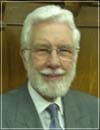
Stephen Hyde

Psalm 119:45-48

Psalm 119:45-48
Stephen Hyde October, 31 2023 Video & Audio
0 Comments
Stephen Hyde
Stephen Hyde October, 31 2023
Psalm 119 Series

In his sermon on Psalm 119:45-48, Stephen Hyde addresses the theological topic of liberty in Christ, emphasizing that true freedom is found in obedience to God's precepts. He articulates that the psalmist expresses his liberty derived from seeking God's commandments, paralleling this to 2 Corinthians 3:17 where it states, "Where the Spirit of the Lord is, there is liberty." Hyde illustrates the point with biblical examples, particularly focusing on the faithfulness of Shadrach, Meshach, and Abednego, and the Apostle Paul's boldness before King Agrippa, demonstrating that true liberty enables believers to proclaim their faith without shame. The sermon underscores the significance of delighting in God's commandments and meditating on His statutes, which serve as a source of spiritual nourishment and encouragement to prioritize eternal over temporal joys.

Key Quotes

“He felt the liberty of the gospel... a great blessing if you and I possess that liberty in our souls.”

“Out of Christ there's no freedom, no spiritual freedom. We're bound up.”

“What a blessing then to have a faith like that and to recognise that we must never be ashamed.”

“The things of God, the spiritual blessings, were far superior and far more important... than the things of time.”

Sermon Transcript

Auto-generated transcript • May contain errors

100%
word to us. And now once again
we'll turn our attention to the 119th Psalm and this evening
we'll meditate on just the four verses 45 to 48. So Psalm 119
and reading verses 45, 46, 47 and 48. And I will walk at liberty
for I seek thy precepts I will speak of thy testimonies
also before kings, and will not be ashamed. And I will delight
myself in thy commandments, which I have loved. My hands also will
I lift up unto thy commandments, which I have loved, and I will
meditate in thy statutes. So once again, in really just
a few brief sentences or phrases, we have a wonderful amount of
great truth. And the psalmist tells us, and
I will walk at liberty, for I seek thy precepts. Quite clearly,
he felt the liberty of the gospel, and it's really just Like we
can read in the Corinthians, the 2nd of Corinthians, in the
3rd chapter and the 17th verse. Now the Lord is that Spirit. And where the Spirit of the Lord
is, there is liberty. So it's a great blessing if you
and I possess that liberty in our souls. And we only possess
that liberty through what the Lord Jesus Christ has done. We read together that 8th chapter
in the Gospel of John because those verses that we read spoke
about the freedom in Christ. Out of Christ there's no freedom,
no spiritual freedom. We're bound up. But as we read
together the verses, and I'll just read again some of those
verses from verse 31. This is what it says. Then said
Jesus to those Jews which believed on him, if ye continue in my
word, then are ye my disciples indeed. And ye shall know the
truth, and the truth shall make you free. They answered him,
we be Abraham's seed, and were never in bondage to any man.
How sayest thou, ye shall be made free Jesus answered them,
Very, very, I say unto you, Whosoever committeth sin is a servant of
sin, and the servant abideth not in the house for ever, but
the Son abideth ever. If the Son therefore shall make
you free, you shall be free indeed. that will be real gospel liberty. And the psalmist was able to
declare that he would walk at liberty. And what a blessing
it is to walk in liberty. And we shall do so when we know
that the Lord Jesus Christ and none other is the one that makes
us free. And he frees us from the condemnation
of the law of God, which says the soul that sinneth It shall
die and all have sinned. We've all sinned and come short
of the glory of God. So we are all really in bondage
until the blessed savior comes and makes us free. And you see,
then we walk at liberty. It's a great blessing. It's a
gift of God. And only when you enter into
it, do you appreciate the wonder of it. And then he goes on to
say for the opportunity. And we may remember that occasion,
wonderful occasion in the book of Daniel, those three men, Shadrach,
Meshach, and Abednego. The law had gone out from the
king that they should not bow down to any other god save himself. should not worship any other
God save himself. Nebuchadnezzar was very proud
and influenced by evil advisors. And so what was their position?
How did they respond to such a request? Well, in the fear
of God, they answered very clearly. And they said, Oh, Nebuchadnezzar,
we are not careful to answer thee in this matter." And that's
a great statement if you think about it. Because very often,
of course, faced with a difficult scene, we'd be very careful how
we answered. And we're trying to avoid bringing
a problem onto our own shoulders. And we'd perhaps try and get
around it somehow. But these three men didn't. They said, we're not careful
to answer thee. this matter if it be so complete
confidence here in his God in their God if it be so our God
whom we the golden image which thou hast set up well it's a
great and glorious example and testimony of the faith these
men were given and what a blessing if we come into situations and
we don't know what the future holds have no idea what the Middle
East situation we develop into and we may be a situation where
we have to face questions and we have to be honest in the things
of God and testify of who we believe and not to try and duck
the issue. Well they didn't. You know the
account, I'm sure, of how God gloriously honoured them. And
they were delivered. They were thrown into the furnace,
and they didn't touch them, and when they came out, there was
no smell of fire on them. Well, that's very wonderful.
You know what a bonfire's like. You've only got to get a bit
near to the bonfire, and you'll very quickly smell the bonfire.
But here these men were completely delivered. What a wonderful occasion
it was. And then also, and I will delight
myself in thy commandments, which I have, sorry, I will speak of
thy testimonies also before kings and will not be ashamed. And
don't forget, we have many examples. We haven't time tonight, but
just to also mention the apostle Paul again, when he was before
King Agrippa. And he knew that King Agrippa
really could have condemned him to death. But again King Agrippa,
Paul was very faithful as he spoke before King Agrippa and
he gave a testimony of his conversion. It's a good thing to be able
to do, to give a testimony of our conversion. I read not so long ago, if we're
speaking to Muslims, the best way to approach them is not to
argue about their religion but is to simply give them the testimony
of our conversion. Well there's good advice in that
and it's good advice to realise that there we have this man Paul
there before the king and other eminent people but very forthright
in how God had been with him and how God had converted him
and how God had blessed him. And then when the apostle wrote
to the Romans, he was able to declare, for I am not ashamed
of the gospel of Christ, for it is the power of God unto salvation
to everyone that believeth, to the Jew first and also to the
Gentiles. What a blessing then to have
a faith like that and to recognise that we must never be ashamed. He says here, the psalmist, and
will not be ashamed. Well, may we all have that same
true living desire to not be ashamed of our profession, not
be ashamed of whom we believe. not be ashamed of the great and
glorious Saviour. Well, the Apostle also, when
he wrote to Timothy, he reminded him really of this same situation,
this same fact, and he said, I give thee charge in the sight
of God, who quickeneth all things, and before Christ Jesus, who
before Pontius Pilate witnessed a good confession. We have the
glorious example of the Saviour himself before Pontius Pilate
and the confession that he made. Well, what a wonderful scriptures
we have to encourage us as we read something like this. And
I would delight myself in thy commandments, which I have loved. Do we love the commandments of
God? Do we bless God for his commandments? for the Word of God. Do we rejoice
in it? Well, the psalmist did. He delighted himself in it. And
what a mercy. And he tells us in the fourth
psalm, he says, Thou hast put gladness in my heart more than
in the time that their corn and their wine increased. What's
he telling us there? He's telling us that the things
of God, the spiritual blessings, were far superior and far more important, the things
of time, which he refers to as corn and wine. The increase of
that was something to be thankful for, but he wanted to have his
gladness in his heart more than in the time that such blessings
were granted. And what an important thing it
is for us to put spiritual things first and not second. And then he says, my hands also
will I lift up unto thy commandments, which I have loved, and I will
meditate in thy statutes. How good it is to meditate upon
the statutes of God and to think upon them and to bless God for
them, whatever the situation is. You may remember that that
little book of Habakkuk, which is a very beautiful book, And
in the third chapter, there's only three chapters, in the third
chapter towards the end, we read these words. He says, although
the fig tree shall not blossom, neither shall fruit be in the
vines. The labor of the olive shall fail and the fields shall
yield no meat. The flock shall be cut off from
the fold and there shall be no herd in the stalls. That appears,
doesn't it, to show us a pretty barren situation. So what's the
result? What does Habakkuk come and now
say? Yet, I will rejoice in the Lord. I will joy in the God of my salvation. See how far more important these
things are. And what a rejoicing there is
when we know that the Lord is on our side. When the Lord is
teaching us, when the Lord is instructing us, and the Lord
has called us by His grace, what reason to rejoice and praise
God? And again, going on in Psalm
36, he says, they shall abundantly be satisfied with the fatness
of thy house, and thou shalt make them drink of the river
of thy pleasures. You see, the things of God again,
the fatness of the Lord's house, river of pleasures they are so
superior to the poor things of time which you and I would have
to leave behind anyway even if we do enjoy them and God does
give us things to enjoy they won't last forever but our soul
lives forever I want a blessing therefore to have spiritual blessings
those which are real and lasting and just going back to the Old
Testament, Deuteronomy, Moses, where Moses wrote, before he
was taken from them, in Deuteronomy, the last book that he wrote,
really, to the children of Israel, apart from Numbers and Leviticus,
but it was a very special book. And this is what he said. He
said unto them, Set your hearts unto all the words which I testify
among you this day, which ye shall command your children to
observe to do all the words of this law. For it is not a vain
thing for you, because it is your life. And through this thing
you shall prolong your days in the land whither ye go over Jordan
to possess it. So much in the Deuteronomy that
Moses wrote to make it very clear to the children of Israel, that
which was before them and the way that they should follow.
Well, we should be thankful again for the 119th Psalm and just
these four verses and perhaps we can appreciate a little of
the greatness really, the volume that these small phrases contain
and what a rich place there is for spiritual food. Well may
God be gracious to us.
Broadcaster:

Comments

0 / 2000 characters
Comments are moderated before appearing.

Be the first to comment!

Joshua

Joshua

Shall we play a game? Ask me about articles, sermons, or theology from our library. I can also help you navigate the site.