Bootstrap
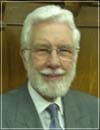
Stephen Hyde

Abstain from fornication

1 Thessalonians 4:3-6
Stephen Hyde October, 11 2022 Video & Audio
0 Comments
Stephen Hyde
Stephen Hyde October, 11 2022
Thessalonians Series

In Stephen Hyde's sermon titled "Abstain from Fornication," he explores the critical theological topic of sanctification as outlined in 1 Thessalonians 4:3-6. Hyde emphasizes that God's will encompasses both the internal and external aspects of sanctification, urging believers to abstain from fornication, which serves as a significant moral teaching for Christians. He references Scripture extensively, particularly noting that sanctification involves possessing one’s body in honorable and pure conduct, contrasting this with the immoral practices of the Gentiles who do not know God. Furthermore, the sermon highlights the severe implications of sexual immorality, indicating that such actions not only offend God but also lead to both temporal and eternal judgment, underscoring the importance of living a life that reflects the holiness prescribed by God's laws. Ultimately, Hyde calls for a thorough commitment to purity and holiness, as these principles represent authentic Christian living.

Key Quotes

“For this is the will of God, even your sanctification, that ye should abstain from fornication...”

“Sanctification is internal or external... internal sanctification is the work of the Spirit of God.”

“For a man to possess his vessel in sanctification and honor is to keep under his body and to bring it into subjection.”

“The Lord is the avenger of all such... these living and dying in such sins God will judge.”

Sermon Transcript

Auto-generated transcript • May contain errors

100%
again as we continue our meditation
in the first epistle of the Thessalonians, and this evening we'll read verses
3, 4, 5, and 6. So the first epistle of Paul
to the Thessalonians, chapter 1, and reading verses 3 to 6. For this is the will of God,
even your sanctification, that ye should abstain from fornication,
that every one of you should know how to possess his vessel
in sanctification and honour, not in the lust of concupiscence,
even as the Gentiles which know not God, that no man go beyond
and defraud his brother in any matter, because that the Lord
is the avenger of all such, as we also have forewarned you and
testified. Well, this evening these verses
are really quite difficult verses. I've spoken going through the
books for a good few years now, but I think this is one of the
most difficult verses. And I've looked up quite a few
commentaries on this and they do tend to alter a little bit. So what I've done, I've actually
copied out the consideration by John Gill, which I think is
probably the best. So I propose to read this evening
his writings on these verses, three, four, five, and six, and
I hope it will be profitable to us. Starting at the third
verse, sorry, I said the first chapter, I meant the fourth chapter.
The fourth chapter and the third verse. For this is the will of
God, even your sanctification, which is another reason to enforce
the above exhortation. Sanctification is internal or
external. Often think with regard to sanctification,
you know, the new man is sanctified, the old man grows in grace, and
there is a growth in sanctification. Sanctification is internal or
external. Internal sanctification is the
work of the Spirit of God, and is a principle of spiritual life
in the soul, a divine and spiritual life in the understanding, a
flexion of the will to the will of God, and a settlement of the
affections on divine things, and is an implantation of every
grace in the heart External sanctification arises from this and lies in
holiness of life and conversation, and is what is chiefly designed
as appears both by what goes before and follows after, and
this is the will of God. The will of this purpose and
decree for in the same decree that he wills the salvation of
any by Jesus Christ. He also wills their sanctification
in heart and life and here and hereafter. And this is his approving
will or what is well pleasing in his sight being agreeable
to his nature and divine perfections. particularly his holiness in
which he is glorious and it is his will of command and what
he requires in his law which is holy just and good and perfectly
agrees with the sound doctrine of the gospel and the revelation
of his will both will in both that ye should abstain from fornication
which is particularly mentioned abstinence from it being a branch
of external holiness. And because that this sin was
common among the Gentiles and not esteemed as sin by them as
also to observe to these Christians that as simple fornication was
not to be allowed of much less other acts of uncleanness. as
adultery, incest, sodomy, and the like, which were iniquities
that greatly prevailed among the heathens. The Syriac version
renders it from all fornication. On this subject, the apostle
enlarges in some following verses. And the fourth verse says that
every one of you should know how to possess his vessel, by
which may be meant either a man's wife or his body. And it is not
very easy to determine which, for the Jews call both by this
name. Sometimes they call a woman so-and-so,
which the gloss says is a vessel, unfinished. It is reported that
when our Eliezer died, Rabbeinu Haberdash would have married
his widow, and she would not, because she was a vessel of holiness,
greater than he. Moreover, it is said that he
that forces a young woman must drink in his own vessel. How
drink in his own vessel, though she be lame, though she be blind,
and though she is stricken with ulcers. The commentators on this
passage say In the vessel which he has chosen, that is to say,
whether he will or not, he must marry her. And you can see Proverbs
5 verse 15 for that. And again, they sometimes call
a man's wife his tent. Hence the saying, there is no
tent but his wife. As it is said, Deuteronomy 5.30,
go, say to them, get you into your tents again. And certain
it is that the woman is called the weaker vessel, as in 1 Peter
3, 7. Between which passage and this
there seems to be some agreement. The same metaphor of a vessel
is made use of in both. And as there honor to be given
to the weaker vessel, so here a man's vessel is to be possessed
in honor, and as their husbands are to dwell with their wives
according to knowledge, so here knowledge is required to a man's
possessing his vessel aright. Now, for a man to possess his
vessel in this sense is to enjoy his wife, and to use that power
he has over her in a becoming manner, which is here directed
to in sanctification and honour. That is, in a chaste and honourable
way, for marriage is honourable when the bed is kept undefiled,
and which may be defiled not only by taking another into it
which is not possessing the wife in sanctification and honour,
it is the reverse, for it is a breaking through the rules
of chastity and honour. But it may even be defiled with
a man's own wife by using her in an unnatural way or by any
unlawful copulation with her, for so to do is to use her in
an unholy, unchaste, wicked, and dishonourable manner, whereas
possessing of her according to the order and course of nature
is, by the Jews, in agreement with the apostle. called a man's
sanctifying himself and is chaste and honourable. And it may be
observed that the Jews use the same phrase concerning conjugal
embraces as the apostle does here. One of their canons runs
thus, though a man's wife is free for him at all times, it
is fit and proper for a disciple of a wise man to use himself
in or to sanctification. When these things are observed,
this sense of the words will not appear so despicable as it
is thought by some. The body is indeed called a vessel,
because in it the soul is contained, and the soul makes use of it
and its members as instruments for the performance of various
actions. And with Jewish writers, we read
the vessel of his body. So then, for a man to possess
his vessel in sanctification and honor is to keep under his
body and to bring it into subjection and preserve it in purity and
chastity as the eyes from unchaste looks, the tongue from unchaste
words, and the other members from unchaste actions, and to
use it in an honourable way, not in fornication, adultery
and sodomy, for by fornication a man sins against his own body,
and by adultery he gets a wound and a dishonour and a reproach
that will not be wiped away, and by sodomy and such like unnatural
lusts, men dishonour their own bodies between themselves, particularly
by his vessel, as Gaetaker thinks, may be meant the membrum virile,
or the genital parts, which by an euphorism may be so called,
not in the lust of concupiscence or passion of lust. For the mere
gratifying and indulging of that, for a man so to possess his vessel,
is to cherish the sin of concupiscence. And a concupiscence is a longing
especially for what is forbidden. Or passion of lust. For the mere
gratifying and indulging of that, for a man so to possess his vessel,
is to cherish the sin of concupiscence. The first motions of sin in the
heart, which a man is drawn away and enticed to, blow up the flames
of lust, and to make a provision for the flesh to fulfil the lust
thereof, even as the Gentiles, which know not God, for Though
they knew him, or might know him with a natural knowledge,
by the light and works of nature, yet they knew him not, savingly
and spiritually, as he is revealed in the word of which they were
destitute, or as the God of all grace, and the God and Father
of Christ, or as he is in Christ. And though by the light of nature
they might know there was a God, yet they knew not who that God
was, nor did they act up to that light and knowledge they had. They did not glorify him as God
by ascribing to him what was his due, nor were they thankful
for the mercies they received from him, nor did they fear,
love, worship, and serve him, nor did they like to retain him
in their knowledge and therefore were given up to judicial blindness
and hardness, to a reprobate mind and to vile affections,
and so did things very inconvenient, unnatural and dishonourable. Wherefore, for a man to use either
his wife or his body in any unchaste and dishonourable manner for
the gratifying of his lusts, is to act and heathenish part
or a like argument dissuading from things unlawful. And then moving on to the seventh
verse. This is commonly understood of
transgressing the bounds of justice and equity between men and men
and of cheating and defrauding in trade and business by increasing
or lessening the value and prices of goods by the buyer and seller,
by not keeping to the bargain, contract, covenant, or sample,
by false weights and measures, and by taking the advantage of
the weakness and ignorance of men, all which is aggravated
by dealing thus with a brother. And this hint is thought the
rather necessary since Thessalonica was a place of great trade and
business, but the matter or business referred to is not trade, but
the subject of chastity or uncleanness. The Apostle is speaking of both
before and after, and the phrases used either design the act of
adultery, coveting a brother's wife and lying with her, and
so defrauding and wrongdoing of him by defiling his bed, or
rather, sodomitical practices, an unnatural lust and desire
in men after men, and copulation with them for rendering go beyond
answers to, to go upon, or lie with. So, often used in Jewish
writings for lying with women, men, and beasts in an unlawful
way. Thus, for instance, these are
to be burned, he that lies with a woman and her daughter. And
again, these are to be beaten, he that lies with his sister
or his father's sister. And the word translated defraud
signifies a greedy, insatiable and unnatural lust and desire
after a man, a brother, or the committing of sodomitical practices
we're dissuaded from by the following reasons, because the Lord is
the avenger of all such, or with respect to all these things,
as the Vulgate Latin and Syriac versions render it, for all these
things, as the Arabic and Ethiopic versions, as fornication, adultery,
lasciviousness, and all sorts of abominable uncleanness. The person that commits these
things, the Lord avenges, either in this life, by the hand of
the civil magistrates, who is the minister of God, a revenger
to execute wrath on him that does evil, or by a violent death,
as in the case of Zimri and Cosby, and 24,000 more at the same time. or by some awful judgment from
heaven, as in the case of Sodom and Gomorrah, or in the worlds
to come. For the law of God is made and
lies against such persons, these living and dying in such sins
God will judge. To whom vengeance belongs, these
shall not inherit the kingdom of God, but have their part and
portion in the lake which burns with fire and brimstone as we
have also forewarned you and testified not by a former epistle
as if this was a second to them and what follows the first as
Grotius thought but they did this when they were in person
with them knowing that these abominable vices greatly prevailed
in their city therefore they bore their testimony against
them and expose the evil of them, and warn them of the danger by
them, so that they could not now plead ignorance. The Ethiopic
version reads in the first person singular, as I have before said
unto you, and testified unto you. Well those are the comments
of John Gill. I hope they weren't too difficult
to understand but it is a difficult passage and I could have ducked
out of it and say well we'll pass over it but I think it's
part of the Word of God and we should just tackle these exceedingly
difficult words and verses and parts sometimes and hopefully
therefore come to a right and a godly appreciation of what
they really meant. So I pray that those comments
of John Gillum may have been edifying and helpful to us. Well
now let's continue by singing hymn number 958.
Broadcaster:

Comments

0 / 2000 characters
Comments are moderated before appearing.

Be the first to comment!

1
Joshua

Joshua

Shall we play a game? Ask me about articles, sermons, or theology from our library. I can also help you navigate the site.