Bootstrap
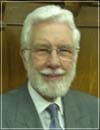
Stephen Hyde

The Good Samaritan

Luke 10:33-34
Stephen Hyde March, 26 2017 Audio
0 Comments
Stephen Hyde
Stephen Hyde March, 26 2017
'But a certain Samaritan, as he journeyed, came where he was: and when he saw him, he had compassion on him, And went to him, and bound up his wounds, pouring in oil and wine, and set him on his own beast, and brought him to an inn, and took care of him.' Luke 10:33-34

Sermon Transcript

Auto-generated transcript • May contain errors

100%
I please God to bless us together
this morning as we meditate in his holy word. Let us turn to
the Gospel of Luke chapter 10 and we'll read verses 33 and
34. The Gospel of Luke chapter 10
and reading verses 33 and 34. But a certain Samaritan, as he
journeyed, came where he was. And when he saw him, he had compassion
on him and went to him and bound up his wounds, pouring in oil
and wine and set him on his own beast and brought him to an inn
and took care of him. The Lord Jesus spoke this parable
to this lawyer that had come to him and had asked him the
question, what should he do to inherit eternal life? And it's just of interest to
note that when the New Testament speaks of a lawyer, It's not,
as we would understand, a solicitor or a barrister. It's actually
somebody who studied the Word of God. So here was a person
who had studied the Word of God, and he came to the Lord Jesus,
and we're told he came to tempt the Lord by his question. Well, of course, he didn't realize
that he was coming to the Lord God himself. of course knew all
the answers 100% and there would be no possibility of him coming
and giving a wrong answer. But again it's important to notice
that the Lord Jesus responds in such a positive way and he
responds by asking the lawyer what the scripture says. Sometimes
In our lives we may be asked questions and it's very easy
to fall into the trap of responding in a natural way. But the best
way, of course, is to respond by quoting the Word of God. We're on safe ground then, we're
on good ground, and we're on God-honouring ground. And so
the Lord Jesus came to him and asked him, What is written in
the law, how readest thou? Well, this man studied the Word
of God and he was familiar with it and he knew what the Word
of God said and he was able to quote it and he said, Thou shalt
love the Lord thy God with all thy heart, with all thy soul,
with all thy strength, with all thy mind and thy neighbour as
thyself. And the Lord said, Well done,
thou hast answered this rightly. But then we see this man, this
lawyer, wanting to justify himself. We're really saying he wanted
to be clever, he wanted to impress, and therefore he asked the question.
And he says, who is my neighbour? Well, then there was this wonderful
opportunity presented to the Lord to then explain who his
neighbour was. And we have this account then,
well-known account of, we term the Samaritan, the Good Samaritan.
But it's full of instruction for us, not only in a natural
way, but also in a spiritual way. And just for a moment, to
take it in a literal sense, because the Word of God is to be taken
literally, as well as spiritually, we should never pass over the
literal implications of the Word of God. And so Jesus gives this
example in this parable of a man going down from Jerusalem to
Jericho and fell among thieves, who stripped him of his raiment
and wounded him and departed, leaving him half dead. So this
man, of course it was just a parable, but the illustration says that
we don't know why he was going from Jerusalem to Jericho, and
we don't know what his objective was but what we do know is that
he fell among thieves and they stripped him of his raiment and
wounded him and departed leaving him half dead. Now how were people
going to respond to that situation? Well it's very sad isn't it when
we we read here and by chance they came down a certain priest
that way and When he saw him, he passed by on the other side.
And likewise a Levite, when he was at the place, came and looked
on him and passed by on the other side. And it is significant that
the Lord Jesus illustrates this by bringing to our attention
to religious people. First of all, a priest and then
a Levite. And we would think that they
should have known better and they should have reacted in a
far better way. But you see how they didn't want
to get involved. They just wanted to continue
in their own way. They wanted to satisfy what they
were doing. And although this man was quite
clearly in a bad state, they weren't prepared to stop and
attend to him. And it's important for us today
to realize the inference of such words as this, because we are
told to do good unto all men, and especially unto the household
of faith. And we have here the illustration
of this man, a Samaritan. He wasn't a Jew. He was the last
person we would expect to stop and to help this man. And those
who should have stopped and helped this man did not. They passed by. And therefore
the illustration is important to us today to realise that we
should endeavour to do good to all men and to help those that
we come across Whatever condition, whatever situation they're in,
however bad they may be, however wicked they may be, we're not
told how bad this person was, but he had a need. He was in
a difficult situation. He was half dead. And we find
then this Samaritan came as he journeyed. He was journeying
like the other two people were journeying, but what did he do? He came where he was, and when
he saw him, he had compassion on him. He went to him and bound
up his wounds, pouring in oil and wine. And of course, such
a position would have had an effect upon what he was doing,
his journey. He was hindered in it. It wasn't
just a question of passing by and give him a little bit of
money and say, well, there you are, you get on with it. No,
it cost him something, didn't it? It cost him in his time.
It cost him in his effort. And it also cost him money and
also the promise that he would pay more if it was necessary. So it's a very good illustration
to us today that if we come across people who have a need, we shouldn't
just pass them by. You see, it's very easy, isn't
it, to just perhaps give a little money. Nothing wrong in that.
It's good. We need to give. We need to give
generously. But we shouldn't think, well,
I've done what I can do and I've done what I should do. There
may be a lot more that we haven't done that we should have done.
It's not just affecting our pocket, it's affecting our time and it's
affecting the attitude that we have. So perhaps in the day and
age in which we live, we may not be perhaps as good and as
right as we should be. There are many needy people today,
aren't there? that we perhaps pass by. And, well, we don't
want to get involved. Well, we're just too busy. We're
doing all these things and we haven't got time to stop and
attend to people who perhaps have a great need. Well, that's
the illustration we have here. And as I said, we shouldn't just
ignore such a plain statement and think, well, we're doing
our bit. Well, we may not be doing our
bit. We may be failing. We may not be doing that that
we should be doing in accordance with God's Word. And therefore,
we see how this man fulfilled his part generously. He did all that he could. He
didn't lack, did he? He did all that he could. He
stopped, he went to him, he bound up his wounds, he poured in oil
and wine, set him on his own beast. He walked, he put the
man on his beast and he brought him to an inn, took care of him
and the next day he delayed himself, he stopped, delayed himself and
the next day he departed and he paid the amount of money that
was owing and perhaps it would seem a bit more to care for him
And then he also said, if there's any more I owe, I'll pay it next
time I come. Well, it's a good example for
all of us, isn't it? And it's a familiar scene, isn't
it? Familiar picture, and we read
it, probably we all read it many, many times, but perhaps we haven't
walked it out as we should have done in our lives. And the Lord
asked this man, and he says, which now of these three thinkest
thou? Was neighbour unto him that fell among thieves? Well
it was obvious, wasn't it? And he said, he that showed mercy
on him, Jesus said unto him, go and do thou likewise. He wasn't saying, well, now you've
had the illustration, you've had the picture, now you go and
do the same. pass it by and don't think, well,
I understand now. No, the Word of God was very
clear. Go and do thou likewise. We must take heed, must we not,
to the gracious and important Word of God. Well, I think that's
very clear from a literal standpoint. But also, of course, it does
have a deep significance to our spiritual lives. And we should
be concerned about that in our daily life, to realise that we
may, individually perhaps, have fallen among thieves. The devil
wants to take away all that we possess in a spiritual sense.
If he can, he wants to strip us of everything and leave us
half dead, so that we seem to have no hope. We seem to be destitute. And there we are, forsaken. And
perhaps there are those which we think may have stopped and
looked upon us. Those perhaps may have given
a word of encouragement. Nothing at all. Just being ignored. Just being passed by. Now that's
a sad statement in itself, isn't it? If the Church of God do pass
by, those who are spiritually needy, to perhaps take time and
perhaps cost us in time to stop perhaps and help such a one who
may seem to be destitute and in a desperate condition and
unable to help themselves. This man, you see, he was half
dead. He wasn't able to help himself. Now, obviously to come and speak
to somebody, to help somebody, involves effort, doesn't it?
It involves time. And it's a good thing, therefore,
to realise that we're not to just pass by on the other side
and think, well, I haven't got time today and I'm doing this
and I'm doing that. And if you and I very carefully
analyse our lives, we'll find probably that such things are
not that important anyway, because a never-dying soul is of infinite
value. So we should never pass by someone
who appears to be very needy in a spiritual sense. We should
desire to come, to draw near to such one and to help them. Well, this Samaritan did just
that. And of course we know that we
have a great and a glorious heavenly Samaritan, the Lord Jesus Christ. We read here, as he journeyed
he came where he was. What a blessing it is for us
today to know that we have such a great and glorious Saviour
who knows where we are. He knows the very position that
where he knows our spiritual state and he can come where we
are. Now, we note this man in the
parables going down from Jerusalem to Jericho and we may think,
well, that wasn't a good thing anyway, because he was leaving
a place where the temple was, a place where God's people met
to worship. and he was leaving it and going
in an opposite direction. We might think, well, he deserved,
therefore, to fall into this condition. Well, it may be the
same with people today. We may look at them, and we may
think, well, if they hadn't done that, if they hadn't gone that
way, then they would be all right. Well, they may have been tempted. They may have gone that way.
They may have been left. perhaps be in a condition which
presents them almost half dead. Well, what a mercy then to realise
here that the Lord Jesus came. He had compassion on him. What a blessing for us today
to know that we have such a saviour who is alive today, who we have
this wonderful picture of coming to. He knew where he was and
when he saw him, What did he do? He had compassion on him. This word compassion really means
he had some empathy with the man. Yes, he looked upon him
and he was truly sorry for him and he therefore did all that
he could to help him. Well, we have a far greater and
more wonderful Samaritan in the Lord Jesus Christ. And what a
mercy it is if he comes and looks upon us and has compassion upon
us. We need compassion from the Saviour
because we so easily find ourselves going in a wrong direction, turning
away things of time, can bring us into times of desolation. We give ear to the devil, we
listen to what he is saying and therefore we follow his advice
rather than following the way set before us so clearly in the
Word of God. What a humbling thought it is
to know that the Lord Jesus has compassion upon us. This word
compassion occurs many times really in the Word of God. What
a favour it is to know that we have such a great and glorious
Saviour who has compassion. We read in Hebrews, For every
high priest taken from among men is ordained for men in things
pertaining to God, that he may offer both gifts and sacrifices
for sins. Who can have compassion on the
ignorant, and on them that are out of the way? For that he himself
also is compassed with infirmity. And by reason hereof he ought
not for the people, so also for himself to offer for our sins. So the Lord Jesus has compassion. He knows in great detail in full
detail our situation. He knows perhaps that it's our
sins which has brought us into the condition we find ourselves.
Half dead, no strength, evaporated because we've listened to the
insinuations and we've listened to the temptations of the Satan. And therefore we found ourselves
stripped and naked and half dead. Well, what's caused that? Our
sin. Our sin has brought us into that
consideration, that condition. What a mercy then to know that
we have such a Saviour who looks upon us, who knows where we are,
has come to us, He hasn't passed us by. As we think of it, we
know we deserve to be passed by. We know we deserve to be
passed by, by the religious people. And we definitely deserve to
be passed by, by the Saviour himself. Because we've operated
in a contrary way to the way of God. We've turned our back
upon perhaps some of the things Perhaps one thing, maybe just
one thing in our lives that we've turned our back upon, God knows
what that is, and He may have caused us to come into a situation
where we appear and seem and feel to be half-dead. Well, to think that the Lord
Jesus Christ, in our situation, bad as it is, We don't really marry any favour
at all. And yet this kind and gracious
God comes to us and he looks upon us and he has compassion
upon us. What a mercy then. We have a
God. Not like the priest and the Levite. We have a God like this kind
and gracious Samaritan who came where he was. You know, in the
Romans we read about God's mercy and God's favour and God's compassion. And when the Apostle is speaking
about those who are called and those whom he has loved, and
it's a very sanitary and a very great truth that the Lord tells
us with regard to those whom he's called and those whom he's
chosen. humbling thing to think, the
Lord comes to us in our wretched and helpless condition. And in
the ninth chapter of the Romans, we read as it is written, Jacob
have I loved, but Esau have I hated. What shall we then say? Is there
unrighteousness with God? Is God unrighteous in this situation? God forbid. For he says to Moses,
I will have mercy on whom I will have mercy, and I will have compassion
on whom I will have compassion. So we don't deserve any compassion. There's nothing that merits it
in our life, but how humbling it is to think that the Lord
comes where we are. looks upon us and has compassion. And you see, it's very positive. The Lord says, and I will have
compassion on whom I will have compassion. Why? Because it's those for whom he
has died. It's those for whom he has shed
his most precious blood in order to cleanse them. from all their
sin, to heal them from all their evil. And then the Apostle goes
on to say, So then, it is not of him that willeth, nor of him
that runneth, but of God that showeth mercy. Well today, what
a blessing it would be in our lives if we've known the Lord
to come to us in our lost condition, You see, this man, he couldn't
get up, he couldn't run to the inn, he couldn't struggle to
the inn. He was half dead. And what an illustration that
is to those who were under the influence of Satan. Half dead. Sinners. Great sinners. Well, let us not forget the Lord
Jesus came to seek and to save those who were lost. lost and
ruined in the fall. And so this wonderful blessing
of compassion. It's a wonderful mercy to know
that the Lord does have compassion. He understands. He has empathy
with our situation. It's a great blessing, isn't
it, to think that we have such a Saviour who understands us
in every detail, very clearly. And the Psalmist David, he needed
compassion of God, didn't he? You think how he turned his back
upon God, tempted by the devil, fell into all manner of sin?
He needed compassion of the Lord, and so he's able to confirm it. He'd experienced it. And he tells
us in the 86th Psalm, He says, but thou, O Lord, art a God full
of compassion and gracious, long-suffering, and plenteous in mercy and truth.
O, turn unto me, and have mercy upon me. Give thy strength unto
thy servant, and save the son of thine handmaid. And he just
goes on, the last verse tells us, show me a token for good. He needed a token from God. This man who fell among thieves,
he had a token, didn't he? This Samaritan, he poured in
oil and wine. What a wonderful evidence it
was of the compassion of this man. What a wonderful evidence
it is of God's compassion to us, if he shows us a token for
good. When he does not deal with us
as our sins deserve, he doesn't cut us off. His compassion. What a wonderful blessing it
is to realise we have such a kind and such a compassionate God. So this This Samaritan came and
when he saw him he had compassion on him. And that compassion was
followed with deeds. He didn't just look upon him
and then pass on. He followed it up with deeds.
And so it is with our great and glorious Saviour. He comes and
He touches our heart. And what does He do? Well, the
position here is he bound him up, he bound up his wounds, and
the wounds of sin, my friends, can be very deep. They can be
very deep, especially perhaps when we've felt that
we've sinned against light and knowledge. That means when we've
gone contrary to God, knowing what we should do, and yet have
walked in a contrary way. Sometimes when the Lord then
shows us what we really have been, it's a wound and it's a
deep wound, and we need the Lord to come to us where we are. And here was his position, and
he bound up his wounds, and he bound up his wounds pouring in
oil and wine. Now, what do these two things
do? Oil, of course, is something
which heals, and wine is something to cheer. What a mercy then to
think that our God looks upon us in our lowest state, like
he did to David, and he has compassion upon us, he's not dealing with
us as our sins deserve, and instead of letting us get on with it
as it were, because of his love, because of his favour towards
us, he binds up, bounds up our wounds and they're healed. What a mercy it is to have our
wounds healed. What a great blessing it is.
Jeremiah in his day spoke about the wonderful favour of being
healed and it's good to read in the in the prophecy of Jeremiah
and the 17th chapter, we read, oh Lord, the hope of Israel. Well, do we come today and say,
oh Lord, my hope, oh Lord, the God of Israel, all that forsake thee, shall
be ashamed. They that depart from me shall
be written in the earth, because they have forsaken the Lord,
the fountain of living waters.' And that may be our condition.
Sometimes we are so hard-hearted and so stubborn, we as it were
turn our back upon the gracious dealings of our God. But what
was The cry, what was the cry? Oh Lord, the hope of Israel. Explain the situation and then
he says, heal me. Oh Lord, and I shall be healed. Save me and I shall be saved
for thou art my praise. The picture surely we have here
is the gracious dealings of the Lord, to heal our souls, and
then, having received that healing, having received that blessing,
then to recognise that through that the Lord is our praise,
because of what he has done for us. To bind up our wounds, pouring
in oil and wine. Well, what a mercy for you and
me today if we've had the evidence of the heavenly Samaritan, the
Lord Jesus Christ, binding us up And perhaps if we haven't,
if we perhaps feel today just like this man who's gone down
from Jerusalem to Jericho and there we are feeling half dead,
well, may our eyes be up to God. He will come to us where we are. And he won't pass by like the
priest and Levi. and pray that he'll come to us
and not only come to us but have compassion on us and not only
have a mental compassion on us but graciously come and bless
our souls, bind us up, heal us, pour oil and wine and set us
on his own beast and brought him to an inn and took care of
him. Now, what we might think was
the inn, well it was a place of safety, wasn't it? And it
was a place of comfort. And it was a place where he was
looked after. We can think of that as the Church
of God today. To be brought to the Church of
God. To be brought to the house of
God. and there to find there are those
who do and are concerned about our souls and who are caring
for us and desiring to look after us. What a blessing if the Lord
brings us then to that condition, to that consideration, and brings
us from our lost condition, our dying condition, a hopeless condition
into the Church of God, and brought him to an inn and took care of
him." You see, the Lord loves the dwellings of His Church. He meets with them, He unites
them together, and He of course is the headstone. He is the sure
foundation. He it is who draws us out to
him in love because of his love toward us. It's there where we
realise there is healing virtue in him. It's there where we do
indeed receive that healing. That which the Lord gives to
us is made a blessing to us and we rejoice in what he's done. We rejoice in his mercy. We rejoice in his favour, that
he hasn't dealt with us, he hasn't cast us off, but he's come to
us and he's blessed our souls. And what has he done? He's revealed
to us what we've needed and he's provided that which we needed. And it's the oil and wine of
the Gospel. That's what heals the soul. The Gospel. Salvation. The good news of the Gospel.
That's what does us good. That's what will strengthen us.
That's what will revive us. May we be blessed with a realisation
of God's love and of God's mercy and of God's favour to us. The
prophecy of Isaiah speaks to us in that 40th chapter as we
come down to the end of that chapter. The Prophet says, he
giveth power to the faint. That's how he may have felt.
Power from on high. He gives it. You can't produce
it. God gives it. He gives power
to the faint. And them that have no might,
he increases strength. Even the youth shall faint and
be weary, and the young men shall utterly fall. They that wait upon the Lord shall renew
their strength, they shall mount up with wings as eagles, they
shall run and not be weary, and they shall walk and not faint. It's a wonderful view of restoration
to the Church of God, just like it was When David records those
words in the 40th Psalm, where he tells us, I waited patiently
for the Lord, and he inclined unto me. He came where I was,
like the Samaritan, and he heard my cry. He brought me up also
out of a horrible pit, out of the miry clay, and set my feet
upon a rock. and established my goings. And
then what happened? He put a new song in my mouth.
He even prays unto our God. Many shall see it and fear, and
shall trust in the Lord. Blessed is that man that maketh
the Lord his trust, and respecteth not the proud, nor such as turn
aside to lies." Well, we have this very beautiful parable to
take home and to ponder over and to realize the relevance
that it has to us today, to each one of us in our little lives.
But a certain Samaritan, as he journeyed, came where he was,
and when he saw him he had compassion on him, and went to him and bound
up his wounds, pouring in oil and wine, and said he wanted
his own beast, and brought him to an inn and took care of him. Amen.
Broadcaster:

Comments

0 / 2000 characters
Comments are moderated before appearing.

Be the first to comment!

Joshua

Joshua

Shall we play a game? Ask me about articles, sermons, or theology from our library. I can also help you navigate the site.