Bootstrap
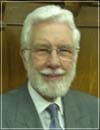
Stephen Hyde

God Be Merciful To Me A Sinner

Luke 18:13
Stephen Hyde July, 3 2016 Audio
0 Comments
'And the publican, standing afar off, would not lift up so much as his eyes unto heaven, but smote upon his breast, saying, God be merciful to me a sinner.' Luke 18:13

Sermon Transcript

Auto-generated transcript • May contain errors

100%
Please God to bless us together
this evening as we meditate on his word. Let's turn to the Gospel
of Luke and chapter 18 and we'll read verse 13. The Gospel of
Luke chapter 18 and reading verse 13. And the publican standing
afar off would not lift up so much as his eyes unto heaven. but smote upon his breast, saying,
God, be merciful to me, a sinner." The world is really broken up
into two people. Those who are so-called Christians
and those who have other faiths and then the Christians are then
broken up into two categories and the two categories are described
to us in the verses in this chapter and the Lord when he was on the
earth he spoke this parable And he spoke it for a specific reason,
unto certain which trusted in themselves that they were righteous
and despised others. And of course in the church today
there are many that fall into that category, who trust in themselves
that they are righteous and despised others. And it's therefore then
that the Lord gives this illustration of the two types of people, the
Pharisees or the example of a publican. And the fact is that all those
who profess to be Christians fall into one of these two categories. And how important it is for us
today to realize The vast difference between the two categories. Because
one describes those who are eternally lost, and the other describes
those who are eternally blessed. And all of us here tonight stand
on either side of that dividing line. We see the example the
Lord gives. when he describes the Pharisee
and tells us the Pharisee stood and prayed thus with himself. You see, people do come and they
pray with themselves. They're not really praying to
God. They're praying perhaps to try
and impress the people with the phrases and the requests they
make. But the fact is that their heart is not really in the words
that they say. And that may be in public prayer,
but you see in private prayer, there may be that situation where
people just pray to fulfill some duty they feel they should do. They know that the Bible instructs
us to pray, and therefore they do pray. But they do not really
pray, because the effect is they're praying with themselves. Just like the description of
this Pharisee who stood and prayed thus with himself, God, I thank
Thee that I am not as other men are, extortioners, unjust, adulterers,
or even as this publican. I fast twice in a week. I give
tithes of all that I possess. So he was very proud of the things
that he did, the things that he was doing. And we have to
be very careful of these kind of situations. Talking about
the tithing, I remember when I was a boy there was one man
who came to the church and he always clearly wanted to impress
people by the amount of money he gave. And he would always
put his collection out on a ledge in front of him while he was
putting on his coat so everybody could see very clearly exactly
how much he was giving. He would take some time doing
that. See, he was just trying to impress
people. Well, I'm pretty sure that man
was not a believer. He was really like these Pharisees.
He was trying to impress people, perhaps he was trying to impress
God. But you see God is not impressed by such an attitude. And so the
description is very important for us to comprehend that we
do not find ourselves praying with ourself and speaking. I mean you may say well it's
good to be thankful that of course we're not extortioners and we're
not adulterers and we should be thankful for that but we should
acknowledge to God that it's not because of any goodness in
ourselves, it's not because of any strength in ourselves, it's
because of God's goodness toward us in restraining us because
be very sure that if God took away restraining grace from any
of us we would commit all the sins in the book and we would
be indeed vile person And so tonight Can we be thankful that
with the Lord does? restrain us well, he Apparently
restrained this Pharisee you see from these more violent and
wicked sins But then he he then points to the publican now publicans
of course were naturally despised people because they were tax
collectors and they were often dishonest people and So in one
sense we can understand why the Pharisee was making this analogy,
or even as this publican. But then we're told, he said,
I fast twice in a week and give tithes of all that I possess.
So perhaps partially we can see that he may have had, he could
have had right desires, but clearly he did not have right desires
by the things that he was then claiming to do for his own merit. We should not desire to claim
things for our merit. We should always desire that
the Lord God will be lifted up and honoured and glorified in
our lives. And so that situation was not
God glorifying. Although it might appear so in
the outside, and how many there are today who appear to be good
people, in actual fact they're just a whited sepulcher. They're full of evil within. Well, may the Lord deliver us
from such a situation and such a position. And let's be clear,
it's good to look at ourselves. It's easy to assume, well, such
a statement doesn't apply to me. Well, we need to be very
careful and to pray that it may not. And if it does, the Lord
will cleanse us from such sinful situations and enabled us to
come rightly and truthfully and honestly before our God. So then
we have the other character described by the Saviour and he tells us
about this publican, what he was like. Well, he stood afar
off. He stood afar off, he didn't
come near to the temple, he stood afar off. and he would not lift
up so much as his eyes unto heaven, but smote upon his breast, saying,
God, be merciful to me, a sinner." What a very different character
described here. And my friends, we need this
to be a description of us. We need to recognise the importance
of it, that here was a person described who were so cast down,
were so burdened with his sin, that he wasn't able to lift up
his head. He was bowed down. Perhaps we
could say he was ashamed to lift up his head. He was ashamed of
his condition, ashamed of his sin. Now how wonderful if the
Spirit of God comes and directs us in that way. to show us something
of the sin which dwells within. It's not, in one sense, outward
sins, they of course are very obvious, but it's the sins which
other people do not see. The sins which make us cry out,
can ever God dwell here? As the Spirit of God reveals
to us what our true state is before a holy God. And if you and I are amongst
the true Church of God, the Spirit of God will come and will reveal
to us what we really are, what we really are like. And we will
be like this publican and we will, as it were, hang down our
head, not be able to lift up our eyes unto heaven because
of our sinful condition. And so he comes and he smites
upon his breast and he utters a very short, very simple, but
very powerful prayer. And he confesses his situation
and he pleads for mercy. God be merciful to me a sinner. Now I'm sure that every true
believer will come to this position where they will find this prayer
so very, very suitable. It will describe them and they
will pray it. They will need mercy. They will
need God's favour. They will need God's blessing
and they will come in this way and they will be thankful. The
Lord in his wonderful mercy has given a clear description of
the prayer of a true believer. And because of our sinful nature,
it's not something that you and I would just utter once and then
think, well, I've said that prayer, now I'm okay. Because the Spirit
of God will keep directing us to look within, and we'll keep
having to pray this prayer, God be merciful to me, a sinner.
I believe through our life, through our life, right down perhaps
to the end of our days, we will need God's mercy. to be granted
to us. Now, that's a very simple illustration,
isn't it? We had another illustration at
the end of this chapter, where there was this certain blind
man, who we know of course from another account, it was Bartimaeus.
And there he was, sitting by the wayside, begging. And he heard the multitude passed
by, and he asked what it meant. And they told him that Jesus
of Nazareth passeth by. Well, did that mean anything
to him? It clearly did. It clearly did. And therefore he came, and he
cried out, Jesus, thou son of David, have mercy on me. Very similar, wasn't it? to the
prayer that the Lord Jesus spoke of, this publican uttering. And
here then is this blind man. And the Church of God are spiritually
blind until the Lord comes and opens our eyes. And what a mercy
the Lord puts, therefore, into our heart, into our innermost
soul, this great cry, God, be merciful to me, a sinner. So
if this comes from our heart, if this is indicted by the Holy
Spirit of God, we can be sure the Lord will indeed answer that
prayer in the same way the Lord heard this blind man and the
prayer that he prayed. Now, this man, Bartimaeus, he
had opposition in praying. They which went before rebuked
him. He should hold his peace. And we will find today there
are those temptations where the devil would endeavour to shut
our mouth. He'd probably say, well, there's no hope for you,
you're just too bad. You just committed too many sins. In fact, you committed the unpardonable
sin. You're really without hope and
therefore you better stop. Well, here we have this illustration
here. of this account of this blind
man. They rebuked him, that he should
stop, should hold his peace. But what effect did it have?
And what a blessing if the same kind of effect is upon us. Because
he cried so much the more. It had the reverse effect. I
believe that the Spirit of God works in our hearts. However
the devil tries to stop us, it will have the reverse effect.
And we will cry perhaps more fervently, God be merciful to
me a sinner. And so this blind man cried out
much the more the same prayer. He didn't need to elaborate it.
Thou son of David, have mercy upon me. It's a complete prayer. It's a full prayer. And coming
from the heart, indicted by the Spirit of God, It's a prayer
the Lord answers. In this instance, we see the
compassion and the mercy of our Saviour. Because He stood, He
stopped, He stood. And He commanded him to be brought
unto Him. And when He was come near, He
asked him, saying, What wilt thou that I should do unto thee? Well, what did He need? He needed
his natural sight. What do you and I need? We need
our spiritual sight. We need to know that we are the
recipients of God's mercy. We want to know that it is well
with our soul. And this experience will be a
very real experience. It won't be just something which
you'll be able to brush off It may be with you perhaps for days,
perhaps for weeks. It may even be with you for years.
And to continually come and pray to God from your very heart,
words as this publican did, God be merciful to me a sinner. Now, did God bless him? Did God answer him? Yes. The
Lord said, receive thy sight. Thy faith has saved thee." Now
how important that statement is. Because when we come to God,
we must come to Him believing that He is God. Believing that
He is able to have mercy upon us. He's the only one that is. No one else can give us that
spiritual sight. It is God alone. Therefore how
important it is that you and I found in this situation pleading
for mercy and pleading that we may receive our spiritual sight
and not giving up but praying much more, much more. We look back perhaps some of
us in our life to days when that was so. when it was very urgent
with us. We had to pray, we had to continue
to pray that God would have mercy upon us. And then perhaps God
came, perhaps in an unexpected way, perhaps almost in an unnoticed
way, and heard our prayers and sent us answers of peace. Bless God, we worship, we pray
to today that same God the same Blessed Saviour that sets this
parable before us, the same Blessed Saviour that gave Bartimaeus
sight. And so may we be encouraged as
we think of the great and glorious truths contained in the Word
of God. And there are so many illustrations
to encourage us, so many things to point us to our need we have
of mercy and favour from Almighty God. There are many occasions
when David speaks about the needs that he has, and the sins that
he has, and the confessions. He tells us in the 40th Psalm,
the 12th verse, for innumerable evils have compassed me about. My iniquities have taken hold
upon me, so that I am not able to look up. They are more than
the hairs of my head, therefore my heart faileth me." You might
say, well, David, you've surely reached the end of the road now.
Surely you're going to give up with such a confession of all
the terrible evil that you possess? But no, he comes and he prays
like this, be pleased, O Lord, to deliver me. O Lord, make haste
to help me, and I believe as we may come to God praying for
that mercy, God be merciful to me a sinner, we will realise
that we don't deserve it. The same as David confessed he
didn't deserve it. But my friends what a mercy it
was that God did hear David's prayers, did hear David's cries
and again came and blessed him. In a previous Psalm, Psalm 38,
again he confesses it's a great blessing to have the gift, the
favour of confession. Sometimes we almost appear to
try and hide our sins and yet God knows everything about us. You and I cannot hide our sins.
So what a blessing if he gives us grace to come and to freely
confess our sins, confess exactly as we are and it won't be a very
pleasant thing to do. But we have these wonderful illustrations
in the Word of God to encourage us. The 38th Psalm, David tells
us in the third verse, there is no soundness in my flesh because
of thine anger, neither is there any rest in my bones because
of my sins, for my iniquities are gone over my head as a heavy
burden. They are too heavy for me. My
wounds stink and are corrupt because of my foolishness." Well
that, very simply put, is a confession of the sinfulness that he felt. It wasn't just a mere passing
fad, we might say. Deva is under the true conviction
of sin before a holy God, he was convicted. And therefore
he comes confessing his sins to his God. Oh my friends, may
we pray for that gift of confession. It's never easy to come and confess
sin. Some people may think it is.
Well, it's not very easy. Because we don't like to, I suppose,
confess. that we've been a sinner and
that we've done things that we should not have done and yet
there we are standing before a holy God and Ezra in his day
also came confessing his sin in the little book of Ezra we
read in the ninth chapter and the sixth verse we read Oh my
God I am ashamed I am ashamed." Well, I wonder if you've been
ashamed before God. Oh my God, I am ashamed and blessed
to lift up my face to thee. What did that mean? Just like
the illustration of the publican, his eyes were down. And blessed
to lift up my face to thee, a black sinner looking to the holiness
of almighty Not surprising, is it, that we hang our heads? My God, for our iniquities are
increased over our head and our trespass is grown up unto the
heavens. He goes on and describes the
situation. Since the days of our fathers
have we been in a great trespass unto this day. And for our iniquities
have we, our kings and our priests, been delivered into the hand
of the kings of the lands, to the sword, to captivity, and
to a spoil, and to confusion of face, as it is this day."
We may perhaps feel confusion of face as we come before the
Holy God. Realising how sinful we are,
how unworthy we are. And so we need then to receive
the blessing of mercy. The blessing of mercy. You know,
mercy really means that one will stoop down in kindness and implore
favour. You know, we need to Come and
implore favour from Almighty God. Implore His favour toward
us. That's really what it means.
We're seeking for mercy, we're seeking for His favour. We're
seeking for His goodness to be revealed toward us. And so here
we have this statement, God be merciful to me, a sinner. Well again, mercy. welcome news indeed to those
who guilty stand my friends what a relief is it is the Lord looks
upon us and gives us a little of his mercy reveals to us something
of his favor again David needed mercy David pleaded for mercy
and he comes he says this in Psalm 25 Verse 7, Remember not
the sins of my youth, nor my transgressions, according
to thy mercy. Remember thou me for thy goodness
sake, O Lord. Well, David wasn't unusual, was
he? I'm sure there are those sins
which we've committed in our youth, which we're truly sorry
for. And so David comes and speaks
in these terms, remember not the sins of my youth, nor my
transgressions. According to thy mercy, remember
thou me for thy goodness sake. Oh God, he was pleading. There
was he not for the mercy of God to come upon him. Because he
tells us all the paths of the Lord are mercy and truth. and
to such as keep his covenant and his testimonies. What a kind
and gracious God we have. Think of that all the paths of
the Lord are mercy and truth. But walking in that right way,
in that right path of confession, all those ways bring true mercy
and truth unto us. And we should be truly thankful
for that. And so he comes and he speaks
like this, he says, Mine eyes are ever toward the Lord, for
he shall pluck my feet out of the net, turn thee unto me, and
have mercy upon me, for I am desolate and afflicted. The troubles
of my heart are enlarged. Oh, bring thou me out of my distresses. Look upon my affliction and my
pain. And, he concludes, forgive all
my sin. He really sums it up, doesn't
he? In just those few words. He acknowledges his gross sinfulness
before God. And he comes and says, oh that
thou would indeed forgive all my sins. You see, confession. What a blessing it is to be granted
that. To come then in that right way.
God, be merciful to me, a sinner. familiar 51st psalm which we
know is a psalm of confession by David and we're told it was
when Nathan the prophet came unto him after he'd gone into
Bathsheba and what does he start with he says have mercy upon
me O God and then he adds according to thy loving-kindness according
unto the multitude of thy tender mercies, blot out my transgressions. He was looking forward, and he
realized there was a gracious God who he was coming to, seeking
for this mercy, and therefore he pleads it on this ground.
Have mercy upon me, O God, according to thy loving kindness, according
unto the multitude of thy tender mercies, blot out my transgressions
and of course he goes on in this psalm which is very descriptive
wash me throughly from my iniquity and cleanse me from my sin he
needed to be washed my friends you and I today need to be washed
need to be cleansed from all our sin and how is that to be
accomplished well it's only to be accomplished if you and I
are washed in the blood of the Lamb It's through the death of
the Saviour that can wash away all our sins. All our sins. The wicked sins, the vile sins.
The Lord can wash them all away in His most precious blood. Now you see, it's when the Spirit
of God shows to us something of our true state before God,
makes us truly plead for mercy, And as we truly plead for mercy,
he enables us to look out of ourselves to the great and glorious
Saviour, the Lord Jesus Christ, who came into this world to seek
and to save that which was lost. David comes and here again is
confession. He says, I acknowledge my transgressions
and my sin is ever before me. What a gift that is, to be able
to come and acknowledge all our transgressions not to leave some
where we've been trying to justify ourselves, but to lay them all
there before our God, make a clean breast of them, confess that
we're very foolish and ignorant and ashamed of our attitude and
the situation, and then come pleading for God's mercy. Oh
God, be merciful to me a sinner. And he says, I was shaped in
iniquity, and in sin did my mother conceive me. Then he comes to
this great truth. Behold, thou desirest truth in
the inward parts. That means in our heart, not
something which is just outside. Truth in the inward parts, in
the hidden part. Thou shalt make me to know wisdom. Purge me with hyssop, and I shall
be clean. Wash me, and I shall be whiter
than snow. He knew the remedy. David knew
the remedy. He lived many years before the
Lord Jesus Christ came, but he knew his hope was in the Saviour,
the Lord Jesus Christ. He was looking forward. Now,
my friends, today you and I can look back, and we can look to
the Saviour. We can come pleading for His
love and mercy to be known toward us, and that mercy may be indeed
a great favour and a great blessing to us. In the 136th psalm, we
read those familiar words which are repeated so often as the
psalmist goes down and he says this, Oh give thanks unto the
Lord for he is good. And he comes and says, for his
mercy endures forever. Isn't that a wonderful statement?
You see there was mercy for David. There's mercy for all those who
are mentioning the Word of God. There's mercy for all His people. My friends, bless God. If we
are those who truly come confessing our sins and pleading for mercy,
there is indeed mercy for us because His mercy endures forever
and so often The psalmist says, and you and I will say it, I'm
sure, O give thanks unto the Lord of lords, for his mercy
endureth forever, because he has not dealt with us as our
sins deserve. He's not cast us off. No, but
he's remembered us with that favor he beareth unto his people. Yes, and the great truth is that
he giveth more grace to be able to come and confess our sins
and to pour out our heart before God and to come indeed, as the
illustration here of this publican. And it's a good example who came,
would not lift up his eyes, would not lift so much as his eyes
unto heaven, but smose upon his breast saying, God, be merciful
to me so that you and I would not be able to rest, would not
be able to rest content, in a situation where we know that we are violent
black sinners, we'll have to come. We'll have to come pleading
for mercy. We'll have to come confessing
our sins and we'll come believing. We come to a God who is able
and willing to hear our prayers and to deliver us and to grant
us that blessed freedom, that freedom which God's people receive
when sin is forgiven. And those words are so gloriously
true. If the Son therefore shall make
you free, you shall be free indeed. The devil will not be able to
bind you up. He will not be able to keep you
because you have, as it were, escaped his clutches and the
Saviour has taken you in. And the Saviour has covered you,
and the Saviour has come and washed you in the fountain of
His most precious blood, so that you are amongst those who are
categorised, the blessed of the Lord, who are those who are redeemed. And remember, redemption is only
through the shed blood of the Saviour. Well, tonight, may we
be thankful that the Lord God, in His infinite love and mercy,
has given us such illustrations in the Word of God, to encourage
us in the real path of the true Christian. And remember, as the
Lord said, He spake this parable and was certain of the who trusted
in themselves that they were righteous and despised others.
Let us not be amongst those, but let us be among those who
truly come, seeking earnestly, pleading the Lord to look upon
us. And in the words of the publican,
God be merciful to me, a sinner. Amen.
Broadcaster:

Comments

0 / 2000 characters
Comments are moderated before appearing.

Be the first to comment!

Joshua

Joshua

Shall we play a game? Ask me about articles, sermons, or theology from our library. I can also help you navigate the site.