Bootstrap
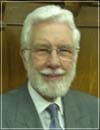
Stephen Hyde

Pleasant Places & A Goodly Heritage

Psalm 16:6
Stephen Hyde May, 31 2016 Audio
0 Comments
'The lines are fallen unto me in pleasant places; yea, I have a goodly heritage.' Psalm 16:6

Sermon Transcript

Auto-generated transcript • May contain errors

100%
May it please God to bless us
tonight as we consider his word together. Let's turn to the book
of Psalms, Psalm 16, and we'll read the sixth verse. Psalm 16
and verse six. The lions are fallen unto me
in pleasant places. Yea, I have a goodly heritage. it's important for us to realize
that these words were written by David. And David's life was,
what we might say, far from pleasant, really. He passed through many
very difficult and very trying situations, and yet he is able
to write such words as this. The lions are fallen unto me
in pleasant places, yea, I have a goodly heritage. So we must
really conclude, therefore, that what David is referring to is
not just those natural difficulties and trials that he had to embrace
as he passed through his life, especially during the days when
Saul was chasing him around. but to be able to realise that
he, as it were, looked clearly as to the blessing of the Lord
which was with him. And he refers to it in this way. He says, the lions are fallen
unto me. And we might say, well, that
really refers to the bounds of his situation. The limits of
them, they were marked out. The lines are fallen unto me
in pleasant places. God was leading him and God was
directing him in his spiritual path. He, of course, directed
him also in his natural life, as we know. And, of course, we
need to be directed in our natural life. The Lord will indeed direct
us in this way so that we can also come to this conclusion
that the Lord has granted us these bounds of our habitation,
the lines which are fallen unto us, which are in pleasant places. The Lord has ordained it for
his honour and for his glory and for our souls' eternal good. Well, he then tells us, therefore,
these lines, these boundaries, these positions are fallen unto
me in pleasant places. And of course it was all those,
we might say, areas of spiritual experience were granted unto
him. And indeed they did work out. So there were pleasant places
for him. And of course he was able to
look beyond the things in this world and how needful it is that
we are also able to look beyond the things in this world and
come to the same conclusion and say by God's grace, I have a
goodly heritage. You know, sometimes people back
away from a statement like that and they say, well, of course
I can't come into that, I can't really reach out as far as that. Well, we have these examples,
my friends, in the Word of God to encourage us. You see, David
recognized that God was with him. in his path, organising
his life for him, instructing him in that life, and also that
he could look forward to that blessed inheritance which God
had ordained for him. And he was able to say with confidence,
Yea, I have a goodly heritage. And my friends, if God has blessed
us with his favour and his direction, so that we have a hope in his
mercy. Surely it's been very dishonorable
to God to say, well of course, I really don't know if I have
a goodly heritage. You see, if the Lord has come
and touched our hearts, it's his work, isn't it? It's not
something you and I have produced. We couldn't produce it. God has
done it. And if God has done it, surely
that should encourage us to believe, yes, I do have, by God's grace,
a goodly heritage. Now, the apostle Paul, of course,
was able also to go along the same lines. And he speaks about this inheritance,
but he also speaks about God's guiding and directing. And when
he gave his defense before Agrippa, he comes and he says to open
their eyes. and to turn them from darkness
to light. You see, God brings these things
to pass, these lines, these boundaries, these areas, so that we come
into this condition to open our eyes and to turn us, or turn
them, from darkness to light, from the power of Satan unto
God, that they may receive forgiveness of sins and inheritance among
them which are sanctified by faith that is in them. So we see here in this verse
that the Apostle speaks of the inheritance but also he also
directs us to these lines which God drew for him and these lines
which God draws for his people. And those lions are to open their
eyes and to turn them from darkness to light. Now then, the lions
are falling onto me in pleasant places. What a pleasant thing
it is to know that God has opened our eyes. Once we were blind, but my friends,
can we now see? once we were in darkness, but
now the light has shone. Can we not say then in true humbleness,
but faithfulness, to say yes, these lions have fallen unto
me in pleasant places. Oh I'm so thankful The Lord has
looked upon me. The Lord hasn't dealt with me
as my sins deserve. And from darkness to light and
from the power of Satan unto God. There was that time in our
lives when we were satisfied to serve Satan. Satisfied to
be engrossed in the things of the world. satisfied to endeavour
to find satisfaction in the things of time. But what a mercy if
our God has come in love to our souls and caused us to be able
to say, yes, and the Lord has delivered me from the power of
Satan unto God. Unto God. That's been that difference. That's been that work of the
Spirit And what is it? The lions are fallen unto me
in pleasant places. Now these things, they are pleasant,
aren't they? Because we have that evidence
of the life of God in our soul, and there's no greater blessing
to know the life of God in our soul. Because if we know the
blessing of God, life of God in our soul, then we do have
a goodly heritage, and we do have a wonderful prospect to
look forward to. We do have glory which we shall
enter into when we have finished our course on this earth. Well,
you know, the lions have fallen unto me in pleasant places. And,
you know, we can think of not only the Apostle Paul, we can
think of the whole Church of God really. We can think of the
Israelites, can't we? The Israelites, how they journeyed,
didn't they? And how they were led, how God
set those bounds, gave those lines in the direction that they
were to walk in, and they were to be blessed in, and they were
to be instructed in. You know, they wouldn't have
selected that for themselves, would they? But you see, the
Lord did it for them. And the God's servant Moses,
when he comes to the end of the Deuteronomy, and he sings the
song of Moses we refer to, he tells us this, the Lord's portion
is his people. How wonderful that is, isn't
it? Think of that. If we are his people, come to that light,
blessed with spiritual sight, we are his portion. For the Lord's
portion is his people. Jacob is the lot of his inheritance. And he speaks about Jacob, and
my friends, what he speaks about Jacob is really true of us today
as well. He found him. He found Jacob. My friends, what a blessing,
if he's found you and found me. And we're told where he found
him, in a desert land. But you see the lines were there,
the bounds were there, the time appointed came in this wasteland
and wilderness when he was found. And was he then just left to
his own devices? Not at all. The Lord led him
about. He instructed him. He kept him
as the apple of his eye, as an eagle stirreth up her nest, fluttereth
over her young, spreadeth aboard her wings, taketh them, beareth
them on her wings. So the Lord alone did lead him. And there was no estranged God
with him. Well, we see the evidence of
God's goodness and mercy to Jacob and my friends. Surely we can
see the Lord's goodness and mercy toward us today. I hope we can. I hope in some way we can trace
out God's hand upon us and be able to declare, yes, the Lord
found Jacob and the Lord found me. He found me wandering away
from God. He found me in this waste town
and wilderness and he led him about and he instructed him and
he kept him as the apple of his eye. It's amazingly humbling,
isn't it, to think that almighty God should look upon poor sinners
of this world and deal with them in such an amazing way to encourage
them, and to strengthen them, and to point them to the way
of salvation, and to point them to that inheritance which is
before them. Well, Jacob, you see, wasn't
allowed to settle down. As an eagle, stir it up a nest.
Stir it up a nest, you know, And as you probably know, when
an eagle stirs up the nest, there's a lot of thorns and they're very
prickly. And it isn't a comfortable place for the young birds to
settle down in, so they have to get out and fly away. But
you see, the Lord still looked after Jacob. He didn't leave
him. Because the eagle doesn't leave
her young. Although she stirs them up, she
still looks after them, flattering over them, and spreadeth abroad
her wings, taketh them, beareth them on her wings. And it's just
the same, you see, our God. He doesn't leave us to our own
devices. He doesn't say, well now, you've got to get on with
it. My friends, the Lord takes care of us. He watches over us. That's why this word is so true. The lions are fallen unto me
in pleasant places. It must be so. Because if the
Lord is leading and directing us in the right way, it may not
always be, perhaps, pleasant to our flesh, but it will be
to our spirit, because we will know it's the right way. And
we'll know that God is dealing with us in love to our souls. and that God is preparing us
for our eternal home. Well, are we not thankful then
that we have these illustrations in the Word of God to encourage
us? And this amazing few words about Jacob specifically directing
us to see how God was setting the bounds of his habitation.
The lions were fallen unto him indeed. in pleasant places. Yes, they were. And my friends,
they are, to the whole Church of God. Because I believe those
lines, they bring us to that situation where they direct us
to the Saviour, the Lord Jesus Christ. There are those lines
which direct us, which guide us to the Saviour. And my friends,
they guide us to the Saviour in the various situations which
the Lord came into. Do you know how important and
how precious is the life of the Saviour as we consider it? It wasn't again just a haphazard
way. God had ordained it the right
way and we see what a wonderful example we have in the Saviour. As He walked out His life, we
don't know much about Him do we for the first 30 years, but
we do know after that how he served his God. He lived his
life not unto himself. He lived his life unto his God. He did his Father's will to the
uttermost. Nothing he failed in. And we see the gracious lines
drawn out for us to direct us to the Saviour. direct us in
what he did. And to think, you know, when
he was faced with that terrible test of his faith, when his strength
was so weak, and when he knew that was about to take place,
he spoke those beautifully comforting words to his disciples on that
Passover night in the upper room, directed them so very clearly
to those lions which were fallen unto me in pleasant places. And
the pleasant places for us today, my friends, will be directed
to the life of the Saviour. And to view Him indeed in the
upper room, and we see the wonderful love He had in instituting that
supper of remembrance, so that His disciples should not forget. And my friends, so that we today
should not forget the cost of our salvation, specifically instituted
to direct us to remember Him. Those lines were directed so
clearly, weren't they? Yes, His shed blood and His broken
body. My friends, as you and I view
that properly, Indeed, to our spiritual heart, are there not
pleasant places? There are holy places, but there
are pleasant places because we realise that through those things
is the hope of our salvation. It's through Christ's blessed
sin-atoning death that we have hope of eternal life, that we
have hope of this goodly heritage. The lions are fallen unto me. And so David was able to declare
that. He'd been directed to view by
faith the sufferings of the Saviour, as we can read in other Psalms.
The Spirit of God influenced him, didn't it, like that. My
friends, may the Spirit of God influence us to remember him,
to ponder, to pause, to think of what the Saviour endured. We know that he left the Upper
Room and he went into the Garden of Gethsemane. And we see him
there, being in agony, praying to his Father. my friends, what
a holy place it was. But we see that displayed, the
weakness of his manhood, but we see the glorious strength
that was given to him. And we see he did not fail, even
in that time of desperation. Although He sweat, as it were,
great drops of blood falling to the ground. Well, if the Lord
directs you and me to Gethsemane, what will we say? We will have to say, the lions
are fallen unto me in pleasant places. The Lord has directed
me to view my suffering Saviour to have some little indication
of the enormous cost of my salvation. I believe we often underestimate
the cost of our salvation. We underestimate what it was
the Saviour had to endure in order to satisfy the demands
of a holy law. My friends, the Saviour, he did
not fail. He did not fail. Although he
did pray to his Father, if it be possible, let this cut pass
from me. Nevertheless, not my will, but
thine be done. My friends, today, we don't have
to enter into that kind of situation, do we? But perhaps in just some
small way, the Lord directs us to understand a little of the
wonderful blessing that the death of the Saviour brought to us.
And what did it bring to us? What it really brought to us
is goodly heritage, isn't it? You know, without the sufferings,
without the death of the Saviour, there will be no goodly heritage.
So come you not tonight, bless God. If he's directed us to the
Saviour, to Gethsemane, And then perhaps as we see him in the
judgment hall, yes, bearing that terrible criticism and suffering
the just for the unjust, bearing all that ignominy, all that mockery,
and yet he was indeed the King of Kings and Lord of Lords. But
you see, he had to endure it, and he did endure it, and he
endured it in such a wonderful way. And so, my friends, to be
blessed with that view of the Judgment Hall, and see there,
the Saviour indeed enduring that, so that we might be blessed with
this goodly heritage. And then as he traversed to Calvary,
Oh, the agony he was in, so weak, bearing those lashes that had
been placed upon him. And of course remember the great
burden, the burden he was carrying, the burden of your sin and my
sin. What an enormous burden that must have been, a burden
that we probably cannot understand at all. Sometimes we may have
a little view of the burden of our sin, and it may weigh us
down. We may be ashamed of it, we may
mourn over it. I hope we do. But I think the
Saviour carried the sins of his whole church. What a burden that
was. Well you see, these things which
have fallen unto us, these lines of direction, to bring us face
to face with the cost of our salvation. You know they are
holy things, but my friends they are pleasant things if we realise
how they are used for the eternal good of our souls and the eternal
peace of our souls. And then of course when the Saviour
is actually on the cross, when his Father hid his face from
him, for those three hours when he endured hell on our behalf. And my friends, his suffering
was so intense. Angels have no perfect sense. And he cried out, my God, my
God, why has thou forsaken me? All in order that you and I might
be saved with this great salvation. Well, if my friends, bless God
tonight, if these lines direct us to the saviour, to a suffering
saviour, and as we are directed to him, we see by faith our hope,
our hope of redemption, our hope of forgiveness is all centred
in the life and death of the Son of God, none less. And without that, there is no
good heritage for us. Well, tonight, may we ponder
these great truths and come and bless God for them and thank
God that there is a Word of God which encourages us in this way. You know, the psalmist again,
he touches on some good points, he says, and he brought them
to the border of his sanctuary, even to his mountain, which his
right hand had purchased. He cast out the heathen also
before them and divided them in inheritance by line and made
the tribes of Israel to dwell in their tents. Well, you see,
the Lord here divided the land by line to Israel for an inheritance. And again these lines not only
direct us to the Saviour but they also set our bounds of our
place and to realise that they are set in that place so that
we have this inheritance which is before us, which is before
the people, divided them, an inheritance. The Lord has provided
an inheritance for his people. My friends, how wonderful and
how blessed it is to think that it is so. The Lord God, he ordained that
we should be encouraged as we read his word. And there are
many encouraging parts that direct us to the truth of these things. And just turning for a moment,
to these lines which are very glorious and very preciously
set before us in the Song of Solomon. And in the Song of Solomon,
we read this as the Spirit of God moved Solomon and he came
and said, a garden enclosed is my sister,
my spouse, a spring shut up a fountain sealed, a garden enclosed. The Church of God is enclosed. The Lord God has enclosed us. He's put a wall around us. He's
put a hedge around us. Here we have then this garden
enclosed is my sister, my spouse, a spring shut up, a fountain
sealed. Now we know of course that The
Song of Solomon directs us so very beautifully of course to
the Lord Jesus Christ as the heavenly Bridegroom and describes
very clearly the Bride of Christ and what she was like and how
poor she was and yet how rich she was as she was able to discern
the blessings that God had brought for her. And of course, as she
was able to describe those lines which she'd been directed to
as she speaks of Christ in the fifth chapter, when she was asked
by the Church of God, what is thy beloved more than another
beloved, O thou fairest among women? What is thy beloved more
than another beloved, that thou dost so charge us? And she was
able to give a most glorious account of her beloved. And my
friends, what a blessing it is if these lines have been so ordained
to direct us to Christ that we can give also a humble testimony
of what He means to us. She gave a very clear description,
speaking of Him, and she said, my beloved, it's white and ruddy,
the chiefest among 10,000. That was a wonderful statement
to begin with, wasn't it? You see, Christ was precious
to her soul. Although she'd been so lukewarm
in her attitude, yet Christ was precious to her soul. And what
a good thing it is, my friends. You know, if these lions have
fallen onto us in pleasant places, it is that they've been directing
us to the Lord Jesus Christ as the centre of our affections. Indeed, Christ was the center
of the affections to this bride of Christ. And how she was able
then to come and give this good account. Be able to say yes,
he is the chiefest among 10,000. She goes on to speak of his head
and his eyes and his cheeks and his lips and his hands and his
legs and his feet, a very comprehensive statement. And then she comes
down to the Last point, she says, his mouth is most sweet. Yea,
he is altogether lovely. There is, this is my beloved,
and this is my friend, O daughters of Jerusalem. She was able to
give, therefore, a very full account of what Christ meant
to her. And what a wonderful blessing
it would be, my friends, if you and I are able in some small
measure to come along and say yes, These lions have fallen
unto me in pleasant places. The Lord has revealed himself
unto me, and he's revealed himself in this way. He showed himself
to be precious in his thoughts to me, in his words to me, in
the strength that he's given me, and all the favours that
I've received. Oh, how good is the Lord unto
me. Yes, how true it is, the lions
are fallen unto me in pleasant places, yea, I have a goodly
heritage. And then just one more reference
in the psalms, what the psalmist gives in the 105th psalm, we
read of these words saying, he says, which covenant he made
with Abraham, and his oath unto Isaac, and we can bless God today
for the covenant ordered in all things insure. A covenant is
a sworn conditional promise, something which is made, something
which will be fulfilled, and which covenant he made with Abraham
and his oath unto Isaac and confirmed the same unto Jacob for a law
unto Israel for an everlasting covenant saying unto thee I give
the land of Canaan the lot of your inheritance." The lot of
your inheritance. Yes, the Lord has given his people
a lot. And that lot is an inheritance
which is incorruptible and which is undefiled. And the Lord speaks
here through the Psalmist. He says, when they were but a
few men in number, yea, very few, and strangers in it, when
they went from one nation to another, from one kingdom to
another people, he suffered no man to do them wrong, yea, he
reproved kings for their sake, saying, touch not mine anointed,
and do my prophets no harm. Now, my friends, the blessing
is, if we are the chosen of God, If we are His anointed, we are
indeed, as we read in Solomon's song, His friends. He is our friend and we are His
friend. We are His people and He's gone
to prepare a place for us in glory. I will bless the Lord,
says David, having spoken of this great truth. I will bless
the Lord who has given me counsel. Now, I believe we shall bless
the Lord if we realize God's given us counsel to recognize
the direction that the Lord has led us in, to see these lines
fallen unto us in pleasant places, and to have that faith to believe,
yes, by the grace of God, I have a goodly heritage, a place in
glory reserved for me. And so, David says, I will bless
the Lord It's good, isn't it, if we have some evidence of these
great things, that we have that desire to bless the Lord. Last night we spoke on Lord's
Day morning. Bless the Lord. Yes, how great
He is. Great is the Lord. Great is the
Lord. I will bless the Lord who has
given me counsel. My friends, the Lord does give
counsel. And what a favour it is. What
a mercy it is. We read that chapter in the Ephesians,
that first chapter this evening. It's a very beautiful chapter.
It's a very important chapter. And the Apostle tells us, as
we read together, he says, To whom we have redemption through
his blood, the forgiveness of sins according to the riches
of his grace. Now this is a beautiful line,
isn't it? wherein he hath abounded toward us in all wisdom and prudence,
having made known unto us the mystery of his will, his will
for us, according to his good pleasure, which he hath purposed
in himself, that, in the dispensation of the fullness of times, he
might gather together in one all things in Christ. both which are in heaven and
which are on earth, even in him. And then we have this 11th verse
which tells us, in whom also we have obtained an inheritance
being predestinated according to the purpose of him who worketh
all things after the counsel of his own will. that we should
be to the praise of His glory, who first trusted in Christ,
in whom you also trusted, after that you heard the word of truth,
the gospel of your salvation, in whom also, after that you
believed, you were sealed with that Holy Spirit of promise.
It is a great blessing to realize that we have obtained not through
what we have done, but through what Christ has done, obtained
an inheritance. Yes, that's why we can come to
these words here and recognise, yea, I have a goodly heritage. My friends, we do want to look
forward, don't we, to that inheritance, to that heritage. This world,
this poor world, this sinful world, This sin-cursed world,
there's no true satisfaction here. Everything has sin mixed
with it. Everything brings with it sadness
and sorrow. But the things of eternity and
glory only bring with it peace and happiness. And so we read,
in whom also we have obtained and inheritance, being predestinated
according to the purpose of him who worketh all things after
the counsel of his own will." We have a little view here of
the greatness of God, the power of God, and his sovereign will
and purpose being performed. You and I, my friends, cannot
alter the will of Almighty God What a blessing it is that that,
my friends, is ordered in all things and sure. And it will
not change. And to therefore realize the
truth of such words as this. Yea, I have a goodly heritage. A goodly heritage. Not one that's
going to fade away. No, but one that is going to
remain. And one which indeed is eternal. In the Acts of the Apostles,
again that we refer to these words in the 17th chapter of
the Acts, the Apostle was in Athens and he was addressing
the people and speaking to them and he was telling them and he
says, God that made the world and all things therein, seeing
that he is Lord of heaven and earth, dwelleth not in temples
made with hands, neither is worship with men's hands, as though he
needed anything, seeing he giveth unto all life and breath and
all things. And he says this, and hath made
of one blood all nations of men, for to dwell on all the face
of the earth, and hath determined the times before appointed, and
the bounds of their habitation, that they should seek the Lord,
If happily they might feel after him and find him, they be not
far from every one of us, for in him we live and move and have
our being." The apostle there was speaking to the Athenians
who didn't really know the things of God at all and he was explaining
to them this great truth. the Lord hath set the bounds
of the habitation, and that the lions are directed for the Church
of God to direct them to the Saviour and his most precious
shed blood. Well, the lions are fallen unto
me in pleasant places. David could testify. David could
say, yes, this is true. Well, I hope tonight that we,
in some small measure, may be able to also confirm, yes, by
the grace of God, because of his wonderful love towards me,
and because of that which has been revealed to my soul, unworthy
as I am, and I stand amazed at the Lord's goodness to me, I
can say humbly with David, the lions are fallen unto me in pleasant
places, and be able to say with a humble confidence, yea, I have
a goodly heritage. Amen.
Broadcaster:

Comments

0 / 2000 characters
Comments are moderated before appearing.

Be the first to comment!

Joshua

Joshua

Shall we play a game? Ask me about articles, sermons, or theology from our library. I can also help you navigate the site.