Bootstrap
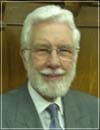
Stephen Hyde

Jesus Is The Remedy

2 Chronicles 36:14-16
Stephen Hyde January, 24 2016 Audio
0 Comments
Stephen Hyde
Stephen Hyde January, 24 2016
'Moreover all the chief of the priests, and the people, transgressed very much after all the abominations of the heathen; and polluted the house of the LORD which he had hallowed in Jerusalem. And the LORD God of their fathers sent to them by his messengers, rising up betimes, and sending; because he had compassion on his people, and on his dwelling place: But they mocked the messengers of God, and despised his words, and misused his prophets, until the wrath of the LORD arose against his people, till there was no remedy.' 2 Chronicles 36:14-16

Sermon Transcript

Auto-generated transcript • May contain errors

100%
My pleased gods to bless us together
this morning as we meditate in his word Let us turn to the chapter
we read that's the second book of the Chronicles chapter 36
and we'll read verses 14 15 and 16 The second of Chronicles chapter
36 verses 14 15 and 16 Moreover, all the chief of the
priests and the people transgressed very much after all the abominations
of the heathen and polluted the house of the Lord, which he had
hallowed in Jerusalem. And the Lord God and their father
sent to them by his messengers, rising up betimes and sending
because he had compassion on his people and on his dwelling
place. But they mocked the messengers
of God and despised his words and misused his prophets until
the wrath of the Lord arose against his people till there was no
remedy. We know that the Word of God
gives us a very accurate account of the historical position of
Judah and also with regards to Israel. Judah, of course, being
part of Israel, but having now settled in Jerusalem, originally
under Rehoboam, after King Solomon had died and the other tribes
went to Jeroboam. And it's very clear as we read
through the kings and chronicles of the history of Israel and
the history of Judah, they run in parallel. There's two accounts
given and there's two series of kings, one following Rehoboam
and one following Jeroboam. And we find that the kings of
Jeroboam, the kings of Israel rather following Jeroboam, were
really all evil kings and did not follow any good way of the
Lord. But generally, and not always,
but generally in Judah the kings had followed the Lord. But there
were very evil kings which had also been in Judah and were reigning
in Jerusalem. And the prophets had come, particularly
Jeremiah and Isaiah, and they'd spoken and they'd spoken and
preached to the people and they'd warned them of the situation
that they were traveling in. That was not a good way. They
weren't following the Word of God. They weren't following the
ways that Moses had set before them. So very clearly, and we
can read of course those parts in Deuteronomy, very clearly
how Israel should act and what they should think and say and
do. And gradually they departed from those ways. And therefore,
what they had been prophesied was that if they did not turn
around, if they did not serve the Lord, if they kept following
their own way and not following God's way, then the Lord would
send that situation which would bring them down into a place
of captivity and they would spend 70 years captives away from Jerusalem. Well, that came to pass. And
we have really that account in this chapter we read of the final
days of Jerusalem. And we read together in these
three verses the sad picture that we have of the priests and
the people who were in Jerusalem. And the Word of God is sad to
read, isn't it really? Especially when you think of
the wonderful blessings that Israel, and perhaps particularly
Judah, had enjoyed over so many years since they came out of
Egypt. Remember, they traveled across
in the wilderness for those 40 years, And they came into Canaan
and God fulfilled his promises, the promises that he'd given
to Abraham, Isaac, and Jacob so many years ago. God had been
so faithful, he brought wonderful deliverances, and now the people
had turned their back upon God. And that's the solemn reality.
They turned their back upon God. And if we look at it and we think,
well, why ever did they turn their back upon God, who'd been
so gracious to them? The truth is they listened to
the evil one, they listened to the devil. And that the devil
had pretended to them that it would be a happy scene. They'd
be much happier if they followed their own agenda and didn't follow
that which God had ordained. Exactly the same as in the Garden
of Eden when the devil came in the form of a serpent and tempted
Adam and Eve and pretended to them that what God had said was
not important. Therefore they fell and they
sinned and as we know that sad day in the history of the world
Sin then came into the world and it is still there today in
all its evil nature And so we realize the solemnity of sin. Well here were these people then
after many years and we're told moreover all the chief of the
priests and the people transgressed very much after all the abominations
of the heathen. They wanted to follow, we might
put it in common language today, they wanted to follow the things
of the world. They didn't want to follow the things of God.
They thought the things of God would just put them in a straitjacket. They didn't want to be involved
like that. They wanted freedom to do just what they wanted to.
And therefore what were they doing? They were following the
abominations of the heathen. and they polluted the house of
the Lord which he had hallowed in Jerusalem. Now, Judah then went down into Babylon
for captivity for 70 years. But the Lord was very gracious
to them and fulfilled his promise and did bring them back from
that place of Babylon after 70 years. And when they came back,
Ezra and Nehemiah were two of God's servants who were raised
up to be with them and to instruct them and to encourage them in
the building of the walls and building the temple and also
to reintroduce the true worship of God. But we read at Nehemiah's
testimony of what Israel had been like in those days and he
said and They testified against them,
that Thou mightest bring them again unto the law. Yet they
doubt proudly and hearken not unto Thy commandments, but sinned
against Thy judgments. Whichever man do, he shall live
in them and withdrew the shoulder and hardened their neck and would
not hear." And so we see the picture sad picture that Nehemiah
is speaking to Judah. He's really warning them of what
had occurred. He says, Yet many years didst
thou forbear them, and testified against them by thy spirit in
the prophets. Yet would they not give ear,
therefore gavest thou them into the hand of the people of the
lands. Nevertheless, thy great mercy's
sake, that it's not utterly consume them, nor forsake them, for thou
art a gracious and merciful God." Now, you see, Nehemiah was praying
to God and he was reiterating the wonderful favour and mercy
of God toward his people. And just reading on then in these
verses, And they polluted the house of the LORD, which he had
hallowed in Jerusalem. And the LORD God of their fathers
sent to them by his messengers, rising up betimes and sending,
because he had compassion on his people and on his dwelling
place." Again, here we have the truth of God's mercy. He sent
his messengers Jeremiah, Isaiah and others, to preach the gospel
to them. And they continued, carefully
telling them of that which would befall them. God had compassion
on them, but what did they do? What was their reaction? Do you
think they listened? Do you think they obeyed? No,
they mocked the messengers of God and despised his words. and misused his profits, until
the wrath of the Lord arose against his people, till there was no
remedy." The Word of God gives us a very
good picture of the spiritual life of his people. Sometimes we may think, well
why ever was such an historical account all these details recorded. What was the purpose of recording
these historical facts? Well, first of all, it was to
show God's greatness and his goodness and his mercy toward
his ancient people, and how he bore with their wrong behaviour,
their sinful behaviour, and how his mercy was great towards them.
But it directs us really to a spiritual scene. the spiritual life of
the Church of God. And as we realise that we have
two natures, our old nature, the nature we were born with,
our natural life, and that we also have a spiritual nature. And the blessing is if God has
shown us what our true spiritual nature is. And we will then understand
that What we read in the Word of God, which spells out the
life of his ancient people in a spiritual sense, it spells
out the life of his people today. You may ask a question, well
what does that mean? What it means is this. We today
are naturally rebellious against God. We don't want to obey God. We want to just do that which
pleases ourselves. We don't listen to God's messengers,
however persuasive they may be, and we ignore the Word of God
and the truth of God, and we continue left to ourselves in
our own way. And that is the lot of most people
today. They do not want to turn and
to serve the Lord God. They want to continue enjoying
their life. And people today, perhaps, if
they can fit God in somewhere, well, that's OK. And they think,
well, I can carry on living as I want to. But I just fit God
in now and again just to show that I think I should obey God
and therefore people do that. Well, that's not really the true
life of a believer. That's not really the true life
of a true Christian. There are many pseudo-Christians
today in the world. Many people who just think they
can do what they want to do, they can please themselves, And
on the other hand, please God. Well, the New Testament tells
us that we cannot serve God and mammon and men and ourselves. We cannot serve two masters. And by nature, we try and do
that. We try and serve ourselves and
we try and serve God. But God is a jealous God. And God won't have divided loyalties. He won't have us pleasing ourselves
and serving ourselves in the world and then on the side trying
to serve God. God does demand that we serve
the Lord. Serve the Lord God with all our
heart, not just a bit of it. Now then, we come to realise
how difficult that is. And we come to realise how really
impossible it is, because of our sinful nature, which we have
inherited from our forefather Adam, because he fell into sin
in that Garden of Eden so many years ago. And so, what are we
to do? Well, we come to this situation,
I believe, like was spoken of to these people here. And we
read, but they mocked the messengers of God and despised his words
and misused his prophets until the wrath of the Lord arose against
his people till there was no remedy. There was no remedy. That means there was no cure. That means there was no healing. That means there was no medicine
that was suitable for them to heal them from the terrible condition,
the terrible situation that they had brought themselves into.
There was no remedy. They turned their back upon God.
They'd ignored the many warnings that had been given to them.
They'd mocked the words of Jeremiah. They'd mocked the words of the
prophets. And they would not listen to those truths. And therefore
the Lord said, he arose against his people till there was no
remedy. Well, that's a very desperate
scene, isn't it? Very desperate scene. To think
there was no possibility of any cure. Now, that really is the
position that we come into. when God's Spirit shows to us
our true position before a holy, righteous God. We must realise
that God is holy and God cannot look upon sin. So therefore,
these words are true with regard to our true natural condition,
that there is no remedy. So, what's the position? What's going to happen? Well,
the glorious truth is, today, there is a remedy. And what is
that remedy? That remedy is the Lord Jesus
Christ. We live in a gospel age, a gospel
day, and what a blessing it is to realize, as we look into ourselves,
we see, well, there's no possibility of me being healed. There's no
remedy. There's no cure for the sin. There's no cure for the illness
which I find myself in. I can't free myself from it. I'm ill. I'm sick. In actual fact, I'm dying. And
so Judah were carried away captive into Babylon. But God was merciful. And my friends, today what a
blessing it is if God is merciful to you and to me. And that mercy
is revealed in the Lord Jesus Christ. And it's revealed in
his great work of salvation. What a wonderful work it is,
because we have no remedy ourselves. We have no way of curing ourselves. But we do have a remedy in the
Lord Jesus Christ. And the Lord Jesus Christ is
that one who can and does heal. Yes, He heals us from all our
sins. He heals us from all our iniquities. And in the days of the Apostles,
those wonderful days which were recorded in the Acts of the Apostles,
we have the account of Peter. And it came to pass, as Peter
passed through all quarters, he came down also to the saints
which dwelt at Lydda. And there he found a certain
man named Aeneas. which had kept his bed eight
years and was sick of the palsy. That means he was very ill. He
couldn't really heal himself. He couldn't cure himself. Naturally,
what was the position? There was no remedy, was there?
He'd been like it all those years. There was no remedy. And what
was to happen? Well, Peter came. And Peter said
unto him, Jesus Christ maketh thee whole. Arise and make thy
bed. And he arose immediately. It wasn't Peter that made him
whole. It was the Lord Jesus Christ. And what a blessing it is today
that we have a glorious risen Saviour who is able to heal us
and to make us whole, to cleanse us from all our sins. There was no remedy, there was
no medicine that would do these people any good. But today there
is a wonderful medicine to heal those who realise their condition
They are sin sick. They are under the curse of sin
and they need some suitable medicine to cure them. Well, what a wonderful thing
it is. There is medicine which is suitable and it's found in
the Lord Jesus Christ. Lord Jesus Christ came into this
world to save sinners. His great purpose was to come
and to deliver his people, to save his people, to come to them
and to be their wonderful and glorious remedy. These people
had come to that condition where they were helpless. God's people
come to the condition where they're helpless in and of themselves
and that's not an easy lesson to learn. We keep naturally trying
to improve ourselves. We keep thinking, well if I do
this and if I do that and if I stop doing this and stop doing
that, I'll be alright and I'll be a good Christian. The trouble
is, what we find is, As the Bible tells us, and it takes us perhaps
a long time to find it out, sin is mixed with all we do. And that means, as Paul tells us,
in me, that is in my flesh, that's our nature which we were born
in, our flesh dwelleth no good thing. And when the Spirit of God teaches
us that, we then realise that there's no natural remedy that
can cure us. We're not able to come and to
save our souls ourselves. It doesn't matter what we do,
we find there's something which is not perfect. Sometimes you
might think, well I've done that and that's very good, and pack
yourself on the back, and of course that in itself is a sinful
condition because God will have all the honour and glory, and
you and I will not be allowed to claim any glory ourselves. And therefore we find that the
Spirit of God teaches us the truth of such words as this,
that there is no remedy naturally. And that's why the Spirit of
God directs us to look out of ourselves. It's when nothing
We come to say, with nothing in my hand I bring. We can't
bring any good works. Nothing in my hand I bring. Simply
to thy cross I cling. The line of a hymn is so appropriate. I came to Jesus as I was, weary
and worn and sad. Sad because we weren't making
any progress. the progress we hoped. We weren't
able to turn over a new leaf as we thought we could, and everything
would be nice and clean and tidy. We found that we still had an
old nature. We found that we still had sin
dwelling within. We found we weren't able to free
ourselves from it. And therefore, it brought us
to that condition. where we found no good in ourselves,
and our case was desperate. And then it was that we realised
that we had to look out of ourselves, and where to look to? The Lord
Jesus Christ. And we're thankful for the words,
the Saviour said, I came to seek and to save that which was lost.
And we didn't realise we were really lost until we came to
that understanding that there was no remedy in ourselves, no
ability to cure ourselves, no ability to make ourselves free
from sin and therefore to come to that place and to look to
the Lord Jesus Christ, to realise that there is our hope. There's our hope. Our hope is
built on nothing less than Jesus' blood and righteousness. We might
think, well, what does that really mean? Well, it means this. It means that the Lord Jesus
Christ came into this world to take away our sin. to bear the
punishment that was due to us. Because if we had borne punishment,
we would never have atoned for our sins, because we are still
sinners. But the Lord Jesus Christ came
and he lived that perfect life. And my friends, don't think it
was an easy life. The life of the Saviour was a
difficult life. Yes, he went about doing good. He never went about pleasing
himself. He always desired to do the will of his Father. And
the will of his Father was that he would live that self-effacing
life, so that he might satisfy the great demands of his Holy
Father in Heaven, satisfy the demands of his Holy Law That
law which you and I are utterly unable to keep. Thankful to know
we have a great Saviour who gloriously kept that law, the law of God. The law set down, the Ten Commandments,
the holy righteous law, the law of Jesus Christ. He never sinned.
We know what temptation he had. He never sinned. He lived a perfect
sin effacing life. Why? So that He might save you
and me from all our sins. Now as we view the Saviour, remember
none less than God Himself, the only begotten Son of the Father,
that One who came into this world, to live that sinless life and
to die that death, that death which was a death which was able
to atone for all sin. We call it a sin-atoning death. And so it was. It was a wonderful
death, but it was a very solemn death and it was a very sacred
death And we have some little view of the enormity of the anger
of God as it came upon the Saviour, as He hung upon that cross, when
He had to endure the hiding of His Father's face for those three
hours. And what did He say? My God,
my God, why hast thou forsaken me? He endured the forsaking
by his father for those three hours upon that cross in that
immense agony. It's hard for us to really comprehend,
isn't it? I suppose I should say it's impossible
for us to comprehend that the Lord God, as the Lord Jesus Christ,
who had never been apart from his father and had enjoyed fellowship
with his father, Now upon that cross, he had to endure the hiding
of his father's face for those three hours, in order to satisfy
the demands of the holy law of God, so that our souls might
be redeemed. He bore the punishment instead. How very precious How very wonderful
and very glorious to think that we have such a Saviour today,
the Lord Jesus Christ. And to realise that the account
of his death was so wonderfully recorded, so that as we read
the Bible, and as the Spirit of God may apply the words to
our heart, that we may see there the glorious remedy for our sin. to realise that the Blessed Saviour,
he came and died so that we might live. And as perhaps we trace
his life in the limited amount that it's recorded in the Word
of God, there's not very much recorded as we think he lived
for 33 years, but we see how he went about after he was revealed
as a son of God. Remember when he was baptised
in the River Jordan by John the Baptist and the Spirit of God
came upon him as a dove and the voice of heaven said, this is
my beloved son in whom I am well pleased. The evidence from Almighty
God that here was the Saviour, his son, to come into this world
to save his people from their sins. And then, for those three
years, we're able to read of some of the things which had
occurred, some of the glorious things that were done, some of
the wonderful words that were spoken. And we can read some
of those words, especially perhaps in the beginning of Matthew,
Matthew chapter 5, 6 and 7, which we remember as, we recall as,
the Sermon on the Mount And Jesus there in those three chapters,
he spoke such wonderful words of truth and wisdom, which should
be a wonderful encouragement for us today as we see how the
Lord directs us to live our lives. And as we see that direction,
how we realize how we fail and how we're thankful then that
the Savior went on and he lived that perfect life. Remember how
he then came into that on that last day that last Passover He'd
kept the Passover and let us not forget the Passover Represented
the glorious sufferings of the Savior and the redemption of
his people through the shed blood Yes on that night never to be
forgotten Israel were told not to forget their night. It was
a night to be remembered and when Christ was revealed through,
in that wonderful picture of the lamb slain, the blood shed,
put upon the doorpost and the lintels, only safety to that
household as they were under the blood. And then as we run
right forward to that occasion when Christ instituted the Lord's
Supper, which superseded the Passover, that which Israel had
kept, more or less, for all those years. And now the Lord Jesus
Christ, he instituted the Lord's Supper. This also was a night
to be remembered. And what did he do? He took that
symbol of bread, representing his broken body. He took the
wine, representing his shed blood. and spoke to his disciples and
to all the Church of God that they should carry out that simple
ordinance in remembrance of him and of course in particular in
remembrance of his death. And so we're thankful that the
Lord Jesus Christ instituted that great and glorious supper
on that Passover night, that night in which he was betrayed. betrayed by Judas, one of the
twelve. He had acted as though he was
a true disciple. He was a great deceiver. And
you see, he came and he was that one who brought the people to
know who was the Saviour. He was the great traitor. People
came, all those officers, and they took Jesus captive. And
then what he endured, all the taunts, all the mocking. You know, here we read, haven't
we tonight, these people, they mocked the prophets. And people today, they mock the
people who preach the truth. They don't want the true gospel. They want entertainment. They
want things that please the flesh. They want a religion of works,
not a religion of grace, not a religion of faith. And yet
the Saviour, you see, he came and he suffered then. All the
mockings, the cruel mockings, the scourgings, those who spat
upon him, the crown of thorns placed upon his head. My friends,
what a mockery it was. And yet the Saviour endured it
all. He endured it all because it was his father's will for
him. And remember, he'd gone to Gethsemane. He knew what he
was going to face. And he said, if it be possible,
let this cut pass from me. Nevertheless, not my will, but
thine be done. There was the glorious remedy
that was to be revealed. And so, my friends, it was revealed.
It was revealed when the Lord Jesus Christ died upon that cross,
crucified He was, and He completed the work that His Father had
given Him to do. Remember those words. It is finished. And we might think, well, what
was finished? The great plan of salvation was
finished. What was the evidence that it
was finished? The evidence was given when that
vial, which was in the temple, which separated the holy place
from the most holy place, was rent entwined from the top to
the bottom. Again, just go back, remember
that the high priest, once a year, on the Day of Atonement, went
into the holy place, not without blood, to atone for the sins
of the children of Israel. But now, there was no need for
an annual occasion of the Day of Atonement, because the Lord
Jesus Christ had not physically entered in to the holy place
of the temple, but he'd entered in to the holy place in glory,
in heaven itself, because he'd given his life as that one perfect
sacrifice And he shed his precious blood to gain entrance into the
holy place in glory. No need ever again for any more
sacrifices. The Lord Jesus Christ had finished
the great plan of salvation. My friends, there was the remedy. My friends, there is the remedy. The remedy today for all our
sins. It's found in the finished work
of the Lord Jesus Christ. What a glorious work it was.
And we know that he then rose from the dead, a conqueror over
sin, death, hell, and the grave. It was a complete victory. There's the remedy. There's our
hope today of salvation. So if we come today recognizing
our true condition before a holy God, realizing that we are a
vile, wicked sinner, no hope in ourselves, and yet to look
out of ourselves to the Lord Jesus Christ and to plead his
finished work that work which atoned for all sin. And therefore
we can rejoice today in that great truth that Jesus came to
seek and to save that which was lost and he saved our souls.
He delivered us from the wrath to come by his great work of
salvation. The enormous cost it was required
his death in that agonizing way. to satisfy the law of a holy,
righteous God. So, my friends, this morning,
are we indeed looking unto the Saviour, the Lord Jesus Christ,
for our salvation? Those words in Isaiah are so
wonderful, are they not? When the prophet says, he said
it to Israel in those days. My friends, it's spoken to us
today, in this Gospel day. And the words are this, look
unto me. And be ye saved, all the ends
of the earth, for I am God and there is none else." My friends,
what a blessing it is to look to the Lord Jesus Christ as our
only Saviour. We have an illustration of that
in Israel's journey in the wilderness when there was an occasion when
they rebelled against God, you remember? And many of them were
bitten by serpents. Poisonous serpents came and bit
them and thousands died. And Moses was told to make a
brazen serpent and to put it on a rod and to lift it up and
to tell the people to look. And all those who turned and
looked, they lived. My friends, it's a picture we
have today. The Lord Jesus Christ lifted
up placed upon that cross at Calvary. And I, if I be lifted
up from the earth, will draw all men unto me. And it's you
and I today, my friends, look to the Saviour. There is life,
no life in ourself, but there is life, eternal life, in the
Lord Jesus Christ. My friends, today, as we consider
these words and realise the truth of them. But they mocked the
messengers of God, and despised his words, and misused his prophets,
until the wrath of the Lord arose against his people, till there
was no remedy. And we've come there, and then
now, to look to the Lord Jesus Christ and find there is a remedy. And to be able to say, yes, my
hope today is built on nothing less than Jesus' blood and righteousness,
and therefore to find salvation in the Saviour as that Lamb of
God that taketh away the sin of the world, and to go on our
way rejoicing in that great and glorious work of the Lord Jesus
Christ and to know today he sits in glory to intercede for us,
to hear our prayers. We shall not come unto him in
vain. If we come unto him pleading
his blood, pleading his merits, pleading his mercy, remember
the Lord Jesus Christ has said, come unto me all ye that labour
and are heavy laden and I will give you rest. Take my yoke upon
me. you, and learn of me, for I am
meek and lowly in heart, and ye shall find rest unto your
soul. Amen.
Broadcaster:

Comments

0 / 2000 characters
Comments are moderated before appearing.

Be the first to comment!

62
Joshua

Joshua

Shall we play a game? Ask me about articles, sermons, or theology from our library. I can also help you navigate the site.