Bootstrap
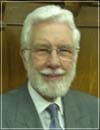
Stephen Hyde

The Stray Sheep Returning to the Shepherd

1 Peter 2:25
Stephen Hyde June, 1 2014 Audio
0 Comments
'For ye were as sheep going astray; but are now returned unto the Shepherd and Bishop of your souls.' 1 Peter 2:25

Sermon Transcript

Auto-generated transcript • May contain errors

100%
May it please God to bless us
this morning as we consider his word. Let us turn to the first
epistle of Peter, chapter 2 and read verse 25. The last verse
in the second chapter of the first epistle of Peter. For ye were as sheep going astray,
but are now returned unto the shepherd and bishop of your souls. We do read a lot in the Word
of God about sheep and lambs. It is a picture that the Holy
Spirit uses very often and it is a very good picture because
we are, I'm sure, familiar up to a certain extent, at least,
what sheep are like. We see sheep in the fields and
we can observe something of their actions and what they do. And the apostle here speaks to
us in this way. He doesn't single out an individual
and say, now this relates to you. because he speaks here for
ye were. He's speaking really to the whole
Church of God and we may be tempted to think sometimes that in our
individual lives we set a very good example and we walk in a
right way and we are perhaps very reluctant to confess and
admit that we haven't been perhaps or that we should be. And there
have been times in our lives, and there may be a time even
now in our life, when in fact we are not walking as a true
child of God should be. And we find therefore that such
a description may be applicable to us. Now it's never comfortable
for us to realise that we are perhaps not what we should be. Perhaps we've wandered away,
that's why we have a statement like this, for ye were, as sheep,
going astray. Well, it would be a great blessing
for us in our lives if we can look back and observe an occasion,
perhaps there have been several occasions, perhaps many occasions
in our lives when we, as it were, gone astray. And what does that
mean? It really means that we wandered
away from God. We wandered away, but we haven't
stayed close. No, we wandered away. I expect we're familiar with that
occasion in the Word of God of Ruth. Ruth is a very special
and wonderful character. She was a Moabite and she came
very wonderfully. into contact with God's people
through Naomi. It was a very wonderful situation. And then, as we know, her husband
died, and Naomi's husband died, and her sister's husband died,
and Naomi decided to return to her own country, to return to
Bethlehem. She, of course, with her husband,
should never have left there in the first place, but nevertheless,
they did return. And then, Ruth came back and
she was there. And she went and gleaned in the
field, that means she went and picked up the ears of corn which
had fallen down. And Boaz, who she got to know,
gave her instructions. And that instruction was very
special really to her. And it was this. She was told
to cleave and stick close by the other maidens. She wasn't to wander off. She
was to stick close by. That's really like sheep. They
are to be kept together. They are to be kept together
as a flock. They are not to go astray. They are not to wander off. They
are to be kept together. Well we know of course in the
case of Ruth, She was wonderfully blessed in that situation. She was able to glean and to
remain with those maidens and servants of Boaz. And eventually,
of course, she was wonderfully blessed and was married to Boaz. And we can think of that in a
spiritual sense, as the children of God may glean in the gospel
field and are indeed married to that wonderful bridegroom,
the Lord Jesus Christ. Well, how glorious it is to think
of such a situation like this. Now, says the Apostle Peter 4,
we were as sheep going astray. You may say, well, what is there
to make me to go astray? As it were, to turn away from
God's flock. Well, there are many things. or which will make us turn away. And the Apostle, he just gives
us some little indication in this chapter that we read together,
when he says, which we were in time past were not a people,
but are now the people of God, which had not obtained mercy,
but now have obtained mercy. And he says, dearly beloved,
I beseech you, strangers and pilgrims, abstain from fleshly
lusts which war against the soul." That's one very clear position
that we may find ourselves in. And fleshly lusts, which the
Apostle says, which war against the soul. Well, I don't intend
to go through a list of fleshly lusts this morning. But I'm sure
in our own mind we can realise, if there are those things which
really are of the world, and are not spiritual, and do not
direct us to Christ, but direct us away from Christ, so instead
of being occupied with the things of Christ, we are occupied with
the things of time. It's not those things of time
which we have to do lawfully in our daily calling, our work,
and our schools, and college, and all things like that. We
have to do those things. But perhaps we might put it this
way. When we might, I don't like the
word, but it is a word we use, leisure. When we have some leisure,
leisure time, do we spend that wisely? Or do we spend it, as
the word here tells us, on fleshly lusts? And the description is
very pertinent, which war against the soul. That means a battle. And there is a battle, you see,
in our spiritual life. There is a conflict. There is
a battle between the things which are good and right, and the things
which are of the flesh which lust against the soul. Now, if
we are then going astray, and we should not think that we are
aloof from such a condition. We should not think that we will
never go astray. The devil is on the watch at
all times to try and gain access to our heart and to turn us away
from the things of God. And without any doubt, he is
successful. And that's why we are to take
a word like this and recognize the importance of it before we
were as sheep going astray. Now the Apostle tells us though,
having your conversation honest, amongst the Gentiles, that whereas
they speak against you as evildoers, they may by your good works,
which they shall behold, glorify God in a day of visitation."
Again, he puts his finger really on the pulse of true Christianity,
which is to glorify God and not to please ourselves. And so he
goes on and tells us, submit yourselves to every ordinance
of man for the Lord's sake. It's good, you know, if we understand
that, isn't it? It's not for this person's sake or for that
person's sake. It's for the Lord's sake. And
that really comes back, doesn't it, to what do we think of the
Lord? Or put it another way, What do
we think of the Good Shepherd? What do we think of the Bishop
of our souls? What do we think of the Lord
Jesus Christ? Yes, to, as the Apostle says
here, to submit ourselves to every ordinance of man for the
Lord's sake. That's a real touchstone, isn't
it? And wonderful it is if the Lord
gives us that soft and feeling heart to really desire, to do
that which is for the honour and glory of God, to turn away
from fleshly lusts and to submit ourselves to the things which
are of God, which are for His honour and glory. He goes on
to say, whether it be to the king and supreme or unto governors,
as unto them that are sent by Him for the punishment of evildoers
and for the praise of them that do well, for so is the will of
God. that with well-doing you may put to silence the ignorance
of foolish men." It's a very blessed standard, isn't it? It's
a very wonderful example, that we may put to silence the ignorance
of foolish men. As free and not using your liberty
for a cloak of maliciousness, but as the servants of God. Love
the brotherhood, love the brethren, love the sisters, It's a wonderful
example of true Christian, to love the brotherhood and to fear
God and to honour the King, to be subject to our masters with
all fear, only to the good, but gentle, and but also to the froward,
those who oppose, those who go in opposite direction, we are
to do good. The Word of God is very wonderful. It instructs us to do good unto
all men, That's a very big statement, isn't it? To all men, and especially
unto the household of faith. Now, if we really ignore such
words as this in the Word of God, and it's very easy to, because
our nature goes after the poor old things of this world, then
what happens is, we find we're a sheep going astray. Now, you imagine, naturally sheep,
they go astray. They wander off from the flock,
they go away from the fold, and what is the effect? Well, sheep
aren't very good at finding their way back. Sheep are very good
at following sheep. They're not very good at following
their way back. They very quickly get disintegrated. They very easily become lost,
and they wander on. They wander away. It's very easy
to see sheep just in this condition. And then they wander off and
then perhaps when the shepherd comes they're not there. They
don't appreciate where the shepherd is taking them and where the
shepherd is leading them because they're not there. They've gone
astray. They've gone astray. So it's very easy for us to also
find that we can go astray. We are led astray by our own
evil heart. Our heart is always facing that
conflict between that which is good and Christ-like and that
which is wrong and bad and evil. And our nature, remember, We
all possess a nature which we are born with, and that's not
a good nature. That's a sinful nature that always goes after
wrong things. It always walks contrary to the
things of God. It always seeks after things
which do not profit. That's our old nature. But bless
God if we do possess a new nature. a new heart, that God's given
us that. We received it, which then seeks
after good, spiritual blessings, which then desires to be under
the guidance and direction of the Good Shepherd, that Great
Shepherd of our souls. What a wonderful thing it is
then, if we know that the Lord has looked upon us and been gracious
to us, It's not dealt with us as our sins deserve. We have
that chapter, do we not, in John's Gospel, 10th chapter, which speaks
very much about the Good Shepherd. And he speaks to us about this. He tells us, I am the Good Shepherd. Now one of the great marks of
this Good Shepherd is this. He knows his sheep. He knows
his sheep. And the only good thing is this,
and are known of mine. That means the sheep know the
good shepherd. They know the shepherd. And again
we only have to think of that in a natural illustration if
you watch sheep and watch the shepherd. The shepherd knows
the sheep and the sheep know the shepherd. And the sheep are
very willing usually to follow the shepherd. If he walks there
or walks there, they follow the shepherd. And so it's a good
example and it's a good illustration for us. And so the Apostle John
goes on to say, As the Father knoweth me, even so know I the
Father, and I lay down my life for the sheep. What a great and
glorious shepherd we have. A shepherd who does indeed lay
down his life for the sheep. As he said in an earlier verse,
I am the good shepherd, the good shepherd giveth his life for
the sheep. What a gift that is, to think
this shepherd, the Lord Jesus Christ, he gives and he gave
his life that you and I might have life. For we were a sheep going astray,
We'd wandered off from this good shepherd. We were perhaps far
away. And then to know such words as
this. And now returned unto the shepherd
and bishop of your souls. What makes us return? Again, coming back to the illustration
of a natural sheep and shepherd, sometimes sheep have wandered
off and they are not aware of the shepherd coming but it may
be the shepherd sometimes whistles. Shepherds often have a great
gift in whistling and sometimes they have a very piercing and
they always have a very special whistle and when the shepherd
makes that sound. It travels a long way. And those sheep which have gone
astray, they hear the sound of the shepherd. What does it do? It attracts
their attention. They then perhaps, as it were,
realise They've wandered away. They've heard that sound. They're
attracted to it. And they begin to retrace their
steps. And what's the effect? They return. They return to their
natural shepherd. They go back. And once again,
reunited to the flock. They are reunited to their shepherd. Well, I'm sure it's a picture
that you and I can very easily understand. It's a very true
picture of the spiritual sheep who perhaps have wandered away. We might say, as it were, out
of sight of the good shepherd. They've
lost sight of him. And then perhaps they hear the
sound. They hear his voice as it were,
calling them. And it's a voice which they know. It's a voice
which they know. The Apostle, when he penned these
words, he tells us about the wonderful truth and he tells us in this chapter,
my sheep hear my voice and I know them and they follow
me. Yes, these sheep which have gone
astray They hear the voice of a good shepherd. The shepherd
knew where they were. The heavenly shepherd knows where
we are. The natural shepherd doesn't
always know. But the heavenly shepherd does know. And so we
have such a statement as this. My sheep hear my voice and I
know them and they follow me. And I give unto them eternal
life and they shall never perish. Neither shall any man pluck them
out of my hand. My Father which gave them me
is great in all, and no man is able to pluck them out of my
Father's hand." The truth is that if we are God's sheep, if
we've gone astray, what a blessing it is to know the Lord knows
we've gone astray. And in that appointed time, in
that set time, in His time, He will call us. Call us to Himself. And you see, the word of the
Lord has an effect. Naturally, the voice or the whistle
of a natural shepherd has an effect. And so it does in a spiritual
way. I believe it does this. It encourages
us to come and to return. We may have realised where we
were, where we wandered off. We weren't enjoying the situation. We weren't enjoying true blessings. We weren't enjoying true fellowship
with the Lord Jesus Christ. We'd gone astray. We wandered
away. But hold in to hear that voice calling
us back. And so we have this statement,
but are now returned unto the shepherd and bishop of your souls. Now, the blessed Lord gives us
a description of this great and glorious saviour, this great
and glorious shepherd of his sheep. It's good to know that
we have such a shepherd, a shepherd who does indeed call his sheep
And just for a moment, turning to the 6th verse in that 53rd
chapter of Isaiah, where we read these words, All we like sheep
have gone astray. All we like sheep have gone astray.
There's no exception. You might think, well, we are
rather unusual. No, all we like sheep have gone
astray. We have turned everyone to his
own way. And then what do we read? And
the Lord hath laid on him the iniquity of us all. Was it a
good thing going astray? Was it a right thing going astray?
Well no it wasn't, was it? Because we were wandering away
from God. What were we really doing? Without
any doubt we were doing that which pleased our flesh. We went
that way which was contrary to the gracious leading and direction
of our God. And we wandered on, as he said,
we turned to our own way. And then we read, and the Lord
hath laid on him the iniquity of us all. Those sins, all our
sins, the sins that we committed by going astray, Well, the Apostle
then comes back and tells us, For even hereunto were ye called. The Lord has called us to return
unto Himself, because Christ also suffered for us, leaving
us an example that ye should follow His steps. We have, as God's sheep, a great
and glorious example as we come and return to Him, but are now
returned unto the Shepherd and Bishop of your souls. We have
this example. Christ also suffered for us,
leaving us an example that you should follow His steps. And this great and glorious Saviour,
this is the Scripture, who did no sin. He didn't go astray. He followed the path that way
his Father gave him, had given him to walk in. He didn't go
astray. Many times of temptation weren't
there in the life of the Lord Jesus. to go astray many times,
but he went not astray. He did no sin, neither was guile
found in his mouth. You see, when we go astray, we
can often be guileful in the things we say. You may say, what
does that mean? Well, I believe it means something
like this. When we are guileful, We don't really tell the whole
truth. We tell the situation in such
a way that will, we hope, endeavour to convince people that what
we're saying is good and right. And yet we know, in our heart,
we're not telling the whole truth. And this is being guileful. And
my friends, by nature, we are like that. We are like that. And you see, if we're going astray,
we'll find we fall under a position like that. Because we don't really
want people to realise that we are going astray. We perhaps
pretend that we're keeping in very close to the flock, And
therefore, we've been guileful in our explanation. In the words
we've said, the Saviour, what a difference, the Saviour, there
was no guile found in His mouth. Isn't it wonderful to think we
have such a Saviour, who gives us to see a great example of
those things which are right and true. There was neither was
guile found in his mouth, who when he was reviled, he reviled
not again." This is the picture we have of the Lord Jesus. And
this is the picture that we are given as an example, who when
he was reviled, reviled not again. Now that's very difficult. In
our lives, when we are reviled, When people speak against us,
we are reviled, and it's very painful sometimes. And to have
a right spirit, to have a soft spirit, to have a Christ-like
spirit, is not something really which is in our nature. But remember
these words here, if we are going to be brought back to return
unto the shepherd and bishop of our souls, that one who is
watching over us and he's directing us to look at ourselves and to
view ourselves and to see that we weren't really quite as good
and quite as pure and quite as honest and quite as righteous
as we might at one time have assumed. What a blessing it is. when the Spirit of God comes
and speaks to our heart and we find there the things which are
hidden in it, which are not quite what they should be. And so we
have this wonderful example of the Saviour who revived that
again. When he suffered, he threatened
not. He endured all the suffering. But he suffered, didn't he? We
don't like suffering, do we? We don't like suffering. But
you see, sometimes the Holy Spirit brings us into a time of suffering
so that we understand in some small measure what the Saviour
endured, what He suffered. We don't like suffering, but
when the Spirit of God shows us that he's blessed us with
a little sight of what suffering is, for his sake, when he suffered he threatened
not, but committed himself to him that judges righteously.
That's the secret, isn't it? We can come And we can commit
ourselves unto our God. The Lord knows all about us.
The Lord knows intimately all about us. The Lord knows far
more about us than anyone else does. And He understands. People don't necessarily understand
at all They can be very far of the mark. The Lord understands. But committed himself to him
that judgeth righteously. And therefore you and I can come
and commit ourselves unto God who judgeth righteously. People
don't always judge righteously. They often judge unrighteously.
But we have a God who judgeth righteously. And a God who knows
the deep concerns of our heart. Committed himself to him that
judges righteously. And then the Apostle comes and
says, who? His own self. No one else. The blessed Saviour. Bear our sins in his own body. on the tree. Now we being dead
to sins, that of course is our new nature, our old nature is
still sinful. Our new nature, dead to sins,
should live unto righteousness by whose stripes ye were healed. Well, when the blessed spirit
of God draws us back so that we return to this great and glorious
shepherd, our shepherd. This shepherd and bishop of our
souls can be described also as one who is an overseer. He is. He oversees our life. He oversees every detail in our
life. It's a comfort to know that he
is in charge. He oversees your life, every
detail of it, as a sheep that's gone astray, and a sheep that
has been brought back and is returned unto the Shepherd and
Bishop of your souls. What a wonderful thing it is
to be brought back to the Saviour, to the Lord Jesus Christ, as
our Good Shepherd. He is our good shepherd. Not a bad shepherd. There may
be many bad shepherds about. Many bad shepherds come into
our life. But we have this one who is a good shepherd. A good shepherd. And the good
shepherd, you see, leads us into those green pastures. What did David say? David, that
sweet psalmist of Israel, No doubt those words which are pretty
familiar when he tells us the Lord is my shepherd. I shall not want. And that's
a true statement. The heavenly shepherd will indeed
provide all that we need. David knew it. David had gone
astray, hadn't he? David had wandered from his God.
But David had been restored. David had been brought back.
He tells us, he restoreth my soul. He leadeth me in the paths
of righteousness for his namesake. It's for his honour and glory
that we are returned to this great and glorious shepherd and
bishop of our souls. And he says this, he says he
shall not want He maketh me to lie down in green pastures. He leadeth me beside the still
waters. Don't pass over that word. He
maketh me. He makes us to lie down. We may have been agitated. We may have been rushing about
here and there. He says, the Lord told David, He maketh me. He makes us to come and to lie
down, to rest, to benefit, to receive the favour of God, to
lie down, not in a barren place, not in a dry place, in green
pastures, It's attractive, isn't it, green pastures? We see it
today, don't we? In the spring as we look around the fields.
Beautiful green, isn't it? Very attractive naturally to
us. Green pastures. To know that this heavenly shepherd
comes and makes us to lie down in green pastures and leads us
beside the still waters. And what is the effect of that?
Our soul is restored. Our soul is restored and it leads
us then in paths of righteousness for His namesake. It's so that
our little lives should bring honour and glory to our great
and glorious God. And so really, whatever the position,
if His heavenly shepherd has brought us back, we're returned
We can say, yes, it will be well. Because he tells us that, yea,
though I walk through the valley of the shadow of death. And that's not an easy path,
is it? But here was confidence in his God. I will fear no evil,
for thou art with me. By rod and thy staff they comfort
me. The rod and the staff of a shepherd
was used to count the sheep. They had to pass under the rod
to come into the fold. Yes, they passed under the rod.
They were counted into the fold. What a blessing, my friends,
when God counts us into the fold. Restoreth my soul, we're returned. unto the shepherd and bishop
of our souls. We're counted in. I will fear, and like Rod and those
staffs, they comfort me. They're a comfort to us. A comfort
to know that we're amongst the true sheep of God. Because our
heavenly shepherd, this good shepherd, don't forget, he's
a good shepherd. He deals with us in love to our souls. He's
a good shepherd. Yes. He doesn't leave us. He
hasn't forsaken us. He knows where we've gone. And so He comforts us. It's a
comforting truth to know that we are under the rod. And he
says, Thou preparest a table before me in the presence of
mine enemies. Thou anointest my head with oil,
my cup runneth over. Whatever opposition there is,
whatever difficulties there are, the Lord still prepares a table
for us. A table where we may feast and
eat of those heavenly provisions the Lord provides for us. He
anoints our head with oil and our cup runneth over. Just think of that. Those who've
wandered away. Those who have gone astray. The Lord brings them back. The
Lord blesses them. The Lord is with them. To this
situation, to this extent, The Lord doesn't just bless a little. My friends, the Lord pours forth
the blessing. So David was able to declare,
my cup runneth over. And you see, we each have a cup.
An individual cup. Sometimes there may be bitter
things to drink from that cup. But then you see when the Lord
comes, restores us, brings us back, we come into the fullness
as it were of the gospel, when we rejoice in what Christ has
done, what is the truth, my cup runneth over. And in conclusion,
surely, goodness and mercy shall follow me all the days of my
life and I will dwell in the house of the Lord forever." There
is perfect, eternal safety in Christ. To dwell in the house
of the Lord forever. And so he says, return unto the
shepherd and bishop of your souls that one who has endured for
you and me all that we deserve to suffer to redeem our souls
we could never do it because sin is mixed in all we do we
could never redeem our souls but think of these words by whose
stripes you were healed and of course the Referring again to
that 53rd chapter in Isaiah, where the Prophet speaks to us
and directs us, and he speaks and he says, but he was wounded
for our transgressions. He was bruised for our iniquities. The chastisement of our peace
was upon him and with his stripes. We are healed. The path, the spiritual path
of the true believer will be to lead us to Christ. To lead us, as it were, to Calvary. To view the suffering Son of
God. Enduring the wrath of God for
us. What he endured, that we should
have endured. But my friends, if we'd endured
it, it would never have satisfied the holy divine law of God because
of our sin. But this man, the Lord Jesus
Christ, yet it pleased the Lord to bruise
him He hath put him to grief, and thou shalt make his soul
an offering for sin. He shall see his seed. He shall
prolong his days, and the pleasure of the Lord shall prosper in
his hand. He shall see the travail of his soul, and shall be satisfied. By his knowledge shall my righteous
servant justify many, for he shall bear their iniquities. are now returned unto the Shepherd
and Bishop of your souls. Well, it's a wonderful thing
to be brought back. It's a wonderful thing to be
recovered. It's a wonderful thing to be restored. And what will
the result be? The result will be, I believe,
from our hearts, we shall praise and glorify this God for His
mercy, which endureth forever. For His great and wonderful love
that He watched over us, He bore with us. When we walked in an
opposite direction, when we walked contrary to our God, we went
astray. Yes, and yet the Lord remembered
us. He remembered us for good. With
that favour, He bore to His people And he visited our souls with
his salvation. And so this morning, as we read
these words, and understand what the Apostle said when he says,
As newborn babes desire the sincere milk of the word, that ye may
grow thereby, if so be ye have tasted that the Lord is gracious,
to whom coming is unto a living stone, disallowed indeed of men,
but chosen of God and precious, ye also, as lively stones are
built up a spiritual house." And as we are returned, you see,
we're built up a spiritual house and holy priesthood to offer
up spiritual sacrifices acceptable unto God by Jesus Christ. And then just finally he says,
but ye are a chosen generation, a royal priesthood, and holy
nation, a peculiar people, that ye should show forth the praises
of him who has called you out of darkness into his marvellous
light. Oh, may we bless God this morning
if we have seen something of that marvellous light. And that
marvellous light only comes through the Lord Jesus Christ. It comes through His sin-atoning
death. And it would be a wonderful blessing
for us this morning if we are able to recognise in our little
lives that a scripture like this, for ye were as sheep going astray,
but are now returned unto the Shepherd, the Good Shepherd and
Bishop of your souls, that we are indeed united to Christ. Blessed be God. Amen.
Broadcaster:

Comments

0 / 2000 characters
Comments are moderated before appearing.

Be the first to comment!

Joshua

Joshua

Shall we play a game? Ask me about articles, sermons, or theology from our library. I can also help you navigate the site.