Bootstrap
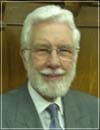
Stephen Hyde

None of these things move me

Acts 20:24
Stephen Hyde April, 9 2013 Audio
0 Comments
'But none of these things move me, neither count I my life dear unto myself, so that I might finish my course with joy, and the ministry, which I have received of the Lord Jesus, to testify the gospel of the grace of God.' Acts 20:24

Sermon Transcript

Auto-generated transcript • May contain errors

100%
May the Lord be pleased to bless
us together this evening as we consider his word. Let's turn
to the Acts of the Apostles chapter 20 and reading verse 24. The Acts of the Apostles chapter
20 and reading verse 24. But none of these things move
me, neither count I my life dear unto myself. so that I might
finish my course with joy and the ministry which I have received
of the Lord Jesus to testify the gospel of the grace of God. We have here the statement by
the Apostle Paul with regards to his feelings and considerations
and his view as he looked ahead of those things which were to
come and how often as we think of
the writings of the Apostle and the words that he spoke we realize
that he was really concerned about two things. He was concerned
about his spiritual life, his union with Christ and to that
which was to come when he finished his life upon this earth. He was not one who put these
things behind him and forgot about them. They were quite clearly
in the forefront of his mind and in his life. And so, as we
have this example, may we recognise the importance of it, and also
realise that the Apostle's life was not an easy life. It was
indeed a life which was faced continually with afflictions
and oppositions and difficulties, and yet we see There he was,
pressing forward. He tells us here, as he commences
this verse, but none of these things moved me. And he's referring to the intimations
that he had from the Holy Ghost that in every city there would
be bonds and afflictions which would abide with him. He didn't
anticipate the days getting better. He didn't think, well, tomorrow
will be an easier day. He had this confirmation from
the Holy Spirit that his life would not be an easy one. What did he say? None of these
things move me. He wasn't tempted therefore to
turned back. No, he wasn't among those having
put their hands to the plough and looking back. He didn't look
back, he didn't go back. He pressed toward the mark set
before him in the Gospel. And therefore we should bless
God today that we have an example like the Apostle Paul. And may his example be an encouragement
to us that we realise that the Lord did not forsake the Apostle. The Lord greatly blessed him.
He brought him safely through. But there was much opposition
and there were many difficulties. But he was able to say None of
these things move me. Well, the great aim of Satan
is to move us. Move us away from the things
of God. When things appear to be difficult,
perhaps they appear to be hot, we might try and avoid them and
turn away from them. The Apostle Paul didn't do that. No, he just said, none of these
things move me. If you recollect, in the apostles
life, how much opposition he had to face, and he did face many, many things, and yet here
was this great statement. None of these things move me.
Well, we know we have In our own nation, there were those
gracious, godly masters who gave their lives and they were not
moved for the most part. They were not moved for the most
part by those things which were determined for them. They were
like the Apostle Paul. Their confidence was in God. They were able to declare, if
God before us, who can be against us. And may we today, as it is
our turn now to walk upon this earth, not to think that our
life will be an easy one, but to realise that we have the same
God. The same God that the apostles
had. The same God that the masters
had. The same God that our forefathers had. The God who is the same
yesterday and today and forever. And that we may therefore recognise
that we have a God who does not change. And a God who is always
there to help, to strengthen, to sustain us against all the
times of opposition and temptation, which, no doubt, we shall have
to face. We, no doubt, have had to face.
The people of God do have to face opposition. And that very
much and very often continues. The Apostle tells us, he says,
when he wrote to the Corinthians, he says, first of all, he says,
we have this treasure the treasure of the knowledge of God in earthen
vessels." That's as he viewed himself, just an earthen vessel. We have this treasure in earthen
vessels, that the excellency of the power may be of God and
not of us, and that is very clearly to set forth that God will have
the honour and glory in our life, because we are nothing better
than just an earthen vessel. But then he says, We are troubled
just on occasion? No, he says, we are troubled
on every side. What was the result? But yet
not distressed. None of these things move me.
Troubled on every side, but not distressed. We should recognise
that. We may have trouble, maybe on
every side. We should not be distressed by
it, because we have a God who is able to deliver us. Remember, the excellence of the
power may be of God and not of us. We have trouble on every
side, yet not distressed. We are perplexed And that is
so sometimes, we are perplexed. What did he say? Not in despair. None of these things move me.
Even though we may be perplexed at the path the Lord has ordained
for us, the path we're walking in, we may not understand it. We're not promised to understand
it. We may be perplexed, but in that perplexed state, we're
not to despair, we're to realise the Lord is guiding us, the Lord
is directing us. We're walking in His path, not
the path perhaps that we anticipated, but it's the Lord's way. None
of these things move me, says the apostle. He goes on, he says,
he was persecuted. And the Church of God is persecuted.
Believe me, the Church of God is persecuted in one way or another. But, they're not forsaken. They're not forsaken. They are
persecuted. But in that persecution, the
Lord is with them. That's why the Apostle can say,
none of these things move me. Cast down. Sometimes we are cast
down, aren't we? Cast down. We may fear the end,
what things will develop. Cast down, but not destroyed. No, you see, Job was cast down. He wasn't destroyed. He was greatly
cast down, but he wasn't destroyed. And therefore the Apostle says,
he was cast down, but he wasn't destroyed. And that's why he's
able to declare such words as this, but none of these things
move me. He had proved the strength and
the support of the Lord with him. What a blessing it is when
you and I can recognise that. As he comes towards the end of
this fourth chapter, He says, for which cause we faint not. We may feel sometimes like fainting. Sometimes we may feel like giving
up. For which cause we faint not. But, though our outward man perish,
yet our inward man is renewed day by day. You see, our spiritual
life The Lord strengthens us. He renews us day by day. It's
His blessing. It's His help. And so He says,
for our light affliction. I like this expression. Light
affliction. Some people think a little affliction
is a heavy affliction. And they make a lot of it. and
they complain about it a lot. They make everybody hear what
they are having to endure. Well, the Apostle, he had many
afflictions and he spells it out like this, for our light
affliction, which is but for a moment, worketh for us a far
more exceeding and eternal weight of glory. The Apostle had an
understanding in the light of eternity. Afflictions are but for a moment. What a good thing it is when
we view things in the light of eternity. It gives the right
complexion upon the things of this life. Therefore the apostle
is able to explain it in this way, and he says, for our light
affliction which is but for a moment, and it works something, it works
for us, a far more exceeding and eternal weight of glory.
On the one hand, an affliction which is just something light,
something fading, something passing. On the other hand, an eternal
weight of glory, something which is really weighty, which is heavy. It's eternal. So he says, well,
we look not at the things which are seen, but at the things which
are not seen. You see, the apostles' eyes We're
looking beyond this life. He says, I'm not looking at the
things which I see with my natural eye, but at the things which
are not seen. He elucidates it for us, for
the things which are seen are temporal. The things that we
look at day by day, they're temporal, but the things which are not
seen are eternal. Oh, how important it is for us
to have a right view, in the light of eternity, these values. And so, but none of these things
moved me. The oppositions, the afflictions,
the bonds, which he was going to have to endure, yes. He was
expecting them really, and he was able to say they weren't
going to move him, because of the blessing and the favour that
God had granted to him. And he was able, therefore, to
walk in the light of the Lord's countenance. He carries on, really, in this
Corinthians in the fourth chapter. He gives us some more evidences
and he tells us, he says, giving no offence in anything, that
the ministry be not blamed, and how important that is in our
lives, to not give an offence in anything, that the ministry
be not blamed, but in all things approving ourselves as the ministers
of God in much patience, much patience. The Apostle needed
much patience, didn't he? You think how he preached, you
think when he was in Athens, day after day preaching the gospel. Surely they were going to turn
and listen. Many were being converted. It
was a great battle. He had much patience, the apostle,
in his ministry. In all things, approving ourselves
as the ministers of God in much patience, in afflictions, being approved in afflictions,
in necessities, in distresses, in stripes, in imprisonments,
in tumults, in labours, in watchings, in fastings. Oh, the Apostle
gives us a list to make sure that we don't misunderstand what
he's saying. by pureness, by knowledge, by
long-suffering, by kindness. Here's the result of the path
that the Apostle was called to walk. By pureness, by knowledge, by
long-suffering, by kindness. That's what we're called to walk
out. None of these things moved me,
you see. The Apostle didn't become rebellious, he didn't become
hard-hearted. He didn't say, well, I'm going to do this and
I'm going to do that. He did God's will. And he was walked
out in this way by kindness, by long-suffering,
by the Holy Ghost, by love, unfeigned, by the Word of Truth, by the
power of God, by the armour of righteousness on the right hand
and on the left, by honour and dishonour, by evil report and
good report, as deceivers and yet true." You see what he had
to face, what the Apostle had to face. And I suppose we tend
to think, well of course that only occurred to the Apostle.
But it's recorded here very clearly so that we should not be surprised
if in the Lord's a good purpose for us, we understand by our
spiritual walk that we enter into something what the Apostle
explains and therefore we shouldn't be surprised. And when we enter
into these situations, the Lord gives us that grace and strength
to be able to come and say, none of these things move me. The
Lord's ordained this path for me. This is the
path the Lord has ordained for me. I need this patience that
the Apostle had. I need this love that the Apostle
had. I need this kindness that the Apostle had. Yes, none of
these things moved me. They didn't move the Apostle,
you see, did they? As unknown yet well known, as
dying and behold we live, as chastened and not killed, as
sorrowful, yet always rejoicing, always rejoicing. He comes here,
you see, he says in this word, in this verse, he finishes his
course with joy, always rejoicing. Well we have cause to rejoice,
you know. The reason we have cause to rejoice is that we are
able to trace out In our lives, the Lord's dealing with us, because
He's dealing with us as sons and daughters of the Most High
God, and He's ordained for us that path which draws us nearer
to Him. Now, that is cause for rejoicing. And so the Apostle is able to
come and say, as sorrowful yet always rejoicing, as poor yet
making many rich. Yes, he wasn't a wealthy man,
Paul. And he was willing to give up everything for Christ. And
yet he's able to say, though poor yet making many rich, able
to preach the unsearchable riches of Christ, for the benefit of
poor sinners. Therefore, through his afflictions
and oppositions, he was able, by the grace of God, to make
many rich, as having nothing, and yet possessing
all things. And the truth is, if we possess
Christ, we possess all things. We cannot want anything more,
because to know Christ is so wonderful, and it's so comprehensive. And if we know Christ as our
Saviour, as our Redeemer, as that One who has died for us,
upon Calvary's cross, yes, yet possessing all things. Perhaps we understand the difference
then between time things and eternal realities. What a difference
there is and what a blessing it is. And he goes on to say,
O you Corinthians, our mouth is open unto you, our heart is
enlarged He wanted to explain to them these great and glorious
truths, and to let them know the blessing and the benefit
of these things. Yes, there was a wonderful favour,
and so the Apostle desired that the Corinthians might be moved
and might indeed know these things, and so he says, but None of these
things move me. Well, my friends, we think of
these things tonight. I wonder if we possess that grace,
if we possess that desire, if we may come into this pathway
where we understand what the Apostle says and we're able to
come and say, by the grace of God, I am what I am. This is not me. This is God's
grace in me, which is enabling me to stand. This is God's grace in me, which
is enabling me to say with the Apostle, none of these things
move me. That means the Apostle believed
that the life the Lord ordained for him was the right way. The life that God had brought
him into, the life that he was being called to walk out, was
not the wrong way, it was the right way. And no doubt, he would
have echoed those words, the way I walk cannot be wrong, if
Jesus be but there. And I believe, you see, that
is the essence of true religion, to know that the Lord is with
us. In these difficulties, in these
afflictions, in these trials, in these oppositions, to know
that God is with us. None of these things move me. Now he goes on to say, none of these things move me,
neither count I my life dear unto myself. Now that's a very
tremendous statement, isn't it? To think of that, he didn't count
his life dear. Well that comes very close, doesn't
it? If we look at our own selves,
how much do we value our own lives? What store do we put upon our
own lives? The Apostle said, he didn't count
his life dear. He didn't put a great value on
it. Neither count I my life dear unto myself. It was a life which
God greatly blessed. He was very useful to the Church
of God. But he says, neither can I my
life dare. So he said, none of these things
move me, neither can I my life dare. Unto myself. What a statement to be able to
consider that. He didn't think his life was
valuable to himself. Why? Because he was a pilgrim. He was a stranger on this earth.
This world was not his home. He was passing through it. He was travelling. to his eternal
home. That's why he was able to declare
when he wrote to the Corinthians, for me to live, isn't to enjoy
this and to enjoy that and the other. For me to live is Christ. And to die is gain. Because then he was going to
be with Christ forever. That was the Apostle's life.
That was the Apostle's testimony. Therefore he was able to come
like this and to say, neither can I my life dear unto me. No, he was looking beyond. Looking beyond. So that I might
finish my course with joy. He had a course to run. He had
a life to run, and you and I have a course to run. We have a life
to run, every one of us. There's a time for us on this
earth, and it has a limit, and it will
have an end. So the Apostle is clear about
that. And he says, so that I might finish my course. You and I will have to finish
our course. We have to finish our life. We
don't live forever. We sometimes act perhaps as though
we are going to live forever. We act sometimes as though our
bodies are immortal. The fact is, our soul is immortal. And now, therefore, we should
live our life like that, recognising that we might finish our course
with joy. Now, that comes again very close,
doesn't it? Because it means that every day
of our life, we should be concerned to be living our life as unto
the Lord, and not unto ourselves. Because we wouldn't want to come,
would we, to a time when we'd be serving ourself, pleasing
ourselves, rather than pleasing our God. And to find that was
the end of our course. That was going to be the time
when we were going to finish our course. We wouldn't want
that, would we? We wouldn't then be found in
that position of joy? Well, the Apostle says, so that
I might finish my course with joy. What may we think of these
things? Here was the Apostle's desire. You may say, well, of course,
that was the Apostle, and what I can't measure up to that. And
the tendency is to just therefore neglect it and turn away from
it and say, well that's the apostle, I must carry on with my life.
And I believe where there is that real desire for spiritual
life, by that I mean spiritual growth, by that I mean a growth
in grace and in the knowledge of our Lord and Saviour Jesus
Christ. but there will be that concern and that prayer that
our lives might be like the apostles, so that we might, in our little
life, bring honour and glory to our great and glorious God. As I do mention sometimes, the
purpose of the life of the Church of God is for the glory of God. And if you and I are one of God's
children, our life is for the glory of God. It's not for our
own exaltation. It's for the exaltation of our
God. So he says, so that I might finish
my course with joy. Oh, the Apostle was indeed concerned. And may we be concerned that
we might also be found walking in the same way that the Apostle
did. You know, when the Apostle wrote to his son in the faith,
Timothy, he was able to come and say this, good advice, But
watch thou in all things, endure afflictions." Timothy,
just remember that. Endure afflictions. Do the work
of an evangelist. Make full proof of thy ministry,
for I am now ready to be offered And the time of my departure
is at hand. I have fought a good fight. I
have finished my course. I have kept the faith. And it
would be a great blessing for us if you and I are able to come
down to the end of our life and be able to make a confession
like that. I have fought a good fight. Perhaps
we may say today, well I'm not fighting very well. Perhaps we
haven't taken unto us the whole armour of God. Perhaps we're
trying to battle on by ourselves. And if we are, we'll fail. We're
encouraged to take the whole armour of God. I've fought a
good fight. I've finished my course. I've kept the faith. And then
he says, henceforth There is laid up for me a crown
of righteousness, which the Lord, the righteous judge, shall give
me at that day, and not to me only, but unto all them also,
that love his appearing." It spells out the reality of
religion, doesn't it? It means, if we are indeed looking
for his appearing, when he wrote to Titus, he said, teaching us
that denying ungodliness and worldly lusts, we shall live
soberly, righteously and godly in this present world, looking
for that blessed hope and the glorious appearing of the great
God and our Saviour, Jesus Christ, who gave himself for us, that
he might redeem us from all iniquity and purify unto himself a peculiar
people, zealous of good works. These things speak and exhort
and rebuke with all authority. Let no man despise thee." Oh,
the testimony, the evidence of the spiritual man. Oh, my friends,
in this day and age in which we live, Well, we live in a very
dark day, don't we, by comparison. A very materialistic day, I suppose,
if we're honest. We have to confess we've moved
very much away from such statements as this, but this is the blessed
Word of God, and all that you and I might be on the stretch
to be a true follower of the Sagan, a true desire to walk
in this way and to realise that by the grace of God there is
laid up for us, and I believe as the Spirit of God works in
our heart, and we have the evidence of the life of God within us,
and if we're honest, and I mean this, and don't suffer from mock
humility. There are those who just prefer
to pretend they don't know, and they really despise the work
of God in their soul. The Apostle says, henceforth
there is laid up for me a crown of righteousness. He had the
evidence of the work of God in his soul and therefore he was
able to declare a truth like this. Henceforth there is laid
up for me a crown of righteousness, which the Lord, the righteous
judge, shall give me at that day, and not to me only, but
unto all them also that love his appearing." Well again, may
we be amongst those who are looking for that glorious appearing of
our Lord and Saviour, Jesus Christ. And so he says, that I might
finish my course with joy. Then it goes on, and the ministry
which I have received of the Lord Jesus, to testify the Gospel
of the grace of God. That was the great work that
God had given him, was to preach the everlasting Gospel, to testify
the Gospel of the grace of God. Oh, he loved, didn't he, to preach
the Gospel. He was never tired of it. At
every opportunity, the Apostle had, he was declaring the grace
of the Lord Jesus Christ. And oh, may we today, whether
we're called to preach or whether we're not, if we're the children
of God, may it be our concern then to walk this out. The ministry
which I receive, the grace of God which we receive of the Lord
Jesus, the revelation to our soul that He has died upon Calvary's
cross to save our souls from hell, that he shed his precious
blood as that one offering for sin, O to rejoice in it, and
sound forth the great and glorious gospel which is contained in
those great truths, that we may magnify them, that it may be
expanded in our hearts, and we may be concerned that many shall
hear the good sound, the glorious news, of the Gospel of our Lord
and Saviour Jesus Christ, he says, and the ministry which
I have received, the Apostle received it. My friends, you
and I, can we testify to God's glory, that by His grace, we
have received it, which I have received in the Lord Jesus, to
testify the Gospel of the grace of God. Well, what a verse this
is, isn't it? What a wonderful truth it contains.
What a blessing it is that we have such a word to encourage
us today, as we walk through this world, to think that, perhaps
we think, well, it's a dark day and there's a lot of opposition.
Well, think of the apostle, And then think of the one who was
greater than the apostle, his Lord and our Lord, what he endured,
what he suffered. We're told to count it all joy.
Yes, to realise that if we suffer with him, we should also reign
with him. eternally. Suffering is but fleeting
and passing. Reigning with Christ is eternal. And so we may have a blessed
and right understanding of the truth of these things and remember
to view all these things in the light of eternity. But none of these things move
me, neither count on my life, dear unto myself, so that I might
finish my course with joy, and the ministry which I have received
of the Lord Jesus, to testify the gospel of the grace of God. Amen.
Broadcaster:

Comments

0 / 2000 characters
Comments are moderated before appearing.

Be the first to comment!

Joshua

Joshua

Shall we play a game? Ask me about articles, sermons, or theology from our library. I can also help you navigate the site.