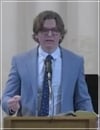
In the sermon "When He Sees The Blood," Eric Van Beek addresses the theological significance of the Passover event as a foreshadowing of Christ's sacrificial death. The preacher argues that the Passover exemplifies God's providence and ultimate purpose in salvation, emphasizing that the lamb's blood was the means by which the judgment of God was averted from the Israelites. He references Exodus 12:1-13, highlighting God's instruction for the Israelites to mark their doorposts with the blood of a lamb, representing Christ, the perfect sacrificial lamb, who fulfills the requirements for atonement. The practical significance of the sermon lies in the assurance that believers are covered by the blood of Christ, thus escaping judgment and entering into a right relationship with God. This message reinforces core Reformed doctrines such as total depravity, unconditional election, and the efficacy of grace through faith alone in Christ.
Key Quotes
“Everything that has ever been orbits around Christ. He is the center of everything.”
“When I see the blood, I will pass over you. That sentence... could study for my entire life... and never come up with the words to truly encapsulate what that sentence means.”
“Only the blood of Christ can turn the wrath of God in its tracks.”
“We are saved solely by the Lord Jesus Christ through faith in Him, which in itself is a gift from God.”
The Passover foreshadows Christ's sacrifice and God's provision for redemption.
The Passover is a pivotal event that signifies God's judgment and salvation. In Exodus 12, God instructs the Israelites to sacrifice a lamb and apply its blood to their doorposts, marking them for salvation. This act of faith in God's promise protected them from the final plague—the death of the firstborn—which serves as a foreshadowing of Christ, the Lamb of God. Just as the blood of the lamb spared the Israelites, the blood of Christ is our ultimate protection from God's wrath, assuring us of our salvation through faith in Him.
Exodus 12:1-13, John 1:29, Revelation 5:6
Christ is the fulfillment of the Passover as the perfect Lamb whose blood brings eternal salvation.
Christ fulfills the symbolism of the Passover in many profound ways. The lamb sacrificed during Passover was to be without defect, representing the perfection of Christ, who is blameless and sinless. Jesus, referred to as the Lamb of God, embodies the ultimate sacrifice that not only atones for sin but also protects believers from God's judgment. The act of applying the blood on the doorposts mirrors our faith in Christ's sacrifice—our acceptance of His sacrifice assures us that we are covered from divine judgment. Hence, understanding the Passover enhances our comprehension of Christ's work on the cross, cementing His role as the true and final Passover Lamb.
Exodus 12:5, John 1:29, 1 Peter 1:18-19
The shedding of blood signifies atonement and is essential for the forgiveness of sins.
In biblical theology, the shedding of blood is critical as it represents the concept of atonement. Hebrews 9:22 states that 'without the shedding of blood there is no forgiveness.' The blood signifies life, and through sacrificial offerings, God's people acknowledge their sin and the cost associated with their redemption. From the sacrifices in the Old Testament, culminating in Christ's ultimate sacrifice on the cross, bloodshed becomes the means by which believers are reconciled to God. The blood of Jesus is particularly potent, as it not only atones for sin but also cleanses and restores believers into a right relationship with their Creator, fulfilling the requirements of divine justice.
Hebrews 9:22, Leviticus 17:11, Matthew 26:28
God's providence ensures His sovereign control and guidance throughout the Exodus narrative.
God's providence plays a crucial role in the Exodus story, encompassing His sovereign authority over creation and human history. As seen through the hardening of Pharaoh's heart and the unfolding of the ten plagues, God's plan is meticulously orchestrated to demonstrate His power and to fulfill His promise of delivering His people. The plagues not only act as judgments against Egypt but also as signs urging Pharaoh to release the Israelites, showcasing God's unwavering control over every situation. This narrative assures believers today that God's providential care applies in our lives as well, guiding us through suffering and trials toward His ultimate purpose. Trusting in God's providence provides comfort, even amidst life’s uncertainties.
Exodus 9:12, Romans 8:28, Psalm 103:19
Comments
Your comment has been submitted and is awaiting moderation. Once approved, it will appear on this page.
Be the first to comment!
