Bootstrap
Eric Van Beek

The Gospel of Jonah

Jonah 1
Eric Van Beek December, 12 2021 Video & Audio
0 Comments
Eric Van Beek
Eric Van Beek December, 12 2021

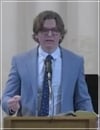
In his sermon titled "The Gospel of Jonah," Eric Van Beek explores the theological significance of Jonah's narrative as a parable of humanity's sinful nature and God's redemptive plan through Christ. He emphasizes that Jonah, though a prophet, exemplifies the pervasive sinfulness found in all people, highlighting that no one is righteous apart from God's grace. Key Scripture references include Jonah 1, where Jonah's initial disobedience and desire to escape God's command underscore humanity's rebellion against divine authority, and Isaiah 53:6, which illustrates Christ bearing the iniquity of humanity. Van Beek draws compelling parallels between Jonah's admission of fault and Christ's willing acceptance of our sins, asserting the necessity of recognizing both our fallen state and the salvation offered through Jesus. The sermon affirms that true understanding of the gospel requires a comprehensive view of man's sinfulness alongside the redemptive hope found in Christ's sacrifice.

Key Quotes

“The very first realization for anyone that is saved is what they are, sinful.”

“You will never find sin as a picture, like in Jonah, without finding Christ in the same story.”

“You can't add anything to something that is finished.”

“All you need to understand is the gospel, and you don't really even need to understand it as long as God gives you life to believe.”

Sermon Transcript

Auto-generated transcript • May contain errors

100%
Obviously a very familiar character
in the Bible, and it's a very familiar story. It's a very familiar
event. I like to use the word event a little bit better than
story. Growing up, Bible stories to me didn't seem real. They
seemed like a story. But I needed to remind myself,
and that's why I constantly use the word event instead, that
these things happen. These are not just stories to teach us
things. Obviously they are, but they're events that happened.
And they happened for good reason. So this event, A very well-known
event is about Jonah, but just like everything else in this
book, spoiler alert, it's about Christ in every way. And it's about an incredibly
simple picture of his gospel, which is great because I'm a
simple guy. So before we even begin to really
go through this, I'm gonna try to kind of go through this sort
of verse by verse. Who is Jonah is first of all
who we need to talk about. So the picture of the gospel,
the very first realization for anyone that is saved is what
they are, sinful. And in the very first picture
of this particular event is to show who Jonah was. And so many
times throughout the Bible, it shows us the true nature of man. And shows us through men that
were saved, really how despicable they were, even though they were
saved. I'm not gonna go through all of them, but David did some
awful things. Lot did things that I don't like
to even say in front of my kids. You know what I mean? Like Jonah,
perfect example. These are men of God. It says
that in the Bible. Prophets, people that actually
heard directly from God and still are the definition of sinful.
And that's not by accident. No one is good. That's the first
realization in the gospel is that we are in a situation that
we can't get ourselves out of. The Bible describes it in really
the best possible ways, dead. Dead in our transgressions and
sins. We're not in a tough spot. We're in an inescapable spot
on our own. And the Bible shows us this so
many times. And Jonah does a very good job
of showing us what kind of a person he is. And even though he's a
prophet. So again, so it says in verse
two, God tells Jonah, go to the great
city of Nineveh and preach against it because its wickedness has
come before me. So Jonah absolutely did not want to go to Nineveh.
He looked at them in a very judgmental way. It says this, they're a
very wicked place. They lived in extreme wickedness
and he knew that. And it wasn't that he didn't want to go there
because he didn't want to be around wicked people. He actually
had the hate in his heart that he knew if he went there, God
might save these people. And he didn't want that to happen.
That's pretty, pretty nasty. And this is a prophet. This is
a man of God. So Jonah didn't want to go to
them, spread the word of God, because he knew that if they
learned the truth, God might forgive their wicked ways. Now
remember, Jonah wasn't just some guy commissioned randomly to
do this. He was a prophet from God. He
heard from God. Very first thing, the word of
the Lord came to Jonah in the very first verse. I don't know
how. I don't know if you heard from
him. I'm not that smart. but he heard from God, something
we don't get to do anymore. Prophets of the Old Testament
had that opportunity. So this man could literally hear
from God, get messages directly from him, and he still made these
horrible, horrible mistakes. The first lesson from Jonah is
that even the men that lived on this earth who literally received
messages from God, who prophesied for God, were nothing but men. sinful creatures concerned with
nothing but themselves, especially when left to themselves. Jonah, a prophet, didn't want
to go to Nineveh because they might get forgiven, because he
didn't like them. We are just like him, a prophet,
so blind. It says in Jonah 1, verses 1,
the word of the Lord came to Jonah. Like I said, the word
of the Lord's come directly to him. And what did he do first? The very first thing, after the
word of the Lord directly came to Jonah, says, but Jonah ran
away from the Lord. So first of all, he disagreed
with what the Lord told him. This is who we are. You'd like
to think that you're not like that. But you are no better than
Jonah. Jonah was a prophet. Jonah heard
directly from the Lord and the first initial reaction he had
was to disagree with what the Lord told him. The Lord said,
go to Nineveh and preach my word to their wickedness. And the
first thing he thinks is, I don't want to do that. That's a terrible
idea. To God. And then he has the gall
to think he can go hide. from a God that he knows created
the world. He says it later in Jonah, he
says, the God who created the seas and the earth, and he's
gonna go hide from him? This is the dense sinfulness
and fleshly nature of man. So Jonah, the prophet, who had
just received a direct message from the Lord, thought he'd go
run and hide from God. Even after all of this later
in Later on in Jonah in chapter 4, we'll obviously go through
what happens on the boat and the fish as well, but just to
skip forward, just to continue this picture of who Jonah is.
After all of this happens, he's on the boat, he gets tossed in,
the waves calm, he spends three days in the belly of a fish,
and lives, and ends up on this land, and wants to go to Nineveh,
does, preaches, and guess what? He's mad at God about it. Listen
to this. But Jonah, to Jonah, this seemed
very wrong. This is chapter four, verse four. But to Jonah, this seemed very
wrong and he became angry. He prayed to the Lord. He said,
isn't this what I said, Lord? When I was still at home, this
is what I tried to forestall by fleeing to Tarshish. I know
that you are gracious and compassionate, God, slow to anger and abounding
in love, a God who relents from sending calamity. He's like,
I knew if I would go to Tarshish you would save them, and you
did, and he's mad about it. This is humanity. This is what
we are. This is another picture of the
very first realization in the gospel is that you need to be
saved. You are evil. You are sinful
in every way. From the first second you're
born, you're out of the womb on your way to hell. It's an
awful thing to say, but there's no other way to put it. Without
Christ, that is the truth. And this is a way for God to
show us that by showing us these examples in the Bible of these
men that are told to us in plain language that they are men of
God or they are prophets. They received word directly from
God. These are men of God, blessed. They are loved. Jacob was loved
by God and deserved it not at all. Lot was loved and thought
of as righteous. He was one of the worst humans
ever. And we're all, I mean I can't even say that, we're all the
same. We're all equally terrible. But there's no, it's not an accident
that these men of God keep showing us over and over and over what
awful men they are. That is the situation, the dead
in transgressions and sin situation that we are all in. Every single
man and woman that has ever been born. So that is the first aspect of
the gospel that is shown to us in the book of Jonah. So the
Lord shows us how blind we are. He shows us the problem. Gives
us the realization of our sinful nature. But he also shows us,
in the same book, the answer to our problems. The only way
to be forgiven and to be set free from the situation that
we are in, completely free, he shows us Christ. In the very
same chapter of the book, he even uses the same man, Jonah,
who was once this earlier picture of man, now becomes a picture
of Christ. Because the gospel is not the
gospel when you're only seeing part of it. You can't just see
the sin, and that's the gospel. And honestly, you can't just
see the Savior, either. You have to know to be saved.
It's very easy to preach God. Happy God loves everybody. That
is not the gospel. The gospel has to have both.
It has to have the fall before you can be saved. What did Henry
always say? If you're wrong about the fall,
you're wrong about it all. And that's the truth. So you
have to have both. And you'll never, if you find
just the fall in a story, you're not looking, or you're not finding
what's meant to be there. You will never find sin as a
picture, like in Jonah, without finding Christ in the same story.
Because that is the gospel. That is what this entire book
is about. This is not to show us, you're all going to hell,
you're all sinful. This is to show us, look, everyone
deserves hell, but there is one hope that we have. And that's
exactly what it's about to show us now. So once he's on the boat,
in verse four, chapter one, Then the Lord sent a great wind on
the sea. Such a violent storm arose that the ship threatened
to break up. All the sailors were afraid and each cried out
to his own God. And they threw their cargo into
the sea to lighten the ship. Now the men on this boat, that's
a great picture of just man in general. The wind and the violent
storm is God's judgment according to the law. Of which every man,
woman, and child on earth is absolutely guilty of breaking.
Basically every second of every day. Verse five is an accurate
depiction of our state, of our flesh. All the sailors were afraid
and each cried out to his own God. And they all threw cargo
into the sea to lighten the ship. They're literally running around
the ship like fools, calling out to any God they can think
of, throwing cargo overboard, simply panicking. They, like
all men, were doing everything in their own power to try to
fix their situation. So we've been showed the situation
of man, and the judgment for it is coming. And unless you
have Christ, this is where you are. you're futilely fighting
against the judgment that's coming. You can run around all you want,
pray to every God you can think of, throw all the cargo overboard,
do whatever you need to do. As long as you're trying to do
it with your own power, it will get you absolutely nowhere and
it won't slow down that storm at all. Then in verse six, the
captain went to him and said, how can you sleep? Get up, call
on your God. Maybe he'll take notice of us
so we won't perish. Then the sailors said to each other, come,
let us cast lots to find out who is responsible for this calamity.
They cast lots, and the lots fell on Jonah. I don't want to dig too deep,
but I do find it interesting that right before Christ was
crucified, they cast lots for his clothing. And right before
Jonah is about to be thrown into the water, they cast lots again. I think that's not a coincidence
because of what this picture actually is. Then they said,
they asked him, tell us, who's responsible for making all this
trouble? What kind of work do you do? Where do you come from?
What is your country? For what people are you? He answered,
I am Hebrew and I worship the Lord, the God of heaven, who
made the sea and the dry land. That also terrified them. It says, it's terrified them
and they asked, what have you done? This is where things seem
to change and how Noah is a picture of Christ. Jonah says, the Lord,
Jonah actually admits guilt, admitting that it was he who
had done what has brought the wrath of God. So how can that
be a picture of Christ? God didn't, Jesus didn't do anything
wrong, ever. God didn't do anything to, or
Jesus didn't do anything to bring the wrath of God. But, in Isaiah 53, verse 6, it
says, The Lord has laid on him the iniquity of us all. This
is the truth of the gospel. In one sense, we absolutely recognize
that the sins which Christ bore were not his own. He bore our
sins on his own body in the tree, but Christ was willing to own
those sins as his own. Just as Jonah did when he said,
it is my fault. Throw me overboard. Only God
could lay our sins on Christ. And he could be just in doing
so because Christ was willing to own those sins. And it says in verse 11, the
sea was getting rougher and rougher, so they asked him, what should
we do to make the sea calm down for us? In verse 12 he says,
pick me up and throw me into the sea, he replied, and it will
become calm. I know that it is my fault that
this great storm has come upon you. Christ willingly owned our
sins. This is a perfect picture of
that. He wasn't thrown overboard against his will. Christ wasn't
crucified against his will. Christ knew exactly what he was
headed for. He knew why he was alive. He
knew this the whole time. Jonah claims that it is his fault
that the great storm has come. Just as Christ didn't argue the
point that it was our sin that he was bearing for us, he didn't
go to the cross saying, fine, I'll go to the cross, but it's
not really for me, and it's not really for my sins, it's for
them. Christ went there to own the
sins as his, because that was the only way they could be paid
for, and we wouldn't have to pay for them ourselves. At this point, Jonah had completely
explained the situation and had given them clear instructions
on how to fix it. He said, it was me. The only way you can
fix this, calm this storm, stop this boat from being crushed
and killing all of us, is to throw me overboard. And in verse
three, it shows how stubborn, once again, man can be. Instead,
the man did their best to row back to land. There's a perfect
picture again of so much Christianity in this world. We're shown the truth. We're
told that Christ is the only way, the only hope we have. But
yet so many of us, it's so natural for us to want to be a part of
it. And it's hard not to look at
ourselves both ways. To look at ourselves in a way
of I am so sinful there's no way I can be saved. And it's
also normal to look at us and say, oh, I did some pretty good
stuff. I'm gonna go out and I'm gonna
study my Bible more this week. And I'm gonna help more people
this week. And I'm gonna do this and do that. And there's fine
things to do. But that, as long as you're not using that as a
way to try to row your boat back to land. There is no way for
us to row our boat out of the storm. None. There's nothing
wrong with those things, but they will do nothing for your
salvation. So again, instead of just listening
to Jonah, who again is a picture of Christ, they tried to their
best to row back to land, just as a man tries consistently to
earn even just a small amount of his own righteousness. when
all we need to do is listen and look to Christ. It's all been
done. All the work is completely finished.
You can't add anything to something that is finished. Verse 14, they cried out to the
Lord, please, Lord, do not let us die for taking this man's
life. Do not hold us accountable for killing an innocent man,
for you, Lord, have done as you pleased. Finally they see that
they have one hope, to call on the name of the Lord. And that's exactly what they
did. Anyone that truly believes and trusts in Christ has been
in this situation, has gotten to the point where you've realized,
I have no hope but to call on my Savior. And we need to be reminded of
that for the rest of our lives. I need to be reminded of that
every single day. But that realization happens to every believer. You
get to the point where you cannot, you realize that rowing isn't
getting me anywhere. And all you can do is call on
the Lord to be saved. To beg him of his love. And if
you do, you will be saved. That's the beauty of this gospel.
You're shown what you are. You're shown the one hope, and
if you call out on his name, you will never hear a no. It
says in Romans 10, 13, whoever calls on the name of the Lord
will be saved. Can't be any simpler than that. So just like the men
on this boat, a picture of God's chosen people, the church of
God, they call on the Lord to be saved. Then they took Jonah,
and they threw him overboard, and the raging sea grew calm. I don't have any notes written
down after that, but I feel like I should. It's hard for me to put into
words. But just think about that, what
that picture's. They threw him overboard in the
raging sea, was instantly calm. The judgment that we all deserve,
hovering above us, that we can't even imagine is instantly calm
and gone and perfect and set up for us in a way that we can't
even imagine. And it was finished at that very
second. It didn't say they threw them
overboard and it calmed down quite a bit but they still had
to row pretty hard to get back to shore. Or the winds calmed
down but they still had to really hold on and get those sails up By throwing him overboard, everything
was fixed. By Christ dying, everything was
fixed. I don't have the fancy words
that Joe does. I just say these things, but everything was fixed.
Everything is taken care of. The second he was thrown overboard,
the second Christ gave himself on the cross, the sea was calm,
and it has been calm since, and it will be calm forever. What a blessing. And in verse 16, at this the
men greatly feared the Lord, and they offered a sacrifice
to the Lord and made vows to him. Now the Lord provided a
huge fish to swallow Jonah, and Jonah was in the belly of the
fish there for three days and three nights. This is an obvious
picture of the crucifixion. Another thing that I struggle
to try to put into words, obviously it can't be. But Jonah does a
pretty good job, actually, in Jonah's prayer, which is verse
two. And I'm gonna read that right now, actually. It's a very
vivid description of what Jonah went through. But keep in mind
that this is a picture of what Christ went through. In my distress
I called to the Lord, and he answered me. From the depths
of the grave I called for help, and you listened to my cry. You
hurled me into the deep, into the very heart of the seas, and
the current swirled about me. All your waves and breakers swept
over me. This is Christ talking to his
Father. He's not saying, he says all your waves and breakers.
He's not saying the devil, the Romans, the Jews. God was doing
this to him. Again, to put that into words
is really hard, but just imagine that. He says, I said, I have
been banished from your sight, yet I will look again towards
your holy temple. The engulfing waters threatened me. The deep
surrounded me. Seaweed was wrapped around my
head. In the roots of the mountains I sank down. The earth beneath
me barred me forever. but you have brought my life
up from the pit. Oh Lord, my God. That's, again, an obvious picture
of what Christ, a not perfect picture, but a
really good picture of what Christ went through. We can never truly understand
what Christ experienced. And that's the beauty of it,
is we never will. We'll never have to. You know, it's amazing when you
think about the fact that when someone that isn't saved dies,
they experience something like this forever. And they never
pay for their sin. It never fully paid for. It's
never finished. Their lives aren't worthy enough
to pay for the sins that they committed ever. That debt is
bigger than anything they can ever pay. But yet Christ paid for those
sins. One person can't pay for their
own, ever. But Christ paid for all of his peoples until there
was nothing left. There was no sin left. There
was no death left for them. Only a perfect God, a perfectly
righteous man, our Savior could have done that. And what a Savior. But the good news, the gospel
of the story is that after three days, that fish, the depths of
the sea, God's wrath was satisfied. Like I said, a man can never
pay for his sins, but God paid for his people's sins in such
a satisfactory way that it's finished for us. The heavy weight
of that is something we will never understand until we're
with him. But if we can grasp a little bit of it, it is incredible. Christ was raised and now sits
at the right hand of God, glorified for eternity, right now. The
story of Jonah is a perfect picture of the entire gospel, just as
everything in this book is, because nothing else matters. I mean,
we can get into the details and argue about theology and all
that if you want, but all you need to understand is the gospel,
and you don't really even need to understand it as long as God
gives you life to believe. That's it. I was coming, when
I was preparing for this, I was going through some old notes,
and I came across something I wrote down nine years ago, and it was
about Oliver, actually. I was sitting back there, I wrote
this down, I said, I was getting ready to pray with Oliver, as
we did before bed, and we used to ask them what we should thank
God for. And he said, will you please
thank God for the forgiveness of sins? And he was five, so
he was just repeating things he had heard at that point. So
I went through, and this is something I just read the other day. Again,
I wrote this nine years ago. I just went through a very quick,
simple, five-year-old version of the gospel, that we are so
thankful, Lord, that you've shown us that we are completely sinful
in every way, and that Christ was sent by God to be born, live
perfectly, and die to pay for every one of our sins. so that
we can be loved by God forever. And because of Jesus, we will
spend eternity with him. And the last thing I wrote, it
says, if Oliver never learns another thing about the gospel,
it doesn't matter. That's it. It's just fine. That's
all he needs to know. That's all we need to know. That's
why, like, I get nervous to come preach, but it's never overwhelming
for me, because all I have to do is come and tell you about
Christ. I pray and pray and pray that Christ makes sure that's
all I ever preach about. And as long as I only preach
about Christ, I feel like I can't really screw it up. Because he's
all that matters. This gospel is all that matters.
We naturally are in a really tough spot, a dead spot. We cannot
help ourselves at all. But the beauty is we don't have
to. The help is there. We look to Christ, and we are
saved. Forever. No more rowing, no more
wind, no more storm. So that's the picture of the
gospel in Jonah. Let's pray. Dear Lord Jesus, we thank you
again for being here with us today. We thank you for your
promise that you are. We have doubts every day, Lord,
I do, we all do. We struggle with things, but
your promises are wonderful. They do ease those doubts. It
takes the human aspect out of being here today, knowing that
you are here with us, and that what your will is for our time
this morning will be done. That helps me so much, and I
just pray and thank you, Lord, that you do that. I thank you
so much that you're here with us. I thank you that you have
perfect power to make sure everything you want done is done perfectly. We pray, Lord, that you'll bless
our time together, bless our week, bless those that are watching
online. And Lord, we pray that you'll
continue to watch over us and love us as you always do. We
thank you, Jesus, and we pray this in your name. Amen.
Broadcaster:

Comments

0 / 2000 characters
Comments are moderated before appearing.

Be the first to comment!

Joshua

Joshua

Shall we play a game? Ask me about articles, sermons, or theology from our library. I can also help you navigate the site.