Bootstrap
Jim Byrd

The Preeminence of Chirst

Colossians 1:18
Jim Byrd September, 21 2025 Video & Audio
0 Comments
Jim Byrd
Jim Byrd September, 21 2025

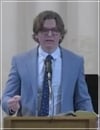
In Jim Byrd's sermon on Colossians 1:18, he addresses the theological topic of the preeminence of Christ, emphasizing His supremacy in all things, particularly in salvation and the church. Byrd argues that Christ, as the incarnate Son of God, is the central figure of both the Old and New Testaments, who fulfills the redemptive work through His life, death, and resurrection. He cites Scripture extensively to support his claims, especially Colossians 1:18, which declares Christ as the head of the church, the firstborn from the dead, and asserts that all things were created by and for Him (Colossians 1:16-17). The practical significance of this doctrine lies in the recognition that believers should hold Christ in utmost regard, viewing Him as their Savior and the focus of their faith and worship, which aligns with key Reformed doctrines emphasizing Christ's sovereignty and grace.

Key Quotes

“He’s the head of the body. Wherever Christ is, he being the head, that’s where the body is anyway.”

“Salvation is to be rescued. It’s to be rescued from the kingdom of darkness and translated, transferred into the kingdom of light.”

“He has made us meet. He has qualified us. He is our qualification into glory.”

“What are they singing about in heaven? … Heaven’s all about praising Him.”

What does the Bible say about the preeminence of Christ?

The Bible affirms that Christ is preeminent in all things, being the head of the church and the firstborn from the dead.

The preeminence of Christ is a central theme in Scripture, particularly articulated in Colossians 1:18, where it states, 'He is the head of the body, the church, who is the beginning, the firstborn from the dead, that in all things he might have the preeminence.' This verse underscores Christ's supreme authority and His foundational role in creation and redemption. His existence is not only before all things but also allows for all things to consist, demonstrating His sustaining power in the universe. Thus, everything created serves the ultimate purpose of glorifying Him.

Furthermore, across the entirety of the Bible, from the Old Testament promises to the New Testament fulfillment, Christ's significance is woven throughout. The Old Testament points to His coming, the Gospels present His life and work, while the epistles proclaim His grace and power. The book of Revelation ultimately focuses on His dominion over all creation, marking Him as the sole being worthy of worship and adoration.
What does the Bible say about the preeminence of Christ?

The Bible declares that Christ holds preeminence in all things, as stated in Colossians 1:18.

The preeminence of Christ is distinctly articulated in Colossians 1:18, where it states that He is the head of the body, the church, and the firstborn from the dead, that in all things He might have the preeminence. This means that Christ is to occupy the highest rank and status among all creation and within the church. His preeminence is grounded in His unique identity as the incarnate Son of God, who fulfills the divine purpose in His redemptive work. His resurrection further affirms His supremacy, providing assurance that those who believe in Him too will rise again.

Colossians 1:18

How do we know Christ’s divinity is true?

Christ's divinity is confirmed through His resurrection and His dual role as fully God and fully man.

The divinity of Christ is affirmed through several key doctrines in Scripture, notably in Colossians 1:15-17, which states that Christ is 'the image of the invisible God' and that 'by him were all things created.' This assertion highlights His role in creation and His preeminence over all that exists. Moreover, the resurrection of Christ serves as divine validation of His claims; He is the firstborn from the dead, denoting not just a chronological ranking but a position of authority and significance in God’s redemptive plan.

Furthermore, in John 14:9, Jesus rebukes Philip for asking to see the Father by stating, 'He that hath seen me hath seen the Father.' This declaration confirms that Christ embodies the fullness of God in human form, and His existence as both fully divine and fully man is foundational for understanding His work in salvation. The New Testament consistently affirms this dual nature, solidifying the belief in His divinity, which is central to sovereign grace theology.
How do we know Christ's work of redemption is complete?

Christ's work of redemption is complete as He declared 'It is finished' upon the cross, fulfilling all that was required for our salvation.

Christ's declaration 'It is finished' on the cross signifies the completion of His redemptive work, fulfilling the legal demands of God for salvation (John 19:30). This command shows that He accomplished everything required for atonement, including bearing the sins of the elect and enduring the corresponding wrath of God. Furthermore, the resurrection serves as the Father's affirmation that Christ's work was not only completed but also accepted. Thus, those redeemed by Christ's blood are guaranteed forgiveness of their sins and eternal life, as evidenced throughout Scripture.

John 19:30, Ephesians 1:7

Why is the resurrection of Christ important for Christians?

The resurrection of Christ is vital as it guarantees the believers’ resurrection and signifies the completion of redemption.

The resurrection of Christ holds crucial significance for Christians as it is the foundation of their faith. In Colossians 1:18, it states that He is the 'firstborn from the dead,' indicating that His resurrection not only demonstrates His victory over death but also serves as the precursor to the resurrection of all believers. Through His resurrection, Christians are assured of their own resurrected bodies, as Paul articulates in 1 Corinthians 15, which explains the transformative hope that believers hold.

Additionally, the resurrection signifies the completion of the work of redemption. It acts as a powerful confirmation that Christ's sacrifice was accepted by the Father, indicating that the penalty for sin has been fully paid. The victory over death that Christ achieved on behalf of His elect reassures believers of their justification and eternal life. Therefore, the resurrection is not merely a pivotal event in history; it is the bedrock of Christian hope and assurance in eternal glory.
Why is understanding the gospel important for Christians?

Understanding the gospel is crucial for Christians as it encapsulates the full report of Christ's person and completed work for salvation.

The gospel is the central message of Christianity, representing God's report of what Christ has accomplished. It is not merely a command to believe but a proclamation of the finished work of Christ—His death and resurrection on behalf of His people. As Paul articulates in Colossians 1, the gospel is a report of God's grace that offers hope and assurance to believers. Understanding the gospel deepens our faith, leading us to recognize our complete dependency on Christ for righteousness and salvation, thus shaping our lives in accordance with His will.

Colossians 1:5-6, Romans 1:16

What does it mean that believers are 'set apart' in Christ?

'Set apart' means that believers are chosen by God for salvation and dedicated to Him, distinct from the world.

The term 'set apart' reflects the reality of believers being chosen by God for His specific purposes in salvation. In Colossians 1:12, Paul thanks God who 'hath made us meet to be partakers of the inheritance of the saints in light.' This idea connects to the biblical concept of sanctification, whereby believers, through God's grace, are separated from the world and devoted to the service of Christ. Being 'set apart' indicates a transformation that occurs when a person is called to faith by God's sovereign grace.

This calling is not a result of individual merit or decision; rather, it is a sovereign act initiated by God. Believers are granted spiritual life and faith, enabling them to follow Christ, exemplifying His teachings and embodying His grace. The idea of being ‘set apart’ affirms the believer's identity as part of the body of Christ, emphasizing both their privilege and their responsibility to live in a manner worthy of their calling.
What does it mean for Christ to be the head of the church?

Christ being the head of the church indicates His authority and direction over all members of the body of Christ.

In Ephesians 1:22, Christ is portrayed as the head of the church, which emphasizes His authority and central role in guiding His people. As the head, Christ provides the necessary life, nourishment, and direction that the church requires to function properly. This relationship ensures that all members of the body are united under His lordship and receive their spiritual sustenance from Him. It also highlights the intimate connection between Christ and the church, affirming that the church exists for His glory and is subject to His will and purpose.

Ephesians 1:22, Colossians 1:18

Sermon Transcript

Auto-generated transcript • May contain errors

100%
Thank you so much for that. I love the writings of Augustus Toplady. And Brother Toplady wrote those words, A Debtor to Mercy Alone. Thank you all for singing that for us. Next Sunday, of course, Brother Jean-Claude Souillot will be with us and his wife, Wendy. And after the evening service, we want to have sandwiches. If you want to make some soup or whatever, that'd be fine as well. Maybe some finger foods or whatever. But we'll look forward to having them over the weekend. And next Saturday evening, you'll be preaching for Brother Allen. And if you want to go up worship with the Saints of God. And here, Brother Suyo up there, we'd love for you to go along. Be glad to provide a little transportation. And look forward to seeing you up there. And if not up there, we'll see you here Wednesday night, I hope, and Sunday also. My subject tonight is the preeminence of Christ. I take my text here from verse 18 of Colossians 1. Speaking of the Savior in Colossians 1.18, and he is the head of the body, the church, who is the beginning, the firstborn from the dead, that in all things he might have the preeminence. This letter was written by the apostle Paul from prison in Rome. And of course, there are several books here together that are called the prison epistles, the prison letters. And the purpose of him writing this letter, the purpose of the Spirit of God in inspiring Paul to write this letter, was to set forth and to uphold the glorious truth that Jesus of Nazareth is the incarnate Son of the living God. If you go back to verse 1, he identifies himself as being an apostle. He's a messenger. God effectually called him to faith in the Lord Jesus Christ. He saw the Savior. The Savior revealed himself to Saul of Tarsus on the road to Damascus. And later he would visit with one Ananias. who told him, said, God chose you. God chose you. He chose him unto salvation and he also chose him to write the majority of the books of the New Testament and to be an apostle of the Lord Jesus Christ, a messenger, that's what the word apostle means, one who was sent. He didn't volunteer himself for the for full-time Christian service. We used to have campfire services at camp and also at youth rallies in the churches where I ministered. People would volunteer for what they called full-time Christian service. Paul didn't volunteer. He was drafted. He was called by the power of God and filled with the Holy Spirit to preach the gospel of the grace of God, the gospel of the Lord Jesus, and of that blessed salvation that is only found in the Savior. So after identifying himself, and he says he's an apostle by the will of God, he says in the second verse, he identifies the people, the immediate recipients of this letter, the saints and the faithful brethren in Christ which are at Colossae. He writes to the saints of God. He says, oh yeah, the saints, that's the ones that they build pillars to and statues to. Those aren't saints. I'll tell you who the saints of God are. Those are called by the grace of God to salvation in the Lord Jesus Christ. They have been, and here's the real meaning of the word saint, somebody who's been set apart. We were set apart in old eternity for God's purpose, for His grace, for His salvation, to know Him and to be found in the Lord Jesus Christ. We are saints eternally. God set us apart. He set us apart to be redeemed by the blood of the Lord Jesus Christ. And the Spirit of God came to us in the time of love and said to us, according to Ezekiel chapter 16, And we lived by the very power of the grace of God. The Lord breathed life into us through the preaching of the gospel of our Lord Jesus Christ. We were set apart for Christ Jesus, set apart to believe him, set apart to follow him. And then he says, and faithful brethren, people who were faithful to the cause of Christ. But more than that, people who believed on the Lord Jesus Christ. We're set apart for faith. We were going down the road of life and, as it were, minding our own business, and the Lord did something for us. He called us. He set us apart. Here the rest of the world is listening to, if any religious message, it was a message of free willism and works. After all, a recent study of the various religions in the United States and people who profess to be Christians, over 50% of them said that salvation is ultimately by the works of men. Over 50% who profess to be Christians said that they're saved by works. No, we're not saved by our works, we're saved by the work of Christ. We're saved by his substitutionary work. He said, I have finished the work thou gavest me to do. It was the work of redeeming his people, of reconciling us to God. It was the work of satisfying the legalities of salvation, and then He would cause us and enable us to believe the gospel of God's grace. We believe Him. We rest in Him. Faithful brethren. Therefore, in verse three, it says, we give thanks to God and the Father of our Lord Jesus Christ, praying always for you. To whom do we give thanks? Well, we don't thank ourselves for believing the gospel. We're thankful for those who preach the gospel to us, but that life that is necessary, that spiritual life that is absolutely imperative that God give us so that we will believe the gospel of the grace of God is a gift of His grace there. He quickens us. And you hath he quickened who were dead in trespasses and sins. And we read in the book of Matthew, the son quickeneth whom he will. Paul goes on, he says, since we heard of your faith in Christ Jesus and love to all the saints. For the hope that is laid up for you in heaven Where have you heard before in the word of truth of the gospel? What is the gospel? The gospel is a report of a person and the work that he has completed. It is a finished report. The gospel is not believe on the Lord Jesus Christ. That's not the gospel. That's a command. The good news is everything God required of sinners The Lord Jesus who died in the stead of his sinful people, he has accomplished. He has finished that work of redemption. It is the finished story of what Christ has done and who he is. It's a report. In our very thin newspaper locally, we have reports of what has happened in the past week. Well, the gospel is God's report of that which is already happened by the Lord Jesus, having finished that work that God issued to him from before the foundation of the world. And he says in verse six, which is coming to you as it is in all the world. Thank God the gospel came to us. Thank God He sent the truth to us. I think about my past religious life, and I was feeding on trash, not knowing that what I was hearing was error. And God bore with me through that, and then He introduced me to the Word of Truth. And I heard it. I heard the gospel. He gave me ears to hear. He gave me a heart to receive, to believe the truth of the word of God. He goes on down and he says in verse 12, he again is giving thanks. To whom do we give thanks? We give thanks to God. He's the fount of every blessing. He's the source of every good and perfect gift. They have to come from God. Giving thanks unto the Father which hath made us meet, verse 12, to be partakers of the inheritance of the saints of God. He has made us qualified. We're qualified to enter into the inheritance He has prepared for us. We're made fit and Christ is our fitness. We have no fitness of our own. The fitness we have, the qualification we have is that our sins have been put away and we're made the righteousness of God in the Lord Jesus Christ. That's the fitness that God has given to us. We enter into heaven through the merits of our savior. Verse 13, who hath delivered us from the power of darkness, he has rescued us. You see, salvation is to be rescued. It's to be rescued from the kingdom of darkness and translated, transferred into the kingdom of light. You know what it means to be rescued? I used to be a lifeguard, lifeguarded at camp where Nancy and I met. And quite often I'd have to pull somebody out and I rescued them. And they'll try to drown you. It may be some other people in here who were lifeguards, maybe many years ago, but we pulled many a person out and they provided no assistance whatsoever. In fact, they would try to push me under, and of course, there's a right way to get behind somebody and pull them in, but I rescued them. And this is what the Lord did for us. He rescued us. We were perishing. The songwriter said, rescue the perishing, care for the dying. We can't rescue people who are spiritually perishing. There's only one who can deliver. There's only one who can save. There's only one who can rescue a foul sinner and turn him or her around, quicken them by his grace, wash them in his blood, robe them in his righteousness, and the name of the rescuer is the Lord Jesus Christ. He has made us meet. He has qualified us. He is our qualification into glory. There was a power and authority that held us captive. It was a satanic captivity from which it is impossible for anybody to break free of. The powers of darkness had a grip on us, had a hold on us. But a stronger one came and released us. He broke the hold that Satan had over us. And we have been translated, transferred into the kingdom of God's dear son. That's a spiritual kingdom. The Jews thought that when Christ came, he came to set up a physical kingdom. A kingdom with headquarters in Jerusalem. That's not the kingdom he came to establish. When he taught his disciples to pray, he said, pray this way, thy kingdom come. We pray for the kingdom to come. We pray for the kingdom of grace to go after and fetch lost ones, to save sinners. We pray that God will release the captives from satanic imprisonment and bring them into the light of the kingdom of God's dear son. and he is the king in that kingdom. The believing thief said, Lord, remember me when you come into your kingdom, your kingdom. And then he says, Paul says, in whom? In Christ, in God's dear son. We have redemption through his blood, the forgiveness of sins. And I made this statement this morning and it cannot be made too often. Wherever you have redemption through His blood, the absolute inevitable result of that is forgiveness of sins. It was impossible that Christ would die and there would be no forgiveness or just a perhaps forgiveness by people who would let Him be their Savior. Well, that's foolish talk. The Savior paid the price, the ransom price that the justice of God demanded. And having paid that price, the price being His sufferings and His bloody death upon the cross of Calvary, having paid that price, those for whom He died, their sins have been atoned for. They have been separated from those people, from the elect of God, from those chosen ones in whose stead Christ died. Our sins have been separated from us. They were separated from us as far as the East is from the West. The Lord Jesus cast them behind the back of God. When you can find the back of God, then you'll find our sins. That can't be found. in whom we have redemption through his blood. Don't ever be ashamed of the blood of Christ. And then he begins to identify the Savior. Look at verse 15, who is the image of the invisible God. He is the image of the invisible God. He is the exact replica of God. In him dwells the fullness of the Godhead bodily. He is the exact person Christ is as the Father. He is the exact deity as the Holy Spirit is. And it pleased God that in this man, Christ Jesus, all the fullness of the Godhead dwells bodily. This is what God purposed from eternity. And therefore, when Christ came into this world, he said, a body thou hast prepared me. God, the invisible God, the eternal God, doesn't have a body. He inhabits eternity. From everlasting to everlasting, thou art God. He couldn't be seen. He's the invisible one. Where is God? He's everywhere. You can't go anywhere but what God isn't already there. He's everywhere by His presence. He's everywhere by His power. He's everywhere by His providence. God cannot be seen. And that's why the Son of God took upon Himself human flesh. so that he could suffer for our sins, and he had to have a body that could die. Philip sinned in John 14, and Judas had already left. So it's just the 11 apostles and our Savior speaking to them about, in the Father's house are many mansions, that he's the way, the truth, and the life. No man cometh unto the Father but by me. And Philip said, show us the Father. Manifest to us the Father and that will satisfy us. We want to see the Father. And the Lord Jesus rebuked him. Have I been with you all this time? And you don't know? You don't know? He that hath seen me hath seen the Father. Sometimes, as preachers, we can, somebody will say something and you just think, you wonder, have they heard anything I've ever said? And the Savior says to Philip, in essence, Have you heard anything I've ever said to you? I've talked to you about this. I've taught you about this. One thing for sure, the Lord has to be our true teacher, doesn't he? Or we won't get anything. He says he's the firstborn of every creature. Now that gives a little trouble to some people. He's the firstborn. He's not talking about age here. He's not talking about chronology. He's talking about rank. That's what he's talking about. He's the firstborn of every creature. And the Jews certainly knew about the law of the firstborn, but the Gentiles did too. The firstborn is the one in the family who gets the honor. It's the firstborn who gets a double inheritance. It's the firstborn in the Jewish family who became the priest of the family. Christ is the firstborn of every creature. He has the top rank. He's over everybody. And he's under nobody except the Father. And he says that in the end of 1 Corinthians chapter 15, when he turns the kingdom over to the father, because he was the father's faithful servant throughout his life. He's the firstborn of every creature. He outranked you. in infinite distance, I might add. He's the firstborn of every creature. And verse 16, he goes on to say, for by him were all things created. John says in John 1, 3, all things were made by him and without him was not anything made that was made. By him were all things created. Things are in heaven. Things that are in earth, visible things, invisible things, angels, principalities, powers, whether they be thrones or dominions or principalities or powers, all things were created by him and they are for him. Revelation 4, they were created by him and for him for his own pleasure. Man is so full of himself that he thinks that all of this is, it's all for us, for our enjoyment. Well, to a degree, that's true of the saints of God, but really everything's for the Lord Jesus Christ. There are things on this earth, beautiful things on this earth, that no human eye will ever behold. Wonder why God made them? For his own pleasure. You read about all the galaxies are way out there, way beyond our galaxy, that no human eye will ever behold. Why did the Lord make them? For his glory. It magnifies His power, His omnipotence, His wisdom. And He keeps everything running. Don't worry about the sun burning out. People want to scare you to death. You'll be long gone before the sun burns out. It'll burn as long as the Lord Jesus Christ ordains for it to burn. I got bigger fish to fry than that. I don't worry about the world. Oh, the world's going to come to an end. It will when he who made the earth brings it to an end, when he renovates it. But till then, seasons will continue. Don't worry about these people. Oh, it's going to get so warm, it's going to be summertime all year round. Man alive. Don't you have other things occupy your attention? What about your eternal soul and the glory of Christ, the preaching of the gospel? The season's going to continue. That's a promise God made to Noah. Hadn't stopped ever since then. And days are still days and nights are still nights. because of who made all things and because he not only made all things, but he controls all things. They're for him. Look at verse 17, and he is before all things. And by him, all things consist. That is by him, all things are glued together. He's the glue that holds everything together. Reason we keep going around the sun and all the other planets in our solar system and all the stars staying where they are. Mariners, years ago, had nothing to go by but the stars. But they could count on them. They knew right where they'd be. Because the Son of God who put them up there said, just stay right there. You'll be a beacon of hope to mariners on a dark night on the stormy sea. All things created by him, for him, he's before all things, and by him all things consist. He's the head of the body. Wherever Christ is, he being the head, that's where the body is anyway. Years ago when we used to have business meetings in church, I hated business meetings. And we'd count heads. That's what we'd do, we'd count heads. What did we mean by that? We'd see how many people got a head. The head counted for the whole body. And the body of Christ has one head. There are not many heads, there's one head. He's the head of the church. Turn back to Ephesians chapter 1. Ephesians chapter 1. Here Paul prays for the saints of God, not only for the Ephesian brethren and sisters, but for us as well. Ephesians 1.18, The eyes of your understanding being enlightened, that you may know what is the hope of his calling, and what the riches of the glory of his inheritance in the saints, and what is the exceeding greatness of his power to usward, who believe according to the working, the energy of his mighty power, which he wrought in Christ, when he raised him from the dead, and set him at his own right hand in heavenly places, far above all principality, and power, and might, and dominion, and every name that is named, not only in this world, but also in that which is to come, and hath put all things under his feet, and gave him to be the head. He's the head of all things to the church, which is his body. The fullness of him that filleth all in all. He's the head. We're members of his body. And you go back over here to Colossians 1. It says he's the head of the body, verse 18. The church who is the beginning, the firstborn from the dead. Yes, he died. He told John on the Isle of Patmos, I am he that was dead, but I'm alive forevermore. His resurrection, you see, was the father's proof or the evidence that the work of redemption that he had completed was satisfying to the fulfillment of God's redemptive purpose. He's the firstborn from the dead, and because he arose, we're gonna rise too. These earthly tabernacles, sooner or later, are gonna have to be vacated. The soul goes back to God. 2 Corinthians 5, we have a heavenly body, a spiritual body that God's prepared. for the saints of God who have departed, who've died. But when our Lord Jesus comes back, he's gonna raise our bodies from the grave. Millions, yea, billions of saints have died since Abel, and the Lord guards the dust of his dear children. and he will put our bodies back together to be a glorified body, conformed to the image of Christ, made likened to that only perfect man who lived. He's the firstborn from the dead, but he's not the last one to be raised from the dead. We will be too. You see, Lazarus, the Lord raised him But he had to die again. He lived to die. But someday the Lord's gonna raise the bodies of his saints. We'll be alive forevermore. And all of this, that in all things the Lord Jesus Christ might have The preeminence. The preeminence. What does that mean, first place? You can't have two people have preeminence. Preeminence is for one person. And Christ is the preeminent one. It pleased God that it be this way. The Father, the Son, and the Holy Spirit in old eternity purposed that one of the three would come into this world in a body. And in that body as a man experience life in this world. And in that body obey God's law perfectly. And in that body take upon himself the sins of all of his elect of all ages. And in his body bear, bearing those sins endure the wrath of God. And in that body, he must die. And he did. And he went back to the Father, his soul did. But he raised himself. Shall we live again? Our Lord Jesus said, I am the resurrection and the life. He that believeth in me, though he were dead, yet shall he live. That in all things he might have the preeminence. Let me give you several things here real quick. Number one, he's preeminent in the Bible. He's preeminent in the Bible. You know this. All of the Old Testament speaks of him coming. It predicts his coming. It promises his coming. From Genesis 3.15 all the way to Malachi chapter 4. Everything in the Old Testament, it's like pointers. They're pointing to somebody who's gonna come. And every lamb that died, every ram, every bullet, every oxen, every turtle dove, every pigeon that died, all of those that died as offerings for sin, they all pointed to the Lamb of God who was coming. Everything in the Old Testament's about Christ. Whenever you read any part of the Old Testament, you've got to be thinking this way. My Savior is here somewhere. Let me see Him. Show Him to me. And the four Gospels announce that He has come. He has come. It's like the Old Testament is preparation for His coming. In the four gospels, there's the presentation of Him. In His life, in His death, in His resurrection. And the book of Acts is the proclamation of Him. They went everywhere preaching the Lord Jesus Christ. That's what they did. And the epistles show the power of Him. The power of His grace, the power of His person. And the book of the Revelation speaks of His absolute dominion over all things. It's His book. It's His story. The Lord Jesus Christ. He's preeminent in the scriptures. He's preeminent in the Godhead in this sense. It pleased God that all the fullness of the Godhead dwell in Him. And I've said this to you before, and I know Bill did before me, and Henry did before him. All of God will ever seize the Lord Jesus Christ. You're not going to see the Father as the Father, or the Holy Spirit as the Holy Spirit. You'll see the Lord Jesus Christ, and in Him you see the Father and the Spirit. He's preeminent. He's preeminent in the Godhead. He's preeminent in his work of redemption. He's preeminent in the one that we believe. Somebody says, well, I believe that God exists. Well, good for you. The devil does that. I believe there is a God, whoopee. Salvation is not believing that God exists. It's not even believing God. I believe God. Salvation, believing Christ, the Son of God, the Lamb of God, the sacrifice of God. I believe Him. He has the preeminence in the gospel. It's all about Him. He has preeminence in preaching. We preach Christ crucified. He's the only person we preach. Obviously, we preach the Father who sent Him, the Holy Spirit who reveals Him, but only one of the three persons of the Godhead laid down His life for us, and that's Christ. And He's preeminent in heaven. What are they singing about in heaven? What are the saints of God singing about? When Bill went to glory Wednesday night, late that Wednesday night, entered into heaven, he started singing the song in Emmanuel's land. He started singing, worthy is the Lamb who was slain, who has redeemed us to God by His blood. Heaven's all about praising Him. He's preeminent in the judgment. All judgment has been committed unto Him. He's preeminent everywhere. And He better be preeminent with you. Oh, I pray to God He's your all in all. He's all to be known, all to be worshipped, all to be adored, all to be served. He's all of our message. The Lord Jesus Christ and him crucified, buried, risen again, ascended, coming again, the eternal king, the preemptance of our Lord Jesus Christ. Let's sing a closing song.
Jim Byrd
About Jim Byrd
Jim Byrd serves as a teacher and pastor of 13th Street Baptist Church in Ashland Kentucky, USA.

Comments

0 / 2000 characters
Comments are moderated before appearing.

Be the first to comment!

Joshua

Joshua

Shall we play a game? Ask me about articles, sermons, or theology from our library. I can also help you navigate the site.