Bootstrap
Jim Byrd

Predestination and Providence

Romans 8:28-30
Jim Byrd May, 7 2025 Video & Audio
0 Comments
Jim Byrd
Jim Byrd May, 7 2025

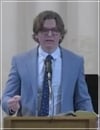
In this sermon, Jim Byrd addresses the Reformed doctrines of predestination and divine providence, grounded in Romans 8:28-30. He argues that God's sovereignty is paramount in understanding salvation, noting that the phrase "all things work together for good" applies specifically to those who love God and are called according to His purpose. Byrd references the effectual call of the Spirit and emphasizes that salvation is entirely the work of God rather than a joint effort with humanity, reinforcing key Reformed tenets such as total depravity and unconditional election. He further explains that divine providence reflects the active working of God to fulfill His predetermined plan, asserting that every event in history and one's life is orchestrated by God for His glory and the good of His people.

Key Quotes

“Salvation is not God's doing His part and me doing my part. Salvation is God doing it all...”

“All things will bring glory to our Lord. And He has so predestinated ahead of time...”

“Providence is God sovereignly and absolutely bringing to pass in time what He predestinated in eternity.”

“You can't add anything to your salvation, even faith or repentance, then you're a gone Jesse.”

What does the Bible say about predestination?

The Bible teaches that God predestines individuals according to His purpose, as shown in Romans 8:28-30.

Predestination is a doctrine rooted in Scripture, particularly illustrated in Romans 8:28-30, which emphasizes that God has foreknown and predestinated a specific group of people to be conformed to the image of His Son. This means that before time began, God determined who would be called, justified, and glorified, showcasing His sovereignty and providence over all creation. It is a testament to God's grace that no one can claim to earn or choose their salvation; it is solely the work of God.

Romans 8:28-30, Ephesians 1:4-5

How do we know God's providence is real?

God's providence is evidenced through His sovereignty in orchestrating all events according to His predetermined plan.

The concept of divine providence indicates that God not only foreordains events from eternity but actively governs them in time. This idea is deeply rooted in Scripture, where we see that all things work together for good for those who love God (Romans 8:28). God’s sovereign rule ensures that every detail, from grand historical events to individual life occurrences, unfolds according to His perfect will. Understanding providence reassures believers that no event in their lives is accidental, but rather is part of God's intricate plan, bringing peace in the assurance that He is in control.

Romans 8:28

Why is predestination significant for Christians?

Predestination is significant as it reflects God's sovereignty and the assurance of salvation for believers.

Predestination matters greatly to Christians because it reveals the heart of God's eternal purpose and grace. In Ephesians 1:4-5, we learn that believers are chosen in Christ before the foundation of the world, demonstrating God’s initiative in our salvation. This doctrine assures Christians that their faith is not a result of their own merit but rather a manifestation of God's mercy and love, fostering humility and gratitude. Furthermore, the certainty of being predestined encourages believers amidst trials, knowing their paths are ultimately governed by God’s providential care.

Ephesians 1:4-5, Romans 8:30

Sermon Transcript

Auto-generated transcript • May contain errors

100%
Well, turn to Romans 8. I think
this will be a familiar passage of scripture to you. Romans chapter
8, and I'm just going to read a very few verses to you here,
beginning at verse 28. And here's my subject. And I
hope those who are watching, I hope you'll take your Bible
and follow along with the rest of us. Here's my subject, Predestination
and Providence. That's the subject I want to
deal with, and I'll be dealing with it another time as well.
But we'll start on this tonight, kind of a continuation of the
purpose of God that we've been speaking about for a couple of
Wednesday nights. Predestination and Providence. Romans 8, verse 28. And we know, we have confidence,
we have the assurance that all things work together for good
to them that love God, to them who are the cold according to
his purpose. For whom he did foreknow He also
did predestinate to be conformed to the image of His Son, that
He might be the firstborn among many brethren. Moreover, whom
He did predestinate, them He also called." And by the way,
that word called in verse 28 is the effectual call of the
Spirit, the drawing call of God to come to Christ. Moreover,
whom he did predestinate, them he also called." That's named. He named us as his children. And our names were written down
in the Lamb's Book of Life. So, moreover, whom he did predestinate,
them he also named or called. And whom he called, them he also
justified. and whom he justified, them he
also glorified. What shall we then say to these
things? If God be for us, who can be
against us? He that spared not his own son,
but delivered him up for us all, how shall he not with him also
freely give us all things? Who shall lay anything to the
charge of God's elect? It is God that justifieth, who
is he that condemneth. It is Christ that died, yea,
rather, that is risen again, who is even at the right hand
of God, who also maketh intercession for us. And I'll stop my reading
there because I won't get any further than there tonight. And
the 28th verse, here we are reminded of something that is emphasized
throughout the entirety of the Word of God. There's really only
one true division of the human race. We are on the one side or the
other of this dividing line. And all other divisions And all
other distinctions will finally appear to be what they really
are, meaningless. There are only two groups of
people who've ever lived in this world, the children of God and
the children of the wicked one. The righteous and the wicked,
the saved and those who are finally lost. And in the 28th verse,
here we have the one group. And the one group, that is the
people of God, are distinguished by two things. Number one, look
at it again, verse 28. We know that all things work
together for good. Now that is not a blanket statement
to everybody, to everybody in the whole wide world. That's
only using half of a verse. All things work together for
good to a particular group of people. And they're identified,
first of all, as being those that love God. And secondly,
as those who are thee called according to God's purpose. These people for whom the apostle
gives a consoling word, a comforting message, these people who are
the people of God, they love God. They love God. 1 John 4, 19 says we love Him
because He first loved us. Our love for the Lord is not
to be found having originated within our hearts, but our love for the Lord is
because of His love for us. The Lord said to Jeremiah, I
have loved thee with an everlasting love, therefore in loving kindness
have I drawn thee, have I pulled thee, have I called thee effectually. In the book of Galatians chapter
five, and you don't have to turn there, but Paul writes, he says,
but the fruit of the spirit, What does that word fruit mean?
Well, it's the product of the spirit. It's just that he's gonna
tell us what the spirit of God produces within us. And if he
doesn't produce these things, they will never be found within
us. And the very first one he mentions
is, now the fruit of the spirit is love, love. If you love Jehovah, if you love
God in the Trinity of His persons, if you love the Father, if you
love the Son, if you love the Holy Spirit, if you love God,
it's because the Spirit of God has done a work within you and
the produce or the product of that work is you love God. It cannot be that the Spirit
of God has done a work within you and you don't love God as
He's revealed in the Scriptures. God's people love the Father.
We love Him as the Father of grace, as the Father of salvation,
as that one in whom our salvation originated in His eternal heart. It's the Father to whom election
under salvation is attributed in Ephesians chapter 1. It's
God who chose us. We didn't choose Him. He chose
us. He set His love on us eternally. And we understand that when we
talk about the everlasting covenant of grace, That's not something
that happened in time. That's always been. God has always
loved His people. Christ has always been the surety
of God's people. The Spirit of God has always
been the one to reveal Christ to us and quicken us by His power. Salvation originated with the
Father eternally. How long have we been the children
of God? Forever. Forever. There was never
a beginning to the love of God, and there'll never be an ending
to the love of God for us. The fruit of the Spirit is love. If you love God, I can tell you
why you love God, as He's revealed in the Bible. Because the Spirit
of God abides in you, and He has instructed you, He has taught
you. Now, if you deny who God is, and you don't bow before Him
according to what the Scripture says, that's evidence that the
Spirit of God doesn't indwell you. You see, here's the way
it is. The same Spirit of God who inspired
Paul to write this passage of Scripture, and all the other
writers of Holy Scripture, the same Spirit of God, who's the
Spirit of inspiration, is the Spirit who quickened us, who
abides with us, who reveals truth to us. And it cannot be that
the Spirit of God who wrote this book indwells us if we say something
like, I know it says that, but I don't believe it. Well, that's
the spirit of error. You don't have the Holy Spirit.
That's the spirit of evil. That's the spirit of unbelief.
You see, the children of God embrace what God says. There's
a good bit of it we don't understand. Say, Jim, I can't wrap my mind
around the person of God. Well, who can? He's infinite
God. He's eternal. He's omnipresent. He's omnipotent. He's everywhere. Well, I can't wrap my mind around
that, but I'll tell you what, whatever this book says about
God, and I believe it, don't you? I embrace what the scripture
says. That's evidence of the fruit
of the Spirit. The first fruit is love. The
only way we can love God is the result of the overwhelming grace
and power of the Spirit. We love God the Father. We love
God the Son. We love God the Son who's the
eternal surety of the everlasting covenant. We love the Father
who chose a people unto salvation. I don't have a problem with that. I don't have a problem with the
fact that He predestinated a bunch of people unto the adoption of
children by Himself. You don't have a problem with
that, do you? Because that's what the Word of God says. I
believe what God the Father did. I believe what God the Son did.
What did God the Son do? He came down and He humbled Himself
and became obedient unto death, even the death of the cross,
to save those that the Father entrusted to Him in everlasting
election. He's the shepherd of the sheep.
And all the sheep entrusted by the Father unto Him, the Savior
will have. And He laid down His life for
the sheep, not for goats, not for the children of the wicked
one. He paid somebody's debt and whosoever
debt He paid, they're debt free. Isn't that right? We don't owe
anything to God, except I'd say thanksgiving,
but even a thankful heart, God's got to give that. But the price
of our redemption, that's the Lord Jesus. God said in Job, Release them
from going down to the pit. Well, what's the reason? I have
found a ransom. That's what God said. A ransom's
been paid. And where a ransom has been paid,
those who were imprisoned have got to go free. The law of God
held us. And Christ said, what's the price
to be paid to release these? And the law of God, the justice
of God said, your life. Because his life, the life of
the son of God is of infinite value. Christ said, that's the
price I'll pay. And bearing our sins in his own
body on the tree, he died under the wrath of God, drinking the
cup of damnation dry. And then, having done that, he
then said, it is finished. And it was over. Price paid. Responsibility for the sins of
all those he represented fulfilled. You see, this gospel, this gospel,
you trace it back to the infinite wisdom of God. And yet, as God presents it to
us in His Word, we don't have to have great wisdom to receive
it, but we do have to have that wisdom
which is from above. Isn't that right? There has to
be a revelation to our hearts of the truth. Because if the
Spirit of God leaves us to ourselves to figure this out, and I get
it all straight in my mind, well, nothing's ever gonna happen like
that. Bow to the Word of God, believing
what God says. And the only way you can believe
is if God the Holy Spirit does something for you. By the way,
there in Galatians chapter two, where it talks about the fruit
of the Spirit, And I'll give you the rest of, through the
Spirit, love, joy, peace, long-suffering, gentleness, goodness, faith,
meekness, temperance, against such there is no law. Against such there is no law. I'll tell you what, the law of
God, you turn to the law of God, it can't give you love for God. You rush like a lot of people
do, rush to the law of God, rush to Mount Sinai. What can it give
you? It can't give you peace. It can't
give you joy. It can't give you salvation.
All the law of God can do is beat you and say you're guilty. That's what the law was given
for. So against such, there's no law. There's no law that can
help you, no law that can create love for God in your heart. So this first group of people
love God. We love God the Spirit. We love the Father, the Son,
and the Holy Spirit in all of His attributes, in all of God's
characteristics. We love the Spirit of God who
came to us in our death and quickened us. I love that God, don't you? I
love that God, the God of salvation. I'm not interested in a God who
made things ready for you, and then he says, now the rest's
up to you. Because there's no hope for me there. I want to hear about a salvation
that's been finished, that's been completed. That's a done
deal. And that's the salvation that
is of God. If you've got to add anything,
anything to your salvation, even faith or repentance, then you're
a gone Jesse. It's just no hope for you. You
can't add anything. Because to attempt to add to
the salvation of God is really a deadly thing. Because that's works. Works will kill you. Grace saves. Works kill. So, the first characteristic
of these people, of whom it is said, and we know that all things
work together for good, Well, first characteristic is
they love God. And the second characteristic
is they're called according to His purpose. This is the effectual
call of grace. It's not an invitation. It's
a call of grace. The Lord doesn't ask you to do
something for Him. He comes and does a work of grace
for you. Salvation is not God's doing
His part and me doing my part. Salvation is God doing it all
and only then if you comprehend that to some degree, if you understand
that, that will give you some peace. It's not dependent upon
you. We say, well, how can I know
I'm saved? Because the Spirit of God works
within you, and the Spirit of God causes you to love God as
he's revealed, and to rejoice in Christ Jesus. We're called according to his
purpose. In John chapter six, the Lord talks about, they shall
all be taught of God. Everyone that hath heard and
learned of the Father Christ, it comes to me. I don't want to know that God
has done something for me. You come to Christ. You come
as a beggar. You come empty handed. You don't
come bringing your works. You don't come bringing your
Bible readings and your repentance and your Sunday school attendance
and your church attendance and membership. You don't come bringing
your baptism. You come bringing nothing. Like
top lady said, nothing in my hands I bring, simply to thy
cross I cling. Helpless, help, that's me. I
look to thee for grace. Foul I to the fountain fly. Save me, Savior, or I die. We're called according to his
purpose. You see, this one group, I said there's only two groups,
children of God and children of the evil one. This one group
is distinguished by this, they love God. And a lot of people
tell me, I love God. Well, tell me about the God you
love. And they start talking about the God they love. I said,
well, now wait a minute, that's not the God of the Bible. That's
the God of your vain imagination. That's not the true God. We love
him as he's revealed. We love Christ Jesus as he's
said before us in the scriptures. The sovereign savior. The almighty
savior. Not somebody who came down here
to try to do something or other. You and me, we try to do things. And when we do them, we kind
of halfway do them. But the Savior, He didn't halfway
do anything. He came to do the Father's work,
to fulfill the Father's saving will. And He accomplished that. So
there's this one group distinguished by love for God, called according
to God's purpose. Then there's another group, and
I'll just, I'm not gonna spend much time on this, but turn over
a page or two to Romans 11. Romans 11, look at verse 7. Romans 11, 7. And I'll back up to verse 5.
Romans 11, 5. Even so then at this present
time, and this is true right now, just like it was in Paul's
day. Even so right now at this present
time, also there's a remnant according to the election of
grace. The word remnant is seed. As
in Isaiah 53, when it said of Christ, he shall see his seed,
his seed, those that God gave him. Verse six, and if by grace,
then it is no more of works, otherwise grace is no more grace,
but if it be works, then is it no more grace. Otherwise work
is no more work. What then? Israel hath not obtained
that which he seeketh for, but the election hath obtained it. Who obtains salvation? The elect. The election obtains it. Well,
what about the others? Well, there they are, the rest.
So that's all there is, the election and the rest. The rest were blinded. How come
folks can't see? Well, they're blinded. And God, according to the riches
of His grace, purposed to give sight to some, and He purposed
to leave others alone. He passes people by. And I know, I've heard, I guess,
about all the, all right, well, that's not fair. Well, I tell
you what, whatever God does is fair. Whatever God does is right. After all, ain't nobody deserving
of his salvation. We're all deserving of the wrath
of God. In fact, look back here, and
there's the rest. That's children of the wicked
one. But look back in chapter nine. Chapter nine, verse 18. This is the God of the Bible.
This is the God you come to love. The God who does what he wants
to. He doesn't conduct himself according
to your ideas of who he is, He does what he wants to according
to his own eternal purpose. In verse 18, he says, therefore
hath he mercy on whom he will have mercy. Who's he gonna have
mercy on? Whoever he wants to. Whoever
he wants to. And whom he will, he hardens. There's the two groups right
there. The one that he shows mercy to, and then the other
group, he just hardens them. So you mean he hardened Pharaoh's
heart? Yes, that's what scripture says. He showed mercy to Moses. He showed mercy to the Israelites. He hardened the heart of Pharaoh
and the Egyptians and threw a big bunch of them into the Red Sea
and drowned them. And God said, for this purpose,
I raised up Pharaoh to make my power known. To make a name for
myself, God said. He raised him up, used him, threw
him into hell. You have trouble with that? You
have to take it up with God. That's God of the Bible. That's
what he wants to. So we go back over here to Romans
18. And again, I repeat, this doesn't
say that all things work together for everybody. All things work
together for good for everybody. only for those in the first group. And I want to say this about
this verse, because there's a lot of people that run to this verse
for comfort. And for God's people, rightfully
so. But I would ask this. This verse,
it says, All things work together for good to them that love God,
to them who are called according to his purpose. How could this
be said with any certainty unless God Almighty rules over every
single thing? Huh? If there's something he
doesn't rule over, well, maybe that won't work together for
good. So you see, we're brought to this conclusion. Either God
has predestinated and He's bringing to pass His own free and sovereign
will, or this promise isn't valid. How could it be valid if there's
no such thing as predestination? How could it be a valid promise,
a source of consolation, The Lord didn't determine everything
and if he's not working all things according to his own purpose. Predestination. What is that? Well, the word,
you divide it, there's pre and then destination or predestinated. Pre means ahead of time. He did something ahead of time.
Well, when did time begin? Well, when he started it, Genesis
1.1. So before Genesis 1.1, God did
something, right? Okay, that's ahead of time. Before
time ever began. Actually back in eternity. And then, destinated. Determined. That's what that
means. He determined. The literal meaning
here is he set as a boundary. As a boundary. As a limit. Everything. Nothing excluded. So you mean Even evil? Yeah, even evil. Everything serves
the purpose of God. That's what people don't realize. And I've said it before, we think
everything's about us. And we kind of think that it
Because we're centered in our own little world, we think, well,
it's about me. It's about us. It's about mankind.
It's not about mankind. It's about God. It's about His glory. It's about
magnifying Him. All things will bring glory to
our Lord. And He has so predestinated ahead
of time. He destined everything that would
ever happen. He ordered everything that would
ever happen. He ordained everything that would
ever happen according to his own goodwill and purpose. And
all things that shall ever come to pass are by God's divine appointment. And if the Spirit of God drives
that deep in our hearts, we'll have real peace as the children
of God. You see, that's the only way
verse 28 can make any sense. How could it ever be promised
that all things will work together, together for good unless God
has predetermined all things and He is working them Himself
together. Predestination, therefore, includes
every event in human history from creation to the judgment. Well, Jim, are you saying you're
a predestinarian? Now you're getting it. That's
right. This includes all the activities
of angels, good and bad, or as the Bible calls them, elect angels. and fallen angels. It includes
all the activities of mankind, both saved and lost. Predestination, then, is closely
allied with creation. Because the God who made all
things has ordained what all things will be and what will
become of all things. Well, then what is divine providence? Well, divine, what we call divine
providence, and I recognize the word providence is not used in
the scriptures this way, but the truth is set before us. That
is the accomplishment, providence is the accomplishment of God's
predestination throughout creation. You see, providence is God carrying
out, it's the ongoing working of God to fulfill everything
that he predestinated. That's not too hard to understand. In other words, here's what providence
is. It is God doing in time what
He predetermined to do before time. You got that. I'm sure you do. Providence is
God sovereignly and absolutely bringing to pass in time what
He predestinated in eternity. So as you look back over the
day, in world history, world events,
if you watch the news, the things happening in the world, things
happening in our state, things happening in our county, well,
let's bring it even closer, the things happening in your life.
They were predestinated and they happened by divine providence
because God is working all things in your life according to his
will. Let me not fuss about what he
does then. Let me not complain because he is doing his will.
And somehow, in a way that is way beyond my understanding,
our great almighty God is working everything in my life, in your
life, you who are watching, every single thing in your life, every
step you take, is according to the predestinated
purpose of God, and all of these things working together now, like a mechanism, like wheels,
like gears. All things are working together
according to God's predestinated purpose. And in the end, it will
be found they all work together for your good. Now you can't
say, well, I don't know how that event was
good. Well, it doesn't say that particular
event. It says all things work together. It's like pieces of a puzzle. You put them pieces together
and you hope that that 1,000-piece puzzle has one more after 999. And there it is. There's the
whole thing. And see, that's the way it's
going to be with your life. All these pieces of the puzzle from your formation in your mother's
womb right on along when you were
just a little toddler. And then in grade school, in
high school, in college, in life, in your jobs, in your times of
health, in your times of sickness, all of these things. It's not
luck. It's providence bringing to pass
what God predestinated. That's not complicated, is it?
It's deep. It's deep, but it's really not
complicated. So don't argue with what God
says. What he says is right. I tell
you, may he give us grace to fall down before him and worship
and honor him and thank him. Maybe my path is rough. I got
sick yesterday afternoon. I didn't enjoy that. I can't
say that was good, but it worked with everything
else. And I'll tell you what, it made me thankful for the times
when I feel good. And when that was over with,
when I'd upchucked everything, right down to my toenails. I
was glad it was over with. I said, Lord, I don't know why
that happened, but you're sovereign over that, too. Everything's working together
for the good of those that love God, called according to his
purpose. Well, get them black folders.
We're going to sing one more song, then we're going to go
home.
Jim Byrd
About Jim Byrd
Jim Byrd serves as a teacher and pastor of 13th Street Baptist Church in Ashland Kentucky, USA.

Comments

0 / 2000 characters
Comments are moderated before appearing.

Be the first to comment!

Joshua

Joshua

Shall we play a game? Ask me about articles, sermons, or theology from our library. I can also help you navigate the site.