Bootstrap
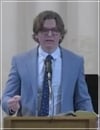
Jim Byrd

Our Great High Priest

Hebrews 4:14-16
Jim Byrd March, 5 2025 Video & Audio
0 Comments
Jim Byrd
Jim Byrd March, 5 2025

In the sermon "Our Great High Priest," Jim Byrd addresses the doctrine of Christ's priesthood as articulated in Hebrews 4:14-16. Byrd emphasizes that Christ, as the fulfillment of the Old Testament priesthood, has rendered obsolete the rituals and sacrifices of the old covenant through His complete and perfect atonement. He draws from various Scripture passages, notably Hebrews 10 and 2:17, highlighting the singular efficacy of Christ's sacrifice and the permanent removal of sins for believers. The sermon underscores the significance of approaching God with confidence, knowing that through Christ, believers receive mercy and grace, alleviating the fear of judgment due to their sins. Byrd's message reflects core Reformed doctrines, particularly the assurance of salvation and the finality of Christ's redemptive work.

Key Quotes

“Our Savior has come. The new covenant is in force, the everlasting covenant of grace.”

“He is our great high priest. And that which is to be remembered concerning our Lord today as being our Great High Priest, number one, is what He has already done.”

“Come boldly to him. Lord, I’m one of your children. I have messed up again, but I’m thankful that Christ died for me.”

“You’re not dealing with an Aaron now. You’re dealing with the Son of God, who loved you and gave himself for you.”

What does the Bible say about Jesus as our High Priest?

The Bible reveals Jesus as our great High Priest, uniquely qualified to mediate between God and humanity due to His divine nature and perfect obedience.

In Scripture, particularly in the book of Hebrews, Jesus is depicted as our great High Priest who fulfills the role in ways that surpass the Old Testament priests. He did not take the nature of angels but rather the seed of Abraham, making Him intimately familiar with human struggles and temptations (Hebrews 2:16-17). Unlike Aaron, who was merely a mortal, Jesus's divine nature ensures that His atonement is perfect and sufficient. As the only one who could bear the sins of His people without being stained by sin Himself, He accomplished what no other priest could do, thus establishing a new and everlasting covenant (Hebrews 10:12-18).

Hebrews 2:16-17, Hebrews 10:12-18

How do we know that Christ's sacrifice is sufficient for our sins?

Christ's sacrifice is sufficient because He took upon Himself the sins of His people, accomplishing full atonement once and for all.

The sufficiency of Christ's sacrifice is rooted in His identity as both God and man. In taking on the nature of humanity, He became a merciful and faithful High Priest, capable of reconciling God and man (Hebrews 2:17). His sacrifice, as portrayed through the imagery of the lamb and the scapegoat, illustrates how He bore our sins away—truly satisfying God's wrath and fulfilling the requirements of justice. Furthermore, the writer of Hebrews assures us that through His death and resurrection, our sins are remembered no more, abolishing any fear of retribution regarding our past sins (Hebrews 10:17). This leads us to rest confidently in the knowledge that His work is complete and no additional sacrifices are needed.

Hebrews 2:17, Hebrews 10:17

Why is having Jesus as our High Priest important for Christians?

Having Jesus as our High Priest is crucial as He mediates for us and offers grace and mercy in our times of need.

The significance of Jesus as our High Priest cannot be overstated for Christians. Firstly, He stands before God on our behalf, interceding for us with an understanding of our weaknesses (Hebrews 4:15). Unlike the Old Testament priests who were flawed, Jesus is perfect and without sin, making Him the ultimate mediator (Hebrews 4:14). This relationship enables believers to approach God boldly, as we can confidently seek His mercy at any time (Hebrews 4:16). In our failures and struggles, knowing Christ's role as our High Priest allows us to experience His grace and mercy without fear of judgment, for He recognizes our need for continual grace.

Hebrews 4:14-16

What are the implications of the New Covenant in Jesus' priesthood?

The New Covenant established by Jesus means that we no longer rely on Old Testament sacrifices, as His one-time sacrifice is sufficient for our redemption.

The New Covenant, initiated by the death and resurrection of Jesus, marks a significant shift in how believers relate to God. In Hebrews, the Apostle Paul emphasizes that the Old Covenant — with its rituals and animal sacrifices — has been rendered obsolete by the superior sacrifice of Christ (Hebrews 8:13). This new relationship is characterized by direct access to God, as Jesus, our great High Priest, has satisfyingly fulfilled all requirements for atonement. As such, believers are no longer burdened by the weight of continual sacrifices and can confidently approach the throne of grace in full assurance of faith, knowing that their sins are remembered no more (Hebrews 10:17).

Hebrews 8:13, Hebrews 10:17

Sermon Transcript

Auto-generated transcript • May contain errors

100%
In the Old Testament, the promised
Messiah was to be a prophet like Moses, he was to be a king like David,
and he was to be a high priest after the order of Melchizedek. The job of the high priest was
very, very important. And when we get to the book of
Hebrews, it is the intention of the Apostle Paul to teach
these professing believers, the Hebrews, the Jews who profess
to believe, to teach them that all of the rituals and all the
ceremonies of the old covenant had all passed away. And therefore,
they should not be looking to animal sacrifices or fulfillment
of some of the laws of the Old Testament. They should not be
caught up with those things anymore because as it says in the end
of Hebrews chapter 8, all of those things have been abolished.
Our Savior has come. The new covenant is in force,
the everlasting covenant of grace. And it is for them and for us
to cease to look to the rituals of the Old Testament, the celebration
of the days of the Old Testament, the observance of the special
feasts of the Old Testament. All of those are done away with
in one person, the Lord Jesus Christ. And one of the things
that in this book Paul especially stresses is the importance of
and the work of our Lord Jesus as our great High Priest. And
the High Priest, to begin with, Aaron, the older brother of Moses. He had many duties, but the most
important duty he had was to minister to God on behalf of
Israel, especially on the Day of Atonement. Now, you can read
in the book of Exodus concerning the garments that the Lord ordained
for Aaron, the first high priest to wear. Actually, he had two
kinds of garments. The first garment he had was
a magnificent garment, very special. Nobody else had a garment like
the high priest had. But on the day of atonement,
he laid aside those glorious garments and he put on white
linen. And in that white linen, he ministered
before the Lord on behalf of Israel. entering into the Holy
of Holies and presenting the blood of a sacrifice, first for
himself and then for all of Israel. He sprinkled the blood upon the
mercy seat. And then he came back out and
there was a goat The scapegoat, there were two goats, one for
the Lord, that's the one he killed and applied the blood, the other
one was a scapegoat. And Aaron laid his hands upon
the head of the scapegoat in symbolism only, only in a symbolic
way, transferring the sins to the goat. Obviously, no sins
were really laid upon the goat and Aaron couldn't transfer them
to the goat. But it was a picture of the Lord
Jesus, God's sacrifice for sin, because both of those goats that
Aaron chose were pictures of the Savior. The first one that
died pictured our Lord Jesus, His substitutionary sacrifice. He shed His blood for our pardon. And when our Savior went into
the Holy of Holies, all of Israel gathered outside. Nobody was
with Him. When He had His glorious garments
on and went into the holy place during the year, other priests
were there too, you know, doing their work with the showbread
and the candlesticks and so forth and burning incense. But on this
day, nobody worked but the high priest. He's the only one. Nobody was with Aaron. And of
course, that picture that the work of atonement by Christ our
Savior was only done by him. He said in Isaiah, he said, no
man was with me. No man could be with him. No
man could assist him. It was a work of redemption that
he alone was qualified to do. and the sins that were transferred
to him by imputation, he bore them away, which was
pictured by the scapegoat. Aaron, the high priest, he chose
out a fit man. And the only fit man and worthy
man to take our sins away is the Lord Jesus Christ. And Aaron said, Brother, you
come up here and take this goat and lead him out into the wilderness. And that goat having symbolically
had the sins of all Israel laid upon him, that fit man led that
goat right on out of the camp into a land, a barren land into
the wilderness. And all of Israel watched They
watched till he was all the way out of sight, but nobody went
home. Nobody took a break. This is
the day of atonement. Are our sins really covered?
Are they really gone for a year? And then somebody said, he's
coming back. Well, does he have the goat?
No, he doesn't have the goat. came back. That scapegoat pictures
our Lord Jesus who took our sins away and he came back in his
resurrection without our sins. Because our sins were really
imputed to him. He is our great high priest.
And that which is to be remembered concerning our Lord today as
being our Great High Priest, number one, is what He has already
done. He has already taken all of our
sins away into the land of divine forgetfulness. The Lord said
in Hebrews chapter 10, their sins and iniquities will I remember
no more. And that crushes forever this
foolish idea that in the judgment the saints of God are going to
weep and be sad over opportunities that were lost, over works that
weren't performed, that the Lord is going to embarrass us and
He's going to bring shame upon us at the judgment. How can that
be when God says there are sins and iniquities I will remember
no more? I hate my sin. We were somewhere
the other day. I forgot where it was. And, oh,
we both had to go to the doctor's appointment at the hospital,
and a fellow picked us up in a shuttle. And he was a very
pleasant man. And he said something like, God bless you. And I said to
him, I said, we were blessed from old eternity. And we're
still blessed. And before God, we don't have
any sin. Where's our sin? Can you find
them? I got news for you, God can't
even find them. They're behind his back. They're
gone, forever gone. And that crushes this idea that
the Lord is going to bring us to shame in the judgment for
the sins that we have committed. If our Lord Jesus really and
truly put our sins away, then there is no condemnation, there
is no judgment of any kind. For we're righteous in Him. And
in the book of Hebrews, the inspired writer, whoever it was, was led
of the Holy Spirit to emphasize the work of the high priest. Now he's already mentioned in
the book of Hebrews. Go back to chapter two. Chapter
two. The high priest, the high priesthood
of Christ has already been mentioned. Look at chapter two and verse
17. Verse 16 first. For verily he, that is Christ,
took not on him the nature of angels. And the word took means
to lay hold of. Well, he didn't lay hold of the
nature of angels, but he took on him, he laid hold of the seed
of, watch it, not Adam. Not Adam. He took on him the
seed of Abraham. Wherefore, in all things it behooved
him to be made like unto his brethren." He had obligated himself. That word behooved means he took
an obligation upon himself to be made like unto his brethren. that he might be, watch it, a
merciful and faithful high priest in things pertaining to God to
make reconciliation for the sins of the people. What kind of high
priest is our Lord Jesus? Number one, he's a merciful high
priest. He's a high priest who shows
mercy. And number two, he's a faithful
high priest in things pertaining to God. in order to make reconciliation
for the sins of the people. In other words, the job of our
Lord Jesus Christ was to take care of the sins of his children. And he did that as our great
high priest. He took upon himself the nature
of man, but without sin. He united himself to his people. He's one of us. Bone of our bone
and flesh of our flesh. He took on him the seed of Abraham. And so, the writer begins by,
in the second chapter, he talks about the high priesthood of
Christ, and then he continues in the third chapter. Look at
verse one of chapter three. Wherefore, holy brethren, partakers
of the heavenly calling, consider, that is, observe very closely,
fix the eyes of your mind upon the Apostle, capital A. The Apostle of our His profession
is the Lord Jesus Christ. He is the one God sent. Apostle
means a sent one. He was sent with a message. And
the message He was sent was salvation and redemption and reconciliation
by His own blood. He is the Apostle that God sent
and He is the High Priest of our profession. Christ Jesus. And the first three
words of verse 2, who was faithful? He was faithful. None of the
children of God have been faithful, none are faithful. We believe
God, but we're not very faithful. But as it says in 2 Timothy chapter
2, though we believe not, though we're unfaithful, so often he
abideth faithful. He's faithful to His covenant
obligations. As our surety in the everlasting
covenant of grace, He obligated Himself to come and take our
place, to die our death, to bear our sins, and to save us by His
own grace. He was faithful to God. And then
we come down here to chapter 4. And here's the third time
that his high priesthood is mentioned, and I won't go into the rest
of them throughout the book. But here in chapter 4 and verse
14, he's called our great high priest. Why is he great? He's
great because he's the son of God. The son of God. Aaron was never said to be a
great high priest. He was a high priest with infirmities. He was a high priest with many
sins. He was a high priest who was
a mere mortal sinful man. But our Savior is a great high
priest. Why is He great? Because He's
the Son of God. His greatness lies in His person. Remember this, there's no need
to talk about the things that the Lord Jesus Christ did unless
it's first of all established who He is. who He is as the Son
of God, who He is as God over all blessed forever, who He is
as that God to man gives value to all that He did. If He's not
God, there's no value to anything that He did. If He is God, and
He is, if He was God, and He was and still is, then everything
He did was with the Midas touch. Always successful. Because God
can't fail. He can't fail. We have a great
high priest. He's great in every way. And he's passed into the heavens.
Upon what basis? Well, upon the basis of having
saved us. He was commissioned to do the
work of redemption. And having accomplished that
work, He is passed into the heavens, beyond the first heaven, beyond
the second heaven, beyond the third heaven, all the way to
the throne that is in heaven, where He sits as the honored Redeemer. And then Paul says, Let us hold
fast our profession. Take hold of Him. And believing
Him to be who He is and having accomplished all that He did,
tenaciously hang on to Christ. But know this, your hold on Him
is not what keeps you safe. I say hold on to him. Hug up
to the Savior. Grab hold of him. But it's not
your hold on him that keeps you safe. It's his hold on you. We used to sing a song years
ago. He will hold me fast. You ever
heard that? He will hold me fast. And He
will. I hold fast to Him. But I tell
you what, I have a flimsy grip. But He holds fast to me and He
won't let me go. He who chose me unto everlasting
salvation. He who redeemed me by His precious
blood. He in whose righteousness I stand
clothed and accepted before God. He laid hold to me in calling
grace. He took me aside by His almighty
power, laying hold to me with life-giving authority. And He took away from me the
heart of stone, and He gave me a heart of flesh. He gave me
ears to hear His voice. He gave me eyes to see His glory. He gave me a heart that longs
to beat only for His magnificence. And He holds me fast. Jim, do
you fear that you'll ever be lost? No, I don't. Well, is your assurance in your
In your faith? No. Is your assurance in your
repentance? No. Well, upon what do you base
your confidence of being saved forever? Because of who my great
high priest is. And because of the price that
he paid to redeem me. He will have no redeemed people
who ultimately perish. To think that is heresy. One of the truths that I just
love so dearly is that of particular redemption. He who bought me
owns me. He who chose me will never be
ashamed of me. He said, all that the Father
giveth me shall come to me. I came, actually I'm still coming
to him. And then he said, he that cometh
to me, I will let no wise cast out. Yeah, but what if you sin?
If I sin, I am sin. But he's not gonna cast me out. What if you misbehave? What if
you do something that brings reproach upon His name and reproach
upon His people? I hope I never do that, but even
if I do, He will not cast me out. He of God has made unto me wisdom
and righteousness and sanctification and redemption, that according
as it is written, He that glorieth, let him glory in Christ. He's passed into the heavens. The messenger from God said to
those disciples who were gazing up into heaven like, you're never
gonna see him again. He said, why are you looking
up into heaven with the attitude like, well, he's gone forever
and I'll never see him again? This same Jesus, This same Jesus,
the same one you've seen ascend up into heaven by His own power.
He's passed into the heavens, this same Jesus. He shall so
come again in like manner as you've seen Him go. Look at verse
15, for or because. And it's like a double negative
here to stress a positive point. We have not an high priest which
cannot be touched with the feeling of our infirmities. We have a high priest who is
touched with the feeling of our infirmities. In fact, He was
in all points tempted and tested like as we are. Do you ever think nobody even
knows what I'm going through or what I've gone through? I
beg your pardon. Our Lord Jesus has gone through,
He went through more than we could ever imagine. We could
ever comprehend. Nobody knows what I've faced.
He does. Nobody knows what I've gone through.
He does, because he's gone through it. While on one occasion, the Spirit
of God drove him out into the wilderness, and for 30 days and
30 nights, Satan was his combatant, attacking him on every point.
You think you know something about difficulties? Our Lord, 30 days and 30 nights,
he stood firm. Satan couldn't find any weakness
in his armor. He finds a lot to work with with
us. And I doubt that Satan even fools
with us, just a third string. bent, set, and demon can handle
us quite easily. But I tell you what, even the
fiend from hell is no match for our Savior. In all points, he
was tempted like as we are. Hungry, thirsty, weary, forsaken, sold out by one of his apostles,
another one denied him three times. And when he was arrested and
brought before the most powerful religious body on earth, nobody
stood with him. Where is everybody? Out there. Nobody stood with him. But all of these things he went
through, here are these three last words of this verse, yet
without sin. That's critical right there.
Without sin. He knew no sin, he did no sin, he was without sin. Yes, the
sins of his people were heaped on him, as a heavy, heavy weight
charged to his account, the word is imputed unto him. But even when sin was imputed
unto him and when he died under the wrath of God because of imputed
sin, even then he was not contaminated by our guilt. Because as Brother Mahan said
years and years ago, one sinner can't die for another sinner. That wasn't a sinner dying for
us. That was the Savior. That's who
that was. Without sin. Well then, since
he's our great high priest, what then? What does this mean? Well,
verse 16. Let us therefore, since we have a great high priest,
not a mediocre high priest, but the great high priest, let us
therefore come boldly under the throne of grace. It's a throne
because the king sets upon it and the king has the authority
to show grace. Come boldly. Not arrogantly,
but come reverently and come boldly. So I'm so ashamed. Come on in your shame. But I
failed him so miserably. Come on in your miserable failure. So I've gone, and I've had people
say this to me, I'm going to see if I can straighten things
out, then I'm going to come to him. You're a fool. You're a fool. You can't straighten
things out. When you came to the Lord Jesus
Christ in conversion, when He drew you unto Himself, did you
kind of clean yourself up before you came? Well, no. Well, don't
get the idea that you've got to clean yourself up now to come
to Him. Well, I've got to think right.
You'll never think right in this world. I won't either, because
our minds are still contaminated by sin. Well, then what should
I do? Come boldly to him. Lord, I'm one of your children.
I have messed up again, but I'm thankful that Christ died for
me. I can come assurance that he's not going to turn me away.
Watch it. "...that we may obtain mercy
and find grace to help in time of need." When is your time of need? Well,
I'll tell you when my time of need is. Always. Always. That's my time of need. And He says, He says, "...come
boldly to the throne of grace," not to ask for mercy. The mercy
is there. Our Savior is the merciful Savior. He's merciful and faithful. Not to beg Him for mercy. Come to Him and say, Lord, here
I am again. And lots of times that's how
I pray, Lord. I've messed up so many times
today, I can't even count them all. But you said, come boldly. I come to obtain mercy. Now you
think he's going to withhold mercy from one of his brethren? Do you think when you come looking
for grace, you're going to find justice? Do you think when you
come to Him for grace to help you in time of need that He's
going to say, I've helped you so many times, but not this time?
That'll never happen. He's not that kind of Savior.
His sacrifice on the cross of Calvary centered it all. It's
done. So come boldly to Him. Every time is a time of need.
Just come on. Receive grace. You can't buy
it. Well, Lord, I promise I'll do
better. You fools say that. Lord, you know me, I ain't gonna
do any better. I can't rise any higher than
the mound of sin upon which I was originally. Lord, I need you. And he assures you, I'm your
great high priest. You're not dealing with an Aaron
now. You're dealing with the Son of God, who loved you and
gave himself for you. Get them black folders out again. And we're gonna turn to number
15, Rock of Ages. Did we decide we're gonna try
to sing that new, you wanna try that new tune? Okay.
Jim Byrd
About Jim Byrd
Jim Byrd serves as a teacher and pastor of 13th Street Baptist Church in Ashland Kentucky, USA.

Comments

0 / 2000 characters
Comments are moderated before appearing.

Be the first to comment!

Joshua

Joshua

Shall we play a game? Ask me about articles, sermons, or theology from our library. I can also help you navigate the site.