Bootstrap
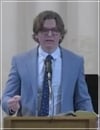
Bill Parker

Signs of Judgment

Ezekiel 4
Bill Parker February, 5 2014 Audio
0 Comments
Bill Parker
Bill Parker February, 5 2014

Sermon Transcript

Auto-generated transcript • May contain errors

100%
Let's turn in our Bibles to Ezekiel
chapter 4. Now in this chapter, and in the
next chapter actually, what we see here are signs of judgment. That's the title of the message.
Signs of judgment. I don't know if you've had an
opportunity to read this chapter or not, but if you haven't, then
you're going to find some things that may seem to us to be extreme. And sometimes, you know, it seems
to us that the Lord God goes to great extremes in his commandments
that he gives to his people, especially his prophets, the
Old Testament prophets especially. This is like extreme signs or
extreme actions. because it's an extreme judgment
against the sin of the people. And this is one of those episodes
in the life of Ezekiel where God commanded the prophet to
do these extreme things, some things that we would say are
impossible for the flesh to perform, the weakness and the infirmities
of the flesh. But God did this for the purpose
of revealing something, some truth to his people. You know,
we sing that song, God works in mysterious ways his wonders
to perform. And that's true. But the occasion
of the prophecy here to the people of Judah in captivity in Babylon,
the occasion called for these extreme actions because the people
were under a severe judgment from God. And remember the context
of Ezekiel. Keep this in mind as we go through
these passages. Jerusalem was not yet destroyed. Here the people were in Babylon
now. They were captive. They were exported to Babylon. They were refugees. Back in Jerusalem,
that's where Jeremiah was, when we went through the book of Jeremiah. And there were still a remnant
of people back in Jerusalem. And Jerusalem was not yet destroyed.
And there were false prophets both in Jerusalem and in Babylon. False prophets, false Jewish
prophets, who were lying to the people, telling them that they
were going to have peace. If they were going to return
back to their homeland shortly and they were going to have it
real nice, everything is going to be fine. God smiling upon
you, God favors you. It's kind of like the false gospel
this day that says, smile, God loves you. You see, the gospel
is not, smile, God loves you. That's not the gospel. Or even,
smile, Christ died for you. That's not the gospel. The gospel
shows us that God's love for his people is in and by the Lord
Jesus Christ and that his love provided all that his justice
required against our sin in the person and finished work of redemption
by the Lord Jesus Christ who died for his people and who secured
their salvation by his death. The gospel shows us that if God
loves any of us, His love can only be given and found and experienced
in the Lord Jesus Christ and based upon Christ's blood and
righteousness alone and nowhere else. The gospel message is not
everything's nice, everything's fine, you just need to do your
part. The gospel message tells a sinner to flee to Christ. Beg
God for mercy. Because that's all we can have. We don't deserve or earn any
of the salvation of God. But in Ezekiel's time, false
prophets were crying, peace, peace, to the people when there
was no peace. We saw that in Jeremiah. He mentions
that twice in his book. Mentions it more, but the words,
peace, peace, when there is no peace. Preaching Satan's message. God says, Adam, when the day
ye eat thereof, you shall surely die. Satan says, you shall not
surely die. False prophets have been preaching
that message ever since. But Ezekiel the prophet, he's
God's prophet, he's going to preach God's word by the power
of God and he's going to confirm the word of Jeremiah which says
to the people this, you are not going back to Judah. You're not
going back to Jerusalem. Though Jerusalem still stands,
it's not going to stand for long. It's going to be destroyed. God's prophets and God's preachers
tell the truth No matter what. That's what he's doing. No matter
how people receive it. These people, like all of us,
they needed a wake up call. They needed a slap in the face.
Something extreme. Something graphic to get the
message across. To get their attention. You remember
back over in chapter 2 and verse 4, he says, they are an impudent
people. Impudent children. Stiff hearted.
In fact, there's one passage there that says they are nothing
but impotence, nothing but rebellion. And that's us by nature. Somebody
said it's like God has to hit us in the head with the proverbial
two before to get our attention. And that's why these extreme
actions were required. The truth is that they were more
sinful than they ever imagined, these people. And that's the
way it is with us. You know, I can't ever remember
a time in my life when I would not have admitted that I was
at least a sinner. But here's the thing about it.
I was more sinful than I ever imagined. And I didn't know that
until God got my attention through the preaching of the Word. The
people of Israel always rationalized. They always said stuff like this.
They always said stuff like, we're not as bad as the Gentiles. We are not as bad as the other
nations, but in reality they were worse. They were worse because
they had light. You remember we dealt with that
last time and went over to Matthew 11 where the Lord spoke of Sodom. It would be better in the day
of judgment for Sodom than it would be for Bethsaida and Chorazin. And we by nature are no better.
Now, that's where we have to come to. You see, we needed a
wake-up call. If you know the Gospel today,
if you know Christ today, if you're submitted to Him as the
Lord your righteousness, at some time in your life, God gave you
a wake-up call. And sometimes we still do need
a wake-up call, don't we? Well, what happens here is the
Lord gives them, through the prophet Ezekiel, four signs of
judgment. The first three are in chapter
four, and then the fourth one is in chapter five, we'll get
to next time. But the first sign is the sign
of the broken tile, or the broken brick, you might say. Look at
it in verse three, he says, thou also son, or verse one, thou
also son of man, take thee a tile, that's like a brick, it's about
this big. It's used to put in a building.
Take thee a tile, lay it before thee, and portray upon it the
city, even Jerusalem. Draw a picture of Jerusalem. I don't know if he just drew
the skyline or what, but I know this, what he drew, and there's
nothing in the book here that says that Ezekiel was some kind
of a skilled artist. So I say this was by the power
of God. But he drew, a picture of the
city of Jerusalem on this brick, and I know this, the people recognized
it. They recognized it when they
saw it. That's Jerusalem. And he says in verse 2, And lay
siege against it, and build a fort against it, and cast a mount
against it, set the camp also against it, and set battering
rams against it round about. He had to draw all this on this
tile. And notice how many times, against it, against it, against
it, against it. God was against Jerusalem. We think about the blessings
of the Lord in Christ, and we say, if God be for us, who can
be against us? If we come before God pleading
the blood and righteousness of Christ, God is for us, isn't
He? We've prevailed with God. That's what Israel means. Because
in Christ, He's well pleased. with his people. We're washed
in his blood, clothed in his righteousness. But think about
the flip side of that. If God be against us, who can
be for us? Nobody. So he says in verse three,
moreover, take thou unto thee an iron pan. Now this was a pan
that they cooked with. It's like a flat dish that they
cooked with over a fire. And he says, set it for a wall
of iron between thee and the city, and set thy face against
it, and it shall be besieged, and thou shalt lay siege against
it, and this shall be a sign to the house of Israel. So what's
he saying here? He's talking about the siege
and the destruction of the holy city. The city will be destroyed. The false prophets were saying,
no, it won't be destroyed. You'll be gone by. God says,
Ezekiel, this is a sign to tell these people that that city,
where their hope is, that they're looking to for their hope is
going to be destroyed. That iron pan, that iron plate
signifies separation from God because of sin. Sit that iron
plate between, talk about an iron curtain, there's one. And
it won't come down. As long as sin is in the camp,
as long as sin is an issue, as long as sin is imputed or charged,
that iron plate will not come down. Man cannot move it or remove
it. And religion will not save you.
Jerusalem is the holy city. That's the city of David. That's
where the temple is, or the city of the kings rather. That's where
the temple is. But Jerusalem will not save you.
Religion will not save you. And don't think that just because
you're a descendant of Abraham physically or citizen of Israel,
Or even that you live in Jerusalem that God will favor you or you
have something to recommend you to God. You see, what we need
for salvation, we don't have. And it cannot be found in any
place here on earth, not even Jerusalem. Not even Jerusalem. We need righteousness. We don't
have it. Where am I going to find righteousness?
Only in Christ. Only through His blood. We need
God's grace and God's mercy. Over there in Psalm 122 that
we read, it says, pray for the peace of Jerusalem. Remember
that? Pray for the peace of Jerusalem.
We hear a lot of people repeat that today. Would you like to
see peace in the city of Jerusalem over in Palestine? Yes, I would. I pray for that peace. But that's
not what the psalmist was talking about. You see, the peace of
Jerusalem is the Lord Jesus Christ. He is our peace, the scripture
says, doesn't it? He is our peace. He's the only
one who can make peace between God and sinners. Now earthly
Jerusalem would not have it and will not have it today. She's
in bondage with her children, Paul said in Galatians 4.25. But Jerusalem which is above,
he said in verse 26 there, he said is free because Christ has
made peace between her and God and set her free. Who's that?
That's the citizens of the heavenly kingdom. That's the church. There's
the first sign. The second sign It's found in
verses 4 through 8. It's the sign of the prophet
lying down. He's lying down and he's bearing
the punishment of sin. And he represents the bondage
of sin and the people going through terrible sufferings because of
their sin. Listen to it. It says in verse
4, now here's the second thing God says, Now lie thou also upon
thy left side, and lay the iniquity of the house of Israel upon it,
according to the number of the days that thou shalt lie upon
it thou shalt bear their iniquity now the left side most commentators
agree that his line on the left side where he was would be facing
the north and would refer to the northern kingdom of israel
which had already been destroyed so it's signifying god's judgment
upon the northern kingdom and then it says in verse five for
i have laid upon thee the years of their iniquity according to
the number of the days three hundred and ninety days So shalt
thou bear the iniquity of the house of Israel. Now there's
a lot of speculation, a lot of variations in translation about
that number. And I certainly am not going
to belabor you tonight with going into all of that. I will tell
you what I think all this means and what it is. Some say that
it dates back and this 390 days, meaning a year for each day representing
390 years. that it dates back to the separation
of Israel and Judah under Jeroboam and Rehoboam after Solomon. And
that could be. But either way, it's just talking
about a period of time. And look on, look at verse 6.
He says, And when thou hast accomplished them, lie again on thy right
side. Which means he'd be facing south.
And thou shalt bear the iniquity of the house of Judah, the southern
kingdom. And it says 40 days. I have appointed thee each day
for a year, so 390 plus 40 equals 430. 430 days. Now look on, he says, therefore
thou shalt set thy face toward the seeds of Jerusalem, and thine
arm shall be uncovered, and thou shalt prophesy against it, the
power of God coming against it in judgment, and behold, I will
lay bands upon thee, I'll tie you up, and thou shalt not turn
thee, from one side to another till thou hast ended the days
of thy siege. Now here's the people going through
these sufferings, Jerusalem being besieged, and he mentions 430.
390 for the northern kingdom, 40 for Judah, 430. The only thing that I can see
in scripture, if you want to talk about the number 430, you
go back to Exodus chapter 12. Let me just read it to you. This
is Exodus chapter 12 and verse 40. Speaks of the sojourning
of the children of Israel. It says, who dwelled in Egypt.
And their sojourning of the children of Israel who dwelt in Egypt
was 430 years. And it came to pass at the end
of the 430 years, even the self same day it came to pass, that
all of the host of the Lord went out from the land of Egypt. 430
years. And then if you look over in
Galatians, chapter 3 and verse 17 is talking about Abraham and
how the bringing in of the old covenant, the law of Moses, did
not cancel out the promise that God made to Abraham. And it says
in Galatians 3 and verse 17, this I say that the covenant
that was confirmed before of God in Christ, that's the covenant
with Abraham, The law, that covenant with Israel on Sinai, which was
430 years after, cannot cancel that it should make the promise
of none effect. In other words, the law didn't
cancel out the promise that God made to Abraham 430 years before. So what do you have here? Well,
Israel was delivered from a bondage and given that old covenant 430
years after Abraham. Well, what's happening here?
They're going back into bondage because of sin and they didn't
keep that covenant that God made with them through Moses. So here's
Israel returning to the bondage from which God had delivered
them. I believe the separation, and that 430 years represents
their freedom from that bondage. 430 years spent, they were free. Now they're going back. I believe
the separation of numbers simply has to do with their being delivered. And you remember the 40 there,
that's 40 years in the wilderness that they wandered before they
got to Sinai and were given the law. the wilderness wanderings
on their way to the promised land. What does it all indicate?
It indicates that there's hope by promise. All promises of salvation
are in Christ. And to reject Christ is to be
in bondage. To have Christ is to be free. And so here they are, separated
from God. Some say Ezekiel, like for example
here when he says he'll bear their iniquity, Some say, Ezekiel,
there's a type of Christ as he bore, Christ bore our iniquities,
but that's not, he's not talking about atonement here. When he
says, Ezekiel, you lay down, you're gonna bear the sins of
the iniquities of the people. He's not talking, he's talking
about punishment for sin. And it's true that Christ did
bear the iniquities of all his people, God's elect Jew and Gentile,
but that's not the issue here. The issue here is punishment
upon the sinner, not the substitute. Ezekiel was a living sign of
the people of God under that old covenant, that national people
being punished for their sin and going back into the bondage
that they were in for 430 years. the wanderings in the wilderness,
their lostness, their bondage, all of that. And that's what
that sign indicates. And then the last sign here in
chapter four is the sign of the defiled bread. Let's read a little
bit here. Now he says in verse nine, here's
the third one. He says, take thou also unto
thee wheat and barley and beans and lentils, millet, fitches.
You've heard of spelt, that might be in your concordance, that's
fitches. Put them in one vessel. Now this
is a conglomeration of these things. Usually when they make
bread, they just use one thing, wheat. He says, put all this together.
And make thee bread thereof according to the number of the days that
thou shalt lie upon thy side, 390 days shalt thou eat thereof. And thy meat which thou shalt
eat shall be by weight 20 shekels a day. In other words, you're
going to eat so much a day. From time to time shalt thou
eat it. Thou shalt drink also water by measure, the sixth part
of an hen, not a cord, and from time to time thou shalt drink,
and thou shalt eat it as barley cakes, and thou shalt bake it
with dung that come out of a man in their sight. Now listen up. He says, and the
Lord said, even thus shall the children of Israel eat their
defiled bread among the Gentiles, whether I will drive them. Then
said I, this is Ezekiel. Ah, Lord God, behold, my soul
hath not been polluted. For from my youth up till now
have I not eaten of that which dieth of itself or is torn in
pieces, neither came there abominable flesh into my mouth. In other
words, Ezekiel saying, I didn't, I didn't break the dietary laws
of the old covenant. Then God said unto me, the Lord
said unto me, said unto Ezekiel, lo, this verse 15, lo, I have
given thee cow's dung for man's dung, and thou shalt prepare
thy bread therewith. You can use cow's dung instead
of human dung. That's what he's saying. Now
this is talking about additional punishments due to idolatry and
compromise of God's truth and way of worship, famine in Jerusalem. And you know the dietary laws
of the Laws of Moses, the Old Covenant, were very strict, weren't
they? You remember, during that transitional period between the
Old Covenant and the New Covenant, when the New Covenant just began,
even the disciples had problems with the abolishment of those
dietary laws. You remember Peter, when he had
that dream, you know, he said, I've never eaten anything unclean.
And God said, well, don't you call unclean that which I've
cleansed. Sent him to Cornelius the Gentile to preach. The gospel. And so what he's doing here,
he's telling Ezekiel to eat something that is unclean. Now this dung
that he's talking about was the fuel for the fire that they bake
the bread over. And he's saying you bake the
bread over human dung. And of course that would be not
only nasty but defiled. And what he's talking about is
that dung is a symbol of human sin. That's what it is. Even
human religion. Think about it. Remember Hannah's
prayer? 1 Samuel 2, He lifteth the beggar off the what? The
dung heap. That's our situation by nature. Depraved in sin, ruined in sin. When God finds us, He doesn't
find us in a clean, holy, righteous state. He finds us on, as old
Tim James said, dung heap drive. That's where we live. And then
remember the Apostle Paul when he was talking about all which
he believed, recommended him unto God before he was convicted
of sin and saw the glory of Christ. And he said, I counted all but
what? But dung that I may win Christ and be found in Him. Human works, human religion,
human righteousness is dung compared to the imputed righteousness
of Christ. The glory of God in Him. And
that's what that represents. And what he's saying is that
the children of Israel were in a place now where they were going
to have to eat defiled bread. They were going to have no choice
but to break the law because they put themselves in this position
and you're going to signify that through this sign. Well, the
question comes, would God be so cruel as to make His prophet
eat bread baked over human dung? Would he go to that extreme? Well, the lesson, look at verse
13 again. The Lord said, even thus shall
the children of Israel eat their defiled bread among the Gentiles,
whether I will drive them. That was a punishment. That's
the answer. That's the reason for all this. Those old covenant
dietary laws were strict for a reason. The people had sinned
against God, so they would eat defiled bread, unclean, the food
of the Gentiles. And then here Ezekiel comes back
and he says, Lord, I haven't eaten anything unclean. I've
not defiled myself with these things. And God responds in verse
15, it says, Then he said unto me, Lo, I have given thee cow's
dung for man's dung, and thou shalt prepare thy bread therewith.
Well, you can use cow's dung, which was common back then in
their cooking or whatever to fuel the fire. You can use cow's
dung instead of human dung. God allowed him to use cow's
dung instead of man's. Cow dung was fuel for cooking.
Why then would God require something he knew would disgust Ezekiel
or any person and then change him? Now, why would he do that?
Well, you know, many people use verses like these to try to prove
that we can change God's mind. You pray hard enough, if you're
sincere enough, or if you're good enough, or all three put
together, you can change God's mind. Much in the same way they
use scriptures that say God repented. You know, their scriptures say
the Lord, it repented the Lord to do something. Genesis 6.6,
it repented the Lord that he made man on the earth. Exodus
32.14, the Lord repented of the evil which he thought to do these
people. What does that mean? Does that mean God changed his
mind? Well, you know the Bible also says that God is not a man
that he should lie, neither the son of man that he should repent.
In fact, it goes on in Numbers 23, 19 to say, Hath he said,
and shall he not do it? Or hath he spoken, and shall
he not make it good? 1 Samuel 15, 29. The strength of Israel will not
lie nor repent, for he is not a man that he should repent. And never forget Malachi 3.6,
God says, I am the Lord, I change not, therefore you sons of Jacob
are not consumed. Never forget Ephesians 1 verse
11, He's the God who works all things after the counsel of His
own will. Even old Nebuchadnezzar said, None can stay His hand
or say unto Him, What doest thou? What do you think you're doing? Whenever it seems to us that
God repents or changes His mind, What we find in the scriptures
and what transpires in the end of it is always, that's always
what God intended to begin with. That was always His mind, His
sovereign will. He didn't change at all. I think
about when Abraham came to God about Sodom and said, if there's
50 righteous, if there's 40, if there's 30, God said, well,
if there's five, I think it went down to five, if there's five
righteous, I will spare the sin. God knew there wasn't five righteous
men in Sodom. God knew that Sodom was going
to be destroyed, but he did that for Abraham to show his forbearance,
to show that he's just. Shall not the judge of all the
earth do right? Yes, he will. God did right. God knew, even
in this case here, that Ezekiel was going to use cow's dung instead
of human dung. He knew that. That was his intention
all along. So why did he do it? Well, the
answer is that it was given this way with this extreme symbol
to draw attention to the point in question, the uncleanness
in which his people were involved and how it disgusted him. and
how it ought to disgust them. Let me ask you a question. Do you
think you're as disgusted and sickened by false religion as
God is? Well, I know this. When God brings
us to see the glory of God in Christ and how God saves sinners
by His free, sovereign grace, what do we do? We repent. of
our former religion. We see it as sinful, as self-righteous. We probably can't say it's as
disgusting to us as it is to God yet. It one day will be.
But I'll tell you what, it's a disgusting thing. And it's that wake-up call that
shows us graphically the same thing that Christ told the Pharisees.
Luke 16, 15, when He said unto them, You are they which justify
yourselves before men, but God knows your hearts, for that which
is highly esteemed among men is an abomination before God. You know, before God shows us
our self-righteousness and our true depravity and sinfulness
in the light of His holiness and His glory in Christ, in light
of the righteousness of God in Christ. We parade ourselves around
in our false religion and it's nothing but filthy rags. And
you know what those filthy rags are in Isaiah 64, 6. Now how
disgusting is that? And that's the point that the
Lord's making here. He didn't change His mind. He
did this to show them, to show Ezekiel even, afresh. that their sin is the most disgusting
thing, even more disgusting than anything that you can imagine,
even more sickening than anything you can imagine. Look at verse
16. He says, moreover, he said unto
me, son of man, behold, I will break the staff of bread in Jerusalem. Not going to be any bread there.
And they shall eat bread by weight and with care. It's going to
be so scarce that they'll have to weigh it out and be careful
with it. And they shall drink water by
measure, rationing. That's what this is. With astonishment,
they'll be amazed that these things are going on. And they,
that they may want bread, like bread and water, and be astonished,
one with another, and consume away for their iniquity. You see, everything they were
trusting in was a disgusting, sickening abomination to God. What does God highly esteem?
Well, He esteems that which pleases Him. And like the Jews of Ezekiel's
day, the Pharisees, they esteemed their physical connection with
Abraham, their circumcision, their own righteousness by works
of the law, their holy city, all of those things. But the
true people of God esteem what God esteems. What pleases God,
pleases them. Scripture tells us it was pleasing
to God to sovereignly and unconditionally choose a people in Christ before
the foundation of the world. That's what Samuel said, it pleased
God to make you his people. It was pleasing to the Lord that
in Christ should all fullness dwell. The fullness of the Godhead,
Father, Son, and Spirit. He said, this is my beloved Son
in whom I'm well pleased. Is pleasing to our Lord to bruise
or crush the Lord Jesus Christ for our sin? Please the Lord
to bruise Him. He was made sin. You know why? Because it pleased the Lord.
He was made guilty. How? By the imputation or the
charging of our sins to Him. And He drank damnation dry. He
brought forth a righteousness that's a sweet smelling savor
unto God and He esteems the righteousness of His Son. He's disgusted and
sickened by the righteousness of man because we have no righteousness. It's like human dung. I count
it all but dung that I may win Christ. He's pleased with the blood of
His Son. And it's pleasing to our Lord
through the preaching of the gospel of Christ to quicken and
enlighten and call His people to Himself. It pleases the Lord
through the foolishness of preaching. to save them that believe. All
right.
Bill Parker
About Bill Parker
Bill Parker grew up in Kentucky and first heard the Gospel under the preaching of Henry Mahan. He has been preaching the Gospel of God's free and sovereign grace in Christ for over thirty years. After being the pastor of Eager Ave. Grace Church in Albany, Ga. for over 18 years, he accepted a call to preach at Thirteenth Street Baptist Church in Ashland, KY. He was the pastor there for over 11 years and now has returned to pastor at Eager Avenue Grace Church in Albany, GA

Comments

0 / 2000 characters
Comments are moderated before appearing.

Be the first to comment!

Joshua

Joshua

Shall we play a game? Ask me about articles, sermons, or theology from our library. I can also help you navigate the site.