Bootstrap
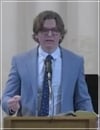
Bill Parker

Christ, Our Wisdom

Job 28
Bill Parker October, 17 2012 Audio
0 Comments
Bill Parker
Bill Parker October, 17 2012

Sermon Transcript

Auto-generated transcript • May contain errors

100%
All right, let's look at Job
chapter 28. As you go through the book of
Job here, we're past the halfway point, and you hear these speeches,
these words that God, the Holy Spirit, inspired Job to write
down. Let's not forget that Job, as
he speaks here, he's at the lowest point of his life that he's ever
been. And I mention that quite often
because I think it's something that we need to be reminded of
as we listen to how Job reasons. He never, in this trial of his
faith, He never totally renounces God. And as I've told you, he
doesn't always speak right things. He speaks out of his ignorance
sometimes. And the Lord is going to answer
Job out of the whirlwind and correct him on some of those
things, just like we need correction. That's what chastisement is for
a child of God, really. It's correction. It's not punishment
in the way of payment. We can't pay for our sins. That's
why we have Christ. That's why we need Christ. Christ
paid the full penalty of all our sins. Now, some of these
things that we mess up with and get into have their consequences,
but that's not payment. The payment for sin, the wages
of sin is death. Always has been, always will
be. And the death of Christ is our full payment. David was playing
that hymn, Jesus paid it all when we come out, you know, that's
what we mean. But we need to be corrected quite often, especially
in these areas of providence that Job is going through. He's,
as I said, he's at his lowest point, lost everything. He's
out there on the dung heap of the land of us. Here, he's been
listening to his three friends. You know, Job is looking for
some knowledge here. He's looking for some wisdom.
He's looking for some answers. And we do that too in these matters
of providence. We have in our possession here
the glorious Word of God, the Scriptures that are able to make
us wise unto salvation. And yet, in life's daily struggle,
there are things that we just kind of grope in the dark. And
we don't know why and the wherefore of what's going on, what'll happen
tomorrow. Job's in the same case here. But he's looking for some
answers. His friends think they have the answers, but they don't.
They come along, they try to comfort him, but they fail miserably. And that's the way it should
be put, because they're called miserable comforters. So Job
here in chapter 28, he begins to speak on the subject of wisdom.
And what he's saying here is that man, man on his own, cannot
attain to the wisdom that only God can give. Man by nature has
no heavenly wisdom. no eternal wisdom to answer the
questions that Job has. You know the two main questions
that are really dealt with in the book of Job are these two.
Number one, when we consider the prosperity of the wicked
and the suffering of the righteous, why is that so? Why do the wicked
prosper? Why do the righteous suffer in
this life sometimes? Man cannot answer. He doesn't
have the answer. Well, you've seen his answer.
These fellows, they come up with it. Well, if you're suffering,
you're evil. If you're in plenty and prosperity,
you're righteous. And that's not true. That is
just not true. That's man's pipe dream. That's
man's self-righteousness. That's man's false gospel. It's
rooted in salvation by works. That kind of thinking. So Job
is seeking wisdom mainly in that area. But think about this. Here's
the second question that's been posed by Job and posed by one
of his friends. How can man be justified with
God? Man doesn't have the wisdom to
answer that question. Well, of course, we know the
answer is the gospel, the good news of salvation. eternal life and salvation the
forgiveness of sins the justification of a sinner by God's grace through
the redemptive work of Christ who is our wisdom and that's
why I entitled this message Christ our wisdom there's the answer
in a nutshell but it takes some explanation it does it takes
some proclamation I've heard preachers say I'm not sent to
explain I'm sent to proclaim well I'll do both you know We're
just going to tell the truth about that. We're going to preach
it out however it comes out from the Word of God. So what Job
does here in the first 11 verses of chapter 28, he compares man's
search, man's seeking, his efforts to search out what man by nature
holds dear and holds precious and valuable here on this earth.
And what his point is, he's going to show how men by nature are
diligent and hard working to dig for and find the things of
this world that he holds dear such as precious metals, gold,
silver, diamonds, rubies, jewels, you see. Man by nature sees value
in those things because he sees monetary value. This is what
he says, look here in verse 1, Surely there is a vein for the
silver, that is in the earth. In other words, you're going
to get silver, you're going to dig for it. And a place for gold
where they find it, refine it. That's what that means. Iron
is taken out of the earth and brass is molten out of the stone. He says in verse 3, He setteth
an end to darkness and searcheth out all perfection. In other
words, man will dig a hole in the ground and go into the dark
to find what he thinks is perfection. That's what that means. Looking
for the perfect vein of gold, the perfect vein of silver, the
perfect diamond. I heard him talking on TV about
this movie star who got a diamond ring and talking about how much
that's worth. And I thought, my goodness, you
know diamonds aren't even rare. You know that, don't you? Now
rubies and sapphires, they're rare, but diamonds are. And then
I saw them, they had one big old diamond out there and they're
talking about how it's worth millions of dollars. Now you know why
it's worth millions of dollars? You know why it's worth millions
of dollars? Because of sin. That's why it's worth, because
of man's perverted view of the value of things. That's really
why. If nobody paid a million bucks
for it, it'd be worth a piece of gravel out there. you know,
and that's just the way it is. Oh, it has some kind of a beauty
to the eye, but it's a fleeting beauty. So he's searching out
for perfection. Look at verse 3, he says, the
stones of darkness and the shadow of death. What that means is
that man will risk his life for those things. He'll go through
the valley of the shadow of death to find those things that he
holds valuable. He'll risk his life. And you know, they used
to talk about the blood diamonds. Now, those were diamonds they
found in Africa that men had shed their blood for. Verse 4,
the flood breaketh out of the inhabitant. In other words, they
go down, they find a stream of water, it breaks out where it's
living, and even the water's forgotten of the foot, they are
dried up, they are gone away from men. Man will damn it up
so he can get his diamonds, his gold, his silver, his rubies,
his pearls, whatever. Verse 5, as for the earth, out
of it cometh bread. Now this is the bread that we
eat, like a farmer. The farmer works hard to produce
that bread to feed us, and he says, under it is turned up,
as it were, fire. There's things under the earth
that you can burn as fuel. That's what that means. Job knew
this. It's pretty good science, really,
for a fellow that lived and wrote a couple thousand years before
Christ. He says in verse 6, the stones
of it are the place of sapphires, and it hath dust of gold. Verse
7, there is a path which no fowl knoweth, which the vultures I
hath not seen. What he's saying there is that
the birds that fly over, the vultures that fly over, they
don't see any value in those things that men put value in.
I mean, you know, the birds, they fly over these diamonds,
these sapphires, these rubies all the time. And the new thing
to them, the vulture, he'd rather have a dead body than he would
find a diamond, wouldn't he? He'd rather have the carrion
than he would a diamond. It's worth more than him. And
I thought about this in this way. You know, in a lot of ways,
there are several times in the scripture that even the dumb
animals are said to be smarter than man in sin, sinful man. And this is one of them, we put
so much value on the things of this world, but not the things
of God. And not just the things we need,
but more. And I thought about like in Isaiah
chapter 1, you know, where he talks about even the ass knows
his master's crib, the ox knows his own, you know, but man doesn't
by nature, he will not turn to his creator. He will not seek
after the Lord. There's none righteous, no, not
one. There's none that doeth good. There's none that seeketh
after God. He goes on, verse 8. The lion's
whelps have not trodden it, nor the fierce lion pass by it. That's
the same thing. The animals, they see no value
in these things that we'll pay millions of dollars for. I was reading a list the other
day of some of the dumb things that have been auctioned off
for a lot of money on eBay. You ought to see it. I don't
have time to mention it up here. Verse 9. He putteth forth his
hand upon the rock, he overturneth the mountains by the roots. He'll
hew down a mountain, blow down a mountain to get what he wants.
Verse 10. He cutteth out rivers among rocks,
and his eye seeth every precious thing. To see those things that
He holds dear. I think about when the Spirit
of God gives us life. What's one of the main evidences
of that spiritual life? Under you therefore which believe
Christ is precious. Christ is. But this is what the
natural man sees as precious. Verse 11. He bindeth the floods
from overflowing. He can dam it up. build a dam,
and the thing that is hid bringeth he forth to light." Anything
that's hidden and buried under the water, under the earth, he'll
bring it to light. And so that's what he's talking
about. He's talking about man's endeavors, man's hard work. I mean, he will not stop. Men
have killed each other over these things, haven't they? Shed blood. to obtain these things, that
in and of themselves, according to the fowls of the air and the
vultures and the lions' whelp, are worth nothing." Christ, in the Sermon on the
Mount, made this statement. He said, "...lay not up for yourselves
treasures upon earth, where moth and rust doth corrupt, and where
thieves break through and steal." Whenever I read that verse, I
always think about the pharaohs building their pyramids and having
themselves buried with all their Jews. And then robbers come in
to rob, grave robbers. Christ said, but lay up for yourselves
treasures in heaven where neither moth nor rust doth corrupt. Now
there's wisdom, isn't it? Foolishness the other, but this
is wisdom. And where thieves do not break
through nor steal, for where your treasure is, there will
your heart be also. And if you're searching for perfection,
where are you going to find perfection? Not in a diamond, not in a ruby,
not in an oil field. You find perfection only in Christ.
He is our perfection. And in Him we have a righteousness
that will never fade away. That will never diminish. Thieves
can't steal it from you. Mauls can't make it tattered. It cannot even be stained with
sin because it's washed white in the blood of the Lamb. That's
wisdom, isn't it? Well, verse 12, listen to what
Job says here. He goes on, he says, But where
shall wisdom be found? Now, all these other things are
found as men dig and dig and fight and fuss and endeavor and
work. But where shall wisdom be found?
And where is the place of understanding? Now, you're going to see in these
next verses that there are three things that go together here.
And something that the natural man doesn't know by nature, because
he cannot receive the things of the Spirit of God, neither
can he know them. The first thing is fear. Now we'll see that when
we get to the last verse. Fear. But now what kind of fear?
And the second thing is wisdom, and the third thing is understanding
or knowledge. Fear, wisdom, and knowledge.
They go together. And they all three come by the
Spirit of God, leading a sinner to Christ. Well, where shall
wisdom be found, Job asked in verse 12? Where is the place
of understanding? Verse 13, man knoweth not the
price thereof. Man doesn't know the value of
the wisdom and the understanding that Job is talking about. There
are people who know the value of knowledge. There are people
who know the value of a good education. But man by nature
does not know the value, the price, of the wisdom and understanding
that Job is talking about, which is the wisdom of God, the understanding
of God. What would you pay for that? What price? Man knoweth not the
price thereof, neither is it found in the land of the living,
on this earth, on this fallen earth, where sinners live physically,
not spiritually now. It's not found. It's absent. He says in verse
14, now listen, he personifies the elements. He says, the depth
saith, it's not in me. You're not going to find it in
the depths. You can dig deep. You're not going to find this
wisdom and understanding. The sea saith, it's not with me. You can become an oceanographer,
but you're still not going to find this wisdom and understanding.
It cannot be gotten for gold. You can't buy it for gold. Neither
shall silver be weighed for the price thereof. Silver was mentioned
because it usually was a means of making money. Verse 16, it
cannot be valued with the gold of Ophir. That was supposed to
be the purest gold that they had back then, the gold of Ophir.
You've probably seen that in some of the Psalms. He says,
with the precious onyx or the sapphire. Verse 17, the gold
and the crystal cannot equal it. And the exchange of it shall
not be for jewels of fine gold. It doesn't matter, you can be
sitting on a mountain of gold and still be dumb as an ox when
it comes to this wisdom. And this, you know, maybe we
shouldn't say dumb as an ox. Maybe what we should say is dumb
as a sinful man. Because that's even dumber than
the ox. He says in verse 18, and you
know, you understand what I'm saying. I'm talking about spiritually
speaking here. I'm talking about the wisdom
and the understanding that God alone gives. From the least to
the greatest. They shall all know me from the
least to the greatest. He says in verse 18, no mention
shall be made of Coral, or of pearls for the price of wisdom
is above rubies this wisdom is priceless he says in verse 19
the topaz of Ethiopia shall not equal it neither shall it be
valued with pure gold and I'm sure Job had some pretty pretty
good knowledge of this stuff you know he was the greatest
man of the east verse 20 whence then cometh wisdom where's wisdom
and where is the place of understanding This is his concern now. And
Job has learned by experience. I think Job knew it in his mind,
but now he knows by experience that all the gold, all the topaz,
all the pearls that a man can have cannot deliver him from
the wrath of God. Verse 21, seeing it is hid from
the eyes of all living, that is, all living on this sinful
earth, dead in sin, and kept close from the fowls of the air.
Verse 22, destruction and death say, we have heard the fame thereof
with our ears. Not even the grave can answer
this question. Now, we can think about death
and the grave. We can philosophize over it. We can write poetry about it,
and songs and sing about it, but you're not going to find
wisdom there, not understanding. Well, look at verse 23 here.
God understandeth the way thereof. God understandeth the way thereof,
and he knoweth the place thereof. Now, where do you suppose that
is? When he talks about the way thereof, what is the way of wisdom? Well, Christ said it. John 14
and verse 6, we quote it all the time. I am the way, the truth,
and the life. No man cometh unto the Father
but by me. Christ is the way of salvation.
He's the way of forgiveness. He's the way of righteousness.
He's the way of wisdom. He's the way of understanding.
I think about when He sat with His disciples after His resurrection. and before He ascended unto the
Father to take His rightful place as the victorious Lamb who was
slain for our sins and put away our sins and by whose righteousness
we stand before God whole and complete and justified and He
ascended unto the Father to be seated at the right hand of the
Father ever to live to make intercession for us to keep us to plead for
us And right before He ascended to the Father, it says He opened
their understanding to the Scriptures, the law of Moses, the Psalms,
the things concerning Him and His death on the cross, His atoning
work, His work of reconciliation. And once they... and they knew
Christ at that point, they knew salvation, but what I believe
He was teaching them was the key to unlocking the Old Testament,
so that they could preach it to others. And once you learn
His wisdom, you have the key. Now, that doesn't mean you're
going to know everything all at once, but you have the key. He is the way, the truth, and
the life. Man's search for knowledge, wisdom, and meaning, and purpose,
and even eternal life. Let me read you this passage,
Ecclesiastes chapter 3, verse 10. The wise man, Solomon, Remember,
it's recorded, I believe, in 2 Chronicles chapter 1, God told
Solomon, ask for the one thing you want and I'll give it to
you. What did Solomon ask for? Wisdom. Now Solomon didn't always act
in a wise way. You read his biography in the
Bible. He did a lot of foolish things,
but he was a man of wisdom. And at the end of his life, By
the inspiration of the Holy Spirit, I believe he penned the words
of Ecclesiastes, showing that he'd learned some things from
his mistakes. In Ecclesiastes 3 and verse 10, he says, I've
seen the travail, you know what a travail is, like a woman in
childbirth, travailing, anguishing. I've seen the anguish which God
hath given to the sons of men to be exercised in it, He hath
made everything beautiful in his time, also he hath set the
world in their heart, literally means he has put eternity in
the heart, so that no man can find out the work that God maketh
from the beginning to the end. In other words, God has set within
man a longing for answers, for fulfillment, for purpose. a longing to search for wisdom.
Now, some people spend their life squelching that and they
get pretty successful at it. And others, by nature, if man's
left to himself, what does he do? Well, he'll try to fill that
void up with other things, materials, gold, silver, money, possessions, families, jobs, education, mostly
false religion. He'll fill it up with false religion
and speak peace to himself when there is no peace. But on his
own, he cannot find the work that God maketh from beginning
to end. Verse 23, God understandeth the
way thereof, and he knoweth the place thereof. Verse 24, for
he looketh to the ends of the earth and seeth unto the whole
heaven. God is omniscient. God is a determinate God. Verse 25, to make the weight
for the winds and he weigheth the waters by measure, God is
the creator. God, creation itself speaks loudly
of the wisdom of God. And verse 26, when he made a
decree for the rain and a way for the lightning of the thunder. And verse 27, then did he see
it and declare it, he prepared it, yea, and searched it out.
That doesn't mean God was searching for answers like man does. But
it means God put everything in its order to be searched for.
And then here's the conclusion, verse 28. And unto man he said,
Behold, the fear of the Lord, there's fear, the fear of the
Lord, and he said, that is wisdom, there's wisdom, and to depart
from evil, is understanding. There's understanding, they go
together. Understanding and knowledge. Solomon said the same thing as
Job here, as he concluded Ecclesiastes. Ecclesiastes chapter 12 verse
13, he said this, And you know what Ecclesiastes is about when
we went through that, the vanity of life here on this earth, man
on his own, man seeking to fill that void by his own works and
efforts and religion, thoughts, philosophies. And Solomon said
at the end of that great book of wisdom, he said, let us hear
the conclusion of the whole matter, fear God. and keep his commandments
for this is the whole duty of man for God shall bring every
work into judgment with every secret thing whether it be good
or whether it be evil fear God keep his commandments look at
verse 28 of Job 28 listen to what he's saying first of all
behold the fear of the Lord that is wisdom now what's one of the
main problems with man in his sinful natural state is described
out along with what I believe is one of the best descriptions
in the Bible of total depravity, and that's Romans chapter 3,
beginning at verse 9 there, where Paul says, the scripture hath
concluded all under sin. Remember, he's talking about
Jew and Gentile, and he says, well, are we Jews better than those
Gentiles? No, not at all. The scriptures
concluded all under sin. None righteous. No, not one.
None that doeth good. None that seeketh after God.
And then it goes down to describe the natural depravity, sinfulness
of all men who by nature deserve nothing but death and hell. And
one of the descriptions he says in Romans 3 and verse 18 is there
is no fear of God before their eyes. The psalmist wrote of it. Psalm
36 and verse 1. The transgression of the wicked
saith within my heart that there is no fear of God before his
eyes. Now there are different kinds
of fear, aren't there? Different kinds of fear. There's
the fear of man. The fear of man. Proverbs 29
and verse 25. Listen. The fear of man bringeth
a snare, a trap. But whoso putteth his trust in
the Lord shall be saved. So here's what we know. The fear
that Job is talking about is not the fear of man. You remember
the Hebrew children on the banks of the Red Sea when Pharaoh's
army was coming after them. Who were they fearing? Not the
God of Moses. They were fearing Pharaoh. What
did it cause them to do? It caused them to blaspheme God.
It caused them to disbelieve God. It caused them to disobey
God. Remember, they complained against
God's prophet. They said, did we leave the flesh
pots of Egypt just to be slaughtered out here? And let me tell you
something. Think about what they had seen
in Egypt, the ten plagues. Think about all that they had
witnessed with their physical eyes. But see, if there's no
fear of God before their eyes, like Job is talking about here,
this fear, It doesn't matter what you see. Our Lord taught that in the parable
of the rich man and Lazarus when the rich man wanted to go back
or send Lazarus back to his brother so they wouldn't suffer the same
punishment that he was going through. And Christ said, the
one be raised from the dead they will not believe. Why? There's no fear of God before
their eyes. There may be a fear of hell. That's another kind
of fear. That's a natural fear of death.
You know, we all pretty much have a natural fear of death.
It lasts a long time. I believe the Lord sort of weans
us away from that as we get older and we find ourselves suffering
because of the infirmities of the flesh. We have a natural
fear of death. That's not what Job's talking
about here. There's a legal fear of punishment and death, a legal
fear of loss of reward. Turn over to Hebrews chapter
2. Let me show you this. Now that legal fear is what stirs
up man by nature in false religion. That fear of punishment, fear
of hell, fear of death, fear of the grave, fear of loss of
reward. You see, if that's the only fear
that we have, the only thing that that will gender and result
in is false, self-righteous, works-oriented religion that
will lead to death. A lot of preachers use that fear
upon their congregations to get them down the aisle, to get them
in the pool, to get them to give, to get them to come to church,
all of that. You know what I'm talking about.
But look here, this sort of describes that, verse 16, or I mean verse
14, it says, for as much then as the children, that's the children
of God, are partakers, participants, fellowshipers of flesh and blood,
were joined to flesh and blood, he, Christ, also himself, likewise,
took part of the same, that is flesh and blood. He had a human
body. He said, a body thou hast prepared me. It wasn't a sinful
body, but it was a body. And he says that through death
he might destroy him that had the power of death, that is,
the devil. Now, understand now, the devil's power of death only
lies in his power of accusation. He throws out the charges. If
the charges stick, what's the result? Death. But what if they
don't stick? All right? So he says in verse
15, and deliver them who through fear of death were all their
lifetime subject to bondage. You see, the kind of fear of
death that he's talking about there, it genders unto bondage,
that's false religion, man trying to bind himself to his own works
in order to relieve that fear. whereby he speaks peace to himself.
By deeds of law shall no flesh be justified in God's sight.
That's why one of the reasons when the Bible speaks of our
regeneration and conversion by the Spirit, it's called a liberation. You can read about that in Romans
chapter 6 verse 17 and 18. We won't turn there. That's what
he's saying. You're made free. Sometimes that word over in verse
7, it means justified. But over in verse 18, it means
to be liberated. out from under that bondage.
Now your debt's paid by the blood of Christ. Now you're a willing,
loving bond slave of Christ, bond servant. That's the whole
idea, you see. You're not serving under the
bondage of a debt because Christ took our debt. Our sins were
imputed to Him and His righteousness imputed to us. Now we're servants,
willing, loving bond slaves of Christ. We're serving because
we love Him. Grace, gratitude, you see. And so that's removed when God
brings us to Christ. There's the wisdom of God. Now,
that natural fear of death, that has to be removed. But here,
back in Job 28, he speaks of a good fear that comes by the
Holy Spirit through faith in Christ. Over in Job chapter 1,
you recall, the very first verse, It says, there was a man in the
land of Uz whose name was Job, and that man was perfect and
upright. We discussed what that meant.
To be perfect means to be complete. How is any sinner complete before
God? Complete in Christ. Do you know
that? That's wisdom. If you see completeness
in yourself in any other way but in Christ, that's foolishness. And he was upright. That is,
he stood before God in an upright position. That's symbolic of
showing his justified state. And he's one that feared God
and eschewed or ran violently away from evil. And it was all
by grace. God's free and sovereign grace
in Christ. Such a great, you know, the fear
of the Lord back here in Job 28, 29 is such a great concern
in the salvation of a sinner and in the life of a believer
that sometimes that expression is used to describe the whole
life of a believer. What kind of fear is he talking
about? He's talking about reverence. He's talking about respect unto
God. revering Him, respecting Him,
believing Him, following Him, worshiping Him. He's God. My
life is in His hands. Honoring Him, magnifying Him
in my redemption by Jesus Christ. That's where the fear of the
Lord is. It begins in regeneration when that power and principle
of life is given to us by the Spirit of God. And it's that
power and principle that enables a sinner to fear God. And that
fear is first evidence in belief of the gospel of God's grace
in Christ. Run to Him. That's wisdom. Rest in Him. That's wisdom. Why? Because we respect God,
we honor God. The most dishonorable thing that
a sinner can do is to seek to come before God and find salvation
and blessing based on his works. Proof. What about Cain? Final glory based on the merits
of Christ. And as I said, this fear and
wisdom and knowledge go together. Solomon wrote in Proverbs, he
said, the fear of the Lord is the beginning of knowledge. Proverbs
1, 7. He said, my son, get wisdom.
Learn the fear of the Lord. Where is that wisdom? Turn to
1 Corinthians chapter 1, and I'll tell you what, now we could
spend a lot of time going through scriptures, the various scriptures
that speak of this fear and this wisdom. We don't have time, but
I'm just going to give you a few high points and then I'll quit. But look at 1 Corinthians chapter
1. Here it is. This probably is one of the best
summations of it that you'll find in all of scripture. But
now notice back up here in verse 18 of 1 Corinthians 1. Listen
to what he says. And this is a time of self-examination,
too. It really is. Listen to it. He
says, for the preaching of the cross. What is the preaching
of the cross? It's the preaching of Christ and Him crucified.
It's not preaching a piece of wood. It's not trying to dig
up a piece of wood and worship it. See, that's what the natural...
He'll dig down for that. He'll try to find it. It's not
looking for a dead man's tomb to pay homage to it. It's the
preaching of the person of Christ, who He is. He's God and man in
one person. What wisdom! I don't know how
that comes about. I can't explain it to you, but
I know it's the wisdom of God incarnate. And it's the preaching
of what He accomplished on Calvary to put away the sins of His people
by the sacrifice of Himself. And to establish righteousness.
To honor God. You want to honor God? The preaching
of the cross. And He says, It is to them that
perish, or who are perishing, foolishness. But unto us which
are saved, or which are being saved, it is the power of God.
Now what is the preaching of the cross to me? What is it to
you? Is it foolishness? Or is it the
power of God? But look at verse 19. He says,
For it is written, I will destroy the wisdom of the wise. You see,
any other message for the salvation and preservation and glorification
and justification of a sinner is foolishness. So where is the
wise? I will destroy the wisdom of
the wise. He's talking about men on earth.
And will bring to nothing the understanding of the prudent.
Where is the wise? Where is the scribe? The explainer
is what that's talking about. Where is the disputer, the debater
of this world? Hath not God made foolish the
wisdom of this world? For after that, in the wisdom
of God, the world by wisdom knew not God. You know, this is the
way God would have it so. That's what he's saying there.
This is God's... His wisdom in the setup of this
system of humanity. In other words, God's going to
get the glory. If you could work your way up
to God, or if you could think your way up to God, or figure
your way up to God, you'd get the glory. Not so. God's going to get the glory.
And so he says, it pleased God by the foolishness of preaching
to save them that way. What I'm doing right now, up
here behind this pulpit, is the pleasure of God, the institution
of God, the way of God, the means of God, to save them that believe. And yet in most religious services
today, that's relegated to the background. Something you just
get through. Get through it. So we can do something we want
to do. Isn't that right? But look at verse 22. The Jews
require a sign. Well, that's foolishness. And
the Greeks seek after wisdom. Man's wisdom, that's foolishness.
But we preach Christ crucified under the Jews a stumbling block
and under the Greeks foolishness, but in them which are called,
called by the invincible call of the Holy Spirit, both Jews
and Greeks, Christ the power of God and the wisdom of God. Because the foolishness of God
is wiser than men and the weakness of God is stronger than men. There it is. over in 2 Timothy
chapter 3. Let me just read it to you real
quick. 2 Timothy chapter 3. He's talking
about the Scriptures. And he says in verse 14 to Timothy,
he says, Continue thou in the things which thou hast learned,
and hast been assured of, knowing of whom thou hast learned them.
Now what did Job say back there? He said, God understandeth the
way thereof, and he knoweth the place thereof. In other words,
if you get this wisdom, it's from God. It's a revelation from
God. And so Paul said, knowing of
whom thou hast learned them, taught of God. And that from
a child thou hast known the Holy Scriptures, which are able to
make thee wise unto salvation through faith which is in Christ
Jesus. Why is unto salvation? Because
it leads us to Christ, our wisdom, and we do it in the fear of the
Lord. And back here in Job 28, 28, that's what it is to depart
from evil in understanding. Where to depart from evil in
any way, shape, fashion, form? Immorality, disobedience, rebellion,
and even false religion. Depart from it. Depart from evil. Anything that doesn't gender,
anything that doesn't come from and gender the fear of the Lord,
that reverence and respect for the honor of God, that's revealed
in salvation by Jesus Christ. In whom are hid all the treasures
of wisdom and knowledge. Psalmist said, he sent redemption
unto his people, he hath commanded his covenant forever, Holy and
reverend is his name, that's respect, that's worship. The
fear of the Lord is the beginning of wisdom. That's it. And the essence of this fear,
you know what the essence of this fear of the Lord is? It's
faith in the Lord Jesus Christ. This is not a fear like Adam
had after he fell that drove him away from God. This is a
fear that draws a sinner to God, that sinner begging for mercy.
in Christ. And the essence of it, the result
of this fear is assurance. Knowing, knowing that God is
a merciful God who saves sinners through His Son, the Lord Jesus
Christ. I'm assured of that. It's consistent, this fear is
consistent with faith, with hope, with love and even with spiritual
joy. And this departing from evil
and understanding, listen to 1 John 5, 20. Let me just read
this to you. We know that the Son of God has
come and has given us an understanding that we may know Him that is
true and we are in Him that is true, even in His Son, Jesus
Christ. This is the true God in eternal
life. Now depart from evil. Depart
from anything that dishonors God, whether it be religion,
whether it be education, whether it be acts of rebellion, whatever,
depart from anything and everything that dishonors and denies the
Lord God of glory. And that's what Job is saying.
Behold, the fear of the Lord, that is wisdom. And to depart
from evil, that's understanding. All right. What is, let's see,
we've got, I've got it here. Hymn number 187, blessed be the
tithe that buys. 187.
Bill Parker
About Bill Parker
Bill Parker grew up in Kentucky and first heard the Gospel under the preaching of Henry Mahan. He has been preaching the Gospel of God's free and sovereign grace in Christ for over thirty years. After being the pastor of Eager Ave. Grace Church in Albany, Ga. for over 18 years, he accepted a call to preach at Thirteenth Street Baptist Church in Ashland, KY. He was the pastor there for over 11 years and now has returned to pastor at Eager Avenue Grace Church in Albany, GA

Comments

0 / 2000 characters
Comments are moderated before appearing.

Be the first to comment!

Joshua

Joshua

Shall we play a game? Ask me about articles, sermons, or theology from our library. I can also help you navigate the site.