Bootstrap
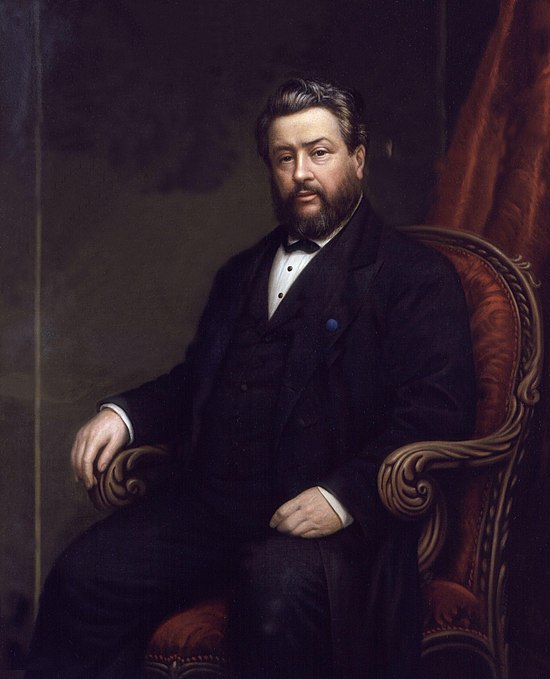
Bill Parker

The Gospel Ministry: II

2 Corinthians 5:11-14
Bill Parker July, 29 2012 Audio
0 Comments
Bill Parker
Bill Parker July, 29 2012

Sermon Transcript

Auto-generated transcript • May contain errors

100%
Let's look back at 2 Corinthians
chapter 5. 2 Corinthians chapter 5. I'm continuing
through this chapter concerning the subject of the gospel ministry. What we have here in the last
part beginning at verse 10 and on to the end of this chapter,
I believe is one of the greatest descriptions and definitions
of what a true gospel ministry is. And so by this we can examine
ourselves to see whether we be in the faith. You know, Paul
wrote that in 2 Corinthians chapter 13. Many people misunderstand
that command, that exhortation. But what he says there is examine
yourselves. and see whether or not you be
in the faith. And the question there that we
have to be concerned with is, for each individual, sitting
under the preaching of the gospel, is am I truly resting in the
Lord Jesus Christ for all my salvation? Am I truly resting
in Him, or am I trusting something else, someone else? That's the
issue of self-examination. It's not looking in yourself
to see if you measure up. Because I got news for you. You
don't. Neither do I. I'm not just beating
on you now. I don't measure up either. You
know, people say, well, I ought to do this better. We ought to
do everything better. Everything good better. We ought
to do everything as far as service to God, loving one another, all
these... If you get to the point you don't
find room for improvement there, then there's something wrong
with you. You know? So it's not an examination. I
mean, there's nothing wrong with looking at these things in ourselves
and being convicted over them and being brought to godly sorrow
and repentance and determinations to do well. But that's not our
hope now. That's not our righteousness
before God. You know, I want to know this. I want to know,
am I truly a child of God? Am I truly a servant, a believer,
a disciple of Christ? And that's what he's talking
about. And that's the gospel ministry. As you know, the gospel
means good news. It's not good news to everyone.
But it's good news to a sinner. I think about the parable of
the Pharisee and the publican. I've been reading that because
I'm going to use it in tonight's message. But the Pharisee is
one who imagined and judged himself to be righteous by his works. Now the gospel wasn't good news
to him because the gospel exposed him to be a hypocrite. It exposed
him to be a liar. it exposed him to be a wicked
man even in his best efforts to keep the law and it wasn't
good news to him but then I think about that old publican that
fellow who stood afar off and beat upon his breast and said
God be merciful to me the sinner I need mercy Lord don't give
me what I deserve don't give me what I've earned the wages
of sin is death God I need mercy now the gospel's good news to
a fellow like that If you see your need of mercy, and I'll
tell you something else, too. We'll see this here in the message.
If you see your real need for mercy, if you've seen, if we've
seen what we really are by nature before a holy God, that's a work
of God. That's a work of the Holy Spirit,
isn't it? That's what drives us to Christ. Last week I dealt
with the gospel persuasion. Look at verse 11. Paul writes,
knowing therefore, reaching back to what he'd said before, knowing
therefore the terror of the Lord, we persuade men. And I've made
this point a couple of times. Paul knew that he didn't have
the power to bring a sinner to Christ. No man has that power. That's God's business. That's
God's work. Man does not have that power
in himself. The Bible says, let me just read
this to you over in John chapter 1. It's talking about Christ
coming into the world. And it says in John chapter 1
and verse 11. It says, He came unto His own. Now most commentators will say
that's referring to His own nation, meaning the Jews. And that has
an application there, but listen, he came unto his own people,
his elect, too, didn't he? And it says, and his own received
him not. Even we won't receive him by
nature. But he goes on to say in verse
12, but as many as received him, to them gave he power to become
the sons of God even to them that believe on his name now
that word power there you know over in Romans 1 16 it says the
gospel is the power of God unto salvation to everyone that believe
it that word power in Romans 1 16 if you would translate it
back into the the original Greek It's the word, we get our word
dynamite from it. Our English word dynamite. You
could say the gospel is the dynamite of salvation to everyone that
believe. It's a powerful thing. The gospel
empowered by the Holy Spirit is a powerful thing. It's an
irresistible thing. It's an invincible thing. All
who have that power come to faith in Christ. But now the word power
here in verse 12 of John 1 is a different word. It doesn't
mean dynamite. The word power here means right. In other words, those who receive
Christ, those are the ones to whom God gave the right and the
privilege, you might say. to claim to be, that's what it's
literally saying, not to turn themselves into the sons of God,
they're already sons of God from everlasting, given to Him before
the foundation of the world, the Bible teaches. But we who
have received Christ under the preaching of the gospel and the
power of the Holy Spirit, we're the ones who have the right to
claim to be the sons of God, the children of God. Now there's
all kinds of people who claim to be children of God, sons of
God, and in that they're claiming salvation, but they don't have
that right unless, unless they can sing from the heart what
we sang a while ago. What can wash away my sins? Nothing
but the blood of Jesus. Christ is my all and in all. Christ is my only hope. This
is all my righteousness. This is all my peace. Nothing
but the blood of Jesus. You see, those who have received
Him are the only ones who have that right. Any other person
who claims that right, who has not rested in Christ and Him
alone for all salvation, it's just an empty claim. It's a presumptuous
claim. So He says, "...as many as received
Him, to them gave He the right to claim to be the sons of God,
even to them that believe on His name." And His name is that
which identifies Him and distinguishes Him from all others and from
all counterfeits. And it says here, "...which were
born." Now those who receive Him, those who have that right
to claim to be children of God, those who believe on His name,
they were born. And it says, they were born not
of blood. In other words, he's not talking about your physical
birth. We're born in trespasses and sins in our physical birth,
aren't we? Even by nature, children of wrath, even as others, fallen
in Adam. But they were born not of blood,
nor of the will of the flesh. You're not born again by your
will. In other words, it's not the product or the fruit of some
preacher standing down here persuading you emotionally to make a decision. That's not how you're born again.
And it says, nor of the will of man. Others did not will you
into it. In other words, we can't get
together a prayer chain and will you into it either. It's not
of blood, it's not of the will of flesh, it's not of the will
of man, but of God. There's where it comes from.
There's where the new birth comes from. Salvations of the Lord. And so, this issue of the gospel
ministry back here in 2 Corinthians 5, when Paul says, we persuade
men, he's not talking about what most modern day evangelism has
come to be. a numbers game, trying to get
people down an aisle, trying to get little kids scared to
death and into the baptistry so they can live on that the
rest of their lives. And that's sad, I know. I've
done it. It's not that kind of thing at
all. He's just simply saying when
he says this gospel ministry is a ministry of persuasion,
He's just simply saying is that we preach Christ and tell you
this is your only hope. He is your only hope to stand
before God at judgment and be justified. And I know the terror
of the Lord. I know that if you come before
God without Christ, you have no hope. No hope at all. I beg you. Christ is not a beggar. But we're His ambassadors and
we plead with sinners, come to Christ, believe on Him, rest
in Him, turn loose of all your religious dreams and professions
and works and false hopes and false refuges, let them go. They
impress men but they don't impress God. The only thing that impresses
God, He said it. You want to know the only thing
that impresses God? He said, this is my beloved Son in whom
I'm well pleased, hear ye Him. That's what impresses God. Oh,
that I may know Him, be found in Him, not having my own righteousness
of the law. But let me tell you something
about this persuasion that Paul's talking about. I want you to
listen very carefully. This will help you. It helps
me. This persuasion, if it comes about within the heart of a sinner,
is the persuasion of God Himself by the Holy Spirit in the new
birth. It's His work. upon the heart,
giving us a new heart. Now you think about this. This
is the gospel ministry. This is the good news ministry.
That's what that means. Look over across the page of
2 Corinthians chapter 3 and verse 6. Now there was a ministry under
the old covenant. And it was a ministry that was
given to a rebellious nation, Israel. There were, you know,
in Israel's history, there were, you know, throughout their history,
there was a remnant, the scripture tells us, a remnant according
to the election of grace. But on the whole, the nation
was a rebellious nation. Good picture of us by nature,
man by nature, left to ourselves. And that law was given. Now,
the scripture teaches this now. I don't have time to go in all
the scriptures that we could go to here But if you know if
you don't believe me come we'll talk about it, and I'll show
every one of them to you But listen to what I'm saying that
that old covenant law was given to show them their guilt That's
what it was given That's why the Ten Commandments, the ceremonial
law, every bit of it was given to show them this. You're guilty
and you deserve to die. There's no hope of salvation
for you based on your works. Read it, Romans chapter 5, Galatians
chapter 3, and we can go on and on. All right, that's why it
was given. Now, that law, it had pictures and symbols of Christ
in that law. In the ceremonial law, the tabernacle,
the priesthood, the lambs for offering, the bullocks, all of
those, the altar, every bit of it. But the nation missed it
as a whole. Let me show you this. Now, he
talks about how much better the gospel ministry is, the new covenant. He calls it, in verse 6, he said,
we're made able ministers of the New Testament. the new covenant. We're not under the law. Israel
was under that law. But we're not under that law.
I've heard people today say, well, I'm no longer under that
law, that old covenant law. You never were under that. You may have thought you were
under that. You may have been under it up
here. But you never were technically under it. That old covenant law
ended when Christ was on that cross and he said, it's finished.
And that veil was rent from top to bottom. He ushered in the
new covenant. Well, we're ministers of the
new covenant. Now, I'm going to talk a little bit more about
the new covenant in another message later on. But just hold right
there. He says, not of the latter. That's
not of the written law. That's what that means. But of
the spirit. And he says, for the letter killeth. Now, why
does the letter killeth? Because it pronounces a sinner
guilty. The wages of sin is what? Death. That's why the letter kills.
But the Spirit, that's the Holy Spirit, giveth life. Now how
does the Holy Spirit give life? He gives it from Christ, who
is our life. It's based upon His death, burial,
and what? Resurrection. And so out of His
life, the Spirit gives life. There was no life in that old
covenant law now. It was death, death, death. It
was a continual, year after year, month after month, week after
week, admission of guilt and sin and the fact that we deserve
death, whoever was under it. So he says, and look at verse
7, look at what he calls the Old Covenant, look at it. But
it's the ministration of death, written and engraven in stone.
Now is there any doubt in anybody's mind what that's referring to?
That's the Ten Commandments. You say, well, I'm under the
Ten Commandments. Well, that's the ministration of death. That
means you're guilty and you deserve to die. Justice. Justice must
be done. And he said that was glorious.
And it had a glory. Think about it. You read the
Old Testament. What a glory it had. Think about the Exodus and
all that led up to it and the ten plagues of Egypt, the miracles.
Moses seeing the law on Mount Sinai, getting the law, he's
going to talk about that. And he says, that was glorious
so that the children of Israel could not steadfastly behold
the face of Moses for the glory of his countenance. There's Moses
coming down from Mount Sinai and he had an effulgent glory,
a light that actually shone from his face. It was a physical manifestation
of the glory of God in that law. But now look at the next line
in verse 7. Look at the last line of verse
7. Which glory was to be what? Done away. It's gone. Don't look
for it again. Don't look for it again. And
then he says in verse 8, Now how shall not the ministration
of the Spirit... I don't know if the King James
translators did it this way or if it's just the printer did
it this way, but I believe that's the Holy Spirit and should be
capitalized. the ministration of the Holy Spirit but if you
if you want to leave it that way he could be talking about
a spiritual life given to us by the Holy Spirit so you know
let's not let's not split hairs over this he says if it be rather
glorious in other words the gospel ministry the ministry of persuasion
is the ministry of the Spirit empowered by the Holy Spirit
to our spirits, which is the life of God given to us, imparted
to us by the Holy Spirit under the preaching of the gospel in
the new birth. So the Holy Spirit speaks to
our spirit. We didn't have that spirit until
we were born again. We were dead spiritually. You hath he quickened
who were dead in trespasses and sin, Ephesians 2.1. So under
the preaching of the gospel, the Holy Spirit brings us to
life. He gives us life from Christ
and we're made spiritually alive, quicken, that's the new birth.
And the Holy Spirit under the gospel ministry, in other words,
what he's saying here is that the gospel ministry is not to
rebellious people, like the old covenant was to Israel. It's
given to those who've been brought to faith in Christ. It's given
to those who have been brought to repentance of dead works and
idols. It's given to those who now have
a heart to worship God. To follow Christ, who can sing
that song from the heart. Like that old publican, God be
merciful to me the sinner. And then look at verse 9. He
says, for if the ministration of condemnation be glory. Now
what's the ministration of condemnation? That is the law. It condemned. the letter killeth. All right? He says, much more doth the ministration
of righteousness succeed in glory. You remember Paul wrote in Romans
1, 16, saying, I'm not ashamed of the gospel of Christ, for
it is the power of God unto salvation to everyone that believeth, to
the Jew first and the Greek also, for therein is the righteousness
of God revealed. You see, under that old covenant,
that law, It could show a sinner his need of righteousness, but
there was no provision of righteousness in that law. Couldn't make you
righteous. You say, well, why do I have
to be righteous? Because if you're not righteous, you can't pass
the test. That's what Paul meant over here, knowing the terror
of the Lord. I know this, if I'm not righteous, when I stand
before God at judgment, If this sinner that you see standing
before you right now is not righteous before a holy God who not only
sees the outside but who sees the heart, if I'm not righteous
before God, I will not pass the test and you won't either. So how can I be made righteous? Well, not by the law. By deeds
of law shall no flesh be made righteous, justified. But here's
some good news. I know where a righteousness
is. I know where one can be found. And there's only one place you
can find it. Don't look to Buddha. Don't look to Muhammad. Don't
look to your denomination. Don't look to your baptism. Don't
look to your church membership. Don't look to your decision.
Don't even look to your faith. Look to Christ. That's good news, isn't it? That's the ministration of righteousness.
It exceeds in glory to that law. Whatever glory that law had compared
to Christ and the glory of God in the face of Jesus Christ,
the brother Aaron read about, it had no glory. And look at
verse 11. Or verse 6, or verse 10, right,
of chapter 3, he says, For even that which was made glorious
had no glory in this respect by reason of the glory that exists.
You see, this gospel, this gospel persuasion, if you're ever persuaded
by the Holy Spirit, if you're ever given a saving view of Jesus
Christ and Him crucified, You'll see that all that other had no
glory. This glory, the glory of God in Christ excels all other
glory. You need nothing else for salvation.
And he says in verse 11, for if that which is done away was
glorious, much more that which remaineth is glorious. He says,
seeing then that we have such hope. What a hope. That's the
gospel ministry you see. It's a ministry of hope. What
is that hope? It's a certain assurance. an expectation of
salvation and final glory in Christ. He says, we use great
plainness of speech. Knowing the terror of the Lord,
we persuade men. That's what he's talking about.
Now let me show you something as pertaining to the conscious
in this gospel persuasion. Look at verse 11 again. Now listen
to this very carefully. He says, knowing therefore the
terror of the Lord, we persuade men, but we're made manifest
unto God And I trust also are made manifest in your consciences. In your consciences. Now how
are we made manifest unto God? Well, we preach the truth. We
preach Christ. Nobody can be a failure as a
minister, as a gospel minister who preaches Christ. who points
sinners to christ and to him alone for all salvation for all
forgiveness for all righteousness and for all eternal life you'll
never be a failure men may look at you and say you're a failure
because you don't meet up to their expectations or do what you want they want
you to do but you'll not be a failure if you lift up christ don't follow
me follow christ that's what john the baptist said he must
increase i must decrease and so we preach the truth we preach
that which glorifies god honors him. We're not here to honor
men. We're not here to glorify men. Listen, we're not even here
to thank men. Now let me tell you something.
I thank people in this church all the time for what they do,
but that's not what this pulpit is for. This pulpit is not here
to puff me up or you up or build up. It's here to thank God. We're
here to thank God. That's what worship is. Thank
you, Lord, for saving my soul. Thank you, Lord, for making me
whole. Thank you, Lord, for giving to me thy great salvation, so
rich and free. That's what we're here for. We're
not here to memorialize men. Now, we preach in memoriam when
we preach a funeral and things like that, but I'll tell you
what, I'll guarantee you in every case Those who die in unbelief
and those who die in the faith, if they could come back and stand
before you at their funeral, they'd say, preacher, do not
talk about me. Tell them of Christ. A rich man
in hell said that. He said, send Lazarus back to
tell my brothers the truth so they won't end up where I am.
That's right. Tell them of Christ. Sing his
praises. Point them to Christ. That's
what we're here for. You'll never go wrong. But then
he says, I trust also are made manifest in your consciences. Now think about that. Your consciences. What does that mean? Well, what
is the conscience? I want you to turn to Hebrews
chapter 10. I want you to get hold of this. The conscience. I believe that
we wouldn't go wrong on a passage like this if we could state it
different ways. For example, we want to be made
manifest in your consciences. We could say it this way. I want
to be made manifest in your hearts. Or I want to be made manifest
in your minds. Or your inner person, maybe.
Paul called it the inner man. What he's talking about is the
power of the gospel ministry, the power of persuasion, not
by the power of men, not by the devices of men, but by the power
of the Holy Spirit to apply the gospel in writing it on our hearts
and our minds, our affections, our wills, our consciences. So
that it is so much a part of us, it cannot be erased. It's
there. You can't get away from it. You
couldn't get away from it if you tried. Number one, Christ
is going to hold you. And number two, it's part of
you now. That's right. You're a spiritual person now.
You've been born again by the Spirit of God. You have His life
within you. He works within you to fulfill
and finish what He started in you. You can't get away from
it. And it reaches to the very conscience. Now, what is the
conscience? You've always heard the saying, let your conscience
be your guide. And I'll tell you something, we're all born
with a conscience. It's a fallen conscience, just
like everything else about us. Spiritually, it's a dead conscience,
but we do have some kind of a moral compass within us. Romans chapter
1 and 2 teaches that, that even the heathen, have a conscience
whereby you go to a country where they've never even seen a Bible,
they still have laws, don't they? Laws against murder and against
stealing and all that. And when it comes to your relationship
with your fellow man, you ought to let your conscience be your
God. You ought to do right. But when it comes to a relationship
with God, our consciences have to be made alive. Our consciences
have to be cleansed. All right? The conscience is
that seat in our mind, that seat of judgment in our minds and
our hearts that tells us what's right and wrong. And in order
to know what's right and wrong in God's courts, in God's way,
in God's way of salvation, that conscience must be cleansed by
the Holy Spirit through the preaching of the Word. Otherwise, we don't
know the difference. For example, I'll give you an
example. Now here's Cain and here's Abel. All right? Cain had a conscience in his
thinking. Think about Cain. He's thinking,
now, I know that God is powerful, I know God is holy, and I know
I need to please Him, I know I need to bring Him an offering,
and I'm going to do my best, and I'm going to work hard and
present the best works that I can offer to God. Now he was doing
that according to a fallen, condemned conscience, and it was evil.
It was an evil conscience. It was a wicked conscience. It
was a legal conscience. It was a self-righteous conscience.
See what I'm saying? But now here's Abel. Abel's like
that old publican. God be merciful to me, I know
I'm a sinner, I have no right, no title to come before God,
I have no works to present before God, I'm totally at his mercy,
God I need your grace, I need a substitute, I need a mediator,
and what did Abel do according to his conscience? He brought
a lamb, he brought the blood, which typified and testified
of the promised Redeemer, the promised woman's seed, the Lord
Jesus Christ. Abel was saying, I need the blood
of Christ to cleanse me from all my sins. I need the righteousness
of Christ to stand before a holy God. Now that's a cleansed conscience. You see the difference? Now I
want you to see that here in Hebrews chapter 10. What I want
you to see is that this gospel ministry This persuasion is aimed
at the conscience. Now I can't get to your conscience,
and you can't get to mine, but God can do it. He can bring each
one of us to a saving knowledge of Christ. Now you know Paul
in Hebrews chapter 10 here, he's talking about the death of Christ
on the cross. Look back up in verse 10, Hebrews
chapter 10, he says, By the witch will, talking about the will
of God, Hebrews 10 and verse 10. By the witch will we are
sanctified, set apart. How? Because we're better than
other people? Or because we try harder? Or
because we've been baptized? and joined the church, made a
decision? No. We're sanctified, set apart through
the offering of the body of Jesus Christ once. That's what that
verse literally says. The for all is in a time. It's
for all his sheep. He laid his life down for his
sheep. But he did it one time. Now there's the one offering
of his body. This is the God man. That's who
Jesus Christ is. It's the ministry of Christ.
Tells the truth about who he is. By His one offering, all
His people are set apart, sanctified. And then He says in verse 11,
"...and every priest standeth daily ministering, offering oftentimes
the same sacrifice." Now that's the Old Covenant. Remember we
talked about that. The priest under the Old Covenant
in the tabernacle, in the temple, they offered offerings, the same
sacrifices, What does it say? Look at it. Which can never take
away sin. What can wash away my sins? Nothing
but the blood of Jesus. Animal blood couldn't, the blood
of bulls and goats could never take away sin. And he says in
verse 12, but this man, this person, Christ, after He had
offered one sacrifice for sins, what sacrifice? His body on that
tree. He bore our sins in His body
on the tree. He was made a curse for us. He
offered one sacrifice for sins forever, sat down on the right
hand of God. Now, why did He sit down? Because
the work was finished. See, there was never any chairs
or seats in that tabernacle because their work was never finished.
The blood of bulls and goats couldn't take away sin. Look
over at chapter 10 and verse 1. Listen to this. Verse 1 of chapter
10. He says, For the law having a
shadow of good things to come, and not the very image of the
things. In other words, they were shadows and types and pictures,
but they weren't the real thing. That's what he's saying. can
never with those sacrifices which they offered year by year continually
make the comers thereunto perfect, complete, righteous, holy. For then would they not have
ceased to be offered." In other words, if they could make a sinner
righteous, if they could make a sinner cleansed, if they could
make a sinner complete, then they'd stop. But he says, "...because
that the worshipers once purged should have no more conscience
of sin." Well, does that mean that they would no longer be
aware of their sins? No. It means they'd have no more
conscience. You know how it's spelled. It's
not consciousness, like you're awake and you know things. I
mean, even as a saved sinner, you still know you're a sinner.
You're aware of that. I hope you are. Because if you're
not, there's something wrong with you. But you have no more
conjuncts of sin. Now, what does that mean? Well,
look back over here in Hebrews 10. He says in verse 13. He's talking about Christ sat down
on the right hand of God. He says, from henceforth expecting
to his enemies be made his footstool, for by one offering he hath perfected,
Christ hath completed, finished forever. not just for a week
a month or a year but forever them that are set apart them
that are sanctified by his one offering that's amazing whereof
now look verse 50 whereof the Holy Ghost also is a witness
to us you see now the gospel ministry the ministry of persuasion
is a ministry of the Spirit and what he's saying there is this
is the exact message that the Holy Spirit brings to the people
of God The Holy Spirit doesn't come to God's people and say,
now you better get busy and work hard and try to make yourself
acceptable to God, try to, you know, get down here in the front
and make a profession. No, the Holy Spirit brings you
to see your sinfulness and says, look to Christ, He's your only
hope. his blood, his righteousness
alone. And he says, for after that he had said before, verse
16, this is the covenant that I will make with them after those
days. Now he's talking about the gospel ministry here. Sayeth
the Lord, I will put my laws into their hearts and in their
minds will I write them. The heart and the mind, this
is a heart work, this is the gospel persuasion. I am persuaded
that Christ is able to keep that which I have committed unto Him
against that day. 2 Timothy 1, 12. And look at
verse 17. And their sins and iniquities
will I remember no more. God has wiped them away. They're no more in the view of
His law and justice. And then he says in verse 18,
Now where remission, forgiveness, pardon of these sins is, There
is no more offering for sin. If Christ didn't get the job
done, do you know what? If He didn't get the job done,
there's no hope for us. You know why? There's no more
offering. What else would you offer? If
Christ just did part of it, as most preachers say today, Christ
did His part, now the rest is up to you. If that's true, there's
no hope for us. What could you offer? Huh? Well, my service. Well, every
believer should offer his or her service to the Lord, but
not to wash away my sins, not to make us righteous before God.
What can wash away my sins? Nothing but the blood of Jesus.
Your prayers, could that do it? No. Your tears of remorse, your
promises to do better, your reformations of life. He says where remission
of these is, what he's talking about, where there is the pardon,
the cleansing, the forgiveness of sins by the blood of Christ,
there is no more offering for sin. Now look at verse 19. Having
therefore, brethren, boldness, liberty, confidence, assurance
to enter the holiest, the very presence of God. How? By the blood of Jesus. That's
it. Not by anything else. Don't come
in saying we preached in your name. I've preached the gospel
for over 30 years, put all those sermons together, and I dare
not come into God's presence and say, Lord, I have a right
to be here because I've preached in your name. No, sir. I know
the terror of the Lord. That doesn't make me... One sermon,
one million sermons do not make me righteous before God. One
sermon, one million sermons do not wash away my sins. Only Christ
and Him crucified and risen again. But look on. He says in verse
20, by a new and living way, not a dead way like under that
old covenant, that ministration of death. This is a new way and
a living way. which he which Christ hath consecrated
or newly made Christ did it all for us through the veil that
is to say his flesh his body this is my body which is broken
for you this is my blood which is shed for you and having an
high priest over the house of God that's the family of God
Let us draw near with a true heart. Now, a true heart there
is an honest, sincere heart. It's a broken, contrite heart. The poor in spirit, knowing our
sin, knowing that we're sinners and if God gave us what we've
deserved and what we've earned, it'd be death. A true heart in
full assurance of faith, in full assurance of looking to and resting
in Christ, having our hearts sprinkled Now, what's that sprinkling
referred to? You remember back when Moses,
when he took the hyssop and dipped it in the blood of the Lamb,
and he sprinkled it on all the people, and he took it into the
holiest of all, and he sprinkled it, or the high priest would
take it and sprinkle it on the mercy sick? That's the blood
of Christ. Sprinkling, having our hearts
sprinkled, look at it, from an evil conscience. An evil conscience, and our bodies
washed with pure water. You know what that evil conscience
is? It's a guilty conscience. What removes the guilt? The same thing that washes away
my sins. Who took my guilt? Christ did. He was made sin. My guilt was
transferred to Him. It was charged to Him. His righteousness
is charged to me. I'm not guilty. I'm righteous
in Him. And that's where my mind, my
affections, and my will must be brought to all the time. Do you know the biggest weapon
that false religion uses to get people to do what they think
they should do? Guilt. Think about it. Am I right? It's guilt. You're not giving enough. You're
not doing enough. You better rededicate at least
three times a year. Guilt. Make them feel guilty. Whip up on them. Beat up on them. Oh no. That's not the gospel
persuasion. That's not the gospel ministry,
you see. It's aimed at the conscience.
Cleanse the conscience. How? By looking to Christ, pleading
His blood and righteousness alone. There's no other way. Alright,
let's sing as our closing hymn, The Cleansing Wave. That's a
good song for that one. The Cleansing Wave, hymn number
Bill Parker
About Bill Parker
Bill Parker grew up in Kentucky and first heard the Gospel under the preaching of Henry Mahan. He has been preaching the Gospel of God's free and sovereign grace in Christ for over thirty years. After being the pastor of Eager Ave. Grace Church in Albany, Ga. for over 18 years, he accepted a call to preach at Thirteenth Street Baptist Church in Ashland, KY. He was the pastor there for over 11 years and now has returned to pastor at Eager Avenue Grace Church in Albany, GA

Comments

0 / 2000 characters
Comments are moderated before appearing.

Be the first to comment!

9
Joshua

Joshua

Shall we play a game? Ask me about articles, sermons, or theology from our library. I can also help you navigate the site.