Bootstrap
Bill Parker

Christ's Mission and Message

Isaiah 61:1-3
Bill Parker December, 10 2008 Audio
0 Comments
Bill Parker
Bill Parker December, 10 2008

Sermon Transcript

Auto-generated transcript • May contain errors

100%
Now, as I said, our text is Isaiah
61. The title of the message is this,
The Mission and Message of Christ. The Mission and Message of Christ. What did He come to do? What
did He do? What did He say? That's what
these first three verses of Isaiah 61 are about. And the reason
I chose to just do the first three verses tonight, I want
to begin the message by reading a rather lengthy passage of scripture
from the book of Luke chapter 4. I'd like for you to turn there.
This will serve as the introduction to this message. Luke chapter
4. Now, if there's any doubt who
Isaiah is speaking of in Isaiah 61, or in essence, you might
say it this way, who is actually doing the speaking through Isaiah,
if there's any doubt, been the book of Luke chapter 4, this
episode of our Lord as He stood and preached in the synagogue
in His hometown, after He had come down out of the Mount of
Temptation, when Satan tempted Him, and He met Satan head-on
in every way, and defeated Satan there on the Mount of Temptation.
After He came down, look at verse 14 of Luke chapter 4. It says,
And Jesus returned in the power of the Spirit into Galilee. And
there went out a fame of him through all the region round
about. And he taught in their synagogues, being glorified of
all. And he came to Nazareth, where
he had been brought up. And, as his custom was, he went
into the synagogue on the Sabbath day, and stood up for to read. And there he was delivered unto
him the book of the prophet Isaiah. They handed him a scroll." Now,
you picture this scene in your mind. Here is the Lord. one who
had grown up as a boy in this town of Nazareth as a carpenter,
a carpenter's son, and his fame had already spread throughout
the region. The miracles that he was doing,
the message that he was preaching, and now he is in his hometown
synagogue and he stands up to read, and they hand him a scroll,
and it is a portion of the book of Isaiah, the prophet Isaiah.
Now look at verse 17, and when he had opened the book, He found
the place where it was written, The Spirit of the Lord is upon
me, because he hath anointed me to preach the gospel to the
poor. He hath sent me to heal the brokenhearted,
to preach deliverance to the captives, and recovering of sight
to the blind, and to set at liberty them that are bruised, to preach
the acceptable year of the Lord. So he read directly from the
portion of Scripture that is our text out of Isaiah chapter
61. Now, I want to read a little bit more in Luke chapter 4, but
to understand exactly what is going on here, you have to understand
the Jewish mindset of that day, and pretty much it describes
the Jewish mindset of this day. They were expecting a Messiah,
the Anointed One. That's who the Messiah was. They
were expecting the Messiah to come. But what did they believe
about the Messiah? What did they know about him?
What did they expect? What kind of Messiah did they
expect? They expected one to come in
a glorious way as a warrior conqueror, one who would come to Israel,
specifically to Jerusalem, and from Jerusalem conquer all of
their earthly enemies, set them free as a nation, and basically
pat them on the back and say, you fellows have done a good
job, that's great, and I'm here to not only conquer your enemies,
but I'm here to applaud you. Now, that's basically the kind
of Messiah that they expected. They didn't expect one to come
as described in Isaiah 53. one who's a suffering servant,
one who's a man of sorrows, acquainted with grief, despised and rejected
of men. They wanted the conqueror to
come. Some say that they were confused scripturally and they
expected the Lord who is to come in his second coming as a conqueror,
which he will come as a conqueror and a judge, to come the first
time. But they didn't see their need.
of a substitute to die for their sins and establish righteousness
for them. Now, they also expected for the
Messiah to set up his kingdom in Jerusalem and rule the whole
world from Jerusalem with them, the Jews, especially the religious
leadership as his lieutenants. And if any Gentile had anything
to do with the kingdom, Then that Gentile would first have
to be circumcised. He'd have to become a Jew. He'd
have to basically worship the Jews along with the Messiah.
So that's what they were expecting. Now listen then with that in
mind, what he says in verse 20. It says, And he closed the book,
and he gave it again to the minister, and sat down. And the eyes of
all them that were in the synagogue were fastened on him. And he
began to say unto them, This day, or today, is this scripture
fulfilled in your ears." Now, you understand what he's saying
now. He's saying that they knew this was speaking of the Messiah.
They knew that. This prophecy of Isaiah. And
he's saying, today, before your very eyes, this prophecy is fulfilled. What's he saying? The Messiah
has already come. And he's saying he is the Messiah.
All right, that's the first thing. And he says in verse 22, and
all bear witness and wondered at the gracious words which proceeded
out of his mouth. And they said, now they wondered
at it. They were perplexed. That's what
that means. They didn't stand in awe. They were perplexed. And they said, is not this Joseph's
son? Well, you're Joseph's son. We
watched you grow up. We didn't see you coming in the
clouds on a white horse as a conqueror. We watched you grow up as a boy,
a carpenter's son, a carpenter yourself. So aren't you Joseph's
son? Well, verse 23. And he said unto
them, you will surely say unto me this proverb, physician, heal
thyself. Whatsoever we have heard done
in Capernaum, do also here in thy country. What they're saying
there is now we've heard of you doing all kinds of miracles,
healing people in Capernaum and other places. Well, start doing
that here. Physician, heal thyself. Work
in your own country. In other words, we've got sick
people here in Nazareth. Heal them. So they're challenging
him. Do the miracles. Well, verse
24, he says, and he said, Verily I say unto you, no prophet is
accepted in his own country. People, you know, that's a proverb
there, too. But he says in verse 25, now
listen to it. But I tell you of a truth, many
widows were in Israel in the days of Elias, or Elijah, when
the heaven was shut up three years and six months, that is,
there was no rain, when great famine was throughout all the
land. But unto none of them was Elijah sent, save unto Sarepta,
a city of Sidon, unto a woman that was a widow." Now, what
is significant about that? What he's saying is that Elijah
the prophet, and you need to understand how much the Jews,
how they lauded Elijah. Elijah was the prophet to them,
even more so than Moses. Moses was the law. You remember
when Christ was on the Mount of Transfiguration, who met with
him? Moses, the law, and Elijah, the school of the prophets, the
word of the prophets. And here he said there were many
widows in Israel, many widows. in Israel in the days of Elijah,
but not to one of those Jewish widows did he go. You know where
he went? He went to a Gentile, Sidon, a Gentile. You mean to tell me God would
choose a Gentile widow over all these Jewish widows? Well, you
see, God is sovereign, and he saves whom he will. He said,
I'll have mercy upon whom I will be merciful. I'll be gracious
to whom I'll be gracious. It's not your Jewishness, you
see, that recommends you unto God. And then look at verse 27. He says, And many lepers were
in Israel in the time of Elisha. That's Elisha, the prophet, the
one that followed Elisha. And none of them was cleansed,
saving Naaman the Syrian, a Gentile. You remember the story of Naaman,
don't you? Well, Naaman was a Gentile. Look at verse 28. And all they
in the synagogue, when they heard these things, were filled with
wrath. Now, that made them angry. And
they rose up, and they thrust him out of the city, and led
him unto the brow of the hill, the edge of a cliff, whereon
their city was built, that they might cast him down headlong. They were going to kill him.
That's how angry they got. What was he telling them? He
was telling them that the mission and message of the Messiah was
not to any one nation. It was to sinners. Sinners who
have nothing to recommend them unto God. God's elect out of
every tribe and nation. And it's by grace, it's not by
works. We're so proud of what we are
and who we are and what we've done. But he says, that's nothing
to be proud of, you ought to be ashamed. God chooses whom
he will. And they got mad and they wanted
to kill him over this. Well, verse 30, it says, but
he passing through the midst of them went his way. He didn't
take off running, he just walked right through them. He's the
sovereign Lord of this universe. And he says, he came down to
Capernaum, a city of Galilee, and taught them in the Sabbath
days. And they were astonished at his doctrine, for his word
was with power. Now, about 700 years before this
actual event, Christ spoke these words before he stood in that
synagogue. He spoke these words 700 years
before. And it's recorded here in Isaiah
61. Look back at Isaiah 61. He begins here by describing
his work and his office, his qualifications for his work,
the parts and the branches of his work, and the accomplishment
of it. And here in these three verses,
listen to what he has to say to start off with. Now, this
whole thing is speaking of the blessings the assured blessings
of grace and salvation that will come through the mission and
the message of the Messiah, of the Lord Jesus Christ. And here
is what he says. Verse 1, here is point number
1. His word and work of power. He is the powerful Messiah. He is able to do the work. He is able to save to the uttermost
them that come unto the Father by him. He is able to do what
the Father sent him to do and what he came to do. And he is
able because of who he is. He says in verse 1, the Spirit
of the Lord God is upon me. He is speaking in his capacity
as God-man. That is what he would become
in time. He is the Word who would be made
flesh and dwell among us. He's both God and man in one
person. And his humanity was sinless,
but it was still subject to all the infirmities of human nature
without sin. That's why he could be a man
of sorrows and acquainted with grief. In that verse in Isaiah
53, when it says he was acquainted with grief, it means more than
he just looked at somebody who was grieving. He grieved himself.
He was knowledgeable by experience of those things, pain and sorrow
and suffering, all that he made himself subject to in this life
as God-man without sin. And it's his person that makes
him able to do the work that he was sent to do. He says, the
Spirit of the Lord God is upon me. Therefore, he had to be upheld
by the power of God, his Father, his own deity. and the fullness
of the Spirit. For God giveth not the Spirit
unto him by measure. The Father loveth the Son, and
giveth all things into his hand. He had the fullness in him, the
fullness of the Godhead bodily resided in the person of Christ,
in the God-man. The fullness of the Father, the
fullness of the Son himself, and the fullness of the Holy
Spirit dwelt in that one person. So he is able. And our Savior
came forth from the Father as the Son, empowered by the Holy
Spirit on behalf of his elect, to finish and accomplish as God
meant the Father's will and the power of the Holy Spirit, to
speak his word, to perform his work, to honor his law, and to
satisfy his justice for the salvation of his people. And he says here,
the Spirit of the Lord God is upon me because the Lord hath
anointed me. You know, the word Messiah, as
I said before, means anointed one. And that means this. He was set up from everlasting
as our mediator and our surety, our representative, our substitute. He's the Lamb slain from the
foundation of the world. In Him, there is all eternity
because He had no beginning and no end. It was the everlasting
covenant of grace made between the Father and the Son and the
Spirit. that brought him into this world to save us from our
sins. And then he was anointed with
the power of the Father, the Son, and the Holy Spirit to uphold
him in his great work. He had to be, he is God-man.
And here the anointing specifically refers to his preaching of the
word, look at it. It says, he hath anointed me
to preach good tidings unto the meek. He announces that he's
come to heal the damage that sin brings. Everything that he's
going to heal is the consequences of sin. Sin has done great damage
to the human race so that there needs to be a great work and
powerful work of redemption. Sin has done a lot of damage,
still doing a lot of damage. But Christ has come anointed
to undo that damage. The Bible says his name shall
be called Jesus, for he shall save his people from their sins. Paul wrote to Timothy, this is
a faithful saying worthy of all acceptation that Jesus Christ
has come into the world to save sinners of whom I am chief. And
so he's going to preach good tidings unto the meek. That means
he's going to preach the gospel to the poor. That's the only
good tidings that we as sinners need to hear and can hear as
far as salvation. It's the gospel of God's grace.
in Christ and is preached to the poor. You see, sin has left
us bankrupt and poverty stricken, poor, with nothing. And the Gospel
is good news to the poor in spirit because it speaks of a debt already
paid. We are in debt, bankrupt, and
the debt has been paid by Christ. It speaks of the riches of God's
grace to those who are in the poverty of sinfulness, the riches
of His grace in Christ. He goes on, he says, to bind
up the broken-hearted. He has sent me to bind up the
broken-hearted. Sin breaks the hearts of those
whom the Spirit slays. When the Holy Spirit convicts
us of sin and shows us our depravity and our impotence to save ourselves,
it breaks our heart. That's a broken and a contrite
heart. That's the work of God, isn't
it? No sinner is truly broken and contrite before God over
sin until the Holy Spirit kills us from any hope of salvation
based upon our best works. Paul wrote about that in Romans
chapter 7. But Christ heals the broken heart. That's what He
is. He's a healer. He's the great physician. He heals the broken
heart by soothing it with the good news of spiritual health
and wealth in Him. Look at verse 1 again. He says,
"...to proclaim liberty to the captives and the opening of the
prison to them that are bound." Sin brings condemnation and slavery
to sin. I want you to look over at Romans
chapter 6. Here he speaks of liberty and freedom, setting
free captives. He does this in two ways. First
of all, he did it by his work on the cross. as he represented
his people, his sheep, before the law of God, the justice of
God. He said, I lay down my life for the sheep. And he is our
representative and substitute, our sin bearer, our sin offering. He died for our sins. So that
when he died, we died. And when he was buried, we were
buried. And when he arose again, we arose again with him. Look
at verse 3 of Romans chapter 6. He says, no you not, that
so many of us as were baptized into Jesus Christ were baptized
into his death. Now that word baptized, I've
told you this before, but just in case you forgot. Baptism here,
baptized doesn't mean water baptism. It's not talking about the ordinance
here. The term baptized, all right, means to be placed into. That's what it literally means,
placed into. And what he was talking about,
what he's talking about here, so many of us that were placed
into Jesus Christ. Now, when did that happen? I'll
tell you exactly when it happened. Before the foundation of the
world in the everlasting covenant of grace, didn't it? When God
chose us in Christ. We were placed in Jesus Christ. He became our surety at that
point in time. He took all the responsibility
for our sins before this world was ever created. Isn't that
amazing? But that's when we were placed
into Christ. And having been placed into Christ before eternity,
we were baptized into His death. Now, what that means is when
Christ died, we were placed into Him at His death. Our sins were
charged to Him. And He died for us. So that when
He died, it could just as well be said, all of you who were
placed in Him, you died too. You died too. 2 Corinthians chapter
5 says, if one died for all, then all were dead. What's he
talking about there? He's talking about all for whom
he died, died with him. That's what it means. And that
we died with him, it says in verse 4, look here at Romans
6, it says, therefore we're buried with him by baptism into death.
When he was buried, we were placed into him. We were baptized, we
were buried with him. that like as Christ was raised
up from the dead by the glory of the Father, even so we also
should walk in newness of life." See, it's unto life, and we walk
in the newness of life. Verse 5, "'For if we've been
planted together in the likeness of his death, we shall be also
in the likeness of his resurrection.'" And knowing this, that our old
man is crucified with him, and that the body of sin might be
destroyed, that henceforth we should not serve sin, for he
that is dead is freed from sin." Now that word freed there, you
might look in your concordance as justified. That means we are
not guilty. He died, I died. He was buried,
I was buried. He arose again, I arose again.
I am justified in Christ. I stand before God as a forgiven,
redeemed, justified sinner, not guilty, righteous in His sight. I am free from sin's power to
condemn me." And that's what our Lord preached when He preached
deliverance for the captives, setting free liberty. But now
go to verse 17. There's another sense in which
He sets us free. He says here, "...but God be
thanked, Verse 17 of Romans 6, "...but God bethanked that you
were the servants of sin." You were slaves of sin. "...but you
have obeyed from the heart that form of doctrine which was delivered
to you." You've come to faith in Christ. And that's talking
about the new birth. You were born again by the Spirit.
How do you know? You obeyed from the heart. The
Bible teaches us in a multitude of other places That obedience
from the heart is the same as the good seed falling upon the
good heart, the heart prepared by God, by the Spirit, the regenerate
heart. And he says in verse 18, being
then made free from sin. Now, the word free there is a
different word than the word freed in verse 7. In verse 7,
it's justified. That's our legal justification
before God. But free here means liberated. You being then liberated from
sin, you became the servants of righteousness. Now, how have
we been liberated from sin? Well, let me tell you something.
Go back to Isaiah 61. Listen to what he says here in
Isaiah 61. He says, I am to proclaim liberty
to the captives and the opening of the prison to them that are
bound. If that means that once Christ saves you, once you're
born again, you're no longer a sinner, then this isn't good
news to me. How about you? Because I'm still
a sinner. If being liberated from sin means
that I'm no longer a sinner, then I've never been liberated
from sin. How about you? I don't think
there's anybody in here who would stand up and make such a boast.
What does it mean to be liberated from sin? I'll tell you exactly
what it means. It means to be delivered from
an evil heart of unbelief. It means to have faith in Christ
and looking to and resting in him alone for all my salvation. That though I'm still a sinner
in myself, I have a righteousness that answers the demands of God's
justice. I have a Savior, I have a Redeemer,
I have a Liberator. And Paul said this in Galatians
chapter 5 verse 1, he says, Stand fast in the liberty wherewith
Christ hath made us free, and be not entangled again with the
yoke of bondage. What is the freedom that we're
talking about? It's looking to Christ, it's living in Him, resting
in Him, continually running to Him as sinners in need of mercy. And that's the kind of liberty
That's the kind of opening of the prison that's the good news
to his people. I'll tell you what, there's no
other liberty that we can experience. Now, one day we will be liberated
from all sin, even its presence, its influence, its contamination.
That's glorification, isn't it? That's when he comes again. All
right, look back at Isaiah 61. Now, verse 2, here's the second
point. His word and work are favor and justice. favor and
justice. Now he says to proclaim the acceptable
year of the Lord and the day of vengeance of our God to comfort
all that mourn. God shows favor to his people
in the way of justice in Christ. This is the mission and message
of Christ. He says to proclaim the acceptable
year of the Lord. That's the time of God's favor
towards his elect in Christ. Now, you can compare this to
the year of Jubilee. We studied that in the book of
Leviticus, the year of Jubilee. You remember, every seventh year
in the Jewish nation under the Old Covenant, every seventh year
was the Lord's year and a Sabbath rest for the land. And on the
year following the seventh of these seven years, 49 years,
the year following, which would be the 50th year, that was proclaimed
to be the year of Jubilee. And they sounded the trumpet,
the jubilee trumpet, which is a pick, the year of jubilee.
Now, what happened during the year of jubilee? Let me show
you just very briefly. Number one, every man or woman that
was sold into slavery was set free. They were sold into slavery
because of debt. They were set free in the year
of jubilee. Number two, listen to this one. Makes you want to
have a year of jubilee. He says all property and family
land was redeemed and returned. Everything they lost was returned
to them. Number three, all debts were
wiped out. Clean slate. And number four,
a year of rest was proclaimed. Doesn't that sound good? Well,
doesn't that sound like good news? We don't have that under
the new covenant as a nation. But boy, we have it in Christ
spiritually and eternally. Isn't that good news? That's
what that acceptable year of the Lord means. It's the year
of God's favor. I was sold into slavery in Adam. I was born into slavery naturally
in trespasses and sin, a child of wrath even as others by nature.
But Christ set me free by His work on the cross. He set me
free. All that I had as a human being,
I lost in Adam. But Christ bought it back, returned
it. He redeemed it, returned it,
and not only that, gave me much more than what Adam had. with
no possibility of ever losing it again. You know, in the actual
year of Jubilee, the next 50 years, that could be lost and
everything be done over again. But see, in Christ, He's our
eternal Jubilee. He's the acceptable year of the
Lord, you see. This is the proclamation. And
in Adam, I owed a debt to God's law that I could not pay. God's
justice. I couldn't pay it. But Christ
paid my debt in full by His work on the cross at Calvary. A year
of rest was proclaimed? Well, an eternity of rest is
proclaimed in the good news of our Savior. But it goes on. Look here in verse 2. It not
only stops there, it says, "...the day of vengeance of our God."
And then after that it says, "...to comfort all that mourn."
And I wondered about that. Most people, when they talk about
the day of vengeance of our God, They speak of God's vengeance
against sin and against unbelievers. And how could that comfort those
who are mourning? Well, let me show you this. Let
me give you a couple of things here. The day of vengeance of
our God. First of all, it's speaking of
God's vengeance, justice against all sin everywhere and everyone. In other words, there's going
to be a day of vengeance. Christ said, vengeance is mine,
saith the Lord. what our Lord said. Vengeance
is not ours. It's not ours to have vengeance.
When we want vengeance, it's nothing but pride and self-righteousness. But God justly requires vengeance
and justice. And listen, it's a day of vengeance
against all sin, everywhere, in every person. You say, well,
how can that cause a sinner like me to keep from mourning, comfort? How can there be any comfort
there? The day of vengeance against all sin everywhere in every person
who is saved, God's elect, has already taken place and it's
over. It took place on Calvary 2,000
years ago when our Lord took the full weight of our sins upon
himself and God's vengeance was poured out upon him for his sheep.
That's the day of vengeance. Now, I'm going to tell you something.
he took our place. For his elect, Christ was punished
when God visited all the iniquity and all transgressions of his
people on Christ on the cross, and he drank damnation and vengeance
dry. The cup of God's wrath was totally,
every last drop, emptied upon the head of our Savior. Isn't
that right? Now, that will comfort the mourner,
won't it? Now the Bible says it pleased the Lord to bruise
him. He was smitten of God. The chastisement
of our peace was upon him. He was made sin. Christ who knew
no sin that we might be made the righteousness of God in him.
And then turn to John chapter 3. It is also the proclamation
of God's vengeance and justice against all who refuse to believe
and rest in Christ. There is that aspect of it. John
3, verse 18, Christ says, He that believeth on him is not
condemned. There is, therefore, now no condemnation
to them which are in Christ. But he that believeth not is
condemned already, because he hath not believed in the name
of the only begotten Son of God. Then look down to verse 36, the
very last verse of this chapter. He that believeth on the Son
hath everlasting life. And he that believeth not the
Son shall not see life, but the wrath, the vengeance of God abideth
on him." My friend, there is no mercy, no grace, no eternal
life without Christ. And when you consider prophecies
like what we are studying tonight, back in Isaiah 61, what a shame
it is that sinners will perish in their own unbelief, in their
own works, in their own righteousness. when the mission and message
of our Savior is so clear and plain and so good. So, really,
you know, it's unbelievable in the sense that it's incredulous,
you know. I mean, we can't believe it unless God brings us to believe
it. We have to be convinced by the Spirit that all this is true. But how does this comfort all
that mourn? Well, Christ is our comfort. And all who know Him
will be comforted eternally. His grace, His love, and His
mercy are all sufficient to comfort us. He's the God of comfort.
And then look at verse 3. Here's the third point. Here's
his word and work of grace. Now, what we're going to see
here in this verse is this. All things in salvation are freely
given us in Christ Jesus. Freely given. He says, verse
3, "...to a point unto them that mourn in Zion." Now, you remember,
Zion is the church. That's the chosen, the elect
of God, justified and redeemed by Christ, called, regenerated
and called by the Holy Spirit. And one part of the Messiah's
work is to appoint comfort for his people. He has appointed
it in the counsel and covenant from eternity. He's made provision
for it in the blessings and promises of his grace, for all the promises
of God in him are yea and amen. He set or put it in the ministry
of the Word and ordered His ministering servants, His preachers, to speak
comfortably to His people. And by His Spirit, He puts comfort
in our hearts as we are led to rest in Him as the only way of
salvation from our sins. And listen to what He gives us.
Listen to this verse 3. First, He gives unto them beauty
for ashes. Do you know what ashes speak
of? To burn out fire. It is the refuge. of a burnout fire. Ashes speaks
of death and sorrow and mourning. It was the custom then that when
they were in mourning for a loved one who had died, to clothe themselves
in sackcloth and then put ashes on their head. And that was a
visible signification that they were in mourning. But what he
says here, instead of the sackcloth and ashes of mourning over death,
Instead of this, Christ gives his people the beautiful garments
of salvation. That's something, isn't it? Righteousness,
life, joy in him. Look over at verse 10 of Isaiah
61. I will greatly rejoice in the
Lord. My happiness is in the Lord and
my confidence is in the Lord. My soul shall be joyful in my
God. You put your confidence in man,
you'll be disappointed. And listen to me, you put your
joy in man, you'll be disappointed. You may be happy today, but look
out for tomorrow. But my joy is in God. He says,
why? For he hath clothed me with the
garments of salvation, not ashes and sackcloth. You see, we're
not to be going around here all the time in mourning and trying
to We are religion, honestly. He's covered me with the robe
of righteousness. That's the righteousness of Christ,
imputed, charged to us. Just like a bridegroom decketh
himself with ornaments, and as a bride adorneth herself with
her jewels. See, it's not like a funeral. It's like a wedding
feast. You see the difference? I mean, you can spend the rest
of your life attending funerals. We're going to spend eternity
in joy and peace and comfort looking at the bridegroom, our
husband. Zion's husband, Christ, the bridegroom. So he gives beauty
for ashes. Look back at verse 3. He says,
the garment, or he says, the oil of joy for mourning. That's
the gifts and the graces and the unction of his spirit, the
Holy Spirit, the oil of gladness to show us his grace and his
glory. You see, the Holy Spirit, he's
the spirit of conviction. He shows us our sinfulness and
what we are constantly, but not to leave us there. He's also
the comforter, and He shows us our sinfulness to show us our
Savior and His greatness and His power and His mercy continually. That's why I've often said that
people talk about the work of the Spirit, and they don't know
anything about it. I've heard people say about some fellow,
and they say, well, he's under conviction. If it's conviction
of the Holy Spirit, by the Holy Spirit, I'm going to tell you
exactly where he'll end up. He'll end up in comfort and peace
and rest and joy in Christ. The Holy Spirit doesn't knock
you down just to leave you in the dirt. He doesn't kill you
to bury you in the grave. He slays you by the law to lead
you to Christ for life. Isn't that right? And that's
what he's talking about. That's the garment of praise.
He goes on in verse 3, "...the garment of praise for the spirit
of heaviness, that in all things we might praise God, even in
times of trial and affliction." I'll tell you what, we need the
kind of grace that God gave Job. He said, "...the Lord giveth,
the Lord taketh away. Blessed be the name of the Lord."
And I know Job, just like every one of us, he's a sinner saved
by grace. He got in the doldrums, he got down, and he got to justifying
himself. But there's some good things
there that are by the power of God's grace that when Job was
at his lowest, he still praised God. That's what I want. That's
what you want, isn't it? Praise the Lord. Look at it. He says that they might be called
trees of righteousness, the planting of the Lord, that he might be
glorified. Now, let me conclude with this.
First of all, here's trees. Now, that's an analogy that's
used quite a bit in the scripture. Psalm 1 opens that up. Trees
planted by the water. You sing that song, I shall not
be moved. Just like a tree planted by the
water. Well, why is that? Well, first of all, who plants
the trees here? It's the planting of the Lord.
Now, religion plants its trees. Man plants his trees, but they
don't last. They wither and they die. But
when God plants a tree, it's set for eternity. That's a redeemed
sinner. That's a justified sinner. That's
a child of God. He's a tree planted by God. And then he's in salvation of
the Lord. We are his workmanship created
in Christ Jesus unto good works. where unto God foreordained that
we should walk in. And then they're called trees
of righteousness, not man's righteousness. Adam had that in the garden,
but he lost it. So would you, so would I. We
never had it, but if we'd have been there, we'd have lost it
too. But this is the righteousness of the Lord. This is Christ,
the Lord, our righteousness. Trees of righteousness made so
by the grace of God in Christ, shedding of His blood to wash
us clean from all our sins. And this tree has to be watered. Well, Christ is the living water
that waters the trees of righteousness. He said that. He's the water
of life. Never runs dry. The life of the tree is in the
sap within. That's the Spirit of God that
indwells us eternally. He'll never leave us. He'll never
let us go. And trees bear fruit. Well, Christ
used the analogy of the vine and the branches in John 15.
He said, I'm the vine, you're the branches. The branches bear
fruit out of the vine. He's the foundation, he's the
source, he's the cause. And trees that will never die.
The planting of the Lord. If the Lord plants it, it'll
never die. He'll have a good crop every
time. We can't say that, can we? We may go out and plant and
water, and we may have a good crop, a bad crop, or a failed
crop, but God's crops always last. And here's the conclusion. Now, look at that. Speaking of
the mission and the message of Christ, that He might be glorified. There's the conclusion. There's
the goal of it all. All to the praise of the glory
of God's grace. It's almost like you can say
it this way. You know, when we go along our lives here on this
earth, We make our decision. We know God's in control. We
know all things are foreordained. I believe that. Predestinated. I believe it. Scripture teaches
it. I don't understand it all. You don't either. But it's so. We make our decisions. We make
our plans and all that. If you want to know what to do
and what not to do on most of these things as we try to figure
them out. Now, that's all things, but we
try to figure them out. Just put it this way, if it glorifies
God, do it. If it doesn't, don't. Isn't that
right? And that was the Messiah's whole
purpose in life, to glorify his Father. He prayed in his high
priestly prayer, Glorify thou me with the glory that I had
with thee before the world was. The glory of the Father, the
glory of the Son, the glory of the Spirit. Give unto the Lord
the glory due unto his name. All right.
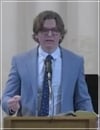
Bill Parker
About Bill Parker
Bill Parker grew up in Kentucky and first heard the Gospel under the preaching of Henry Mahan. He has been preaching the Gospel of God's free and sovereign grace in Christ for over thirty years. After being the pastor of Eager Ave. Grace Church in Albany, Ga. for over 18 years, he accepted a call to preach at Thirteenth Street Baptist Church in Ashland, KY. He was the pastor there for over 11 years and now has returned to pastor at Eager Avenue Grace Church in Albany, GA

Comments

0 / 2000 characters
Comments are moderated before appearing.

Be the first to comment!

Joshua

Joshua

Shall we play a game? Ask me about articles, sermons, or theology from our library. I can also help you navigate the site.