Bootstrap
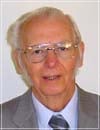
Bill McDaniel

Feed the Church of God

Acts 20:17-30
Bill McDaniel January, 24 2010 Audio
0 Comments

Sermon Transcript

Auto-generated transcript • May contain errors

100%
Our Father, we come before Thy
throne into Thy presence, Lord, in a spiritual way. We might
ask of Thee a great blessing that You'll open our hearts to
this section of the Scripture, that there might be things here,
Lord, that are precious to us this evening that speak to our
heart in a way of spiritual understanding that we might see, Lord, the
blessing that is here, and the blessing of the ministry, and
the preaching of the Word of the Lord, and the church for
which our Lord died and shed His blood. We thank You for this
passage and pray. Make it a blessing to us. Help
us to understand. May we not yet be like those
dull disciples, Lord, yet not understanding So many things
that are clearly set out in Your Word. Bless the sick and the
afflicted, those weak in their bodies. Give every one of Your
children a measure, Lord, of grace that they might feel strengthened
and feel the peace of the Lord. For we ask it in the blessed
name of Him who died for us. Amen. Alright, in Acts chapter
20, let's begin at verse 28. Read to the end of the chapter. These are the words of Paul. He is speaking to the elders
from Ephesus. Take heed therefore unto yourself
and to all the flock over which the Holy Ghost, our Spirit, hath
made you overseers, to feed the church of God which he hath purchased
with his own blood. For I know this, that after my
departing shall grievous wolves enter in among you, not sparing
the flock. Also of your own selves shall
men arise, speaking perverse things, to draw away disciples
after them. Therefore watch and remember
that by the space of three years I cease not to warn everyone
night and day with tears. And now, brethren, I commend
you to God, to the Word of His grace, which is able to build
you up and to give you an inheritance among all of them that are sanctified. I have coveted no man's silver
or gold, yea, or apparel, yea, you yourselves know. that these
hands have ministered unto my necessities, and to them that
were with me. I have showed you all things,
how that so laboring you ought to support the weak, and to remember
the words of the Lord Jesus, how He said, It is more blessed
to give than to receive. Watch this. And when He had thus
spoken, He kneeled down and prayed with them all. And they all wept
sore, and fell on Paul's neck, and kissed him, sorrowing most
of all for the words which he spoke, that they should see his
face no more. And they accompanied him unto
or into the ship." Now, as we begin in this passage of the
Scripture, let's take time to set our compass that we might
find our contextual bearing, that we might hold on the right
way and sail where we intend to go. The text we have read
for consideration is a part of Paul's farewell address to the
elders in the church from Ephesus when Paul greatly desired to
see them. He greatly desired one more time,
as he passed by that way, to be with them and instruct them
because we have read from the text that he felt that this would
be the last time that they would ever be together in one another's
presence. And yet the meeting did not occur
in Ephesus, the city or the church, but it occurred in the seaport
city of Miletus. which is some place at a distance
of about 30 miles from the city of Ephesus. Now, the reason why
Paul was determined to bypass Ephesus on this visit and not
go there in person was that he was crimped for time to be in
Jerusalem for the Feast of Pentecost. Many of the Jews would be there,
and I suppose that he wanted the opportunity to preach Christ
unto them. Some have wondered if Paul thought
that if he went to Ephesus, whether his friends, and perhaps his
enemies, would cause him to carry there longer than he intended
in his journey toward Jerusalem. So what Paul did, he sent over
to the city of Ephesus that the elders there how many there were
I don't know, might come and meet him at my leaders. Though
the apostle might have written to them the very same thing that
he communicates unto them in person, yet they readily come
and they comply with Paul's invitation and request. He would personally
give them an account of some of the things and then give them
a strong charge to keep as they ministered. He would give them
also a very stern warning concerning the doing and the teaching of
false teachers that would be in the area and would come among
them. He refers to them in this text
as grievous wolves. Grievous wolves shall enter in. So we in no way have time here
this evening to consider the whole discourse. Only time that
we might give sort of an overview of it, a quick summing up of
it, that we might understand it. It has been called, rightly
so, an apostolic masterpiece that was spoken by Paul. J. A. Alexander wrote in his commentary
on the book of Acts, The discourse is full of those impassioned
vindications of himself from various malign charges found
in his writing, and especially in the second letter to the Corinthians."
Now here's a quick overview of the farewell address of the Apostle. First of all, in verses 18 through
21, forms the introductory part of the message or of the discord,
he reminds them of the first time that he had ever come among
them. And they knew that first hand
in verse 18. He would have them remember also
how he conducted himself among them as a minister of the gospel. He would have them remember the
manner of life that he had lived and the example that he had set
before them. His faithful proclamation of
the gospel of Jesus Christ. Jews and Gentiles and the opposition
that he received from or for the sake of the gospel. And especially
in verse 20, how He had not withheld anything from them that was profitable,
but He showed them all things that were profitable to their
spiritual life, that He did publicly, that He did also house to house. Preaching Christ, both to the
Jew and to the Gentile, preaching the Lord Jesus Christ. The second
thing that He calls to their attention, you'll find in verse
22 through verse 24. He confronts the things that
might await him at Jerusalem, except that he was absolutely
constrained to go. He could not be dissuaded from
going to Jerusalem, even though, in verse 23, in each place that
he went, traveling back toward Jerusalem, in city after city,
and church after church, The Holy Spirit, it said, was witnessing
the thing that awaited Him in Jerusalem. And if you'll note
in verse 23, the witness of the Spirit was bonds and afflictions
that await me there. They very well may have been
the direct prophecy of some of the prophets in those particular
places. But they were revelations that
were made by the Spirit of God that trouble awaited Paul in
Jerusalem. It is clear that some Spirit-led
brethren exhorted Paul to avoid Jerusalem in Acts 21. And verse 4, entire finding disciples,
we tarried seven days, who said to Paul through the Spirit, that
he should not go to Jerusalem. I'm going to read a few passages
in Acts chapter 21. Look at verse 10 and 11. We tarried
there many days. There came down from Judea a
certain prophet named Agabus when he was come unto us. He
took Paul's girdle, bound his own hands and feet, and said,
Thus saith the Holy Ghost, So shall the Jews at Jerusalem bind
the man that owneth this girdle, and shall deliver him into the
hands of the Gentiles." Let's go again. This was in Caesarea,
by the way. And how did Paul react to these
gloomy predictions? Look at Acts 20 and verse 24,
if you might. He says unto them, Acts 20. I've turned to chapter 21. Excuse
me. But none of these things move
me. Neither count I my life dear unto myself, so that I might
finish my course with joy, and the ministry which I have received
of the Lord Jesus, to testify of the gospel of the grace of
God." In Acts 21 and verse 5. when He had accomplished those
days, we departed and went our way. And they all brought us
on our way with wives and children, till we were out of the city,
and we kneeled down on the shore, and we prayed." In Acts 21, verse
12-14, when we heard these things, both we and they of that place
besought Him not to go up to Jerusalem, Paul answered, What
mean ye to weep and to break my heart? For I am ready, not
to be bound only, but also to die at Jerusalem for the name
of the Lord Jesus Christ. And when he would not be persuaded,
we ceased praying, saying, Thy will of the Lord be done." So
in verse 25 then, through verse 27, touching the Gentiles which
believed, We have written and concluded that you observe no
such thing, save they keep themselves from idol." Then Paul took the
men and he purified them, and you know the account of that.
So that there was a witness unto Paul that there were troubles
that awaited him in the city of Jerusalem. And whether he
escaped from Jerusalem or whether he never saw them again, he would
preach the gospel in another place. He felt persuaded that
if he was delivered from Jerusalem safe and sound, that he would
preach the gospel elsewhere. Still, he said, his conscience
was clear in that he is clean of the blood of all. For wherever
he had ministered, he had not shunned to declare the whole
counsel of God. He felt he stood guilty of no
man's blood. He had kept back nothing that
was profitable. He had not hid the word or the
message of the gospel under a bushel. He had not watered down the gospel. He had preached the way of salvation
fully and faithfully. He had neither respected their
persons nor feared their faces. He had not courted their favor
by preaching another Jesus or a weaker Jesus. He had set forth
Christ among them as placarded are, as crucified. They had heard
nothing from Him, but Christ crucified and the way of salvation. And He could honestly say to
them, I am clean of the blood of all men. And by the way, compare
Acts 18 and verse 6 where you have a like text. Then in verse
28 and following, Paul lays to them a very solemn charge that
contains our text of the evening. He gives them a charge concerning
their oversight of the people and the church of God and their
work in the ministry, having declared to them his very own
faithful discharge of the ministry of Christ. He calls them now
to be good and faithful servants to the children of grace. First of all, let us consider
the position that these men held that he is speaking to here.
Back in verse 17 of Acts 20, they are called elders of the
church at Ephesus. And the word is pressed butyrus,
which can mean elders in age, or older, or senior, or a presbyter
is the meaning of the word. And in verse 28, he uses the
word overseer. And this is that word episkopos,
which you recognize as episcopal, which is the same word translated
bishop in Philippians 1.1, 1 Timothy 3 and 2, Titus 1.7, 2 Peter 2, verse 25. Same word, translated bishop. A bishop or an overseer is who
he is speaking to here. And in the metaphor of calling
the saints a flock, feed the flock of God, he uses the overseer
in the metaphor of a shepherd. He likens them unto a shepherd. A bishop, an overseer. He speaks
to them, that is, the bishops and the elders, not the entire
church, but they are assembled in this place. Now concerning
the charge which Paul gives to them, he says, feed or tend,
or you may find it guide or shepherd the flock, to feed the church
of the living God. Let's also hear the charge from
Paul to two other of his underlings. we might acquaint ourselves with
the way in which Paul charged ministers of the gospel. In 1
Timothy chapter 1, there is a passage that I would like for us to read. It's in verse 1, and it's verse
18, and the first part of verse 19. I'm coming. 1 Timothy chapter 1 and verse
18. This charge I commit unto thee, son Timothy,
according to the prophecy which went before on thee, that thou
by them might war a good warfare, holding faith and a good conscience."
There must have been some prophecy uttered over the young minister
by the name of Timothy. Now, in 1 Timothy chapter 5,
verse 21 and 22, again, he comes to charge, I charge thee therefore
before God, and the Lord Jesus Christ, and the elect angel,
that thou observe those things that thou hast learned without
preferring one another, doing nothing by partiality, lay hands
suddenly on no man, neither be partaker of other man's sins,
keep thyself pure." 1 Timothy then chapter 6 and verse 13 and
verse 14, I give thee charge in the sight of God who quickens
all things and before Christ Jesus, who before Pilate witnessed
a good witness or confession, that thou keep this commandment
without spot, unrebukable, until the appearing of our Lord and
Savior, Jesus Christ. So we see that Paul charged his
young ministers. He did so again in 2 Timothy
1-4, Titus 1-9-11, Titus 2-1, charging these men to be faithful
to minister the gospel. Now back to Acts 20 and verse
28. And the verse, I believe, is
just bursting open with sweet and ripened fruit for our picking. And let us see all the things
that might revolve here around the phrase, the church of God. Let that be the hub in the middle
of the wheel. The church of God. It is the
common word, Ekklesia, and it is a combination of two words,
ek from out, and also chosen or called. These are the called
out ones, the assembly, the congregation, those that assemble together
in the worship of God. A religious congregation is another
meaning of the word, and it is called the church of God, and
not the Church of Christ or the Church of the Lord. It is called
the Church of God, for it is both formed and belongs to God
Himself. In honesty, we are compelled,
I believe, to acknowledge that some prefer the term, the Church
of the Lord, and it might be in some translations that way. Still, the term Church of God
is a favorite one with the Apostle Paul. He uses it in the New Testament
to count as many as eight times in his epistle. The Church of
God. The Church of God. And the reason
that some might prefer the term Church of God is because here
in our text, it flows with the last part of the verse, which
he purchased with his own blood. On the other hand, could it be
a declaration of the Godhood or the Deity of the Lord Jesus
Christ? For He is very God, be that as
it may. There are three things here in
verse 28 that are related and that revolve around the phrase,
the Church of God. And for keeping the order, of
occurrence, we'll start at the bottom of the verse, if you don't
mind. This church of God, says Paul,
has been purchased by blood. The church of God, which he has
purchased with his own blood. It has been blood bought, as
we say. It has been redeemed, or ransomed,
or acquired by blood. It has been purchased with a
price. And the price is the blood of
the Lord and Savior Jesus Christ. The blood of God's own Son. Let's focus our attention for
a bit on the word purchase, which he hath purchased, which is used
twice in the New Testament. That is, this form, or this tense
of it, is used again in 1 Timothy 3 and verse 13. in the tense that expositors
call the middle voice in the Greek. Now, we don't keep all
that straight in our mind, middle voice and so forth, but the main
point of the middle voice tense of it being this, having purchased,
yes, but having purchased for himself. And that's what that
word in 1 Timothy 3.13 is, for oneself. As for James Alexander
wrote, The Greek verb purchase means to save, to acquire, to
gain, to buy with a price. And when in what they call middle
voice, to acquire for oneself. In other words, the Lord has
bought this church not to give it to someone else. He has bought
it for His very own. So that the individual members,
the church collectively is purchased by the blood of Christ upon the
cross. Paul said to the Corinthians,
1 Corinthians 6, verse 20, Ye are bought with a price. And
what that price is, the blood and death of our Lord. 1 Peter
1, verse 18 and 19, uses similar language. You were not redeemed
with corruptible things such as silver and gold received by
vain conversation from your fathers, but with a precious Blood of
Christ as of a lamb without spot and without blemish. Because
Paul said in Ephesians 5.25, Jesus loved the church and gave
Himself for it. This is His blood that redeemed
the church, that brought us out of the slavery of sin. You know, sometimes we sing from
time to time a hymn that contains lines like this. The church's
one foundation is Jesus Christ her Lord. She is His new creation
by Spirit and the Word. From heaven He came and sought
her to be His holy bride. With His own blood He bought
her, and for her life He died." Again, that song says, one holy
name she blesses, partakes one holy food, To one hope she presses
with every grace endued. Because the church is exceedingly
dear to God and to Christ. For it is the only spiritual
institution ever in time of creation bought with the blood of the
Lord and Savior Jesus Christ. Thus Paul says unto them, lift
the esteem of the church in your eyes. Elders, give it the glory
and the honor that it deserves. It is bought out of bondage with
the blood of the Lord Jesus Christ. Do we think of the church that
way? We think that some people have just gotten together and
formed a religious organization. But the church of the Lord is
bought with the blood of Christ who shed it upon the tree. Then
we come to the second thing. related to the church. The Holy
Spirit has made them overseers. They have not appointed themselves.
They have not taken this office upon their own inarrogance. This teaches us that the Holy
Spirit is active in the church which the blood bought and truly
has Christ as its head. Here are a couple of examples
along the same line where the Spirit is said to take the lead
in the affairs of the early churches. And of course, both of them are
to be found in the book of Acts. Remember that decision in Acts
15? That decision in the council
concerning the Gentiles and the ceremonial law? When they had
been much talking, finally they decided on a way to go and they
put it in writing. And in Acts 15 and 28, It seemed
good to the Holy Ghost and to us to lay no greater burden than
necessary. That is, the Spirit led them
in that resolution in Acts 15. In Acts 13, there's another great
example. The church at Antioch sending
out Paul and Barnabas to preach the gospel. Let's consider two
verses from Acts 15, verse 2. And as they ministered and fasted,
the Holy Ghost," or the Holy Spirit, said, "'Separate me Barnabas
and Saul for the work whereunto I have called them.'" Now, it's
not to be concluded from this that the Holy Spirit spoke in
an audible voice before or in the assembly that could be heard
by the congregation, but that the Spirit led them, that the
Spirit motivated them, that the Spirit put them to be in one
mind about that matter of Paul and of Barnabas. Secondly, in
verse 4, we see again, so they, listen to this, being sent forth
by the Holy Spirit departed unto Seleucia. The Holy Spirit, yes,
the church sent them out with their blessings, but the Holy
Spirit was behind the matter. You might remember again another
place in Acts 16 and verse 6, how that Paul intended to go
one way, and the Scripture said the Holy Spirit forbid him to
go and to preach that way. So when Paul tells the Ephesian
elders that the Holy Spirit has made them overseers, what has
he done? In what way has the Spirit of
God accomplished this? If the Spirit did orally communicate
it, no halo appeared around their heads. Their clothes did not
glow like did those of the Lord Jesus Christ. So how then did
the Spirit communicate His sovereign will to make them overseers? I personally like Gil's take
on it, that the Holy Spirit called them to the work, inclined them
in their hearts toward it, gave them both a heart, and the desire
for it, gave them the qualifying gifts that they might be a minister,
and last but not least, moved the people to agree on that matter. This is a great work of the Holy
Spirit that shows that the gospel ministry is not simply another
ordinary vocation, not a choice which one makes, Not a vocation
one might choose, like some choose to be a physician, or a chemist,
or a shopkeeper, or a herdsman, or a husbandman, or whatever.
No, the Spirit did not light upon them in the form of a dove
as it had done the Savior, but it gave them the ability gave
them the inclination and sealed it up in the heart of the congregation
so that they appointed them as overseers in that place. But
the third thing that we notice with the church as the hub, Paul's
charge and exhortation is this, feed the church of God. Elders, feed the church of God. As we said, we have called them
a flock. A metaphor frequently used in
the Scripture for God's people who are so often called by the
title of sheep. Psalms 100 and verse 3, we are
His people and the sheep of His pastor. For the sheep Christ
died. For them He died. For them only
our Lord died. John chapter 10. And though feeding
the flock is a leading function of the minister, Many good expositors
contend that it is better to render this another way. Shepherd
the flock. Tend the flock or shepherd the
flock is better. To shepherd the church of God. And some say there is an old
verb meaning to act out the part of a shepherd toward the sheep
or toward the church. Alexander came right out and
said the word feed. is a very inadequate translation
of the Greek word. It includes the whole care which
a shepherd exercises over a flock. It includes protecting them from
grievous wolves, in verse 29. For in Matthew 7.15, false prophets
were equated with ravening wolves. Rapacious wolves they were, who
came and violently Tore and wounded and stripped and killed. Seized
and taken by force. Moved by greed. They do these
things. How often did the Lord warn His
disciples against false Christs, false prophets, and false doctrine. Paul warns the Ephesians in verse
29 and 30 of our text of a double danger if you look at it. In
verse 29, of grievous wolves entering in among you." That
means that they are coming from without and are entering in. And notice, not sparing the flock. Not sparing is just another way
of saying devouring and destroying the flock of God. These, he said,
would enter in from without. Perhaps appearing as wolves in
sheep's clothing. in order to be received in. The second danger, however, is
even more pernicious in verse 30. Not only from without, he
said, but from within. For the turncoat within poses
a great threat more than the barbarians outside of the wall
or outside of the gate. Listen to what Paul says. Of
your own selves shall men arise. preaching or speaking perverse
things. Out of your own number, some
of those who have professed the soundness of the gospel and the
profession of Christ, out of your own number shall arise of
those seeking to draw away disciples after themselves. Speaking distorted
things and perverted things, their purpose being to make them
a little of disciples. Make them followers of themselves. Draw them away. Bring them out. Thus, the exhortation. Shepherd
the sheep or kin the sheep. Instruct them. Correct them. Warn them. Guard them. Lead them. Protect them. Point out the wolves. This is the business of an overseer. Remember what the Lord told Simon
Peter in our text this morning? Feed my lambs. Feed my sheep. Feed their soul. Lead them to
the good word of God. Take them by the refreshing waters
that they may refresh. Always hold before them the very
truth of God. Remember this, the sheep ought
to follow the true shepherd and not the false. Peter never forgot
the Lord's piercing words which he spoke unto them, and he included
them in his first epistle. In 1 Peter 5, verses 1-4, Peter
made an admonition, including that one the Lord had given him. Feed my sheep. You know, if you look and pass
and know about churches today, they're doing everything, everything
but preaching the gospel. They're playing. They've got
ladies' night, mothers' night out or day out. They've got clay
modeling. They've got it all. You can play
all day, but preach the gospel. Preach the word. Hold up Christ. That is the business of those
who are to feed the church. Feed the flock of God. Give them the good word of God.
Not watered down pablum, but meat and strong meat and milk
that they may grow thereby. Feed the flock of God. the church of God." That's Paul's
charge to those men from Ephesus. All right, may we have a word
of prayer, please?

Comments

0 / 2000 characters
Comments are moderated before appearing.

Be the first to comment!

Joshua

Joshua

Shall we play a game? Ask me about articles, sermons, or theology from our library. I can also help you navigate the site.