Bootstrap
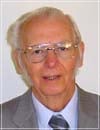
Bill McDaniel

The Holy Trinity

Matthew 28:19
Bill McDaniel December, 6 2009 Audio
0 Comments

Sermon Transcript

Auto-generated transcript • May contain errors

100%
In Matthew 28, verse 19, we see
all three members of the Godhead are mentioned, and that's why
I wanted to read this verse of Scripture. Go ye therefore, and
teach all nations, baptizing them in the name of the Father,
and of the Son, and of the Holy Ghost, our Spirit. John chapter
10 and verse 30. a short statement from our Lord,
but one that threw the Pharisees into a great tizzy. And they
wanted to kill the Lord when He said these words, I and My
Father are one. When the Lord said that, the
next verse said they took up stones again to stone Him because
they considered that He had spoken blasphemy in making himself equal
with God. But our Lord never retracted
that and never backed off of it. I and my Father are one. But let's get into our subject
today, if we can, the Lord allowing, on the subject of the Holy Trinity. I guess you would admit with
me that there are some subjects that are deeper than others. Some are harder to understand
And some are more difficult to rightly divide. And such as this
morning brings a great challenge unto our limited understanding
at what we have proposed today, such a subject as that of the
Trinity. Not just that of the Trinity,
but that this implies that there is a plurality in the Blessed
and Holy Trinity. Now, be warned, if you may, and
I may use a metaphor from sailing, that in considering the subject
of the divine Holy Trinity, we are casting our feeble vessels,
as it were, out upon an ocean that has neither bank nor bottom. We cannot see the shore, so broad
is it. We cannot sound out the depth,
so deep. or the things that we are about
to consider this morning. And before getting into the subject
in earnest, let's stop and acknowledge something about the doctrine
of the Trinity. And that would stand good for
other great doctrines of the faith as well. That it is not
reasonable, when you think about it, it is not reasonable to think
that the doctrine of the Trinity is something that might have
been devised by a man or men. We do not think that this doctrine
is something that might rise up in the mind of a human being
or fashioned by a depraved and fallen understanding. Whom or
what mind is there that could possibly conceive of one essence
and yet three persons in that one divine essence. Then there
is the equality, there is the unity in the Godhead. And then it is conceived that
the one person of the divine essence or nature became incarnate. That one of those persons who
is in the divine Godhead became incarnate, assumed flesh, and
walked among men, even forming a great, mysterious, but hypostatic
union between the two natures of the Lord Jesus Christ, the
human and the divine. So much so that He was true God
and true man as He dwelt among men on the earth. Now again,
I would suggest doctrines that are not likely to be posited
or put forth by men Another one would be, I think, the doctrine
of total depravity. The doctrine of depravity hardly
seems to be a doctrine that men would put forth concerning themselves. It is not how they would portray
themselves as they are portrayed in the Bible. It's not common
for men who are unregenerate and sinful to portray themselves
as bad as they are or worse than they are, but it is always their
habit to portray themselves better than they are described in the
Word of God. So in general, the human family
resists and challenges the doctrine of total depravity or original
sin, having nothing to do with it. One more, if you might. How
about salvation? free and undeserved salvation
is not the view of salvation that is held by the majority
of people in the world. In fact, the last two mentioned
are most rejected by the world in favor of the view that people
are basically good at heart, that they have a good heart and
they have good intention, and that they are worthy of eternal
life by the good deeds that they perform while they live in the
world. We can consider the matter of
God's having His being and His essence. And let us do so under
two headings. We might make some division that
might be profitable unto us. First of all, let us consider
that it is indeed the teaching of the Scripture that God is
one. That there is one and only one
God in all of creation. Which also was the confession
of the Old Testament people of God in Deuteronomy chapter 6
and verse 4, Moses said, hear, O Israel, the Lord our God is
one Lord. And 1 Corinthians 8 and 4, there
is no other God to us but one. Verse 6, to us there is but one
God, the Father and the one Lord Jesus Christ. And in all of these,
notice the distinction. There's the Father and there
is the Lord Jesus Christ. So the conclusion of that is,
to the Christian there is one and only one God. We cannot be so charitable as
to acknowledge any other God or gods that might be worthy
of worship. We cannot say, as do some, that
one God is as good as another. that there might be many gods,
and it's just simply up to the person to choose the god that
they prefer. One religion is as good as the
next, is the philosophy held by far too many, both in the
world and in the church. In Isaiah 44 and verse 6, I am
the first, I am the last, and beside me there is no god. And as the Lord Jesus claimed
in Revelation 1 and verse 8, I am Alpha and Omega, the first
and the last, or the beginning and the ending. Now this God
is eternal in the sense that He had no beginning. Little kids often ask after Sunday
school, where did God come from? We have to tell them that God
has always been, has no beginning. That means that He is uncreated. That means He is un-evolved. And as the Philadelphia Confession
of Faith put it, quote, His substance is in and of Himself, unquote. This means that God is dependent
on absolutely none or nothing outside of Himself. We learn
again in 1 Timothy 1.17 that our God, as to His essence and
being, is invisible. And His nature is pure. John chapter 4 and verse 24,
God is So that he possesses his being
in the purest form possible by a spirit being. Jeremiah 23,
24. His knowledge is immense. Filling both the heaven and the
earth. Psalms 147 and 5. His person
and purpose is immutable. That is, it is unchangeable. He is holy, He is wise, and He
is sovereign, all those things and more. Now, concerning God,
He possessed His attributes, possesses them in a very unique
way. Some of such uniqueness that
they cannot be imparted to any other creature. Certain attributes
of God cannot pass to the creature at all, such as his immensity,
such as his omniscience, and such as his eternality. And so we see that he possesses
his being in such an immense way that it is so manifold that
it is past finding out for these finite minds of ours. But to partially sum up, if we
may try, God is an uncreated, eternal Spirit. He created the
heavens. He created the earth. He created
all things therein and guides them by His sovereign power and
providence. Now, a second thing about this
great God in the Trinity, this eternal uncreated God who is
filled with every perfection in the divine essence, exists
in Trinity. Yes, there is one God, but this
one God exists in Trinity. He exists in three persons. John Gill expressed it in his
Body of Divinity. There is a plurality in the Godhead. a trinity of persons sharing
the one divine essence. Now be careful, this does not
say that there are three gods, as some have accused us of being
tritheists when they hear the view of the trinity. They accuse that we have, or
that we preach, or that we worship three gods. But three persons
sharing The one divine essence is our view of the Trinity, yet
doing so in unity of purpose and of power, as there is no
division, no cleavage, and no contention in the Godhead, none
whatsoever. Perfect harmony always exists
among those in the Godhead, and the three divine persons in the
one essence of that one Godhead are identified for us in Scripture
by personality. Father and Son, or sometimes
called the Word, and the Holy Spirit of God. Herman Bebink,
the Dutchman, in his book, The Doctrine of God, has a chapter
on the Holy Trinity in which he wrote this, and I copied it
from him. The Old Testament contains the
nucleus of the doctrine of the Trinity. That is, the revelation
of the doctrine of the Trinity does not wait or is kept for
the New Testament, but it begins to be unfolded and manifested
in the Old Testament. In such things as the plural
name of Elohim as God in the Old Testament. And then there
are the plurals we find in Genesis and in Isaiah. We and us in regard
to creation. And in Genesis, let us make man
in our image. And in Isaiah chapter 6, whom
shall I send and who will go for us? So the plurals are used. then the doctrine of the Trinity
is more fully explained and opened up in the teaching of the New
Testament, as, of course, many great doctrines are, as is the
case with other good doctrines that are found first in germ
form or nucleus form in the Old Testament, but then are more
clearly revealed when we are brought over into the New Testament. Now, as is the case with every
major doctrine, that of the Trinity has had its corruptors, its perverters,
and its tormentors. Rather early in the history of
the New Testament church came out of the woodworks those who
began to pervert the doctrine of the Trinity. In regard to
Trinitarian truth, So I'd like for us to consider two that came
fairly early as perversions and corruptions of the holy doctrine
of the Trinity. First of all, and I'll lump some
together here under this name of Monarchianism, or the same
as what was known of old in history as Patrapacianism by some early
in the church. There was Sabellianism also,
if you've heard of Sabellius and Sabellianism. And still Sabellianism is alive
and living among us today in what is called the oneness doctrine
that you hear about. Meaning of the Pentecostal movement. Those of the oneness persuasion
are off sprouts illegitimate children of Sebellianism. So they say we have trifeism. They say we have three gods. And to avoid this trifeism, they
contend, and you need to listen carefully now, the way they get
around a trinity is they contend that there is one substance and
one person only in the Godhead, and that that one person only
in the Godhead that the names Father, Son, and Holy Spirit
are simply names or manifestation of that one person in the Godhead. That God, the one person, assumes
the role of Father. He assumes the role of Son and
assumes the role of Holy Spirit. Which means that they then deny
the personalities of the Son and the Spirit as being the second
and third member of the Godhead. Thus they are able to conclude
that in the Incarnation, do you believe this? Listen, in the
Incarnation it was the Father who animated a human body so
that it was actually the Father who suffered and died upon the
cross. That is the view, when once you
get off of the trail of the truth as it is in the Lord. That's
that old doctrine of patripationism that I was speaking about a little
bit earlier, a while ago. Now secondly, we notice that
there are some who rob Christ of His deity, such as the Arians,
as they were called, of old. They taught that the Son was
neither God nor was He eternal. The Son was not God and not eternal. They teach, Arianism does, that
He was a created being. A high created being, yes, but
a created being nonetheless. And here's how Robert L. Dabney
summed up the Arian view that they developed of the Lord Jesus
Christ. Quote, the son was produced or
generated by God out of nothing, endued with the nearest possible
approximation to his own perfections, adopted into sonship, clothed
with a sort of deputized divinity, and employed by God as his glorious
agent in the works of creation and redemption." And Dabney was
quite a deep thinker on those matters. And, if I mistake not,
the teaching of Cyrus, he taught that the Holy Spirit was produced
then by the Son. So we have these eras, that the
Son was created by the Father, Way back, not from the beginning,
but way back. And that the Holy Spirit then
was created by the Son. Both of these heresies destroy
the truth and the unity of the Divine Trinity. So that what
is at stake in all of this is the eternal Deity of Jesus Christ
our Lord. For if this Deity of our Lord
be surrendered up then Christianity is an empty and a desolate house
indeed, if the deity of Christ be taken away. I stand, therefore,
with Edward Bickerstadt in his excellent writing on the Trinity,
and that is that the Scriptures prove the co-equality of Jesus
Christ with that of the Eternal Father, that Christ the Son is
of eternal deity with God the Father. That by comparison of
power and attributes, as can be seen in some examples that
I'm about to give you now. Here are some comparisons from
a description of God and a description of the Lord Jesus Christ. In Malachi 3 and verse 6, God
said, I'm the Lord, I change not. Now, could anything like
that be said about the Lord Jesus Christ? Well, how about Hebrews
13 and 8? Jesus Christ, the same yesterday
and today and forever. We have Isaiah 43 and 3, where
God is called Jehovah, the Holy One. And in Acts 3 and 14, Peter,
in preaching after Pentecost, calls the Lord Jesus the Holy
One. You kill the Holy One of Israel. In Genesis chapter 1 and verse
1, In the beginning God created the heaven and the earth. John
1.1, In the beginning was the Word, and all things were made
by Him. And that is a reference to the
Lord Jesus Christ. Psalms 103 and verse 19, His
kingdom rules over all. And then in Acts 10 and verse
36, preaching Christ it is said, He is Lord of all. Isaiah 25 and verse 8, He, that
is Jehovah, will swallow up death in victory. 1 Timothy 1 verse
10, Our Savior Jesus Christ who abolished death. God is said
to abolish death. Christ is said to abolish death.
In Proverbs 3 and verse 12, Whom Jehovah loves, He corrects. Then we read in Revelation 3.19,
Jesus saying, As many as I love, I rebuke and chasten them. Again,
in Malachi 1.6, Jehovah is called Master. If I be your Master,
where is my honor? And in the New Testament, Matthew
23, 8 and 10, the Lord Jesus Christ is called Master. One great proof. Christ accepted
the worship of men. Now, none but God can legitimately
do that. A man cannot. An angel cannot. A saint cannot. But the Lord
Jesus Christ allowed men to fall down before Him and worship Him
and pray to Him. If He were not God, this would
be an act of idolatry, to worship one, not God. He allowed people
to pray unto Him without rebuking. Neither rebuking nor refusing. the prayers and the worship of
men and women upon the face of the earth. Furthermore, we do
affirm and ascribe the same deity to the Holy Spirit as to the
Father and to the Son. He is called the Spirit of God,
is He not, again and again? He is called the Spirit of the
Son in the Scripture. He is called the Spirit of God,
the Spirit of Christ. And in Hebrews 9.14, He is called
the Eternal Spirit. The Lord offered Himself through
the Eternal Spirit in light of John 4.24 where Jesus told the
woman of Samaria, God is a Spirit. Or more literally, God is Spirit. Not God is a Spirit. That would
imply one among many. But God is spirit. Where for one thing, as A.T. Robertson wrote in a statement
of the non-corporality of God, that God has no physical or material
body. That God is spirit means simply,
as John Owen the Puritan wrote, He, God, is pure spiritual immaterial
nature." And John 4.24 there speaks of the immaterial nature
of which each person in the Trinity is a partaker. So that the Lord,
in John 4 and verse 24, is not referring to the person of the
Holy Spirit when He said, God is Spirit, apart from the Father
and the Son. God is Spirit. And each member
of the Trinity, or the Godhead if you prefer, are partakers
of that spiritual nature. It is the Son and the Son only
that assumed humanity. But also in the Trinity, there
is the person of the Holy Spirit. Yes, I said the person of the
Holy Spirit. A distinct person from the Father. and from the Son. And this Spirit
speaks expressly. 1 Timothy 4 and verse 1. He can be lied to in Acts chapter
5 and verse 3. Why have you lied unto the Holy
Ghost? He can be a witness to the saints
in Romans 9 and verse 1. He can be blasphemed in Matthew
12 and 31, and that is a strong example of His divinity. He can be blasphemed. He came
in power on the day of Pentecost and empowered the church and
the people of God. And by the way, do we see mentions
of the Holy Spirit in the Old Testament as well? Is there the
work of the Holy Spirit among the people of God in the Old
Testament? Yes. Thus, the Holy Spirit is
also a divine person. And not just merely an influence
or some kind of mystical power. We read in the Westminster and
the Philadelphia sort of companion confessions of faith in the Trinity. There are three, Father, Son,
and Holy Spirit of one substance, of one power, of one eternality,
each having the whole divine essence, yet the essence is undivided
in the Godhead. None is more or less God. Each possess the same attribute,
each taking part in the divine purpose, such as creation and
salvation and such. Now, I will only mention quickly
that at times in the New Testament Scripture, All three are mentioned
in the same verse at one and the same time. We read Matthew
28 and verse 19, baptizing in the name of the Father, the Son,
and of the Holy Spirit, or Ghost. 2 Corinthians 13 and 14, Paul
gets all three of them in this verse. The grace of the Lord
Jesus Christ. and the love of God and the communion
of the Holy Spirit. Now, each with a different grace
bestowed. And look at the graces. Grace,
love and communion mentioned in that verse. As well as such
manifestation at the baptism of our Lord in water. In Matthew 3 and verse 16 and
17 and in Luke chapter 3 and verse 22, You have there all
three members manifest and in evidence at one time, in one
place, at the baptism of our Lord. The Son is there in the
flesh coming up out of the water. The Spirit descends upon Him
as it were in the form of a dove. And the Father speaks orally
and audibly from heaven, This is My beloved Son. hear ye him."
Now these sorts of texts like this squeeze the anti-Trinitarian
and such as Herman Hoeksema referred to as quote, nominal Trinitarians,
unquote. So that they are forced to defend
their denial of the literal and the personal subsistence of the
Son and the Spirit with the Father by saying that the Son and the
Spirit are simply two powers or influences that emanate or
come forth from a source which they identify as God. That Christ
simply emanated from God and the Holy Spirit simply emanated. But this truth is, as Bickerstith
again wrote, these distinctions reveal unto us the simultaneous
cooperation of the three infinite agents or persons in the Godhead. Now, as to the person and the
deity of the Holy Spirit, we notice that the Holy Spirit is
referred to both as a person and also masculine when He is
mentioned in the Scripture. Masculine gender. He and Him. And unto Him is ascribed all
manner of actions performed by the Spirit of God. He indwells,
He leads, He teaches, He intercedes, and such as that. We read of
His mind, we read of His will in the New Testament. Abraham
Kuyper noted in his book, The Work of the Holy Spirit, that
in every work which is effected by and attributed to the whole
Godhead In common, each member is ascribed a part, as in creation. Both the Son, Colossians 1, 16
and 17, John 1 and 3, Hebrews 1 through 3, and the Holy Spirit,
Genesis 1, 1 through 3, are said to have a part in the creation. The Father and the Son and the
Spirit. are all said to be creators of
the world and of heaven. So the incarnation, the Father
decreed, the Spirit conceived the humanity of the Son, and
He assumed that humanity that the Holy Spirit had conceived. And what would be the effect
then upon the person of Christ? How would a mere influence, if
He were that and no more, affect the mighty works that are ascribed
unto the Spirit of God. Works such as regeneration, the
same Spirit that did conceive the human nature of our Lord
Jesus Christ in the womb of that young virgin, the same Spirit
that came upon her and overshadowed her, is that one and same Spirit
who quickens the dead in their trespasses and in their sin. Can any but a divine power accomplish
such a work as that? Thus it is that the New Testament,
more frequently and more clearly, develops the Trinitarian truth
than in the Old Testament. In the New Testament revelation
of the Trinity, the fact that God, the God of the covenant,
now becomes triune is evident. Salvation rests upon a triune
principle. The work of the Father, the work
of the Son, the Holy Spirit. The Father chose a people before
the world. He ordained them to the adoption
of children. He gave them unto Christ by way
of charge and reward, Ephesians 1, 3-5. The Son then became incarnate
according to the eternal purpose and died to redeem those whom
the Father had given unto Him. And the Holy Spirit brings the
first two to fruition, regenerating the ones that God has chosen
and that Christ has redeemed. Not only regenerating, but being
both a seal and the earnest. of their great salvation, indwelling
them, indwelling them as a temple the body is called, bearing witness
with their spirit that they are the children of God. Would you
say that it was far-fetched for me to say that often the Holy
Spirit is badly shorted in His due, in His honor, and in His
glory in the preaching and the study of the Word of the Lord? Not only is he our teacher, he
appoints ministers over the flock, Acts 20 and verse 28, over whom
the Holy Ghost hath made you overseers. It was the Spirit
of God who said to the church at Antioch in Acts 13 and 2,
Separate me Paul and Barnabas for the work whereunto I have
called them. He forbade Paul and Timothy to
preach the gospel in Asia, Acts 16 and verse 6. 1 Timothy 4 and
1, the Spirit speaks expressly, even explicitly, some translate
that word, concerning the latter time of apostasy. Returning now to the idea of
the Trinity, sometimes called the three in one. The hymn writers,
we often run across the Trinity in our hymns. They speak of God,
the three in one. God in three persons, blessed
Trinity. We sing, the holy three is a
phrase that I like to use concerning them. Not three gods, but one
God in Trinity and in unity. In one essence are three persons,
each being God, each being eternal, yet there is one divine essence,
though there be three persons, and the proper distinction of
these where they are made are Father, Son, and Holy Spirit."
When we speak of their unity, or that each one of them is God,
and each one of them is a partaker of the divine nature or essence,
it is not to be inferred that they are all one and the same
person, but that they are three distinct, all three persons,
are co-equal and co-eternal, and the three are each equally
divine, possessing divinity. Hodge wrote in his exposition
of the Westminster Confession, quote, the indivisible divine
essence in all divine perfections and prerogatives belong to each
one in the same sense or degree, unquote. Concerning the Trinity
now, brethren, We ought to confess, as some great thinkers and expositors
of days gone by have done, that the subject of the Trinity actually
is a matter of revelation. This is a matter that must be
divinely revealed unto any. It can only be believed either
by classroom, mental instruction, or by divine revelation. And then, even then, Our understanding
is limited. We are overwhelmed. We say with
a writer of old, it is more than I can take in. We believe what
we cannot fully understand and fully complain. Still we say,
salvation is trinal. It requires the Trinity so that
none can know God. None can know God in a saving
way apart from the Trinity. Still, it is past finding out. It is more than we can grasp.
Let me conclude with these few words. As said in the Philadelphia
Confession, quote, the doctrine of the Trinity is the foundation
of all of our communion with God, unquote. He was revealed
to us as Father and Son and Holy Spirit. As the truth of the Trinity,
is seen in the bestowals of grace upon the elect. He that has been
saved will think in relationship unto the Trinity, that the Father
sent His only begotten Son, the Son loved us and gave Himself
for us in the cross, and the Spirit of God came and quickened
us and convicted us and enlightened us and drew us unto Him. God
the Son gave to God the Father a sufficient sacrifice for the
elect in order that God the Spirit might apply the great salvation
purpose for them in eternity past. Now, we will agree, will
we not, that it is past our finding out. All right, let's stand,
please, for a word of prayer.

Comments

0 / 2000 characters
Comments are moderated before appearing.

Be the first to comment!

Joshua

Joshua

Shall we play a game? Ask me about articles, sermons, or theology from our library. I can also help you navigate the site.