Bootstrap
Donnie Bell

Thoughts On The Lord's Supper

1 Corinthians 11:23-28
Donnie Bell August, 26 2018 Audio
0 Comments

Sermon Transcript

Auto-generated transcript • May contain errors

100%
Good evening. Let's read from
Luke chapter 7. Luke 7, verse 36. Luke 7, we'll start at verse
36. Our pastor preached last week
about the parable of the sower and the seed. Probably my favorite
parable. And whether this is a parable
or not, it's a learning lesson for us about forgiveness and
grace. Luke chapter 7, verse 36. And
one of the Pharisees desired him that he would eat with him.
And he went into the Pharisee's house and sat down to meet. And
behold, a woman in the city, which was a sinner, when she
knew that Jesus sat at meet in the Pharisee's house, brought
an alabaster box of ointment and stood at his feet behind
him weeping and began to wash his feet with tears and did wipe
them with the hairs of her head. and kissed his feet, and anointed
them with ointment. Now when the Pharisee which had
bidden him saw it, he spake within himself, saying, This man, if
he were a prophet, would have known who and what manner of
woman this is that toucheth him, for she is a sinner. And Jesus
answering said unto him, Simon, I have somewhat to say unto thee,
and he saith, Master, say on. There was a certain creditor
which had two debtors, the one owed 500 pence and the other
50. And when they had nothing to
pay, he frankly forgave them both. Tell me, therefore, which
of them will love him most? Simon answered and said, I suppose
that he to whom he forgave most. And he said unto him, thou hast
rightly judged. And he turned to the woman and
said unto Simon, seest thou this woman? I entered into thine house. Thou gavest me no water for my
feet, but she hath washed my feet. with tears, and wiped them
with the hairs of her head. Thou gavest me no kiss, but this
woman, since the time I came in, hath not ceased to kiss my
feet. My head with oil thou didst not
anoint, but this woman hath anointed my feet with ointment. Wherefore
I say unto thee, her sins, which are many, are forgiven. For she
loved much, but to whom little is forgiven, the same loveth
little. And he said unto her, thy sins
are forgiven. And they that said it meet with
him began to say within themselves, who is this that forgiveth sins
also? And he said to the woman, thy
faith hath saved thee. Go in peace. Open your Bibles
with me, if you will, this evening to 1 Corinthians 11. I could
go to several places, but I want to use this tonight. And I want
to give some thoughts on the Lord's Table. Some thoughts on
the Lord's Table. Or the Lord's Supper. The Lord's
Supper. That's what He called it. He
called it a supper. Called it a supper. Called it a supper.
Let me start reading in verse 23, down through verse 28. For
I have received For I have received of the Lord
that which also I delivered unto you, that the Lord Jesus, the
same night in which he was betrayed, took bread. And when he had given
thanks, he broke it and said, Take eat. This is my body, which
is broken for you. This do in remembrance of me.
After the same matter also he took the cup, and when he had
supped, took a sip out of it, saying, This cup is the New Testament
in my blood. This do ye as oft as ye drank
it in remembrance of me. As often as ye eat this bread
and drink this cup, ye do show forth the Lord's death, ye do
show the Lord's death till he come. Wherefore, whosoever shall
eat this bread and drink this cup of the Lord, unworthily shall
be guilty of the body and blood of the Lord. But let a man examine
himself, and so let him eat of that bread and drink of that
cup." The Apostles talking about, this is what the Lord taught
me. I believe Christ taught me this, delivered this to me. And
it says, and this is astounding statement to me, There in verse
23, that the Lord Jesus, the same night in which he was betrayed,
he was betrayed. Judas went and sold the Lord
Jesus Christ for 30 pieces of silver, told him where he'd be,
who he'd be with, and how to recognize him. But the same night
in which he was betrayed, and he even said this, that there's
one sitting here who shall dip his bread in sop, who will betray
me, who will betray me. And here on the day when the
night that our Lord Jesus Christ is going to pray until His sweat
become as great drops of blood, when He's all alone in the Garden
of Gethsemane, saying, Father, if it be possible, let this cup
pass from me, but nevertheless not my will but Thine be done.
The same night, the same night that they took this Lord's Supper,
when He took that bread and he took that wine and he break it
and took a sip from it and passed it out among his disciples. That
same night when he done that, when they left that table, they
come and got him when he went out into the garden, the same
night in which he was betrayed. But let me tell you about this
Lord's table, the Lord's Supper. First of all, it's a time for
examination. Look what it says down here in
verse 28. It's a time of examination. Let a man examine himself. Let a man examine himself, and
so let him eat of that bread and drink of that cup." And what
this is telling us is, what do you think of the Lord Jesus Christ? What is your interest in the
Lord Jesus Christ? Not you examine your brother,
not you examine your wife, not you examine the preacher, not
you examine your neighbor, not examine anybody else. Examine
yourself. What's your relationship with
Christ? What's His blood to you? What's His broken body to you?
What is His death to you? And I want to show you over here
in 1 Corinthians 13, 5, 2 Corinthians 13, 5. Let's look at this and
see what it says over here. When we talk about examining
ourselves, now we're not examining ourselves to see whether we're
worthy or not. That's not what He says. Let
a man examine himself. You consider the Lord Jesus Christ
and what He did, the broken bread and the broken body and the shed
blood. And he said here in 1 Corinthians,
2 Corinthians 13, 5, he said, examine yourselves, and listen
to this now. Preachers always, he does, they
preach this thing, examine yourselves, see whether you're worthy or
not, see whether you're living good enough or not, see whether
you're praying enough or not, see whether you're giving enough,
see whether you're dedicated enough, see whether you're devoted
enough. Examine yourselves like that. But that's not what he's
talking about here. When he talks about examining
yourselves, whether you be in the faith, to whether you believe
the gospel. That's what that means. Examine
yourself whether you believe the gospel. Are you in the faith? Did God save you by His grace?
Did God make Christ real to you? Did God make Christ effectual
to you? And here's the thing, prove your
own selves. Don't prove nobody else. Prove your own selves,
and that word prove means try yourself. Know your own selves. You know this for yourself how
that Jesus Christ is in you, and if He's not in you, you would
be a reprobate. And so that's what the Apostle
is talking about over here. Let a man examine himself. Do you, let me ask you
this, do you as a sinner, do you as a sinner, do you as a sinner, do you as a sinner, do you as a sinner,
do you as a sinner, do you as a sinner, do you as a sinner, do you as a sinner, do you as
a sinner, do you as a sinner, do you as a sinner, do you as a sinner, do you as a sinner, do you as
a sinner, do you as a sinner, do you as a sinner, do you as a sinner, do you as a sinner,
do you as a sinner, do you as a sinner, do you as a sinner, do you as a sinner, do you as a
sinner, do you as a sinner, do you as a sinner, do you as a sinner, do you as a sinner, do you as
a sinner, do you as a sinner, do you as a sinner, do at his feet, showered his feet with
her tears. And I tell you, she was a sinner. Do you as a sinner believe on
the Lord Jesus Christ for all your salvation from sin, believing
for your righteousness, believing for your eternal hope? Do you
believe Jesus Christ is your all in all? That's what he's
asking here. That's what he's asking. Examine
yourselves. Is Christ in you? Is Christ who
you need more than you need anything else in this world? You've got
to have Him. And here's the second thing about it. Our Lord, our
Lord caused this to happen. Our Lord started doing this.
It says here, and as they were eating, Jesus took bread. Look what he says up there in
verse 23, that the Lord Jesus, the same night in which he was
betrayed, he took bread. They were sitting there eating
the Lord's supper and he took bread. There's bread on the table.
He wretched and got bread. It's unleavened bread. This is
the Passover he's talking about, and he rests and got a got a
loaf of bread, a round loaf of bread, the way the Jews made
it, and he picked up this bread, he picked up this bread, and
then he says, oh, and when he had given thanks, he himself
said, Lord, thank you, for this bread. Oh, Father, thank you
for this bread. Thank you for what you're fixing
to do for your people by sending me to the cross. Thank you for
this bread." He lifted up his arm and said, thank you. And
then he broke that bread. He tore it apart, tore it into
pieces and he handed it Don't know to his right or to his left
I don't know but he handed it to the disciples and said as
he break it take eat This is my body and just as I broke this
bread. This is my body broken broken
for you And his visage was more marred than any of the sons of
men. Said we esteem him stricken. Oh, he was stricken. Oh, they
struck him and struck him and struck him. But we esteem him
stricken of God, smitten of God. But why was he smitten? For our
transgressions. Wounded for our transgressions,
bruised for our iniquities, and everything that happened to our
blessed Savior was for US! He said this body of this bread
is broken, take it, it's broken for you. And that's another thing
about it, was it? Did you consider that the body
of Christ was broken, beat to a bloody pulp, and suffered incredibly
on that cross and by the hands of sinful men? For you, I believe
it's for me. I believe his death was for me. I believe his body was beaten
to a bloody pup. I believe he hung on that cross.
I believe his back was smitten and you could count the ribs
on his back and the blood that flowed from his side. I can say
yes, that body was broken for me. You know why I can say that? Because I need him more than
anything else in this world. And thank God that that body
was broken. Had it not been broken, then
we could have not been saved. Oh my. And oh, he said there
in verse 24, oh yes, this is my body, which is broken for
you. And then look what else it says about it. It's something
for us to remember. And this is such a, oh. This
touches me as such. I've preached this, I couldn't
tell you the times over the years, but still, it does something
for me. And he says, do this, in verse
24, do this in remembrance of me. In verse 25, the last part,
do this in remembrance. He told his disciples, said,
you know, said, I'm gonna go away. I'm not gonna be with you
anymore. The Holy Spirit, the Comforter,
he'll come. But he said, from every time, from now on, every
time you take bread, And every time you take that wine, that
fruit of the vine, you remember me. You remember, here's the
first thing I want you to remember, that I loved you. Oh, how I loved
you. And remember this, remember this,
that you were given to me of my father. And remember this,
that I came here, I came here to give my life for you. No man
took it from me. No, no, nobody took my life from
me. I've got the power, I have the
power to lay it down. and I have the power. You remember
the great love that I led you. Remember the words that I said
to you. Remember all the times that I
had fellowship with you and all the things that I taught you.
Remember my love, my humility, my grace, my meekness. Remember
my power, my willingness to do for you. Remember. Oh, remember. How? Remember. Remember when
I crossed your paths. Remember when I called you by
your grace. Remember when I called you by
name. Remember what I did for you. Remember. Remember my sufferings. Remember my death. And all this
was by the determined counsel of God. It was God determined
to do this for us. And oh, listen to what else he
says us here. Here in verse 26, now look what
he says now. For as often as ye eat this bread
and drink this cup, now listen, you do show the Lord's death
till he come. So, Edwards, we're preaching
a sermon. We're preaching a sermon. When
we take the bread and we take the wine, we're preaching a sermon.
We're preaching that the death of Christ and the sufferings
of Christ, the pain and agony of Christ, that the reason that
he suffered, the reason he shed his blood, because he had no
sins of his own. So he bare our sins in his own
body on the tree, being put to death in the flesh, but yet quickened
by the Spirit. And I tell you, by his stripes
we're healed. And so we show the Lord's death,
we're showing that our Lord Jesus Christ was who He said He was,
that He was who He said He was, and that went, oh Lord, when
I take this bread, I remember Lord, oh I know that you shed,
you broke, your body was broken for me and I know your blood
was shed for me, that you was bruised for my iniquity, wounded
for my transgression, that God made you to be sin for me, And
that wine, he said, oh, listen, drink, eat this bread and drink
this cup. We take that cup, his blessed,
blessed blood. And I tell you, as often as you
eat this bread and drink this cup, you do show the Lord's death.
We show who he died for. That's the first thing we show,
who he died for. Now, it would not be right in
any circumstances for a priest that Christ died for someone
and his death not be effectual. For whom he died, he's gonna
have. All that the Father gives me
shall come to me, and every one that cometh to me I will in no
wise cast out. And then secondly, who he died
for. Just look at yourself. Just consider yourself. Who he
died for? Why in the world would he die
for you? Why would he die for you? What
can you contribute to God? What can you contribute to Christ?
You gonna make God any more holy? You gonna make Christ any more
righteous? You gonna make his blood any more affectionate?
No, no. Look who he died for. Just look. Just consider yourself. Lord, depths of mercy, can there
be? Mercy still reserved for me? Can he, the chief of sinners,
spare? And then we show the Lord's power
of his death. The power of his death. You know
how powerful Christ's death was? It was he had power enough in
his death to lay down his life and take it up again, and power
enough in his death to save every single soul God gave to him from
Abel to the end of time. That's how much power is in his
death. That's why we preach the gospel. There's so much power
in the death of Christ that there's not a soul nowhere if Christ
died for him that will not be saved by that day. Not a soul
nor worthy will not be saved by that death. And oh, we show
His blood. We do show His blood. And what
did His blood do? His blood satisfied God. God
has to be satisfied. His justice demands death for
sin. Christ had no sins, but He took
our sins. And when God put sin on His Son,
He slew His Son. He forsook His Son, and He took
His Son's blood as an offering. He made His soul an offering
for sin. He poured out His soul unto death.
And God said, I saw the travail of His soul, and I was satisfied. And if God's satisfied with Him
and His blood, then if I'm in Christ, He's satisfied with me.
That's why we do this. And oh, we show His death that
he actually put away sin by that blood. By that broken body and
that blood, the scripture said there's sins and iniquities.
Well, I remember against them no more. Why? Because he wants
in the end of the world, put away sin. Put away sin. Did you hear what I said? He
put away sin. Oh, I had mountains and mountains
of them, mountains and mountains and mountains of them. He put
away sin. How? By the sacrifice of himself. Oh, that's what we're talking
about. That's what we're talking about. As often as you eat this
bread and drink this cup, you do show the Lord's death. That's
the things we show. And then look what he says back
up here in verse 25. And he said, after the same manner
also he took the cup, and when he had supped, saying, this cup,
now listen to this now, this cup is the New Testament in my
blood, the New Testament. The Old Testament, the covenant,
the old covenant, the law, that was without the shedding of blood,
but they had to offer the same blood over and over and over,
which never took away sin, never satisfied God. But he said, this
New Testament, this New Covenant, My blood is this new covenant
that'll never be offered again. It'll never be offered again.
Offered once, once he entered into the holy place, once with
his own blood and obtained eternal redemption for us. Listen, this
New Testament, this covenant of grace, they get up every day
and they'd offer a morning lamb, they'd offer an evening lamb.
A fellow sinned, he'd bring him a dove, he'd bring him a lamb,
he'd bring him a bullock, he'd bring something. He had to have
a sacrifice. Christ said, my blood is the last blood that'll
be shed ever. And you know what it says? He
said, for many. What, how, what many? As many
as received Him. As many as believed on Him. As
many as were ordained to eternal life. By this blood is shed for
many for the remission, the payment of sin. And then it shows us
our faith in the Lord Jesus Christ. Take eat, take eat. This is my
body. We're taking that bread and taking
that wine. Shows by the grace of God. We
take Christ to be our all in all. We take His blood to cleanse
us, His body to save us from our sins when His body was broken
for us. And so, beloved, by the enabling
grace of God, we trust Christ and receive Christ. And then
I want to show you over here. Look with me over here in verse
chapter 10 and verse 16. I want to show you this. And
this shows you the unity of the church. It shows the unity of
the church, the unity of the church. He says here in verse
16, the cup of blessing which we bless. Our Lord took the bread
and gave thanks, took the wine and gave thanks. The cup of blessing
we bless. Is it not the communion of the
blood of Christ, our union with Christ and our union with one
another? The bread which we break, is
it not the communion of the body of Christ? Our union together
over these things. We're unified in these things.
We're gathered together, together. This is the body of Christ he's
talking about here. Because that's what he said,
for we being many are one bread and one body and all of us are
partakers of that one bread. So our unity, our union and our
unity is through Christ's body and blood. That's our unity. That's our unity. You know why
churches split so much and bust up so much? It's because they
have a half a dozen different things going on in the church,
but everybody hears the same thing, believes the same thing,
and they understand Christ is all. What's there to fuss about? We ain't gonna fight over that.
Oh, my. And then last of all, back here
in chapter 11, at verse 26. shows us we're going to do this
until our Lord comes again. We're going to do this until
our Lord comes again. We were talking about this this
afternoon, talking about Christ coming back. And boy, when I
start thinking about Him coming back, I get happy. I just, I
just, oh, I look so forward to it. But look what He says here
in verse 26, for as often as you eat this bread and drink
this cup, you do show forth the Lord's death. Listen to this,
till He comes. We're going to do this till the
Lord comes. We're gonna do this till he comes to get us, one
by one, or he comes to get us all at the same time. And I tell
you, he may come get us all here pretty soon. Oh my, wouldn't
that be something? That Trump, that Trump sound,
whoo, that big old Trump motor blowing, the sky bust open, Christ
stepping on them clouds. Coming down here, coming down
here and say, Come up here, come up here. Oh, that's what we're
showing. Till he, till he.
Donnie Bell
About Donnie Bell
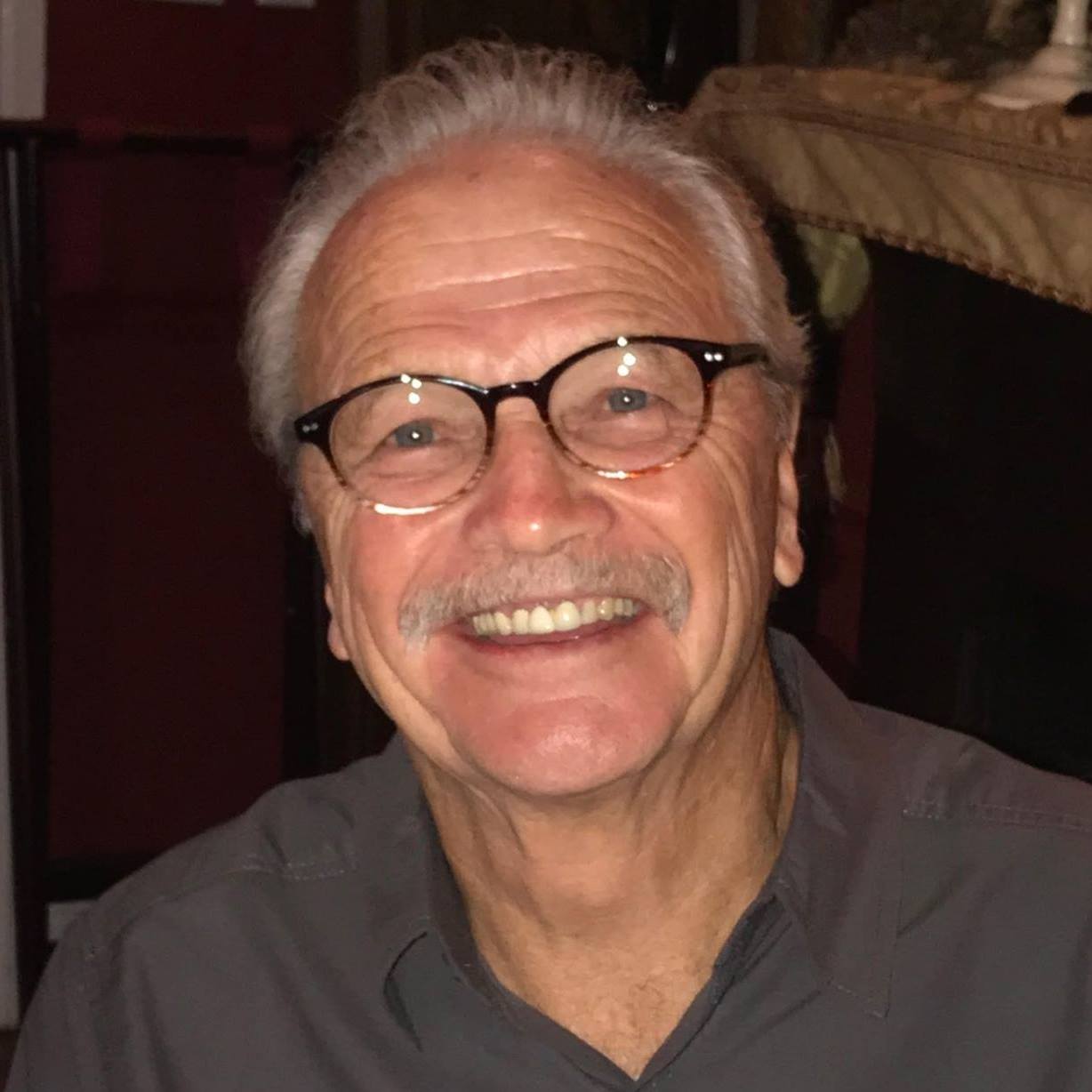
Donnie Bell is the current pastor of Lantana Grace Church in Crossville, TN.
Broadcaster:

Comments

0 / 2000 characters
Comments are moderated before appearing.

Be the first to comment!

Joshua

Joshua

Shall we play a game? Ask me about articles, sermons, or theology from our library. I can also help you navigate the site.