Bootstrap
Donnie Bell

If God is willing

James 4:10-17
Donnie Bell February, 21 2010 Audio
0 Comments

Sermon Transcript

Auto-generated transcript • May contain errors

100%
The title of my message this
evening is God Willing. I get it there out of verse 15,
James chapter 4. For that you ought to say, If
the Lord will, we shall live, and do this, or do that. But
let's start reading here in verse 10. Humble yourselves there in
the sight of the Lord, and he shall lift you up. Speak not
evil one of another, brethren. He that speaketh evil of his
brother, and judges his brother, speaketh evil of the law, and
judges the law. But if thou judge the law, thou art not a
doer of the law, but a judge. There is one lawgiver who is
able to save and to destroy. Who art thou that judgest another?
Go to now, ye that say, today or tomorrow. We will go into
such a city, and continue there a year, and buy, and sell, and
get gain. Whereas you know not what shall
be on tomorrow, for what is your life? It is even a vapor that
appeareth for a little time, and then vanishes away. For that,
you ought to say, if the Lord will, we shall live and do this
or that. But now you rejoice in your boastings,
all such rejoicing is evil. Therefore to him that knoweth
to do good, and doeth it not, to him it is same." You know, the Scripture tells
us that God is the God of all grace. Ain't that what he says
there in verse 6? Wherefore he giveth more grace.
More grace. You've got to have grace before
he can give you any more grace. So when he gives us grace, that
means we're growing in grace. We're learning some things. God's
making himself more known to us. Wherefore he giveth more
grace. And who's he give it to? He gives
it to the humble. He gives it to the humble. It
says there he resists the proud, but gives grace unto the humble.
And you go through the scriptures and you look at all the proud
that God resisted. Look at all the proud. He resisted
Cain. Cain was proud. First proud man
we find in the Scripture. He was proud enough that he's
going to come to God on his own terms. Going to come with the
works of his hands. Going to come with the fruit
of the ground that was already cursed. And God told him, says,
you're going to go with the mark of Cain on you all the days of
your life, and if anybody lays a hand on you, I'm going to get
them. So he says, my punishment's greater than I can bear. And
then you've got You've got Pharaoh. Who is the Lord that I should
obey him? How did God resist him? He buried
him in the Red Sea. And, oh, beloved, you go through
the Scriptures. Herod sat on his throne one day and gave a
great oration, and everybody started clapping their hands
and stood up and rejoiced in what he was saying and said,
Oh, it's the voice of a God! It's the voice of a God! He received that, never acknowledged
it, and God smote him down right then and there. And when the
Pharisees got proud, you know, and Simon Peter said, Don't you
know you've offended these fellows? Their pride is so great, you've
made them feel bad about themselves and feel bad about what they
believe. He said, You've hurt their feelings. He said, Let
them alone. Just let them alone. But God
resists the proud, but He gives grace. to the humble. You know
the scripture says, six things I hate, yea, seven abominations.
You know what the first one is? A proud look. A proud look. I don't know what a proud look
is, but God does. God does. I don't know what.
I've seen folks that appeared proud to me, but God knows what
a proud look is. He does. And so James encourages
everyone, those to whom he writes, to draw nigh to God. He says
there in verse 8, draw nigh to God and He'll draw nigh to you.
He encourages us to draw nigh to God. And we do. We want to
draw nigh to God in the Word. We want to draw nigh in our hearts.
We want to draw nigh in our thinking. We want to draw nigh in our understanding. We want to draw nigh to God.
I want to know God. I want to be close to God. And
in the sense that that I lean on Him, trust in Him, and He's
on my mind, He's on my heart, and I want to draw nigh to Him.
Draw nigh to Him. And then He tells us there in
verse 10, Humble yourselves in the sight of the Lord, and He
shall lift you up. Now, beloved, when a man or a
woman from their heart humble themselves before the Lord, and
what does this mean, to humble yourselves in the sight of the
Lord? Now, you can humble yourselves in the sight of God right now,
and I wouldn't know it. Or you could not humble yourselves
in the sight of God, and I wouldn't know it. It's in the sight of
the Lord. It's not humbling ourselves in one another's sight. He said,
humble yourselves in the sight of the Lord. And when men humble
themselves in God's sight, what they're doing is that they're
acknowledging their sinfulness, their inability, their unworthiness. And they humble themselves, and
thereby saying that, I seek your mercy, I seek your grace, I need
your strength, I need your power, I need what you have for me in
Christ. And then when we humble ourselves,
we walk humbly before God from that day. We want to walk humbly
before God. We want to depend. And this means
we're dependent on Him for our grace. We're dependent on Him
for strength. We're dependent on Him for what
we have in this life. And what happens to those who
humble themselves? What does it say? He shall lift
them up. He that humbleth himself, what
does it say? Shall be exalted. And our beloved
over in 1 Samuel, it says there, you know, it says, He lifts the
beggar off the dunghill and sets him among princes. He lifts us
up. Lifts us up from that despair.
Lifts us up from that feeling of our sinfulness and our inability
and our weakness. He lifts us up from the deepness
of despair. He lifts us up, lifts us up. And the only people He lifts
up is those who humble themselves. That's the only person He does.
And then He says, go along and say your... And He says, speak
not evil of one another, brethren. He doth speak of evil of his
brethren. You know, brethren and brother.
He's shown this relationship that we have with one another.
And judgeth his brother, he's speaking evil of the law, and
he judged the law. But if thou judge the law, you're
not a doer of the law, but a judge. So speak not evil of one another,
brethren. Now, this is an evil of which
we're all way too guilty. All of us way too guilty of speaking
of one another and speaking about others in a critical, critical,
judgmental way. And that's something we ought
not never do. Never do. The truth is bad enough. Mary
said this all the time. She'll say this to me all the
time. I'll say something. She said, the truth is bad enough.
Don't lie on me. But to speak, you don't speak
evil one of another. But to speak evil of your brethren.
And I hope we're not this way. And I don't want us to be this
way. I don't want to be this way. And I don't believe you
do. We don't want to be more prone to find fault than we are
to encourage. We want to not be people who
are quick to point out someone's failures than to praise their
virtue, to praise what's right about them. And God help us never
to repeat the bad, but always talk about the good. God help
us to always do that. And I'll tell you one thing we
cannot possibly do. We can't exalt ourselves by discrediting
someone else. We can't make ourselves look
good by making somebody else look bad. You know, the more
you know the grace of God, the more you know what Christ has
done for you, and the more you understand these things, the
more you really understand how awful it is for you to try to
set yourself up to put somebody else down. That's a despicable
saying. When you see yourself doing it
or somebody else doing it, it hurts you all over, don't it?
It hurts you all over. And gossip, criticism, they aren't
acceptable. They aren't acceptable even if
what you say is true. And God make us and our words
to be guided by one word, by one thing, by one motive, love
as well as the truth. Let me show you a couple of things.
Look over in Leviticus, chapter 19. Oh, let our words be guided
by love. Let it be guided by love as well
as truth. You know, and I know this, there
are things that you can know and you can even see, and it
wouldn't be profitable to tell it even if it's true. And you
know it to be true. It wouldn't be profitable to
tell somebody else about it. If you can make somebody else
lose their esteem or lose the love of somebody by telling something
on them, why would you want to do that? It hurts their influence
or their effect on somebody else's life. But look here in Leviticus
19 and verse 16. Thou shalt not go up and down
as a tailbearer among thy people, neither shalt thou stand against
the blood of thy neighbor. I am the Lord. Don't you go around
telling things. And you know, that's why religion,
they thrive on that stuff. But we're not in religion. We're
in Christ. We believe grace. We believe
the scriptures. We believe what God's done for
us. We know that God don't hold our sin against us. Why should
we hold anybody else's sin against them? And look over in Proverbs
11. Proverbs 11. And James deals with these things. You know, it's one thing to tell
the truth to somebody. I pointed out something to a
man just this week, some things that he wrote, and I pointed
it out to him. And I hope I've done it in love,
but the things he was teaching was wrong. And I love the man,
got some confidence in the man. And I don't want him to do that,
but I hope I spoke the truth in love. And you don't even know
who it is, you don't even know what he said. But look here at
Proverbs 11, 13. A talebearer reveals secrets. Oh, my. Have you ever heard anybody
say, you know, somebody told me not to tell this, but it's
just, this is just you. This is just you. If you won't
tell it, promise not to tell this. If somebody ever tells
you not to tell something, don't you ever tell it. If somebody
tells you a secret, say, I want that just between me and you,
leave it right there. If you've got any honor, if you've
got any integrity, if you've got any scruples, if you've got
any respect for the person you're talking to and respect for yourself,
if somebody says this is just between me and you, that's where
it better stay. Ain't that right? And he goes
on here to say this, but he that is of a faithful spirit, he conceals
the matter. Oh, he ain't going to tell it.
He ain't going to carry it on. He's got a faithful, he's faithful
in that person. He's faithful to love. He's faithful
to his Word. And he's not, he's going to conceal
this thing. He's going to conceal it. Now,
let's back over in our text. Back over in James. So speak
not evil one of another. Because he said, he that speaketh
evil of his brother, and judges his brother, speaks evil of the
law. You know, to speak evil of your brother is speaking evil
of the law. What does he mean by this? In speaking evil of
a brother, what you're doing is you're setting yourself up
as a judge. And we set ourselves up in God's place. We usurp His
position. And this power doesn't belong
on us. It doesn't belong to us. We don't sit in the chair of
judge and the sentencer. And the law forbids. What this
means is the law forbids rash judgment. The law forbids gossip. The law forbids evil speaking. And in doing this, what we do
is we become judges of the law. We take it upon ourselves to
decide which law is greater. The law that our brother broke,
or the law that we set ourselves up to despise, because we think
that we know more about what they did than God does. Now,
Romans 14 and 4 says, Who art thou that judgest another man's
servant? For God is able to make him stand
or fall, and that's the way it is, beloved. You know, God's
the one that's going to make us stand, and we don't want to
be judges of the law. No, no. I don't want to set myself
up in that sense at all. Oh, my. Don't want to judge the
law. Look what he says. He says in
verse 12, there's only one lawgiver. There's only one person that
knows what's going on in the heart. Only one person knows
if a man broke the law. Only one person. That's why James...
Remember when he said, if you're offended one point, you're offended
all? And he says, you know, and you don't have to, you don't
have to actually do anything to break the law. You just got
to think. You just got to feel. You just
got to have the motive. You just got to have the desire.
You don't have to open your mouth. It's just what you feel in your
heart. It's what you think, and that's the motive. It's the reasoning
behind it. And the very fact that you go
around speaking evil of somebody who is your brother, You're setting
yourself up above God. You're setting yourself up in
His position. And this person may have broke the law, may have
committed an awful sin even, but you've got no business judging
him, especially telling somebody else about it. And He says, if
you do what you're doing, you're judging the law itself. You're
setting yourself up as the one who, this is the law that I'm
keeping, and this is the law you despise. But there's only
one lawgiver. And watch what it says here.
You know who the only lawgiver is? God. You know who the only
judge is? God. And watch what it says here
now. Who is able to save, and He's
able to destroy. Who art thou that judgest another?
And oh, beloved, see, it says only one lawgiver, only one judge. Only one who has the right to
condemn, only one who has the right to save. And it says here
he's able to save. He's able and willing to save.
He's able and willing to save only by Christ, even those who
have dishonored and despised and fallen by the law. I'll tell
you, I'm an example of that, and I believe every one of you
are. We despised God's law, lived without it, disregarded it, despised
it, and yet He was willing to save us by Christ. And not only that, but look what
it says, not only is He able to save, but He's able also to
destroy those. Destroy men who refuse to humble
themselves, men who refuse to seek His mercy, men who want
to set themselves up as the ones who decide who can do what and
who can't do what. He says He's able to destroy
them. And He says, Who art thou that judges another? So why do
you presume to pass judgment on your brother? That's what
He's saying is, you can't save him or you can't destroy him.
You can't change one statue, you can't change one idol of
His standing or His state before God. See, we don't have access
to the heart, we don't have access to the mind. We don't have the
knowledge to the extent of a person's failure. And we certainly don't
know anything about how he repented and what went on between him
and God. Ain't that right? And oh my, these things along
with God, along with God. My dear brother I talked to last
night, he went to a prayer breakfast yesterday morning in a Presbyterian
church, and he's a Baptist. And he said they were making
fun of Baptists, you know, and going on with the Westminster
Confession and all that. And he says, I am so glad I went.
He said, I'm so glad I went. He said, it didn't offend me
that they made fun of me as a Baptist. He said, we had some incredible
conversations about the scriptures. They made fun of people for not
having an education. Preachers that didn't have an
education, didn't go to a seminary, didn't go to a Bible college.
And he said, but I'm so glad I went. It didn't offend him,
didn't make him mad. He said, we got to go through
some scriptures. We got to go through some scriptures
and talk about God teaching. God didn't—and he said, I tried
to show them that we're looking for Christ. We're not looking
at the Westminster Confession. We're looking for Christ. Now,
see, those fellows set themselves up as judge, but this man didn't
offend him, didn't hurt him at all. He said, I'm glad I done. He said, I needed that. I needed
that. And so let him Let men do what
they will, but no, we're not, God help us, we're not going
to do that. And you know what? You know, this is the case. This
is what I've, this has been my experience all the years I've
been here. This word right here, if it cannot rebuke you and chasten
you and teach you and instruct you, me stating you out ain't
going to do nothing. I can't straighten myself out.
And Mary's been trying for 40 years, and she ain't getting
it done. You know. Husbands and wives
all the time, we've been trying to straighten our kids out, and
they just get worse. But what I'm saying is, is that the shepherd's
responsible for the sheep. If I'll be faithful to the Word,
if I'll be faithful to go through these Scriptures, God will take
care of His sheep. I really believe that. And that's
been my experience over the years. Let the Word. do the rebuke and
the chastening and the teaching, the instructing, the judging.
The Word judges us pretty harshly sometimes, don't it? It exposes
things that we didn't even know. It'll come to expose something
that we done and we was unconscious that we done until the Scriptures
comes and exposes it to us. And then he goes on to say here
now in verse 13, Ye that say, Today or tomorrow
we'll go into such a city, continue there a year, and buy and sell,
and get gain. Whereas you know not what shall be on the morrow,
for what is your life? It is even a vapor that appears
for a little time, and vanishes away." Now when he says, Go to
now, he says, you fellas, it's a, go to now doesn't mean
go do this, it means, now you fellas hold up on this. He says,
You that say, Now, he's not condemning buying or selling. That's not
what he's doing. He's not condemning people running a business, and
having a business to deal with, and doing business, and having
a business, and going about their business. What he's doing, he's
rebuking those who do these things without consulting God, without
calling on God, without looking to the will of God. You know,
a man can receive nothing except it be given him from heaven.
And over in 1 Samuel, it says this, he says, you know, it's
God that kills and makes alive. It's God that makes rich and
makes poor. It's God that gives sight to
the blind and hearing to the deaf. It's God that does these
things. He's the one that raises up and
brings down. So he says, you fellows, you
forget about this sin I'm going to do here and do that and not
ask the will of God about it. And he says, then what? Don't
you know what your life is? He says, Lord, we're not considering
the frailty and the uncertainty of life. We say, we'll go here,
we'll go there, we'll do this, we'll do that. As if they had
all the power over their own life without any dependence upon
God, out of independence upon His providence, out of dependence
upon His blessings. And He says, and you know not,
for as you don't even know, you don't have a clue about tomorrow. Now, if we're going to get up
in the morning, God willing, we'll wake up in the morning.
There's going to be a lot of people in this world that ain't. There's going
to be a lot of people going to work tonight that's not going
to come back home from work. There's going to be a lot of
people that's going to go out to go to the grocery store to
get something they ain't going to get back home. There's going
to be a lot of people that's going to wake up in the morning
while they're sitting eating their breakfast, their heart's
going to stop them. And that's what he's saying here. He says,
you know, you don't even know nothing about tomorrow. You don't
even know if you're going to live tomorrow. Host not thyself
of tomorrow, for thou knowest not what a day may bring forth.
And that's why we always say, if God willing, we'll do this
or we'll do that. And that's not just a religious
saying, cliche. Oh, we can't see into the next
day. We can't see what's going to happen. And it's stupid, it's
haughty to determine any course without the will of God. It's
by Him that we live and move and have our being. So why would
we live without consulting Him? What is your life, He says, what
is your life? What He said, what's the nature
of your life? And when He said it's a vapor,
It's just a vapor. It's a wisp, a puff of smoke,
a mist, visible for a little while. And what he's talking
about, he's talking about our breath. You know, you're standing
out on a cool morning and that vapor comes out of your mouth.
He said, that's your breath. That's how frail your life is,
that vapor, that mist, visible for just a little minute, and
then it disappears. That's the breath of man. Let
me show you a couple of things. Look in Job 14. Job 14. You know, I can't get over how fast time goes. I can't. But oh my, this is the breath
of man. And I tell you, you can't depend
on your breath. Look how little effort it takes
for you to get out of breath. You know, you exert yourself
a little bit. Next thing you know, you're breathing real hard. You know, this breath is so frail.
And look what he says here in Job chapter 14. He says, man
that's born of a woman is a few days and full of trouble. He
comes forth like a flower. Oh, I tell you, we've had our
children come forth and oh, we loved them. They're so beautiful
and gorgeous. And then our grandkids come along
and there's the prettiest flowers. Oh, so beautiful flowers. Now
our great granddaughters come along and oh, nothing like her. And I was one day, I was like
that. I got a picture of me and my little brother in there. Of
course, I was the best looking one. I was two and he was one.
Had a head full of curly hair, black hair. Come forth like a
flyer. Cut out. And not only that, but
he flees as a shatter. Talking about those shatters
yesterday. And you know, when we come in, the shatter flees.
It's gone. It's gone. And it don't continue. And doest
thou not open thine eyes of such a want, and bringest me into
judgment with thee? That's what we just said, these
fellows bringing themselves into judgment with Job. Who can bring
a clean thing out of an unclean? Not one. Listen now. Seeing his
days are determined, the number of his months are with thee.
Thou hast appointed his bounds that he cannot pass. God has
our days set. Look over at Psalm 103. We've
read this so many times, but oh, this ought to be read. Again, Psalm 103, verse 13. What is your life? What's the
nature of your life? What's the nature of it? We can
be made frail very, very quick. He says there in verse 13, Like
as a father pitieth his children, so the Lord pitieth them that
fear him. For he knows our frame, He remembers
that we are dust. As for man, his days are as grass. Boy, ain't no grass right now,
are there? None. That's the way we're going to
be one of these days. That frost's going to come across us, that
cold wind's going to blow across our soul, and we're gone. As the flower fulfills, so it
flourishes. And watch this, the wind passes
over it, and it's gone. And the place there, us will
know it no more. The place don't even know that it ever was there.
Ever was there. There's my father-in-law. I told
you all this here a while back. Him and I was going to the VA,
and we was going across through Clifty, and he was born down
there at Jumpin' Branch. There's a little old bridge down
there called Jumpin' Branch. There used to be a whole town
right there. And in Clifty, like one vote being the capital of
the state of Tennessee. And now there's not a house there,
there's not a foundation there, there was a school there, there
was a great multitude of people lived there, and now you cannot
find anything that proved that anybody ever existed in that
place. And he went to school there,
played there. And that's the way it's going
to be with us one of these days. My 10, 12 generations to now,
somebody's going to get in their genealogy and say, you know,
back in 2000 or 1950, I said, I've got a relative that was
born down there in Ohio, and he moved to Tennessee, and he
migrated to Tennessee. And you know what? He was a preacher.
And they'll look back through there, and they'll try to figure
out, where's he at? Where's he at? And they'll go
to a graveyard and look and find, you know, some sign that I was
in. But that's going to be in existence if I have a gravestone
left. That'll be the only way they know I was ever here. Ain't
that right? So what is your life? And you
know, we're going to live. We are going to live. We're going
to enjoy life. I don't want to be morbid here or anything. We're
going to live. We're going to enjoy life. But
we also know how frail it is. We also know it's in God's hands.
And that's where I want mine to be, don't you? I want it to
be in His hands. And that's why He says now, in
verse 15, for that you ought to say. Because of this, because
of this, because your life is so frail and so uncertain, because
of the nature of life itself, for this you ought to say. The
Lord will. We shall live. We shall live. Did you notice that? The first
thing, the Lord will. We'll live. If God's willing,
we'll live. And not only that, we'll do this
or we'll do the other thing. Instead of getting up and saying,
we're going to go here, we're going to go there for a year,
we're going to stay in this place for a year, we're going to buy
some there, we're going to sell some here, we're going to make
a lot of money. And he said, for all we do or
intend to do, We ought to say, the sovereign will of God be
done. God, I'm in your hands, in your will. Is it agreeable
to you if I go here? Is it agreeable to you if I go
there? Paul says, he told the Romans when he wrote to them,
he says, I'll come shortly unto you if God willing. If God's willing. And oh, listen
to what he else says. But now, You rejoice in your
boastings, boasting about where you're going to go, boasting
about what you're going to do, boasting about how you can be
a judge. He says, now you rejoice in your boastings, and all such
rejoicing is evil. What he's saying is, you boast
presumptuously of tomorrow. I'm going to go here, and I'm
going to do that. I'm going to continue living. I'm going to
continue doing all kinds of things. I'm going to go a certain place,
I'm going to do certain things, and do it without regard to will.
He says, that's evil. That's presumptuous. Without
doing it, without regard to the will of God, without regard to
the providence of God, and it's boasting, it's saying, I'm controlling
my life, I'm making myself independent of God. Oh, we don't want to
do that. Now listen here. This is interesting. He says, Therefore, to him that
knoweth to do good, and doeth it not, to him it is sin. Oh
my, how many times have we quoted him? Therefore, in light of everything
he's just said, in humbling ourselves, in seeking the will of God, in
not setting ourselves up as judges, not brashing and boasting about
where we're going to go and what we're going to do, knowing Not
knowing how frail our life is, if a man knows these things,
knows these things, and don't do them, don't humble himself,
speaks evil of another, don't know how frail his life is, brags
and boasts about where he's going to go and what he's going to
do, he that knows to do these things and do them not, it's
a sin. Ain't that right? That's what
he's talking about. If he knows to do these things
and does them, to him at sea. You know, here's the thing about
it. Everybody wants to know how bad
you got to do to be a sinner. Here it says, him the north to
do good and don't do it. It's not enough just to do bad. It's worse if you know to do
what's right and don't do it. That's what he's saying. If we
know to do these things, and these are good things. Ain't
everything I said tonight a good thing? Ain't it a good thing
for us to ask? And if He says, you know, we
don't want to consume things on our own lust. We don't want to
be offended with the world. Ain't these good things? And
we want to do these good things. We don't want to sin. We don't
want to sin against God. And how blessed, blessed, blessed
is Your Word that speaks to us, teaches us, instructs us, rebukes
us. And I pray, Lord Jesus, that
this Word would be real and alive to our hearts, and we'd apply
it to our hearts, we'd apply it to our lives. Lord, we want
to be people who don't just talk about the grace of God, but we
want to live the grace of God. We don't want to just talk about
Loving people. We want to actually love people.
We don't want to talk about not judging. We actually don't want
to judge. We don't want to make our plan
for our lives. We want you to plan our lives.
We don't want these just to be words coming from our mouth.
We want them to be the very heart and soul of our existence, our
lives. God bless these saints as they
go on their lives, go on their ways, go on their days, go to
their jobs. Strengthen them, encourage them.
The sick among us, God bless Peggy. Strengthen her, encourage
her. Then, O Father, again for our unconverted children in that,
O Lord, send them for our serpents to bite them. Send them to bite
them. For I know if they're bitten,
they'll come. They'll come. They'll come looking. And Lord, by your grace, we'll
set forth Christ before them, that then they see him, find
their hope, their salvation, their righteousness, and everything
in him who alone is worthy of our worship, our praise, and
our adoration. Amen. Amen. Thank you, Lord, for saving my
soul.
Donnie Bell
About Donnie Bell
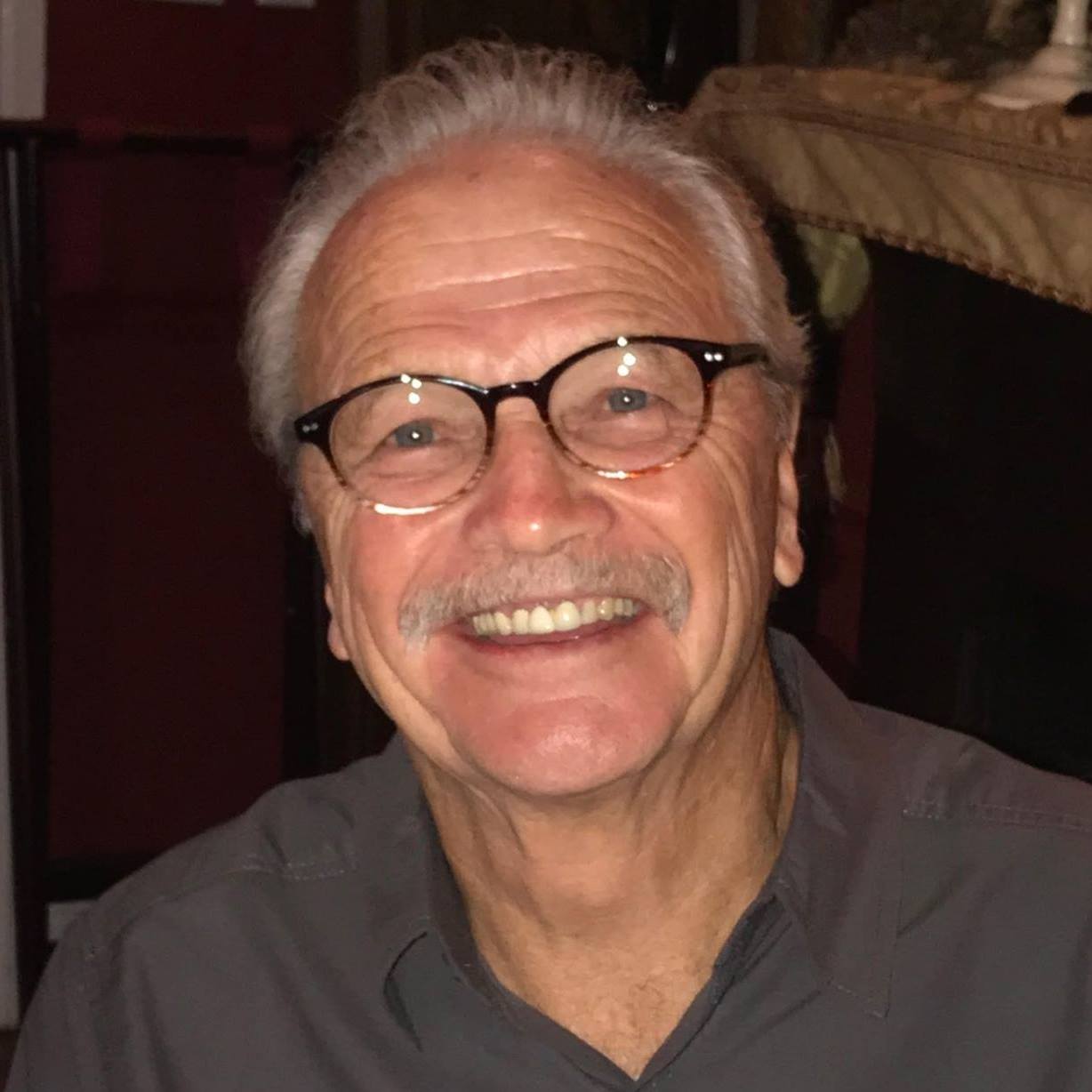
Donnie Bell is the current pastor of Lantana Grace Church in Crossville, TN.
Broadcaster:

Comments

0 / 2000 characters
Comments are moderated before appearing.

Be the first to comment!

Joshua

Joshua

Shall we play a game? Ask me about articles, sermons, or theology from our library. I can also help you navigate the site.