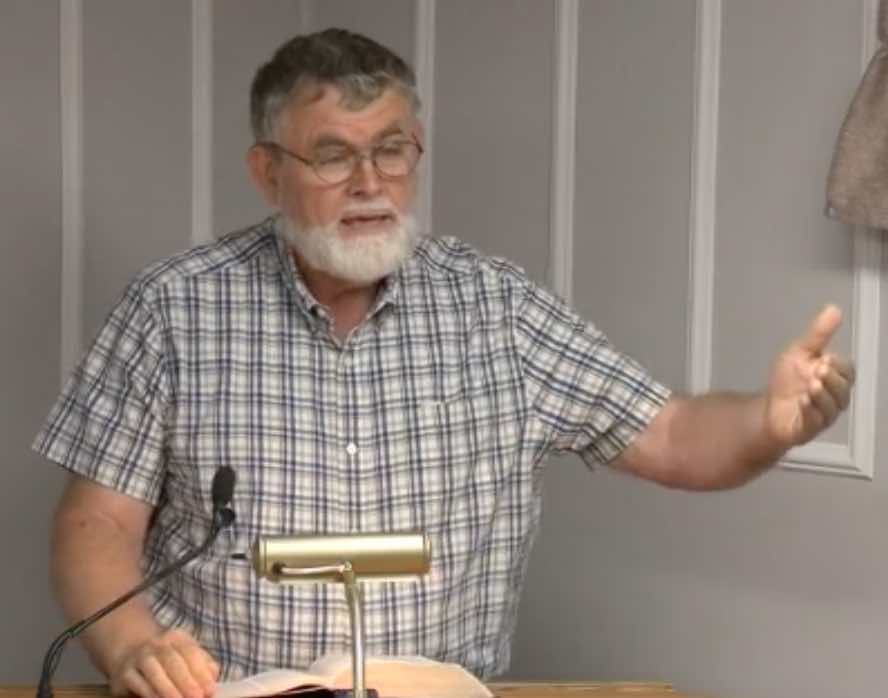
The sermon titled "Christ the Destroyer" by Mike McInnis addresses the theological topics of God's sovereignty, pride, and the salvific work of Christ. McInnis argues that God raises up and destroys nations, using Babylon's rise and fall as a prime example to illustrate His control over history and judgment against prideful self-reliance. Supporting his points with Scripture references such as 2 Corinthians 10:12, Galatians 6:3, and Proverbs 16:18, he emphasizes that pride ultimately leads to destruction, while God's grace redeems His chosen people. The practical significance of the sermon lies in urging believers to recognize their dependence on God and to submit to His sovereignty, rejecting murmuring and self-sufficiency in favor of humility and trust in God's providence.
Key Quotes
“Pride goeth before destruction and a haughty spirit before a fall.”
“It is a fearful thing to fall into the hands of the living God.”
“Christ is the destroyer of the enemies of his people, blotting out the handwriting of ordinances that was against us.”
“Have you met the Destroyer?”
The Bible warns that pride leads to destruction and that humility before God is essential.
Scripture teaches us that pride is a significant spiritual danger. In Proverbs, we see that 'Pride goeth before destruction, and a haughty spirit before a fall.' This highlights the outcome of an arrogant mindset. Additionally, Paul reminds the Corinthians to take heed, indicating that self-reliance can lead to a fall (1 Corinthians 10:12). The Lord's jealousy for His glory manifests in His responses to prideful attitudes, where we are reminded to approach Him with humility and reverence.
Proverbs 16:18, 1 Corinthians 10:12
The Bible affirms that Jesus will return to judge the wicked with His mighty angels.
The New Testament speaks clearly about Christ's role as the judge of the living and the dead. In 2 Thessalonians 1:7-9, it states that Jesus will be revealed from heaven with His angels in flaming fire, taking vengeance on those who do not know God. This emphasizes that those who reject the gospel and choose sin will face everlasting destruction from the presence of the Lord. Such judgments lead us to recognize the seriousness of one's standing with God.
2 Thessalonians 1:7-9, Matthew 10:28
Acknowledging our reliance on God is vital for spiritual growth and avoiding the pitfalls of pride.
Recognizing our dependence on God is crucial in the Christian faith. The sermon illustrates this through the lives of biblical figures like Peter, David, and Jonah, all of whom attempted to rely on their own strength or wisdom, ultimately leading to their downfall. God's intervention in these lives reveals the importance of understanding our limitations. The danger of self-reliance is reiterated through scripture, where we are reminded that it is God who is sufficient for us and that His grace sustains us (2 Corinthians 12:9). Hence, acknowledging our need for Him cultivates genuine humility and alignment with His will.
2 Corinthians 12:9, 1 Peter 5:6
Christ as the Destroyer signifies His authority over sin, evil, and the enemies of His people.
The concept of Christ as the Destroyer emphasizes His sovereign power and authority over all that opposes God’s will. In His sacrificial work, He triumphed over principalities and powers, removing the condemnation that sin brought upon His people (Colossians 2:14-15). This role underscores the divine justice that will be enacted against those who resist God, providing a profound comfort to believers. They are assured that their sins are no longer held against them because of His atoning blood. The destroyer of the wicked is also the Savior of the redeemed, illustrating the dual aspect of God’s justice and mercy.
Colossians 2:14-15, 2 Thessalonians 1:8
Comments
Your comment has been submitted and is awaiting moderation. Once approved, it will appear on this page.
Be the first to comment!
