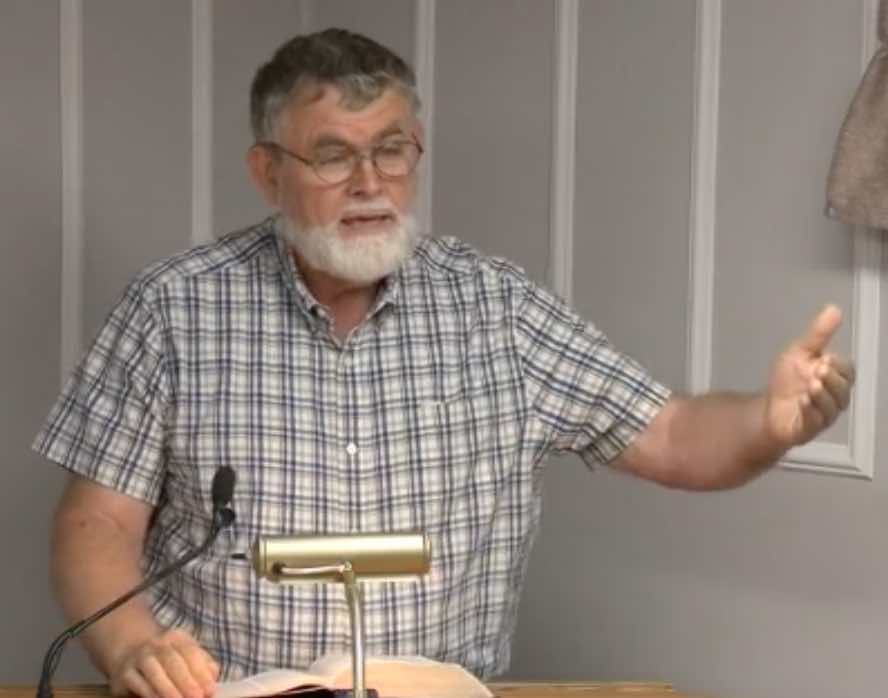
In the sermon "Certainty Not Possibility," Mike McInnis addresses the doctrine of divine sovereignty and the certainty of salvation in Reformed theology. He asserts that God, who defines the end from the beginning, orchestrates all events and leaves nothing to chance, particularly concerning salvation. Key arguments include a critique of the notion that salvation is a mere possibility contingent upon human action or choice, emphasizing that Christ's atonement was purposeful and effective rather than opportunistic. McInnis supports his points with Scripture references such as Isaiah 46:9-10 and John 10:27-29, illustrating that God's calling and saving grace are definitive and assured for His elect. The practical significance of this message lies in its comfort to believers, reinforcing the assurance that their redemption is grounded in God's unwavering purpose and plan, not in their own efforts.
“The Lord God of heaven and earth leaves nothing to chance, and is not ashamed to declare the same to men.”
“To believe such, one can have no consideration of the total depravity of men, nor of their inability in their flesh to approach unto Him.”
“He has not shed one drop of that blood in vain. He has not made the salvation of those he died for a possibility, but rather a certainty.”
“He is not waiting for the opportunity to save them, but rather he is determined to save them from before the foundation of the world.”
The Bible declares that God's sovereignty is absolute, and salvation is according to His purpose, not chance.
Isaiah 46:9-10, Ephesians 1:4-5
Election is affirmed by Scripture, showing that God chooses those whom He desires to save.
Romans 9:15-16, 2 Timothy 1:9
Total depravity underscores humanity's inability to save themselves and the necessity of divine grace for salvation.
Romans 3:10-12, Ephesians 2:1-5
Auto-generated transcript • May contain errors

Comments
Your comment has been submitted and is awaiting moderation. Once approved, it will appear on this page.
Be the first to comment!