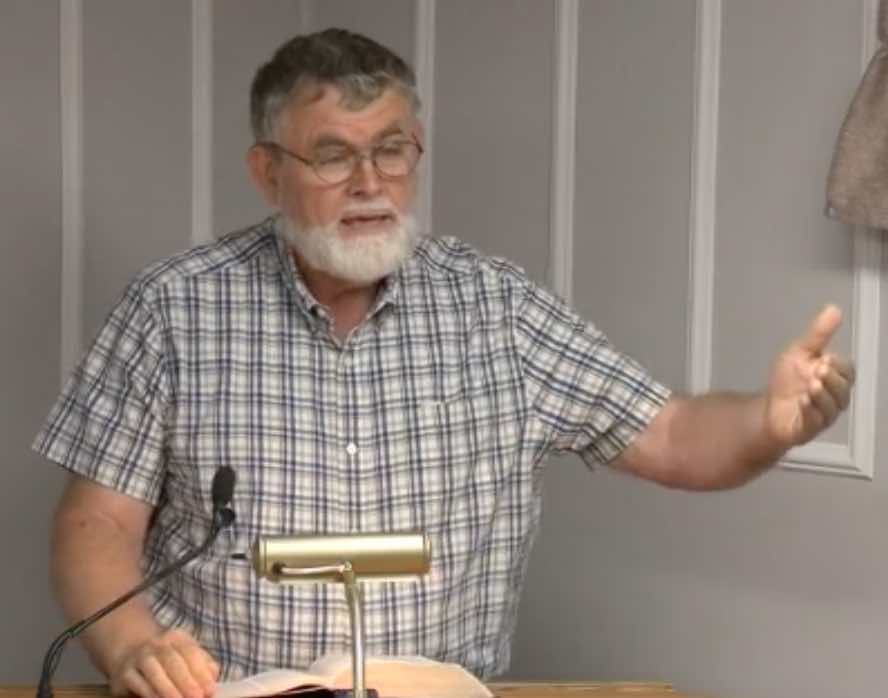
In the sermon "A Hard Saying #956," Mike McInnis addresses the theological doctrine of God's sovereignty, contrasting it with the contemporary emphasis on human free will in salvation. He argues that many professing Christians misinterpret Paul's teachings, promoting a view that elevates human effort over divine grace. McInnis supports his arguments with Scripture references, particularly 1 Corinthians 1:30 and Romans 9:20-21, emphasizing the sovereign role of God as the potter and humanity as clay. He surmises that the event referenced in Mark 9:1 pertains to the Mount of Transfiguration, highlighting God's revealing of His glory in Christ as a definitive manifestation of His kingdom coming with power, which has significant implications for understanding the nature of Christ's reign and the assurance of believers in their redemption.
“Men will by nature rebel against every true revelation of the glory of God in Jesus Christ.”
“One cannot deny the testimony of Paul, but of him are ye in Christ Jesus, who of God is made unto us wisdom and righteousness and sanctification and redemption.”
“If this is not a revelation of the kingdom of God coming with power, I'm not able to imagine what it would be.”
“The opening up of the understanding of his disciples was an ongoing work of his ministry.”
The Bible affirms God's sovereignty in all aspects of creation and salvation, emphasizing His authority and power.
Romans 9:20-21, Isaiah 46:10
God's redemptive work is effective because it is based on His sovereign will and the perfect obedience of Christ.
1 Corinthians 1:30, Ephesians 1:4-5, Romans 8:28-30
The transfiguration reveals Christ's divine glory and the establishment of His kingdom, assuring believers of His authority.
Mark 9:1, Matthew 17:5
Auto-generated transcript • May contain errors

Comments
Your comment has been submitted and is awaiting moderation. Once approved, it will appear on this page.
Be the first to comment!