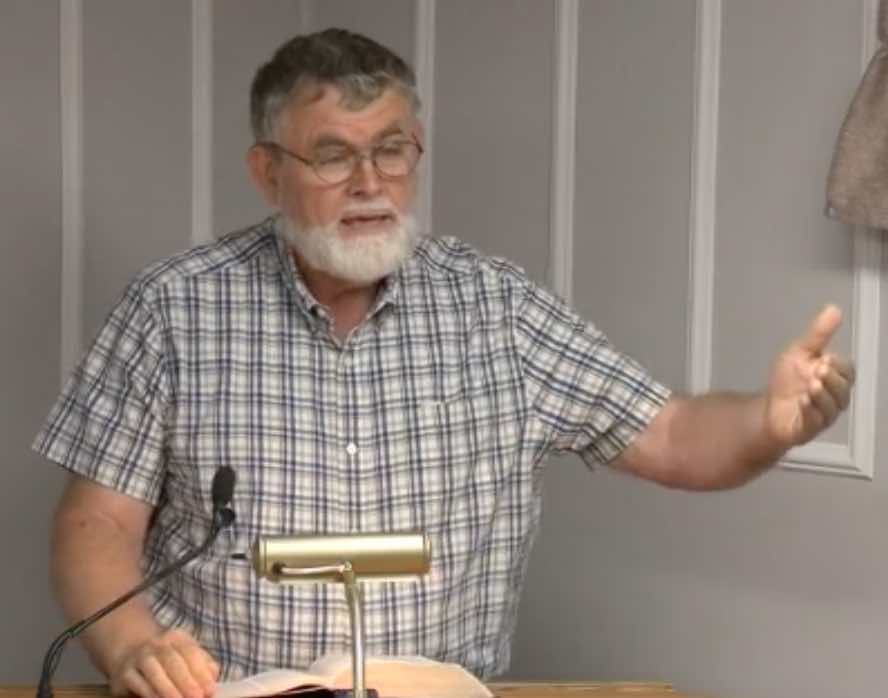
The sermon titled "Power and Authority" by Mike McInnis explores the dual Greek terms for power in the New Testament: "exousia," which refers to judicial authority, and "dunamis," linked to ability and might. McInnis argues that Christ’s authority (exousia) is primarily displayed in His sovereign rule over truth and His command over creation and human hearts, rather than merely in the demonstration of His miraculous abilities (dunamis). He supports his theological claims with Scripture references, including John 10:27-28 and Acts 13:48, underscoring Christ’s role as the sovereign shepherd whose voice is effectual to those ordained to eternal life. The central significance of the sermon lies in the affirmation of Reformed doctrines, particularly the sovereignty of God in salvation and the effectual call to His chosen people, prompting a response of worship and trust in God's authority.
“Yet later we see that many followed him merely for those mighty works, or miracles... but that he works as one who rules in the army of heaven and among the inhabitants of the earth.”
“This is a command from the lips of Christ to a particular people who will hear his voice and to whom he will give eternal life.”
“...the most glorious of all of his commands was spoken in the weakest of moments... He decreed, it is finished, and then breathed his last breath, exactly as he determined.”
“None can bring any of his sheep into condemnation, nor can any accuser ever stand to bear witness against them.”
The Bible affirms God's authority through His sovereign control over creation and His power to save.
Matthew 7:29, John 10:28
The truth of God's sovereignty is manifest in scripture, where all events unfold according to His divine decree.
Ephesians 1:11, Acts 2:23
Acknowledging God's power strengthens faith and provides assurance of His control over every circumstance.
John 10:28, Romans 8:28
Auto-generated transcript • May contain errors

Comments
Your comment has been submitted and is awaiting moderation. Once approved, it will appear on this page.
Be the first to comment!