Bootstrap
Mike McInnis

Undertaking Our Cause #804

Mike McInnis July, 1 2021 Audio
0 Comments

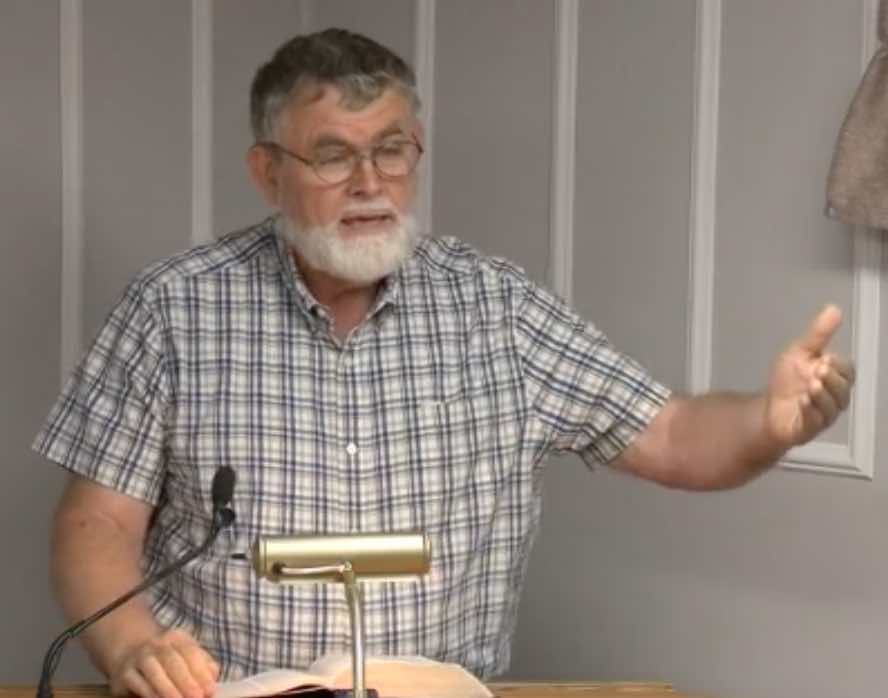
In the sermon "Undertaking Our Cause," Mike McInnis addresses the sovereignty and supremacy of God over all false idols and the ultimate victory of Christ in the spiritual warfare against sin and death. The sermon emphasizes that humanity often prefers gods who reflect their own values and desires, exemplified by the Philistines' worship of Dagon, who fell in submission to the true God. Key Scripture references include 1 Samuel 5, where the defeat of Dagon illustrates God's unparalleled power, and Colossians 2:14-15, which highlights Christ's triumph over the law and sin by nailing our debts to the cross. The doctrinal significance of this message underscores the Reformed belief in God's absolute sovereignty, the necessity of Christ's redemptive work, and the assurance of eternal life for believers who have been justified by faith.

Key Quotes

“The God of heaven and earth will share no stage with any person, religion, doctrine, or God, nor will He be worshipped according to any man's design.”

“He will do right, he may show mercy... but he reserves the application of it to his sovereign choice and purpose.”

“The greatest enemy we face is death. Death is the result of sin. The power of sin to condemn us is the law.”

“There is therefore now no condemnation to them which are in Christ Jesus.”

What does the Bible say about the power of God over false gods?

The Bible demonstrates God's supremacy over false gods, as shown in 1 Samuel 5, where Dagon falls before the Ark of the Covenant.

In 1 Samuel 5, we witness the Philistines capturing the Ark of the Covenant and placing it in the temple of their god, Dagon. Despite their intentions, they soon discovered the futility of their actions when Dagon fell before the true and living God. This account illustrates that God will not share His glory with any false deity. The supremacy of God is consistent with His nature; He is in the heavens and does all that pleases Him (Psalm 115:3). Through these narratives, Scripture affirms that all false gods ultimately fall in the presence of the one true God, who cannot be confined or manipulated by human design.

1 Samuel 5, Psalm 115:3

How do we know that God has the authority to condemn sin?

God's authority to condemn sin is rooted in His perfect holiness and the unbreakable law, which we have all violated.

God, as the Holy Sovereign of the universe, has the ultimate authority to establish moral law. The law serves as a reflection of His perfect holiness, and any transgression of that law results in condemnation. Romans 6:23 states, 'For the wages of sin is death,' revealing that sin intrinsically leads to separation from God. Moreover, the condemnation we face for sin is not arbitrary; it is a just outcome of violating a holy standard defined by God Himself. Thus, His authority to condemn is legitimate, as He is the very definition of right and wrong, providing a clear framework through which we can understand sin's repercussions.

Romans 6:23

Why is the resurrection of Christ crucial for Christians?

The resurrection of Christ is vital for Christians as it demonstrates His triumph over death and sin.

The resurrection of Jesus Christ is central to the Christian faith because it signifies His victory over death, the consequence of sin. Colossians 2:14-15 explains that Christ 'blotted out the handwriting of ordinances that was against us' and 'made a show of them openly, triumphing over them in it.' This victory means that believers are no longer under condemnation for sin but have been granted eternal life through His resurrection. The risen Christ assures us that death has been defeated, providing hope and the promise of resurrection for all who are in Him. Thus, His resurrection is not merely an event in history but the foundation for our faith and the assurance of our salvation.

Colossians 2:14-15, Romans 8:1

Sermon Transcript

Auto-generated transcript • May contain errors

100%
Welcome, friends, to another
broadcast of Morsels for Zion's Poor. The Philistines were a
great and mighty people who were constantly at war with the children
of Israel. They were worshippers of the pagan gods Dagon and Ashtoreth. One of the most amusing accounts
of the absolute disdain and triumph of the true and living God over
all false gods takes place in the fifth chapter of 1 Samuel.
The Philistines captured the Ark of the Covenant from the
Israelites and placed it in the temple of their god, Dagon. They
soon discovered that Dagon had fallen in worship before Jehovah
and was ultimately dismembered by the same. The Philistines,
like all religious men, assumed God would be pleased to occupy
a place in their worship. They thought they would honor
Him in the same way in which they honored their other gods.
But the God of heaven and earth will share no stage with any
person, religion, doctrine, or God, nor will He be worshipped
according to any man's design. He certainly will not be worshipped
alongside those who have eyes, but see not. Because of their
religious assumptions and presumptions, they were smitten with a plague.
There was no solution for their plague but to rid themselves
of this one over whom they had no control. So they sent the
ark back to the Israelites. Men are comfortable with the
gods of their own making because they are predictable, easily
defined, and most often do exactly what they want. Their gods think
like they do, and always follow some moral code which they agree
with. David said of the true and living God, Our God is in
the heavens, he hath done whatsoever he hath pleased. The God of all
gods will always be consistent with himself, and will do right
because he is the very definition of right. It does not matter
if we understand him or agree with him or even like him. He
is still God. He said to Moses, I am. And then
the Lord Jesus repeated those words when the soldiers came
to arrest him in the garden. In him we move and have our being
and not vice versa. He dwells in the light to which
no man can approach. I grow weary of those who think
they can paint God into a corner and force his hand or who assume
that he is under some obligation to be merciful. He will do right,
he may show mercy. The mercy of God flows out of
his very character, which he has revealed in his word, but
he reserves the application of it to his sovereign choice and
purpose. Some balk at this reservation and go off on a search of a God
or gods more suitable to their own design. The Philistines were
typical of the enemies of the people of God in all ages. They
desired the servitude of Israel. They controlled Israel to ensure
that they had no blacksmith to fashion their swords and spears,
thus making them dependent on the Philistines to supply them
with weapons. When the time for battle arose,
the Israelites found themselves empty-handed. But the king and
his son had weapons and knew how to use them. Jonathan, the
king's son, undertook to fight these Philistines himself, and
in so doing set them in such disarray that they turned upon
themselves and were defeated. The Lord Jesus Christ has undertaken
the cause of his people and has single-handedly destroyed their
enemies. We were not able to even fight
against our foes, for we were found without sufficient weaponry
in the day of battle, but he has triumphed for us. The greatest
enemy we face is death. Death is the result of sin. The
power of sin to condemn us is the law. The law brings us into
condemnation because we have broken it in its letter and its
spirit. Therefore, in order for us to escape death, it was necessary
for the Lord Jesus to destroy that which had the power to condemn
us. blotting out the handwriting of ordinances that was against
us, which was contrary to us, and took it out of the way, nailing
it to His cross. And having spoiled principalities
and powers, He made a show of them openly, triumphing over
the many. There is therefore now no condemnation
to them which are in Christ Jesus. He was a perfect man, and as
such had the weapons necessary to wage war against our enemy
death, satisfying every jot and tittle of the law, paying the
sin debt that his people owed, and coming forth from the grave
as a victor over death. In doing so he purchased for
them eternal life, which he has now bestowed upon them. They
shall never again be overcome with the darkness and sting of
death. God has placed in every man a conscience which indicates
their wickedness. All have violated that conscience
from time to time. But he gives the gift of faith
to his elect and causes them to believe the record of the
gospel, giving them a conscience void of offense. As they are
unable to believe the gospel by the grace of God, their conscience
is made clear. Condemnation is taken away. and
they can serve Him with a pure heart while delighting themselves
in Him. Is He your delight? For a free
CD containing 15 of these radio broadcasts, send an email to
forthepoor at windstream.net.
Mike McInnis
About Mike McInnis
Mike McInnis is an elder at Grace Chapel in O'Brien Florida. He is also editor of the Grace Gazette.
Broadcaster:

Comments

0 / 2000 characters
Comments are moderated before appearing.

Be the first to comment!

Joshua

Joshua

Shall we play a game? Ask me about articles, sermons, or theology from our library. I can also help you navigate the site.