Bootstrap
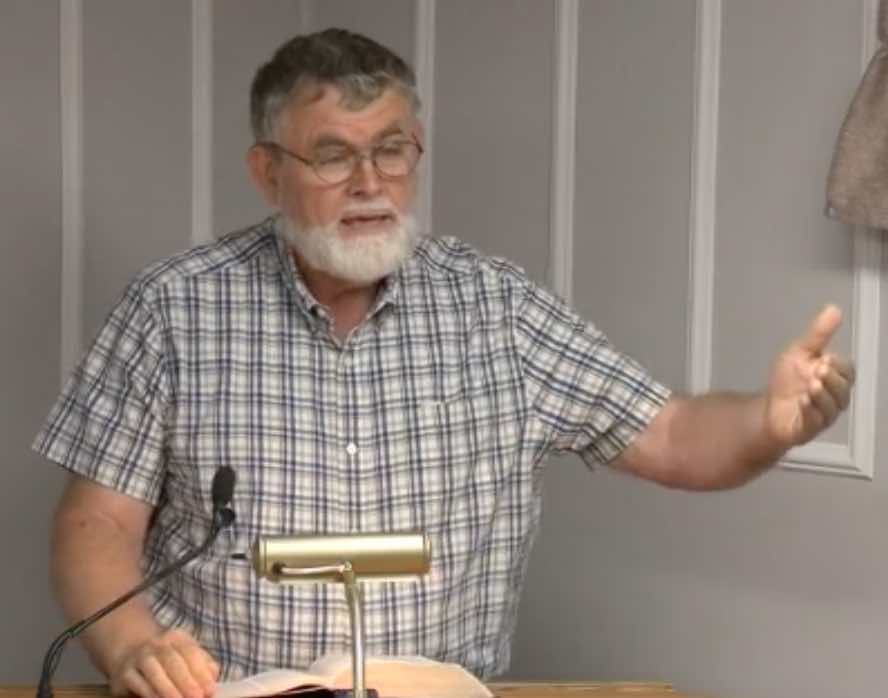
Mike McInnis

Willful Sin

Hebrews 10
Mike McInnis September, 27 2015 Audio
0 Comments
Hebrews Series

Sermon Transcript

Auto-generated transcript • May contain errors

100%
Continuing to look here in Hebrews
chapter 10, I'm going to read verse 21, go over and over some
of these same verses because of the fact that it's necessary
to keep the context of what it is that he's saying firmly entrenched
in our mind. There's nothing worse than pulling
a verse out of the Scripture and trying to arrive at what
it means simply on the basis of that verse. Now, every verse,
every word in Scripture is put there for a purpose, and every
word means what it means. But yet, as in all things, the
Lord has a narrative that He would give us, and it's necessary
that we understand these things else, you know, just like in
the case of Abraham that we were looking at there a moment ago,
if we just looked at a few verses about Abraham, we'd just come
to the conclusion if all we did was read the verse there where
he came up with his scheme to lie about Sarah being his wife,
we'd say, well, Abraham's just a liar. I mean, what else could
you say about him if you just took that verse out and said
this is how Abraham is? But that's not the picture, is
it? I mean, you've got to read the whole thing. to see what
it is that God was doing, because even in Abraham's scheming and
ways that were contrary to moral uprightness, yet the Lord directed
Abraham in the course that he took. And it was the course that
he took that brought him to the place where the Lord would have
him to be, and Abraham learned some things. along the way. And
that's what the Lord is doing with His children, is He is teaching
us. And it is a sad thing, but it's
a true thing that we often have to learn by our mistakes, as
we would look at them as mistakes. I mean, humanly speaking, things
that we do that we shouldn't do, but nonetheless bring us
to a place of seeing, number one, what we are by nature, and
then, as God is pleased to reveal to us, His grace and mercy in
not casting us off when by all rights, as we would consider
what is justly due to us, He should. But He would demonstrate
to us His mercy and kindness and His forgiveness. You know,
forgiveness is a glorious thing when we consider what the great
offense is that we have offended as we would consider it, as we
have offended God if He was offendable. And God is offendable to those
whom He does not love. The Scripture says He won't clear
the guilty. He will by no means acquit the wicked. God is offended,
but He's not offended by those He loves. He's not offended by
those He loves. Why? Because He said it here
in verse 17, "...and their sins and iniquities I will remember
no more." That's forgiveness. It's just He doesn't have any
ill will towards His people. He loves His people with a perfect
love. And he would demonstrate that.
And we read about that here in the book of Hebrews. And having
a high priest over the house of God, that is the Lord Jesus
Christ, we have one who is the great high priest. Having a high
priest over the house of God let us draw near with a true
heart in full assurance of faith. If we need a high priest, he
is telling us we have a high priest. And so that if we need
a high priest and we have a high priest, then we must draw nigh
unto him in faith, in full assurance of faith. Now assurance, usually
when people are talking about assurance, They're talking about
how they feel. Well, I just don't feel saved.
I just don't, I don't feel like I'm saved. Well, you know, the
fact of the matter is that you will never get to a place in
your life where you every day of your life have the same feeling
in your heart from one day to the next. Feelings change. But
assurance is not about feelings. Assurance is about facts. Now, if your faith is built on
your feelings, then you're going to have ups and downs in your
faith. But you see, the faith of God's
elect is not fickle. It is not changing. It's always
the same thing. What is the faith of God's elect?
Jesus Christ and Him crucified. He is our faith. He is that one. That is the basis and grounds
of our faith. Now, as we read there about Abraham,
Abraham believed God and it was counted to him for righteousness.
Now, some people say, that, well, see there, God looked at Abraham's
faith and He says, well, I'm going to count that as if it
was righteousness. But that's not what the Scripture
says. That's not what it means because
Abraham believed God. Now what was the basis of what
Abraham believed? It wasn't that Abraham believed.
Abraham believed that Pharaoh would take his wife. Was that
the basis of his standing? No. But you see, Abraham believed
God. Now, you've got a lot of folks
today that talk a lot about faith. You've got to have faith. You've got to believe and all
of that kind of stuff. I mean, if you believe strong
enough, you can just do anything. But dear brethren, that's got
nothing whatsoever to do with the faith that's spoken about
in the Scripture, the faith of God's elect. The faith of God's
elect is Jesus Christ. It's what Jesus Christ has done. That's our faith. That's the
place whereon we believe. And so when the Scripture says
Abraham believed God and it was counted for righteousness, what
was counted as righteousness to him? God. God Himself is the
righteousness of His people, and Abraham by the grace of God
and the gift of faith was given eyes to see that. And he embraced
it. And Abraham believed God and
it was counted to him for righteousness. Because God is our righteousness
even as we see in that which Christ has performed for us.
And so let us draw near in full assurance of faith Every one
of God's children, regardless of his feelings, regardless of
his age in the faith or whatever, is commanded to draw near in
the full assurance of faith. Now, because why? The full assurance
of our faith is Jesus Christ. Regardless of what I think about
it or feel about it or whatever, it is Christ. That's what Peter
said. Lord, thou hast the words of
eternal life. Who else are we going to go to?
See, that's the full assurance of faith. And we believe and
are sure that thou art the Christ, the Son of the living God. That
is the full assurance of faith. Having our hearts sprinkled from
an evil conscience and our bodies washed with pure water. What's
an evil conscience? An evil conscience is that which
would cause the children of God to doubt that Christ is sufficient
or to think that Christ is somehow less than all that we need. I
mean, is there something you can add to the perfect righteousness
of Christ? Is there one jot or tittle of
obedience or whatever that you can add to that which Christ
has already done that could somehow enhance your standing with God? If your standing with God is
in Jesus Christ, then it's perfect, is it not? And there's not a
thing in the world you're going to do that's going to enhance
it or take away from it, because Christ is the place wherein we
stand. So our hearts are sprinkled from
an evil conscience, our bodies washed with pure water. Let us
hold fast the profession of our faith. And what is the profession
of our faith? that Jesus Christ has gone into
the holy place in our behalf and He has paid sin's debt. That is our profession of faith. That's what we believe there,
brethren. And let's hold on to it. Let's
hold fast that profession of faith without wavering. What are you going to do? Believe
Christ is? the sufficiency of our salvation
partially? How can you believe that partially?
I mean, how can you believe that He is the totality of your standing
with God partially? We hold on to it unwaveringly. It is that which informs the
very basis of that upon which we stand and profess and confess
before God. Why? Because He is faithful.
Why is that which we stand upon so unshakable? Is it because
we're unshakable? No, I quit believing every day. I come up with some reason that
I couldn't be one of God's children or God just told me something
and maybe none of this stuff is true. Because that's the nature of
man, is it not? But dear brethren, He's faithful
that promised. You see? He's faithful that promised. Now sometimes there's creeps
and doubts in a man's mind, but by the grace of God, He's able
to convince us that God's faithful. And really brethren, when it
all boils down to it, that's the only place we stand, is it
not? He's faithful. Faithful is he that called you
who also will do it. If he called you, he'll do it.
He said he would. God who cannot lie, he confirmed
it with an oath. Faithful, for he is faithful
that promised. And then he says this, And let
us consider one another to provoke unto love and to good works.
consider one another. Now, when the Lord Jesus prayed
in the garden, as recorded in the seventeenth chapter, He prayed,
He said, Father, I will that they be one even as we are one. Now, let's understand what it
is that the Lord Jesus Christ is praying. He's not praying
that we have the same unity as he has with the Father, because
we can't. Why? Because we can't be God.
But he prayed that we would be one. Who's the we? Those whom
he's called, those whom he's loved, his children, that we
would be one with the other in unity together, even in the same
fashion in which he is united to his Father in one. in the
same way. And so the unity of God's people
built upon the same basis of faith is that we are our brother's
keeper. And so we are, he says here,
let us consider one another to provoke unto love and good works
if we believe that Jesus Christ is the foundation of our faith. Now it doesn't make any difference
if I think somebody else believes it as strong as I do or not,
does it? Because it's not how strong somebody
believes something. It's whether or not they've been
given faith by the grace of God, and the foundation of their faith
is Jesus Christ and Him alone. Not Jesus Christ and something
else, but Jesus Christ alone. And so we are made one in Christ
in that faith and we are to consider one another. That's why he says,
as Paul says, that we are to bear one another's burdens and
so fulfill the law of Christ. He said we are to esteem one
another above ourselves. He said we are to love one another
with a pure heart fervently. He said the body is built up
by that which every joint supplies. Now, one thing that is very plain
in the Scriptures is that God's people are part and parcel of
one another. If the foot hurts, can the leg
say, well, I'm not the foot, so that's the foot's problem. Isn't that what he said? Isn't
that what Paul, the illustration that he used? I mean, can the
hand say, because I'm not the arm, then I don't care what happens
to the arm. No, brethren, we're all part
of the same body. Every part of the body is important
in its place and in its purpose, and even the smallest part of
our body. I mean, I guess your little toe
is probably the littlest part of your body, as far as a member
would be concerned, but if you drop a a hammer or something
on that little toe or you stub it on a furniture leg as you're
walking through the house in the dark or whatever, it causes
your whole body to hurt, doesn't it? I mean, it's not just that
your toe, because if it was just your toe, you could just reach
down there and cut it off and you'd be done with it. I mean,
I've felt like doing that before. But it's not the toe that's hurt,
it's the body that's hurt. The toe is just the point at
which it was heard. But the whole body is one together. And that's why he says here,
let's consider one another to provoke to love in good works.
Now, what do we provoke one another to love in good works by? Is
it that we're going to have a better reward in heaven? No, it's because,
dear brethren, we are knit together and we have the same faith in
Christ. And if we see a brother walking
contrary to the way in which he ought to be walking, let those
which are spiritual restore such in one in the spirit of meekness,
considering themselves, lest they also be tempted, if a brother
be overtaken in a fall. It's not that we're not without
faults, but we are to provoke one another to love and good
works because that is what we're called to. We are part and parcel
one of another. Not forsaking the assembling
of ourselves together, as the manner of some is, but exhorting
one another, so much the more as you see the day approaching.
Not forsaking the assembling of ourselves together. Now, most
of the time this is applied to coming to church. We're going
to have church on Sunday morning at 10 o'clock. I don't want anybody
to forsake the assembling of yourselves together. Well, the
sad thing is you can come on Sunday morning and still forsake
the assembling of yourselves together because what he's talking
about here is more than just coming together in a formal meeting.
and singing some songs, maybe hearing somebody preach or teach
or whatever, is more than that. The assembling of ourselves together
is the very basis of what he is talking about here, provoking
one another to love and good works. It goes beyond simply
assembling together on Sunday morning. We are gathered together
seven days a week. We're not to be apart from one
another in the sense that we have no regard to one another.
Well, it didn't happen on Sunday, so it's not any concern of mine. No. Dear brethren, our lives
are intertwined. You know, we like being independent
and private, don't we? And that's a good thing. There's
certainly, you know, at our very basic nature as human beings,
we are private and individual creatures. Nobody's trying to
overturn that and say that's not the case. But in relation
to our faith in Jesus Christ, we are knit together. in one,
in Christ. And we are not to forsake the assembling of ourselves
together as the manner of some is. Now, some get in their mind,
well, I can just be, I'm an island unto myself. All I need is just
to take the Bible and I can just go off somewhere by myself and
I can just read the Bible. I don't need to get around other
Christians. I don't need to be interacting
with other believers. Well, that might be well and
good, except that it's to fall into exactly what he's saying
right here. We're not to do that. We are
to assemble ourselves together. And again, while that has probably
a very important aspect of gathering together as we do on the first
day of the week, it's more than that. That assembling together
is a continual assembling. And it is assembling together
has to do with the desire to meet together. I mean, if the
only thing we come together for is just because we're meeting
some obligation or we think we ought to do it, then we're missing
the point. John said, by this shall we know
that His Spirit dwells in us because we love the brethren. Now you see, God puts within
the hearts of His people a love for the people of God. And there
are oftentimes things that would prevent us from coming together
in a specific location at a specific time. But there is never anything
that should come between our assembling ourselves together
as the matter of some amends. That is, we have regard to one
another. And we have regard to gathering
together with one another, whether it's on Monday or Tuesday or
Wednesday or Thursday or Friday or Saturday or Sunday. It doesn't
make a difference what the day of the week is. We assemble together
with one another, dear brethren, because we congregate in our
faith. See, our faith doesn't stop when
we leave here, does it? If it does, you don't have much.
I mean, you don't have any much because it's part and parcel
of our life. So it is that the assembling
together of ourselves. It's going to be the same tomorrow
as it is the next day. Not forsaking the assembling
of ourselves together because we are part of one another as
the matter of some is. Brethren, when God's people start
living their lives as though they are an island unto themselves,
then weakness has got to follow because we're strengthened by
that which every joint supplies. The body is built up by that.
But exhorting one another, I mean, that's the purpose of assembling,
is it not, to exhort one another? I mean, whether we're down here
on Sunday or whether we're going through the week, to encourage
one another. Even if it's just a handshake
and look at somebody in the eye with the knowledge that you share
a common bond in Christ. Because most of the people that
you meet during the week, you don't have that with, do you?
I mean, most of the people that I come in contact with in the
week, they don't even want to, that would be the last thing
on their mind. They're not even concerned about that. Not forsaking,
but exhorting one another, and so much the more, as you see
the day approaching. Now, what's he talking about,
the day approaching? What day is he speaking about?
Well, I think that specifically, considering who it is that he's
speaking to here, these Hebrews, and the concentration of the
Hebrews was in Jerusalem, the Hebrew believers, that what he's
saying to them is specifically regarding the approaching calamities
that would befall the early Christians around the destruction of Jerusalem
when the Romans approached and all that stuff. But see that
did not all happen overnight. That happened over a period of
time and it was a build-up of the forces at Pro and Con and
those who were fighting against the Roman oppression and the
buildup of the Roman army to crush that oppression. And as
he had already warned them, he said, you know, when you see
these things come to pass, you need to head for the hills. And
he said, so much the more as you see this day approaching. need to help one another. Now,
in that time, it was vitally important, perhaps even more
so than it is now, that they be knit together in one as that
great persecution arose. And, dear brethren, so he's speaking
about as you see these days of greater persecution coming. Now,
if you can look at the news, and the things that are transpiring
in the world now and not see that there are days of greater
oppression coming for the people of God, I think you're hiding
your head in the sand. Now, there is a buildup in the
men's minds about religion. And you mentioned it there with
this thing with the Pope. I mean, it's just amazing to
me. I can't even believe it. I mean,
the Pope's been here before, but it's like this is something.
But see, people can unite around what the Pope's saying. Take
care of the planet, love one another, and do all that. I mean,
people like that. But I think you start preaching
Jesus Christ and Him crucified, And, oh wait, you know, you're
divisive. You know, we want something that's
going to bring us together. See, everybody agrees with all
of that, helping out, giving somebody some free food and stuff
like that. I mean, everybody agrees with
that. Nobody wants to see some child
going hungry, do they? I mean, if you see a child going
hungry, what would you do? You'd want to help them. Everybody
would want to help them. But you see, not everybody is
clamoring for the glory of Christ alone. And that message, as time
goes on, dear brethren, I can see it in the handwriting on
the wall, that it's going to become less and less an acceptable
thing because it is so contrary to the natural thinking of men.
Now, we've lived through a halcyon period, in a way, in which there's
been kind of a general concept of an acceptance of the tenets
of Christianity, in a way. Now, the Gospel's always been
a kind of an abrasive message. And it's never been included
by the masses, but it has been more, what you would say, tolerated,
I guess, by society. But I believe as time goes on,
there's going to be less toleration of the preaching of Christ and
Him crucified. Now, if you want to tell folks
a bunch of stuff they can do and whatnot, they'll like that.
But you tell them that Jesus Christ is an absolutely sovereign
God, who does according to his will an army of heaven and among
the inhabitants of the earth, and he saves whom he will. But
you've got a different story then. You've got people that
you think are your friend that won't be, because they don't
want to hear that. They rise up against it. And
that's what the Lord Jesus said, Think not that I am come to send
peace in the earth, but I came to bring a sword. Now, the Pope
didn't come bringing a sword, did he? No, he came talking peace,
peace, when there is no peace. But the gospel message is a divisive
message, dear brethren. It's not divisive to God's people.
It's divisive between God's people and the world. And that's what
he's talking about here. He said, so much the more as
you see that day of trouble approaching. Now, of course, this also could
have reference. to the day of judgment, the day
when all things are going to be made open and plain. But when is the day of judgment
for God's people? Paul said it again very plainly.
Now is the time for judgment to begin in the house of God. See, the day of judgment is now,
dear brethren. I mean, we're constantly in a
state of judgment, not condemnation, but we're in a state of judgment. That is, we're looking at ourselves
as to where we need to be. We need to be looking at one
another, not in a condemning fashion, but judging right and
wrong, judging good and bad. A judgment for sure. I mean,
we must all stand before the judgment seat of Christ. That's
not future, that's present. If we presently examine ourselves
to see if we be in the faith. You see, that is a judgment.
Now, there is coming a final judgment. But we will stand there
in that day on the right hand of the Lord if we be His as He
separates the sheep from the goats. And the glories of heaven
are opened and we see who we are and what we are in Christ
and it's revealed to the creation in general who the people of
God are. Oh, how bright the robes they
glisten! And then shall those songs be
sung in Zion which angels delight to hear. exhorting one another so much
the more, even more. I mean, we need to be mindful
of this. Now, listen to what he says here.
For if we sin willfully, after that we have received the knowledge
of the truth, there remaineth no more sacrifice for sins. Now,
if we sin willfully, does that mean if I go out here and I commit
some sin willfully? Now, let me ask you a question.
What sin do you commit that's not willful? I mean, have you ever known something
was wrong and went ahead and did it anyway? Now, is that what
he's talking about? If it is, brother, we've had
it. Isn't that the truth? I mean, if we sin willfully,
that comes with the knowledge of the truth. If that means that
if you just go out and commit some sin willingly, then there
remains no more sacrifice for sin, you're in trouble. You are
in deep trouble. I mean, oh, we can hang it up
today. We can forget it. So it does not mean that. Now,
I don't care who comes along and tells you that it does. I
know a guy that he claims he doesn't sin. And it's built on
this deal here. Well, they know that, you know,
if you're a child of God, if you sin willfully, so you can't
be sinning willfully. So they don't sin willfully.
If they sin, it's just kind of some kind of thing that just
happens, you know. They didn't really willingly
do it. But they're dishonest. They're dishonest because they
don't understand what sin is. They don't understand their own
heart. But dear brethren, what this is speaking about here is
the sin that he has been talking about here, which is what? Forsaking
the foundation of the faith which we profess. You see, that is
that willful sin, if we willfully say we are not going to follow
the way of Christ because we do not believe that what Christ
did was sufficient, if we reject that which Christ has performed,
then our sin is upon our head and we have no more sacrifice
for sin. There's no sacrifice for sin
for a man that rejects Christ, is there? I mean, for the man
that turns away from Christ, I mean, he might have embraced
it even as many of these Jews did, and these are specifically
who he's talking about. Some that said, oh yeah, we want
to go in that way, we believe in Christ, but when the chips
came down, they said, Al, I don't know, I'm going to go back over
here to Judaism because I believe that was the way to go. What
remains? What do you have left? What is
there? Nothing. Dear brethren, if you
depart from Christ, you have nothing left. Now is he saying
that some of God's children are going to do that? Not at all. And if you go on to the end of
the chapter and read verse 30, he says, But we are not of them
that draw back unto perdition, but of them that believe. to
the saving of the soul. So you see it's kind of an interlude
here between what he's saying there and what he comes down
to conclusion. Now, the reality is that if we
turn away from that which Christ has done, there remaineth no
more sacrifice for sin. Simple as that. If you don't
believe Christ, You have no basis upon which to expect that you
shall be accepted into the presence of God. But there's only a certain
fearful looking for of judgment and fiery indignation which shall
devour the adversaries. That's not a pretty picture,
is it? Now, what are they the adversaries of? The adversaries
of the gospel. Dear brethren, you can't be halfway
for the gospel. You're either the friend of the
gospel or you're the enemy of it, the adversary of it. You
can't say, I believe part of it, because there's no parts. It's
got one part. You see, the gospel only has
one part. It's Jesus Christ. And if you
turn away from Him, what have you got left? There's no parts
to it. A certain fearful looking for
judgment and fiery indignation which shall devour the adversaries,
those that are against it. He that despised Moses' law died
without mercy under two or three witnesses. How much sorer punishment,
suppose ye, shall he be thought worthy?" Now look, he's describing
exactly what the willful sin is. Shall he be thought worthy
who hath trodden underfoot the Son of God, who hath counted
the blood of the covenant wherewith he was sanctified an unholy thing,
and hath done despite unto the Spirit of grace?" That's what
the willful sin is. It's a man saying, I don't believe
it. I turn away from it. I know I
claimed to believe it at one time, but I've turned away from
it. What does he have left? Nothing. I mean, all he's got
to look forward to is judgment. But for we know him that hath
said, Vengeance belongeth unto me, I will recompense saith the
Lord. And again, the Lord shall judge
his people. It is a fearful thing to fall
into the hands of the living God. It is. And dear brethren, Apart from Christ, we don't have
a leg to stand on, but He is the foundation of His people,
and it is upon Him and Him alone that all of our hope for us.
Somebody have a question or a comment?
Mike McInnis
About Mike McInnis
Mike McInnis is an elder at Grace Chapel in O'Brien Florida. He is also editor of the Grace Gazette.
Broadcaster:

Comments

0 / 2000 characters
Comments are moderated before appearing.

Be the first to comment!

Joshua

Joshua

Shall we play a game? Ask me about articles, sermons, or theology from our library. I can also help you navigate the site.