Bootstrap
Bill Parker

Christ the Lamb Slain

Revelation 13:8
Bill Parker January, 27 2007 Video & Audio
0 Comments
Bill Parker
Bill Parker January, 27 2007
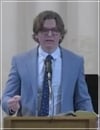
Pastor Bill Parker presents a message on 'The Lamb Slain from the foundation of the world'.

Sermon Transcript

Auto-generated transcript • May contain errors

100%
me in your Bibles to the book
of Revelation chapter 13. Revelation chapter 13. Now, I
want to deal with basically one verse out of this chapter, verse
8, concerning Christ, the Lamb slain. As you can see in Revelation
chapter 13 and verse 8, the Lord Jesus Christ is identified here
in the King James Version of the Bible as the lamb slain from
the foundation of the world. And that's what I want to deal
with, basically. But, you know, the book of Revelation seems
to be such a mystery to most people. And there may be things
that are mysterious there. But the more I read the Scriptures
from Genesis to Revelation, the more I'm convinced that the key
to understanding the whole of Scripture is to view it as it
relates to the issues of the gospel of God's grace in Christ
and Him crucified. And anything that you come away
with in understanding the scripture is going to support that truth
and be consistent with that truth of how God saves sinners through
Christ, how God is just to justify the ungodly based on the shed
blood and the imputed righteousness of Christ. And any interpretation
or understanding that you have of any scripture that takes away
from the glory and the power of the person and work of Christ
on the cross or anything that diminishes in any way or any
degree the glory of that power of the person and work of Christ
is a wrong interpretation. The Bible does not teach in any
way, Old Testament or New Testament, that salvation is ever conditioned
on a sinner. It's all conditioned upon Christ
who came in time according to the will and appointment of the
Father to fulfill and meet all of the conditions, all of the
requirements, all of the stipulations of salvation for his people. And that's so. And nothing's
going to diminish that or take away from it. Now, in Revelation
12 and 13, we're confronted with what some commentators call an
unholy trinity. We're first confronted with the
symbol of the dragon. And that dragon symbolizes Satan.
And Satan, in Revelation 12, is portrayed as the accuser of
the brethren. Now, that's important to understand
how Satan works. Satan is a subtle, deceptive
devil. We're going to see that. But
he's called the accuser of the brethren. He hurls accusations
against God's people. The truth is, though, is this.
Satan's accusations that are hurled against God's people cannot
and do not stick. Why? That's the issue here. Why? You who are in Christ, you
who know the Lord, you who are children of God, when Satan hurls
his accusations against you, they don't stick. Now, why is
that? Well, it's because I'm the new
improved version of Bill Parker. No. Is it because I no longer
commit sin? No, I'm a sinner. But his accusation
is no mistake. Why? The next one that we're
confronted with in Revelation 13 is a beast. That term beast
there is a term that was normally used for a wild animal that could
not be tamed. And he's the servant of Satan.
And that beast rises out of the sea. And what that first beast
represents is ungodly governments that serve Satan in opposition
to the government, in opposition to the truth of God. He's the
servant of Satan. Back in John's time, when he
received this revelation from the Lord Jesus Christ on the
Isle of Patmos, a good interpretation of that would apply to the Roman
Empire, which was a God-hating, Christ-hating government. a great
persecutor of the church, openly hateful, openly in a lie, coming
against it. It's been represented down through
the ages in the last days, which refer to the time of Christ coming
and doing His work on the cross and ascending unto the Father
and the time of His second coming. That's what the last days refers
to. Somebody says, we're living in the last days. Well, we've
been living in the last days since the Lord ascended. The
Bible teaches that. Somebody says, well, I believe
we're close to the time that the Lord's going to return. Well,
I believe we're closer. I don't know how close we are.
We don't know when, and it's foolish and ungodly for any man
to try to figure it out according to the Scriptures. But down through
time, governments that stand in opposition to Christ and the
gospel have been risen up, have been put down, they'll raise
up again. And the Bible, I believe, teaches it's going to get worse
as we do get closer to the time of our Lord's second coming.
But that's what that first beast represents, the one coming out
of the sea, the sea in the Old Testament. The islands, they
represented the nations, you see. And that's what that represents. And then after that, there's
another beast that comes up out of the land. And look at this
one, it says in verse 11, now look at this, this one is called,
this one is known as the false prophet. And he says in verse
11, And I beheld another beast coming up out of the earth, and
he had two horns like a lamb, but he spoke like a dragon. Now
what does that tell you? Well, that tells you he appears
to be gentle. In appearance, He has an appealing
appearance that would draw men and women to him. But his words,
his speech, his doctrine, his message is in line with Satan,
the dragon. And this beast represents false
religion. And he's more dangerous than
the first beast because he's more deceptive. Now this beast
This is a symbol. This is not just one animal.
This is a wild beast that cannot be tamed. It's a symbol. It's a type, if you will, of
false religion, false philosophies that are in line with the dragon,
Satan, satanic religion. And I'm not talking about people
wearing black robes and sacrificing cats now. That's not what he's
talking about. This beast... Our Lord spoke
of the servants of this this beast when he spoke of false
prophets who come to you in sheep's clothing, but inwardly are as
ravenous wolves. And let me show you an example.
Turn over to John chapter 8. This false prophet represents
any religion, no matter what it calls itself. Listen, even
if it calls itself Christian, any religion, that is appealing
to men by nature, but which denies the doctrine of Christ, the person
and work of Christ, which denies the issues of how God can be
just and justify the ungodly, which deny the issue of the cross,
the accomplishments, the finished work of Christ on the cross as
our whole salvation. and our justification before
God. Look at John chapter 8. Now remember, our Lord here is
talking to religious people here, the Pharisees, who outwardly
appear righteous unto men. Christ himself said that. He
said you're like whited sepulchers, but inwardly like an open grave.
And these were men who were promoting keeping the law, keeping the
law for salvation. their way of being justified
before God. Now, what is it to be justified?
It's to be declared by God legally not condemned, legally not guilty,
and righteous in His sight. That's what justification is.
These Pharisees would teach you that a sinner can be justified
before God by keeping the law, by their works. And look at what
our Lord says of them in John 8 and verse 44. He says, You're
of your father, the devil. You religious men and women,
you're devilish, you're satanic. And the lust of your father you
will do. Now you know what lust is. We
always think of lust as being a sexual desire. Lust is any
unlawful desire. Do you know it is a lust, an
unlawful desire for a sinner to desire salvation? apart from
Christ. In fact, there's no more wicked
lust in the world than for a sinner to come before God pleading something
other than the shed blood and imputed righteousness of Christ.
And I'll tell you where that's first taught. First taught in
Adam after the fall. You preached on it the other
night, David, when he said, when he sewed fig leaves together
and tried to cover their nakedness. And then it's taught with Cain
and Abel. Here comes Cain. pleading the works of his hands
as his ground of acceptance before God. That's wicked and evil. But here comes Abel with the
blood of the Lamb. That's a picture of Christ. That's
a picture of his blood and his righteousness imputed, saying,
I'm a sinner and my only hope is to be accepted in him, the
one who was to come. And so he says, the lust of your
father you will do. He was a murderer from the beginning,
a soul murderer. He brought the whole human race
into condemnation in Adam under the sentence of condemnation
and death. And how did he do it? What was
his weapon? It wasn't tanks. It wasn't Cobra
helicopters. It wasn't anything like that.
And when people go to the book of Revelation, that's what they
want to talk about, they want to talk about carnal weapons. Here's his weapon. It says, he was a murderer from
the beginning and a bode not in the truth. You see? Because there's no truth in him.
He speaks a lie. When he speaks a lie, he speaketh
of his own. That means he speaks what's natural
to him. You see, that's what false religion does. It speaks
what's natural to man. Salvation by works, self-righteousness,
salvation conditioned on the sinner. God's done his part. Now won't you do yours? That's
the lie. Right? God will save you if you'll let
him. God's come this far, now you
do yours. That's the issue, you see. When he speaketh a lie,
he speaketh of him. For he's a liar, and the Father, his weapon,
is a lie. And that's what this third beast
represents here, this two-horned lamb who speaks like a dragon. Let me show you another example.
Look at 2 Corinthians chapter 11. Now Paul here is talking about
false preachers. And he said what they've done
is they've gotten the minds of some of God's people off of Christ
and Him crucified, the simplicity that is in Christ. Just like
Satan beguiled Eve. He said, I fear lest he beguile
you and get you away from the simplicity. That's the single
message of Christ and Him crucified. The single message of how a sinner
is made just and righteous before a holy God based on the finished
work of Christ on the cross. And he's gotten you off of that.
And he says in verse 13, now look at this, he says, for such
are false apostles, deceitful workers, transforming themselves
into the apostles of Christ. They claim to be Christ's apostles. They claim to be preachers of
the gospel. They'll even claim to preach
grace. You see, they transform themselves into the apostles
of Christ. And the tense of that word there, the verb there, is
it is a temporary transformation. In other words, it's not a permanent
change. You see, when God saves a sinner, there's a permanent
change. When God calls one of His men into the ministry to
preach the gospel, He gives him a message and it never changes.
But these men transform. They go back and forth. They
can't stay with the preaching of Christ because it's not in
their hearts. It's not what they love. It's
not their hope. And he says in verse 14, no marvel,
for Satan himself is transformed as an angel of light. You know,
Satan can quote scripture. Satan can speak enough truth,
pepper it with a lie to deceive. So he said, that's nothing amazing
that false preachers would do that. He says in verse 15, therefore
it is no great thing if his ministers also be transformed, now listen
to this, as the ministers of righteousness, whose end shall
be according to their words. I believe that he's saying at
given times they'll even preach the true gospel. in the sense
that they will preach the imputed righteousness of Christ, but
they can't stay with it. It is not their main message.
They're transformers. And he says, somebody said, well,
they preach man's righteousness. No, they do, but they don't have
to transform to do that. That's what's natural to them.
You see, men don't have to change and transform to preach work
salvation. They don't have to transform
and change to preach salvation condition on the center. That's
what comes next. When Satan speaks that, he speaks of his own. He's
speaking what's naturally to him. But these men, for certain
times, they can say the right things to God's people at a given
time, to the point that if it were possible, Christ said, they
could deceive the very elect. Isn't that something? And that's what this two-horned
lamb over here in Revelation 13 is. He has that appearance. You can say, well, I heard him
preach a message the other day, and it sounded good. But what's
the tenor of his ministry? What's the tenor of his message?
What is his mainstay, day in and day out? Because these Transformers,
they can't stay with it now. Somehow, someway, they're going
to get into where they exalt man and their works. It may be
rewards in heaven. We're saved by grace. But you
better get busy and earn your reward. You know, you don't want
to live in a cabin in glory land. You want a mansion. So you better
work hard. Now let me tell you something. The gospel of God's
grace never, never puts God in a position where he's indebted
to you. Did you know that? If you ever
come under a message that puts God in debt to you, you better
run from it. God's indebted to himself. That's
it. He owes himself his own glory. He's never going to put himself
in a position where he's indebted to you or me. We're not in the
earning business. The only thing we can earn is
debt, the wages of sin. The gift of God is eternal life. It's a gift. We're blessed with
all spiritual blessings in heavenly places in Christ Jesus. We don't
earn our blessings here or in glory. Our reward is Christ, and we're
all equally saved, equally justified. We who know him, we who are resting
in Christ, we're equally saved, equally justified, and equally
rewarded in Christ based on his blood and his righteousness alone.
But you see, this two-horned lamb is deceptive. He has that
appearance, but he speaks like the dragon. In some way, somehow,
subtly, some degree, he will deny both the glory of the person
and the finished work of Christ in his ministry. Now, here's
the question. Go back to Revelation 13. You
say, well, that's pretty hard stuff. That sounds bad, you know. What are we going to do? Well,
the question is, who's going to escape? Who's going to get
out from under the deception of this false prophet, this beast,
this dragon who is so deceptive? Well, look at Revelation 13 and
verse 8. Now, it says here, in the last
days, it says, all that dwell upon the earth shall worship
him. They're going to worship the
beast. They're going to worship this unholy trinity, the dragon,
Satan. the beast that comes out of the
sea, these ungodly governments, and the false prophet, this deceptive
false religion that works in concordance with the beast and
with the dragon. Some people say it's like the
state religion, and sometimes it is. Sometimes it's more subtle
than that. But all that dwell upon the earth shall worship
him. Now somebody says, everybody that dwells upon the earth is
going to worship him. Well, he says, everyone who dwells
upon the earth shall worship him whose names are not written
in the book of life. Now, there's a distinction here.
There are going to be some people who don't worship him, but all
whose names are not written in the book of life of the Lamb
slain from the foundation of the world. Now what does this mean? All
that dwell upon the earth shall worship him. What that means
literally is this. It is all who are of the world
who are so connected to this earth that they have no interest
in Christ. You see, God's people are those
who are chosen out of the world before the foundation of the
world. God's election of grace. This book of life, that's God's
book of electing grace. It's God's book of redeeming
grace. Those who are God's are redeemed of the Lord. They've
been bought and paid for on the cross of Calvary. They've been
justified by Christ on the cross. They've been declared righteous.
They've been declared not guilty. Their sins have been paid for.
We sang it. Our debt's paid in full. When
Christ went to the cross, he went there not for himself, but
for those whose names were written in the book of life. That's what
the scripture teaches. Men may not like that, and they
may argue with it, and they may say they don't understand it,
but that's what this book teaches. Those whose names were written
in the book of life, Christ came representing them, substituting
himself for them, and took their sins upon himself by a legal
act of imputation from the Father. He was accounted, he was made
sin, legally. And he went to the cross and
he drank damnation dry for them. He satisfied law and justice
and he established and brought forth a righteousness and imputed
it too. And that's the issue of the gospel,
so that God could be just and justify the ungodly. And these
are the ones who are called out of the world by the Holy Spirit
in the new birth. They're called out of the world.
Christ said this. He said, I laid down my life for the sheep. He
said, I know my sheep. I'm known of mine. My sheep hear
my voice and they follow me. They're not going to follow the
two-horned false prophet, the two-horned lamb. Now they may
follow him before they're converted, and they do, but he said they're
going to call him out of the world. So they've been chosen
out of the world, they've been redeemed out of the world, and
they've been called out of the world. And their names were written
in the book of life before the foundation of the world. But it says here that the Lamb
slain from the foundation of the world. Now that phrase, I
want you to look at that just for a second. Most of you in
here, if not every one of you, know that the original language
of the New Testament was Greek. Not the Greek that they speak
in Greece today, but it was a common Greek language. And you've probably
been taught that it was a spoken, it was an oral language, it was
a spoken language, more than a written language. In fact,
when the New Testament was originally brought together, there were
no punctuation marks. And many of the punctuation marks
have been added. Now, what does that say to us?
Well, it says this. Now, first of all, you don't
have to be a Greek scholar to understand the Bible. If that
were true, then I wouldn't understand it. I use a concordance. I use word studies. They have
their places. I look up words. I try to find
the original meanings of the words, and that's a good thing.
But you don't have to be a Greek scholar to understand the New
Testament. You don't have to be a Greek
scholar to understand the Gospel. The Gospel is a simple, plain
message. It's so simple that a little
child can understand it, Scripture says. But what it does teach
us is this, and don't get me wrong, I love the King James
Version of the Bible. I think it's the best translation,
closest to the original. But it is a translation. And
what it does tell us is this, that we have to be careful when
we read and study the Scriptures. We can't just go through willy-nilly
and just take phrases out and jerk them out here and put them
here. And we can't take one phrase, like this phrase, the lamb slain
from the foundation of the world, and develop a whole elaborate
theology on just that one phrase. The Bible says, study to show
thyself to prove unto God a workman that needeth not to be ashamed,
rightly dividing the word of truth. Now, we've got to rightly
divide the word of truth. That means we've got to see where
it lays, why it's there in the context, and understand what
the Holy Spirit intended in the meaning there as much as we can.
And it's got to be consistent with the basic principles of
the gospel of God's grace in Christ. There are no contradictions
in Scripture. There's no confusion in Scripture. The confusion is in our minds.
And sometimes the Lord will give us light on scriptures that we
didn't have before through our studies. The Bible says that
it's impendent upon the people of God to be skillful in the
word of righteousness so that we might know the difference
between what is good and what is evil. Some have taken this
phrase, the lamb slain from the foundation of the world, and
have taken it and developed an elaborate theology which they
call eternal justification. Because they say, well, that
means that the Lamb was always slain. There never has been a
time that He was not slain. I know the term eternal justification
can be used in the right context. For example, I've always understood
it this way, that before the foundation of the world, God
purposed to save a people, to glorify Himself in the salvation
of a people of His choice through the obedience unto death of the
Lord Jesus Christ. That was God's intention. It
was God's purpose. Listen, I don't understand eternity,
and you don't either. We are creatures of time. Even
when we speak of eternity, we will use tenses. Somebody said
God purposed. The moment you put the E.D. on
that word, you're already into time. We don't understand eternity. God is eternal. God has no beginning. He's the great I Am. He's the
Alpha and the Omega. We can't enter into that in these
puny old minds that we have. We have to look at things as
they come in segments of time. But God, who is eternal, created
time, purposed time, set time in motion, governs time, controls
time, regulates time, and has appointed time. Now hasn't He? He's appointed. And before the
foundation of the world, he appointed his son to be the savior of his
people, that through his bloody death, under satisfaction in
a given time in history, that that would be accomplished. Now
let me show you that. Look at Galatians chapter 4. And for anybody to say, well,
we just don't think in terms of time anymore since we've been
saved, that's a lie. That's foolishness. And somebody
says, well, God doesn't think in segments of time, that He
just thinks always in the... I don't know, and you don't either. Why even get into stuff like
that? That's foolish. God is the eternal I Am. Always
was, always is, always will be. That's what He says. Bow to it
and worship Him. But for me to try to climb into
the mind of God and figure that out so that this old thing up
here can understand it is foolish. I know there was a time when
there was nothing, and God created something out of nothing. He
said, let there be light, and there was light. There was a
time there was no light, and God is light. But He said, let
there be light, and there was light. Now explain that to me.
Anybody want to make a stab at it? I just can't do it. But look here in verse 4 of Galatians
4. It says, But when the fullness of the time was come. Now this
is written by the Apostle Paul as he was inspired by God the
Holy Spirit. Now when the fullness of the
time. What is that word, that term, fullness of the time? That
means when God's appointed time came about. And our Lord recognized
this now. How many times did he tell his
disciples, it's not time yet. It's not time for me to go to
Jerusalem. My time has not yet come. He was subject to time in his
humanity as God-man. And he said it over and over
again. And then when the time came for him to go to the cross,
he said, it's time. Time to go, fellas. And when
the fullness of the time was come, God sent forth His Son
made of a woman. He wasn't always made of a woman.
That's speaking of His incarnation. The Word was made flesh, the
Word that was in the beginning. The Word that was with God, the
Word that was God, the Word was made flesh and was tabernacled
among us. There was a time when He was
not God-man. But here it says, when the fullness
of the time God sent forth His Son, made of a woman, conceived
in the womb of the Virgin Mary by the Holy Spirit without the
aid of man, that perfect God-man. And then it says, made under
the law. That means that He was made under the law that cursed
His people. He became responsible to keep
the law for us. He became responsible to satisfy
its justice. All of it was conditioned on
him. Now look here in verse 5, for in the fullness of the time
he did all this to redeem them that were under the law. Redemption
had to be accomplished in time, and it wasn't accomplished in
eternity. It was purposed to be. It was
intended and decreed by God Almighty, and it was sure and certain to
be, because God's behind it all. But it wasn't actually accomplished
until our Lord came to this earth, having been made of a woman,
made under the law, and went to the cross of Calvary and paid
the debt at that time. And he said that we might receive
the adoption of a son. That's legal adoption, right
there at the cross. The papers were signed, in other
words. It's like when a couple adopts a child. They sign the
legal papers, and that child is theirs. They may not have
actual possession of that child yet, but he's theirs, or she's
theirs. And we became His. That's when
we were justified. And it says in verse 6, and because
you are sons, because you are adopted, because you are redeemed
and justified, God hath sent forth His Spirit. And that's
in time. The Spirit of His Son into your
hearts, that's the new birth. That's when you find out about
what all took place and was accomplished right there at Calvary in time. Crying, Abba Father, Papa, Papa.
That special relationship between the Father and His people. Look
over at Hebrews chapter 2. Let me show you this one. And I'll tell you, now folks,
you say, well, We can't understand all this about eternity, but
now God has revealed things in him. All we have to go by is
his word. And anytime you get to wrassling
with stuff like this or get to arguing or debating or discussing
it, always remember this. The wisest thing we can do is
start with chapter and verse. And if you can't find the chapter
and verse, leave it alone. How about that? Don't get it
out of there and draw and establish some big elaborate theology on
it and make it an issue. That's what men have done now.
That's what they're doing, a lot of them, taking a phrase out
of it. But look here at Hebrews chapter
2. He says in verse 14, he says, for as much then as the children
are partakers of flesh and blood, that's his elect, that's Christ's
sheep. partakers of flesh and blood,
he also himself likewise took part of the same. He had to become
flesh and blood. Why? That through death he might
destroy him that had the power of death, that is, the death.
He could not die until he had a human body. Blood had to be
shed. Now God absolutely considered
has no blood. He's spirit, you see. So God
the Son had to become incarnate before He could die. He could
not have been slain before He came and become incarnate. He
said in Hebrews chapter 10, He said, A body hast thou prepared
Me. He had to have that body to die. That's right. Without the shedding of blood,
there is no forgiveness, no pardon, no remission of sins. He had
to have blood. He didn't have blood before He
become incarnate. He's the God-man, you see. And he goes on, he said,
that through death he might destroy him that had the power of death,
that is the devil, and we'll talk about that in just a second,
and deliver them who through fear of death were all their
lifetime subject to bondage. When were we delivered? At the
cross. And he didn't go to the cross
before he became incarnate. That would be impossible. Somebody
said, well, God cannot die. I know that's so. But this person
who is God did die. That's to be attributed to his
humanity. Yet it was an act of his entire
person. I can't even explain that. I just know it's so. But
he had a human body that died on that cross. It was through
that veil, that is to say his flesh, that he consecrated, newly
made that way into the holiest for his people. And that newly
made it. Look over it. Now, remember, we understand
that this book was originally written in the common Greek of
the day. Sometimes when the King James
translators translated a verse, they let their prejudices enter
into the picture, and that's why we have to be careful when
we study the Scripture. When we speak of the inspired
Word of God, we're speaking of the original Hebrew and Greek
Bible. And what we have today, that
doesn't mean now, again, that we all have to be Greek scholars
or Hebrew scholars. It doesn't mean that if you don't
speak anything but English, you can't understand the gospel.
No. God has a people out of every tribe, kindred, tongue, and nation.
And the gospel can be as plainly preached in English as it can
be in Greek. But sometimes in the translation of these verses,
we have to be careful. In the original, this verse,
Revelation 13, 8, would read this way. Now some say, well,
the word from there could be translated since. And that's
all right. That's true because that same
Greek word sometimes in the New Testament is translated since.
In other words, it would be the lamb slain since the foundation
of the world. But here's the original Listen
to it as I read it to you. It says this, all who dwell on
the earth will worship him, everyone whose name has not been written
from the foundation of the world in the book of life of the Lamb
who is being slain. That's the original. In other
words, from the foundation of the world would be connected
to the being written in the book of life, not to the Lamb slain. So what he's saying here is this,
if your name was written in the Lamb's book of life before the
foundation of the world, the Lamb was slain for you. That's
what he's talking about. The Lamb was slain for you. Now listen, we talked about the
dragon, that's Satan, the accuser of the brethren. We talked about
the beast out of the sea, that's ungodly governments that oppose
and persecute Christ's church here on earth. We talked about
the false prophets. Where is our deliverance? Where
is our hope? Where is our salvation? Well,
turn with me to John chapter 12. Now, let me ask you this.
When was Satan, the accuser of the brethren, when was he defeated? Somebody said, well, when you
believe he was defeated. Oh, no. No. He was defeated long before that.
Here in John 12, look at verse 23. Now, the subject here is
the death of Christ, going to the cross. That's what he's talking
about. He's talking to his disciples. And it says in verse 23, Jesus
answered them saying, now, what did he say there? What's the
first three words? The hour is. Now, that's the eternal Lord
of glory talking about an hour, talking about time. So I don't
think it's wrong for us to talk about it. Why didn't he say,
well, there never was an hour. It's already been done. It's
already been accomplished. No, he said, the hour is come
that the Son of Man should be glorified. There was an hour.
There was a time appointed. And he says, verily, verily,
I say unto you, now listen to this, verse 24. He says, except
a corn of wheat fall into the ground and die, it abideth alone.
But if it die, it bringeth forth much fruit. He that loveth his
life shall lose it. He that hateth his life in this
world shall keep it unto life eternal. If any man serve me,
let him follow me. And where I am, there shall also
my servant be. If any man serve me, him will
my father honor. Now is my soul troubled. And
what shall I say? Father, save me from this hour,
this hour of his death, his suffering unto death. But for this cause
came I into this hour. I came to this hour. for this
cause, this time, you see. He says, Father, glorify thy
name. Then came there a voice from
heaven saying, I have both glorified it and will glorify it. God the
Father speaking in terms of past, present, and future. I have glorified
it, and I will glorify it. There's a time appointed. He
says, the people, therefore, that stood by and heard it heard
this voice and said that it thundered. They didn't understand. It sounded
like thunder to them. Others said an angel spoke to
him. Jesus answered, verse 39, and said, this voice came not
because of me, but for your sakes. In other words, it was for the
people's sake. And he says, now, now look at verse 31. He says,
now, time. Now is the judgment of this world.
Now shall the prince of this world be cast out. That's Satan.
Now how's he going to be cast out? He says in verse 32, and
I, if I be lifted up from the earth, will draw all unto me. All what? All for whom he died,
all whom he represented, all for whose sins he paid for on
the cross, all for whom he established righteousness and justified and
imputed that righteousness to him. They'll come unto him. And
this he said signifying what death he should die. Do you see
that? That corn of wheat, he was speaking
of himself. He said, that corn of wheat goes into the ground
and dies, it will bring forth much fruit. What is that much
fruit? All whose names are written in the book of life. All whom
the Father gave him, John 6, 37. He said, all that the Father
giveth me shall come to me. They must come to him. He said,
them I must bring in John. Why? Because he paid for their
sins. He satisfied law and justice. He gave them righteousness. that turns back every accusation
that Satan hurls. You see, when Satan accuses a
child of God, the accusations cannot stay because they've already
been condemned to death and judged for all their sins. When? In
Christ on Calvary. They've been made perfectly righteous. When? In Christ on Calvary. So
that when Satan accuses them, it doesn't stay. When man accuses
them, It doesn't stick. Not in the courts of God's law
and justice. And when our own hearts accuse us, that doesn't
stick either. You know why? Because He's greater
than our hearts. Sometimes we'll lose sight of
it, won't we? And we'll start, oh, me. But you see, He's greater
than our hearts. I've already been judged. Somebody
says, well, you're going to have to come to judgment and give
an account. I'll tell you the account we're going to give.
Christ and Him crucified. When you give any other account,
you're going to stand before the judgment of God on your own.
My only plea, Christ died for me. My hope is built on nothing
less than Jesus' blood and righteousness, and I dare not trust the sweetest
frame, but wholly lean on Jesus' name, on Christ the solid rock
I stand, and all other ground is sinking sand. That's it for
this old sinner. Somebody said, well, where does
that leave us? Well, let me conclude with this. Look, first of all,
at Revelation 12. And I'll tell you where it leaves
us. It leaves us, we who are sinners,
it leaves us with absolutely no hope of salvation but in the
shed blood and imputed righteousness of Christ. That's where it leaves
us. Somebody says, well, I want to do it my way. Well, you're
in a mess. You see, you've got to do it
His way. It leaves us with no salvation but that which Christ
accomplished at Calvary. It leaves us with no rest, no
assurance except that which we find in Him. Look at verse 9
of Revelation 12. I want you to notice this. It
says the great dragon was cast out. That's when the Son of God
died on the cross and said it's finished and justified His people. That old serpent called the devil
and Satan, he's called the devil because that means accuser, and
Satan because he's deceptive, same being here, which deceiveth
the whole world. He was cast out into the earth
and his angels were cast out with him. And I heard a loud
voice saying in heaven, now is come salvation and strength and
the kingdom of our God and the power of his Christ. That's what
Christ accomplished on Calvary. And he says, For the accuser
of our brethren is cast down, which accused them before our
God day and night. He wouldn't stop. He wouldn't
let up. And it says in verse 11, now don't miss this, listen.
They overcame him. How? What does it say? By the
blood of the Lamb. You see, it's not our faith that
turns back Satan's accusation. If we pled our faith, Satan could
rightly accuse us of our moments of unbelief. Think about what
Kim preached last night. Do you think if Satan had got
hold of Peter and James and John and those disciples right after
the resurrection, when the ladies come and told them about the
risen Lord, do you remember what Peter said? That's an old wives'
tale. Now what if Satan had accused
Peter at that time? Unbelief. It would have stuck. You see, we have faith, but our
faith is not our righteousness. Our faith is not our shield.
Christ is. His blood, His righteousness.
Our faith is not in our faith. Our faith is in Him. When the
blind men come to Him and said, Lord, heal us, give us sight.
You know what He said to them? He said, Do you believe? No. He said, Do you believe that
I am able? Faith is not the power and ability of their faith, it's
the power and ability of the Savior. You see the difference? Our faith is in Him, whom to
know is life eternal. It's in Him who lived on this
earth perfectly, who died on the cross and justified us. And
He says, they overcame Him by the blood of the Lamb and by
the word of their testimony. Well, what is the word of their
testimony? Christ is all. Christ and Him crucified. The
word of our testimony, the testimony of those who are not bowing to
the beast and deceived by that deceptive false prophet, is Christ's
righteousness alone saves me, keeps me, and will bring me to
glory. That's the word of their testimony. And they love not their lives
unto death, because you see, He is our life. That's where
it leaves us. But you know what? That's a good
place to be, isn't it? To be at the mercy of God, that's
a good... Would you rather be standing
on your own two feet with your own works before the judgment
of God, or would you rather be like that old publican who beat
on his breast saying, God be merciful, be propitious to me,
a sinner, this sinner. Mercy back. That's a good place
to be, folks. Because if you see you have no hope but Christ,
you'll run to him and you'll rest in him and you'll plead
all that he accomplished on Calvary on your behalf. And that's enough.
That's more than enough to turn back the accusations of the dragon.
That's more than enough than to free you up from the beast
that comes out of the sea and that false prophet. Look into
Christ, the author and finisher of our faith. All right. Right.
Bill Parker
About Bill Parker
Bill Parker grew up in Kentucky and first heard the Gospel under the preaching of Henry Mahan. He has been preaching the Gospel of God's free and sovereign grace in Christ for over thirty years. After being the pastor of Eager Ave. Grace Church in Albany, Ga. for over 18 years, he accepted a call to preach at Thirteenth Street Baptist Church in Ashland, KY. He was the pastor there for over 11 years and now has returned to pastor at Eager Avenue Grace Church in Albany, GA

Comments

0 / 2000 characters
Comments are moderated before appearing.

Be the first to comment!

Joshua

Joshua

Shall we play a game? Ask me about articles, sermons, or theology from our library. I can also help you navigate the site.