Bootstrap
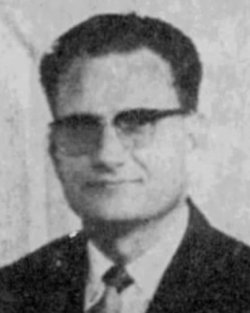
W.E. Best

What Is Christian Slavery?

Romans 1:1-7
W.E. Best February, 16 2003 Audio
0 Comments
Best's Corner

In Wilbur Elias Best's sermon "What Is Christian Slavery?" the central theological theme is the concept of servitude to Christ as understood through the Greek term doulos, meaning slavery or bondservant. Best argues that true freedom is found not in self-determination but in being owned by Christ, who redeemed believers with His sacrifice at Calvary. He supports this doctrine with Scripture references such as Romans 1:1-7, 1 Corinthians 6:20, and Galatians 2:20, which emphasize the believer's identity as a slave to righteousness rather than sin. The practical significance of this teaching lies in the understanding that authentic Christian living stems from a grateful, voluntary submission to Christ, leading to spiritual growth and an acknowledgment of one’s infinite debt to Him.

Key Quotes

“True freedom is to know a person who is higher and better than oneself. Now who is the person? It's Christ.”

“The only true freedom is found in slavery. Freedom is not a product of human craving or action, but it is a condition brought about by divine grace.”

“Every person born into slavery to sin by his first birth…the chosen sinner is born into a loving and willing bond service to the Lord Jesus Christ by the second birth.”

“The believer is compelled to do nothing to complete his relationship with Christ; he is impelled from within to do everything that pleases his Heavenly Father.”

Sermon Transcript

Auto-generated transcript • May contain errors

100%
What is our question today? Our
question today is, what is Christian slavery? What is Christian slavery? Now, this is a very important
one, and following this, and I'll have two messages, I think,
on this. What do you think ought to follow
along the same line? What is separation? What is separation? I have a passage of scripture
I want to read to begin with this morning, seven verses. They're taken from the book of
Romans, chapter one. But we're emphasizing the Greek
word, the Greek noun, doulos. It's translated differently by
some, but the basic meaning just means a plain old slave, S-L-A-V-E. So what is Christian slavery? Let's read the first seven verses
to begin with. And there'll be two statements
in these seven verses that I'll call attention to as we read
them, because we'll be dealing with both of them in the lesson
this morning. Reading the NASB, Paul, a bondservant
of Christ Jesus, called an apostle. set apart for the gospel of God,
which He promised beforehand through His prophets in the Holy
Scriptures concerning His Son, who was born of a descendant
of David according to the flesh, who was declared the Son of God
with power by the resurrection from the dead, according to the
spirit of holiness. Jesus Christ our Lord, through
whom we have received grace and apostleship, to bring about the
obedience of faith among all the Gentiles, for his name's
sake, among whom you also are the called of Jesus Christ to
all who are Beloved of God in Rome, call as saints grace to
you and peace from God our Father and the Lord Jesus Christ. True freedom is to know a person. True freedom is to know a person. who is higher and better than
oneself. Now who is the person? It's Christ. It's Jesus Christ. The Greek
noun doulos means Paul was not only a slave of God, for he was
that, he was a slave of God, but he was owned by God, are
you with me now, owned by God, body and soul. Paul was not his own man because he had been bought with
a price and the price was the death of the Son of God. It was Paul who said to the Corinthians,
Do you not know that your body is a temple of the Holy Spirit,
who is in you, whom you have from God, and that you are not
your own? For you have been bought with
a price, therefore glorify God in your body. That's very meaningful, isn't
it? It's right to the point. The noun doulos refers to a slave
that is in permanent relationship to his master. This word, doulos, divides every
audience into two classes, the saved and the unsaved. There's a division. Every person is born into slavery
to sin by his first birth. The chosen sinner. So we'll begin
where Paul did in his first letter to the Thessalonian believers.
Knowing, beloved, your election or your being chosen by God. So every person born into slavery
to sin by his first birth. The chosen sinner. So we'll start
where the scriptures start. is born into a loving and willing
bond service to the Lord Jesus Christ by the second birth. So we're a slave. I'd rather
be a slave for the Lord than to be one for the devil. Now there's a lot more pleasure
of the flesh by being a servant of the devil, not much pleasure
of the flesh in being a servant or a slave of God. But we have something far more
wonderful, and that's our relationship as a result of what He did for
us at Calvary. Jesus Christ came into this world
and Paul magnifies it in these first seven verses. He does a
tremendous job of showing us what the true gospel really is
and that's why we read it slowly as we did. The believing sinner's identification
with Christ in his death severed his relationship to Satan. It
is severed. Since Christ will never die again,
because He died once in the end of the age to put away sin by
the sacrifice of Himself, He'll never die again. And the believer will never die
because Christ's life is His life. And the Apostle Paul says it
far better than any of us could, because he was inspired by the
Spirit of God to say this in Galatians 2 and verse 20, and
here is what he said, I have been crucified with Christ, and it is no longer I who live, but Christ lives in me. and the life which I now live
in the flesh by faith in the Son of God who loved me and delivered
Himself up for me." That, folks, was fully understood by Paul,
and it's understood by you and me as Christians. The word doulos, is also used
to denote one's acknowledgment of Jesus Christ as His Master
and Lord. He's my Master, I'm His slave. He's my Lord, and I'm His child. Paul applies the term to himself
in Romans 1.1, that is the term that we're using, Galatians 1.10,
Philippians 1.1 and Titus 1.1. It also expresses the condition
of one who has surrendered to the will of Jesus Christ. And there comes a time after
a person has been born of the Spirit, he will yield himself
to the will of God as the will of God is made known to him by
teaching the Scriptures. So it also expresses the condition
of one who has surrendered to the will of the Lord Jesus. Spiritual
servitude. I'm a slave, but it's for spiritual
reasons. Therefore, I call it spiritual
servitude. Must ever be the product of choice. Choice. Notice what I'm saying.
and never that of coercion. Religionists coerce people to
make a decision. Christians do not do that. They don't do that. They don't
operate in that way. I should say informed Christians.
Thus, the believer's surrender is not forced. I don't force you. I'm not going
to try to force anyone to do what's right. I'll simply present
what the scriptures teach, and it's up to someone else to put
the pressure on. Not me. Not me. The Holy Spirit of regeneration
will, for He abides in every believer, and He'll surely put
the pressure on. But you won't be forced to. The
Holy Spirit will continue to work in you, Philippians 2.12,
in such a way that you are willing to do His will because He has
made you willing. And what you do in the way of
work for Him, you will do because He has made you willing to do
that work. So we wrap it all up. with what
the scriptures teach. The new life purchased by Christ
and applied by the Spirit develops in every recipient of grace the
sense, S-E-N-S-E, the sense of eternal debt to whom? Jesus Christ, who stood in your
place at Calvary. There is also the sense of infinite
debt. Infinite debt. We just can't ever do enough
of the Lord. Whatever we try to do. So there
is a sense of personal debt because the Christian can never forget
what Christ has done for him. And there is also the sense of
infinite debt because the Christian's growth in grace and knowledge
of Jesus Christ seems so insufficient in honoring his Master and Lord
properly. Are you ever satisfied? I'm not.
I'm never satisfied with myself. Anything I do, anything I give,
I'm not satisfied. David felt this way when he said
in Psalm 139, 23, and 24, Search me, O God. David, the man who killed Goliath,
and a great warrior for God, did a tremendous work, but also
made some terrible mistakes and committed one awful sin. for which he paid for it while
he was living, and that's where we pay for our sins, while we're
living. We don't pay for them after we're
dead. I'm talking about Christians
now. David said, Search me, O God, and know my heart. I can't search
it well enough. You can't either. Can't search
your own well enough. Then David said, try me and know
my anxious thoughts. Try me, put me to the test. I need to be put to the test.
After I've been put to the test, I can make a better judgment
of myself in the light of your word. So try me and know my anxious
thoughts and see if there be any hurtful way in me, any hurtful
way in me, and lead me in the everlasting way. Folks, that
statement is made by David at the conclusion of one of his
tremendous Psalms, and I won't go into what precedes it. If a man says he wishes freedom
to love, watch this, if a person says, He wishes for freedom to
love and the woman does not desire his approach. It is nothing short
of attempted rape. Did you get what I said? And
folks, the analogy applies to worship. That analogy applies
to worship. Let's see if it does. The Song
of Solomon is a revelation of a chaste and
virtuous love between a man and woman and also between the Christian
and his Lord, which no splendor can dazzle and no flattery can
seduce. The Song of Solomon is one of
the richest spiritual books that you will read in the Old Testament.
And yet, there are some who say it has pornography in it. No,
folks, it has no pornography in it. Let's look at something this
morning. I've used this two or three times before, but I saw
an application that I never made, which I want to make this morning
because it's true. And by the way, the Green Songbook, I Am His, the song I think is
number 56, is it, in the Green Songbook? I'm going to ask each
one of you to make a test. It came to me to do this this
morning. And so pull out the Green Songbook, 56, I Am His
and He Is Mine. Just hold it. Don't read it now.
I'm going to ask you a question after I get through with something
here in a minute. and let you give the answer, and after you
give your answer to yourself, then I'm going to get you to
look closely at the song for just a moment. Christians are
attracted to Christ, not merely for what He has done, but for
the person that He is. He's the Son of the Living God. He's the captain of our salvation. He's our mediator who stands
between us and our righteous and holy God. He is the one who
has settled all the claim against me at Calvary. And He can take me into the presence
of the Father in worship, and I call Him my Father. because
He is my mediator, He's my go-between, He's my surety, He's my all and
in all. Now I want you to look at a passage
of Scripture. Let me read the Scriptures first.
Let's talk about His love and read the Scriptures before we
get you to look at some Scriptures in the Song of Solomon. Open
your Bibles, if you will, please, to Romans chapter 8. I want to
show you something about His love. The love of Jesus Christ
is a reality in the life of a Christian. I said He's the Christ of reality. I want us to begin with the 35th
verse. We can't read all we'd like to
in this great chapter. and it can never be read enough
by us and studied enough. Who shall separate us from the
love of Christ? Notice how he starts off. Who
shall separate us from it? Now notice what he says in giving
an answer. Shall tribulation? No. Our distress? No, that won't
do it. That'll not separate us. Our
persecution, regardless of how severe it may be. Our famine,
I may not know where the next meal's coming from. Our nakedness,
may not have sufficient clothes to close the body. We don't know
what'll happen to us, or how it'll happen to any of us. But
Paul knew this, and the Holy Spirit knew it. and He knows
what to tell us, and He gives us reassurance. So, who shall
separate us from the love of Christ? Tribulation will not,
distress, persecution, famine, nakedness, or peril, or sword. Just as it is written, for thy
sake we are being put to death all day long. We were considered
as sheep to be slaughtered. But in all these things, we overwhelmingly
conquer through Him who loved us. For I am convinced, Paul
said, that neither death, death won't separate us from His love,
life, ANGELS, PRINCIPALITIES, THINGS PRESENT, THINGS TO COME,
POWERS, HEIGHT, DEPTH, NOR ANY OTHER CREATURE SHALL BE ABLE
TO SEPARATE US FROM THE LOVE OF GOD WHICH IS IN CHRIST JESUS
OUR LORD. Now that love is expressed and
demonstrated in the Song of Solomon. As Christians, Christ's love. We are Christ's
love. Christ is one whom we love. He loves us. He's already demonstrated
it. The Father gave us to Him. He
died for us. He's demonstrated it. And so
we love Him. because he loved us and gave
himself for us. Now, the Song of Solomon gives
three stages of Christian love. Three stages of Christian love.
Every Christian here this morning loves the Lord Jesus Christ.
But I don't think that we all have the same stage of love. Some have a different stage or
a progressive stage that others may not have. Do you want to
test yourself this morning? Let's look at something. Turn,
if you will, please, to Song of Solomon, chapter 2, verse
16. This is the first stage of love. And I want to see if you can
see some weaknesses in it as we go along. So first, the new
believer, the baby Christian, the baby who is in Christ, the new believer thinks chiefly
of Christ as being his. Christ is my Savior, his. He's for MY pleasure. That's
the baby's stage of love. I said the baby's stage of love.
Solomon also said a little further on. And here's what it is. In Solomon
2 verse 16. You have this one. Song of Solomon 2 verse 16. This
is the baby's stage. My beloved is mine and I am his. That's the song. I am his and
he is mine. Now what stage of love is that? It's the baby stage. So every
time you sing this song from now on, you're singing the song
that portrays the baby stage of love. Had you thought of it? I hadn't
thought of it until I was studying this this last week. You can't
get away from it. I'm going to prove it before
I get through. Now let's look at the baby's stage of love for
a moment. Why is it that a baby, when it
first begins to talk, or a child just beginning to talk a little
bit, And you say, I love you, and
you mean every word of it. And the baby says to you as the
mother or father, I love you too. And then about that time,
if the child is walking or crawling or whatever, but getting around
and talking a little bit, the baby thinks everything there
is out there is his, it's mine. If you don't believe it, you
can have several toys for several children. But the youngest one
thinks all those toys belong to him. And when he gets it,
he won't turn it, mine, mine, mine. That's the baby stage of
love, folks. Baby Christians are like that.
They think everything is for them. And they get upset when things
do not go their way. So there is the first stage of
love. It's genuine, but it's baby stage. Now I want you to
turn to Song of Solomon chapter 6 and verse 3. Now Christ's ownership, Christ's
ownership takes place in the Christian's thinking. Now Solomon said, I am my Beloved's
and my Beloved is mine. It's not the same, folks. Compare that with the first stage.
And then you'll see the beauty of Song of Solomon, which I had
never seen before. I got into this last week. I
am my Beloved's and my Beloved is mine. What does he do? Then
he says, he who pastors his flock among the lilies. He who pastors
his flock among the lilies. What does he add? He adds something. I'm my beloved's and my beloved is mine. Now, let's look at the third
stage. He recognizes something. So not only is Christ mine, but
he talks about ours now. He includes the lover. You see that? That's in number
two. Now number three, finally, the
word mine, M-I-N-E, is dropped in the perfect assurance. that
to be Christ includes everything worthwhile, because it is external. Thus Solomon said, and here it
is, this is in chapter 7 verse 10, do you have it? Chapter 7
verse 10, I am my beloved's, watch this,
and his desire for me so we go first of all from mine
it's mine I'm his he's mine it's mine and then he goes to the
second I am my beloved and my beloved is mine so I'm his he's
mine and then thirdly he drops mine He drops Himself. He doesn't see Himself now. He
sees too much in the Savior to talk about Himself. It's no longer
me and mine, but now it's His. It's His. So look at it at 7
verse 10. I am my Beloved's and His desire,
His desire is for me. His desire. I'm still included
with the emphasis now on His desire for me. Recognition of
Christ's ownership swallows up every other thought in the life
of the Christian. Every other thought. Therefore,
Christian growth goes from my babyhood love to hours recognizing
Christ but he'd use hours and finally he just drops mine and
puts all the emphasis on my savior that's pretty good theology isn't
it folks can't get around that theology can you That constitutes,
and that alone constitutes spiritual growth. Spiritual growth. It is the responsibility of every
Christian to let everyone he meets know that Christ is first. First, not second. First in his
or her life. You don't have to do it with
just the mouth. If you do it with just the mouth and you don't
live it, then your actions are talking so much and so loud,
they can't hear what you're saying. So, Paul knew Christ better than
anyone else, but he desired to know Him better. I said, Paul
knew Christ better than anyone else. but he always desired to
know Him better. We can never know Him well enough. That's growth, folks. That's
growth. For instance, Paul made this
statement, and I'd like for you to turn in your Bibles to Philippians
3, 7 through 11. I want to demonstrate with Paul's
own words that he couldn't ever ever in his lifetime, know him
as well as he wanted to know him. So listen to what he says. But whatever beginning with the
seventh verse, Philippians 3 verse 7, But whatever things were gained
to me, those things I counted as loss for the sake of Christ.
In other words, Paul did all right for himself as a Hebrew
of the Hebrews and as a religionist, according to Galatians chapter
1, beginning with verse 15 through 17. He made progress. He was known
better than any Christian to understand that he did for Christ
after the Lord called him into the ministry. After having regenerated
him, after his regeneration, he was
not the same person, and then he was called of God to be an
apostle. So, now he said, but whatever
things were gained to me, whatever they were, those things I counted
as lost for the sake of Christ. What else? More than that, He
said, I count all things to be lost in view of the surpassing
value. And folks, that's saying a lot,
isn't it? Of knowing Christ Jesus my Lord,
for whom I have suffered the loss of all things, of all things,
and count them but rubbish, in order that I may gain Christ,
and may be found in Him, not having a righteousness of my
own derived from the law, but that which is through faith in
Christ, the righteousness which comes from God on the basis of
faith, that I may know Him, and the power of his resurrection,
and the fellowship of his sufferings, being conformed to his death,
in order that I may attain to the resurrection from the dead."
Philippians 3, 7-11. Paul first recognized relationship
with God was that of a son, S-O-N, son. He's the one that tells
us in Romans 8 and verse 15, and the first word that comes
out of a baby Christian is, Abba, Father. Abba, Father. And that's what Paul said as
an infant. Father. He recognized God as
his Father. A regenerated son does not need
to do anything to be born of God. But as a purchased slave,
now we're getting back to slavery. But as a purchased slave, he
must do everything to please the one who bought him from,
what? The slave, religious slave market
of sin. And notice I said the religious
slave market of sin. He could say I was a Hebrew of
the Hebrews. I was a religionist, but he didn't
brag about it after the Lord saved him. There are so many religionists
today and they're all proud of their religion. They are as proud
of their religion and their family's religion as they are as human beings. Folks, it's sad, isn't it? It
is sad. You talk to most people today,
well, I'm a Baptist, I'm a Methodist. I'll tell you what I saw this
last week that's a little unusual. I wonder how far it's going.
The Pope and the Muslim getting together. Did you see that? Why the Muslim, the spokesman
for Saddam Hussein, went all the way to the Pope's
office to meet with him. And the Pope gave him a 30-minute
session. That's interesting, isn't it?
I'm anxious to listen to the news for the next few days and
see what all will come from this. You see, they're doing anything
they can to try to turn people against the United States of
America. And boy, they want that billion number of Catholics to
also be against the United States. So these are interesting days
in which we live. So Paul not only recognized God
as his father, and he was a son, Abba Father. That's where sonship
comes in. But he goes further than that. So a regenerated son does not
need to do anything to be born of God. But as a purchased slave,
he is to do everything to please the one who has bought him and
paid for him, and he is now God's slave. I'm God's slave. Doesn't
bother me. I'm so happy that I'm a slave. And I haven't seen anything in
my slavery that I don't like better than anything I see in
the world. So Paul said to the Galatians,
listen to this, in Galatians 1, 13 through 16, to give you
another idea of what Paul gave up. I hear some people talk about
what they gave up to become a Christian or what they gave up to become
a preacher. You have a question mark about
the individual talking when you hear language like that. Here's
what Paul said, beginning with the 13th verse of Galatians chapter
1. For you have heard of my former
manner of life in Judaism. You've heard about it, my former
way of life in Judaism. How I used to persecute the church
of God beyond measure. And he was persecuting the church
when the Lord did something to him. And I was advancing in Judaism. I was advancing in Judaism. Beyond many of my contemporaries
among my countrymen. Being more extremely zealous
for my ancestral traditions. But when he who had set me apart, even from my mother's womb, and
call me through his grace, was pleased to reveal his Son in
me, that I might preach him among the Gentiles, I did not immediately
consult with flesh and blood. Folks, that's a tremendous testimony
Paul gave at the beginning of his epistle to the Galatians. People that he had a great amount
of problems with. Although his son does not do
anything to enhance his relationship with Christ, he must do everything. I said he must do everything
to please Him who bought him. while the regenerated person
is compelled, I said the regenerated person is compelled to do nothing
to complete the relationship, so he's compelled to do nothing
to complete his relationship. He is IMPELLED from within, IMPELLED
to do everything that pleases his Heavenly Father. That's Christianity,
folks. Pure and simple. Therefore, the
word doulos, we're looking at the word doulos again. Slave
involves two different ideas. Number one, the Christian belongs
to a master with emphasis on belongs. And what else? And number two, he is the servant,
servant of his master. 1 Corinthians 6 and verse 20 proves
the first point. For you have been bought with
a price. Romans 1.1, where we began this
morning. proves the second point. Paul,
a slave, doula, a slave of Jesus Christ. So the latter part has been compounded,
compounded by the fact that Paul had been called to be an apostle. Plus the fact that he had been
permanently separated. Now this is in the first verse,
separated. Under what? Or for the purpose
of proclaiming the gospel. So you have both a slave and
separation in the first verse of Romans chapter 1. Now, Jesus Christ takes center
stage, doesn't he? I said, Our Lord, Jesus takes
center stage. The second Christian idea of
a slave is the believer's self-surrender. Self-surrender, I said. Spiritual servitude must be the
product of choice. and never that of coercion. Watch what I'm saying now. This
is very important, very important. So let me give it all again and
let's follow closely. The second Christian idea of
a slave is the believer's self-surrender. Spiritual servitude must be the
product of choice. It was my choice. but I was unable
to make the choice. I willed to do it, but it was
His will that made me willing to do it. Are you with me? You
see what I'm talking about? Very important point. Therefore,
the believer's surrender is never forced because it is the expression
of self-surrender. Now, let's explain this. The
new life purchased by Jesus Christ and applied by the Holy Spirit
develops in every recipient of grace the sense of eternal debt
of gratitude to Jesus Christ. The only true freedom is found
in slavery. The only true freedom is found
in slavery. I'm going to prove it with the
Bible. Freedom is not a product of human
craving or action, but it is a condition brought about by
divine grace. It is unique because it is unsolicited. unsolicited and gratuitously
given. Grace, you didn't solicit grace,
you didn't solicit grace, I didn't solicit grace, it's unsolicited and then it
becomes gratuitously given. On the other hand, the condition
of the unsaved is characterized by what? Number one, bondage. In bondage to whom? The devil
himself. Slavery. A slave of whom? Satan himself. And oppression. And where does it all come from? From knowing the conclusion of
Satan and what will happen to him in the future. Now, our Lord
had a debate with the religious crowd of His day, the religious
Pharisees. His debate is found in the 8th
chapter of John. It consists of 10 different points. I can't look at all 10 of them,
but there's one I want to look at because it deals with slavery,
and that's our subject this morning. So Christ, in His debate with
the Pharisees, certainly shows us something that we all need
to know. In the fourth point of the debate,
and this is found in John chapter 8, beginning with verse 28, Christ said, When you lift up
the Son of Man, Then you will know that I am he." See, they
didn't believe that he was the Christ. They called him Beelzebub. They said, well, we're not a
son of fornication. They even accused him of being
a bastard child. And I could go on and on. Ten
points, all in the eighth chapter of the Gospel of John. But here,
in the fourth one, when you lift up the Son of Man, then you will
know that I am He, and I do nothing on my own initiative, but I speak
these things as the Father taught me. This is Christ speaking as
His Father taught Him. And He who sent me is with me. He has not left me alone, for
I always do the things that are pleasing to Him. As he spoke
these things, many came to believe in him. As he spoke these things,
many came to believe in him. I want to ask you a question.
Were they saved? Boy, what a great revival. The average religionist
today would say, if he's interested in easy-believism, boy, that
was a great revival. Are you ready for the rest of
it? Okay. where these believers say, consider
our Lord's reply. We'll continue. Jesus therefore
was saying to those Jews who had believed him, if you abide
in my word and you are truly disciples of mine, and you shall
know the truth and the truth shall make you free. They answered
him. They didn't like that word be
made free. That got them. They answered
him, we're Abraham's offspring and have never been enslaved
to anyone. The Lord was showing them by
making them see themselves as a result of what they were saying. So they answered him, we are
Abraham's offspring and have never been enslaved to anyone.
How is it that you say you shall become free? Jesus answered them,
truly, truly, I say to you, Everyone who commits sin is the slave
of sin. Boy, that was a mouthful, wasn't
it? And the slave does not remain in the house forever. The son
does not remain forever. If therefore the son shall make
you free, You shall be free indeed. They didn't know what freedom
was. True freedom becomes actualized
in slavery. Are you with me? I said true
freedom becomes actualized in slavery. not to sin, but to Jesus
Christ. And here is what we have in Romans
8 verse 2. For the law of the Spirit of
life in Christ Jesus has set you free
from the law of sin and death. Jesus Christ is the true liberator. He's the only liberator. There
are three kinds of liberty. Three kinds of liberty. We have,
and I've used this before, but there's something I want to emphasize
on one of them. There is liberty without law,
and that's like a dog not on a leash, or not in a pen, just
wound. You know, you have to have some
kind of law. I remember reading in history,
some little country, they didn't want any law, so they decided
to just do away with all law. And they did, and man, people
began to just commit rape and murder and everything going along
with it without any, they didn't have any law. So then they begin
to beg for a law. Because you have to need some
restraint. And man needs restraint. So there
is liberty like a dog. Dog without liberty is like a
dog chained to a post. So law without liberty, liberty
without law, then law without liberty. It's like a dog that's
chained. He becomes a mean dog if he lives
on a chain all the time. And then you have what? Number
three, liberty with law. Now let's show the simplicity
of this. The Christian is free from the
curse of the law, but he is not free from obedience
to the moral law of God. I get amused that these antinomians
today, and there are a lot of religionists who are antinomians,
very antinomians, When you find the law in Genesis
9, 6, that if a man shed a man's blood, his blood is to be required,
and that for perpetual generations, means just exactly what it says. So I don't care if it's Saddam
Hussein, who has evidently been instrumental in killing a lot
of people in the past, with any way he could kill them,
his opposition, And he has a few over here that are manifesting
their disgust with him and willingness to go back and fight against
him. I've heard some of them interviewed. But folks, when a nation kills
a lot of people, just murders them, that nation needs to be
wiped out. That's what I said, wiped out,
by law. I'm not looking for much to happen
in the UN. I don't know why we ever got
into it anyway. We believed in separation in
this country and I don't think we'd ever gotten into such a
mess or been a part of it. But it'd be interesting to know
how the UN is going to vote on this, isn't it? We're seeing
a lot of things unfold, folks. So the Christian is free from
the curse of the law, but he's not free from obedience to the
law. And I'm talking about God's law,
and I think God's laws ought to be recognized by all humans
on the face of the earth. And I'm talking now about the
Ten Commandments. The moral law of God. He is not free from the sins
of the old nature. I'm talking about the Christian.
I'm not free from the sins of my old nature. And you're not
either. That's the reason you go along
for a while, then you make a boo-boo and do a foolish thing here and
another one there. We're just human beings. So we need to be very careful.
When someone does sin, be sure it is a Christian who has sinned,
and not just a religionist who has sinned. But if he is a Christian
who has sinned, he needs to be pointed to the truth. And if
he is a Christian, he will get right. He WILL repent. If he doesn't repent, boot him
out. He doesn't need to be a member
of the church. I'm looking at the scriptures
as a whole. I'm talking about law. I'm talking
about being a slave to the law. To what law? The moral law of
God. I'm glad we have the moral law
of God, aren't you? But we're not supposed to see
it, not supposed to talk about it, we're not supposed to practice
it in this country. So look out. I don't know just
how far we are away from God's judgment on us. Are you with
me? So the old nature, our old nature,
gonna do a lot of foolish things. Then there are troubles that
come to you and me on account of indwelling sin. Problems that
we have. Then there are rods of affliction
that are sometimes executed on us. I said rods of affliction. God knows when and what to do. And all of this in the sphere
of reverential love. Reverential love for God. Now,
the legalist, here's the simplicity of it all. The legalist obeys
in hope of achieving life in the sphere of a slavish fear. Let me say that again. The legalist. Well, all the Muslims are legalists. All false religions are legalists. They believe you've got to do
something. You've got to do something in order to make their heaven.
That's true of the Muslims. That's true of any false religion,
Buddhism, Shintoism, or any other ism that ought to be a wasm.
They're all alike. The only true And I'll use the
word religion here guardedly right now. The only true religion,
folks, has to do with Christianity because it embraces Christ. Christianity
embraces Christ. No Christ, no true religion. No truth. Whatever you believe
about Christ determines what you are and what people are.
But the legalist obeys in hope of achieving life in the sphere
of a slavish, F-E-A-R sphere. You and I are different people
altogether. God chose us, regenerated us, converted us,
set us apart, for his honor and glory. And you can't have that
teaching if you don't believe in Jesus Christ. I think I'm
going to close with something this morning. I'd like for every one of you
to make a little chart. I want you to get something out
of our service this morning. I want you to take a piece of
paper I'll read the text in a moment. I'm closing with it, with magnifying
Christ. I want to raise the question
and open your Bibles, if you will, to 2 Corinthians 5.21. 5.21. Let's read the text. We have time to do this. Take
me about 10 minutes to do this. In order to really get the connection,
I'm going to have to read a few more verses though. Let's begin
with verse 18. But the 21st verse, put down
on your sheet of paper that you have. Look at me just a moment. Put down 2 Corinthians 5.21 up
at the top. Number one, well, put father
on your left-hand side. Start with the father. Son, and
then man. Father, son. I could say the
elect would be all right, but you start with man. I'll let
you put whatever word you want to put. Now, I'll fill that in
for you in just a minute. Let's read these verses after
giving you that. You got Father, Son, and then the sinner. Just
put the sinner. Father, Son, and sinner. Let's
read now verses 18 through 21. Verse 21, we'll zero in on it. Now, all these things are from
God, who reconciled us to Himself through Christ, and gave us the
ministry of reconciliation. namely that God was in Christ
reconciling the world to himself, not counting their trespasses
against them, and he has committed to us the word of reconciliation. Therefore, we are ambassadors
for Christ. I wish that all the young people,
even though you're not a Christian, would make this chart because
it'll help you. I guarantee you it'll help you to make a decision
about yourself. We are ambassadors for Christ
as though God were entreating through us. We beg you on behalf
of Christ be reconciled to God. Now here's the text. He made him. Who made who? What? He made him. That means the Father
made Christ. Are you with me? in the light
of the context, that's why we read the context, the immediate
context. He made him who knew no sin to be sin on our behalf that
we might become the righteousness of God in him. Now I want to
give something, if you can't rejoice in this, folks, I might
be wasting my time trying to teach. I found it in some of my old
notes, but I hadn't fully developed it. And then I got... And I'll tell you what I was
doing when I got into it. Meditation is a tremendous word. The best illustration for meditation
is the cow chewing her cud. And if I had time to develop
that for you this morning, you might be surprised. even from
dictionaries and all, about the could and so forth. But you know,
a cow just graze and graze and eat grass. And on some of these
places that we pass, going to Conroe and different places,
little ranches, they'll eat that coastal Bermuda, I think they
call it, as it grows so prolific. And about 10 o'clock in the morning,
if it's summertime, they're so full of just, I mean really getting
big mouths full, and their stomach is protruding, they'll start
lying down. Then you'll see just a lot of
them lying in there. And they start chewing. You know
what happens before they start chewing? I won't describe it for you now,
but you need to study it. See, I was an Ag student, so
I could go into this with you a little bit. And this is about
the only thing profitable that has been profitable that I got
from my three years of Ag. But anyway, they'll chew it. What they're doing, they're bringing
up what they have taken in fast. And they're re-chewing it before
it goes into another stomach for digesting. So they're pulling
up, re-chewing their food. What do you do when you get through
listening to a message? Do you go home and spend some
time meditating during the afternoon on what you've heard? Or do you
just do something else and forget about it until next week? If
you don't meditate, folks, I've learned the art of meditation
and what it does. I'm going to share something
with you on this. Okay. Now, father, son, center. Put center. Now, that's number one all the
way across. Put now down below the name,
father, son, and center, number one. Then drop down. Notice now,
keep it horizontal. One, one, one. See? Father, son,
center. Number two, put down two, number
two, but leave some room now under Father, Son, Spirit. And
number three, Father, Son, Spirit. That's number three all the way
across horizontally. Now, let's fill this in. Let's fill this little chart
in. But before we start doing that,
I want to ask you a question. How would you interpret verse
21? He made him who knew no sin,
you don't have any problem with that, to be sin. How would you explain that to
somebody? It's not as easy as you might
think. who knew no sin to be sin on
our behalf that we might become the righteousness of God in him.
Now we're gonna fill in our little thing for you, you can meditate
on it this evening. I wrote it out here. Under father, number one is sovereignty. He's the sovereign God, sovereignty. And then I'm using this phrase
in verse 21. He made Him. That's all you use right now. We're just taking this verse
now. We're dividing up the verse. I'm trying to give a little lesson
on studying the Scriptures. So, He made Him. That's the Father
made Christ, isn't it? You understand that? So you can
put that also under that. You just scribble now, but you
can straighten it out later. So, sovereignty. He made him. The sovereign God made Christ.
And just stop right there. Now go over to the next son,
purity. Put the word purity. For number
one, under son. Purity. And then, knew no sin. Put the phrase, take it out of
the text here. See, He made Him, He made Him
who knew no sin, who knew no sin. That's purity, isn't it?
Knew no sin. Just write those words. Then
you go on over to sinner. And you can say, what would you
say here? Now look at the text again. He
made Him who knew no sin, to be sin on our behalf so you could
say this made he became our inner uh what uh my thought left me for
a minute i didn't know i was going to really do this but i'm
sharing it with you because we had time to do it uh read the
verse on our behalf on our behalf on our behalf so made sin for
the in other words he was made sin in behalf or on behalf of
the elect that's that's the sinner see now go back to number two
under the father it's justice so the father is sovereign and
then there is justice justice is number two the first one under
the father and the next one is suffered suffered under son,
and then number two under sinner is delivered. So the main words
are justice suffered and delivered. Under the number one across is
sovereignty, sovereignty, purity, and sinner. Two is justice suffered
and delivered. Let's go ahead and take number
three and give you the words. You have grace under the Father,
merit under the Son, M-E-R-I-T, and you have position of righteousness
under number three, the sinner, that is, the elect. Now, let's
fill them all in. Let's see if we have them all. We're going across now from sovereignty
son to man, under number one. So, the father made the son, made Christ to be sin. And then
the son, purity. He knew no sin. The sinner, Christ, became the substitute,
you can use different terms, I'm just throwing some out, different
ones, made sin for the elect, and he was made sin, simply means
that he stood in our place, and then go back to number two,
justice under the Father, so he made Christ to be sin for
us, that is the elect, or on our behalf, And then under the
son, he suffered, he was made to be sin. Or he was treated
as a sinner. See, you get into imputation
here that we've already studied. And you have to use imputation
here, I'm sure you understand that. So, made to be sin or... And then number three, delivered.
See, justice is satisfied. See, justice satisfied the father. And then it was through the suffering
of Christ that the elect will be delivered from sin and guilt
or on behalf of the elect. Then go back to number three.
Under Father, it's all of grace, isn't it? That we might become
righteous. And it's by grace that we become
righteous. That's under the Father. And
the merit of Christ It's merit, and we're made righteous in Him. Here Christ comes up again. It's in Him that we're made righteous.
And then for the sinner, we're looking at position, not condition,
but position. So positionally, we've been made
the righteousness of Christ in Him. So that's our position,
not condition. Now, that really takes care of
the text, doesn't it? Look at it closely. And it's
all in there. All of those things are in that
one text in order to really understand the text. So I'll let you meditate
on that all this afternoon. Now, I have one more message
on slavery that I'll give next Sunday, and then we'll get into
separation. And here is where It usually
results in real separation. A separation sometimes it just
doesn't stop separating. Let's stand for the benediction.
W.E. Best
About W.E. Best
Wilbern Elias Best (1919-2007) was a preacher and writer of Gospel material. He wrote 25 books and pamphlets comprised of sermons he preached to his congregation. These books were distributed in English and Spanish around the world from 1970 to 2018 at no cost via the W.E. Best Book Missionary Trust.

Comments

0 / 2000 characters
Comments are moderated before appearing.

Be the first to comment!

33
Joshua

Joshua

Shall we play a game? Ask me about articles, sermons, or theology from our library. I can also help you navigate the site.