Bootstrap
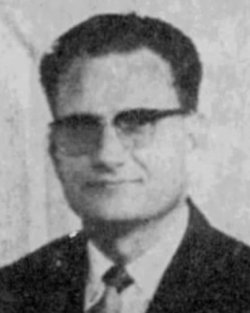
W.E. Best

Does God Will That All Men without Exception Be Saved?

1 Timothy 2:1-4
W.E. Best November, 3 2002 Audio
0 Comments
Best's Corner

The sermon by Wilbur Elias Best addresses the theological question of whether God wills that all men without exception be saved, based on 1 Timothy 2:1-4. The key argument is that while the text states that God desires all men to be saved, this desire must be interpreted in light of divine sovereignty and election. Best argues that this “all men” refers not to every individual but to individuals taken from all classes and nations, as supported by other Scriptures, including Romans 9, which emphasizes God's unilateral election. The practical significance of this doctrine lies in understanding that if God’s will was dependent on human choice, then no one would be saved, affirming the Reformed doctrine of irresistible grace and unconditional election.

Key Quotes

“God's will is that which is beyond the will of man to control. The sovereign God is carrying out one purpose by one plan on one principle to accomplish one goal.”

“If the will of God was dependent on the will of man, no one would be saved.”

“The salvation of 1 Timothy 2.4 is not a possible salvation for all without exception, but it is an actual salvation for the chosen ones by God the Father.”

“Methods must not be exalted over the message. When they don't hear the truth...what about all those people standing?”

Sermon Transcript

Auto-generated transcript • May contain errors

100%
Open your Bibles, please, to
1 Timothy. I have another question that
I'm raising today. I do not know how long we will
be studying it. But I want to read the first
four verses of 1 Timothy chapter 2. First four verses. Third and
fourth verses observed carefully as we read them. First of all, then, I urge that
entreaties and prayers, petitions and thanksgivings be made on
behalf of all men, for kings and all who are in
authority, in order that we may lead a tranquil and quiet life
in all godliness and dignity. This is good and acceptable in
the sight of God our Savior, who desires all men to be saved and to come to the knowledge
of the truth. Look at verse 4. God desires all men to be saved
and to come to the knowledge of the truth. What's your interpretation of
that? Could you interpret it? Could
you answer the question that I have raised and we'll be dealing
with it today and maybe another Sunday or two? Does God will
that all men without exception be saved? How would you answer? Before
we get into the study of that question, I was looking at something
in my Greek part of my New Testament, and most of you have this interlinear
in your possession, and there is something that I
would like to share with you, something that I got together
a long time ago. And when I say a long time ago,
I'm talking about from 30 to 40 years ago. And that's a long time. I have 10 questions that I have
put together as a result of some study I was doing many years
ago. And then after I wrote the questions,
I started looking through some of the outstanding works that
I have in my library to see what they had to say about
these things. And I ended up by selecting two
men who were recognized at that time as being outstanding theologians. One, associated with Dallas Theological
Seminary, and the other, the past president and the Baptist
Hour speaker for many years of the Southern Baptist Convention. And folks, let me read these. Maybe this will whet your appetite
for what we want to do. I think when we get into the
study of the question this morning, and from what many of you have
been saying to me over the last two or three weeks, you appreciate
what I'm doing, is trying to condense much study in the past
into as few words as possible dealing with pertinent subjects,
very important subjects. in these last days when we're
witnessing the greatest apostasy that we have ever witnessed in
our lifetime. I'm going to just give you the
questions. In fact, I'm going to have them printed for you
so you won't have to, but listen if you can and then see how you
would answer. You can answer it either yes
or no. I'm not asking anybody to do this, but I'm asking you
to do it. Test yourself. Number one, are all members of
the human family potentially elected to God's plan of salvation? Now watch my terminology because
it's terminology that is very much in vogue today. Are all
members of the human family potentially elected to God's plan of salvation? Would that be a yes or a no? I'm not telling you which this
morning. I want you to test yourself to
see if you'll be in a position to give a clear biblical interpretation
as to what you believe concerning these things. Number two, was
Christ the only person ever elected? Only person ever elected? Yes or no? Number three, Does election take
place at the moment of salvation? Does election take place at the
moment of salvation? Is it yes or no? Number four. Does election say
that God's plan for your life? continues as long as you live? Yes or no? Number five. Are regenerate Jews,
regenerate Jews, a part of God's elected plan? Yes or no? Number six. Does election involve
a God who is love and a man who is morally responsible? Yes or no? Seven, does election ever appear
in the Bible as a violation of the human will? Yes or no? Eight, did God elect
a people to make known his elected plan of salvation? Yes or no? Nine, does the free
will of man determine the final result of God's elected plan
to both salvation and evangelism? Yes or no? Number 10, this is
the last one. Can man elect himself to be both
saved and fruitful? Yes or no? Very important questions. Very important. Now, looking
at the fourth verse, of 1 Timothy chapter 2 this morning. It was just this last week. I
was going across the dial one night before we retired, and you might know, guess who
was on, showing his classics. His classics. And it was one
of his evangelistic campaigns about 25 years ago, 20 to 25
years ago. Now you know who I'm talking
about. And when I turned across, he
was reading this passage of scripture. And do you see why I stopped?
I stopped right there and listened. And then I listened to his 20-minute
sermonette. if you can call it that, and
his 10 minute to 15 minutes of pleading with people to come,
not to the altar, not to the down in front, just coming in
front necessarily, but coming before this platform. There must
have been at least 30,000 people in the stadium, and folks, I
would say almost half of them were standing around that platform.
They had made a decision. He let them know they had made
a decision. They used their will. And this was His text. Verse
4 was His text. So I said, I'm going to use that
for one of our questions. Does God will that all men, without
exception, be saved? Mr. Graham said yes. I say no
to you this morning." Now, can I prove it? What does the text
teach? It seems to say that He does. He does desire all men to be
saved. I hope you'll listen. If the
Word of God doesn't convince you, and I assure you, we'll
handle the Word of God. and not just try to disprove
what someone else has said, but to the glory of God, give the
truth that should be expounded in these apostate days in which
we live. I've made up my mind. If the
Lord, just as long as He lets me live, I don't know how long
it'll be, I'm going to do what I've done for the last couple
of weeks. I'm going to continue to do it, raising a question,
and then look at that question in the light of the Scriptures. So let's begin our exposition.
I hope that the Lord will bless you as much as he did me in just
getting it together. God's will is that which is beyond
the will of man to control. That's the way I believe in starting. I said God's will is that which
is beyond the will of man to control. The sovereign God is carrying
out one purpose by one plan on one principle to accomplish one
goal. The will of God goes before all
other wills. It goes before all wills. His will does not depend on the
wills of others, but their wills depend on the
will of God. Your will as a Christian depends
on the will of God. So the will of God is absolute
and independent. Nothing takes place without the
will of God. Nothing. Absolutely nothing. Listen to this tremendous passage
of scripture in Daniel 4.35. All the inhabitants of the earth
are accounted as nothing. but he does according to his
will in the host of heaven and among the inhabitants of earth. And no one can ward off his hand,
or say to him, What hast thou done? Now folks, that puts us all where
we belong. God's will is the first will
in any movement, any movement. Even the renewed will of the
Christian depends on the will of God for guidance. that Christian's will must be
in subjection to God's revealed will. I said revealed will. Paul said in Philippians 2, 12,
and 13, So then, my beloved, just as
you have always obeyed, not as in my presence only, but how
much more in my absence, Work out your own salvation with fear
and trembling, for it is God who is at work in you, both to
will and to do. To will and to do is the King
James, and to work is the new American standard. For His, whose,
His, God's good pleasure, HIS good pleasure. Looks like most
religionists today, all they can think about is THEIR pleasure.
What THEY want to do. They don't even consider God
in it. Folks, I'm going to speak very
frankly. Since this is true of the renewed
will, HOW MUCH MORE TRUE OF THE UNRENEWED
WILL WHICH IS ENSLAVED TO SIN AND HAS NO SALVATION TO WORK
OUT. He doesn't have any salvation
to work out. That doesn't mean working out
our own plan of salvation, folks. When you have salvation, you
work it out like you work out a cotton crop. You have the cotton
crop already growing, you work it out. Well, the Christian life
is to be worked out by you and me in fear and trembling. Objectors to divine election
use 1 Timothy 2, 4, which says, God desires all men to be saved
and to come to the knowledge of the truth. They assert that if God willed
all men to be saved, but by an antecedent secret will, decreed
to save only some, He would be inconsistent. I've had that said
to me. Those who advocate this view,
or the view that God selects some and leaves others, Make
God meaner than the devil. Now would you like for me to
tell you who said that? It's in print, folks. He's the
head of one of the major denominations in America and the world today. I'll just describe it a little
bit for you. My brother-in-law and I were
having an argument years ago, he was a Methodist preacher,
over this very thing. He said, well, you haven't studied
theology enough. I said, well, I might say the
same about you. So he was attending Perkins School
of Theology, SMU, in Dallas at the time. Clarence brought me a book written
by one of the professors. And I had the privilege of reading
it, if you can call it a privilege. But it did help me. It helped
me to dig deeper into the subject and give a better answer against
it. Now, you would make a lot of
folk, and I realize I don't want this in print. I don't want lawsuits
being brought against me. But I have the man's name that
wrote the book, and he was a professor, and I'll give you his name. His
name was Oliphant. And he was Clarence's teacher.
I read that book, and when I came across this, I changed it a little
bit because I have the privilege of doing that. He said, that election, anybody
who believes in election, that he selects some and he passes
by others, that makes him meaner than the devil. Folks, I've read some just that
raunchy. Do you know who I'm talking about?
Do you know what denomination I have in mind? I'm talking about
the Methodists. Well, who was the starter of
the Methodist Church? That's the man, folks, who said
it. Well, when I showed that to Clarence,
I said, Clarence, what are you going to do with a statement
like this, as my brother-in-law? He said, well, that's going too
far. But he didn't change. So think it, let that ring in
a little bit, just let it ring in your ears. Those who advocate
the view that God selects some and leaves others makes God meaner
than the devil. According to Arminianism, the
will of man is balanced between right and wrong. Watch this,
please. According to this theory, The
will can choose to go either way, either way. The truth is, watch what I'm
saying, the sinner can choose to go only in one direction,
and that is D-O-W-N, down. Whatever he chooses, it's down. In his unregenerate state, everything
he chooses leads him further down. If you believe in depravity,
you don't argue with it. You don't argue with it. He must be drawn to goodness. Watch this. Drawn to goodness,
I said. because he has no free will to
good. The sinner is passive to spiritual
things because he has no free will to do spiritual things. He has a depraved will. If the sinner has a free will,
the doctrine of the effectual call is false. Now watch what I'm saying. I
want to repeat it. If the sinner has a free will
to do good or bad, the doctrine of the effectual
call is false. That means the sinner's call
is effectual. His call is effectual. And he
calls God when HE is ready. They'll tell you, God can't do
anything for me until I let Him. Now, folks, when you teach like
this, what I'm giving you this morning would split the average
church fort away from crooked today. All I'm asking is you
search the Scriptures and listen closely as we develop it this
morning. If the sinner has a free will
to either receive or reject Christ, does his receiving Him give eternal
security? That's the Baptist view. Most
Baptists. Now listen to this. If it does,
he loses power. He loses the power to reject
Christ. Now think that one through for
a while. That'll keep you busy. The promoter of free will. says in substance. Listen to this in Romans 9, 18
through 24. I'll tell you what I want you
to do. I want you to open your Bible to Romans 9. Let's read
it together. We need to read all this passage. Romans chapter 9, and we'll begin
reading with verse 18. So then he has mercy on whom
he desires, and he hardens whom he desires. Hardens. Now watch the next verse. You
will say to me then, why does he still find fault? For who resists his will? On the contrary, who are you,
old man, who answers back to God? The thing molded will not
say to the molder, why did you make me like this? Will it? Or does not the potter have a
right over the clay? to make from the same lump one
vessel for honorable use and another for common use. What
if God, although willing to demonstrate his wrath and to make his power
known, endured with much patience vessels of wrath prepared for
destruction? And he did so in order that he
might make known the riches of his glory upon the vessels of
mercy, which he prepared beforehand for glory. Even us he also called
not from among Jews only, but also from among Gentiles." Now
folks, did Paul know what he was talking about? Did he speak
the truth? I guarantee you the 9th chapter
of Romans will certainly separate the sheep from the goats in a
hurry. And that's why they avoid it. It won't disturb anybody. Looking at the text again in
1 Timothy chapter 2 verses 3 and 4. The text, God our Savior who
desires all men to be saved and to come to the knowledge of the
truth. Two things, two things. God's desire that all men be
saved and second, His desire that man come to the knowledge
of the truth. Very few study the context of
the overall context of Scripture to find the answer. Now what
we're doing this morning, we're looking at the overall context
and we'll give you a little of it this morning. The salvation referred to in
this text does not refer to all men individually. Now watch it. But some from every class, nation,
and order of men. Big difference, folks. Big difference. Let me stop here and just give
you a simple application of that. When you turn in your Bible to
John 1.29, Behold the Lamb of God that takes away the sin of
the world. W-O-R-L-D. Cosmos. World. The Lamb of God that takes away
the sin of the world. Does the word Cosmos there mean
every individual without exception? If it does, we better go home. We've all got it made. Are you with me? Now, let me
give you another passage where the word Cosmos is used. In 2
Corinthians chapter 5 beginning with verse 18 through the last
verse, Paul talks about the reconciliation of the world and in the light of the context,
the world there is the world of believers, not every individual
in it. So if God wills the salvation
of all individually, how is it that many resist His will? Let me say that again. If God
wills the salvation of all individually, how is it that many resist His
will? And listen to this. And I'm reading
again. from the book of Romans, and
I want to read you verses 13 through 22. And listen to this. Jacob I loved, but Esau I hated. Starting with
verse 13. What should we say then? There
is no injustice with God, Is there? May it never be. God forbid is the way the King
James says it. For he says to Moses, watch this,
I will have mercy on whom I will have mercy. And I will have compassion
on whom I will have compassion. Who's speaking? Paul by the inspiration
of the Spirit. So then it does not depend on
the man who wills or the man who runs. Underscore that, don't
ever forget that. Watch that. So then it does not
depend on the man who wills or the man who runs, but on God
who has mercy. Now folks, that can't be refuted. For the scripture says to Pharaoh,
now he's going to give an example. The scripture says to Pharaoh,
for this very purpose I raised you up to demonstrate my power
in you and that my name might be proclaimed throughout the
whole earth. So then he has mercy on whom
he desires And He hardens whom He will, or whom He desires. You will say to me then, why
does He find fault? For who resists His will? On
the contrary, who are you, O man, who answers back to God? The thing molded will not say
to the molder, Oh, how classic that is. Why did you make me like this? Will it? Or does not the potter
have a right over the clay? To make from the same lump one
vessel, notice this, one vessel for honorable use and another
for common use. And Pharaoh was one for the common
use in the context. What if God, although willing
to demonstrate His wrath and to make His power known, endured
with much patience vessels of wrath prepared, prepared for
destruction? I didn't say it, folks. God said
it. I believe it. The salvation of 1 Timothy 2.4
is not a possible salvation. It's not a possible salvation.
For all without exception. But it is an actual salvation
for the chosen ones by God the Father. If the will of God was dependent
on the will of man, no one would be saved. No one would be saved. I'll show
you why. Because salvation would be of
Him who wills and of Him who runs, which would contradict Romans
9.16. which says, so then it does not depend on the man who
wills or the man who runs, but on God who has mercy. Folks, that's it. No way of getting
around it. That's it. The favorite statement by Arminians
is, and I quote, free grace makes man nothing more than a puppet
on a string." End of quote. Have you ever heard that? I've
had it said to me so many times in 60 years. I want to answer
it this morning in the best way I can. So the favorite statement by
the Arminian is, free grace makes man nothing more than a puppet
on a string. Well folks, That is more honorable
than what the Arminian says, making God a puppet on the string
of a swill. Now, which is more honorable? That answers it, folks. There is great emphasis in today's
religious meetings on coming to Christ. Follow me closely
here because it may touch some of us that need to be touched
on this very point. I said there is great emphasis
in today's religious meetings on coming to Christ. What does
it mean to come to Christ? However, coming to Christ is
not a physical act. Coming to Christ is not a physical
act, such as raising the hand. Have you ever seen that used? Raise your hand. Walking the
aisle. Going to the mourner's bench. And now, after having seen Billy
Graham the other night and what he did, I'll put a conclusion
to this. are the act of come and stand
before this platform." End of quote. Made popular by Billy
Graham. And out of some 30-some thousand
in the ballpark, half of them were standing around that platform
in the middle of the football field. Were they saved? Is that coming
to Christ? Well, they counted it as coming
to Christ. You're showing by your coming
and standing here with others. You should have seen the drove
of them going down. Let me make one statement to
conclude that paragraph. Methods must not be exalted over
the message. I said methods must not be exalted
over the message. When they don't hear the truth,
and they didn't hear it that night, what about all those people
standing? Now let me tell you what I personally
experienced. When Billy Graham came to Houston,
I think it was in 51 or 52, for his first campaign, I'm just
guessing now, somewhere in the early fifties anyway. The church that I was pastoring
at that time wanted me to go in their planning meeting. So
I went to one of the planning meetings just to see and to listen. When Mr. Graham got up, and I
call him Mr. Graham, that's all I can honestly
do. When Mr. Graham got up to speak,
he made the statement that he would not come to Houston in
this campaign unless all denominations, and there were many denominations
there at this planning meeting, Methodists, Episcopalians, Pentecostals,
Baptists, Lutherans, just on and on and on we could go. And
they all identified themselves. I just sat there. I wasn't about
to stand up and identify myself. I was there to listen. But when
he got through making that statement, he would not come unless, and
Catholics, he included Catholics, all support the meeting, he wouldn't
come. I got up and walked out. And never attended another one. Don't you think I didn't get
some hot discussions? And members of the church were
against what I did. But I'll do it again, I would
do it again. Okay, after the meeting was over,
we got a little stack of cards of people that they found who
had made their profession, you know, had walked the aisle or
held up their hand or walked before the platform. And there
were 20-some names of people right around in the close proximity
of Tabernacle Baptist Church. When I got those cards, I said,
I'm going to do something. I'm going to visit these people.
I want to see what they really, what kind of decision they made.
And folks, I dealt with them as nicely as I could. I asked
them, you made a profession of faith that night. Did something
take place in your heart and life? I never got a one to come
to our church, not one, when I got through discussing and
showing the scriptures. And they didn't want what I had
to say. They were moved by Billy Graham. They weren't moved by
the Word of God, which I gave them in the home. Are you with
me? Ignorance of biblical principles
is a wide-open door for deception to enter. Biblical teaching is something
uncommon in our generation. The gospel of Christ cannot be
geared to human ability or wisdom. Paul said in his first letter
to the Corinthians, chapter 15, verses 9 and 10, For I am the
least of the apostles. I want you to see what real humility
is. I am the least of the apostles,
who am not fit to be called an apostle, because I persecuted
the church of God. But by the grace of God, I am
what I am. And folks, I say to you this
morning, I am what I am by the grace of God. And His grace toward me did not
prove vain, Paul said. And I want you to know God's
grace toward me certainly has not proved vain. But he says, Yet I labored even
more than all of them." He wasn't bragging. Paul wasn't bragging. Yet not I, watch this, but the
grace of God with me. No one can boast within himself
over the fact that he is saved while others are lost. This also applies to the ministry.
Preaching has a goal, which is the conversion and edification
of the elect. Simply finding the sheep and
teaching them the scriptures. Human methods are not used in
reaching, watch this, human methods are not used in reaching the unregenerated. You don't have to have them.
See, they use methods to reach unregenerate people for their
religious views. So let me say it again with all
the emphasis of my soul. I said preaching has a goal,
which is the conversion, not regeneration. I said conversion. edification of those who have
been regenerated by the Spirit of God. It's not to get decisions
and people to say, yes, I want to be baptized, and then you
count how many did you baptize, not how many. Boy, I've heard
those remarks. How many did you baptize this
year, preacher? Folks, we better look up. We better look up. Human methods are not used in
reaching the regenerated. They only build super goat barns. Let me say it again. Human methods. And I've had human methods given
to me. Boy, we used to get them every
week from the headquarters. And we were supposed to use them.
I never used one of them. So I said, after some time, I
better get out of this mess. Human methods are not used in
reaching the regenerated. And the reason is they only build
super goat barns. There is a reason for the assembly
at Thessalonica. I want to close now with giving
you something that you can't refute. I'm not worried about
anybody refuting what I'm going to give. Anybody. I don't care who it is. That's
how dogmatic I am. That's how assured I am of what
I'm going to give you. I want you to open your Bibles
to 1 Thessalonians chapter 1. We're going to do some reading
and some real study in just a few minutes that we have to give
it. 1 Thessalonians chapter 1. And
we'll begin with verse 4 just to conserve time. Knowing, brethren beloved by
God, His choice of you. How did Paul know they were saved?
How did he know they were chosen? We want to find out just how
he knew. And you can know how he knew.
Knowing, brethren beloved by God, His choice of you. For our gospel did not come to
you in word only, but also in power and in the
Holy Spirit. Do you see what that verse is
saying? Is that the way the message came to you? Just as you know what kind of
men, we prove to be among you for your sake. Now let's go back and read it
again. Our gospel did not come to you in word only, but also
in power. And that, of course, that power
was the power of the Holy Spirit. And with FULL CONVICTION. Folks, what we need today is
people with full conviction. We don't have many. just as you
know what kind of men we proved to be among you for your sake. Watch verse 6. You also became
imitators of us and of the Lord. Now that's a tremendous testimony.
Paul was certainly living a life that should be lived for the
honor and glory of God, and it was. And then they were manifesting
the same kind of life. Having received the word in much
tribulation. Now if you want to know the problems
they had, you have to go back to the 17th chapter of Acts and
there you have the history of the church of Thessalonica in
its organization. And there was tribulation. So
they received the word, the message God had for them in much tribulation. It wasn't easy. Today it's easy
believism. no opposition, just easy believism. Watch this, in much tribulation
with the joy, with the joy, I want you to know when you know the
truth you have a joy that nobody can take from you, of the Holy
Spirit, so that you became an example. The Church at Thessalonica is
the only Local assembly in the New Testament called a model
assembly. Only one. And that's the word tupos, tupon,
which comes from tupos, meaning example, or example, or model. to all the believers in Macedonia
and Achaia, for the Word of the Lord has sounded forth from you,
not only in Macedonia and Achaia, but also in every place your
faith toward God has gone forth, so that we have no need to say
anything, for they themselves report. about us, what kind of
a reception we had with you, and how you turned to God from
idols to serve a living and true God, and to wait for His Son
from heaven, whom He raised from the dead, that is, Jesus who
delivered us from the wrath to come. Folks, that is a tremendous
portion of Scripture. So what do we have? What do we have? All men cannot
refer to every individual because there is the broad way
that leads to destruction and many enter in at it. Are you with me? That's Matthew
7.13. Furthermore, there are those
who go away into eternal punishment, Matthew 25, verse 46. So the
second part of 1 Timothy 2, verse 4 says, and to come to the knowledge
of the truth. The knowledge of the truth is
experiential. Christ's reaction to being rejected
is found in Matthew 11, 25 through 30. God reveals some truth to
some. Deuteronomy 29, 29. He conceals
truth from others. Matthew 11, 25 through 27. Christ
prays God for concealing the truth from some. NOTICE THAT! THE SON OF GOD PRAISED THE FATHER
FOR CONCEALING THE TRUTH FROM SOME. HOW CAN HE DIE FOR EVERYONE? FOLKS, I'M JUST SHOWING YOU THERE
ARE TWO SIDES TO THE SUBJECT. WE BETTER LEARN TO SEARCH THE
SCRIPTURES. SO WE'LL READ VERSE 25, LISTEN
TO THIS VERSE, MATTHEW 11, 25. I praised the old father, LORD OF HEAVEN AND EARTH, THAT
THOU DIDST HIDE THESE THINGS FROM THE WISE AND INTELLIGENT,
AND DIDST REVEAL THEM TO BABES." I never will forget, one day in a classroom, the teacher was making some terrible
statements about Isaiah. the book of Isaiah. He said there
are two Isaiahs, two books of Isaiah. And he said, you know, they had
the concept of Christ's death, and it didn't mean to them what
it does to us. Well, to unregenerate, that's
true, but not to regenerate. So this professor kept making
some statements, and sitting right behind me was a tall fellow
pastor of a little country church, and he said, may I ask a question? And the doctor said, and I won't
call his name, the doctor said, yes, you can raise your question.
Doctor, don't we have a divine commentary on all of this that
you're discussing in the eighth chapter of the Acts of the Apostles? He looked at him, the professor,
and he said, yeah. He said, well, how about reading
it for us? So he got over there, and man,
he messed him. He didn't want to read it. You know why? When you read the
eighth chapter, it talks about Isaiah 53. You'll find out that
somebody heard the truth And it had to do with Jesus Christ.
That's who he was discussing. So here was a man behind me. Looked like he was about 40,
45, and I was about 25 at the time. And he knew more spiritual
truth than the professor. The professor was one of those
liberals. It was not the will of God that
every individual person be saved, because He did not choose every
person to be saved. If He chose some, He had to pass
by some. However, it is God's will for
every person He chose and gave to Christ to come to a knowledge,
a knowledge of having been chosen. Paul knew that the people in
Thessalonica had been chosen. They proved it by their lives. So the way by which Paul knew
the election of the Thessalonian saints must be the method by
which we know our relationship to the Godhead. When Paul beheld
the graces that he had seen in the believers, he said, knowing,
brethren, beloved of God, His choice of you. Verse 4. Paul's reason for knowing
that the Thessalonians were chosen ones is given in 1 Thessalonians
1, 5. For our gospel did not come to
you in word only, but also in power, and in the Holy Spirit,
and with full conviction, just as you know what kind of men
we prove to be among you for your sake. Only when persons
pretend to be assured of their election on any other grounds
then can evil arise from it. For example, if a person based
his assurance on a dream, vision, impression of the mind,
are his decision, my decision, he should be considered a wild
enthusiast and a self-deluded imposter. Don't ever talk to
me and talk about your dream and you base anything on your
dream or your vision or all of that because you're manifesting
that you're nothing more than a deluded, self-deluded imposter. Now that's strong language, folks,
but I intend it to be. I heard just yesterday morning,
a man looked like he was as old as I am, talking to Benny Hinn. And boy, you talk about spooky.
Man, when the two of them got together, it was spookiness on
top of spookiness. Man, what a mess. So I thought
this is a good way of expressing it. Now, I close with this. The following are leading evidences
of electing grace. I said the following are leading
evidences of electing grace. Number one, work of faith. That's
in the context of the first chapter. Secondly, labor of love. I'll
explain these in closing. Three, patience of hope. Patience of hope. Thus, the way
Paul knew the election of the Thessalonians must be the method
by which every Christian is to know his election. God-given faith receives God's
Word, and it works effectually in the
recipients. Verse 6, You also became imitators
of us, and of the Lord, having received
the Word in much tribulation with the joy of the Holy Spirit.
in Romans 5. Look at chapter 2, 1 Thessalonians
2. Paul also said, And for this
reason we also constantly thank God, that when you received from
us the word of God's message, you accepted it not as the word
of men, but for what it really is, the
Word of God, which also performs its work in you that believe. So you start looking for evidence
in your life. And if you are regenerated, it
will show up. And then we have in Romans 5.5,
you know, the love of God's shed abroad in our hearts. So this
love is guided by principle. not by sentiment. I say it again,
this love that has been shed abroad in our hearts is guided
by principle not, not by anything else, not by sentiment. Hope is the offspring, hope is
the offspring of both faith and love. And I can Give Juanita's testimony
on this yesterday. It is a patient grace which leads
one to expect all that God has promised. Listen to Romans 8.25. But if
we hope for what we do not see with perseverance We wait eagerly
for it. And that's what Juanita was getting
at when she said, I must be willing to go through
any experience in my hope and I must be patient and let God
have His will done in my life because He's going to do it.
So I want to be submissive. So let's look at the verse again.
I said, Hope is the offspring of faith and love. It is a patient
grace, patient grace, which leads one to expect all that God has
promised. Thus Paul said, For if we hope,
for that we do not see, with perseverance perseverance, we
wait eagerly for it. Is that your testimony? I ask
the brethren to come for the
W.E. Best
About W.E. Best
Wilbern Elias Best (1919-2007) was a preacher and writer of Gospel material. He wrote 25 books and pamphlets comprised of sermons he preached to his congregation. These books were distributed in English and Spanish around the world from 1970 to 2018 at no cost via the W.E. Best Book Missionary Trust.

Comments

0 / 2000 characters
Comments are moderated before appearing.

Be the first to comment!

Joshua

Joshua

Shall we play a game? Ask me about articles, sermons, or theology from our library. I can also help you navigate the site.