Bootstrap
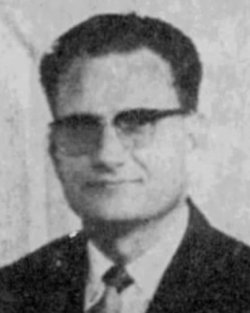
W.E. Best

#13 Isaiah 53 - The Necessity of the Savior's Death, Part 2

Isaiah 53:12
W.E. Best July, 1 1988 Audio
0 Comments
Best on Isaiah 53

In his sermon on Isaiah 53:12, Wilbur Elias Best emphasizes the theological significance of Christ's sacrificial death, underscoring the necessity of the Savior's atonement. He argues that Jesus' death is predicated upon His nature as both divine and human, fulfilling the Levitical offerings such as the burnt, meal, and sin offerings, which signify His perfect character and the satisfaction of divine justice. Specific references to Isaiah and the Gospel of John illustrate the concept of particular redemption, as Best asserts that Christ bore the sins of many—not all—and emphasizes the Reformed doctrine of election, where God's intent in predestination aligns with Christ's redemptive work. The practical significance lies in the assurance of salvation for the elect and the call to recognize the nuances of intercession, particularly as it relates to individuals’ ignorance or knowledge of their sin against Christ.

Key Quotes

“Christ’s bearing the sins of many does not imply that He bore the sins of all, which is a common misconception in Arminian theology.”

“The Father’s election, the Son’s redemption, and the Holy Spirit’s application are of equal extent.”

“Christ took up the defense of the guilty; that is a manifestation of God's grace.”

“God's purpose in eternity and Christ's accomplishment in time are of the same extent.”

Sermon Transcript

Auto-generated transcript • May contain errors

100%
We'll not read the chapter again. We'll just look at the 12th verse
and take up where we left off this morning. Try to let you
out a little early so you can get home before it gets too cold.
Appreciate your coming. And it seems that the worst part
is over, that there is no precipitation at the present time and not likely
to get any more. things will probably improve.
Let's read the twelfth verse. Therefore will I divide him a
portion with a great, and he shall divide the small with the
strong, because he hath poured out his soul unto death. That is as far as we got this
morning, but may I add that we did not give some very important
things that we wanted to give because of lack of time. And
we'll be giving those things at a later date in connection
with another message. Now for the last part of the
verse. And he was numbered with the
transgressors, and he bared the sin of many, and made intercession
for the transgressors. Let's pray. We thank Thee for
the privilege of being in Thy house again this evening. We're
grateful, dear Lord, for those who are present, and we pray
Thy blessings upon those who are not here this evening. We
ask, Heavenly Father, that Thou will open our hearts and minds
now and help us to understand some of the controversial themes
of this great text of Scripture. We know there are many things
in this chapter that are easily understood by the Christian,
but there are some things that necessitate a great deal of study,
thought, and meditation in order to arrive at the teaching that
thou wouldst have us to know from this great verse of Scripture. Help us, our Heavenly Father,
as a result of our studies in this chapter. that they might
make an everlasting impression upon us, that we might have a
greater manifestation of love for the Lord Jesus Christ and
what he has done for us and what he means to us. For we pray in the name of the
Lord Jesus and for his sake. Amen. This morning, in our closing
remarks on Christ pouring out his soul unto death, I mentioned
that all five of the offerings of Leviticus, chapters 1 through
5, are found in this chapter. If you have been looking for
them but have not located them, I would like to give to you the
references where these different offerings, beginning with the
burnt, through the trespass offering, where they're all found in this
chapter. Look, first of all, at verse 11 for the burnt offering. I'm sure that you remember the
principal meaning of the burnt offering. It all went up to God.
Leviticus chapter 1 in verse 11 He shall see the travail of
his soul and shall be satisfied By his knowledge shall my righteous
servant justified many here it is This is the bird offering
for he shall bear their Iniquities in doing this It went up to God
as a sweet-smelling offering that we find and read about in
Ephesians 5, 2, and divine justice was satisfied by the offering
that Jesus Christ made on our behalf. That's verse 11. Now, the meal offering in Leviticus
2 speaks of the perfection of Christ's person. It also displays
the twofold nature of Jesus Christ, his divine nature being united
with human nature, but yet the person of Christ being absolutely
impeccable. Now, there is something in connection
with this that we could spend all the remaining moments of
the time tonight, but I'm only going to mention it. We'll enlarge
upon it later in our discussion of the offerings from Leviticus
chapters 1 through 5. It is called a meal offering,
and rightly so. Look at verse 10 for a description
of a meal offering. Yet it pleased the Lord to bruise
him, he hath put him to grief, when thou shalt make his soul
an offering for sin." Notice now, his soul is made an offering
for sin. What was it that really qualified
the Lord Jesus to become our Savior or our sin offering? It was his person. Now, in the
discussion of the human nature of Jesus Christ, we have said
in times past that he possessed a human spirit, a human soul,
and a human body. Now, since his soul was made
an offering for sin, if, if he had been a peccable
person then a peccable soul could never have satisfied divine justice. So his soul, even his human soul,
was absolutely perfect, and therefore we have the fulfillment of the
meal offering of Leviticus chapter 2. We'll pass on to the peace
offering. Go to verse 5. The peace offering
is in Leviticus 3, and here it is in verse 5 of Isaiah 53. But he was wounded for our transgressions,
he was bruised for our iniquities, the chastisement of our peace
was upon him. It's the peace offering. Now, if you're looking for the
sin offering, there are several references in Isaiah 53 that
would refer to the sin offering that is described in Leviticus
4 and, of course, is fulfilled in Jesus Christ. Actually, this
offering is found in verses 6, 10, and 12. And I'll not read those verses.
I'll let you put the verses down. The trespass offering is also
represented here in verse 5, in the first part of the text,
but he was wounded for our transgressions. Thus the Lord Jesus Christ is
pictured as the burnt offering, the meal offering, the bloodless
offering, which depicts his human nature, his perfect human nature. And then the peace offering,
the sin offering, and the trespass offering. And I'm sure that you
recall the distinction between the sin and the trespass offering. The sin offering was for the
nature of sin, whereas the trespass offering was for the sins of
nature. This is so little understood
today by most, by all religionists, and I'm afraid by too many Christians. Now let's look at the next statement. I wanted to give that because
I didn't have time to go into it this morning, and I did not
enlarge upon it much tonight. The next statement, Christ bear
the sin of many. It does not state that he bear
the sin of all. And this is what all Armenians
believe. I plan, the Lord willing, next
Sunday morning to preach on a very important message. In that message,
I'm going to answer the things that we are subjected to today.
The title of the subject will be, Is Salvation Conditional? And I'm using the word salvation
in the sense that the religionists use it, not in the sense that
you and I would use it who know the difference between regeneration
and conversion. But I'm using the word salvation
in the sense, I said, as religionists are using that term today. Is
salvation conditional? And in that I'm going to answer
many questions. Is faith essential to salvation. In other words, is salvation,
or the new birth, to put it in the terms that we hear today,
like new birth, or conversion as some refer to it, salvation
is another term that is used, or born again as Coulson has
written a book entitled Born Again. But is faith essential
to salvation are the new birth. And then we'll go into that and
answer some of the things that we are subjected to every day
now since we are hearing so much about I Found It, and we're going
to hear a lot more. I think it's my obligation to
go into it and to answer it from the scriptures and to give things
that would be of help to you as you face these things in your
witnessing for Christ. And then next Sunday night, the
Lord willing, I am going to speak from Exodus 25, one of the first
messages in a long series on the tabernacle, and we're going
to deal with the willingness on the part of the people in
bringing their offerings for the erection of the tabernacle
or the building of the tabernacle. And the title of the subject,
I think, at this time will be, The Motive for True Service. What is the motive for true service? Is the motive gain? Is that the
motive? Is the motive gain? That's wrong. The motive for true service is
not gain, G-A-I-N. And so we're going into that
subject. But Christ bearing the sins of
many. Turn with me to the 17th chapter
of John, just for a few comments on this, because we've already
given a lot. But I want to give just a few
statements because I think John 17 is one of the great chapters
on this particular subject. You've heard me in the past say
that we have general providence and we have particular redemption
in this chapter, and it begins in that manner. This is the high
priestly prayer of Christ. We'll read the first three verses
after which I'll make a few comments for the point that we have just
mentioned because we want to go on and spend most of our time
tonight in the last point, which is the controversial statement
among many commentators. These words spake Jesus and lifted
up his eyes to heaven and said, Father, the hour has come. Glorify
thy son, that thy son also may glorify thee, as thou hast given
him power over all flesh. that he should give eternal life
to as many as thou hast given him. And this is life eternal,
that they might know thee, the only true God, and Jesus Christ,
whom thou hast sent." Now, I cannot go into a lot of things in connection
with this chapter, but I do want to mention a few. The theme of
John 17 is this. Christ came for His own, He died
for His own, and He prays for His own. That is the theme of
this entire 17th chapter. Came for His own, died for His
own, and prays for His own. He came from the throne of God
to the depth of woe and then went back again to the throne
after having finished the work the Father sent him to perform.
Now, as we look at the chapter as a whole and thinking upon
particular redemption, he bared the sin of many, not all. The Father's election, which
is stressed in this chapter, not by that name, But it is found
in the fact that seven times the statement is made, those
whom the Father gave to the Son. The Father's election, the Son's
redemption, and that's what we're talking about in the light of
Isaiah 53, 12, He bared the sins of many. The Son's redemption
and the Holy Spirit's application are of equal extent. Now notice what I said. I challenge
anybody to read John 17 and come to any other conclusion than
that which I have mentioned. The Father's election, the Son's
redemption, and the Holy Spirit's application are of equal extent. Let me simplify. The Holy Spirit
does not apply salvation to any more than the Son redeemed by
His blood. The Son did not purchase any
more by His blood than the Father gave to Him. So we have the Father's
election, the Son's redemption, and the Holy Spirit's application
All are of equal extent, are the same extent. Now, the second
thing, the redemption of Jesus Christ is as extensive as the
grace of the Father. This chapter establishes the
fact, which I have just made, that the redemption of Jesus
Christ is as extensive as the grace of the Father. Now, just
as grace is not experienced by all men, then Jesus Christ did
not die for all men. The Bible does not speak of the
possibilities of Christ's work. but of things that are real and
certain according to Isaiah 53, verses 10 through 12, which we
have already studied to a great extent. Finally, God's purpose
in eternity and Christ's accomplishment in time are of the same extent,
or we could put it differently. The Father's purpose in eternity
and his accomplishment in time, the purpose in eternity, the
accomplishment in time, are of the same extent, Romans 8, 28-31. Jesus Christ, therefore, did
not procure forgiveness for those
who can never be forgiven. And there are some who can never
be forgiven because they have committed the unpardonable sin
that Jesus Christ talks about in Matthew 12, 30, and 31. Would
you say that Jesus Christ died for them? If He did, then He
died in vain. Justice was not satisfied for
them, was it? Christ died absolutely for some,
not conditionally for all. And, beloved, if you will listen
carefully, I venture to say that 999 percent of that which you hear
today on television and radio The conclusion is that Jesus
Christ died conditionally for all, but absolutely for none. And that is nothing short of,
and I'm going to use a strong word, blasphemy. Blasphemy. Now, I know there
are some who say, well, who do you think you are? preaching
to a handful of people to make a statement that strong. I base
it on the Word of God, not on the opinions of men. Now let's look at the next statement
in Isaiah 53. He buried the sin of many, not
of all. Christ was numbered with transgressors. Now, for an explanation
of this and a fulfillment of this prophecy, turn to Mark 15. Let us look at verses 27 and
28. Mark 15, 27, and 28. And with him, that is the Lord Jesus,
they crucified two thieves. two malefactors. So the Lord
Jesus Christ was numbered with transgressors. He was numbered
with the malefactors. Let's read on. And you'll notice
when we get to the 28th verse, we have the quotation of that
passage from Isaiah 53. In other words, the writer is
quoting, showing that this is the fulfillment of the prophecy
made by Isaiah. And with him, verse 27, they
crucified two thieves, the one on his right hand and the other
on his left. And the scripture was fulfilled,
which saith, and he was numbered with the transgressors. And they
that passed by railed on him, wagging their heads and saying,
Ah, thou that destroyest the temple and buildest it in three
days, save thyself and come down from the cross. Likewise also
the chief priest, mocking, said among themselves with the scribes,
he saved others, himself he cannot save. Now before we pass from
this, because we're not going to spend much time on this passage,
it is necessary we see the fulfillment of it. And this is not as controversial
as the last part of Isaiah 53, 12. But I do want to call attention
to these three things. You notice that the Lord Jesus
Christ is abused by three different classes of persons in the verses
which we have read beginning with verse 27 through verse 31. I said he is abused by three
classes of persons. Just as he was abused by three
classes of persons during his personal and public ministry,
He continues to be abused by these three classes of individuals
today. Number one, he is abused by the
ignorant. Verse 29, I said he is abused
by the ignorant. There are many people who are
ignorant. And they're so ignorant, they're
even ignorant of their ignorance. Look at verse 29, And they that
passed by railed on, wagging their heads, and saying, Ah,
thou that destroyest the temple, and buildest it in three days. Now these were the Israelite
people. They remembered the Lord Jesus Christ having made the
statement, or it was reported to him that he made the statement.
And the statement is found in the second chapter of John. When
the Lord Jesus made the prediction, you destroy this temple, and
I'll raise it up, and I'll raise it up. And they thought he was
speaking like some foolish individual. How in the world is he going
to rebuild this temple? And they thought about the temple
that stood before its destruction in 70 A.D. But Titus, how in
the world after its destruction can he rebuild in three days?
Now that's a manifestation of ignorance. They were so ignorant,
they were ignorant of their ignorance. So he was abused by the ignorant.
The Lord Jesus is abused by the ignorant today. And there are
many, many who are very, very ignorant of the truth concerning
Jesus Christ. Number two, he was even abused
by the condemned. I said the condemned. Now, we're
going to have to go to Matthew 27, 42, make a study of the harmony
of the Gospels to see the truth of the statement which I have
just made. So go back with me to Matthew chapter 27 and verse
42 for the proof of the second point. He saved others, himself
he cannot save. If he be the king of Israel,
let him come down from the cross, and we will believe him." Notice
their statement. You see, a statement is made
in Matthew that we do not find here in Mark. Now, if he'll just
simply come down from the cross, we'll believe him. Now, he had
performed many miracles. Now, why would they say, if he'll
just come down and perform another miracle, we'll believe him? So
here he is abused by the condemned. Finally! He was abused by the
religionists, and this is the thing that nauseates me more
today than all that Madeline O'Hare has to say. I don't expect
anything else out of Madeline O'Hare, and I don't get near
as disturbed about her statements concerning Christianity. I don't
get half as disturbed about her as I do, beloved, these stinking
religionists. And I want to emphasize that
word, stinking religionists. They stink. They are a stench
to my nostrils. And I believe they are to every
individual who knows anything about grace. Now, here, what
do we find? He's abused by the ignorant,
he's abused by the condemned, and now he's abused by the religionists,
verse 31. Likewise, the chief priests.
Now, the chief priests were the religionists. Mocking, sat among themselves
with the scribes. Now, as the religionists mocked
then, beloved, I want you to know they're mocking today. They're mocking today. All you have to do is just really
hold up, stand up, earnestly contend for the great principles
of biblical truth, and you'll find that they will mock and
scoff and belittle as much today as these priests did then. It's no surprise to me that Jesus
Christ said whoremongers would go into the kingdom of God before
the stinking Pharisees. That's no surprise to me. None
at all. Whoremongers, prostitutes, the
lowest, morally speaking, have a better chance going into the
kingdom than the stinking religionists. That's what Christ said in Matthew
22, and I believe it. So what does he say? Likewise
also the chief priest, mocking said among themselves with the
scribes, he saved others, himself he cannot save. Now there is the abuse of the
religionists, numbered with the transgressors, and then the abuse
that he received from the ignorant, the condemned, and the religionist. Now let's look at the last. Made intercession for the transgressors. What does that mean? We'll spend
the rest of our time tonight in the discussion of that last
phrase of this Now, I'm going to make a statement
at the very beginning of this that really is the key, I think,
to the understanding of this passage. The transgressors, notice
now I'm going to stress something as I state this. The transgressors
for whom, you can tell by the way I said that, that I'm placing
emphasis on those two words. The transgressors for whom Christ
interceded are either all the transgressors for whom He suffered,
verse 6 of Isaiah 53, or the transgressors by whom He suffered. Now, make a note of that. I'll repeat it again. The transgressors
for whom Christ interceded are either all the transgressors
for whom he suffered are for the transgressors by whom he
suffered. Do you see the difference? Does it refer to those who actually
caused Him to suffer physically? In other words, was it those
who abused Him, who mocked Him, who derided Him, who nailed Him
to the cross? Was it those? Or was it four? the transgressors for whom he
died. Now, it was either for those
for whom he died or it was for those by whom he died. Now, what would you say? A great number of commentators,
if you have read any this afternoon and you have material in your
library at home by which you could refer to this, you have
already seen that there are a great number of good men who say that
Luke 23, 34 is the fulfillment of this passage. That's what we're going to study
tonight. But you see, there's something involved in that that
necessitates a great deal of study. Now, if it is the first
that I mentioned, It continues now. If it refers to those for
whom he died, that intercession continues now. If this refers
to those by whom he suffered and died, then it's past. It
doesn't apply now. Would you agree with me there? Now, a doctrine has been built
on this. all Arminians, without any exception,
hold to the idea or to the concept that Luke 23, 34, so open your
Bibles to that verse, because this is where we'll spend the
remaining of our time tonight. This is the first cry of Jesus
Christ from the cross. You know, there were seven cries
of Christ from the cross. This is the first. This is the first. I'd like to
go back up to verse 32 and begin reading, and we'll read through
verse 34. And there were also two other
malefactors, led with him to be put to death. And when they
were come to the place, which is called Calvary, there they
crucified him and the malefactors, one on the right hand and the
other on the left. Then said Jesus, here is his first cry
from the cross, Father, forgive them, for they know not what
they do. You'll notice that the expression
Father is used. Do you remember what we said
last Sunday? My God, my God, why hast thou
forsaken me? Here he says, Father, forgive
them. He uses the endearing term, Father,
not that which pertains to what? Justice being satisfied, or to
his suretyship, and the judgment that must be executed upon him
as our surety. But he said, Father, forgive
them, for they know not what to do. Arminianism, without one
exception, teaches there is a general intercession for all men that
they might believe, and this is their proof text. What do you think about it? Does this refer to a general
intercession on the part of Jesus Christ for all men that they
might believe? No, it is not. This passage does
not teach that, and I'm going to prove it from the very passage
itself. I'm going to prove to you that it is not general, but
it is particular even here in this very verse. And this is
what nauseates me when I listen to religionists misconstrue the
scriptures. Now, let's read it again. Let's
see if you can pick it out. It is not a general intercession. It is a particular intercession. Then said Jesus, Father, forgive
them for they know not In other words, it does not include
all men, generally speaking. This includes those who are ignorant
of what they were doing. You see, there's hope for the
ignorant. Notice what I said, there's hope
for the ignorant. Now, I'm going to prove to you there's hope
for the ignorant. I'll give you the verses. In the study of the
sin offering, In Leviticus 4, verses 3, 13, 22, and 27, there
is hope for the ignorant. Now, before we go any further,
let's turn to the Acts of the Apostles, and I'm going to prove
my point. Turn with me, please, to the Acts of the Apostles,
chapter 3, and we'll begin reading with verse 15. Here we have the record. given
by Peter concerning the death of Jesus Christ. Let's begin reading with verse
12. And when Peter saw it, he answered
unto the people, Ye men of Israel, why marvel ye at this? or why
look ye so earnestly on us, as though by our own power of holiness
we had made this man to walk? The God of Abraham, and of Isaac,
and of Jacob, the God of our fathers, hath glorified his son
Jesus, whom ye delivered up, and denied him in the presence
of Pilate, when he was determined to let him go. But ye denied
the Holy One, and the just, and desired a murderer to be granted
unto you, and killed the Prince of life, whom God hath raised
from the dead, whereof we are witnesses. I'm not through. Go on through the 17th verse. And his name, through faith in
his name, hath made this man strong, whom ye see and know,
yea, the faith which is by him hath given him this perfect soundness
in the presence of you all. And now, brethren, oh, some of
them had even been saved who had a part in the death of Jesus
Christ. What they did, they did out of
ignorance. Listen to it now. And now, brethren,
I want that through ignorance ye did it, as did also your rulers. There's the word ignorance. I said there's hope for the ignorant. And aren't you grateful for that?
But there were some who participated in his death that were not ignorant. Was Judas ignorant? No, he was
not. And what happened to Judas? Did
Jesus Christ intercede for him? Well, you say, well, he had already
gone out and had committed hara-kiri. He had already committed suicide. But they say that Christ's prayer
here is a general intercession that all men might believe. What
about all of those who had died before this time? So that will
not hold water. It is restricted to the ignorant. Now let's look at another passage.
Turn to the fourth chapter of the Acts of the Apostles and
the fourth verse. Howbeit many of them which heard
the word believed, and the number of the men was about five thousand. There were many who did what
they did out of ignorance, and God saved them. Peter was preaching
to that very crowd of people. And some of them were saved.
Let's look at another passage. In the 6th chapter of Acts, and
verse 7. And the word of God increased,
and the number of disciples multiplied in Jerusalem greatly, and a great
company of the priests were obedient to the faith. Now turn with me,
if you will, please, to I Corinthians chapter 2 and verse 8, and listen
to this statement by the Apostle Paul in writing to the Corinthian
believers, which none of the princes of
this world knew. For had they known it, they would
not have crucified the Lord of glory." In other words, there
were some who did what they did out of ignorance. Now notice
how the Lord Jesus prayed here. Father, forgive them, for they
know not what they do. And they parted his raiment and
cast lots. So it is restricted to those
who did not know what they were doing. But there were many who
did know what they were doing, and He didn't intercede for them,
if you want to use that argument. So if the Arminian view, and
also some men who believe in grace, I think have the wrong
interpretation of this passage. They say it refers to a general
intercession of Jesus Christ on the behalf of all men that
they might believe. I deny that. If this be true,
then Christ's intercession is unsuccessful. But according to
John 17, He intercedes for those whom the Father gave to Him. Whom the Father gave to Him.
And I affirm, based upon the authority of Scripture, that
Jesus Christ never prayed in vain. He was always heard by
the Father according to the gospel of John, and we'll look at that
a moment later. Now, there is no indication that
Jesus Christ prayed for all, even by whom he was crucified. There is no proof in this text
that he interceded for all by whom he was crucified. It was
only for those who were ignorant. Now, why don't we study the scriptures
close enough to see these things, without just running through,
it sounds good, and it appeals to people in general, and would
build a doctrine for which there is no foundation. Though some who did crucify Christ
in ignorance were later saved, there is no indication that Jesus
Christ prayed that they might believe. That would be indefinite. Now, Christ's prayer was, by
virtue of His duty as the God-man subject to the law of To give
us an example of praying for his enemies. Now I think that
brings us to this point. Christ's praying must be considered
from two points of view. Listen carefully. I said Christ's
praying must be considered from two points of view. Number one.
by virtue of his manhood, subject to the law, in which he was to
forgive wrongs done unto him, pray for his enemies, in the
sense of leaving us an example, as we find in Matthew chapter
5, verses 43 and 44. Now, that's the first way in
which we're to look at the praying of Jesus Christ. I said, as to
his manhood, As to his manhood who was subject to the law of
God By which he was to forgive The wrongs done unto him and
pray for his enemies as well as to leave us an example and
number two we are to consider Christ's praying by virtue of
his office as mediator who makes intercession for his own and
only for his own. Now, I think that ought to help.
Now, let's go a little further. Intercession for the transgressors
is the phrase at which we're looking. I like what John Calvin
had to say about this. I mean John Owen, John Owen instead
of John Calvin. And I want to give a statement
by John Owen. He was a great expositor of Scripture. In fact, I do not know of any
modern writer or any writer in the last 200 years that was the
thinker that John Owen was. So intercession for the transgressors
means Christ took up, this is Owen, took up the defense of
the guilty. That's a provoking thought. The
Lord Jesus Christ took up the defense of the guilty. Now you
and I would not think about taking up the defense of a guilty person,
would we? Would we really? If you knew
that a man was guilty, Would you want to take up his defense?
And this is exactly what Jesus Christ as our surety did. He
took up the defense of the guilty. As I brought out this morning,
we were all guilty. But he was willing to become
our surety. And we became his clients. Because we were given to him
by the Father. And being willing to be our surety
What did he do? He simply took up the defense
of us, of the guilty. I like that. I think that's a
manifestation of God's grace, and Owen was great at magnifying
the grace of God. Now, let's go a little further.
Someone raised the question, who among us would even think
about taking up the defense of the guilty? Here's a direct quotation
now. Quote, The Son was heard in this
request also, faith and forgiveness being granted to them for whom
he prayed, so that this makes nothing for a general intercession, or ineffectual intercession. It was effectual, end of quotation. Then either the Father does not
hear him or all men will be saved. What does it teach? That's the
question. It does not teach a general intercession. But I want to close by saying
that we must view the prayers of Jesus Christ, or the praying
of Jesus Christ, from two points of view. First of all, by virtue
of his manhood subject to the law, by which he was to pray
and did pray, even for his enemies, and left us an example in his
praying, and number two, by virtue of his office as mediator. And
when he prayed in John 17, he was praying in the office of
Mediator, the only Mediator between God and man, the God-man, the
Lord Jesus. I think this has been a most
interesting study, and I close by saying the studies I have
made have only made me want to study Isaiah 53. I haven't really
studied it. I haven't really studied it. I've just touched the surface. I told one of you to come into
church tonight. Did you know if I had the time I could take
Isaiah 53, think about this for a moment, I could take Isaiah
53 and give an interpretation of the Bible from Genesis to
Revelation. Everything concerning both the
person and work of Jesus Christ is set forth here in 12 verses
in Isaiah 50. In other words, it covers the
whole Bible from Genesis to Revelation. That's how inexhaustible this
great chapter is. Let's stand for the benediction. Let's pray for the services next
Lord's Day. I hope that all of our families
will be represented, all of our people plus others. And this
is a most important subject, is salvation conditional. Brother Pennington, you know,
when Bright, he kept saying, now, will you follow me and pray
this prayer? Didn't that make you nauseated?
He said, now, I'm a sinner, Lord, and I want to be saved. Come
into my heart. Now, if you said that, you're
saved. You're saved right now. You're saved. You talk about people being duped
today, and it's these duped people who are on the telephone calling
and saying, I want to share something with you. And you know what he's
doing? He's making that prayer a condition
of salvation. Did you hear that? I'll take
care of that, too, next Sunday morning. He not only makes faith
a condition of salvation, he makes prayer a condition of salvation. So is salvation conditional? That's next Sunday morning. And
then next Sunday night, that true motive for Christian service. You talk about heart searching.
I tell you, when I got through studying that ladder, I had to
investigate my own heart.
W.E. Best
About W.E. Best
Wilbern Elias Best (1919-2007) was a preacher and writer of Gospel material. He wrote 25 books and pamphlets comprised of sermons he preached to his congregation. These books were distributed in English and Spanish around the world from 1970 to 2018 at no cost via the W.E. Best Book Missionary Trust.

Comments

0 / 2000 characters
Comments are moderated before appearing.

Be the first to comment!

Joshua

Joshua

Shall we play a game? Ask me about articles, sermons, or theology from our library. I can also help you navigate the site.