Bootstrap
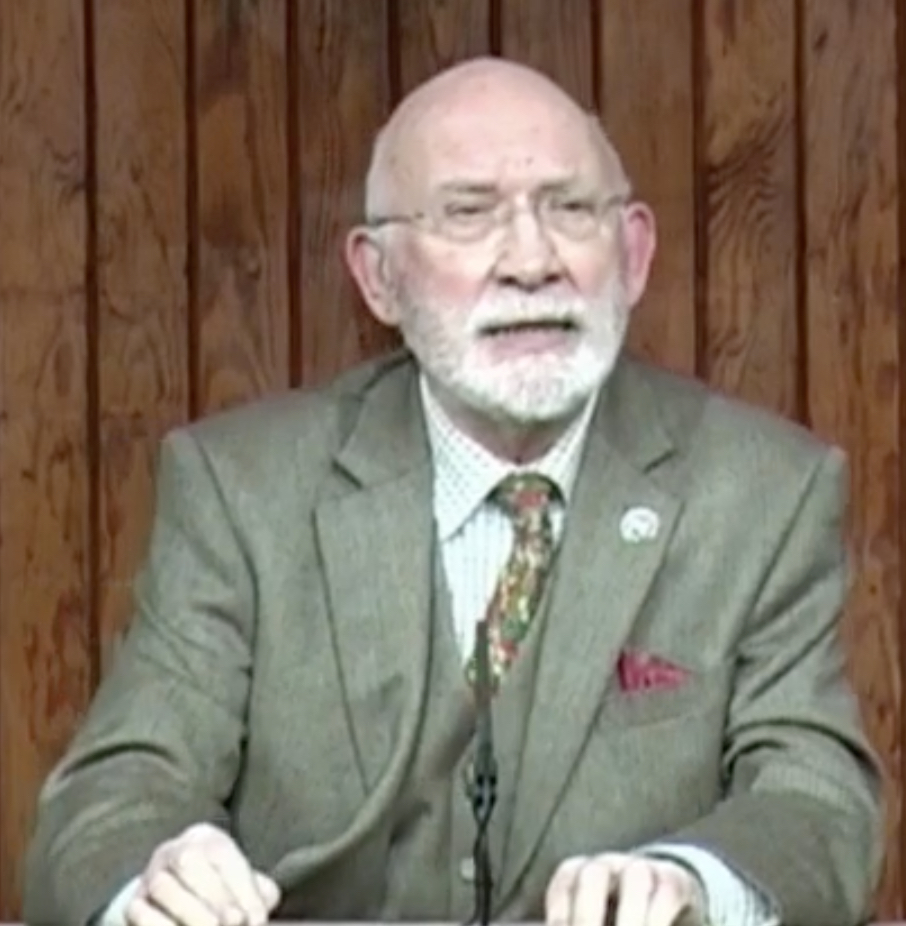
George Ella

William Carey: Using God's Means to Convert the People of India - 2

George Ella July, 25 2009 Audio
0 Comments
Dr. George Ella Lecture Series

Sermon Transcript

Auto-generated transcript • May contain errors

100%
Well dear friends and brethren,
I'm back again for the second exciting episode in the life
of William Carey and again the same title, using God's means
to convert the people of India and part two, as you now expect,
the mission prospers so the mission at Serampore prospered and spread
Kerry was given the most prominent building in the city for the
church in which he preached for the next 34 years the town of
Serampore too prospered as it proved an asylum of peace for
fugitives from the Americo-Franco-British Wars fancy three civilized nations
going at it, Hammer and Toms and it persuaded many wealthy
investors to settle there because there was peace at Serampore
and where peace is, business flourishes more missionaries
were urgently needed as Brunson soon died of a liver complaint. Fountain, who was doing pioneer
work at Dinapore, also died after a short illness. Thomas rejoined
the mission but became insane and soon died. the missionaries
were able to purchase a very large house in the middle of
the town with two acres of garden from the governor's nephew for
800 pounds in no time Ward had set up his press sufficient paper
was at hand and he began to print the Bengali Bible Due to the
generosity of the Danish king, the missionaries were able to
add a school, a college, a hostel and private houses, so that within
a few years the buildings alone of the mission station covered
five acres. These were set in several acres
of botanical gardens. It all belonged to the
Missionary Society. Soon after settling in Serampore,
Cary realised what a godsend Ward and Marshman were. Remember the Serampore trio. he told the society brother Ward
is the very man we wanted he enters into the work with his
whole soul I have much pleasure in him and expect much from him
brother Marshman is a prodigy of diligence and prudence as
is also his wife learning the language is mere play to him
he has already acquired as much as I did in double the time. Ward had more difficulties with
languages but Carey soon found him so holy, so spiritual a man
and he soon became a favourite with the Indian children. The
missionaries drew up an order of family rules regulating who
prayed and led the worship at what time? who took care of the
common purse? who looked after the medical
equipment? and who took care of the library? so you see again
in their church the offices of the church were very widespread
all business and trade that was done was jointly regulated by
the missionaries who now call themselves the family the Serampore
brethren had seen this work in their predecessors the Moravians
and found that it worked with them equally well Marshman wrote,
thank you Moravians if ever I am a missionary worth a straw I
shall owe it under God to you knowing human nature it is a
sheer miracle that these men and women were able to live in
near absolute harmony, though their day was organized so that
little or no private family leisure was possible. Now the mission
prospers. In 1789 Fuller gave the Indian
Mission the empty promise it would receive £3600 from the
Society per annum. This promise was never kept.
It was like the initial promise that they would raise £13 but
that was only on strips of paper they put in the collection box.
This challenged, though, Carey's ideas of independence. He didn't
even want theoretical support from England. Now the printing
of the Bengali Bible was going ahead at full speed, and with
the income from the press and the schools alone, the missionary
family became more than self-supporting. I'm quoting Carey. so after a
further year and in order to set the Serampore mission on
its old feet they paid back every penny ever received from the
society further building projects were financed by the Indian mission
itself with the added assistance of friends in India the mission
now owned property valued at many thousands of pounds but
to avoid rumours that the missionaries were lining their own pockets,
this was always the suggestion coming from England, you're lining
your own pockets, they naively but ideally signed over all the
Serampore mission rights, fortune and assets to the society. This was eventually altered to
allow the missionaries a tenth of their profits in order to
make provisions for widows and orphans. They realised that the
society was squandering their money and they were left with
no hope for the future. There were no pensions in those
days. So they wisely said, we're sending
nine-tenths and we'll keep a tenth for when we are infirm and we
get older. This meant that Carey's mission,
now called the East Indian Mission, was the Home Society's major
financial supporter in their work. in lands other than India. So India was financing China
and Africa and other countries that the Baptists were sending
missionaries to. Can you imagine it? The mission
was financing the home base, not the other way around. Though Carey's biographers tell
of the palatial circumstances under which the missionaries
lived, they also tell of the great harvest of souls the missionaries
now began to reap. Already towards the end of 1800,
a few Indians began to profess Christ but were persecuted by
their families. Krishnapal, however, a former
guru, was instrumental in having his wife, his four daughters,
his wife's family and several other Hindus follow him to Christ
and formed the first Indian church north of Madras. He became an
accomplished speaker and hymn writer and Keri's tutor also
in various dialects. On 29th of December, Carey wrote,
Yesterday was a great joy. I had the happiness to desecrate
the Ganga river, desecrate, by baptizing the first Hindu, Viz. Krishna and my son Felix, his
own son professed Christ and was baptized, desecrating the
Ganga river. In many ways, however, Krishna's
baptism was a matter for sorrow. Thomas's joy and praise had been
instrumental in converting the first Bengalis, made him so elated
that he lost his mind, became raving mad and had to be kept
behind locked doors during the baptism service. Mrs. Carey was now declared insane
and she was not able to witness the baptism of her son. She too was behind locked doors
raving mad. Hitherto missionaries had maintained
the caste system even sharing communion with different cups
for different castes. the Serampore trio, Carey, Ward
and Marshman announced that worship was to be caste free also a move
without the permission of the home society this angered many Europeans but
equally caste conscious Bengalis who maintained that the converts
were now Ferengi. I don't know whether you've seen
those science fiction films, I think it's called Star Trek
or something, the traders who have no home country are called
Ferengi. Well, they got that from the
Indians who used this Portuguese term to say that those Ferengi
were foreigners who have nothing to do with us. Governor being
his assurance that Krishna and his friends had truly become
Christians, but not Europeans, failed to calm the enraged mob. There was quite some scenes then,
outraged Hindus saying that their relations had become foreigners. Nevertheless, the floodgates
had opened and soon many Indians were moved to follow Christ. A fortnight later, Jaimani, the
first of many Bengali women, was baptized, followed soon later
by her sister, Rasmei, a leather workers' widow named Anada, and
a man called Gokul. who had been converted about
the same time as Krishna was baptised with his wife. Then high caste Pitambha Singh
who had sought forgiveness of sin for many years professed
Christ followed by other high caste Indians such as Siam Das
and Pitambha Mitta and his wife Draupadi. These were learned
people who soon became teachers and preachers to their people.
Then Muslims such as Peru and Brahmins such as Krishna Prasad
became Christians so that within 4 years 40 native Indians were
converted and 8 from other stock Portuguese and people like those. a number of these were trained
as missionaries to spread the good tidings in other areas and
the mission was able to provide them with a salary this move of the spirit was greatly
furthered by the publication of the Bengali New Testament
in March 1801 This academic feat brought the
mission to the notice of the King of England who began to
take the side of the mission in her dealings with the East
Indian Company. The East Indian Company complained
to the King that they had not commissioned the translation.
The poor missionaries had the East Indian Company telling them
what to do in India and Fuller telling them what to do in England
but the King took their side. King George, no relation, King
George replied that the task of spreading the Scriptures was
outside of their jurisdiction and that he was greatly pleased
that his subjects were employed in such a manner. After this
the British Indian Company stopped their opposition. There's nothing
like a king saying, you know, shut up, shut up. The same poor
trio triumph now over opposition from the home front. Now early
blunders. It was a general practice amongst
missionary societies to give Christian names to their non-European
converts as a demonstration that they had started new lives. When
tracing the 18th and 19th century history of the Baptist mission
to the Native Americans for my book, Isaac McCoy, Apostle of
the Western Trail, I found so many Indians called John Gill,
John Calvin and Isaac McCoy in the Southern states and Andrew
Fuller in the Northern states. Well, the Northern states didn't
know better. that it became impossible to determine if they were the
same people as those formerly called Hachikake, Posa Cheha,
Nampawara or Sabaukau. See, I was tracing these names
and suddenly they were called Andrew Fuller and it made tracing
their family history impossible. Carey allowed the mission's converts
to keep their birth names. This was a wise move as the families
of Indian believers looked upon the giving of foreign names to
their dear ones as a form of apartheid, separating one family
member from another, and so it did. As soon as Carey died, the
home society changed that and converts had to have English
names. Well, they said they were biblical
names, but I don't find Andrew Fuller in the Bible. The rumor
even spread that Indians with English Christian names lost
their right to be considered Indians and would be deported
to England. Sadly, oh I've just said that,
former Brahmins, Muslims and the casteless who were now Christians
sought to convince their fellow Indians that though they had
been taught to look on the outer cast of a person God looked at their hearts and
thus castes were of no account whatsoever. But try telling some
Indians that. Thus, when casteless Gokul died,
a man without any caste at all, so he was an outcaste. So, when
casteless Gokul died, his coffin was carried by Bhairav, a converted
Brahmin, the highest caste, and Pirru, a former Muslim, besides
Marshman and Felix Carey, to demonstrate that they were all
now one in Christ. So too, in 1802, Krishna's Christian
daughter, who was a Sudra, the caste, was married to a Brahmin
convert, the first Christian marriage to occur in North India. A special service was devised
for the occasion based on the Church of England Rite, most
of the believers on the European side were Church of England. Two of the mission's new rules
for converts, however, proved most controversial. One because
of its foolishness and the other because it questioned the sanctity
of marriage. The mission's lesser blunder
was to give those who offered themselves for baptism six shillings,
six silver shillings. A shilling was a silver coin
in those days. Six silver shillings each to encourage them in their
stand. Well, you can imagine this creating
the Rice Christians, as we call them, etc, etc. But this was
soon discontinued, thank God. Far more questionable was the
society's attitude to marriage. The home mission gave them highly moral guidance. Carey aimed at converting whole
families and the first male converts brought their wives and families
into the fold of the church, like the first Christian converts
in the New Testament. Soon, however, both men and women
were converted, whose spouses refused to follow them into the
baptismal waters. The missionaries prayed weekly
all through 1803, a year long, for a solution to this problem,
but found none. Sadly, they felt they must refer
the matter to Andrew Fuller, who was prompting them all the
time with his advice, but they weren't taking it. But now they
thought, we can't solve the problem, let's see if the whole mission
can. Now, Fuller responded as the society's spokesman. Listen
to this. He believed that marriage outside
the Lord was null and void. and a Christian had no responsibility
whatsoever in wedlock to an unbelieving husband or wife Fuller would have been most popular
with the modern divorce mechanism according to George Smith Fuller
therefore advised the mission that converted Indians should
do all in their power to have their spouses worship with them
but if this proved impossible after a reasonable period of
time they should divorce their spouses and be free to remarry. Can you imagine a Christian pastor
giving that advice? Well, I can't at all. Oddly enough
Those who had several wives were not asked to divorce any of them. So if a man came with his six
wives and they were all baptised, that was alright. But woe be
to a man who came and his wife wasn't baptised, then he had
to divorce her. The Baptist Society's advice
ignored the fact that marriage was a natural creation act. and
love, care, devotion and faithfulness played a large role in maintaining
marriage bonds, whatever the religion of the participants
was. The dissenting churches of Commonwealth
times, the time of Oliver Cromwell, and the Church of England at
the Restoration, when Charles II was restored, had equally
stressed free churches and state churches that marriage was a
civil contract God created human beings as man and woman, husband
and wife the two who became one flesh were therefore not necessarily
Christians marriage was for a Cain as well as an Abel for an Esau
as well as a Jacob one could not force a Christian to divorce
on the grounds that he or she had married whilst unconverted. Be this as it may, within the
next few years Kerry and his friends had won many converts
amongst the Europeans, Asians, Eurasians and some hundred Indians
who were now staunch Christians. Church buildings were being raised,
which would have been the pride of any British church of whatever
denomination. Some of them are still there
today, they look like cathedrals, Baptist churches. Many Indians
were married in the Lord and founding Christian families.
The Serampore Trio's work was thoroughly successful. Now Professor Carey, not the
poor boy without any education who spent 20 years in a hut cobbling
shoes, Professor Carey, the East Indian Company was now absorbed
into the British Empire. The company ceased to exist,
the British Empire reigned. and in 1800 Lord Wellesley, the
Governor General, founded Fort William College at Calcutta for
the instruction of imperial civil servants. Most of them were Lords
and Sirs, the cream of the British society. Chaplain David Brown,
a faithful and energetic Anglican supporter of the mission was
chosen by Wellesley as Provost brilliant scholars were appointed
for the various posts and Brown insisted that Carey was the man
most fitted to become Professor of Bengali so we have little
William, no education now teaching the Dukes and the Counts. He had shown so much academic
ability in his translation work and other linguistic studies.
Carey accepted the post and immediately received an enormous salary which
was doubled after a very short period. So Carey was now earning
£1,500 per Well, my father in about 1954
was earning in Britain £12 a week. but a couple of hundred years
before that here was Carey earning £1,500 per annum which was ten
times that of a normal English scholar of an equivalent post. Furthermore, Carey was asked
to found a department for the translation of scripture into
Indian languages as a department of the university. Thus, though
foreign missionaries were refused entrance into British Bengal
for a number of years and missionaries already there were severely hindered
in their work, Carey could engage Marshman and Wade in the provision
of grammars, textbooks and translations from the classics and scripture
for the further education of Eton scholars. Eton was the most
famous of England's public schools and for hundreds of years all
the cabinet up to my boyhood, all the cabinet came from one
school, Eton. and these men came also from
the Anglo-Indian aristocracy Kerry was one of only two Europeans
who could speak and write Sanskrit as well as the most learned Brahmins
so almost immediately he was also given a professorship in
Sanskrit and was able to find posts for a number of his better
educated converts. So here was Carey, although officially
he was forbidden to practice, he was getting all his staff,
all the Indian converts into the university and they were
all getting jobs with enormous salaries. over the years he was able to
build up a library of the greatest works in Sanskrit and other ancient
and modern Indian and Asian languages the bulk of these books still
being available behind fireproof doors in the Regents Park College
Library, the Baptist College Library at Oxford I discovered
this by chance because being a curious and nosy man I started
exploring the cellars and I found thousands of books under layers
of dust. So I asked Sue Mills, the librarian,
what books were they? I said, they're in Sanskrit and
Pali and she said, oh, that's William Carey's own individual
library and I said, what is it doing there? She said, it's never
been touched since Carey died and we got it all over. The mission
went over and took all of the records of Carey And I said to
Sue, well, couldn't we at least catalogue them? And she agreed
and I had arranged for a young fellow to do his doctorate and
help me in the cataloguing and the processing and the accessing,
that's library jargon. And then I had two heart attacks
and this, that and the other. and I couldn't go, so Sue wouldn't
drop the subject and asked an Indian working at the Balliol
library, the oldest and largest library they have, and he was
able to catalogue those books. But if you go to that library,
they're still down in the cellar, gathering dust. So if you ever
go to Oxford, insist on seeing Carey's library, because if you
do that, even if you can't read a word of what's in those books,
you'll be reminding the library that they ought to be doing something
about it. That's just an aside. for anyone
hoping to do missionary work in India or academic work in
the ancient Indian languages a prolonged visit to that library
is an absolute must my works on Baptist history have profited
much from my visits there Cary, a workaholic if ever there was
one, took all the tasks of a professor in his stride and still found
time to preach and teach the gospel several days a week amongst
the Indians. He was also able to found and
preside over an Indian training college at Serampore, a training
college for future pastors and teachers. Now we're talking about
people earning thousands and thousands and doing great work.
But my next passage is, the society demands sole authority over the
Indian missions, funds and property. It's a pity you weren't around
Jim then. Yes, the Serampore Trio invested
nine-tenths of their large income in worldwide missions. The rest
was used for the daily needs of the growing missionary family. Carey's mission was thus the
greatest financial supporter of the British Baptist Missionary
Society worldwide. The figures speak for themselves.
During Carey's 40 years in India, he personally received a mere
£600 in 40 years from the Home Mission, who, I must honestly
add, were getting in far more money than that. But he paid every penny back.
On the other hand, Carey donated most of the £46,000 he earned
as a businessman and professor in India. He gave that all to
the mission. The other missionaries, I'm only
talking about Cary, but there were all the other missionaries
too. The other missionaries doubled this amount between them and
their non-society friends in India provided another 80,000. So, Andrew Fuller and his friends
were getting the 46,000 then they were getting also double
that amount from the other missionaries and then they were getting 80,000
from Carey's friends in India. Rather than rejoice at this situation,
the sad truth is that the more Carey's mission became totally
self-supporting and expansive, the more the society wished to
have full control over its financial resources and the personal lives
and agendas of the missionaries. They're always saying, are you
sure you've given us enough? Are you perfectly sure? Have
you got tutins somewhere, two pennies in your pockets? The
Serampore trio wisely saw that the society was totally lacking
in the acumen needed to perform such tasks and that Fuller Anko
had no idea whatsoever of the Indian situation. When Fuller
strove to rule the Serampore church like an absent vicar,
he hampered the mission's work. He died in 1815 but his successors
who professed to hold the rope as they promised Cary right at
the start but his successors support of the missionaries was
even worse. They began to complain that the
Serampore missionaries were making themselves rich at the expense
of the mission. Fancy that! and demanded absolute
control of all property and finances from the home base. They began to treat their star
missionaries as if they were fiddling the society's books. They became so grasping that
Carey threatened to give them all the assets of the Indian
mission including their pension rights and goth and found another
mission run by the missionaries alone. He ought to have done
that years and years before. Nevertheless, the Society advertised
the work in India as their prime target for funds. Those people
thinking they were contributing to the spread of the Gospel in
India were actually contributing to the mission elsewhere, where
the methods of the Society were far from successful. Whatever they did without care
they seemed to go wrong. Indeed some of their missionary
work was absolutely disastrous. A similar state of affairs in
North America prevailed when William Stoughton, a co-founder
of the British Baptist Mission, was unwisely influential. See, Stoughton helped found the
British Baptist Missionary Society and then the Americans said,
oh Mr Stoughton, come over and help us too. So Stoughton helped
to find the Northern Baptist Missionary Society, the South
and the North hadn't separated then, so the Northern Society
at Philadelphia was ruling all the Baptist churches in the States. Now, monies were canvassed by
Stoughton and his men for the American Indians but those monies
were not used for the Indians, but they were spent on building
Columbia College and financing missionaries abroad. And one
day, Isaac McCoy, who was training missionary candidates and scholars
at his little home school, went to the college which his money
or the money of the mission had financed with the half a dozen
young intelligent Indians and they were stopped at the door.
No Indians may enter this college. And Isaac McCoy said, but the
money for the Indian mission has financed this college. Oh
yes, but no Indians are going to enter it. Well, praise God,
that college went bankrupt very quickly, because they had no
idea of how to finance things. And if you read my book on Isaac
McCoy, Stoughton... I named Stoughton as the man
behind all this corruption. But sadly, Luther Rice, who went
out with Judson to India and Burma, he was blamed by the society
for this corruptive way of handling money. So when I read that, my
heart wept. So I had to defend Rice against
all these accusations. Now this scandal brought the
American society to its knees and missionary to the Native
Americans, Isaac McCoy, who strove to follow in Carey's footsteps. He had maps all over of Carey's
progress and he followed him as much as he could. He eventually broke away from
the Baptist Missionary Society and with his Indian churches
he helped found the Southern Baptist Convention. So at the
Southern Baptist Convention, which believed in the doctrines
of grace in those days, the Indian churches were a major factor
in that founding. You won't read that today, but
please believe me, that was the case. Now, though Carey did not agree
with the Society over the financing of the mission and was often
tempted to break with them, he believed initially that his influence
would be greater within the Baptist Society than without. When one reviews the accounts
of the Society's own fundraising work soberly, it is clear that
the larger donations came from outside of the committee's denominational
circle and that the amounts raised were far too modest to finance
a large worldwide mission. Two great exceptions were the
Society's success in raising over a thousand pounds for Bible
Society work and in meeting the costs caused by fire in the mission's
printing department in India. but the society didn't spend
their own money they called for subscriptions from all the denominations
in England and people knowing and respecting Kerry by then
donated huge amounts of money but the society sat on its own
i.e. they sat on Carey's money so
that money was chiefly demoted by people outside of the denomination
or outside of the society remember it was still a parachurch activity
even when Carey's own family members were fitted out materially
for their pioneer work by the society Carey regarded the Society
merely as suppliers and paid them in full. Now the Homes Society
breaks with the Serampore Trio, you'll probably not find this
either in the official records but look at the real records
and they're all available and you'll find this. From 1850 to
1820, Carey gradually realised that the society was systematically
striving to hinder his work in India and destroy his missionary
ideals. They had begun to send out very
young, inexperienced, but gifted men in their early twenties. Bunyan would have said the eggshell
was still on their head, they'd just hatched. who were told to
ignore the Serampore Trio and take their orders direct from
the Home Committee. They were to be directly salaried
from England and there was to be no pooling of income. Ignoring
the great pioneer work of Carey, Wade and Marshman, these Greenhorns
started up a work of their own under the name of Calcutta Missionary
Union. professing to be the real British
Baptist mission in India. This work included duplicating
schools side by side with Carey's and churches to compete with
Carey's work, i.e. those of the old mission. which
was very typical of the society's own waste of their supporters'
money. So here we have Carey sending
money to England, the English people then disowning Carey and
building rival churches. Deliberately basing their work
in areas where the gospel was already thriving, the newcomers
refused to do pioneer work. They were obviously merely cashing
in on the Serampore trio's success. Raiding out into the jungle with
the managing tigers and I don't know what, they went across the
road from Carey's churches and built new ones. It was not long
before some of these untrained youngsters promoted the liberalism
of Fuller, Ryland and the Halls and erred into Unitarianism. Marshman made a journey to England
to sort out the mess, but found the Society had lost the missionary
zeal present at the time of the foundation. All the old Fullerites,
including Robert Hall, were now against them. On arriving back
in India after three years begging the Society not to rock the boat,
Carey wrote that he was shocked. to find his fellow labourer looking
15 years older read the troubles of Marshman in England he was
treated like a leper disgusting and sorry God dishonouring the
old mission was now greatly restricted in their work of expansion as
the new missionaries just would not cooperate with them no wonder
Carey wrote I am greatly afflicted and called the new society outreach
a counter-Baptist mission. He protested that he had understood
the work of the society as supporting their brethren on the mission
field by holding the rope for them. That was the jargon they
used. But they had now removed their brethren from the India
end of the rope and placed mere society servants in their place. The Serampore trio refused to
become servile to the incompetent and unbiblical whims of the society. Yet throughout this period they
continued to use their income for the support of the society's
work. They were financing their rivals.
But they didn't want to split the society. when the society
groundlessly continued to accuse Carey of holding back further
monies from the society Carey replied that he kept so little
for his own daily needs that if he were to die on the spot
his widow he had remarried would not have funds to pay for his
funeral however Carey told Ryland privately and happily we've got
these letters that he refused to take action against the new
policies of the society and would carry on as usual not wishing
to mortify anyone by proving they were wrong. That's a noble
thing, isn't it? He didn't want to mortify anybody
by proving they were wrong. Now even Ryland turned against
the missionaries and especially Marshman, of whom Carey said,
I wish I had half his piety, energy of mind and zeal. Ryland's
letters became plainly insulting and the society poured hailstorms
of accusations, I'm quoting Carey, on Marshman and Carey. William
Ward had died in 1823. They wrote to the English press
and condemned their own missionaries, the home society. Carey's correspondence
was now cut and reshaped by the society to show that he had been
unrighteous all along. They cut a bit out here and a
bit out there, glued it together to prove that Carey had been
a rogue all along. But of course they were criticising
themselves, why did they send out a rogue? Keri told Ryland
that he was acting evilly and regretted that his former brethren
now looked on them as renegade servants of the society now even
members of Keri's family were solicited by the society to squeal
on Keri and Marshwen and break with them they got at his very
children and said reject your father By March 1827, Carey and
Marshman were officially no longer considered the society's servants
and were cut off from the society's pseudo-fellowship and support. In my opinion, and I don't mind
you quoting me, the society had become a criminal money-making
racket organisation. Now, two old men lead the society
to its own folly and continue God's eternal work. I must tell you, because you'll
be worried, the young people came back to Cary and they said
hello to the society. It was Carey and Marsh Bedoot
who alone sought to bridge the great divide which had come between
them and the society. Both were men who scorned riches
but were extremely successful in earning money for others in
need. In 1830 they did what they had
threatened to do decades before. They signed over the entire Serampore
property and income, every cent of it, to the English society's
trustees and merely asked to be able to live rent-free in
their own buildings, rent-free with their families for the rest
of their lives. The society responded with glee
There was a large hurrah went through the society's officers.
They got all the money. But God is just. Divine justice
intervened. As soon as the society had got
all the thousands and were rubbing their hands in glee, the Calcutta
banks crashed. so that the society was not able
to get any of that money. The banks went bankrupt and Carey
had just paid the bit in time. And well, I think that's the
work of God. And if you sow the wind, you
reap the whirlwind. Yes, the Serampore work suffered
less from the crash as Carey and Marshman were used to attempting
great things through their own God-given energies. Now Carey
was at last free, he was an old man now of course, but he was
at last free to get on with his missionary work without, as he
said, the society wasting his precious time. He continued with
translating the scriptures into various dialects and the last
sheet of his new Bengali edition was completed in June 1832. With Lord Hastings as his patron,
Carey founded a seamen's mission in Calcutta and purchased a boat
to be used as a mobile missionary station. Well, in recent years,
people have been buying big boats to go all over the world preaching
the gospel, but Carey beat them to that too. He had a big boat
going through all the islands in that district preaching the
gospel. He was even able, though now
over 70 years of age, to establish new stations in a number of un-evangelised
areas. suddenly he felt it was now time
to hand his mantle to the grand, eager and highly qualified group
of youngsters who had kept faithful to the cause of India. Those
greenhorns at the beginning realised that they were to Hobatch for
Cary and they eventually joined him in his work and scorned the
society. Most of these were the children
and grandchildren of the pioneer missionaries who had been led
by the Serampore trio. Cary confessed to them that in
his old age he had scarcely a wish, ungratified, he could die a happy man. On 9th of June 1834
William Carey passed peacefully through death to eternal life. Before his home call he asked
for a few words from a hymn by Watts, remember that's just what
John Gill did, to be placed on his grave and nothing more, no
name, no verses of praise or grand speeches,
just these words. A wretched, poor and helpless
worm, on thy kind arms I fall. The entire history of William
Carey is of man with but one divine ambition who was able
by the grace of God and despite initial blunders to accomplish
all that he was called to do. that he achieved his goal is
all the more astonishing in view of the enormous lack of understanding
for his views on missionary strategy and evangelism shown by the very
parachurch organisation which had pledged itself to support
him but did its level best to hamper him. One cannot stop God
working his purpose out. Amen. Oh, thank you dear brother. I'll have him as the appropriate
attorney. Yes, my dear friends, have you
any questions? How did you do that? It was so
good. It's a wonderful book. Thank
you so much. Pleasure, that's what you asked
me to do. Well, I tried to do it. Oh, sorry, ladies first. At what point did Terri's wife
die? When she went insane, soon after
that? Soon, yes, soon after Felix was baptized. I've heard that some diseases
cause people to go insane. Do you think it was something
like that, some sickness or something that made her and Thomas go insane,
or just the heat, or what? Depression weakens you. and if
you're sad and worried all your system goes wrong and the more
you're depressed, the more you have stomach trouble, heart trouble,
your lungs don't function, you get out of breath and I don't
think it was a disease as such but the accumulation of sorrows
which sent her to her grave and she hadn't the stability to withstand
all these shocks. I mean, I haven't told you the
whole story, but they were actually starving several times. And especially for a woman who
has small children. You know, she went with a little
boy. And the other children were all sort of eight and under.
And that's a tough job. And so, let us not think that
Dolly was a failure. She wasn't. Her sufferings were
part of the blessings that the missionary success was built
upon. Her hard work paved the way for
future joy. and her depressions were turned
into happiness in other people. And I think Dolly would have
liked to have known that before she died. But she knows now. So, I think this gentleman was
before you, Bob, if you don't mind. He was... Oh, what else
was I going to ask? You made mention of Luther Rice.
Luther Rice? Yes. And all I ever read or knew
about Luther Rice was kind of on the bad side. But what are
you saying, that they made him a scapegoat? Oh yes, much so.
Luther Rice was appointed by the Presbyterians to go out to
India and later to Burma. but both of them make Cary and
became Baptists. Andrew Fuller would have been
pleased and Rice went back to America and worked for the Missionary
Society and Judson went on to Burma but Rice was the middle
man between the Indian Mission and much of the home mission
and Philadelphia and of course he was the man that had to bear
all the criticism when monies didn't get through to Isaac McCoy. Isaac McCoy was fully on his
side he defended him in all this criticism but Rice couldn't pass
on what he didn't get and Rice actually invited the Indians
to come to the college perhaps naively thinking well it was
financed by the Indian mission so the Indians would be welcome
and he greeted McCoy and his Indians with great joy and it
was a shock to him too when they weren't allowed to study there.
So they went to Hamilton to a Christian college there and studied and
some of them became doctors and very famous people. Only one
went wrong of all the boys and there were very, very many of
them subsequently who went up to Hamilton. little church I go to that goes
back to 1814 and it shows in there where a loop of rice came
down and they gathered up money but it never was never was picked
up or anything seven seven dollars or something yes and that went
on for 14 years trying to figure out what to do with it and finally
the association just told them to put it back in the church
fund Could you make those available to me, those records, because
I have the Library of Congress copyright and I'm hoping to produce
a third edition of my Isaac McCoy book. the present publishers
have washed their hands of it now and I think they received
perhaps too much criticism from certain sources and that would
be very useful information but you see Rice was almost alone
in the whole of America working between the board at
Pennsylvania and the Indian missions which were scattered from Grand
Rapids right down to the Texan borders and he was a one-man
band and couldn't play everywhere at the same time. Well, I've
been told or read that Luther Wright had a bad reputation for
it, you know. Well, read my defense of him
in, you know, Mike said I like trying to get hold of underdogs
that have been badly treated and if it is the truth then vindicate
them. I mean, I wouldn't defend somebody
who I felt was wrong. I would only defend somebody
who I felt was right, but people have misused or misunderstood
him. Well, some of them supported
Isaac McCoy with all their might, and people like Dagg, of course,
supported him. But that is a controversy which
has been going on for hundreds of years, and I'm not going to
solve it today. It's a mystery to me, as it is
to many others. Brother Bob. As you were speaking, I'm conscious
again because this kind of misunderstanding I see with my own eyes on the
mission field. And I am reminded that we have
a great enemy of our souls. And there's a great hymn that
Martin Luther wrote, A Mighty Fortress is Our God. And then
it goes on to speak, as you know, that we have a mighty foe. And he is so clever. He is so ingenious, so experienced,
that if it were not for, as Luther points out in that great hymn,
that if it were in our own power that we would try to stand up
against him, we would not succeed. But one little word from the
Lord is able to destroy the hopes and ambitions of those who are
siding on Satan's side and to say, who's going to find a way? We know who's going to find a
way. Yes, praise God. I really feel that this is an
emphasis that we dare not lose sight of and all of our thinking
and all of our talking about the past history of the church. It is, we're on the winning side,
and God is going to be honored and glorified. And in spite of
the opposition, and all the cleverness, and all the, shall I use the
word skullduggery, it's not a word I don't use often, All these efforts are going to
not succeed, though human beings often think so, but it is something
that we need, as Christians, to be aware of. The Lord, just
as Martin Luther said, a mighty fortress is our God. He doesn't change. He is there. and something I've learnt is
that when a brother falls out with me I've learnt not to give
him the blame because it's the devil that's working between
us and he's gazing at him and gazing at me at the same time
and so I always try to keep friendly with my enemies because I know
that he is going through some battle or other to word his opposition
as he does and I must have something in me and it must be the devil
trying to pull me down which has caused this man to say things
which I believe are not true of myself and he perhaps thinks
when I answer I'm saying things which aren't true of him so we're
getting further and further away because the devil is going like
this well what we should do is confound the devil and try to
get nearer and nearer and I've made some of my best friends
lately in the field of opposition because I am learning to refuse
to be alienated by my brethren, because if I'm alienated from
him, he's alienated further from me and we'll never get back together. But we strive to keep holding
hands, although we're stretching and stretching with the devil
pushing both sides, hold hands, and strive to overcome the one
that's tormenting us both. Just a quick question. You mentioned the New Theology
and I think you used the plural of Waylands, that the Waylands
had embraced. No, I didn't mention the Waylands. So would you just clarify that,
that the new theology that Kerry was shocked to find was not John
Ryland's senior? Yes, it was John Ryland, Jr. A gentleman we met the other
day said, well I base my theology on the Rylands. So I asked, which
one, both of them? but John Ryland Senior was the
very opposite, geologically, with John Ryland Junior. He said of his son, he's got
the devil's rattle and he's playing with it and all he's eating is
whipped cream and jelly, or do you call it jello? Jell-O and
whipped cream. He's playing with his rattle,
eating Jell-O and whipped cream and he hasn't found out about
the real meat of the word and he hasn't grown. That man said
that about his own son. Now, as you know, John Ryland
Senior built up a great work. John Moore had filled the church
in Northampton and when John Ryland came He filled it more
and more, seven times more than John Moore left, so he did more
than Moore. And this was amazing, and it
was a big church, but Ryland had to push the walls further
and further back, and he extended the church twice, physically,
so that all the souls would find room and then he went out into
the highways and byways and founded 20 churches in the surrounding
district and that was a country district and then John Ryland
Junior came on the field he was a staunch Calvinist if you read
his hymns about atonement, election and predestination they're great
but then He and Fuller changed their views. So, John Ryland
Senior had all Gill's volumes, the same edition, I presume,
because of the dates, as the ones you have, sir. and they
were chained to the pulpit, no, what are they called? Pews. They
were chained to the pews for everybody to go in and read them.
Well, what did John Ryland do when he accepted New Divinity
teaching? He got rid of gills, books. And then the old Gaelic congregation
started to protest. A man called Adams, with his
parents-in-law, all his family, they protested. Adams was a great
hymn writer. You'll find his hymns in very
many hymn books. And he said, but this isn't right,
what you're doing. And John Ryland merely said,
are you criticising me? And he said, but no, I'm trying
to show how you are leaving the paths of your father and leaving
the paths of the Word of God. So, without any real reason,
he excommunicated three generations of the same family and he got
rid of them. Yes, well his church just shrunk. Now they say John Ryland was
part of this movement that caused marvellous expansion. Don't you
believe it? His father had marvellously expanded
and his son had marvellously shrunk because he preferred milk
to meat. So, the difference between the
two gentlemen. Sorry, there was your question,
I'll just have a What do you think of that? Sorry, I didn't hear. Yes, he was fully convinced that
Fuller was correct and he and Hall and Robert Hall, Robert Hall
Jr. and Fuller propagated this idea
that man was not fully dead in sin because God would never speak
to a dead man. He wouldn't get any sense out
of him. Well of course God does speak
to dead men and he doesn't get any sense out of them because
there's no sense in them but God revives the dead bones and
that's the Bible you know you can read it black and white the
valley of the dead bones and sinful men are dead bones they're
dead and done with but the Lord has not done with his bride amongst
them He said that the atonement is
sufficient for all men but only efficacious for those who are
prepared to grasp out and receive it. Salvation to him is a table
set with all sorts of goodies I suppose they meant the jello
and the whipped cream. And all you have to go to do
is go and get it. So in reality it's selection
on reception, you see. And the Atonement has waited
so long, ineffective, until you happen to decide you want it. And then, thousands of years
after Christ died for us, people say, hooray, I've made Christ's
atonement effective, you see. I don't believe
that. Oh yes, it's sort of election
on demand. Some people, considering themselves
theologians, and hear Philip O'Loughlin talking, they think
that they want a little bit of credit for themselves. I should
go and get all the credit. Maybe a little bit would be nice
for me. Yes. Well, Geoffrey Thomas and
Ian Barry, are going around America and Britain at the time saying
we must preach God does all but man must do his all too. Well if I look upon it like this,
if man does his all and God does his all, man and God are made
equal and they have a bargain, you do half of it and I'll do
the other half. But I think that the Lord has
done all of it, and I can do none of it. Yes, yes, that's right. Brother,
I know you're getting tired, but if you don't mind, because
there is a particular thought that is having influence with
a good number of our young people that are serious-minded in studying
the Scriptures. I'll put this down so that I
can lean on it. That God has contrary wills. That God on the one hand wills
the salvation of all men irrespective, all men without exception. but
on the other hand has another will that only desires the salvation
of those who he chose before the foundation of the world.
And supposedly this is a new, kind of a new way of talking
about election, but it's having an influence among some of our
young people, or even our young preachers. Yes. Well, people
like Oliver Roberts are turning Baptist history on its head and
saying this was the original teaching of the particular Baptist.
Now you show me a particular Baptist who said this before
Andrew Fuller came on the scene. They are not to be found. And
they say that God has three wills. He's got his Decretive Will and
he's got his Volitional Will And then along comes Christ and
He has His own will. So a whole book has been written
against me recently by a man called David Gay. saying that
I do not believe in preaching the gospel properly and I'm an
Antonian, an Antinomian and a Hyper-Calvinist because I do not believe that
God has three wills. How do they know God's will?
Oh, that's one of the wonderful things about them, about their
logic, because they say election and predestination and the decretive
will of God are God's secrets. So we shouldn't preach that.
We should only preach God's volitional will. You've got even John Mary
here. We've got to preach God's volitional
will and keep the rest secret because we don't know it. Well,
how do they know God's secrets themselves? You see, they profess
to know what we ought not to preach. Well, if they know it,
it's not secret and I want to know it too. But Brian says,
but it's written in the scriptures that the gospel, the election,
predestination, the eternal perseverance of the saints belongs to the
gospel. If you don't preach that, you've
a cut down gospel. So they have a cut-down gospel. They believe that God has three
wills, but we've got to keep quiet about it. We pastors know
all about that, but the poor people in the pews don't, and
we shouldn't tell them. This would upset them. And that's
their preaching. Now I denounce that as being
the devil's work. and that's what causes me to
have people like David Gay sort of jumping on me. But happily
I'm in daily conversation, well through the internet, with David
Gay and we've arranged that he should write a book condemning
me and I should write a book defending me from the word and
we will be honest enough together, each to give his own version
of the other. He will appear in a chapter on
his own saying why I do not believe as George Eller. I will write
a chapter, why I do not believe as Davy Gay. Yes, we're going
to do articles in a magazine, it's all arranged, and then a
book comes. And then, he will write a chapter,
why I must reject George Eller's defence. And I will write a chapter,
why I reject Davy Gay's defence. Yes, well you'll find me, if
you look at the chapter where I am, quoting scripture all through. And I think this might help somewhat. What it will do is awake in Christians
a sense of silliness of the whole debate. Fancy saying God must
have two wills. God is at loggerheads with himself. So they preach the gospel properly
by telling people that God is an old senile man who doesn't
know what he's talking about. Now, how many people do you think
will be converted through that? And this was Andrew Fuller with
Abraham Booth. Abraham Booth gave Andrew Fuller
chapter and verse condemning his views. And Fuller says, oh,
you're senile. That was his only defense. Which
heresy is this? Is this analogous to this one
that Brother Mike is concerned about? I mean, nothing's new
under the sun, so it must have been a heresy that's very new.
Yes, well it's anti-Trinitarianism and it's Arianism. If Jesus contradicts
his father, he can only contradict him as a man. He can't contradict
him as a God, i.e. Jesus must be only a man. And
this is what they accuse Fuller of being an Arian. And when Fuller
left his first church, He left it as an Aryan church and he
got a friend of his who was an Aryan to pastor that church. And then there was a terrific
bother in England. You won't find it in any of the
Fullerite websites or in their biographies of Fuller. I got
it from the Baptist Press and the dailies, the daily papers
of that day. Fuller was called before the
Grand Jury for being an Arian. In those days it was an offence
and well to us brother and to the Lord it is but not legally.
I mean if I say bad things about Christ they won't put me in jail. If I say bad things about Mohammed
they will. That's the difference today.
Now Fuller was called before the Grand Jury and he said I
am not an Aryan and the Baptist press all wrote Fuller is lying,
he is guilty of perjury, we know he is and Coleridge Taylor, you
know the great poet and writer, friend of William Wordsworth
he wrote a review of the whole thing for the press and he said
Andrew Fuller is a bigger Aryan than Joseph Priestley and he
was certain from the evidence that he had And nowadays, my
dear friend and one whose shoes I'm not worthy of even looking
at, Roger Beckwith, one of the greatest theologians and professors
in England. He took up his pen against the
banner of truth through Paul Helm who are defending themselves
against the charge of anti-trinitarianism and he shows how their theology
is anti-trinitarianism and I'm very privileged to have Roger
Beckwith now writing for New Focus which is the newspaper
Peter Maney and I produce and he is proclaiming the truth side
by side with us. So we are not people who don't
know what on earth we are talking about. There are very well equipped
theologians today who are ready to say those people are preaching
heresy. Your paper is the New Focus? New Focus. Yes, New Focus. It was called Focus and I used
to write for it and then it was a free paper given to everybody
but the editor Jim North is still going strong he couldn't afford
to keep it and so he asked Peter Many to take it over And Peter
Many thought, well he sells educational books for Oxford University and
he thought, well I might make enough money to be able to run
this paper. This was about 14 years ago and
he's still running it, new focus. and I write approximately every
issue two articles and a review and one or two other writers
add articles, for example, a man you know, Zack Guess, he writes
occasionally little things for us and new focus. It's online? Yes, you can just
put a new focus and you get into it and there you'll find articles
by John Fortner, Peter Mennie, George Eller, etc. Right. Thank you so much. And thus concludes Brother George
Ellis' ministry among us. We have three more lectures,
two in Birmingham and one near Atlanta, but this will be the
last time he'll be with us here at church, our church. I just
want to say how grateful I am to the Lord for him to have been
with us and to have experienced what the Lord has done in the
last couple of weeks here. I'm very thankful for that. And
I'm going to ask a brother that, without his help and blessing
and work and his family's, this would not have been possible
at all, humanly speaking, to pray our last prayer for Brother
Allen's time with us. and to give God thanks and express
our appreciation to the Lord. Would you join with me in your
hearts in prayer this morning? Dear God, There are a few times in our
lives that it is so readily apparent that you have done a mighty work
and that you have done a mighty blessing among your people. But Lord, for this small congregation,
we recognize this is one of those times. And we know, Lord, it's
not because any person has done a great thing, or that any group
of people have gotten together and overcome obstacles and overcome
the adversary. But it's because of you, Lord.
Nothing that we've done, but all the glory is unto you. Lord,
we have heard great things. We have heard stories of your
people. We've heard the story of your
written word translated into English. But more than that,
Lord, we have made great friends. When all the knowledge has passed
away, Lord, we get to see you face to face, arm in arm with
the brothers and sisters, the wonderful friends in Christ that
we've made across these last two weeks. We pray, Lord, that
as this particular time passes, that we will not forget the tie
that has bound us together. We praise you for new friends
for Dr. Ella and for Larry Hale. We praise
you for the partnerships with the Cultural Arts Center and
with the museum. We praise you for the churches
in this area that have opened their doors and opened their
hearts to us. that we may transcend the denominational
lines that have separated us so long and that we can be in
unity, your bride, the bride of your son, standing before
you one day spotless and in purity. Lord, as we go today, we pray
your blessings upon the word that is being spread. We know
that it will not return void, but it will work according to
the purpose that you have for it. We lay all these thoughts
and these requests and these praises before you at the throne
of your feet through our mediator, the Lord Jesus Christ. Amen.

Comments

0 / 2000 characters
Comments are moderated before appearing.

Be the first to comment!

Joshua

Joshua

Shall we play a game? Ask me about articles, sermons, or theology from our library. I can also help you navigate the site.