Bootstrap
George Ella

John Gill (1697-1771): Pastor-Scholar

George Ella July, 19 2009 Audio
0 Comments
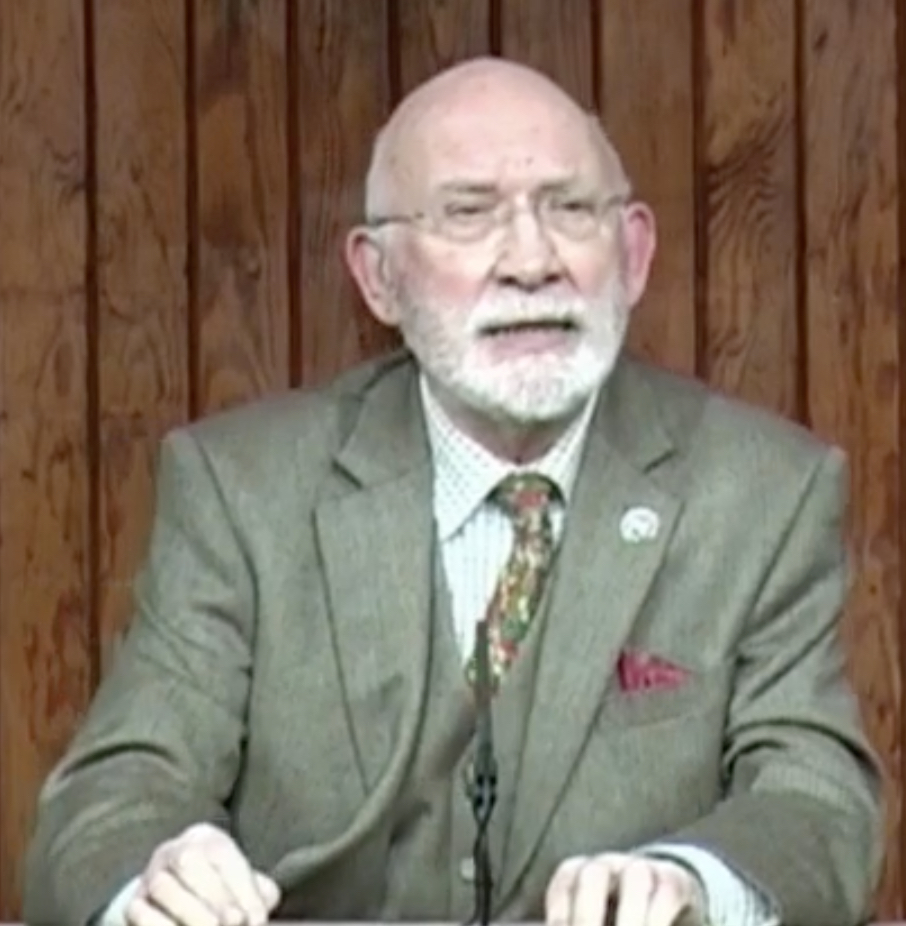
Dr. George Ella's lecture at Fellowship Baptist Church in Cleveland, AL (www.fellowshipbaptistcleveland.org) on John Gill (1697-1771), a pastor-scholar.

Sermon Transcript

Auto-generated transcript • May contain errors

100%
I'd like to introduce our guest
speaker, Brother George Ella. Dr. George Ella holds four graduate
and three postgraduate degrees in fields including classics,
theology, and linguistics. He has written a number of full-length
books, including the works of William Copper, John Gill, and
Andrew Fuller, and others. Born in Yorkshire, England, and
currently resides in Melheim, Germany, Dr. George Ella is a
featured keynote speaker of the 2000 line conference of the English
Bible sponsored by the Gadsden Primitive Baptist Church. My
brother, it's a privilege to have you and would you please
come at this time and we're looking forward to it. Dear friends and
brethren, it's great to be with you and I'm amazed that people
are inviting me so generously to visit them and tell them about
the great men of God that I've been studying recently. I'd like to invite you to visit
with John Gill this evening and he's a very good friend of mine
and he's my number one mentor in the faith. So come along with
me as we do a quick visit to the life and works of John Gill. Now, my first point is that the
good work of 18th century Baptist is often overlooked in church
history. So often when speaking about
the work of the Holy Spirit which infused the churches with new
life in the 18th century mention is made of Anglican stalwarts
such as Whitfield, Harvey, Toplady, and Romaine. The works of these
men, through God's sovereign grace, cannot be praised enough,
but the fact that recent biographers have highlighted their activities
has tended to give the impression that other denominations, such
as the Baptists, were quite inactive during this period. This is by
no means the case as the testimonies of John Gill, John Brine, John
Ryland, John Noble, John Moore, John Skepp, and John Rippon Show. You notice what a popular name
amongst Baptists is the name of John. Any Johns here? Ah,
the tradition is still going on. The best known of these great
men, John Gill, was born in 1697 in Kettering, Northampton, England,
the son of Edward and Elizabeth Gill, née Walker. The Gills ran a small textile
business and were in membership at a local dissenting church
called the Great Meeting, founded in 1662 at the restoration of
the monarchy after the Great Rebellion in England. Originally
particular views of the audiences was not a condition, so they
had in the church quite different views, especially on baptism. But you see this was because
the church had been very much influenced by John Bunyan and
you remember that John Bunyan used to preach that baptism is
no bar to church communion. However, a firm confession of
faith was required of the new members. Elder Edward Gill, John
Gill's father, was occasionally asked to preach by his pastor. Another elder, William Wallace,
became convinced that a church needed to be as united on baptism
as it was on other doctrines. This caused some disturbance,
so it was amiably agreed that Wallace and his followers should
form a church of their own on Baptist principles. Thus, the
Little Meeting was formed at Bailey's Yard, Kettering, with
Wallace as its first pastor. The members now called themselves
Particular Baptists to emphasize that they believed in the Reformed
doctrine of Particular Atonement, as opposed to the General Baptists,
who stressed a universal saving sufficiency of the Atonement. the church prospered and grew,
holding first to open communion but changed to closed communion
in 1768 during the modern question debate on duty faith. Edward Gill was now elected as
a deacon and he is recorded as possessing a good witness because
of his, I'm quoting, his piety, and his holy conversation. During the unrest leading up
to the founding of the particular Baptist Church, Edward met, wooed,
and won his Elizabeth, and the two were married. When Elizabeth
told Edward that she was expecting a child, her husband was immediately
convinced that Elizabeth would bear a son who would become a
household word amongst the Baptists. This fond thought was strengthened
on the very day that the child was born. It was indeed a son. and Edward could not contain
himself and ran into the streets in great joy, proclaiming the
good news to anyone and everyone. Any father here will sympathize
with this because I'm sure I did the very same thing when my first
child was born. I was just almost out of my mind
for joy. The first person he met was Chambers,
the woodsman. who was unloading a supply of
logs in the yard. Edward began to tell him the
good news at the top of his voice, when a complete stranger passed
by and overheard the joyful tones. The man came over to the exuberant
father and said sagaciously, Yes, and he will be a scholar
too, and all the world cannot hinder it. Then the stranger
continued on his way and was never seen again. John indeed
soon surpassed in learning even pupils much older than himself. Before he turned 11, John was
so proficient academically that he was the wonder of the neighboring
clergy and literati, who encouraged him with almost paternal pride. Gil, sorry, was soon, my publisher's
wife is called Jill, spelled G-I-L-L, just the same, so I
get Jill mixed up with Gil, excuse me. Gil was seen every market
day sitting in the local bookshop, reading whatever instructive
works he could lay his hands on, or discussing points of style
and grammar. with the Northamptonshire academics. This picture so left its mark
on Kettering that when a person wished to emphasize that anything
was true, he would say, it is as sure as John Gill is to be
found in the bookseller's shop. That means it was perfectly sure
because he was always there. One minister who encouraged Gill
was Richard Davies, his dates are 1658-1714, pastor of the
Independent Church at nearby Rothwell. Gill could have had
no better instructor than this wise man who combined academic
acumen with an earnest desire to spread Christ's kingdom. In
1748, Gill, said of Davies, His memory has been always precious
to me, partly on account of his great regard both for my education,
for which he was heartily concerned, and also for my spiritual and
eternal welfare. Davis urged Gill never to neglect
the one thing needed, and told his young friend, if you know
Christ well, it is no matter though you are ignorant of many
other things. If you are ignorant of Christ,
other knowledge will avail but little. You youngsters and students
here, think of that. Gill praised Davis' very powerful
and evangelistic ministrations with his zeal for soul winning. Davis evangelized eleven countries,
founding churches wherever he went. training weavers, carpenters,
tailors and farmers to go out into the highways and byways
to bring lost sinners to Christ. In so doing he earned the animosity
of many sleepy pastors in an 80 miles radius of his Northamptonshire
church. They woke up to find that Davis
was doing their work for them. It was Davis who laid the foundation
stone of the work of the Spirit in Olney Bucks, where Anglicans
Moses Brown, William Cooper, John Newton, and Thomas Scott,
Baptists John Sutcliffe and William Carey, and independent Samuel
Greathead afterwards labored, all providing their contribution
to what has become known as the Olney Revival. Sadly, I must
add that Davies, with all the great Johns I have already mentioned,
are all slandered nowadays by so-called Reformed Baptists as
Hyper-Calvinists who refuse to preach to sinners. I think that's
a great tragedy because these were men with a revived heart
and they preached to thousands and won thousands for the Lord. increasing their own churches
from two to sevenfold. John Gill's grammar school days
were soon numbered. John's schoolmaster, an Anglican,
took his religion seriously and encouraged his pupils to attend
prayers at the local parish church during weekdays. Baptist parents,
however, believed that this well-meant act may one day prejudice their
own children against their own denomination. After a good deal
of debating, they decided they must withdraw their children
from the school, no matter what disadvantages they might incur
because of this move. The more affluent Baptists boarded
their children out with private tutors or in private dissenting
schools. The clergy of all denominations
in and around Kettering came to the assistance of John's parents
and strove to find him such a means of furthering his education.
Applications were made in London and specimens of John's work
were sent off in the hope that they would earn a scholarship
for the young protégé. John's youth and learning, however,
proved a stumbling block as such bursaries were only available
for boys who had not yet reached John's proficiency, though they
were much older. Edward Gill had not given up
hope that his son would day become a notable Baptist minister, but
the dissenting academies and colleges he applied to argue
that John was already far too advanced for them. and the envisaged
difficulties if John were placed among less talented students. Here we have a young boy who
is too intelligent and gifted for the senior student and so
he's refused admission to college on the grounds that he was too
brilliant. There was no hope of John's finding
an early place at a university, as such institutions, sadly,
were closed to dissenters. The words of the stranger at
John's birth, that the world might wish to hinder John's progress,
were thus coming true. For the next eight years, John
worked in his father's business. but his understanding parents
gave him every opportunity to learn autodidactically. Quite simply, he taught himself. John improved in Latin and Greek. This is in his spare time whilst
working hard in the textile business. John improved in Latin and Greek
and purchased Buxtos grammar and lexicon so as to learn Hebrew. He then tackled logic, rhetoric,
moral philosophy, and science. Languages proved to be his greatest
delight, and through reading the Latin writers, he developed
a great interest in theology. Remember, we are still talking
about a little boy. Now, his conversation and baptism.
Young John often felt pangs of horror and fear in his breast
because of besetting sin and a sensitive conscience. At other times, he would experience
deep insight into spiritual truths which blessed his soul. When
John was twelve years of age, he heard Mr. Wallace preach on
Genesis 3-9, and the Lord God called unto Adam, and said unto
him, Adam, where art thou? During the following weeks and
months, John was constantly reminded of this question, where art thou? And found that he was in a wretched
state spiritually, fearing that he would die unconverted. John turned to his pastor for
help and a ray of hope following conviction entered his life. Wallace died soon afterwards
but John's parents and the church members helped John on towards
a sound experimental faith in Christ. John Gill was greatly
loved by the members of his church and the change in his life did
not go unnoticed. Thomas Wallace took over the
pastorate from his father but only on a part-time basis. After
a few years, the members realized that young Gill was being called
of God to assist Wallace, though John had not yet testified openly
to a saving work of Christ, believing that he ought to do this first
at baptism, after ample evidence that he was truly converted. Gill also believed that once
he started to make a public confession of Christ, and we remember he's
still a teenager, he should continue to do so as a minister of the
gospel. At the age of 19, Gill was satisfied
that such a time had come. Thus, on the first day of November
1716, he was baptized in the local river. Already proficient
at writing, John composed a hymn to be sung as he passed through
the waters. On the following Sunday, the
4th of November, Gill was formally admitted into membership at the
Kettering Particular Baptist Church and invited to take part
in the Lord's Supper. During the same evening, at a
private house meeting, he opened his Bible at Isaiah 53, read
the text, and commented on a few verses. After this, friends told
Gil of their absolute conviction that he was called to be a minister
of the Word, and asked him to preach a full sermon at the same
time on the following Sabbath evening. The text Gill turned
to was, For I determined not to know anything among you save
Jesus Christ and Him crucified, 1 Corinthians 3.2, which Gill's
first biographer records, ushered in a charming season to the godly
people. After preaching for several weeks
in this way, Gill was officially asked to assist Wallace in his
work as co-pastor, and was soon preaching regularly, both at
his own and other church meetings. Like teenager Charles Haddon
Spurgeon, over a century later, Gill now quickly gained a reputation
as a fine preacher, and was soon well known and loved for miles
around, and even in the capital. Soon Young Gill was called to
pastor the prestigious Goat Yard Church in London, formerly pastored
by Baptist giants such as Benjamin Keech and Benjamin Stinton. This was the church young Charles
Haddon Spurgeon was called to serve to. Not directly after
Gill but there was John Rippon between them and John Rippon
served for many many years and then came Spurgeon. John Gill
now introduces sound Baptist principles to the Southwark area. He soon realized that the doctrines
and methods of church government in his new church needed reforming. Too much emphasis was placed
on the supervisory rights of extra-church affiliations, which
robbed local churches of their sovereignty. A clique of clergy
who met regularly at a coffee house of all places had set themselves
up as joint elders of the total particular Baptist churches in
London, claiming the sole right to ordain pastors and deacons. They said it was their business
and not the business of the churches. Indeed, an influential minority
in the churches maintained that they had relinquished rights
to appoint church officers to the coffeehouse fraternal. What
came to be known as the Baptist Union was here in its infancy. Jill denounced the assumed powers
of the coffeehouse club. I call it a club. and thought
to it that his church chose and ordained its own deacons, as
is prescribed in the Bible. Confronted with much anti-creed
opposition, he bravely drew up a statement of faith which was
thoroughly evangelical in its scope and thoroughly reformed
in its doctrine. This step was necessary as along
with lax ideas of church government, Doctrine was being downgraded,
and heresies concerning the Trinity and the eternal Sonship of Christ
were being fostered in the churches. Once Gill put his church back
on a biblical footing, membership at Goat Yard grew by leaps and
bounds, and the church, which moved to Carter Lane for larger
premises, became one of the most influential congregations in
the country for 50 years to come. Now, Gill's gifts as an evangelist The brethren at Horsley Down,
in Gochart, had been drawn to Gill because of his evangelistic
gifts, and now Gill began to systematically evangelize the
Southwark area. He divided the district into
four parts and assigned two brethren to each sub-area who were to
visit and instruct the members. What started as a work amongst
his own flock soon spread to a wider work, and the evangelical
ministers of all denominations gave Gil their support. Anglican
pioneers of the revival such as James Harvey and Augustus
Toplady were full of praise for the help they received through
Gill's sermons and publications and even preaching. Whitfield
invited Gill to share a platform with him and we have Whitfield
and Gill preaching together. Harvey was particularly fond
of Gill as he taught the sinner's need of the imputed righteousness
of Christ, and Toplady loved Gill for the way he convicted
Arminians of their faulty view of man. Harvey wrote of Gill,
James Harvey, the preacher of righteousness, as he was called,
a humble, frail man who preached to thousands and thousands. He
had a gigantic church that he had to take all the windows away
so that the hundreds and hundreds outside could hear his voice. He was a very close friend of
John Gill's. He said of Gil, he presents us
with such rich and charming displays of the glory of Christ's person,
the freeness of his grace to sinners, and the tenderness of
his love to the church. What better report could be given
of a Christian evangelist? And I have almost weekly letters
from so-called Reformed Baptists who tell me that Gil refused
to preach to sinners. He would only preach to believers. In order to give... They'd never
read Gil, of course. In order to give Gil more access
to a wider field of hearers, denominational leaders begged
him to give a weekly lecture at Great East Sheep. This series,
which was to last almost 30 years, was opened in 1729 by Gill, preaching
on Psalm 71-16. I will go in the strength of
the Lord God. I will make mention of thy righteousness,
even of thine only. Many of these sermons form the
basis of Gill's fine book It's available quite cheaply in America
through Bill Lee's, I think it's called the Standard Bearer, his
publishing house. The fine book, The Cause of God
and Truth. The Great East Sheep Experiment
proved a huge success, and soon Baptists, Anglicans, and Independents
were subscribing to other halls so that Gil could give regular
lectures there. All the churches were open to
him. Now, Gill is recognized as an
ardent evangelist. I'll just comment on this in
face of modern criticism that he was no evangelist at all.
Contemporary evangelical authors looked on Gill's work with admiration,
writing how his message of joyful Christian experience spread far
and wide amongst the Baptists and even influenced, as one missionary-minded
contemporary put it, all the evangelical denominations at
home and abroad, all of them. This was to be expected as Gil
had worldwide evangelism as his goal. Two of Gil's favorite texts
were Isaiah 24, 16, Look unto me and be ye saved, all ye ends
of the earth. and 2 Chronicles 16.9, for the
eyes of the Lord run to and fro throughout the whole earth to
show himself strong in the behalf of them whose heart is perfect
towards him. Preaching at the induction of
John Davis, Gil told him, sorry I might say it again, Gil told
him, souls sensible to sin and danger and who are crying out,
what shall we do to be saved? you are to observe and point
out Christ the tree of life to them and say believe on the Lord
Jesus Christ and thou shalt be saved. He went on to say your
work is to lead men under a sense of sin and guilt to the blood
of Christ shed for many for the remission of sin and in his name
you are to preach the forgiveness of them. He preached, be faithful,
labor to show the one and other their wretched state by nature,
the necessity of repentance towards God and faith in our Lord Jesus
Christ, in his blood, righteousness and atoning sacrifice for peace,
pardon, justification and salvation. You can't get more evangelical
than that. Now John Wesley's clash with
Gil concerning Christ's righteousness. It was inevitable that John Wesley
would clash with Gil and their debate on the question of the
perseverance of the saints filled several books on both sides. Wesley claimed, I believe a saint
may fall away that one who is holy or righteous in the judgment
of God himself may nevertheless so fall from God as to perish
everlastingly." Here Wesley criticizes the very judgment of God. He further stated, he who is
a child of God today, wait for this, may be a child of the devil
tomorrow. Ill answered him by saying, those
who are truly regenerated, effectually called, and really converted,
and internally sanctified by the Spirit and grace of God,
shall preserve in grace to the end, and shall be everlastingly
saved, or shall never finally and totally fall, so as to perish
everlastingly. That's the gospel. Because Wesley
showed great weakness in his doctrine of imputation, Gilquot
Job 79, the righteous also shall hold on his way. and tells Wesley,
by the righteous man is meant one that is made truly righteous
by the righteousness of Christ imputed to him and which he receives
by faith in consequence of which he lives soberly and righteously
and by his way is meant Christ the way in which he walks as
he has received him as the Lord his righteousness. Our righteousness
is in Christ, and Christ never leaves us nor forsakes us. Gill
explains that even if the righteous one slips, falls, or stumbles
because of the inner fight within all Christians, he cannot slip
or fall or stumble out of fellowship with Christ, as it is Christ
who maintains that fellowship, not the man himself. It is, after
all, Christ who is our righteousness, not our own works. The Holiness
of the Law and Good Works in the Theology of John Gill Dr. Abraham Taylor argued that Gill
could not possibly, as a Calvinist, believe in the holiness of the
law and in good works. This is one of the reasons why
leading magazines in Europe and one or two in America call me
an antinomian. They think that I can't believe
in things like holiness because I'm lawless. But though the principal
of a theological college, he had no idea what the doctrines
of grace really were. and sadly most of our enemies
today are in the same boat, clever as they may appear. Hill told
him, though we say that works are not necessary to salvation,
do we say that they are not necessary to anything else? Do we say that
they are not necessary to be done in obedience to the law
of God? Do we say that the commands of
the law are not to be regarded by men, that there are things
indifferent that may be done or not done? No, we say none
of these things, but all the reverse. Do we make void the
law through this doctrine? God forbid! Yea, we establish
the law as it is in the hands of Christ, our lawgiver. to which
we desire to yield a cheerful obedience, to show our subjection
to Him as King of Saints, and to testify our gratitude for
the many blessings of every kind we receive from Him. We do not
reject the law which Christ has established, we follow the law
in Christ, who is our lawgiver and gives us the grace to live
according to his law. Now, Gil and Arminianism. You all know this famous picture
of Gil where he looks as though he's eating a sour lemon. Well,
Spurgeon said he just had an interview with an Arminian. Now,
Gil and Arminianism. Gil's emphasis on the insensitivity
of the unsaved to his own state and his spiritual inability angered
many an Arminian. Once Gil preached on the total
depravity and spiritual inability of man. Aheara became deeply
offended and told Gil, you have degraded man and laid him much
too low. Gil responded, praise sir, How
much do you think men can contribute towards their own conversation
and salvation? The man then gave Gil a long
list of all that man could do to vouchsafe God's eternal favor. Gil listened patiently and then
said, have you done all these things for yourself? No, I cannot
say that I have, replied the man. Gill looked at him with
some surprise and said, if you really have all these things
in your power and have not done them for yourself, you deserve
to be doubly damned and are but ill qualified to stand up for
that imaginary free will which, according to your own confession,
has done you no good at all. However, After you have made
yourself spiritually whole, if ever you find yourself able to
do it, be kind enough to come and let me know how you went
about it. For at present I know but of
one remedy for human deprivation, namely the efficacious grace
of him who worketh in men both to will and to do of his own
good pleasure. Needless to say that man never
came back. Now efforts made to silence Gill.
Great effort was made to silence Gill by a number of free willers
and he was even cautioned by his own people to be less rigorous
when preaching the truth. Spurgeon says of his eminent
predecessor, that's how he termed Gill, Dr. Gill, these are Spurgeon's
words, Dr. Gill was told by a certain member
of his congregation, who ought to have known better, that if
he published his book, The Cause of God and Truth, he would lose
some of his best friends and that his income would fall off. The doctor said, I can afford
to be poor, but I cannot afford to injure my conscience. Spurgeon
then added proudly, and he has left his mantle as well as his
chair in our vestry. Gill's chair is still there in
the vestry, I've seen it, and that's the chair Spurgeon sat
on as Gill's successor. Sadly, the downgrading of doctrine
in the Baptist Union churches got out of hand. and Spurgeon's
fight against it proved in vain. There is nothing new under the
sun, and the follies of Gilth's times and those of Spurgeon's
days are with us again, or rather with us still. We have a tremendous
downgrading controversy on our hands these days. I think it's
greater than the one in Spurgeon's day. This speaker must confess
that in reading Gill he has found a compendium of sound theology
second to none which serves as a God-given armour against the
downgrading going on in reformed evangelicalism today. Back to
Gill and you get back to the Bible and you will only witness
then upgrading and not downgrading. Now, a dying man's dependence
on the everlasting love of God. Gil's very last preaching wish
was to expound the song of Zacharias going on through Luke up to the
Nunc Dimittis of Simon in chapter 2. This morning I heard a wonderful
word of God from our dear brother Mike and he was talking about
Simon's last words in Church History, the Nunc dimittis, Lord,
now letteth thy servant depart in peace according to thy word. And Gil had hoped that he'd get
that far before he died. The old scholar preacher did
not get that far, but ended his 51 years in the ministry by preaching
on the text to give knowledge of salvation unto his people
by the remission of their sins through the tender mercy of our
God whereby the dayspring from on high hath visited us." So,
Gil's last sermon wasn't about himself, Lord now let me, it
was about the Evangelical Grand Commission that all Christians
have. Now, what better note could a
true evangelist end on? Hill was now wracked with violent
pains in his stomach and he lost his sense of taste, eating merely
out of duty. Erasmus Middleton records how
he bore his visitation with great patience, composure, and resignation
of mind to the divine will. Without uttering the least complaint,
without ever saying to God, what doest thou with me? During such
bodily discomfort, Gil's nephew of the same name, he was also
a Baptist minister in St. Albans, he asked his uncle how
he was feeling, how many would have taken the opportunity to
moan in self-pity and give a long list of his ailments. Instead,
as an answer, Bill preached a regular sermon to his nephew, outlining
his hope in the Lord, saying, I depend wholly and alone upon
the free, sovereign, eternal, unchangeable, and everlasting
love of God. the firm and everlasting covenant
of grace, and my interest in the persons of the Trinity, for
my whole salvation, and not upon any righteousness of my own,
nor anything in me or done by me under the influences of the
Holy Spirit, nor upon any services of mine which have been assisted
to perform for the good of the Church, but upon mine interest
in the persons of the Trinity, the person, blood, and righteousness
of Christ, the free grace of God, and the blessings of grace
streaming to me through the blood and righteousness of Christ,
as the ground of my hope. There are no new things with
me but what I have been long acquainted with, what I can live
and die by, And this you may tell to any of my friends, I
apprehend I shall not belong here." To other inquirers, Gil
was more brief. When one visitor asked him of
his well-being shortly before he passed away, Gil merely replied,
I have nothing whatsoever to make me uneasy. And quoted a
verse from Isaac Watts, He raised me from the depths of sin, the
gates of gaping hell, and fixed my standing more secure than
t'was before I fell." It was a principle of Gil that he preached
that the salvation of a Christian and the righteousness of a Christian
is greater than that of unfallen Adam. Because Adam fell. that we are held eternally in
the hand of Christ. This again showed how steadfast
to the last Gil was in stressing the need for a better covenant,
bringing with it a better hope and a better righteousness, which
he faithfully believed God had made with him. Thus when the
time came for John Gil to depart and be with his Lord, he went
without a sigh or a groan, but with a look of inward joy and
peace on his face, and the words, O my Father, my Father, on his
lips. Blessed are they that die in
the Lord. Amen.

Comments

0 / 2000 characters
Comments are moderated before appearing.

Be the first to comment!

Joshua

Joshua

Shall we play a game? Ask me about articles, sermons, or theology from our library. I can also help you navigate the site.