Bootstrap
Drew Dietz

On Whom do You Trust?

Isaiah 36:1-10
Drew Dietz October, 15 2023 Audio
0 Comments
Partial recording!

In Drew Dietz's sermon "On Whom do You Trust?", the primary theological topic addressed is the nature of trust in God versus reliance on human strength and false religions, exemplified through the historical confrontation between King Hezekiah and King Sennacherib. Dietz argues that true trust should be placed in God alone, as demonstrated in 2 Chronicles 32:7-8, where Hezekiah reassures his people of God's protection against their formidable enemies. The preacher underscores the futility of trusting in the "arm of the flesh," illustrated by references to broken reeds, and warns against the allure of false religions that offer counterfeit salvation (Isaiah 36:5-7). Ultimately, the sermon emphasizes the Reformed doctrine of total reliance on the triune God—Father, Son, and Holy Spirit—who provides strength and salvation, urging believers to rest in God’s promises amidst trials and tribulations.

Key Quotes

“Do not be alarmed if the enemies of our great God give you false promises of false peace.”

“Lean not unto our own understanding, lean upon him and his grace.”

“If we’re relying upon [the arm of the flesh] for grace or help in time of need, there’s no salvation to be had, absolutely none to be had.”

“On whom do we trust? If somebody asks you, can you give them a good hope, a good reason for the hope that is in us? It’s not me, not myself, but it’s what Christ has done for me.”

Sermon Transcript

Auto-generated transcript • May contain errors

100%
All right, we'll see if this
will work this time. Anyway, this and these other
places in 2 Kings chapter 18 and 2 Chronicles chapter 32,
the story of King Hezekiah versus King Shennacherib, this is actually
the second time that Sennacherib came to Judah, to Jerusalem,
because he went there one time and Hezekiah had already paid
handsomely. He'd already paid to the Assyrian
king. Now the king, you know, everything looked to be fine.
But the king Sennacherib from Assyria returned again. So my
thought there is off the top of my head, do not be alarmed
if the enemies of our great God give you false promises of false
peace. This could be your friends, your
neighbors. These are the enemies. If they don't worship the Lord
God in heaven, they're like this Rabbi Shekiah. They're like him.
They're like the king of Assyria. We've got this money. We're not
going to come back. And then they come back. And
then now they're going to try to go in and take Jerusalem. We're going to try to take it
all. So do not be alarmed if they return again to do you more
harm or more pillaging. However, If you're a child of
the king, I will read you what was said in this lesson, in a
different place, in Chronicles, 2 Chronicles, you don't have
to turn there, you can note it down, 2 Chronicles 32, verses
7 and 8, when Hezekiah is talking to his people. because he sees
that uh... that uh... should not grab has
come back again to take everything this is a verse one of second
chronicles thirty-two after these things the establishment thereof
shanak rub king of assyria came and entered into judah and encamped
against the fence cities and thought to win them for himself
a matter of fact in this water and kings his general, Rabsh
Kiyit, is speaking in the Jewish language. And they said, don't
do that. It was another intimidation factor.
If I can speak to them, to the people, the men on the wall,
who are defending this city, if I can speak to them in their
own language, it may scare them even more. But listen to what
Hezekiah, now they're outnumbered. Just like we are often outnumbered
in whether a place of work or our neighborhood or wherever
we're at, we are friendly to people, kind to people, try to
get along, but remember, they are the enemies of the gospel,
of the gospel, which we adhere to, which we love, which represents
our Lord Jesus Christ. Listen to what he says in verse
seven and eight. Hezekiah has told his people,
be strong and courageous. Be not afraid nor dismayed. for
the king of Assyria, nor for all the multitude that is with
him, for there are more with us than with him." There are
more with us. That is, he saw the Lord's, you
know, that there's hosts, the angelic hosts, and et cetera.
There are more. There are more with us than with
them. With him, that is the king of Assyria, is the arm of the
flesh, but with us, is the Lord our God to help us and to fight
our battles. And this is what the Lord, I
pray, will do for us this morning. And the people rested. They rested themselves. upon the words of Hezekiah, king
of Judah. Now, I don't want you to rest
in me, but when I stand up here and I, as a representative of
God's grace, this is what I'm trying to do. I'm trying to just
tell you what is done, what's already done. This book is finished.
This is all happening according to God's purpose, His decrees,
His plan. And I'm just trying to remind
us when we gather together, when we gather Wednesday and we gather
Sunday, we just remember him. I'm just trying to remind us
of him. But this is even more true of our King Jesus. To rest
ourselves, whatever's going on outside these walls, to rest
ourselves upon the King. Rest themselves upon the words
of Hezekiah, the King of Judah. That word rested is leaned. Lean not unto our own understanding,
lean upon him and his grace. So may we, the redeemed of the
Lord, take these words of Hezekiah's exhortation to heart. Oh, to
rest upon the very words of our King, Jesus the Christ. To rest and rest only upon him. Now, back to our text in Isaiah
36. I wanna look at verse, one verse. This is said in mocking,
verse five. I say, sayest thou, but they're
vain words. I have counsel and strength for
war, but this is what I want to look at right here. This guy,
this Reb Shecky, he says, now on whom do you trust? On whom do you trust? That's a good question. That's
a good question. Actually we saw that in this
morning's Bible class. David says, I will trust. On
whom do you trust? That's a good question. I ask
each of us today. Well, let's just continue on.
We either trust in several things. The first one is the staff of
this broken reed, Egypt, that is the arm of the flesh. And
this is scary because so often we are in the flesh. So if we
realize how often our decisions are made, when we get up in the
morning and things we do, we don't even consult the Lord our
God. We just do what we normally do,
and that's the arm of the flesh. Now, granted, we're under his
protection, but there's also presuming, which we saw in Deuteronomy
a couple weeks ago, presuming upon God's grace. Well, I'm one
of the elect, I'm a believer, therefore I can do this and I
can do that. Are you seeking him? Is the word
of Christ dwelling in you richly, or are you just kind of, you
know, winging it? No, that's the believer Christ
says, without me you can do nothing. Do we believe that? And there's
nothing wrong, as I said, just continually bugging God or being
opportune and just constantly talk, you know, there's nothing
too small, just continually asking for grace. If the Lord wills,
you know, I'm going to go into town, I'm going to get gas, I'm
going to go into town, I'm going to get groceries, I'm going to harps,
I'm going here. No. That's just common stuff. What
does the scripture say? If the Lord will. You might get
run over on the way. We don't know if the Lord will.
That's the mindset. That's the mindset of Hezekiah.
You know, your eyes tell you I'm outnumbered. But the scripture says he holds
everything in his hand. So this is the first thing. What
are you trusting in? What am I trusting in? Is it
the staff of Egypt? This is simply the arm of the
flesh. That is relying on the mind The intellect, the pocketbook or the wallet,
our jobs, money, our emotions, our insufficient works, our brothers
and sisters. That's not wrong, but if we're
relying upon them for everlasting life, it is, because Christ is
the only one that can give us life. The church, it's always
going to be here. Maybe yes, maybe no. It's unity,
it's doctrine, man, it's very clear about don't put your trust
in man, good music. I've heard people say, I got
saved when I heard that hymn. I don't know. He doesn't save
through the foolishness of singing. He saves through the foolishness
of preaching. Now the hymns that we sing are
in line with what we believe. And I think this is well stated
here in our text. If you lean, if you trust in
the arm of the flesh, he calls it a broken reed. Or in Jeremiah
chapter two, verse 13, it's a cracked cistern, broken cistern, doesn't
hold water. When we lean upon the arm of
the flesh for grace or help in time of need, there's no salvation
to be had, absolutely none to be had. The Lord is very clear
in regarding this. He illustrates this, this arm
of the flesh from the sacrifice of Cain, the very first, you
know, there Cain and Abel to the Tower of Babel. They thought
they could build their way to heaven. Nothing worked. To that
one in the New Testament, what must I do to be saved? What can
I do? Give me something to do. No,
it's the work of God in you. that you believe. With men, and
I've said this over time and time again, this everlasting
salvation, pardon life, is impossible, but not with God. On whom do
you trust? Well, he gives a second reason.
Religion false religion now this remember this is the enemy of
grace and this is what he's saying He's saying verse 7 if you say
to me we trust in the Lord our God Is it not he whose high places
and whose altars Hezekiah had taken away? He didn't understand
the gospel Because that's why Hezekiah tore down those high
places, because they were in competition to the one altar.
So this guy had it wrong, but we can use it for purposes of
teaching and preaching. That is false religion. False
religion. No, we do not trust in the religion
of men. be it Catholicism, or Joseph
Smithism, or Buddha, or Mohammed, they are false religions. They're
man-centered religions. They claim salvation to their
hearers, but if they basically, and back in, turn with me, if
you will, to Isaiah chapter eight, Isaiah chapter eight and verse
20, it says, to the law and to the testimony, If they speak
not according to this word, it is because there is no light
in them. There's no light in them. You
talk to a Mormon and they just want to keep bringing Joseph
Smith in. You talk to the Catholics, they
want to bring in the priest. Christ is our high priest. Mohammedanism
and all these different, and I'm not saying that they're the
philosophies is bad, but I'm just saying, by way of, and whom
do you trust? It's a matter of life and death.
It's a matter of life and death. We're not being critical or judgmental
with what the scripture says. If there's, they don't speak
according to this book. And if this book, you know, a
lot of critics, it's got air and this and that and all that.
Well, I told one man, If that's the case, how do we know the
error is not at Calvary? Where everything, the center
of everything, the historic center of this world, everything pointed
to the substitutionary work of Christ. How do we know it's not
wrong there? No. False religions. And we know
that the natural man loves darkness more than light, John 3, 19. That's just we're born in sin.
So we have a tendency to lean on the arm of the flesh. We have
a tendency to false religion. May our Father help us to trust
in the true religion, not false religion and not the arm of the
flesh. So third point is, back to our text, in whom Do we trust? Hezekiah had a good hope that
maketh not ashamed. Do we? Do we? Now, your friends may say you're
weird, strange, fanatical. All these things the children
of God have had to endure cost friendships of the world. It
costs families. There's all these different things.
But again, my concern is what Hezekiah's concern. Whom do you trust? Well, we can
say, I hope with confidence, we trust in God my father, as
my father, as my darling parent, and my soul echoes Abba Father. I trust that he has chosen me
from before the foundation of the world, Ephesians 1, and will
guide me as his sheep by his skillful providence. I trust
the Father that he will protect me as a hen does her little chicks,
that he will teach me as a schoolmaster about himself. that he will correct
me as my loving and all-caring Father, Father of lights in whom
is no variableness, neither shadow of hurting, James chapter one.
I trust in the Father at the last to carry me home upon his
omnipotent shoulders of grace and mercy and receive me into
glory or to Beulah land. Secondly, we trust God the Son. We trust God the Father, we trust
God the Son, the second person in the blessed Trinity. We trust,
we confide, we expect, other words for trust, in the Son of
God. to take away all our sins, to
take them in his own body on the tree, 1 John chapter one.
We trust the son to satisfy everything held against us, whether found
in the law or the prophets or the decrees of God, Colossians
chapter two. We trust Emmanuel to adorn us
with the spotless garments of his own perfections and array
us in beauty, not our own, but in his comeliness, Isaiah 61.
We trust He to be our intercessor and go-between, to present our
prayers and desires before the throne of grace, Romans 8 and
Hebrews 7. We trust the Son to plead for
us and ever be our advocate, to fulfill every jot and tittle
and entreat on our behalf His promise in that everlasting covenant
to do even as He said. He's not man and He should lie.
We trust God the Spirit. We trust God the Father, God
the Son, and God the Spirit. We trust Him, the Spirit, to
carry that good work unto final and complete fruition. Philippians
1. We trust Him to mortify the deeds
of our vile flesh, to subdue our baser passions that so dishonor
His loving name, to continue to convince us of sin and righteousness,
to help point us to the sun and to curb our tempers, enlighten
our understanding of grace, love, and hope, John 16. We trust him
to comfort his people in these trying times of this worldly
chaos and confusion, knowing that he is not the author of
confusion, but of peace, 1 Corinthians 14. We trust the spirit to abide
in us and most certainly guide us into all truth, John 16, 13. And finally, we trust that good
and gracious spirit of God to reign in us and keep us until
the very end, holy and fully sanctified and made meat for
the master's use, 2 Timothy 2. And then, as Psalm 73 says, then
to receive us up into glory, Psalm 73, 24. So that's, I ask
once more, On whom do we trust? If somebody asks you, can you
give them a good hope, a good reason for the hope that is in
us? It's not me, not myself, but it's what Christ has done
for me. And he did that by order of the
Father. The Son fulfilled what the order
of the Father, so to speak, and the Holy Spirit. That threefold
cord is, it cannot be broken. It's not easily broken. It can't
be broken. And that's the beauty of this
gospel. That's the beauty of the Christ. Our God is sovereign, our Savior
is sovereign, and the Holy Spirit is sovereign as well. On whom
do we trust? His power never fails, never
is slack, and never exhausted. So I say as David, O trust, kiss
the Son, lest he be angry. Brian, would you close us?
Drew Dietz
About Drew Dietz
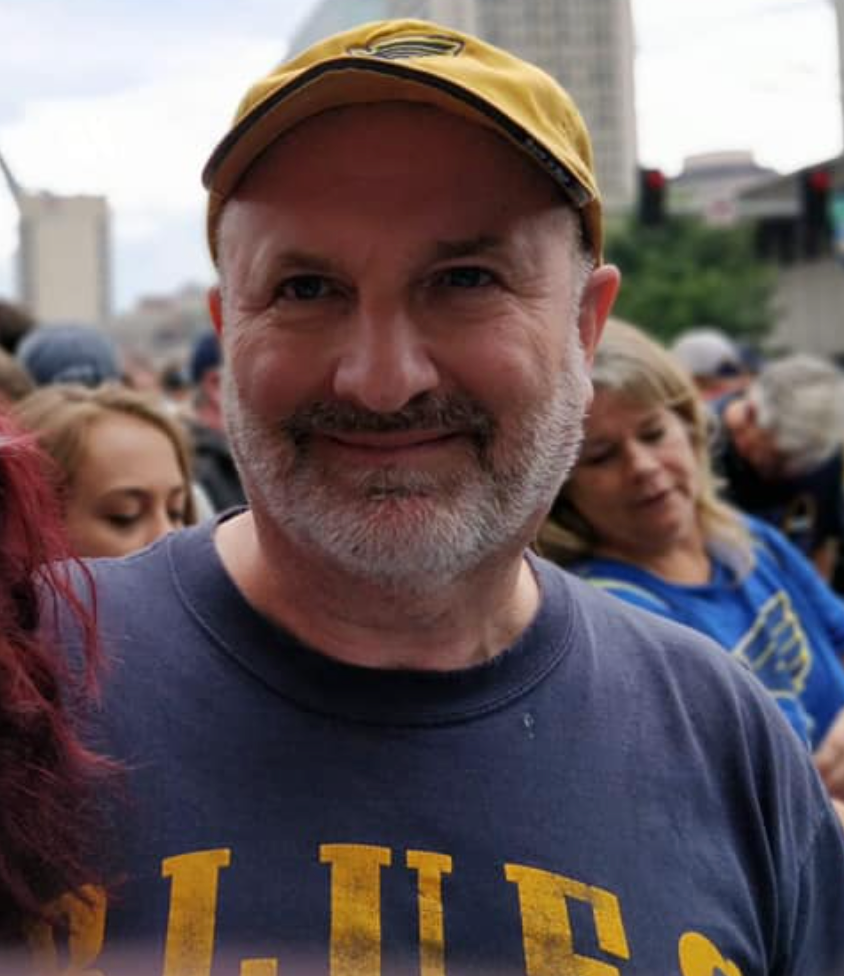
Drew Dietz is the pastor of Sovereign Grace Church in Jackson, Missouri.
Broadcaster:

Comments

0 / 2000 characters
Comments are moderated before appearing.

Be the first to comment!

1
Joshua

Joshua

Shall we play a game? Ask me about articles, sermons, or theology from our library. I can also help you navigate the site.