Bootstrap
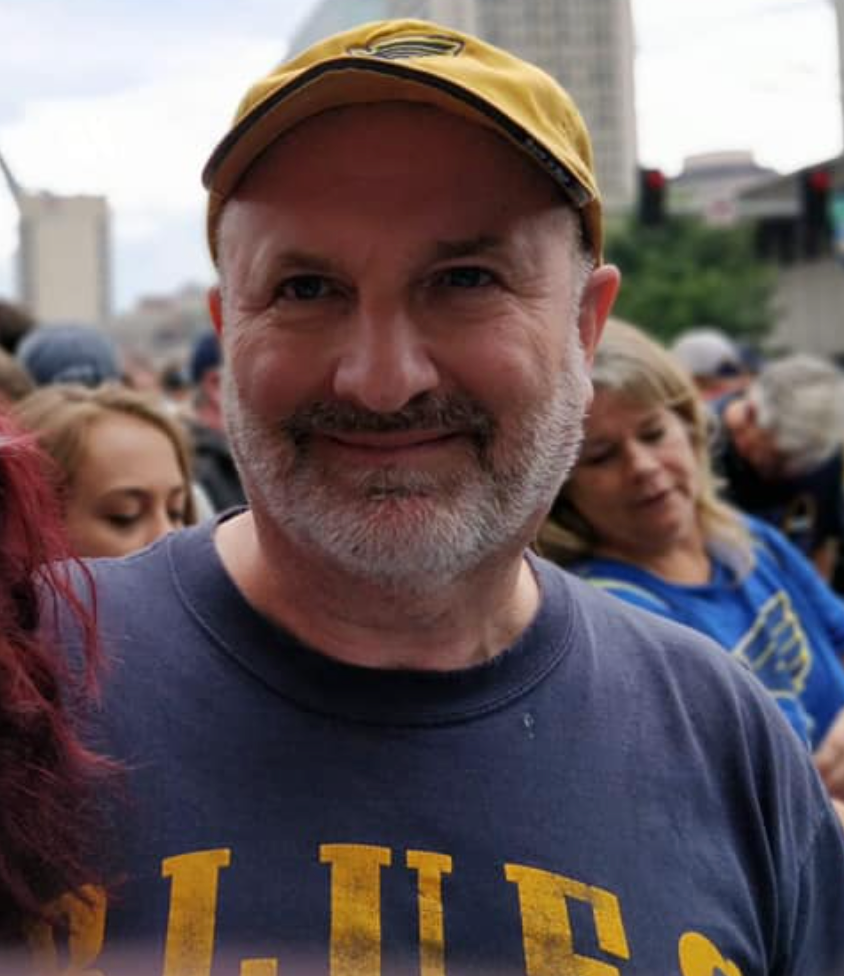
Drew Dietz

On Whom dost Thou trust?

Isaiah 36:1-10
Drew Dietz October, 10 2021 Audio
0 Comments

In the sermon "On Whom dost Thou trust?" Drew Dietz addresses the doctrine of trust in God, emphasizing the importance of directing one’s confidence solely towards the Lord rather than relying on human strength or worldly resources. He argues that humanity, by nature, tends to place trust in sources other than God, highlighting the failure of figures like Cain who approached God in their own way instead of according to divine instruction. Through various Scripture references, such as Isaiah 36:1-10 and Jeremiah 17:5, he illustrates the futility of trusting in man and the necessity of relying upon the Triune God—Father, Son, and Holy Spirit—as the ultimate source of salvation and support. The sermon calls believers to critically examine their trust and to reaffirm their dependence on God's sovereignty, love, and faithfulness, thus demonstrating the profound doctrinal significance of faith in the Reformed tradition.

Key Quotes

“On whom do you trust? That's a good question.”

“By nature and from birth, we trust everything and everyone but God for the salvation of our souls.”

“It is better to trust in the Lord than to put confidence in man.”

“Salvation is of the Lord; it doesn't start with us. It doesn't end with us.”

Sermon Transcript

Auto-generated transcript • May contain errors

100%
Isaiah 36. Let's look at the first 10 verses
for this morning. starting in verse 1 of Isaiah
36, the prophet records, Now it came to pass in the fourteenth
year of King Hezekiah that Sennacherib, king of Assyria, came up against
all the defense cities of Judah and took them. And the king of
Assyria sent Rabshakeh from Lachish to Jerusalem unto King Hezekiah
with a great army. And he stood by the conduit of
the upper pool in the highway of the fuller's field. Then came
forth unto him Eliakim, Hezekiah's son, which was over the house
of Shebna, the scribe of Joah, Asaph's son, the recorder. And
Rabshakeh said unto them, Say ye now to Hezekiah, Thus saith
the great king, the king of Assyria, What confidence is this wherein
you trust? I say, sayest thou, but they
are but vain words. I have counsel and strength for
war. Now on whom do you trust that you rebel against me, the
king of Assyria? Lo, thou trustest in the staff
of this broken reed on Egypt, where if a man lean, it will
go into his hand and pierce it. is Pharaoh king of Egypt to all
that trust in him. But if you say to me, we trust
in the Lord our God, is it not he whose high places and whose
altars Hezekiah hath taken down and said unto Judah and to Jerusalem,
you shall worship before this altar? Now therefore give pledges,
I pray thee, to my master, the king of Assyria, and I will give
you 2,000 horses if you be able on your part to set riders on
them. How then will thou turn away the face of one captain
of the least of my master's servants, and put your trust on Egypt for
chariots and for horsemen? For am I now come up without
the Lord against this land to destroy it? The Lord said unto
me, Go up against this land and destroy it." So this king of
Assyria is not only making and mocking God. He's mocking those
who would follow God. And if they seem to want to trust
in Egypt, it's not going to help them. What I thought was very
interesting is this question that this Reb Sheki asked Hezekiah
and all those who were on the wall on the other side of the
fortified city listening. And by the way, he's speaking
in Hebrew. so the Jews could understand
them. And then the scribes hollered back at them and said, speak
in your own tongue. We understand you. And they said,
nope, I'm not talking to you. I'm talking to all these men
behind the wall, and they're afraid. But here's a question
that this person asks, which is a fair question. It's a fair
question. He says in verse 5, Verse 5, "...on whom do you trust?" That's a good
question. That's a good question. On whom
do you trust? Well, Peter makes a similar statement
in 1 Peter 3 and verse 15. He says, but sanctify the Lord
God in your hearts and be ready always to give an answer to every
man that asks you a reason of the hope that is in you with
fear and meekness. So this question is is a good
question. And it's not being asked today.
People assume they have the answer and they assume they know the
God of the Scriptures. It's the God of their own imagination.
It's really nothing to do with the God of the Scriptures. But
I have only two thoughts, one question and some sub-points.
Why would we ask such a question as this? On whom do you, on whom
do I, on whom do we trust? Why would we ask such a question
as this? Why is it over and over again
asked in different manners and statements in the Scriptures?
Well, because many place their trust in the wrong place. or the wrong person. You see,
by nature and from birth, we trust everything and everyone
but God for the salvation of our souls. That's what happened
when Adam fell. He didn't just slip, he fell
completely. Mind, body, soul, heart, will,
it all collapsed against God in the Garden of Eden. And I'll
just give you some Scripture. We could go on on this point,
which is a negative point, but why would we ask such a question?
On whom do you trust? You look at the first children,
Cain and Abel. Cain was instructed exactly how
God was to be approached. It wasn't left up to him. He
was told exactly how he was to approach God. And yet He came
with the best that His hands could produce. Now that's where
we get there's only two religions in the world. It doesn't matter
if it's Buddhism, if it's Hindu, Seventh-day Adventists, Lutherans,
Catholics, Baptists, there's only two religions in the world. That of Cain, which is works-oriented,
works-based, and like Cain, surely to be rejected, and there are
those of the religion of Abel, who bring what God requires,
a lamb, an innocent lamb for a sacrifice, to atone for what
he had done, what he had said, what he had thought, So that
right there is the reason why we ask such a question. It's
because in an almost perfect situation, there wasn't a lot
of this nonsense, there was only a few people on the earth. And
you want to know why there's murders and killings? Go back
to the garden. Go back there. So that's why
I ask this question. Turn with me to Psalms. Psalms
118 and verses 8 and 9. It is better to trust in the Lord than to put
confidence in man. It is better to trust in the
Lord than to put confidence in princes. Jeremiah chapter 17, and look with me
at verse 5, Thus saith the Lord, Cursed be the man that trusts
in man. and makes flesh His arm, and
whose heart departs from the Lord." That's what we do by nature. That's all we can do by nature
until God intervenes. Jeremiah chapter 9 and verse
23 and 24. Thus saith the Lord, let not
the wise man glory or trust in his wisdom, Neither let the mighty
man glory or trust in his might. Let not the rich man glory or
trust in his riches, but let him that glorieth, that has confidence
in this, that he understands and knows Me, that I am the Lord
which exercise love and kindness, judgment, righteousness in the
earth. For in these things I delight,
saith the Lord." 2 Corinthians chapter 1. 2 Corinthians 1, verse 9, Paul said, but we had the sentence
of death in ourselves, that we should not trust in ourselves,
but in God which raised the dead. Not trust in ourselves. 1 Timothy
1. 1 Timothy chapter 6 and verse 17. Charge them that are rich in
this world that they not be high-minded nor trust in uncertain riches,
but in the living God who gives us richly all things to enjoy. And lastly, Romans chapter 10. Romans chapter 10, verses 1, 2 and 3. Brethren, my heart's desire and
prayer to God for Israel is that they might be saved. For I bear
them record that they have a zeal of God, but not according to
knowledge. for they being ignorant of God's
righteousness, and going about to establish their own righteousness,
have not submitted themselves unto the righteousness of God."
The reason why I read all these passages, and there are so many
more, is on whom do we trust? It is natural for man, he was
created to worship, and when he fell, he substituted riches,
and self, and other men, and idolizing men, idolizing things,
idolizing games, idolizing recreation, idolizing all these things. It
doesn't matter what country we're from, if we're from Ethiopia,
or if we're from this country, man will worship something. There
really is no such thing as an atheist because they're worshiping
themselves. That's why the question is so
important to be asked. Whom are we trusting? Whom are
we trusting? It shocked me the other day.
I was listening to a podcast or something similar to that. It had nothing to do with religion.
Religion wasn't even on the table. This guy was talking about what
was going on in society. And he made a comment. He said
depravity. He used the word depravity. I
thought, there you go. That's why we are in the shape
we're in. The whole world is steeped in
sin. And what we see with these eyes
and hear with these ears are the result of sin. That's the problem. It crosses
all ethnicities, it crosses all religions, it's everywhere. is why we do what we do is because
of what we are. We're sin. And the scriptures
in John 6, verse 44 says, we will not come to Christ for life.
We'll trust in anything and everything other than Christ. This then
is what we must ask ourselves. Am I deceived by this old heart And have I not trusted in or
on the Lord Jesus Christ for hope, peace, and life? That's
what we must ask ourselves. The second thought is why we
would ask such a question. What is the believer's response?
What is the believer's response to this question? Now the word
trust, it's interesting in Psalms 118 because he says, Blessed
is that man that puts his trust in the Lord, his confidence,
that's what the word is, his confidence. It also has to do
with fleeing for a refuge. I thought that was interesting.
You're not putting any confidence in yourself. You're flat moving
to get out of the situation. And as we saw, as we noticed,
and I think it numbers the six cities of refuge, if somebody
kills somebody unawares, he just dropped what he did. was doing,
and he ran for that city of refuge. And those cities of refuge point
us to Christ. It's Christ. So that's what a believer's response
is. I have confidence in, I will
flee for refuge to the triune God. Now before we get to this
point, look at the way the question is worded. On whom? On whom? It's a pronoun, it's not a what. That is so important because
our deceitful hearts will begin to trust in my baptism. Or it will begin to trust in
the Lord's Supper. Or it will begin to trust in my strength,
or my monetary, or my wisdom, or my strength. That's what we'll
do. That's what the deceitfulness
of the heart will do. On whom? It's the person. We don't trust
in doctrine, we don't trust in do's and don'ts. The believer's
answer is, I will trust and have confidence in God the Father,
God the Son, and God the Holy Spirit. First, God the Father.
As my Father, I trust Him to care for me, to feed us, to clothe
us, to watch over us with His tender loving concern. I trust
Him to chastise me when we go astray. to teach us, guide us,
and to guarantee for us, to us, to bring us home as He has promised
in this book. Where He is, we will be. He's
my Father, He cannot lie. As my God, as our God, the one,
only Jehovah God, He cannot lie and He is not man that He, that
He could ever fail. We say we're gonna do something
and we don't do it. We fail. He's sovereign. He's omnipotent. He's omnipresent. He's omniscient. Turn to Psalms
139. Psalms 139. He's omnipresent. Psalms 139 verses 7 through 9. Whither shall I go from thy spirit? Or whither shall I flee from
thy presence? If I ascend up into heaven, thou
art there. If I make my bed in hell, behold,
thou art there. If I take the wings of the morning
and dwell in the uttermost parts of the sea, even there shall
thy hand lead me and thy right hand shall hold me." There's
nowhere we can go that he's not present. There's nothing we can
do that he doesn't see. And he is altogether acquainted with
us. He's omniscient. Luke chapter 12, verses 6 and 7. He knows everything. He knows
everywhere. He knows everything. Luke chapter
12, verses 6 and 7. For are not five sparrows sold
for two farthings, and not one of them is forgotten before God?
But even the very hairs of your head are all numbered. Fear not,
therefore, you are of more value than many sparrows." Not only
is He everywhere, He knows everything. And He's omnipotent. Psalms 135. Psalms 135, verses 5 and 6. This is just a sampling of what
the Scripture says who God is in whom we trust. Verses 5, For
I know that the Lord is great, and that our Lord is above all
gods. Whatsoever the Lord pleased,
that did he in heaven, and in earth, in the seas, and in all
deep places. And we are glad it is so. Therefore our salvation is both
unmovable and steadfast, because God is God. Not the God that's
being preached today. God is God, as He is in this
book. It's been said by somebody many, many years ago, and it's
a correct statement, man's thoughts of God are too small. They're
too small. Not this God and not our God. Let us flee to God our refuge,
the God of the Bible. Second answer the believer gives
is, We trust in God the Son. Yes, He is God incarnate in the
flesh. How else could any sinner be
redeemed? Because God chose the people
and Christ came to die for those people, to accomplish salvation
for them. The man Christ Jesus, whom there's
no salvation in the other, whereby we must be saved. The man Christ
Jesus, Acts chapter 4 verse 12. We trust in Him to fully pardon,
cleanse, and put away our sin, or else We did. Either we got to put away our
sin or he's got to put away our sin and we can't do it. We're
dead in trespasses and sins. We flee to Him to be our atonement,
our propitiation and blot out all things against us. We trust
Him and His perfect righteousness which He gave to us at Calvary
and made us accepted before a thrice holy God, Ephesians 1 verse 6. We trust we will be heard by
God as the sun intercedes on our behalf and pleads our cause.
And he is right now seated at the right hand of the throne
of God as our advocate. We trust that he, Christ, has
completed salvation work on our behalf and will without fail
present us faultless before the throne. Oh, happy day. That's whom we trust. So I say,
flee to Christ, our only hope. The third response is, I trust,
we trust in God the Holy Spirit. We trust God the Father to choose,
the Son to redeem, and the Holy Spirit to quicken all those for
whom the Son fetched. We trust the Spirit to keep us
from falling, Jude 24. to help us in mortifying the
flesh, to subdue our wills, to give us more light and comfort
in time of need. We trust in Him that He's the
one that enables us to do all these things. He's the one that
enables us to repent. He enables us to believe. He
enables us to trust God the Father, God the Son of God. He's the
enabler. He takes the things of Christ
and reveals them to us. We are confident that we will
endure unto the end because of His influence over us and to
dwell in us, showing more of Christ to us. We trust Him to
help us with prayer, loving the brethren, and worshiping God
aright. We trust the Holy Spirit to show
us to put no confidence in our flesh, but lead us into all truth
and finally take us home with all the saints in light. Colossians
1 verse 12. Let me read you something here
in closing. Oh, blessed trust, to trust Him
whose power will never be exhausted, whose love will never wane, whose
kindness will never change, whose faithfulness will never fail,
whose wisdom will never be confounded, whose perfect goodness can never
know a decrease, happy are you, believer, if this trust is yours. So trusting
You shall enjoy sweet peace now and glory hereafter, and the
foundation of our trust shall never be removed." Because it's
God. God the Father, God the Son,
and God the Spirit who has initiated everything, salvation. It's like Jonah said, salvation
is of and of shows origin. Salvation is of the Lord. It
doesn't start with us. It doesn't end with us. He's
the Alpha and the Omega. So I ask myself and I ask us
before we close, is this whom our trust resides? May it be
so. To the glory of God. I'm about ready
to partake of the Lord's Supper and I'll make this statement.
It's the Lord's Supper. It's not this church's supper. This is children's food. This
is children's bread. If you're a believer, This is
for you. Bruce, would you close this?
Drew Dietz
About Drew Dietz
Drew Dietz is the pastor of Sovereign Grace Church in Jackson, Missouri.
Broadcaster:

Comments

0 / 2000 characters
Comments are moderated before appearing.

Be the first to comment!

15
Joshua

Joshua

Shall we play a game? Ask me about articles, sermons, or theology from our library. I can also help you navigate the site.