Bootstrap
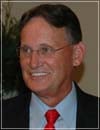
Larry Criss

Jesus Christ: Our Hope

1 Timothy 1:1
Larry Criss June, 16 2013 Audio
0 Comments
Larry Criss
Larry Criss June, 16 2013

Sermon Transcript

Auto-generated transcript • May contain errors

100%
Well, it's good to be home. So
delightful to see you. I've looked forward to it. I
appreciate your pastor and my pastor inviting me to preach. Will you turn with me to 1 Timothy,
1 Timothy chapter 1. It was only a couple of months
ago that I was here, April, and a lot has happened. A lot can
happen in less time than that, can't it? Much can happen. Things change so swiftly. And
I reached a milestone, so to speak. I turned 62 about a month
ago, a little less than a month ago. got to Larry Dale's last night.
His eight-year-old granddaughter met me at the door and helped
me take some things in. Then we hugged one another. She
looked at me and said, Pawpaw, you've got gray hair. I said,
surely not. Say it's not so. It's not so.
And I said, honey, I've had gray hair for a long time. But James wrote, we don't know what
tomorrow might bring forth, do we? We just don't know. I want
to begin by reading just two verses of scripture and speak
to you, as God enables me, nothing you haven't heard before. But
pray that it'll be refreshing to our hearts just to be reminded
of that which is most important never changes, never changes,
that which My immortal soul resides in, never changes. That one who
determines where I spend eternity, never changes. In verse 1 of
1 Timothy, we're told that. Verse 1 of Timothy 1. Paul, an
apostle of Jesus Christ, by the commandment of God our Savior
and Lord Jesus Christ, which is our hope, unto Timothy, my
own son in the faith, grace and mercy and peace from God our
Father and Jesus Christ our Lord." All Paul's epistles before this
had been written to various churches. This is the first of his three
epistles to individuals, pastorial epistles. Of course, two being
to Timothy, and then the third being to Titus. But whether Paul
is writing to a body of believers, or whether he's writing to an
individual, this young preacher, this pastor, Timothy, his subject
is always the same, isn't it? You see where he begins? You
see where he directs young Timothy, this young man that would take
up Paul's mantle, so to speak, when Paul would be gone? Look
where he directs Timothy to look. Again, verse 1, the Lord Jesus
Christ, which is our hope, our hope. You'll notice that the
two words, which is, are in italics, and you know that that means
they weren't in the original. So let's read it again and leave
those two words out. Jesus Christ, our hope. Has a nice ring to it, doesn't
it? Sweet note. Jesus Christ, our
hope. The hope of salvation. Which
part? Every part. Every part. The hope of entering heaven?
The hope of being accepted by the Lord God? Those are not small
things. Those are not easy things. The
Lord Himself said, as far as man's concerned, impossible. And to have such a hope, as standing before God accepted,
there must be a foundation for it, mustn't there? There must
be a reason for such a hope, a reason, a foundation that God
himself will accept. And that excludes just about
everything in our religious world, doesn't it? When I was a boy
at home and my father would catch me doing something I shouldn't
have been doing, and he would stand over me and look down and
say, son, why did you do that? And I'd be looking up, and I
thought, Bob, he's the biggest man in the world. Man, he's big.
And my answer would be, just because. Just because. Rex didn't impress him. Didn't impress him. Just because. But you know, there are multitudes
in our day, if you would ask them the reason of the hope that
they express of salvation, of entering glory, of standing in
the presence of God himself, accepted the foundation, the
basis of that hope? And you know their answer would
be no better than what I gave my father? Just because. Because. Remember what Peter exhorted
believers to do. He said, but sanctify the Lord
God in your hearts. And be ready always to give an
answer to every man that asketh you a reason of the hope that
is in you with meekness and fear." You notice when Paul directs
Timothy where to look, he says, Jesus Christ, our hope. Nothing else. No one else. Paul doesn't begin with I, does
he? Now, that's where the false hope
begins. You ask folks, what's the hope? What's your hope of
glory? What's your hope of salvation?
And they'll say, I, I, I, oh, my soul. You couldn't start in
a worse place. You couldn't start in a worse
place than that, could you? I? Oh, you're bound to go wrong. Paul directs Timothy, himself,
and every believer. He says, for every child of God,
the hope, our hope, is Jesus Christ. Nothing else. No one
else. Christ is all. He's enough. At one time, Paul's answer would
have been, I. Lindsay read it a moment ago,
didn't he? In Philippians 3. At one time, if you would have
asked Saul of Tarsus, why do you expect, as you most certainly
do, why do you expect to be accepted by God Almighty? And Saul would
roll out a scroll with a list. And he would go down. I'm a Pharisee. I live after the strictest sect
of our religion, the Pharisee. And I'm a Hebrew of Hebrews.
A Hebrew of the Hebrews. On my mother's side and my father's
side. As touching the law, blameless. I'm very careful to dot every
I and cross every T, just so. I'm very zealous of the tradition
of my fathers. Are you impressed? Saul certainly
was. Doesn't that sound familiar?
That sounds like another Pharisee, doesn't it? Our Lord taught about
in Luke 18, in his parable, that he spoke because certain trusted
in themselves, like Saul of Tarsus did. before the Damascus Road,
trusted in themselves that they were righteous and despised others. I love our Lord's teaching, don't
you? Just the way he could so simply. Never a man spake like
him. I mean, this parable, you can
just picture that man, can't you? You can just picture him.
You can just visualize him as he stands so proud. I don't know. I have reason to believe that
Pharisees were suspenders, but if he had them on, he was popping
them. He was, I thank you God. Can you imagine? Can you imagine? Oh, what a picture of self-righteousness.
A man's going to the temple, professedly in the presence of
God, and he stands before God and brags on himself. How blind. How blind, how foolish. But he
stands. I thank you that I'm not like
other men. I'm not like other men. I'm a
self-made man. Or I've weaved a robe of righteousness,
and he was impressed with it, and he thought God was impressed
with it. Or I'm not like other men. I
do all these things like Saul of Tarsus at one time. And he
looked down. He looked down at that publican.
And you well know, One of the most despised people of the day
was a publican, that traitor, collecting taxes from the Roman
government against his own people or from his own people. And that
Pharisee looks down and says, I'm not like him. I'm not like
him. Oh, how often such a man has
since prayed. Oh, I would have been like him. I would that I had been like
him, like that publican that felt his need of God's mercy. But the Pharisee didn't. And
so it was with Saul of Tarsus. But now, now, he rolls up that
scroll. Of all of his doings, of all
of his professed merit, all of his self-righteousness, he rolls
it up and throws it on the pile and calls it done. Paul, what's
your hope now? Done? Paul, I knew you. I was acquainted with you. No
one was more religious. More godly? More holy than you? No, no. Paul, if all those things
you once trusted weren't your hope, if they don't recommend
you to God, what's your hope now, Paul? Jesus Christ. Two words. Jesus Christ. Paul no longer speaks of himself
or his heritage or his religion or his works. He sums up all
of his salvation and all of his hope. and all of his desire,
Jesus Christ. He's all. Paul, you're going
to Corinth. There's a lot of smart people
there in Corinth. A lot of philosophers. A lot
of men think they're smarter than God. How are you going to
confront them? What will you do in Corinth?
Paul said, well, this is what I've done. I'm determined to
know nothing among those people save Jesus Christ. He's the wisdom
of God. I'm not impressed with their
wisdom. Let me preach to them God's wisdom. How that Christ,
through Him, God can be just and justify an ungodly sinner. Or what about Ephesus, Paul?
What about Ephesus? When you go there, what shall
you do? Because there they have a temple built to the goddess
Diana. She was the goddess of all the
Ethesians. They worship her. What will you
preach to them? They built her a huge temple. It was one of the seven wonders
of the ancient world. What will you preach there, Paul?
And Paul would say, I will preach a greater wonder than that. I
will preach the wonder of God's grace in Jesus Christ. I will tell them how that God
has blessed us with all spiritual blessings in heavenly places
in Christ Jesus. I will tell them that He has
made us accepted and to be loved. That's a greater wonder than
any temple to any false goddess, far surpassing anything else. Christ is all. What about the
law and the ceremonies and the religious tradition, Paul, like
at Galatia? How will you confront that? Those legalizers that are very
slyly, they think, telling believers, you go ahead and believe in Jesus.
That's okay. That'll be all right. However, we can't throw Moses
out the door. We still have to honor the law.
You go ahead and let's just, can we not mingle the two? Can
we not mix the two? Can there not be Christ and Moses?
Can there not be works and grace? And Paul said, no, no. God forbid
that I should glory saving the cross of the Lord Jesus Christ. Nothing between. Nothing between. My soul and the Savior, Christ
is enough. Oh, at one time, between this
sinner and the Lord God, there was a mountain of sin and
transgression, abomination. And I couldn't go over it. I
couldn't go around it. And God's voice thundered, the
soul that sinneth, and oh, that was me, must die. There was that great gulf fixed,
fixed. And I couldn't bridge it. My repentance couldn't bridge
it. Prayers couldn't bridge it. Faith couldn't bridge it. Oh,
that great gulf. I was, as Paul described, without
God, without Christ, without hope. But God Jesus Christ bridged that great
gulf. He, by His life and death, our
glorious Redeemer, this sinner who couldn't have
been any further off, has been brought nigh by the blood of
Jesus Christ. Brought nigh, Paul said. Now. Now. Brought now by the blood
of Christ. So near that I couldn't be any
closer, Rex. I couldn't be any more loved
by God. I couldn't be any more accepted by God. I couldn't be
any more one in Christ because I'm in Him. No wonder Paul said,
Timothy, Jesus Christ is our hope. Preach that. Preach Him
and nothing else. Paul said, God has made Him,
that is Christ, who knew no sin, to be sin for us. And what's the outcome of that,
Paul? What was the purpose of that?
What's the fruit of that? Was His being made sin? The outcome
of it? Depending upon something that
sinners would do on down the road? Oh, no, no, no. No. Because he was made sin at Calvary. It was then that he entered into
the holy place. Then and there, he either accomplished
salvation, he either accomplished redemption, or he didn't. He
either put away sin, or he didn't. And bless his holy name, when
he said, it's finished, it's finished. And the result of that
is, we're made the righteousness of God in him. At the same time,
he was made sin. He bore it away like the scapegoat. upon whose head the high priest
placed his hands over, symbolically transferring the sins of Israel
to that scapegoat. Then he was taken out into the
wilderness and let go, never to be seen again. Oh, my sins. Isn't this a blissful thought? Oh, my sins, not in part, but
the whole, were nailed to his cross, and I bear them no more. Praise the Lord, praise the Lord,
O my soul. Paul said, there is therefore
now no condemnation to them, them, who? Who can possibly be described
in that way? Who can possibly enjoy such a
state before the Lord God? You mean to tell me there are
people in this world that God Almighty looks down on with delight? That God Almighty looks down
like He did that publican and said, He's not guilty. He's not
guilty. He's going home justified in
the sight of God Almighty. Paul said, There is therefore
now no condemnation to whom? Who are those people, Paul? Who
are such blessed people? Those who are in Christ Jesus. Our hope is Jesus Christ has
brought me to God, Himself being the way. In 2 Thessalonians,
Paul said, Jesus Christ has given us a good hope. through grace. In Titus, he referred to that
blessed appearing, that blessed hope rather, and the glorious
appearing of the great God and our Savior, Jesus Christ. And Peter, Peter referred to
our Lord and His resurrection as a living hope, a living hope. Jesus Christ is all of that,
is He not? He lives. He lives. Now, this moment, the Lord of
Glory sits on the throne of sovereign majesty, ruling and overruling
everything for His glory and the salvation of all His people. And when He calls the last sheep,
as Ruth sang about a moment ago, Cause that last one that God
entrusted into His hands, that He became responsible for, that
He laid down His life for, whose sins He bore away. When He calls
that last one to Himself, when He comes to the tomb of that
sinner and says, live, live, He'll say, time shall be no more. He'll just Fold it all up, and
so shall we ever be with the Lord. Sweet thought, is it not? Our hope lies here. Jesus Christ. Other religions,
they continue. They don't require that their
founder yet be alive. It's not necessary. Not so concerning
Christianity. We live because he lives. We derive our life from him. Is that not what he told his
disciples? Because I live, ye shall live also. What a standing
miracle. The church of Jesus Christ is
in this world, is it not? It's a standing miracle. But
the greater wonder, that's a wonder, but the greater wonder is this,
her head, her head. His church is his body. Oh, but
look at the glorious head from whom she derives all of her life. Paul said, in him are hid all
the treasures of wisdom and knowledge. All the fullness of the Godhead.
One hymn writer expressed it like this. And he didn't exaggerate. He didn't go too far. It's not
possible. Millions of years my wandering
eyes shall o'er thy beauties rove, and endless ages I'll adore
the glories of thy love. Timothy, Jesus Christ, our hope. Is that enough? Is that enough,
Alan Kibbe? Jesus Christ, is He enough? The only people that ask such
a question as that, the only people that have such a thought
as that, are those who've never seen Him. If you've ever seen
Him, your heart will echo, oh yes, He's enough. He's enough. They asked the bride
in Solomon's song that question, didn't they? She went out looking
for her beloved, the bridegroom. And she asked the watchman in
the street, have you seen my beloved? Have you seen him? He came to me, and I didn't arise
like I should, and now I want him. I want him. I must find
him. Have you seen him?" And you remember
their answer. How will we know him if we see
him? Who is he above another? What
makes him so special? And she said, oh, nobody else
is like him. He's the fairest of 10,000. He's
the lily of the valley. He's the cheapest. He's all in
all. He's perfect. He's perfect. There's no flaw in him. There's
no defect in his character. He's perfect God and perfect
man. He's altogether the wisdom and
the righteousness, the sanctification. He's all in all. I'm complete
in him. If you ever see, if you ever
see, if God opens your eyes to behold the name of God, you'll
know and you'll sing with me. There's not a beloved like my
beloved. There's not another like Him.
Yes, Christ is all. He did for me. He did for me what only God could
do. What no one else could do. Is
it not so? Is it not so? Jesus Christ, our
hope, did for us what only He could do. He trod the winepress
alone, without any assistance, without
any help, where would it be? He trod the winepress alone.
He bore my sins alone. There was only one voice, only
one voice, that uttered that proclamation of victory, it is
finished. And it was the voice of our beloved
Redeemer. And He alone deserves all the
praise, and all the trust, and all the gratitude. Jesus Christ,
our hope, yes, He's enough. Wish I could sing like David
Coleman. There's an old hymn. We love
the scene, don't we? We love the scene of Christ our
King. Our King. Not that imposter,
Don. Not that imposter Jesus that
can't have his way. No, no, no. The one we sing of,
He's King. We love to sing of Christ our
King. He's our King. With Thomas we
bow before Him. My Lord and my God. You're everything. You're all
in all. You're all I need for time and
for eternity. Oh, we love to sing of Christ
our King and crown Him blessed Jesus. There is no word here
ever heard so sweet, so near, or near rather, as Jesus. Christ our King. Oh, what a wonder
of His grace. Lord, draw back the curtain. Draw back the curtain. Help me to remember. Like Paul
said down here, before verse 13, I was a blasphemer and persecutor
and injurious. And all that time, Paul thought
he was doing God's service. All the time that he was hunting,
with a thirst for the death of all those who called on Jesus
of Nazareth, Paul thought he was pleasing God. How blind,
how religious, but how blind, how engulfed in darkness, and
he knew that's where he would yet be, or even worse, lifting
up his eyes in everlasting darkness, had it not been for one thing,
but, but, but, I, I, child of God, put
your name there. Let's get in Paul's shoes. But I obtained mercy. I obtained
mercy. What a wonder. What a wonder. Jesus Christ, our hope. When sin abounded, Grace doth
much more abound. That's what Paul said in Romans
5, didn't he? Yes, sin abounded, but he didn't
stop there, did he? Grace doth much more abound. Yes, sin reigned unto death,
but grace, God's sovereign, superabounding, Super reigning grace doth much
more. Grace. Oh, what a charming sound. Grace that's greater than all
my sin. Amazing grace that made my heart
to fear. And an amazing grace took my
fears away. Grace that opened my blinded
eyes. Grace that made me see. See Him. Grace abounded in all child of
God. Look yonder. Look yonder. You see grace. You can see grace? Oh, yes. See the very personification
of grace. There He sits. There He sits. Jesus Christ, our hope. Setting upon, Paul said in Hebrews
4, upon a throne of grace. Grace Himself and Himself grace. Did you not find it so? Did you
not find it so? In those days when God got you
lost, when He stripped you, and perhaps you sought mercy
and didn't find it, Remember? Remember? Remember lying in bed,
closed? Couldn't sleep? All I could think of, I'm lost. I'm lost. And I'm going to hell. And I deserve to go to hell. And there's nothing I can do. And he would not let me go. He
would not let... If someone had told me during
those days, Larry, God's being gracious to you. He's teaching
your heart to fear. He's bringing you down. Really? This is gracious? I'm lost! Oh! But He came to me and said, Thy
sins, that burden, that terrible load that's crushing your soul
down, it's gone. It's gone. Your sins are all
forgiven thee. What's that old hymn say? He
reached down his hand for me. I was near to despair when he
came to me there and he told me that I was free. And he lifted me up and gave
me peace from above. when He reached down His hand
for me." Yes, Christ is the personification of grace. Is He not? Is He not? You remember in John
11, when He came to Bethany, where Lazarus had died four days
before. And Mary and Martha, brokenhearted
and confused, because they sent word to Him before their brother
had died, but He didn't come. So he comes to Bethany, seemingly
now too late. What's the point? And Martha
has that frame of mind when she meets him. If you'd have been
here, my brother had not died. You remember what he said? Martha, thy brother shall rise
again. My soul, who else could talk
like that? Who else could speak that with
such authority? And that wasn't a question. It
wasn't a suggestion. He was telling her a fact, the
truth. Thy brother shall rise again.
And she had some vague notion of the resurrection sometime,
somewhere, somehow, a very cold sort of comfort she derived from
it. And she replied, yes, I know,
in the last day. He arrives in the resurrection,
and he said, Martha, I'm the resurrection. Oh, what a difference. What a difference. She went and got Mary. They come
back to him. They go to the tomb. I just love
to visualize this. Don't you? See my great God and
Savior, Lindsay. See, God in the flesh, who said,
The hour is coming that all shall hear the voice of the Son of
Man, and they that hear shall live. He said, Father, I'm not
asking for myself, for these that stand by, that they may
believe that you sent me. Lazarus, come forth. And I don't think it's a stretch
to say that from that day to the day that Mary and Martha
and Lazarus died, they ever thought of the resurrection as just some
vague, vague, abstract theory. Do you? When they thought of
the resurrection, they thought of Him. Oh, do you remember what
He did? Did you see what He did? Oh,
never understand when He said, I am the resurrection. Apply
the same thing. To all those glorious doctrines
of grace. When you think of election, without
Him, there would have been none. God chose us in Him. Without
Him, no choice. See your glorious Redeemer, standing
before God the Father. And He chose Christ first, and
then chose us in Him. Thou art my first elect, God
said, and then chose us in Christ our Head. On one occasion, after
sending out 70 disciples, giving them power over demons and disease
and preach the gospel, they came back rejoicing in Luke 10. And he said, in this rejoice
not that the devils are subject unto you, but rather rejoice
your names are written in heaven. Your names are written in heaven,
Bob Ponson. Your names are written in heaven.
The Lamb's Book of Life. Isn't that glorious? And no one
can take it out. It'll never be erased. I've had
a few experiences where I've gone somewhere to preach and
a reservation was supposed to have been made for me, and I've
gone to the motel, went up to the desk, I'm Larry Criss, and
they let me say, so what? I say, well, maybe you didn't
understand me. I'm Larry Criss. Is that supposed to mean something
to us? Well, there was a reservation made for me. I'm sorry, sir,
there wasn't. There wasn't. And I think, man,
that Donny Bell's done it again. But Peter said, child of God,
there is an inheritance laid up for us in glory, reserved
for us in heaven, incorruptible, undefiled, that fadeth not away. I've got a reservation in glory,
and that's where I'll meet my Redeemer. Redemption. Redemption. Redemption. He loved me, and he gave himself
for me. The value, the worth, the sufficiency
of redemption is the value, the worth, the sufficiency of the
Redeemer. And he's priceless. His precious
blood shall never lose its power till all the ransomed Church
of God be saved to sin no more. Even the Lord God said, when
I see the blood, I'll pass over you. My acceptance before God
again Jesus Christ, our hope. Accepted in to be loved. Paul
said in Ephesians 6, he had made us accepted. He, who? God. God. God the Father. He made us accepted. Will he reject what he himself
provided? Never. Never. Turn, if you will,
to Revelation chapter 21, and we'll bring this to a close.
Jesus Christ is also our hope of heaven, our hope of glory. I don't know a whole lot about
heaven. When Andrew, Peter's brother, stood
with John the Baptist and another of the Baptist disciples one
day, Jesus walked by. And John directed them away from
himself to the Lord and said, Behold, the Lamb of God. And
Andrew and the other began to follow him. And the Lord turned
and said, What do you want? They said, Master, where dwellest
thou? And he said, Come and see. And one day, one day, we're going
to go see. We're going to go see. Revelation 21, it says in verse
1, And I saw a new heaven and a new earth, for the first heaven
and the first earth was passed away, and there was no more sea.
And I, John, saw the holy city, New Jerusalem, coming down from
God out of heaven, prepared as a bride adorned for her husband.
Just perfect. Perfect. And I heard a great
voice out of heaven saying, Behold, the tabernacle of God is with
men, and he will dwell with them, and they shall be his people,
and God himself shall be with them and be their God." Oh, look
at this, child of God. My brothers and sisters in Christ.
And God shall wipe away all tears from their eyes. We cry now,
but Omnipotent God will say, no more. And there shall be no
more death, neither sorrow nor crying, neither shall there be
any more pain, for the former things are passed away. Who says
so? And he that sat upon the throne
said, behold, I make all things new. And he said unto me, write,
for these words are true and faithful. And he said unto me,
it is done. I'm Alpha and Omega, the beginning
and the end. I will give unto him that is
a thirst of the fountain of the water of life freely. Augustus' top lady said in his
famous old hymn, Rock of Ages, When I soar through worlds unknown, And behold thee on thy throne,
O rock of ages, cleft for me, Let me hide myself in Thee. Just a couple more words. Look
at verse 4 of chapter 22. Oh, what a glorious truth we
read in chapter 21. What a blessed sure and certain
promise. But look what it says here in
verse 4 of chapter 22. And they shall see His face. what's in store for us, they
shall see His face. What a day! What a day! When life is most o'er and death
is in view, the Word of His grace will see us safe through. Not
fearing nor doubting, with Christ at our side, we hope to die shouting,
will provide. God bless you. Thank you for
your attention.
Larry Criss
About Larry Criss
Larry Criss is Pastor of Fairmont Grace Church located at 3701 Talladega Highway, Sylacauga, Alabama 35150. You may contact him by writing; 2013 Talladega Hwy., Sylacauga, AL 35150; by telephone at 205-368-4714 or by Email at: larrywcriss@mysylacauga.com
Broadcaster:

Comments

0 / 2000 characters
Comments are moderated before appearing.

Be the first to comment!

Joshua

Joshua

Shall we play a game? Ask me about articles, sermons, or theology from our library. I can also help you navigate the site.