Bootstrap
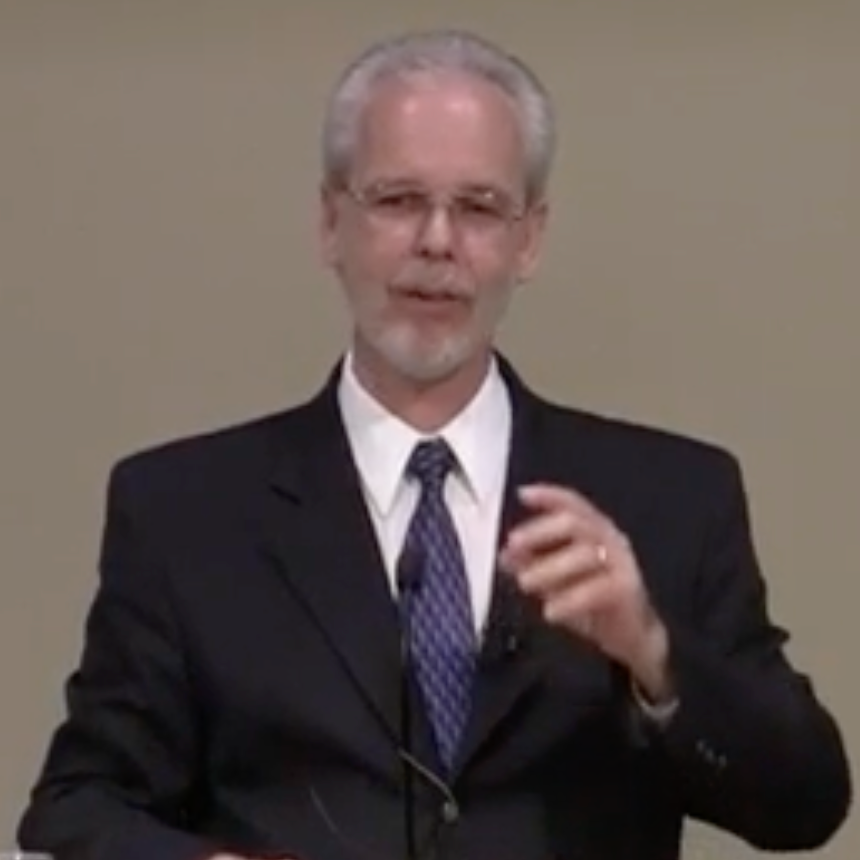
Mark Daniel

The Uniqueness of The Gospel

Ephesians 4:1-5
Mark Daniel December, 28 2005 Audio
0 Comments
Mark Daniel
Mark Daniel December, 28 2005

Sermon Transcript

Auto-generated transcript • May contain errors

100%
It's good to be home. Let me ask you to be turning
to Ephesians chapter 4. While you're turning there, let
me pass along the notes that the folks in Albany sent. They
wanted to make sure and thank every one of you for your part
in sending the gospel to Albany. They said that they really appreciated
all you did to get us there and all you've done to keep us there.
And they really do appreciate that. And Donna and I do as well. Those of you who've helped us
through this last year, it's a difficult time. You know who
you are and I appreciate so much all your kindness toward us. And even though I hadn't taken
notice of the passage of time, Donna said it's been Over a year
since we've been here, I've forgotten how long it's been, but nonetheless,
it's just like yesterday to see your face, and I really do enjoy
just getting to be with you. Tonight, I want to preach out
of Ephesians 4, and I want to talk about the uniqueness of
the gospel. I want to focus in on the first
six verses. Let's just read those together.
I just want to look at one in particular. Let's begin with
verse one. I therefore, the prisoner of
the Lord, beseech you that you walk worthy or worthily of the
vocation wherewith you are called. With all lowliness and meekness,
with long-suffering, forbearing one another in love, endeavoring
to keep the unity of the Spirit in the bond of peace, there is
one body and one Spirit. Even as you are called in one
hope of your calling, one Lord One faith, one baptism, one God
and Father of all, who is above all and through all and in you
all. Now, I'm not going to be talking
about the exclusiveness of the gospel, but rather the uniqueness
of the gospel. Now, we're accused by many of
preaching an exclusive gospel. But nothing could be further
from the truth. The good news, please hear this if you hear
nothing else I say, the good news of God's sovereign grace
in Christ Jesus is the only truly inclusive gospel a sinner can
find. It's the only one that guarantees
that whosoever shall call upon the name of the Lord shall be
saved. That whosoever is literally all
whoever. You can't get any more inclusive
than that. The gospel doesn't allow for the least possibility
that any sinner will go to hell who truly calls upon the Lord
for salvation. False gospels, on the other hand,
are quite exclusive. They exclude those who can't
understand the mystery of Christ. They exclude those who cannot
repent. They can't change their mind. Those who cannot believe,
those who cannot forsake their sin are all excluded by the gospel
of our day. But the gospel of Christ, our
gospel, includes all people who find themselves in that condition.
What a wonderfully inclusive gospel we preach. Sinners can
find refuge here. The truth is, when properly understood,
what most people today call the good news is actually the bad
news. because it excludes true sinners from finding peace. The
gospel is not exclusive, but it is. It's every bit as unique
as the Christ it was given to reveal. There can only be one
Christ, and therefore there can only be one true gospel, for
it's every inspired word corresponds exactly to the person and the
work of the living word. Therefore, to tamper with the
gospel is serious business because it's nothing short of attempting
to modify the very person of our Savior. Any preacher who
adds to or subtracts from the gospel revealed in the Bible
in an effort to change even just one small detail of its divine
message is guilty of rejecting the Lord Jesus Christ. It's not
just a doctrinal error. This is a personal thing. He's
trying to change the Lord Jesus Christ. Now, if we find ourselves
having a problem with the uniqueness of the gospel, it's always because
of this. We would, for some reason, feel
a need to justify the salvation of someone who rejects its teaching.
Now, if you find yourself ever tempted to do that, in that situation,
I want to point out to you two great blessings. Two great blessings
for God's people that arise from the clarity of the gospel revelation
in scripture, the uniqueness of the gospel first. The gospel
in its simple uniqueness removes all ambiguity. The gospel, if
anything else about this is true of the gospel, it's simple. It's
not hard to remember. It's not hard to recall its teachings. I remember my theology teacher
back in Bible college. He was an avowed Arminian. He said, you know, what we call
the gospel, he said, Calvinism is not hard to understand. It's
just hard to believe. He was right on both points.
But it's not hard to understand. The gospel is simple. Isaiah
said, it's so simple that the wayfaring men, though fools. That's true of me on both points.
Just wandering astray from God and a fool. The wayfaring men,
though fools, shall not err therein. The gospel is so simple. Now,
I'm not saying that we'll be able to discern who really and
truly believes the gospel. But the gospel's unique simplicity
carries this blessing. It makes it easy to determine
who doesn't believe the gospel. It's that clear. The uniqueness
of the gospel also helps us to keep the real issues straight
in our thinking. You know, we live in a world where the vital
concern of religion is to isolate what they call the essential
doctrines so that they don't break fellowship over the non-essential
doctrines. And I'm still trying to figure
out how you can tell the difference. But for true believers, the issue
for us is far less complicated than that. Our only concern is
that the whole gospel be preserved and maintained and honored. Why?
Because we want to argue doctrine? No, because we want our Christ
to be glorified in all of the fullness of His glory represented
in the gospel. That's why we're jealous over what we preach and
teach. Because our Christ's glory is at stake. We don't hate unbelievers. I love unbelievers. I used to
be one. And only by the grace of God am I not one today. I
don't hate those people. We just don't compromise the
glory of Christ. That's all. If Christ is all in all to you,
you will not tolerate the least modification to the gospel, not
a single one of its teachings, because you see it as the perfectly
drawn, divinely inspired portrait of your Savior, and you wouldn't
change a brushstroke in it. We wouldn't even change it for
our own sakes. Why would we change it for someone who denies it?
No, we just don't do that. Now, in this passage, the gospel
is presented, the uniqueness of the gospel is presented in
this as a series of ones. The first three of those ones
represent the work of the Holy Spirit. The last one, which is
subdivided into three other divisions, speaks of the work of God the
Father. But the one I want to speak about are those middle
three. The very heart of the gospel, for they reveal the person
and the work of Christ. There again in verse five, one
Lord, one faith, one baptism. Now, the original language of
the New Testament in a lot of ways resembles the tribal language
that Donna and I learned in Africa. They don't have a word for same.
They use the number one. If I wanted to say you and I
are the same, I'd say you and I are one. And they did that
in the original language in the New Testament. That's how the
word one is being used here. It's the number one. It's meaning
one and the same. You can read this passage that
way and it makes quite good sense. All of God's people, are brought
by the same grace of God, through the same power of the Spirit,
to bow to the same Lord, Jesus Christ, receiving the same gift
of faith in Him alone, and confessing Him in the same baptism. Now,
let's take a look at those three things. The same Lord. One question
will suffice to reveal whether we believe that Jesus Christ
is Lord or not. And that's simply this. Is he
your Lord because you believe in the doctrine of the sovereignty
of God, the sovereignty of Christ? Is he Lord because you believe
that doctrine? Or is he Lord whether you believe
it or not? That will tell the difference
whether you are truly, truly regarding Christ as sovereign,
sovereign Lord. If we must make him Lord, we've
done two things. We've denied his Lordship if
we must make him Lord. And we've also sealed ourselves
off from his blessing. You remember there in John chapter
6, right after he'd fed the 5,000. Let me read those two verses,
verses 14 to 15. Then those men, when they'd seen
the miracle that Jesus did, said, this is of a truth, that prophet
that should come into the world. If it had stopped right there,
you would have felt like you were in the presence of fellow
believers, folks who looked to the same Lord. This is that prophet
Moses foretold. He's surely coming right here
in our midst. Look at what he's done. But that wasn't all they
said. When Jesus therefore perceived
that they would come, they wanted to come and take him by force
and make him king. They forfeited all privileges
to come before the sovereign and plead for mercy. When you
make him king, you declare he's not king. And you declare that
you are sovereign. And he departed again into a
mountain himself alone. He'll do that every time. Christ
will have nothing to do with any religion that must make him
what he really is already. The only way a sinner will ever
see, any human being will ever see Christ as Lord is to be taken
captive by him against your will. You'll know his Lordship then.
Paul twice in this book calls himself the prisoner of the Lord.
Now, what does that mean? Does that mean that he submitted
himself as a prisoner? You've watched all the old Andy
Griffith movies where it was the old drunk that walks in and
locks himself up in the cell, and it's not like that. Salvation
in modern religion is like that. You bring yourself in, you arrest
yourself, and you put yourself in and lock the door. No, it's
not like that. Only if God takes you and saves you against your
will. I like what Maurice Montgomery
said, God saved me against my will with my full consent. And
that is exactly the way he saved the Apostle Paul. Look back over
in the book of Exodus, just a couple of verses for a clear evidence
of this. This is such a wonderful example
of the Lordship of Christ. Acts chapter 9, yes. And Saul, yet breathing out threatenings
and slaughter against the disciples of the Lord, went unto the high
priest, and desired of him letters to Damascus, to the synagogues,
that if he found any of this way, whether they were men or
women, he might bring them bound unto Jerusalem. And as he journeyed,
He came near Damascus, and suddenly there shined round about him
a light from heaven. The Lord ambushed him. And he
fell to the earth and heard a voice saying unto him, he overpowered
him, Saul, Saul, why persecutest thou me? And he said unto him,
and he said, who art thou, Lord? And the Lord said, I am Jesus,
whom thou persecutest. It is hard for thee to kick against
the prince. And he trembling, And Astonish
said, Lord, what wilt thou have me to do? He took him into custody.
And he said, the Lord said unto him, Arise and go into a city,
and it shall be told you what you must do. He made him his
slave. You see, when God saves a sinner, he just takes over. It's his choice where you're
saved, when you're saved, under what conditions you're saved,
whether you're saved. He takes his prisoner. If you know him
in that relationship, you know he's Lord. Which one of us here
tonight ever turned freely to the Lord Jesus? I sure didn't. I wasn't even looking to. I was
happy. I was satisfied. I was doing
what I wanted to do. And yet the Lord happily ruined
my life for me. He got me out of my job, out
of my career, got me out of the country I was living in and saved
my soul against my will. I was graciously made the prisoner
of Christ. He is Lord. And all of God's
people say that's exactly The Lord, I vow to save me at his
will, the same war, the same faith. Now on this question,
how can we be sure that our faith is the faith? The one that's
spoken of here that all believers have the same faith. One simple
question, I think, will help us verify it, and that's a question
of source. Does our faith originate within our heart? Or is our faith
the gift of God that comes to us from without? You alone can
answer that question. No one can answer that for you.
But you know whether it's something you've worked up, something you've
put together, or whether God just made you believe. Totally
outside of your own ability to make that happen. Let me share
with you a verse in 2 Thessalonians chapter 3. This is such a, this
is a verse that I've longed to understand for a long time, and
I think I have some light on it. Second Thessalonians chapter
three. Let's begin with verse one. This is a true saying. I'm sorry,
wrong one. One chapter too many. Here we
go. Finally, brethren. Pray for us
that the word of the Lord may have free course and be glorified,
even as it is with you, and that we may be delivered from unreasonable
and wicked men, and look at what he says here, for all men have
not faith. Now, is he simply saying there
that not everyone is a believer? That would be an obvious statement,
of course. You know not everyone's a believer. He goes on in verse 3 to make
a distinction between those men and the ones that Christ had
saved in Thessalonica. But the Lord is faithful who
shall establish you and keep you from evil. Is he just saying
that some men are just not going to be saved? No, he's saying
actually something much more profound. He's actually saying
something about the nature of believing. In particular, he's
talking about our inability to believe. I looked up at that
verse literally, and literally that phrase reads like this.
Faith is not of all men. Now, there's a very similar statement. Well, I'll tell you how to understand
that. There's a very similar grammatical
statement in Galatians. Hold your finger there in testimony
and flip back to Galatians chapter 2. Galatians chapter 2, verse
16. It's not talking about the same
thing, but it's talking in the same grammatical terms. Look
at the very last phrase in verse 16. For by the works of the law
shall no flesh be justified. That phrase literally reads the
same way, for by the works of the law will not be justified
all flesh. What does that mean? Some will
be justified, but not all? No. It's when you put the negative
not, forgive me for being technical, but it's important here. When
you put the negative not and you follow it with the word all
in the original, the word all is given with the understanding
of any. For by the works of the law shall not any flesh be justified. And go back to Thessalonians
now. It's the same truth there. Faith is not of all men. Faith
does not originate with any man. That's exactly what Paul is saying. He says, may the Lord deliver
us from men who don't believe because no one can believe it.
It does not originate with us. Faith is not within a man to
do. You know, the clearest statement of the faith of God's elect is
found in Ephesians chapter 2. I love it so much. In Ephesians
chapter 2, verse 8, it's the part I used to read over so easily
and now I dwell on so much. Ephesians 2, 8, for by grace
are you saved through faith. Now, what does that mean? Most
folks would say that means that when you believe, God will save
you. It's that if of the condition of salvation. If you believe
God, if you trust Christ, if you put your faith in Him, if
you receive Him, if you want Him, He'll save you. That's not
at all what that verse teaches. Two words I want to draw your
attention to. First is that word through. That preposition is
given to signal this. Through signals when two things
join together and produce a third thing. The second thing I want
you to notice there is that verb. By grace are you saved. That
saved is in the past perfect tense. Past means it's something
that happened already. Perfect means it's completely
accomplished in a past act. Now, you put those two things
together, it literally reads like this. For by grace, that's
one thing. God's grace. Are you already,
past tense, having been saved, that's two things. when faith
becomes your experience. The clear teaching of that verse
is that faith is not what produces salvation, it's the result of
it. When grace and salvation come together, faith is the result,
not the cause. That's what that says. By grace
are you saved, already having been saved. By the time you come
to believe, God's already saved you or you wouldn't have believed.
You didn't make God save you by deciding. I'm going to choose. I'm going to choose to believe.
I'm just going to change my life. I'm ready. I'm ready now. I've
run all my life. I'm ready to be. That's such
foolishness. No, by grace you come to faith. For when God in his grace saves
your soul, it's already happened when you come to believe. That's
the way it works. All that follows in those next
two verses signal that same truth. Look at what it says. And that
not of yourselves, If it was a faith you worked up, it would
have said, and that's of you. But that's not of yourselves.
It's the gift of God. If it's the gift of God, it can't
be your production. Not of works, lest any man should
boast. If it was a faith you produced,
you could boast about it. And many people do. At least
I believed. I didn't do any good works, but
at least I believed. If that's your faith, you don't
have the faith. The one faith of God's people is not the same.
It's a different faith. We are His workmanship. God's
produced us. He's put this together. We didn't
read and study enough or go to seminary long enough or sit in
Sunday school often enough to get this straight in our minds.
God made us think this way. Against our will. Took us prisoner
and caused us to believe that. I'm standing here before you
preaching. That which for 36 years I despised. I can't explain
that any other way except I wasn't looking to change. The Lord changed
me and caused me. So much that He caused me to
believe I can't believe anything else. This past year has been
so difficult. I've had all kinds of people
trying to convince me to believe something else. To believe in
another faith and I could find no way. Let me make a confession. I'm a very weak person. I love
harmony. I hate conflict. It ruins my
It ruins my stomach, it ruins my mind, it ruins my mind. I
hate conflict and I will find a way to avoid conflict if it's
at all possible. But you know when it comes to
this faith, I can't find any way around it. It's the only
thing I can believe. I'm not able to believe anything
else. And that's the grace of God.
He says it's a faith that comes because we've been created in
Christ Jesus. You know what created is? Something
where nothing was before. Do you know that what's in you
by nature is not able to believe? And God must do a new creative
work in you to even introduce faith into you. There has to
be something new in you to believe, because your flesh will never
believe. Created in Christ Jesus, there's no true believer, no
true believer who ever has or ever will confess any other faith,
but God by His grace saved me and caused me to believe. Same
Lord, same faith, same baptism. The validity of our baptism can
be determined by this question. What were we confessing when
we went into the baptismal pool? What was your confession? What
was on your mind? What was it that you were saying
through that act? Look in Romans chapter 6. We'll
finish in this passage. Romans chapter 6. verses 8 through
10, all of God's people confess that the sacrifice of Christ
on the cross in their behalf is everything in their justification. Look at verse 8. Now, if we be
dead, that's literally if we died. But Bergkamp signals that
we were so represented in Christ that when he died, we died. If
we died with Christ, We believe that we shall also live with
him." It's looking at what he did. He died for sin and God
raised him from the dead as proof that it was successful. It speaks
of his satisfaction of his death. Knowing that Christ being raised
from the dead, that resurrection signal that it was complete and
perfectly accomplished, knowing that Christ being raised from
the dead, number one, he dieth no more. It's not necessary. He died so successfully for the
sins that he was punished for. But he need not die again. He
will not die ever again. I know that if you study that
out, the Catholic masses literally say that they're bringing Christ
down and sacrificing him for your present sins. Not necessary.
Not necessary. He dies no more. Look at what
it says also about the success of his death. Death hath no more
dominion over him. The sting of death is sin, and
the strength of sin is the law. Christ's death for the sins of
his people was so successful that the sins were completely
paid for, the law was absolutely satisfied, and death has no more
rights to claim anything from him. It's completely fulfilled.
When the law is satisfied, death can't hang over your head. When
the sin is gone, the soul that sinneth it shall die. He so successfully
put away those sins that there's no death called for. It's already
been done. Death hath no more dominion over
him. Verse 10, for in that he died, and here's one of my favorite
terms of scripture, he died unto sin once. That's the one that
comes up so often in Hebrews 9 and 10. It's that little word
that means once for all. It would have been good enough
if you understood the truth for him to say he died unto sin.
Not his own sin. If he died under sin, he had
to die for the sins of specific sinners and for specific sins. I get so amused when I hear Arminian
theologians trying to describe a death that was satisfactory
to God, but yet universal. He was a sin offering. He died under sin. And it's almost
like sin is just sort of this Vague stuff that is just out
there, and he paid for all of it. But it really is not attached
to anybody, because the sinner can still go to hell, even though
all the sins have been paid for. Doesn't make sense, does it?
Oh, no. He died for specific sinners and specific sins. Now, I don't want to back you,
but that breaks my heart, because I know a lot of mine. And my
sins hung in the body of my Savior on that cross, and one time only
was sufficient to take care of my sins. My sins haunt me daily. Sins of my youth, sins of my
religious past, sins I commit every day, they haunt me. And
yet I know that one time by the just death of that just man,
holy, harmless, undefiled, was sufficient to absolutely put
my sins away once for all. When we are baptized, all believers
confess that death is everything in my justification before God.
Now let's back up a few verses and look at this. Every true
believer also who is baptized confesses that that death that
he died is also everything in my righteousness within. I have
no righteousness of my own, it's all of him. Look back up in verse
three. Know ye not that so many of us as were baptized into Jesus
Christ. Now what's he talking about there?
Is that baptismal regeneration that when you're put under the
water, that's when you're saved? Oh, no. He's talking about the
figure of baptism and what we're confessing in that act. We're
confessing that when He came to me through the person of the
Holy Spirit and caused me to be born again all over brand
new, I was united to Him. I was baptized into Christ. We've become so much one that
God can't see any difference. It's not as though we were glued
together. God can see where Christ ends
and I start. God can't see any difference.
He sees me and He sees His Son. My wife knows better than that.
And God can't see the difference because of the glory of that
death. I was baptized into Christ. When we're baptized in the water,
we say, my only hope of righteousness, my only hope of deliverance from
this body of flesh and its sinful nature is if I am found in Him
as all my righteousness and all my desire for it. Freedom down. Know you not that so many of
us as we're baptized into Jesus Christ were baptized into his
death. Therefore, we're buried with him by baptism into death. This union with Christ that we're
confessing is that all the benefits of his death become mine. You
see, that's what he accomplished for me on the cross in terms
of a justified standing before God now becomes a new nature
in me. I have Him residing in me and
His righteousness becomes mine. I don't even begin to know how
to explain that. I just know that I love righteousness. I
never had concern for it before. I know that if I could be righteous
from this very moment on, I'd stop sinning. But I can't. But I know the very desire that
I have is God's work within me. It's Christ in me that causes
me to be that way. We're buried with him by baptism
into death, that like as Christ was raised up from the dead by
the glory of the Father, even so we also should walk in newness
of life. And that's not talking about
a new way of living, that the newness is the life. That we
might no longer walk in the deadness of sin, but in that brand new
creation. Life. Life. If there had been
a law that could have given life, Paul wrote. Verily, righteousness
would have been by the law. But the only life-giving power
there is in this universe is Christ, who has that life within
Himself. And when He takes up residence
in us and becomes one with us, we are alive and we are given
His righteousness. Verse 5, we'll finish with that
one. I like this one word. I want to bring it out. For if
we have been planted, Together, that word, probably the closest
thing, closest thing I've been able to find in my understanding
of our of our current experience. It would be like talking about
conjoined twins. So grown together that the two
are actually one. That's what it says here. We
have been conjoined with the Lord Jesus Christ. We share a
death. We've grown together at the point
of his death. His death is mine. Paul said, I am crucified. I
was crucified with Christ. He wasn't even there. He's joined
to the one who was. We're joined in life. The life
that flows through his being is the life that flows through
my spiritual being. And we're joined at that point.
We're joined also at the point of resurrection. His acceptance
before God is my acceptance before God. No, we've been planted together,
grown together so much into one that there is no separating us. If we've been planted together
in the likeness of His death, we shall be also in the likeness
of His resurrection. Same Lord, same faith, same baptism. And I pray that the Lord in His
kindness and grace might make it that every time, every time
we meet, meet together and rejoice in Christ, it may be as this
evening, that we may find that we trust the same Christ, that
we know that we've been brought to this place through the same
gift of faith, and that we all make the same confession of Him
as all of our righteousness in heaven before God, and in my
heart that makes me love Him. Same Lord, same faith, same baptism. We'll stop right there. That was such a blessing. Thank
you so much for that message. That little Roman six thrilled
my heart. And I'm so thankful to hear that. And aren't you thankful that
they're down there in Albany preaching that message? That
is just a blessing to think about. And we pray for the Lord's continued
blessing on your preaching there. I remember hearing Donny Bell
once say, he heard an old preacher say, there's two types of preachers
that make me want to preach. He said, then the can, and then
the can. Well, that was one who could.
That was a blessing, and I'd like to go on, but I won't. Let's
pray together. Our glorious, gracious, merciful
Heavenly Father, We're so very thankful that thy blessed son
has died once unto sin. And that all of our sin was put
away by his one glorious act. Lord, we thank you for reminding
us of that. We ask that you give us grace. Always to look nowhere
but to thy dear son. We thank you for this message
and Lord, we thank you for the messenger and we We pray for
your continued blessing upon the ministry in Albany. We pray that you would glorify
thy dear son through the preaching of your
word. Lord, we pray that sinners might be brought to a
knowledge of thy dear son in that place and in this place
and wherever your gospel is preached. We ask that you give us grace
to be faithful in proclaiming your gospel. Lord, we thank you
for this message. Now, bless us for Christ's sake. Forgive us of our sins for Christ's
sake. In his name we pray. Amen. I
want to remind you that the Walmsley's are having to get together at
their house. If you don't know how to get there, just follow
somebody. Well, I'd like to sing as a closing hymn, hymn number
228, Stand and Sing.

Comments

0 / 2000 characters
Comments are moderated before appearing.

Be the first to comment!

Joshua

Joshua

Shall we play a game? Ask me about articles, sermons, or theology from our library. I can also help you navigate the site.