Bootstrap
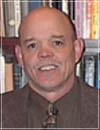
Bruce Crabtree

Christ, A Better Sacrifice

Hebrews 9:9-15
Bruce Crabtree January, 31 2018 Audio
0 Comments
Studies in Hebrews

Sermon Transcript

Auto-generated transcript • May contain errors

100%
Do you want to turn to the other
book of Hebrews? Chapter 9. Hebrews chapter 9. I can't see through these glasses.
I've got new glasses and I can't really see through them. I thought
I could, but I can't. Let's begin reading in verse,
maybe verse 9 of the 9th chapter. Read through the remainder of
that chapter. Hebrews chapter 9. Paul is speaking here of the
services that was done in the tabernacle by the high priest,
the offering of the offerings and lighting of the candles and
all of this. And he said in verse 9, which
was a figure for the time then present in which were offered
both gifts and sacrifices that could not make him that did the
service perfect as pertaining to the conscience. which stood
only in meats, and drinks, and divers' washings, and carnal
ordinances, and posed on them unto the time of reformation.
But Christ being come, then, high priest of good things to
come, by greater and more perfect tabernacle, not made with hands,
that is to say, not of this building, neither by the blood of goats
and calves, but by his own blood, he entered in once into the holy
place, having obtained eternal redemption for us. For if the
blood of bulls and of goats, and the ashes of the heifer sprinkling
the unclean, sanctifyeth to the purifying of the flesh, much
more shall the blood of Christ, who through the eternal Spirit
offered himself without spot to God, purge your conscience
from dead works to serve the living God. And for this cause
he is the mediator of the New Testament. that by means of death,
for the redemption of the transgressions that were under the first testament,
they which are called might receive the promise of eternal inheritance.
For where a testament is, there must also of necessity be the
death of the testator. For a testament is of force after
men are dead, otherwise it is of no strength at all where the
testator liveth. Whereupon neither the first testament
was dedicated without blood. But when Moses had spoken every
precept to all the people according to the law, he took the blood
of calves and of goats, with water and scarlet wool, and hyssop,
and sprinkled both the book and all the people. And he said,
This is the blood of the testament which God has enjoined unto you. Moreover, he sprinkled with blood
both the tabernacle and all the vessels of the ministry. And
almost all things are by the law purged with blood. And without
shedding of blood is no remission. It was therefore necessary that
the patterns of things in the heavens should be purified with
these, but the heavenly things themselves with better sacrifices
than these. For Christ is not entered into
the holy places made with hands. which are the figures of the
true, but into heaven itself, now to appear in the presence
of God for us. Now yet that he should offer
himself often as the high priest entered into the holy place every
year with blood of others, for then must he often have suffered
since the foundation of the world. But now once in the end of the
world hath he appeared to put away sin by the sacrifice of
himself. And as it is appointed unto men
once to die, So after this, the judgment. So Christ was once
offered to bear the sins of many, and to them that look for Him
shall He appear the second time without sin, without a sin offering
unto salvation. Paul makes a statement here in
verse 10 that sort of caught my attention as I was looking
at it, and I want to dwell on it just for a few minutes. He
said here, the carnal ordinances imposed on them, carnal ordinances
imposed on them. He was speaking about the services
that took place in the tabernacle. All the offerings that were offered,
the lamps had to be continually burning, bread had to be put
on the show table, sacrifices had to be brought, wood had to
be gathered, blood sprinkled everywhere. Sabbath days, holy
days, new moons, every year three times a year all the males had
to go up to Jerusalem for a few days. And he says all of this
was an imposition on the children of Israel. And that word simply
means to lay on as a burden, a tax, a duty with penalty. So it was a burden and a yoke,
all of these things that we've been reading about, all these
figures. It was a terrible imposition on the Jewish nation. They regulate,
the Jews' life was really a burdensome life in a way. From their death
till they died, every day of their life was strictly regulated
by this law. either by the moral law or by
the ceremony law or by the ethical law that they had to live by
daily. And that's why he says here that it was an imposition. If you just look at this chapter
along, did you notice as I was reading that the places that
blood was sprinkled? The blood of bulls and goats
sprinkling the unclean. If you were unclean, you had
to have blood sprinkled on you. He sprinkled the tabernacle.
He sprinkled the book. He sprinkled all the instruments.
And almost everything under the law is sprinkled with blood.
Now, if you've ever got a dot of blood on a nice shirt, you
realize the difficulty of getting that stain out. Blood is something
that stains, isn't it? And can you imagine the time
and labor that it took to keep this place clean? And the barrels
of blood from animals that had to be taken somewhere outside
the camp and dumped. Just considering that aspect
alone was laborsome. It was toilsome. And then he
mentions here in verse 13, the ashes of Nanhefer sprinkling
the unclean. If you want to take the time
sometime, and I would encourage you to, to read, it's very peculiar. They had this one sacrifice that
they took a young heifer, probably a yearling heifer, a young red
heifer, and they brought her to the priest, and they took
this red heifer, never yoke, come up on her, never been bred,
young heifer, without any blemish on her. They'd take her outside
the camp, and they killed her. They took some blood and the
high priest sprinkled the blood in front of the tabernacle and
then they burnt the entire body of that heifer outside the camp.
They threw in some cedar wood and some hyssop and scarlet and
they burnt all that together and somebody raked up those ashes
and they put them in a clean container and kept them outside
the camp. And it was called the ashes of
purification. the water of the ashes of purification. And what they did, if somebody
was in a tent where you died, you were unclean. If you touched
a body or you touched a grave or you touched a bone, you were
ceremonially unclean. And what you had to do, go to
the priest and tell the priest, he sent a man outside the camp,
they got some ashes off of this burnt heifer, put water in it
and tucked some hyssop and sprinkled it on you. They did that the
third day of your uncleanness. On the seventh day they did it
again and you were clean. And you had to do that or you
were cut off from the children of Israel. Now can you imagine
having the ashes of a heifer with water and have it sprinkled on you?
And you couldn't bathe until the seventh day and then you
were to bathe. So if you just take things like
this, and you can begin to see, man, why this was an imposition. It was imposed on them. You couldn't
make a mistake. You couldn't make certain mistakes,
and it may have been deadly. Remember, Uzzah, David's friend,
when they were carrying the ark back to David's house, and the
ox stumbled, and Uzzah thought the ark was going to fall off
the cart, so he retched and held it, If anything, he was doing
that, he thought, for the glory of God. I can't let this fall.
God struck him dead. Just like that. You weren't allowed
to do that. They shouldn't have been carrying
it that way anyway. I've often wondered about Aaron's
two sons. You weren't to get fire in your
censer except it came from the sacrifice, the altar. That's
where you got fire and sprinkled your incense on it and burned
incense before the Lord. They put strange fire in their
senses. I don't know if they got careless,
these young men. I don't know where they got the
fire. But when they put that strange fire in their senses,
God killed them. He killed Eli's two sons, which
they were wicked men anyway, but they were eating the fat.
They weren't supposed to eat the fat. I sometimes wonder about
the children of Israel when the Lord Jesus went into the temple.
Remember the high priest and the Pharisees and probably the
Herodians had given these people permission to bring their doves
and their money changers right inside the temple. When people
came from out of the country there, they had to have these
doves, so they had to have money changers. And they thought, well,
let's just make it convenient for everybody. You know, and
everybody come here and you can change your money, you can buy
some doves. I'm not justifying their sin. The Lord made him
a whip and drove him out of there. He said, this is my father's
house and you've made it a den of thieves. But you know, I can
understand why they did that. I can really understand, probably
at least, you know, this needs to be more convenient. We need
a place, you know, to buy and sell these sacrifices. But the
reason they did that, because buddy, it was tough. It was tough. Every day, the same routines,
they had to go through these things. That's why Peter said,
when those Pharisees were trying to bring the church back underneath
these things, these offerings and all these ceremonies and
figures, he said, why are you tempting God to put a yoke upon
the neck of the disciples which neither our fathers nor we were
able to bear? It was a yoke. And that's what
the Apostle Paul is telling here, that it was imposed on them. That's why Paul in another place
called them weak and beggarly elements. And when you add to
that, that not only was it an awful imposition to keep all
of these things as they were supposed to, when they did it,
if they did it perfectly, it can never atone for sin. And
it can never reach a man's conscience. to purge the conscience. The
main thing that these figures were for, I imagine, was that
the children of Israel, those who had enlightened minds and
had faith, could look at these figures and see Christ in them.
They looked through those figures and they saw the Lord Jesus Christ,
the true sacrifice for sin. But I said that to bring us here
to verse 11. Because I think he introduces
verse 11 very well when he calls these figures, these ordinances,
something that was imposed on them. Then he says, But Christ,
being come in high priest, of good things to come. And he said
over there in verse, well, I don't know what verse it is, verse
23, that it was therefore necessary that the patterns of the things
and habits should be purified with ease. But the heavenly things
themselves were better sacrifices. Christ is a better sacrifice.
All that he offered, his time, his energy, his talents, his
blood, his body, everything that he offered, he was better. He
was just better than these figures. And that's why I want us to see
three things, give you three ways in which Christ's sacrifice
of Himself was better than these figures. And the first one He
gives us here is in verse 12. Look at this. Neither by the
blood of goats and calves, but by His own blood, He entered
in once into the holy place, having obtained eternal redemption
for us. Here's the difference. Here's
where Christ sacrificed. is better. It truly did redeem. It really did redeem people. I love the way the Holy Spirit
says that, having obtained eternal redemption for us. Christ's death was truly a redeeming
death. And you know one reason people
see no need for the cross is because they don't realize that
sin has brought them into bondage and that the only way to be delivered
from that bondage is to be redeemed? There is no salvation apart from
redemption, is there? Salvation is by redemption. The wages of sin is death and
somebody has to pay that wage. We cannot be delivered from sin
from its penalty, from its power, from its slavery, apart from
somebody paying the wages for our salvation. The Bible says
that all have sinned and come short of the glory of God. All are condemned. All are guilty. And Christ has redeemed us from
sin and from the consequences of sin. From sin and the consequences
of it. And boy, that's many, isn't it?
The consequences of sin is guilt, condemnation, it's the wrath
of God, it's the curse of the law, it's death, and how are
we redeemed from sin? Christ gave Himself to redeem
us from all iniquity. The curse of the law, cursed
is everybody, who continues not in all things written in the
book of the law to do them. How then are we delivered from
the curse of the law? Through redemption. He hath redeemed
us from the curse of the law. And death? Boy, death, that's
something to be in bondage to death, isn't it? We're a slave
to death. We're going to die. But you know
something? Christ has even redeemed us from
death. Listen to what he says over in Hosea chapter 13 and
14. I will ransom them from the power
of the grave, I will redeem them from death. O death, I will be
your plagues, O grave, I will be your destruction, and repentance
shall be hid from my eyes. And how are we redeemed? By the
precious blood of Jesus Christ. So the death of Christ really
is a redeeming death. When you read a passage like
this, if you just read what it strongly implies, you can't have
Christ dying for a man that perishes. How do you call that redemption?
If the death of Christ redeems, then He must not have died for
those who perish because His death is a redeeming I want you
to notice two or three things about this verse, what He says
here about redemption. First of all, this redemption
has already been obtained. Did you notice that? He hath
obtained eternal redemption for us. It's already been secured.
It's already been procured, acquired. I know we haven't been fully
redeemed yet. I know we're still in these bodies.
There's a redemption of the body that's to come. But you know
that redemption has already been secured. The foundation of the
redemption of our body has already been laid. It's already been
obtained. And when was it obtained? At
the cross 2,000 years ago when the Son of God died. He obtained
redemption for us. You know there's a lot of elect
souls I hope there's a lot that's not being called yet. I hope
there's some around here that hasn't been called yet. I pray
to that end. Lord, if there's any of your
elect people here, please use us to call them to yourself. And you know what? If there's
some elect people around here, they'll be saved. You know why? Their redemption has already
been obtained. They must be saved. They must come to faith in Christ
because they've already been redeemed, haven't they? When
were they redeemed? Back there at the cross. He obtained
eternal redemption for us. And that's the second thing we
read about His redemption. It's an eternal redemption. Those who have been redeemed
from sin have been eternally redeemed from sin. The ransom price has been paid
and accepted, and it's impossible for that to ever be reversed.
And it's impossible for the price to ever be required again. Once,
once he died. Why was it only once? That's
all it required. That's all it would require.
One time. The debt has been fully and eternally paid. Israel was
redeemed from the slavery of Egypt, but it was just a temporary
redemption. It was just a physical for the
most part. Most of those perished. There
was a lot of Jews who perished because they put the blood of
that lamb over the post of the door. But that did not redeem
them. But the blood of Christ does.
And it redeems them forever. When Jesus laid down the price
of His own precious blood, that procured, that secured everlasting
redemption for every elect soul. And that will never be repeated
again. I love that old song. We sang
it sometime, Free From the Law, Old Happy Condition. Jesus has
bled and now there's remission. Cursed by the law, bruised by
the fall, but grace hath redeemed us once for all. Forever we are redeemed. Boy,
if we can just get a hold of that, that when Christ died upon
Calvary's tree, He secured our eternal redemption, our eternal
redemption. Man, how would that make us live?
I mean the joy, the peace that would fill our hearts, the confidence
before God. And here's the third thing that's
emphasized really about this verse. He did it by Himself. He obtained eternal redemption
by Himself. By His own blood, He entered
in once into the holy place. He did it. And there's no doubt
about it when we think about most of the people that He redeemed,
because most of the people He redeemed weren't even living
then. We didn't even have a being when He redeemed us. He did it by Himself. He by Himself
purged our sin. We weren't there to have Him.
Angels wouldn't have Him. And you know, I'll say this with
all reverence, the Father didn't even have This redemption was
accomplished by the Son of God Himself. He entered the holy
place by His own blood and obtained eternal redemption for us. He
secured it for us. I love that, don't you? I just
love to think about that. You know, those figures never
could do that. Never could do that. They couldn't redeem anybody.
And secondly, we have here in verse 14 something else, another
reason that he gives why the death of Christ is a better sacrifice. He is speaking here of the blood
of the bulls and goats and ashes of the heifer. And in verse 14,
How much more shall the blood of Christ, who through the eternal
Spirit offered Himself without spot to God, purge your conscience
from dead works to serve the living God? It's a better sacrifice
because it not only atones for sin, but it reaches the conscience,
the guilty conscience. It purges the conscience from
dead works. It's a fountain open. What for? Zechariah 13 tells us why this
fountain was open, for sin and uncleanness. It should be the
easiest thing in the world for you and I to confess our sins
because God has opened a fountain on purpose to wash us from those
sins. It reaches our conscience, cleanses
us from our conscience. Sin brings guilt, it brings shame,
it brings fear, but the blood of Jesus Christ cleanses that
guilt away, cleanses the shame away, the fear away, and leaves
us standing with confidence before God our Father. Because His blood
cleanses, it reaches the confidence. And you know what He says right
here, to serve the living God? And we can't serve God if we're
dead in sins, can we? We just can't do it. We have
to be washed. The blood of Jesus Christ, God's
Son, cleanses the conscience. Why? that we may then serve God. We can then serve God. Then we
can love God. Then we can worship God when
His blood cleanses us from our sins. Then we can worship Him.
Fountain open for sin. I notice what he said right here,
and I think we need to be very clear and understand it in our
teaching of this. Notice how he offered himself
in this verse. He offered himself without spot. to God. And this is where you
and I really need to be very clear. I had a dear pastor friend
of mine that accused another pastor, accused him right to
me so I know this to be true, but he accused the other pastor
of, this pastor made the statement that Christ was innocent when
He hung on the cross. And my friend didn't like that
at all. He said, He wasn't innocent. He took our sins and bore the
guilt of them. And I had to talk with him about
that. I said, You know, that's true. There's two sides of this that
we need to be very careful and very clear on. One is Jesus Christ
did take our sins. He made them His own. Now, we
see that. We see it in these types, the
scapegoat, Aaron, put His hands on the scapegoat and confessed
the iniquities of Israel and put Him on the goat. That literally
happened at the cross. God laid on Him the iniquity
of us all. I believe that was real. I don't
think God pretended that to be that way. I think when He punished
Christ, when the judgment of God fell on Him, I think it was
for a reason. that He saw sin in Him. Our sin. So there's that aspect of it.
We believe that. He was made sin for us. But we've
got to be careful when we go there. Because there's this other
side of it too. Jesus Christ never ceased to
be what He was. And what was He? Holy. Holy. So my friend, my dear friend,
sort of got upset with this other pastor because he said Christ
was innocent. And I said, really? I said, really? He was more than
innocent. He was just. I Peter 3, verse
18, the just for the unjust that He might bring us to God. So
we look at Christ one way, and what do we see? We see sin. Man,
we see sin. We see judgment. We see wrath. We see death. And we look at
Him from another way, what do we see? holiness, righteousness,
merit, worth, obedience. And I know this is a mystery. You're not going to figure this
out. We just believe this. You see these two things in Him. And the reason our sins were
put away is because He had more worth about Him. He had more
holiness about Him than He had sin. Our sins were many, innumerable,
and they were terrible, damnable sins. But Christ was so full
of merit and worth, He put those sins away by the sacrifice of
Himself. That's how holy He was. You and
I don't have enough merit to put one of our sins away. He
put the sins of a mountain of iniquities away. a scapegoat when they transferred
the sin on Him. He was led out into the wilderness
by the hands of a fit man. He had to be a fit man. Christ
was a fit man. He took our sins, made them His
own. The awful judgment of God fell
on Him. In Imitations 1.13, if you go
there and read that. But I tell you, He was holy.
And therefore, by His own merit, He put those sins away. That's
why He raised from the dead. He could have never risen again
if He had not satisfied for those sins. So that's what we see in
Him. We see Him there upon the cross
with our sins, but with His holiness. And He put those sins away by
the holiness of Himself. So when we talk about Christ
being made sin and we talk about Him taking our sins and He was
guilty because guilt is the result of sin, don't forget the other
side. Don't forget the other side.
Jesus Christ the same yesterday, today, and forever. He cannot
change. He cannot cease to be what He was. Okay? Here's the third thing He mentions
here in verse 15. Look at this. For this cause
He is the mediator of the New Testament, that by the means
of His death, for the redemption of the transgressions that were
under the first testament, they which are called might receive
the promise of eternal inheritance." He is the mediator of a new testament,
a new covenant. It is through Him. He is called
the mediator because it is through Jesus Christ that all of these
blessings of this new covenant come to God's elect. It is only
through Him. and not only through Him, but
through His death. Each one of these three things, did you notice?
It's His death. Redemption was by His death.
And here, these blessings of this new covenant that He's the
mediator of comes through His death. Everything is through
His death. That's why His death is so much
better than those figures. It accomplishes the end for which
it was intended. We don't go to God and ask Him
for blessings. And God doesn't come to us and
give us blessings except it's through this mediator of this
New Covenant, this New Testament. He'd already mentioned some of
the blessings here in chapter 8 and verse 10 through 12. Remember
that? That this is the covenant that
I will make with them. I'll put my laws into their hearts
and write them in their minds and I'll be to them a God. They'll
be to me a people. Boy, that's a blessing, isn't
it? And all of them is going to know the Lord. Clarence has
got a little plaque just outside his door. Do you know my Lord?
Well, those in this covenant know Him. And their sins and
iniquities, well, I'll remember no more. I'll be merciful to
their unrighteousness. That's all of these blessings. And Christ
is the mediator of this covenant. And then He comes here in verse
15 and He tells us another wonderful blessing. And you'll notice it
here too in the last portion of verse 15. For the redemption
of the transgressions that were under and against the first testament,
they which are called might receive the promise of eternal inheritance."
Christ, through Him and in Him, because of Him, we have the promise
of eternal inheritance. And that comes out of His death.
He's the mediator of this new covenant. Sometimes the more
I read the Bible, the more admiration I feel for those who translated
the King James Bible. And I read all kinds of versions
in my study, but this is the one I prefer. And one of the
reasons I prefer it is because the more I read it, the more
I admire the way our translators translated these passages. In the 8th chapter, they translated
covenant. I will make a new covenant. That's
the very same word that they translated New Testament in verse
15. And the reason they translated
that one covenant and one testament is because they kept it in its
context to help us to understand it better. They translated it
here in verse 15, New Testament, because it has something to do
with the last will and testament. We all know what a will is, don't
we? We ask people all the time. I bet you one of them talks about
wills all the time. Have you made out your will?
I don't know how many people ask me now. They look at me and
say, have you made out your will? I go, what's that about? Have
I made out my will? But the amount of time you're
going to croak, you better get your will made. I bet most of
you have asked that. Somebody's asked you that. But
the reason he said that, the reason they interpreted that,
you, because that's the very thing he's talking about. He's
talking about a different subject altogether, more of a promise
in chapter 8. But see what he says in verse
15? For where a testament is, there must also a necessity be
the death of the testator. For a testament is a force after
men are dead, otherwise it is of no strength at all while the
testator liveth. We know that, don't we? And this
is what the Apostle is teaching us here. If you're going to leave,
if you're getting old and you're going to leave your children,
your property, you're going to say, who gets what? You leave
your testimony to that effect. You write down your testimony
concerning your will, who you're going to leave it to? Which children?
That's why a lot of people, a lot of parents have regulated their
children's life. Because if you don't do what
I tell you, I'll write you out on the will. You can change your
will while you're living. That's what he says here. As
long as the testator's living, he can change that will. But
when he dies, I may hold it over my kid's head. I'm going to leave
you this inheritance if you'll act right. But buddy, when I
die, it's fixed. Nobody can change it. Nobody
can make it void. And that's what the Apostle is
telling us here. God has put all the blessings
of this new covenant. He's put all of these blessings,
these heavenly blessings, these spiritual blessings, He's put
them in His Son. And they're secured to us by
the way of an inheritance. They're given to us. And when
Christ died, that fixed it. That fixed it. Those blessings
are sealed. It's impossible for our inheritance
to be withheld from us because our testator has died. Man, that secures all the blessings,
doesn't it? Eternal inheritance. My goodness. The Lord Jesus, the Apostle said,
Lord, you can't go away. Don't leave us. And basically
he said, you want to go to heaven? You want to live in glory forever?
You want to be with me? You want everlasting life? Then
it's expedient for you that I go away. If I don't go to the cross,
I don't go to the grave, you don't have an inheritance. My
death is going to seal your inheritance. This is why you and I who believe
in the Lord Jesus Christ don't have to doubt and fear of our
inheritance as wonderful and as glorious as it is because
our testator, the one in whom all these blessings, the one
who left us these blessings, the one who shared these blessings,
the one who has given us what belongs to Him, love and salvation
and mercy and life and heaven itself, He has died to secure
that inheritance for us. And you know, these figures can't
do that. These figures never could do that. But the death
of our Lord Jesus Christ could do that. John said, This is the
promise that He hath promised us, even eternal life. And the death of the Lord Jesus
secured that promise. And he said in chapter 7 verse
22 that Christ is the surety. of a new covenant, a better covenant,
a better testament, is death. He has died. And who is this
promise to? The promise of an eternal inheritance.
There in verse 15, notice what he said, the called. The called. They which are called might receive
the promise of eternal inheritance. You know the way I believe I
have been called? One of the ways I have been called? To be
honest with you, I can't live without Christ. I just can't
live without Him. I sure can't die without Him.
I'm not willing, not able to die without Jesus Christ. I cannot
stand before God. I can't face eternity without
Him. I've got to have Him. You feel that way? Then you've
probably been called. The Holy Spirit has probably
awoken you and made you feel your need of Him. That's the
way He calls us, isn't it? No man can come to me except
my Father which sent me draw him. How does He draw us? By
teaching us. What does He teach us? Our need
of Christ. There was a time when Paul didn't
need Him. Boy, then there was a time when he said, I counted
everything lost and I want nothing but Him. That's what happens
when the Lord calls us. We've got to have Him. And if
you're here tonight and you've got to have Him, I'm telling
you, just keep on trusting Him. Keep on believing Him. Keep on
cleaving to Him. Keep on looking to Him. To them
that look for Him shall He appear the second time without sin unto
salvation. Believe His promises. Cleave
to Him. Let us pray.
Bruce Crabtree
About Bruce Crabtree
Bruce Crabtree is the pastor of Sovereign Grace Church just outside Indianapolis in New Castle, Indiana.
Broadcaster:

Comments

0 / 2000 characters
Comments are moderated before appearing.

Be the first to comment!

Joshua

Joshua

Shall we play a game? Ask me about articles, sermons, or theology from our library. I can also help you navigate the site.