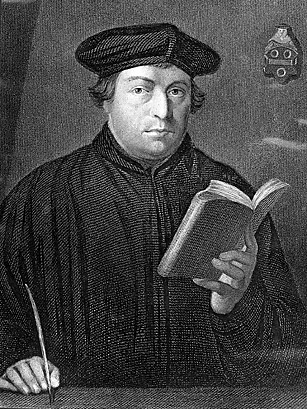
Martin Luther critiques the Epistle of James as non-apostolic, arguing it contradicts Paul's doctrine of justification by faith alone by ascribing justification to works (citing Romans 4 against James 2:21-26), and notably fails to preach Christ's Passion, Resurrection, and the work of the Holy Spirit—which Luther identifies as the essential test of apostolic writings. Though Luther acknowledges James contains good moral teachings and useful sayings about God's law, he contends the epistle's chaotic presentation and fundamental opposition to Pauline theology disqualify it from canonical authority, as it attempts through legal emphasis what apostles accomplish through exhortation to love.
What does the Bible say about justification by faith versus works?
The Bible teaches that justification is by faith alone, apart from works, as demonstrated in Romans 4 with Abraham's faith.
Additionally, the law of God, as taught in Scripture, serves to reveal sin and point to Christ, not to serve as a means of justification. The law cannot justify; it can only condemn and expose our need for grace. True apostolic teaching revolves around the Gospel—the death, resurrection, and mediation of Christ. Hence, any teaching that overlooks this essential Gospel message risks leading believers astray from the true purpose of faith, which is rooted in the Person of Jesus Christ.
Romans 4, Genesis 15, John 15
How do we know the doctrine of justification by faith is true?
We know justification by faith is true through the clear teaching of Scripture, particularly in Romans where Abraham's faith is celebrated.
Moreover, throughout the New Testament, the theme of reliance on Christ’s finished work continues to reinforce this doctrine. Ephesians 2:8-9 proclaims that we are saved by grace through faith, not of our own doing, highlighting that our justification is entirely the work of God’s grace rather than our merit. Thus, we find that the doctrine of justification by faith is not merely a theological assertion but a deeply rooted truth woven throughout the fabric of Scripture.
Romans 3:28, Romans 4, Ephesians 2:8-9
Why is the distinction between faith and works important for Christians?
This distinction is crucial as it clarifies the basis of salvation and encourages a genuine faith that produces good works as a fruit.
Furthermore, this distinction guards against legalism and the misconception that one can earn favor with God through works. It encourages believers to rest in the completed work of Christ, thereby focusing on a relationship with God rather than a transactional view of faith. Encouraging Christians to live out their faith through works is an appropriate response to God’s grace, as it reflects an authentic transformation and the abiding presence of the Holy Spirit in their lives. Thus, maintaining this vital distinction ensures both freedom from the law and a compelling motivation to live a life that glorifies God.
Ephesians 2:10, Romans 8:1
Though this epistle of St. James was rejected by the ancients, I praise it and consider it a good book, because it sets up no doctrines of men but vigorously promulgates the law of God. However, to state my own opinion about it, though without prejudice to anyone, I do not regard it as the writing of an apostle; and my reasons follow.
In the first place it is flatly against St. Paul and all the rest of Scripture in ascribing justification to works. It says that Abraham was justified by his works when he offered his son Isaac; though in Romans 4 St. Paul teaches to the contrary that Abraham was justified apart from works, by his faith alone, before he had offered his son, and proves it by Moses in Genesis 15. Now although this epistle might be helped and an interpretation devised for this justification by works, it cannot be defended in its application to works of Moses' statement in Genesis 15. For Moses is speaking here only of Abraham's faith, and not of his works, as St. Paul demonstrates in Romans 4. This fault, therefore, proves that this epistle is not the work of any apostle.
In the second place its purpose is to teach Christians, but in all this long teaching it does not once mention the Passion, the resurrection, or the Spirit of Christ. He names Christ several times; however he teaches nothing about him, but only speaks of general faith in God. Now it is the office of a true apostle to preach of the Passion and resurrection and office of Christ, and to lay the foundation for faith in him, as Christ himself says in John 15, "You shall bear witness to me."
All the genuine sacred books agree in this, that all of them preach and inculcate [treiben] Christ. And that is the true test by which to judge all books, when we see whether or not they inculcate Christ. For all the Scriptures show us Christ, Romans 3; and St. Paul will know nothing but Christ, I Corinthians 2. Whatever does not teach Christ is not apostolic, even though St. Peter or St. Paul does the teaching. Again, whatever preaches Christ would be apostolic, even if Judas, Annas, Pilate, and Herod were doing it.
But this James does nothing more than drive to the law and to its works. Besides, he throws things together so chaotically that it seems to me he must have been some good, pious man, who took a few sayings from the disciples of the apostles and thus tossed them off on paper. Or it may perhaps have been written by someone on the basis of his preaching. He calls the law a "law of liberty," though Paul calls it a law of slavery, of wrath, of death, and of sin.
Moreover he cites the sayings of St. Peter: "Love covers a multitude of sins," and again, "Humble yourselves under the hand of God;" also the saying of St. Paul in Galatians 5, "The Spirit lusteth against envy." And yet, in point of time, St. James was put to death by Herod in Jerusalem, before St. Peter. So it seems that this author came long after St. Peter and St. Paul.
In a word, he wanted to guard against those who relied on faith without works, but was unequal to the task in spirit, thought, and words. He mangles the Scriptures and thereby opposes Paul and all Scripture. He tries to accomplish by harping on the law what the apostles accomplish by stimulating people to love. Therefore, I will not have him in my Bible to be numbered among the true chief books, though I would not thereby prevent anyone from including or extolling him as he pleases, for there are otherwise many good sayings in him. One man is no man in worldly things; how, then, should this single man alone avail against Paul and all the rest of Scripture?
NOTE: The edition of 1530 put instead of these last two sentences, "Therefore, I cannot include him among the chief books, though I would not thereby prevent anyone from including or extolling him as he pleases, for there are otherwise many good sayings in him."

Comments
Your comment has been submitted and is awaiting moderation. Once approved, it will appear on this page.
Be the first to comment!