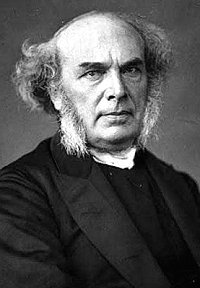
Horatius Bonar expounds Matthew 25:3-12 to warn against external religiosity devoid of the Holy Spirit, arguing that the five foolish virgins represent those who possess all outward marks of Christianity—correct doctrine, moral conduct, religious activity, and church involvement—yet lack the essential oil of the Holy Spirit. The parable's critical distinction lies not in externally perceivable differences but in an imperceptible internal deficiency that will be revealed at Christ's return, the day of "certain and unerring detection"; Bonar emphasizes that professed faith, intellectual assent, liturgical participation, and even fervent profession of belief cannot substitute for genuine spiritual regeneration through the Holy Spirit's indwelling presence.
What does the Bible say about the parable of the ten virgins?
The parable illustrates the importance of being spiritually prepared by having the Holy Spirit, as signified by the oil.
Throughout history, the church has often struggled with externalism versus genuine faith. This parable serves as a warning against superficial religion that lacks the transformative power of the Holy Spirit. It encourages believers to seek an authentic relationship with God rather than simply maintaining outward forms of worship or piety. In the end, it is not just the appearance of being a Christian that matters, but whether one possesses the Holy Spirit, which enables true faith and readiness for our Lord's return.
Matthew 25:1-13
Why is having the Holy Spirit essential for Christians?
The Holy Spirit is essential for Christians as He empowers, guides, and assures believers of their salvation.
Furthermore, the Holy Spirit empowers believers for holy living and service. He produces the fruit of the Spirit in their lives, enabling them to reflect Christ's character in various circumstances (Galatians 5:22-23). The presence of the Holy Spirit assures believers of their position as children of God, giving them confidence in their salvation (Romans 8:16). In essence, a Christian's life that lacks the Holy Spirit is devoid of the true essence of faith, leading to a hollow and ineffective testimony.
John 3:6, John 16:13, Galatians 5:22-23, Romans 8:16
How do we know that externalism is a danger for Christians?
The danger of externalism lies in its potential to deceive believers into thinking they are Christians without genuine faith.
Additionally, externalism promotes a reliance on religious performances, traditions, or societal acceptance rather than a personal relationship with Christ. Many today may participate in church activities, adhere to moral standards, or engage in theological study while lacking a genuine connection with the Holy Spirit. As Bonar emphatically states, 'A religion without the Holy Spirit profits nothing.' Therefore, it's essential for believers to examine themselves sincerely, ensuring that their faith is grounded in spiritual reality rather than mere outward appearances.
Matthew 25:1-13
"The five who were foolish took no oil for their lamps." - Matthew 25:3
This parable has many sides and aspects.
It is prophetical; it is also practical.
It suits all ages, but especially the last days.
It suits the world, but especially the church of God.
It is searching and sifting.
It is also quickening and comforting.
It suits us well in these days of . . .
- profession,
- fashionable religion and
- religiousness.
It is a parable for the church.
It comes in to the inner circle of Christian profession, and sifts it, divides it.
There are points of likeness between the two classes.
- They get the same name, virgins;
- they wear the same dress;
- they are on the same errand;
- they both have lamps;
- they both slumber and sleep.
They have thus many features in common.
The peril of mere externalism is that which our Lord points out here. This externalism may not always be hypocrisy, but it is imitation. It is not the flower in its natural color and growth, but painted, artificial. Let us watch against an artificial life, and an artificial religion. What does it profit now? What will it profit in the day of wrath? The name, the dress, the lamp, the outward show, will all go for nothing in that day of universal discovery and detection.
Though in most respects they were all alike, yet there was a difference. It was within; it was imperceptible from without; it could only be discovered when the bridegroom came. Up until then all were completely similar. Only then the deficiency came out in the foolish. Then was it seen who were wise, and who were foolish. That day is the day of certain and unerring detection. It is the day of weighing in the balances! It is the separation of the false from the true.
The difference was confined to a single point, the lack of oil. The oil is the Holy Spirit. Thus a man may be very like a Christian, and yet not be one. He may come very near the kingdom, and yet not enter in. He may have all the outward features of a Christian, and yet be lacking in the main one. He may have the complete dress of the saint, and yet not be one.
He may have a good life, a sound creed, a strict profession; he may be one who says and does many excellent things; he may be a subscriber to all the religious societies in the land, a member of all their committees, or a speaker at all their meetings, and supporter of all their plans; he may profess to be looking for Christ's coming, and going forth to meet the bridegroom, yet not necessarily a Christian!
He may lack the oil, the Holy Spirit.
A religion without the Holy Spirit profits nothing.
There is the religion . . .
- of the intellect,
- of the sense,
- of the imagination,
- of the flesh,
- of the creed,
- of the liturgy,
- of the catechism,
- of nature,
- of poetry,
- of sentiment,
- of mysticism,
- of humanity.
But what are these without the Spirit?
Christianity without Christ, what would that be?
Worship without God, what would that be?
So religion without the Holy Spirit, what would that be?
The five who were foolish took no oil for their lamps. "Sir! Sir!" they said. "Open the door for us!" But He replied, "I tell you the truth, I don't know you."

Comments
Your comment has been submitted and is awaiting moderation. Once approved, it will appear on this page.
Be the first to comment!