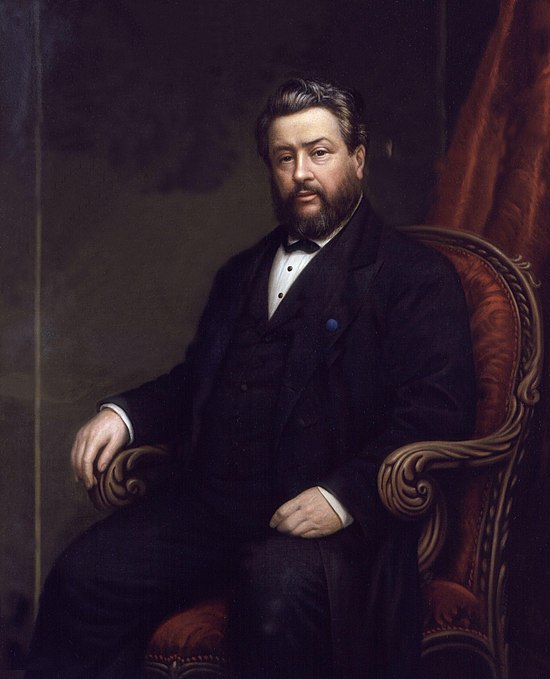
Charles Spurgeon examines John Gill's doctrine of justification from eternity, which asserts that the elect were justified in Christ before the foundation of the world since Christ was eternally justified by the Father as believers' representative. While affirming that justification and adoption were virtually accomplished in God's eternal decree, Spurgeon argues for a both/and position: these acts were determined and virtually executed in eternity through Christ's work, yet are also actually applied to individual believers in time at conversion through faith, citing Scripture's language of justification occurring when believers believe (Romans 5:1). This framework reconciles Gill's emphasis on God's eternal counsel with the Westminster Confession's affirmation of justification's temporal application to personal experience.
What does the Bible say about justification from eternity?
The Bible affirms that the elect are justified in Christ before the foundation of the world.
However, this eternal justification is intricately linked with the experience of justification in time. Upon belief, a sinner experiences the actual act of being justified by faith, as stated in Romans 5:1. Therefore, while the act of justification is completed in the eternal decree of God, its application to believers happens at a specific moment in their lifetime, representing a both/and relationship rather than an either/or scenario.
What does the Bible say about justification from eternity?
The Bible teaches that believers were justified in Christ before the foundation of the world.
Romans 8:30, Ephesians 1:4-5
How do we know justification is true?
Justification is grounded in Scripture, which affirms God's eternal decree and Christ's redemptive work.
Furthermore, the doctrine of justification is confirmed by the teaching of the early church fathers, the confessions of faith, and the writings of theologians like Dr. Gill. By examining these scriptural and historical foundations, believers can confidently assert the truth of justification, recognizing it as a central tenet of the Christian faith that ensures their peace with God through faith in Jesus Christ.
How do we know adoption is true in a Christian context?
Scripture assures us that believers are predestined for adoption by God in eternity.
Ephesians 1:5, Galatians 4:4-5
Why is the concept of eternal adoption important for Christians?
Eternal adoption reassures Christians of their secure position as children of God.
Moreover, the practical implications of this doctrine are significant. Knowing that we are adopted into God's family grants believers identity and purpose, empowering them to live in accordance with God's will. It also encourages unity within the church as all members share the same divine heritage, which flows from our shared relationship as adopted children of God. This assurance begets confidence, leading us to approach God with boldness and gratitude.
Why is justification important for Christians?
Justification is central for Christians as it signifies acceptance before God based on Christ's righteousness.
Romans 5:1, Romans 8:33-34, 2 Corinthians 5:21
But there are one or two acts of God which, while they certainly are decreed as much as other things, yet they bear such a special relation to God's predestination that it is rather difficult to say whether they were done in eternity or whether they were done in time. Election is one of those things which were done absolutely in eternity; all who were elect, were elect as much in eternity as they are in time. But you may say, Does the like affirmation apply to adoption or justification?
My late eminent and now glorified predecessor, Dr. Gill, diligently studying these doctrines, said that adoption was the act of God in eternity, and that as all believers were elect in eternity, so beyond a doubt they were adopted in eternity. He further than that to include the doctrine of justification and he said that inasmuch as Jesus Christ was before all worlds justified by his Father, and accepted by him as our representative, therefore all the elect must have been justified in Christ from before all worlds. Now, I believe there is a great deal of truth in what he said, though there was a considerable outcry raised against him at the time he first uttered it. However, that being a high and mysterious point, we would have you accept the doctrine that all those who are saved at last were elect in eternity when the means as well the end were determined.
With regard to adoption, I believe we were predestined hereunto in eternity, but I do think there are some points with regard to adoption which will not allow me to consider the act of adoption to have been completed in eternity. For instance, the positive translation of my soul from a state of nature into a state of grace is a part of adoption or at least it is an effect at it, and so close an effect that it really seems to be a part of adoption itself: I believe that this was designed, and in fact that it was virtually carried out in God's everlasting covenant; but I think that it was that actually then brought to pass in all its fullness. So with regard to justification, I must hold, that in the moment when Jesus Christ paid my debts, my debts were cancelled - in the hour when he worked out for me a perfect righteousness it was imputed to me, and therefore I may as a believer say I was complete in Christ before I was born, accepted in Jesus, even as Levi was blessed in the loins of Abraham by Melchisedec; but I know likewise that justification is described in the Scriptures as passing upon me at the time I believe. "Being justified by faith," I am told "I have peace with God, through Jesus Christ." I think, therefore that adoption and justification, while they have a very great alliance with eternity, and were virtually done then, yet have both of them such a near relation to us in time, and such a bearing upon our own personal standing and character that they have also a part and parcel of themselves actually carried out and performed in time in the heart of every believer.
I may be wrong in this exposition; it requires much more time to study this subject than I have been able yet to give to it, seeing that my years are not yet many; I shall no doubt by degrees come to the knowledge more fully of such high and mysterious points of gospel doctrine. But nevertheless, while I find the majority of sound divines holding that the works of justification and adoption are due in our lives I see, on the other hand, in Scripture much to lead me to believe that both of them were done in eternity; and I think the fairest view of the case is, that while they were virtually done in eternity, yet both adoption and justification are actually passed upon us, in our proper persons, consciences, and experiences, in time, - so that both the Westminster confession and the idea of Dr. Gill can be proved to be Scriptural, and we may hold them both without any prejudice the one to the other. - From Spurgeon's Sermons "Adoption", Metropolitan Tabernacle Pulpit Vol. 7

Comments
Your comment has been submitted and is awaiting moderation. Once approved, it will appear on this page.
Be the first to comment!