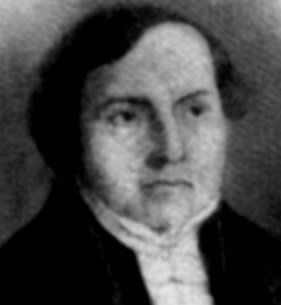
In "The Word of God the Paramount Authority With Respect to the Doctrine of Providence," Alexander Carson emphasizes the supreme authority of Scripture over philosophical speculation regarding God's providence. He argues that while philosophers may attempt to create harmony between their theories and biblical doctrine, true understanding must rest on the divine revelation found in Scripture, which holds authority over all matters of truth. Carson references the inherent contradictions that arise when scientific theories contravene biblical truth, asserting that interpretations of Scripture must hold true to its intended meaning rather than conforming to human philosophies. The practical significance of this argument lies in the necessity for believers to uphold the authority of Scripture firmly against the tide of modern philosophical thought, affirming the truth of providence as laid out in biblical passages.
Key Quotes
“If there is a revelation from God it must be paramount to all philosophical speculation.”
“It is equally self-evident that if God speak to man he will use his words in the sense of the language which he employs.”
“I believe the testimony of the Holy Spirit rather than the doctrines of the geologists.”
“Had geology never existed many persons would have appeared to receive the testimony of Scripture who now make it evident that they do not supremely respect that testimony.”
What does the Bible say about the doctrine of Providence?
The Bible teaches that God is sovereign and actively involved in the governance of all creation, as seen in passages like Romans 8:28-30.
The overarching scriptural narrative indicates that God's providential care extends to all aspects of creation, including the affairs of humanity. This is crucial for understanding the relationship between divine sovereignty and human responsibility. The doctrine reassures believers that they operate under the governance of a loving and all-wise God, who orchestrates events for His glory and the good of His people. As such, understanding Providence helps Christians navigate life's uncertainties with faith and assurance in God's ultimate plan.
How do we know the doctrine of Providence is true?
We know the doctrine of Providence is true through the authority of Scripture, which affirms God's sovereignty and involvement in creation.
Furthermore, historical and experiential testimonies from believers throughout the ages bolster this doctrine. Many narratives within Scripture outline God’s providential hand at work — from Joseph’s experiences in Egypt (Genesis 50:20) to the broader narrative of redemption culminating in Christ’s atonement. These accounts showcase a consistent theme of divine involvement in human affairs. Thus, by faith in the authority of God's Word, we accept the truth of Providence as a foundational aspect of our theological understanding.
Why is the doctrine of Providence important for Christians?
The doctrine of Providence is vital for Christians as it reassures them of God's sovereignty over all circumstances and instills trust in His divine plan.
Moreover, this doctrine strengthens faith by emphasizing the reliability and faithfulness of God. Believers can approach life’s difficulties with the assurance that they are under the care of a wise and powerful God. Providence cultivates a trust in God's timing and methods, leading to a deeper relationship with Him. It compels Christians to respond to situations not with despair but with hope, knowing that God is in control and that His plans cannot be thwarted.
But in the decision of this question, there is an appeal from the speculations of philosophy to the paramount authority of the word of God. It is not strange that philosophers who believe not the Scriptures, or who acknowledge them merely out of complaisance to the religion of their country, should decline an appeal to revelation on this subject. But it is passing strange that believers of the word of God should not press their opponents with the overwhelming weight of this authority. Philosophers, out of subtlety, affect to treat evidence on this subject on different grounds, according as it is viewed as a doctrine of science, or a doctrine of revelation. They will allow the theologian to proceed in his own way, if he grants them the same privilege in return. But truth cannot be different, as it is supported on a different basis. There may be different sources of proving the same truth, but in all, the truth itself must be perfectly the same. That cannot be false in science which is true in religion; and that cannot be true in religion which is false in science.
But scientific professors of Christianity will allege that it is right, as far as possible, to take every man on his own ground. Why, then, should we not leave the issue of this contest to philosophical evidence? I admit that it is right to take every man on his own ground. But I do not admit that we should not oblige him after this to take other ground. Let our outposts skirmish a little with the enemy, and if we succeed, the matter is well. But is this a reason why we should not show the main body of our army? If they reply, "We profess to meet you only on philosophical grounds," we may reply, Hut we will give you no choice. You cannot refuse evidence from testimony. This is sufficient to overturn any thing but first truth.
If there is a revelation from God, it must be paramount to all philosophical speculation. This is an axiom which many may neglect, but none will be hardy enough to question. Philosophers themselves speak on this ground. Dr. Brown himself often, in mentioning Scripture, speaks of it as a clear and even authoritative revelation. Indeed, it is absurd to suppose that God gives his testimony, and that his testimony will not be an authority paramount to every other on every point to which it extends. Yet clear as is this truth, absurd as is the violation of it, philosophers in general overlook it, and speculate as independently of Scripture, as Scripture decides independently of philosophical speculation. Systems of science, in general, take no notice of the testimony of Scripture, even on those points which Scripture clearly and expressly denotes. To philosophers, who are really infidels, it is no concern that the results of their speculations are so different from the doctrine of Scripture. That they may not shock the feelings of the public, and that they may gain easier access to their dogmas, they will perhaps deign to force a harmony between the Scriptures and their own doctrines. Theologians, who affect the wisdom of this world, will lend a helping hand, and employ a crazy hermeneutics to force the language of Scripture into compliance. Thus it is that the speculations of every science gain admission into theology, and modify the doctrines of Scripture, and the reigning theology follows in the wake of the reigning philosophy. The theologian is followed by a sort of recognition from the philosopher, and repays the compliment by swearing allegiance. Now, this conduct, I maintain, is as unphilosophical as it is impious. If Scripture is the word of God, it must be a paramount authority on every question on which it speaks. This is self-evident. It is equally self-evident that if God speak to man, he will use his words in the sense of the language which he employs, and his meaning must be ascertained by the usual laws of language. Yet such is the bold blasphemy of men in interpreting the Scriptures, that they presume to give a meaning to the word of God, according to principles that cannot be exemplified in human speech. The Holy Spirit is forced to explain, in order to give a paramount authority to the philosophers. I can never look on this matter as one of light importance. The honour of revelation and of God is deeply concerned in it. To me it is not so offensive to say, that the writers of Scripture were clever impostors, as to force them to walk in the footsteps of the philosophers. I have less contempt for the man who says, "The Scriptures speak thus, and therefore must be false," than for him who says, "The Scriptures are true, and therefore they cannot mean what they say."
This insult to the language of the Holy Spirit is audaciously verified on the subject of geology. To bring the Scriptures to accordance with their pretended science, an interpretation has been put on their language which nothing but the most extravagant fanaticism can recognise. Now, what has the Christian to do in order to ascertain the inferences of this assuming science? Nothing more than to show that these inferences are not a necessary result of the facts. If there is a mere possibility of this, it is quite sufficient for the cause of the Bible. What is possibly true must be true, if the veracity of God requires it. It was on a mere possibility that Abraham rested his belief on God's promise. There was no way in which the former promises of God to the patriarch could be verified, but by the resurrection of Isaac, had Abraham, as he intended, really put him to death. But this was possible, and he hoped against hope. Now, belief in a promise of God with regard to futurity is essentially the same thing with belief in his testimony with regard to things past. I wish to emulate Abraham, who, instead of arguing that God could not mean that he should kill his son, took the divine testimony in its proper sense, and purposed to obey it. I believe the testimony of the Holy Spirit rather than the doctrines of the geologists.
But, even independently of the testimony of Scripture, I maintain that the age of the world is not a question ever to be decided scientifically. The evidence on the subject is symptomatic, not scientific. Observation and experience may lead to the exhibition of certain results in other cases; but the ground of the exhibition of such results is not science. With all its present symptoms, it is possible that the earth might have been created yesterday. Were it now aged a million of millions of years, Almighty power could have made it at first what it is at this moment. Its present symptoms, then, cannot scientifically determine its age.
The science of mind, in like manner, pretends to dictate to revelation, and modifies the doctrines of the Holy Spirit by the dogmas of the schools. The Apostle Paul, in the Epistle to the Romans, finds all men depraved and guilty by the first sin of Adam. But science rejects the doctrine; and every smatterer in metaphysics expounds the language of the Spirit of God in a forced conformity with the wisdom of man. Even pretended evangelical theologians employ a fantastic exegesis to banish the doctrines that are the divine import of the words. Such a thing cannot be true, therefore cannot be said in Scripture. The science of mind forbids their appearance. The crazy fanatic avails himself of the aid of his metaphysics, as well as the infidel philosopher.
Atonement itself must assume a scientific modification, in order to save it from expulsion from the creed of the wise. It is not literally, but only figuratively, a price for our sins ; and is a mere expedient for example.
But in all this the design and wisdom of Providence is manifest. If false science had raised no plausible theories in contrast with the word of God, there would be no trial of faith in the divine testimony. Had geology never existed, many persons would have appeared to receive the testimony of Scripture, who now make it evident that they do not supremely respect that testimony. There must be heresies, that they who are approved may be made manifest.
Dr. Brown makes no appeal to Scripture on the doctrine of Providence. If Scripture is esteemed true, it is not sound philosophy to neglect its evidence. That it is true is in proof, and may fairly be alleged on the subject, even against unbelievers. Science should avail itself of all accessible sources of knowledge; and if disaffection to revealed truth disinclines to this, it should be pressed with the greater earnestness. I shall, therefore, now proceed to mention some passages of Scripture, which teach the doctrine of Providence, and show its nature.

Comments
Your comment has been submitted and is awaiting moderation. Once approved, it will appear on this page.
Be the first to comment!