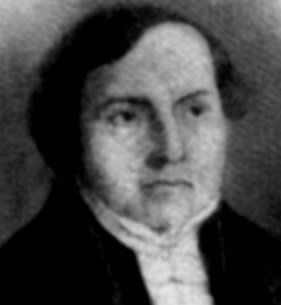
In Alexander Carson's article, "Defence of the Doctrine of Providence," the main theological doctrine addressed is the active and continual providence of God over creation. Carson critiques Dr. Thomas Brown's philosophy, which posits that God's providence is limited to the original laws set at creation, emphasizing that such a view leads to practical atheism. He supports his argument using Scripture and logical reasoning, insisting that without God's continual power, creation would dissipate into chaos. Carson's assertions highlight the Reformed doctrine of God's sovereignty and providence, arguing that both creation and its ongoing sustenance necessitate the active intervention of God, which shapes Christian understanding of God's relationship with the world.
Key Quotes
“It appears to me to be not only insufficient but absurd to suppose that mere foresight and arrangement without power constantly exerted are capable of governing and regulating the world.”
“If nothing but the existence of God can account for creation, nothing but the constant energy of God can account for the continued existence and changes in the works of creation.”
“If mere law or arrangement or appointment can produce its effect without the continued agency of God—then suppose that God should cease to exist all things would go on as at present.”
“This doctrine does not respect the law or manner of the production of an effect but the ultimate cause of it.”
What does the Bible say about God's Providence?
The Bible teaches that God's Providence is His continual active involvement in sustaining and governing the world, not merely an initial set of laws.
Colossians 1:17, Psalm 104:27-28
How do we know God's continual agency is necessary for creation?
God's continual agency is necessary because the existence and operation of creation depend entirely on His sustaining power.
Acts 17:28
Why is understanding God's continual Providence important for Christians?
Understanding God's continual Providence reassures Christians of His sovereignty and active involvement in their lives.
Romans 8:28
In reading the works of philosophers, Christians may be deceived by the ample and reverential manner in which they seem to recognise Providence. But the Providence which they generally recognise is merely that foresight and arrangement by which Almighty power gave its constitution to universal nature. They mean by it, not the constant agency of God in his works, but those laws by which he at first regulated their changes. The celebrated Dr Thomas Brown recognises most explicitly and reverentially the Providence of God; but it is, as appears to me, not a continually ruling, guiding, working Providence; but a Providence which exhausted itself iu its original laws. "It is the influence of this analogy of our muscular motions, as obedient to our volition," says he, in his Eighth Lecture, "together with the mistaken belief of adding greater honour to the Divine Omnipotent, which has led a very large class of philosophers to ascribe every change in the universe, material or intellectual, not to the original foresight and arrangement merely,—the irresistible evidence of which, even the impiety that professes to question it must secretly admit,—but to the direct operation of the Creator and Sovereign of the world."
And, as expressive of the opinion which he opposes, he quotes the following passage from Thomson's Hymn to the Seasons:—
"The mighty hand,
That, ever busy, wheels the silent spheres,
Works in the secret deep, shoots streaming thence
The fair profusion that o'erspreads the Spring;
Flings from the sun direct the flaming day:
Feeds every creature, hurls the tempest forth;
And as on earth the grateful change revolves,
With transport touches all the springs of life."
Upon this I would remark:—It is not to the supposed analogy, nor to any other analogy, that the opinion referred to is owing. It is not owing even to a desire of doing honour to God. It originates in the irresistible conviction, that the constant exercise of Almighty power is as necessary to uphold and regulate the works of creation as it was to create them at first. It appears to me to be not only insufficient, but absurd, to suppose that mere foresight and arrangement, without power constantly exerted, are capable of governing and regulating the world. Mere foresight and arrangement would not make a single blade of grass to grow in the spring, without the constant agency of Him who made the world. The best arranged plans require agency in their execution. The heavenly bodies are carried on in their proper courses not by virtue of mere foresight and arrangement, but by the same power which gave them existence. Should God withhold his power, the laws of nature would cease to carry them. Nothing can be more strictly true, than the beautiful description of the poet. It is the mighty hand of God which wheels the silent spheres. The philosopher ascertains the laws of nature, as they are called, which regulate their motions. But what are such laws but the uniform manner in which it pleases the Almighty to proceed? Abstract the power of God from the laws of matter and motion, and you will leave nothing but chaos. "So prone is the mind," continues Dr. Brown, "to complicate every phenomenon, by the insertion of imagined causes, in the simple sequences of physical events, that one hypothesis may often be said to involve in it many other hypotheses, invented for the explanation of that very phenomenon, which is adduced in explanation of another phenomenon as simple as itself. The production of muscular motion by the will, which is the source of the hypothesis of direct spiritual agency, in every production of motion or change in the universe, has itself given occasion to innumerable speculations of this kind. Indeed, on no subject has the imagination been more fruitful of fancies, that have been strangely given to the world under the name of philosophy. Though you cannot be supposed to be acquainted with the minute nomenclature of anatomy, you yet all know that there are parts termed muscles, and other parts termed nerves, and that it is by the contraction of our muscles that our limbs are moved. The nerves, distributed to the different muscles, are evidently instrumental to their contraction; since the destruction of the nerve puts an end to the voluntary contraction of the muscle, and consequently to the apparent motion of the limb. But what is the influence that is propagated along the nerve, and in what manner is it propagated? For explaining this most familiar of all phenomena, there is scarcely any class of phenomena in nature, to the analogy of which recourse has not been had,—the vibration of musical chords,—the coiling or uncoiling of springs,—the motion of elastic fluids,—electricity, magnetism, galvanism, and the result of so many hypotheses,— after all, the labour of striving to adapt them to the phenomena, and the still greater labour of striving to prove them exactly adapted, when they were far from being so,—has been the return to the simple fact, that muscular motion follows a certain state of the nerve; in the same manner, as the result of all the similar labour that has been employed to account, as it has been termed, for gravitation, has been a return to the simple fact, that at all sensible distances observed the bodies in nature tend toward each other."
Now, here I must say, that this truly illustrious philosopher turns away from his subject, and attempts to discredit the doctrine which he opposes, by associating or confounding it with the absurdities of philosophical hypothesis. What has the doctrine of the constant agency of God in his works to do with the reveries of ingenious men, in forming hypotheses to account for things utterly beyond the reach of human intellect? The doctrine which he opposes is not an hypothesis, but is the result of intuitive truth. We may say of it what he says of the Providence which relates to foresight and arrangement: "Its irresistible evidence, even the impiety that professes to question it must secretly admit." Thousands of examples of infidels in the moment of danger witness the truth of this. If nothing but the existence of God can account for creation, nothing but the constant energy of God can account for the continued existence and changes in the works of creation. The uniform way in which things occur may be called a law; but in what sense is it a law? The meaning can only be, that God acts usually in such a manner. Even human laws have effect only as relative to the administrators of law. I am as fully and as irresistibly impressed with the necessity of the power of God in upholding all things, as I am with respect to the creation of all things. I see God in every motion of the leaf on a bush. Let philosophy trace the laws of nature as far back as it is able; still, ultimately, God is the mover. Herbage, according to certain laws, springs from the bosom of the earth; but could it thus spring without the agency of Almighty power? No more than the earth could be created without power. The heavenly bodies are upheld in their places, and directed in their courses, by laws. By laws? Can laws, or appointment, or arrangement, act without power? This matter may be brought to a very simple and decisive test. If mere law, or arrangement, or appointment, can produce its effect without the continued agency of God—then suppose that God should cease to exist, all things would go on as at present. There is no farther need for God. Can any thing but Atheism bear this thought? The supposition is of a thing impossible, but things impossible may be supposed for the sake of argument; and are supposed in Scripture. Now, Dr. Brown himself speaks of God as the Governor of the world. But if his doctrine of Providence is just, there is no Governor of the world, but the laws originally established in creation. His opinion, then, is practical Atheism. Men do not like to retain God in their knowledge; and by the provision of the import of the laws impressed by God in creation, they continue to banish him from his works. The God of Dr. Brown has no more concern with the government of the universe than had the gods of Epicurus. The laws of nature have been made gods by the wisdom of this world. This is the idolatry of philosophy; and is as truly idolatry as the worship of the sun, moon, and stars.
With respect to gravitation and the production of muscular motion by the will, the author tells us that all hypotheses have given place to "the simple fact, that muscular motion follows a certain state of the nerve;" and with respect to gravitation, to the " simple fact, that at all visible distances observed, the bodies in nature tend toward each other." Well; and what has this to do with the doctrine of Providence? The hypotheses given up should never have had existence. They all alleged physical causes, which nature did not present. They were, therefore, unphilosophical. But the doctrine of Providence does not respect the law or manner of the production of an effect, but the ultimate cause of it. The cause we allege does actually exist, is sufficient to produce the effect, and nothing but this cause is adequate to the production of the effect of which it is alleged the cause. What, then, has the doctrine of Providence in common with the fanatical hypothesis invented by crazy ingenuity to account for gravitation and muscular motion?
But does Dr. Brown imagine that the return to the facts he speaks of really accounts for gravitation and muscular motion? Philosophy may never be able to proceed farther than the simple facts he mentions. But simple facts are not causes. By my will I move my pen, but the state of the nerve that moves the muscle cannot be the ultimate cause, because it is not an adequate cause of the motion. The connexion is only by divine appointment, and divine power must give effect to that appointment. Another state of the nerve might enable me to guide the courses of the sun, moon, and stars. But would this, strictly speaking, be my power? Would it not be the power of God exerted in a certain way? The state of the nerve in producing muscular motion, and the natural tendencies of the particles of motion towards each other, are like a cheque on the bank, only the sign of value. Without the agency of God, 1 could no more move my pen than I could remove mountains, or create worlds. To argue that because we can discover no physical cause of the phenomena but what are alleged,, therefore, such cause is all that can exist, and is sufficient, is to reason without principles. When we trace the laws of God in his works as far as we can go, we should see God himself as the worker through these laws.
"The mere sequence of one event after another event is, however," says Dr. Brown, "too easily conceived, and has too little in it of that complication which at once busies and delights us, to allow the mind to rest in it long." Too simple and easily conceived! Does he mean that, in the sequences referred to, we can conceive the cause of gravitation and muscular motion? It may be very true that we can discover nothing more in nature; but it is equally true that this gives us no conception of causation or power. These must still be sought in the Creator and Governor of the world. The
strictures of the ingenious author are justly due to the inventors of hypotheses, who, in philosophy as well as in religion, are the great corrupters of truth; but they have no bearing on the defenders of the doctrine of Providence. Does he discover in the state of the nerve power to give effect to volition, or any necessary connexion between the antecedent and the consequent? The connexion in the sequence is effected by Almighty power.
But how does Dr. Brown prove that the continued agency of God is not necessary in all his works? Has he produced a cause sufficient to account for the phenomena, without the action of Providence? No such thing. What he calls the cause is not perceived by the mind to be sufficient to produce the effect. On the contrary, the mind is perfectly sensible of its insufficiency. I lift my hand at my will. Is the state of the nerve which precedes this voluntary motion an adequate cause for the effect? So far from this, it does not appear to possess adaptation even as a means. As far as we can see, the last link in the chain of antecedents is perfectly arbitrary. Is the impossibility of our proceeding farther any reason to think that there is nothing farther? When we arrive at the last step in the physical process, does this entitle us to exclude God from giving effect by his immediate power? He justly blames philosophers for assigning causes by hypotheses. Such causes, even if true, would not account for the phenomena more than would Sir Isaac Newton's ether. Did it really exist, it would be merely a higher step in the physical process, which could produce its effect only by an adequate cause, the will and power of the Creator. All Dr. Brown can allege is, that there is no agency of God, because it is not a link in the physical process we can discern. The child may as philosophically say, that the puppet is the author of its own motions, because it does not discern the moving hand behind the screen. What similitude is there between the doctrine of the agency of God in giving effect to the physical process which he has established, and the hypotheses of philosophers which add a link to the physical process without knowing its existence?
Dr. Brown's account of the power of God in creation is very unsatisfactory. In order to reconcile any thing to his theory of power, he confounds power and will, and the words expressive of will. "But I have said in my Essay," says he, "though the powers of created beings be nothing more than their relation to certain events that invariably attend them, is this definition consistent with the notion which we form of the power of the Creator? or, Is not his efficiency altogether different in nature as well as in degree? The omnipotence of God, it must, indeed, be allowed, bears to every created power the same relation of awful superiority, which his infinite wisdom and goodness bear to the humble knowledge and virtue of his creatures. But, as we know his wisdom and goodness only by knowing what that human wisdom and goodness are, which, with all their imperfection, he has yet permitted to know and adore him—so, it is only by knowing created power, weak and limited as it is, that we can rise to the contemplation of his omnipotence." Here it is supposed that power in the creature is the same in relation to the creature, that power in the Creator is in relation to the Creator; and that the only difference between the power of God and the power of man is in degree. Is not this absurd as well as false? I can move my hand, and, if God pleased, I could move the heavens and the earth in like manner. But is that power the same in relation to me that God's power is in relation to him? Strictly speaking, it is not my power at all that performs these things. It is the power of God exerted in a certain way.
But what is the ground of this doctrine? Why must power in the creature be exactly the same as in the Creator? It is because we can have no conception of power in God, but by knowing it in ourselves. But may we not become acquainted with the divine power from our knowledge of power in ourselves, though power in us has a different relation to us, from the relation that power in God has to God?
"In contemplating it," he continues, "we consider only his will as the direct antecedent of those glorious effects which the universe displays." Here he confounds will and power, or at least includes power in will. In no other sense is the assertion true. We never consider will as exclusive of power, when we consider will as a cause. Very frequently, indeed, we speak of will as inclusive of power ; and as such the cause of an effect. If this ingenious and profound philosopher takes will as exclusive of power, his assertion is not true: if he includes power in will, he gives up his doctrine. Though power and will in God are always in unison, they are perfectly distinct ideas, of which every rational creature has a distinct conception. "If thou wilt, thou canst make me clean," said one to Christ. Here he distinguishes will and power, and supposes that Christ may possess one of them without the other, in reference to his disease. But if will and power are distinct, then Dr. Brown must want one of them in his sequence, or have one more than enough. If mere will without power could create, then there is no evidence of power in the works of creation. It may as rationally be supposed that power acted on creation without will, as that will acted without power. In fact, when Dr. Brown asserts that will creates, he takes will for power, for creation is the proper object of power, will is what prompts to the exertion of power.
"The power of God," he proceeds, "is not any thing different from God, but is the Almighty himself, willing whatever seems to him good, and creating or altering all things by his very will to create or alter." Here he confounds will with power. The Lord, in the sentence immediately preceding, here speaking of will, now that will is transubstantiated into power, and the power of God is said to will. What confusion of ideas! Are power and will the same ideas? Can power be said to will? He must have both power and will. But his philosophy can give place only to one of them. He contrives to bring them in by turns, as perfectly the same, while they are different.
He tells us that the power of God is not any thing different from God. But he was speaking of the will of God, and if the power of God is not any thing different from God, may it not also be said that the will of God is not any thing different from God? And if, on this account, power is excluded as unnecessary in the sequence, may not will be also excluded, and so creation might be effected without either power or will?
But I object to the phraseology which he here employs, as paradoxical and absurd. The power of God is not God acting, and the will of God is not God willing. By the same paradoxical phraseology he makes the phenomena of mind to be the mind in certain states. Now, this is contrary to the whole analogy of human speech in every language. In all languages attributes are distinguished from the substances to which they belong; and while we have a clear conception of them as distinct, they must not be confounded, because we are not able to fathom the distinction. State of the mind, and the mind in a certain state, are two very different things. The phenomena of mind may be called states of the mind, without implying that they are the mind itself in certain states.
"It is enough for our devotion," says the author, "to trace everywhere the characters of the Divinity,—of provident arrangement prior to this system of things; and to know, therefore, that, without that divine will as antecedent, nothing could have been." The knowledge of prior arrangement is good, but it is not enough. The knowledge of God's continual agency is equally good. Besides, we have the same means of knowing that nothing could have existed without power more than without will.
"Wherever we turn our eyes," says he, "to the earth—to the heavens—to the myriads of beings that live and move around us—or to those more than myriads of worlds, which seem themselves almost like animated inhabitants of the infinity through which they range; above us, beneath us, on every side we discover, with a certainty that admits not of doubt, intelligence and design, that must have preceded the existence of every thing which exists." True, and as certainly do we know that the same Almighty power constantly acts in upholding and regulating the works of his hands.
"Yet," says he, "when we analyze those great but obvious ideas which rise in our mind while we attempt to think of the creation of things, we feel that it is still only a sequence of events which we are considering, though of events the magnitude of which allows us no comparison, because it has nothing in common with those earthly changes which fall before our view." We feel that creation is the work of power as well as of will, and the one as immediately as the other. If he chooses to call will power, it is an abuse of words. There is nothing of which we are more immediately and more thoroughly certain, than that nothing can begin to exist without the agency of power. When he speaks of " attempting to think of the creation of things," he seems to mean an attempt to conceive something of the manner of creation. An attempt vain and impious! Besides, in the growth of vegetables, &c. there is something quite akin to creation. It is creation before our eyes, yet we understand no more of the manner of the connexion between the cause and the effect, than we do of the manner of the production of the first plants.
"We do not," says our author, "see any third circumstance existing intermediately, and linking, as it were, the will of the Omnipotent Creator to the things which are to be; we conceive only the divine will itself, as if made visible to our imagination, and all nature at the moment rising around." We see power as directly as we see will: the one is not more visible than the other, nor more the object of attention than the other. We think of no process; but the will which is followed by creation must be a will that possesses omnipotent power. God's will has its effect, because he is all powerful. The will that creates is not viewed as will simply. No matter what phraseology is used; all men, in thinking of creation, view the power of God as distinctly as they do his will.
"It is evident," continues Dr. Brown, "that, in the case of the divine agency, as well as in every other instance of causation, the introduction of any circumstance, as a bond of closer connexion, would only furnish a new phenomenon, to be itself connected; but even though it were possible to conceive the closer connexion of such a third circumstance, as is supposed to constitute the inexplicable efficiency between the will of the Creator and the rise of the universe, it would diminish, indeed, but it certainly cannot be supposed to elevate, the majesty of the person and the scene." We are not called on, in order to prove the necessity of the exertion of power in creation, to enter into any speculations on the manner of its operation, which would be as vain as they are impious. Does it diminish from the divine majesty, to suppose that, in performing a work of Almighty power, he exerts his power? It may as well be alleged, that it diminishes the majesty of God, to suppose that the attribute of justice cannot perform the work of the attribute of mercy. Whatever may be the origin of our idea of power, we have an immediate perception that power is essential to agency.
"Our feeling of his omnipotence," continues Dr. Brown, "is not rendered stronger by the slowness of the complicated process: it is, on the contrary, the immediate succession of the object to the desire, which impresses the force of the omnipotence on our mind; and it is to the divine agency, therefore, that the representation of instant sequence seems peculiarly suited, as if it were more emphatically fearful." Here he recognises a feeling of omnipotence. This is all we want. Can there be omnipotence without power? But this omnipotence is only the desire. What an abuse of words! Desire is not power in any degree. Desire can produce nothing without power. However, then, this philosopher may find omnipotence in desire, it will equally serve our purpose. If desire is used as equivalent to power, exclusive of its own proper meaning, then there is an abuse of the word, but there is the idea for which we contend. If desire has its own proper meaning, and includes power along with that idea, then the idea is complex, and serves our purpose. To tell us that simple desire is omnipotence, is the greatest outrage on language. Desire is followed by the desired effect, wherever there is power. Never otherwise. Desire, in God, is instantaneously followed by the desired effect, because the being who desires possesses Omnipotence. The recommendation of Dr. Brown's theory of power is simplicity; but there is in it not only mystery, but confusion and contradiction. There is power without power. For that power which is supposed to be in simple desire is not power. In simple desire there is no power.
"Such," continues the author, "is the great charm of the celebrated passage of Genesis, descriptive of the creation of light. It is from stating nothing more than the antecedent and the consequent, that the majestic simplicity of the description is derived. God spoke, and it is done." Here Dr. Brown overturns his own doctrine. What was the immediate antecedent to the sequence of creation? It was the utterance of a few words. "Let there be light, and there was light." Now, according to Dr. Brown's doctrine, there is no power here but the power of the words themselves. To suppose the necessity of any other power, or even of desire, is quite unnecessary and unphilosophical. There is no power different from sound. It would diminish the divine majesty to add any third circumstance. But every child believes, that the words pronounced by God, commanding the existence of light, were followed by the effect, because he who spoke the words is Almighty. And the words upholding creation are expressly said to be " The word of his power."
According to the philosophy of Dr. Brown, when Paul said to the lame man, with a loud voice, "Stand upright on thy feet," the effect was caused simply by the words, or, at least, by the desire expressed by the words. No need, and no room for any interference of Divine power! This would be an unphilosophical complication. Yet not only was the cure effected by Almighty power, but the faith of the individual cured was by God made a necessary step in the process. Indeed, this fact, with others of like nature recorded in Scripture, illustrates the true philosophy of muscular motion by volition. I move my hand by my will, just as Paul cured the lame man by his words. In both the effect is produced by the Divine power, through means that could effect nothing without that power. The one is an ordinary thing, because God has usually connected motion with the will. The other is a miracle, because there is no such usual connexion. Indeed, there is no difference between the growing of corn from the seed, and the raising of the dead from the grave, but] that the one is the ordinary work of Providence, and the other is done only occasionally for a certain purpose. Were we accustomed to see the dead buried to-day, and to-morrow beginning to spring up out of the earth, we would be no more surprised by it than we are now by the springing up of the herbage. Divine power is as necessary for the one as for the other. If I now can lift my hand at my will, God could enable me to move the sun by my will. If God pleased, we might raise the dead by calling on them to come out of their graves.
With respect to the cause of this sublimity of the celebrated passage in Genesis, 1 question Dr. Brown's philosophy. It in no measure depends on any theory with respect to power. And as a matter of fact, men, on feeling the sublimity, never think of the philosophy of the subject. The sublimity, however, does not consist in the stating of nothing more than the antecedent and consequent. If this were a true prescription for producing sublimity, there is no writer who might not equal Moses. "The general ordered the army to dine, and they dined," is an expression which has the essentials of Dr. Brown's sublimity; but it is never likely to become a rival to the expression in the book of Genesis.
In statement there is no difference between the two expressions. What, then, is the essential difference which confers such sublimity on one of them? One of them commands what a command is fit to effect. Command is the usual means employed to produce such effects. The other expression commands what a command has no tendency to effect, even as a means. Not only this, but the command is addressed to what does not exist, and the thing which does not exist is viewed as hearing and obeying the command, by coming into existence. It is here, especially, that the sublimity lies. In the first characteristic, the expression in Genesis differs not from that in the Acts of the Apostles, "Stand upright upon thy feet. Ami he leaped and walked." There is sublimity here, indeed, but not so much as in the expression in Genesis. Authority is expressed by command: God, therefore, creates the world by the means of command. It is not desire, but command that is expressed by the words. Desire, indeed, like will, may be used so as to include another idea, but simple desire is not command, more than simple will is power. The thought of creating by command is a truly sublime thought. It is God only who can properly call on those things that do not exist; because his power can give them existence. God spake, and it was done. But why was it done by his speaking? Because he who spoke was Almighty to give effect to his words.
As God employed the form of command in calling things into existence, so Christ generally employed the same form in performing his mighty works when on earth. "Lazarus, come forth." "I say unto thee, Arise." "Rise, take up thy bed and walk." "Stretch forth thy hand." Now, there is no connexion at all between the means and the end, but Divine appointment. This shows us what means truly are in all cases—effectual only by the power of God. The same truth appears to be intended to be conveyed to us, when Christ took the clay and spittle, and anointed the eyes of the blind man. There was no natural connexion between the cure and the means employed to effect it. And when means are natural, it is just the same thing in reality. The effect follows only by Divine power. The crop of corn follows the sowing of the seed, only as the opening of the eyes of the blind man by the anointing of the clay and spittle.
Dr. Brown concludes his Seventh Lecture by saying, " That Being has Almighty power, whose every will is immediately and invariably followed by the existence of its object." Yes, because the Being who has Almighty power is enabled to give immediate effect to his will. But does this imply, that power does not give effect to will? Does this imply that power and will are the same thing? How power acts, it would be presumptuous to speculate. But that power is necessary to action, every man has an immediate and irresistible conviction. Dr Brown thinks he has given a simpler notion of power. But the simplicity of it seems to consist,, either in virtually denying its existence, or in paradoxically confounding it with will, than which no two ideas can be more distinct. No axiom can be clearer than that two things, which are plainly distinguishable, cannot be the same. Now, no idea can be more clearly distinguishable from another than power is from will. We may desire to do that which we may have no power to do; and we may have power to do that which we have no desire to do. If power and will are perfectly coincident, then God has no power to do any thing which he does not choose to do. 1 have the highest respect for the talents of this illustrious philosopher. No man ever applied a more penetrating intellect to the discussion of a metaphysical question. But in labouring to dispel mystery from our idea of power, he has lost himself in mystery. If in words he avoids mystery, it is only by the help of paradox. That power in the creature is the same, except in degree, with that in the Creator, appears to me a doctrine not only unphilosophical, but impious. If it does not make us equal to God, it makes us little gods. I can have no conception of power in the creature, except as it is the power of the Creator in him. I can lift my hand and move my body. I call this my power. But invisibly it is only the power of God exerted in a particular way. If God did not act through my volition, I could no more raise my arm than I could pull down the sun. And if the continued agency of the Divine power is not necessary to uphold and govern the world, then, had God ceased to exist the moment after creation, all things would go on without him notion which is the purest blasphemy.

Comments
Your comment has been submitted and is awaiting moderation. Once approved, it will appear on this page.
Be the first to comment!