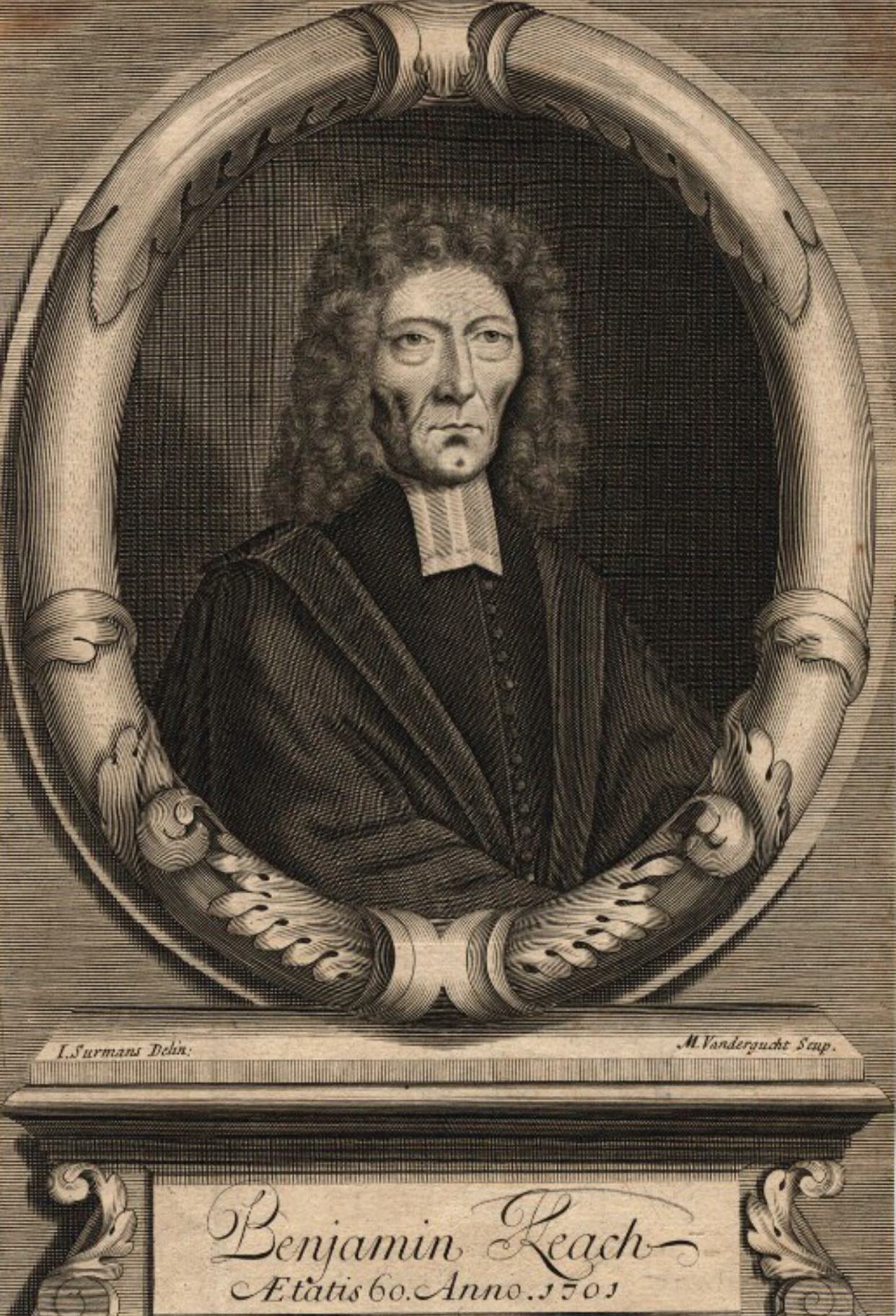
In "Of a Metonymy of the Effect," Benjamin Keach addresses the concept of metonymy, particularly how effects can denote their causes within Scripture. The article articulates three key ways this occurs: (1) an effect representing the author, (2) an effect denoting the instrument or organical cause, and (3) an effect serving as a stand-in for the action or thing causing it. Notable Scripture references such as Genesis 15:1 and Luke 2:30 are examined to substantiate these points, illustrating how God, as the author of life and salvation, is represented through the outcomes He produces. The practical significance of this teaching lies in deepening believers' understanding of divine causality and the relationship between God's actions and the effects seen in the world, reinforcing the Reformed emphasis on God's sovereignty in salvation and everyday life.
Key Quotes
“A Metonymy of the effect is when the effect is put for the efficient cause which is done three ways...”
“As Ge 15 1 I am says Jehovah to Abraham thy exceeding great reward that is I am a most liberal Giver of reward...”
“This species of a Metonymy is distinctly found in nouns and verbs as when the effect is put for the cause materially...”
“The cause and effect are joined Ps 5 11-12 To be ashamed and confounded signifies a falling into calamities and be exposed to violence which is the cause of confusion.”
What does the Bible say about metonymy in Scripture?
The Bible uses metonymy to illustrate how effects represent their causes, such as calling Jesus 'salvation' to signify Him as the author of salvation.
Scripture is rich with such examples, affirming that terms often represent more than their literal definitions. In Psalm 27:1, for instance, the psalmist declares the Lord as his 'light' and 'salvation', reflecting not just the qualities of God but His role as the source of comfort and protection. This understanding enhances the depth of our theological inquiries about God’s workings in the world and underlines the reliability of God's promises as documented throughout biblical text.
Genesis 15:1, Isaiah 49:6, John 14:16, Psalm 27:1
How do we know the doctrine of salvation is true?
The doctrine of salvation is rooted in Scripture, presenting Christ as the author of salvation through His work on the cross and resurrection.
The historical events of Christ’s crucifixion and resurrection serve as the foundation for this doctrine, and the fulfillment of prophecies concerning the Messiah throughout the Old Testament solidifies this belief in a sovereign plan for redemption. Believers can take confidence in this doctrine, knowing it is anchored in God's unchanging nature and His fidelity to fulfill promises, as highlighted in Romans 10:9-10, which invites all to confess and believe in their hearts for salvation.
John 14:6, Ephesians 2:8-9, Romans 10:9-10
Why is the sovereignty of God important for Christians?
The sovereignty of God reassures Christians that He controls all events, ensuring the fulfillment of His divine purpose and promises.
Moreover, God's sovereignty underpins the concepts of grace and election within Reformed theology. It teaches that salvation is not dependent on human merit but entirely on God's will and purpose as articulated in Ephesians 1:4-5, where God chooses believers before the foundation of the world. Recognizing God's sovereign authority reinforces both the urgency of evangelism and the joy of assurance for believers, knowing they are part of God's purposeful plan.
Romans 8:28, Ephesians 1:4-5
CHAPTER II.
OF A METONYMY OF THE EFFECT
A Metonymy of the effect is, when the effect is put for the efficient cause, which is done three ways, as,
1. When the action or the effect is put for the author or person effecting.
2. When a thing effected by an instrument, is put for the instrument or organical
cause.
2. When the effect is put for the thing or actioneffecting.
1.The Action or Effect is put for the Author or Person effecting.
As Ge 15:1, "I am (says Jehovah to Abraham) thy exceeding great reward," that is, I am a most liberal Giver of reward, De 30:20, "He is thy life and length of days," that is, he is the cause of it. Ge 49:18, "I have waited for thy salvation," that is, the promised Messiah, the Author of salvation, as Lu 2:30, where Simeon says, "Mine eyes have seen my salvation," that is Christ. All the flesh shall see to swthrion ton Oeon the salvation of God, that is, a Saviour. See Isa 49:6, etc., Ps 3:3-4, and Ps 106:20, and Ps 27:1, "Thou art my light, salvation, strength," etc., that is, the Author and cause of them; so Ps 18:2, and Ps 22:20, and Ps 33:20, and Ps 46:2; Jer 16:19, and Ps 23:6; Joh 11:25, and Joh 14:16; 1Co 1:30; Eph 2:14; 1Jo 5:20, and Heb 5:9; Ro 15:5,13; 2Co 1:3; Lu 1:50.
Lu 11:14, "And he (viz. Jesus) was casting out a devil, and it was dumb; "that is, he made the man (in whom he was) dumb, or suffered him not to speak, and so was the cause of dumbness. See Mt 9:32-33, and Mr 9:17,25; Lu 13:11.
It is said, Ge 26:35, "That Esau's wives were a grief of mind," or as the Hebrew says, (bitterness of spirit) unto Isaac and Rebecca, that is the cause of sadness and trouble of spirit. See Ge 25:23; Ne 12:31; Ro 13:3, "Rulers are not a terror (that is a cause of terror) to good men," 2Co 1:14, "We are your rejoicing, as ye are ours."
The Greek is kauxhma, which signifies (glorifying or boasting,) that is, the cause of your rejoicing and glorying, inasmuch as we instructed you in the Gospel, which is the way of salvation, and you likewise are our glory, inasmuch as we have won you to Christ, 1Th 2:19-20; Ro 5:5.
2. When a Thing effected by an Instrument, is put for the Instrument or Organical Cause.
Glory is put for the tongue, Ps 16:9, "My heart is glad, and my glory rejoiceth," that is, my tongue, because it is the organ by which God is and ought to be glorified, suitable to Ac 2:26, "Therefore did my heart rejoice, and my tongue was glad." See Ps 30:12,12, and Ps 5:7,9.
Power is put for the organ exerting power, as Ro 1:16, "The gospel is (dunamiv) the power of God unto salvation to every one that believeth; "that is, the gospel is the means or organ by which God exerts or puts forth the power of his salvation to believers, Eph 1:19.
Victory is put for the instrument of overcoming, as 1Jo 5:4, "This is the victory that overcometh the world, even your faith; "that is, the instrument of victory, Eph 6:16.
Life is put for the means of its preservation, De 24:6, "No man shall take the nether, or the upper millstone to pledge, for he taketh a man's life (or XXXX, soul) to pledge,"that is, the instruments that are necessary for the preservation of life, Pr 7:27; life is put for food and maintenance, Lu 15:12, "He divided unto them," ton bion, his life, that is, his estate; or, as we translate it, "his living." Hesiod, Lib. 2. calls money the soul of a man:
Xrhmata gar ynxh peletai deiloisi brotoisi.
1. When the Effect is put for the Thing or Action effecting.
This species of a Metonymy is distinctly found in nouns and verbs, as when the effect is put for the cause materially, as 2Ki 4:10, "There is death in the pot," that is, deadly poison, which will cause death. So death is put for great perils and dangers, troubles or calamities, which cause death, Ex 10:17; Ro 7:24; 2Co 1:10, and 2Co 11:23. And for the plague, Re 6:8. See Pr 11:23; Jer 3:24. Shame is put for an idol, Jer 11:13; Ho 9:10. The reason of the name you may see Jer 48:13, "And Moab shall be ashamed of Chemosh, as the house of Israel was ashamed of Bethel their confidence. See Eze 44:18; Ho 12:1, "Ephraim daily increaseth lies and desolation;" that is, he commits such evils, that nothing can be expected but desolation and calamity.
See more examples, La 2:14; 1Co 12:6,8; 14:3, "He that prophesieth, speaketh unto men edification, (so the Greek, lalei oikodomhn kai &c.,) and exhortation, and comfort," that is, an edifying, exhorting, and comforting speech.
Sometimes the effect is put formally for the cause, as De 30:15, "I have set before thee this day, life and good, death and evil;" that is, I have clearly showed and laid before thee what is the cause and original of each, or for what cause and reason, either of these was to come upon thee, viz., to love and obey God brings life and good; but rebellion, sin, and disobedience bring death and evil, as the following verses made evident. This is called, Jer 21:8, "The way of life and death." See more De 32:47; Pr 19:3, and Pr 20:1; Isa 28:12, "This is rest," that is, the cause of rest, or the way and manner of arriving at it. Ho 4:18, "Their drink is sour" (or gone;) that is, their cause of recess from God, or that which made them backslide, as ver. 11, (Ho 4:11) "Whoredom and wine, and new wine taketh away the heart." Which words, (viz., take away the heart) are emphatical, for they denote that they were (as it were) wallowing in these evils, when they gave themselves to whoredom and drunkenness. They saw and knew what was better, and approved them,[i] but they followed the worse, and so the devil keeps them that are drowned in these wickednesses (as it were) captives, 2Ti 2:26; for the Hebrew word here, is used when they speak of such as are taken and detained by force, Ge 14:11-12; Jos 11:19,23, etc., Mic 1:5, "what is the transgression of Jacob? Is it not Samaria? And what are the high places of Judah? Are they not Jerusalem?" That is, as Kimchi (in lib. Radicum) expounds it, was the cause of the defection of Jacob? was it not the cities of Samaria, etc.: see Hab 2:5; Joh 3:19 "And this is the judgment or condemnation;" that is, the cause of it, Joh 12:50, "And I know that his commandment is life everlasting; that is, the cause or organ by which everlasting life is obtained, for he speaks of saving knowledge by the gospel, Ro 7:7, "Is the law sin?" that is, the cause of sin in or by itself. So Ro 8:6, "For to be carnally minded is death; but to be spiritually minded is life and peace;" that is, the cause of death, and the cause of life and peace, as ver. 10. (Ro 8:10) See Php 1:13; Heb 4:1, and Heb 9:14,[ii]) and Ro 4:23.
[i] Video meliora, proboque; deteriora Sequor. Ovid
[ii] Here the scanned PDF indicated this reference to be Hebrews xix, as this means chapter 19, I concluded it to be a printer's mistake and looking at Heb 9:14 determined that passage showed the concept of cause and effect under discussion. (de)
In verbs, to joy and rejoice are put for to be freed, or delivered from evil, and to be or do well, which is the cause of joy, Ps 70:4, "Let all those that seek thee rejoice, and be glad in thee; that is, let them be freed from all evil, that they may have cause of joy. The cause and effect are joined, Ps 5:11-12. To be ashamed and confounded, signifies a falling into calamities, and be exposed to violence which is the cause of confusion, Ps 25:1-2, and Ps 3:8,8, and Ps 31:2, and Ps 119:115-116, etc.
To please signifies good behaviour and honest respect, which is the cause of complacency, as Ro 15:2, "Let every one of us please his neighbour for good to edification." See Erasmus upon the place, 1Co 10:33.
Haste or flight is put for shame and confusion, Isa 28:16, "He that believeth shall not make haste;" that is, he shall not be confounded, as Ro 9:33, and Ro 10:11; 1Pe 2:6. The effect and consequence of confusion is flight, or a hasty getting away from the sight of men this also signifies calamities and punishments, as limited before, see Ps 74:15; Isa 28:28; Ec 11:1; Job 28:5; Ps 104:13-14; Isa 47:2, and Isa 33:12; Jos 11:8, and Jos 13:6.

Comments
Your comment has been submitted and is awaiting moderation. Once approved, it will appear on this page.
Be the first to comment!