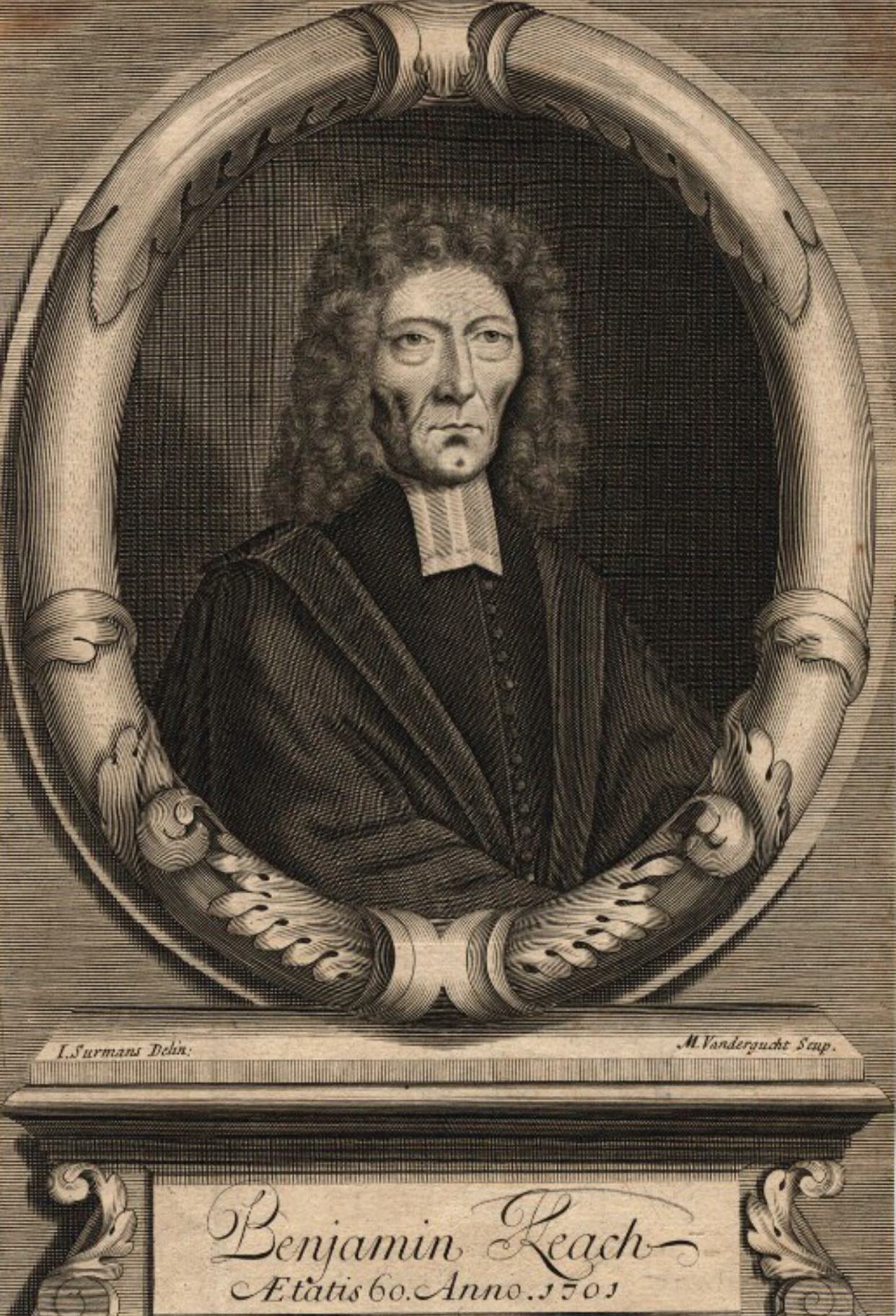
Benjamin Keach's chapter "Of a Metonymy of the Cause" explores the complex theological concept of metonymy within the context of Scripture, specifically how causes and effects are symbolically represented. He articulates four types of metonymies corresponding to different causes (efficient, material, formal, final) and demonstrates how these figures of speech can convey deeper meanings, such as the Holy Spirit representing regeneration (2 Corinthians 3:6) and the gospel's transformative power. Key scriptural references, including John 6:63 and Romans 8:2, bolster his arguments by illustrating how spiritual realities reflect the divine work of the Holy Spirit in individuals' lives. The practical significance of this doctrinal analysis emphasizes the necessity of understanding scriptural language to fully grasp the workings of grace and the role of the Holy Spirit in the life of believers, aligning with Reformed theological principles of grace and regeneration.
Key Quotes
“A Metonymy is a trope when a cause is put for the effect or the effect for the cause...”
“By the law of the Spirit of life as Illyricus says is meant the doctrine of the gospel because it is a peculiar instrument or means of its operation.”
“Hence arises an opposition of flesh and spirit... that which is born of the flesh is flesh and that which is born of the Spirit is spirit.”
“For true faith and godliness may be likened to a little flame kindled by the Spirit in the hearts of believers.”
What does the Bible say about the Holy Spirit's role?
The Bible teaches that the Holy Spirit is the agent of regeneration and sanctification in believers' lives, empowering them for service and spiritual growth.
2Co 3:6, Eph 4:23, Ro 12:2
How do we know regeneration is essential for salvation?
Regeneration is essential for salvation because Scripture teaches that one must be born again to see the Kingdom of God (John 3:3).
Joh 3:3, Eph 2:1-5
Why is understanding metonymy important in Scripture?
Understanding metonymy helps readers grasp deeper spiritual meanings and connections in biblical texts.
CHAPTER I: OF A METONYMY OF THE CAUSE
A Metonymy[1] is a trope when a cause is put for the effect, or the effect for the cause, the Subject for the Adjunct, or the Adjunct for the Subject.
[1] Metonumia, transnominatio, a change of names or transmutatio, Sive nominis pro nomine prositio ex meta, trans and onuma, Æolice pro onoma Nomen, etc.
There are four kinds of Metonymies, answering to the four kinds of causes, viz.
1. Efficient.
2. Material.
3. Formal.
4. Final.
A Metonymy of the Cause is used in scripture, when,
1. The person acting is put for the thing done.
2. When the instrument by which a thing is done, is put for the thing effected.
3. When a thing or action is put for the effect produced by that action, of which in order.
1. The Person acting for the Thing acted or effected.
1. THE HOLY SPIRIT is put for his effects and operations, as 2Co 3:6, "Who hath made us able ministers of the New Testament, not of the letter, but of the Spirit, for the letter killeth, but the Spirit giveth life." Where by the term letter, we are to understand the law written in tables of stone, which required perfect obedience, and which no man can perform because of corruption, therefore that law can pronounce nothing but a sentence of death: but by Spirit is meant the saving doctrine of the gospel, which derives its original from the Spirit (considered as a most merciful Comforter) who sets it home upon the soul, fitting and preparing it thereby for eternal life; suitable to Joh 6:63. "The words that I speak are spirit and life; that is, they are from the Spirit of God, and being received by faith confer salvation, through the grace of God, Ro 8:2. "By the law of the Spirit of life," as Illyricus says[2] is meant the doctrine of the gospel, because it is a peculiar instrument or means of its operation, which, by a divine efficacy, changes the heart, and writes his law there, which now is not only inscribed in tables or parchments, but penetrates the inward parts, quickening the soul to spiritual motions and actions. See Ga 3:2,5; Isa 11:4; 2Th 2:8; Isa 42:1, and Isa 60:1-2; Joh 3:34 etc.
[2] Part 1. Column 1162
2. The Holy Spirit is put for regeneration, Ps 51:10, "Renew a right spirit within me." Eze 36:26, "A new spirit will I put within you." Hence the apostle says, "Be ye renewed in the spirit," etc., Eph 4:23, Which is expounded, Ro 12:2, "Be not conformed to this world, but be ye transformed by the renewing of your mind," etc. Hence arises an opposition of flesh and spirit, Joh 3:6, "That which is born of the flesh is flesh, and that which is born of the Spirit is spirit," where[3] by flesh is meant man defiled by sin, and by Spirit the grace of renovation, or (which is the same thing) the regenerate man. The Apostle (1Th 5:19,) exhorts "not to quench the Spirit," that is the gifts of the Spirit, as Illumination, and Renovation, suitable to 2Ti 1:6, anazwpurein to xarisma Qeou, suscitare instar ignis, Donum Dei;) stir up, as fire or coals "are stirred up, for so the word avazwpureiv signifies, "the gift of God which is in thee." For true faith and godliness may be likened to a little flame kindled by the Spirit in the hearts of believers, which the devil and carnal corruptions endeavour to smother, but is to be cherished and stirred up as fire is by more fuel; this feeding and quickening fuel is the word of God; in this sense the soul is distinguished from the spirit in man: for spirit denotes a divine power and energy in a regenerate and sanctified soul, by which it is carried to and united with God, as Lu 1:46-47, "My soul doth magnify the Lord, and my spirit rejoiced in God my Saviour," expounded, 1Th 5:23, "The very God of peace sanctify you wholly; and I pray God your whole spirit, and soul, and body, be preserved blameless unto the coming of our Lord Jesus Christ:" for other places where the Spirit is put for the new man, and spiritual strength, see Ps 51:17; Isa 26:9; Eze 18:31; Mt 5:3, and Mt 26:41; Ac 17:16, and Ac 19:21, and Ac 20:22; Ro 1:9; 1Co 5:3-5, and 1Co 6:20; Ga 3:8, etc.
[3] Primo loco vox Spiritus denotat ipsum spiritum sanctum, gratiose per verbum et baptismum operantem; posteriori loco spiritus sancti enerthma salutare intelligitur.
More especially the Spirit is put for those peculiar or extraordinary gifts of the Spirit, which for various uses, whether public or private, spiritual or external, are bestowed on man, as Nu 11:17, "I will take off (or separate part of, for so the Hebrew is) the spirit which is upon thee, and will put it upon them," (viz., the seventy Elders, who, as verse 25 (Nu 11:25) thereupon, "prophesied and did not cease,") upon which Vatablus says, "The Lord so abstracted from the spirit of Moses, that he took away nothing, as one candle" (which Rab. Salomon calls a most elegant similitude) lights several, yet loses nothing of "its original light." To this may the request of Elisha be referred, 2Ki 2:9, "I pray thee let a double portion of thy spirit be upon me," where there is an evident allusion to the right of primogeniture, or first-born, De 21:17, where the first-born was to have a double portion, etc.; as if Elisha had said, "I am your first disciple, received into your school, therefore ask of God a greater measure of spirit for me, than any one of your disciples." "Daniel had a more excellent spirit," (Da 5:12, with Da 6:3, for so the Hebrew text runs) and more knowledge and understanding, etc., than the presidents and princes, that is, more excellent and higher gifts of the Spirit, see Lu 1:17,80, and Lu 2:40; Ac 19:2; Joh 7:39; Ac 1:5.
To this may be referred, what is spoken of revelations, visions, or ecstacies, whether if real or pretended, as Eze 37:1, "The hand of the Lord carried me out in the Spirit of the Lord;" that is, by a vision, or rapture of spirit, so 2Th 2:2, "That ye be not shaken in mind, or be troubled, neither by spirit, nor by word, nor by letter, as from us," etc., that is, by revelations, which are pretended to come from the Spirit,' so Re 1:10, "I was in the Spirit, that is, in an ecstacy or immediate revelation of the Spirit," as 2Co 12:2; Re 4:2, etc., and Re 17:3, and Re 21:10, is described.
The Spirit is also put for doctrines revealed from heaven, whether alhqwj truly, or docastikwj by vain boasting so pretended, as 1Co 14:32, "The spirits of prophets are subject to the prophets," that is, the doctrine, or scripture interpretation proposed by some prophets, are subject to the judgment of the rest; for it would favour of haughtiness, ambition, and disdain for any individual to usurp an infallibility, and reject the judgment of the brethren, as 1Co 14:29, "Let the prophets speak two or three, and let the other judge. If anything be revealed to another that sitteth by, let the first hold his peace,; 1Jo 4:1. We are thus exhorted, "Believe not every spirit, but try the spirits," etc. The marks of what are given, verses the second and third, ect. Here it is evident that the Spirit is put for doctrine, whether really revealed or pretended to be so. And by seducing spirits, 1Ti 4:1, are meant false teachers, that pretend their doctrine to be from God's Spirit, but is indeed of the devil.
Parents or ancestors are put for their children, or posterity, as Ge 9:27, Japhet and Shem, Jacob and Israel, for the Israelites, Ex 5:2; Nu 23:21, and Nu 24:5,17; De 33:28, etc. Abraham, Isaac, Jacob, of whom according to the flesh, Christ came, are put for Christ, Ge 12:3. "In thee, [which the Chaldee translates "for thee," and the Targ. Jerusal. "In thy righteousness or holiness"! shall all the families of the earth be blessed." And Ge 18:18, "All the nations of the earth shall be blessed in him," which is meant of his seed,[4] as Ge 22:18; which seed is Christ, who took on him the seed of Abraham, Heb 2:16; "through whom the blessing of Abraham is come on the Gentiles," Ga 3:14
[4] In te and in femine tuo, Copulativa (et) idem est ac, id est, &c.
The or is put for his , , or , Lu 16:29,31, "They have Moses and the prophets, let them hear them;" that is, they have what Moses and the prophets by inspiration from God have written, and delivered to posperity for the canon and rule of faith.. So Lu 24:27; Ac 15:21, and Ac 21:21; 2Co 3:15, "But even unto this day when Moses is read," that is, the Mosaical writings, etc.
The writer or author is put for his writing, book, or work, Lu 16:29,31, "They have Moses and the prophets, let them hear them;" that is, they have what Moses and the prophets by inspiration from God have written, and delivered to posperity for the canon and rule of faith.. So Lu 24:27; Ac 15:21, and Ac 21:21; 2Co 3:15, "But even unto this day when Moses is read," that is, the Mosaical writings, etc.
The soul, the noblest part of man is put for life, which is its effect, Ge 9:5. What we translate blood of your lives is in the Hebrew "blood of your souls;" and Ge 37:26, Reuben said, "Let us not kill him," the Hebrew says, "Let us not smite him in the soul;" so Le 17:11, life of the flesh, in the Hebrew is "soul of the flesh;" see Ps 106:13-15; Jer 40:14.
1. This term is sometimes put for the whole person of man, consisting of soul and body, Ge 46:27; Ac 27:37; en tw ploiw ai pasai yuxai"All the souls in the ship." (2.) For the body only, Ps 105:18, "Iron enter into his soul," we translate it, "He was laid in iron," that is, the iron fetters made dints in his flesh. (3.) It is put for life (as, before) Ps 94:21, and Ps 7:1-2,5. (4.) It is put for a carcase, Le 19:28, "Ye shall not make any cutting in your flesh for the dead," the Hebrew is, "for the soul;" and so it is taken, Le 21:1, and Hag 2:4. (5.) It is put for the rational soul, Ps 19:7; De 11:18, etc.
2. The soul is put for the will, affections, and desires, which are operations of the soul, as Ge 23:8, "If it be your mind," in the Hebrew it is "with your soul," as Ps 27:12, and Ps 41:3, and Ps 105:22. The Septuagint translates it, "If ye have in your soul," the Chaldee,"if it be the pleasure of your soul." So Ex 23:9, "Ye know the heart of a stranger," Heb. the "soul of a stranger," that is, his mind or affection. See De 23:24; 1Ki 19:3; 2Ki 7:7; Ps 17:10, and Ps 27:12, and Ps 41:3; Pr 23:2; Jer 34:16; Joh 20:24, ewj pote ton yuxhn hmwn aireij, "how long dost thou hold our soul in suspense?" That is, as our translation hath it, "how long dost thou make us to doubt?"
It may be referred hither, when the Spirit, which is often put for man's soul, is used to express the motions or affections of the soul, whether good or evil, as Ge 45:27, "The spirit of Jacob their father revived;" Nu 14:24, "My servant Caleb had another spirit;" Jg 8:3, "Their anger was abated," it is in the Hebrew "their spirit was abated;" 2Ch 21:16,"The Lord stirred up the spirit of the Philistines," etc.; 2Ch 36:22,"The Lord stirred up the spirit of Cyrus," etc., see Ps 76:12, and Ps 77:4; Pr 1:23, and Pr 18:4, and Pr 29:11; Ec 7:9; Isa 29:10, and Isa 37:7; Jer 51:11; Eze 13:6; Da 5:20; Hag 1:14; Hab 1:11; Ro 11:8; 1Co 2:12, etc., "God hath given the spirit of slumber, eyes that they should not see, and ears that they should not hear." "Now, you have received, not the spirit of the world, but the spirit which is of God," etc.
2. The Organical Cause or Instrument is put for the Thing effected by it.
The mouth is put for speech, or testimony, as De 27:6, "At the mouth of two or three witnesses, shall he that is worthy of death he put to death, but at the mouth of one witness, he shall not be put to death," that is, by the witness or testimony of two or three etc., so De 19:15, "One witness shall not arise against a man for any iniquity, or for any sin, in any sin that he sinneth: at the mouth of two witnesses or at the mouth of three witnesses "shall the matter be established" which is expounded, Mt 18:16, and Joh 8:17.
2. The mouth is put for a command or prescription, Ge 45:21, "And Joseph gave them wagons according to the mouth of Pharaoh," etc, that is, as we translate it, according to the commandment of Pharaoh, Ex 17:1, "And the children of Israel journeyed according to the mouth, that is, the commandment of the Lord." So Nu 3:16,39, and Nu 20:24, and Nu 27:14; De 1:26,43, and De 34:5, "So Moses the servant of the Lord, died there in the land of Moab, according to the mouth of the Lord," that is, according to the word of the Lord. Upon which, Sanctius says in his comment on Isa 49, "Therefore they do not rightly judge, who from the Hebrew reading say, that Moses died in the kiss of the Lord: for that tradition is not from the Hebrew text, but from the Targum, which is attributed to Jonath. Uziel, who renders peh, (this is Strongs #6310) at the mouth of the Lord, ad osculum verbi domini, that is, according to the kiss of the mouth of the Lord. But what is spoken of the mouth of the Lord, is better to be referred to the Trope Anthropopathia, of which we shall hear hereafter.
The tongue is put for speech, Pr 25:15, "A soft tongue breaketh the bones," that is, a mild, civil, and courteous speech so Jer 28:17,7[5] "Let us smite him for that tongue," XXXX, that is, for his importunate, unseasonable, and odious speech. But more especially for the idiom or particular language of nations. Ac 2:4,11, "And they were all filled with the Holy Ghost, and began to speak with other tongues, as the Spirit gave them, utterance. Cretes and Arabians do we hear them speak in our tongues the great things or (wonderful works) of God." It is also put for the gift of "strange languages. In my name shall they cast out devils, they shall speak with new tongues," Mr 16:17, and 1Co 14:19, "Yet in the church I had rather speak five words with my understanding, that by my voice I might teach others also, than ten thousand words in an unknown tongue." That is, in a language which the people understand not, etc.
[5] Percutiamus eum propter islam Linguain, hoc est, sermonem illum importunum et nobis odiosum. So some translate this passage, and so it is in the margin of our Bibles.
The lip is put for speech, Ge 11:1, "And the whole earth was of one lip, and of one word," that is, of one language, and of one speech, or idiom of speaking; the Chaldee says of one tongue, and one speech. That the Hebrew language is meant here, (which in Isa 19:18, is called the lip of Canaan, we translate it language by the same trope : and which by the Targ. Jerusal and R. Salomon, upon the place is called the holy tongue) is showed elsewhere. Neither was Hebrew the peculiar name of that language in those times, because there was no need of a term of distinction, there being no other speech in the world, till after the confusion of tongues, and scattering of the people at Babel.
Pr 17:7, "A lip of excellency does not become a fool, much less a lip of lying, a prince; that is, a worthy and excellent speech does not become, or is not to be expected a fool, much less should a noble or brave mind tell lies.
Isa 33:19,"A people of a deeper lip," so the Hebrew,"than thou canst perceive," such as speak so obscurely, that you cannot understand them; as Pagniuus renders it. See Pr 12:19. "The lip of truth shall be established for ever, but a lying tongue is but for a moment." Job 12:20,"He removeth away the lip of the faithful," &c. so it is in the Hebrew.
The palate is put for speech, Pr 5:2, "For the lips of a strange woman drop as a honey-comb," "and her palate," so the Hebrew, "is smoother than oil;" that is, her words or speech.
The throat is put also for loud speaking, Isa 58:1, "Cry with the throat," so the Hebrew,"spare not," etc., by which the organ of crying or speaking is to be understood, for the explication follows, viz, "lift up thy voice like a trumpet;" and what the scope or argument of that loud speech, or shrill cry, was to be, is added in these words, "and show my people their transgression, and the house of Jacob their sins."
The hand is put for actions done by it, where there is also a Synecdoche, for by the actions of the hands, some other things, as also principles or beginnings of actions, are understood, as counsel, machination, or contrivance; thought, endeavours, care, etc., as 1Sa 22:17, "Slay the priests of the Lord, for their hand is also with David," that is, they help him with their counsel, so 2Sa 3:12, and 2Sa 14:19; 1Ki 10:29; Ps 7:4; Isa 1:15.
The hand is put for writing, 1Co 16:21, "The salutation of me, Paul, with mine own hand," that is, mine own writing, and Col 4:18, "The salutation by the hand" (that is, the writing) "of me," Paul. This is ordinary, (viz., for a man's, writing to be called his hand) among the Greeks as Pollux and Suidas say, and among the Latins, see Cicero lib. vii. Epist, ad Attic, as also in our own language.
The hand is put for a gift reached by the hand, Ps 68:32, "Ethiopia shall make her hands run to God," so the Hebrew, that is, Ethiopia shall speedily transmit her gifts; as Ps 72:10; Isa 60:6, to which relates that of Pliny8[6] the ancient Greeks called Doron the palm or fist, and therefore they called the hand gifts, that word so signifying, because they were given thereby. See Ps 22:31,31. And more under the head or title Metaphors.
[6] Lib. 35. cap. 14. Græci Antiqui doron palmam vocabant, et ideo Dora Munera, guia Manu darentur.
A sword is put for war or slaughter, which are in a great measure performed thereby. Ex 5:3, "Let us go, we pray thee, three days' journey into the desert, and sacrifice unto the Lord our God. lest he fall upon us with pestilence, or with the sword." Le 26:6, "Neither shall the sword go through your land," so Isa 1:20; Jer 24:10,10,10,10, and Jer 43:11; Ps 144:10; Ro 8:35, and several other places. It is said, Mt 10:34, "I came not to send peace, but a sword" that is, no such peace as that men will rest contented and quiet in Paganism, or irreligion, but contend earnestly for the true religion in their confessions and preaching of the Gospel, even through sufferings, persecution, and blood, etc.
A line, or tan measuring rope, is put for a country, or tract of land, because it was measured by it, as Am 7:17; Mic 2:5, Zecheriah 2:1. For it was a custom to measure land by an extended cord, and distribute inheritances, as in Palestine, which is done in modern times by a rod or perch, therefore the word tan,(English--chebel, de) a cord, rope, or line, is put for the bounds, space or quantity of the portion of land given, De 3:4, "All the line of Argob,[7] the kingdom of Og in Bashan." The Chaldee says, all the house or place of the province, etc., see Jos 17:14; Ps 105:10-11; Zep 2:5, etc.
[7] So it is in the Hebrew.
Sometimes it is also a Metaphor, De 22:9, "For the Lord's portion is his people, Jacob is the cord of his inheritance," that is, a people peculiar to himself, and separated or divided from, the world, see Ps 16:6, "The lines are fallen unto me in pleasant places, yea, I have a goodly heritage." Our Saviour, who is here speaking by the prophet, uses this metaphor to express the figure or delineation of the church, etc. Hence it is said, 2Co 10:15-16, "Not boasting of things without our measure, that is, of other men's labours; but having hope, when your faith is increased, that we shall be enlarged by you according to our rule abundantly to preach the Gospel in the regions beyond you, and not to boast in another man's line or rule of things made ready to our hand," where kanwn regula, a rule, signifies that space measured by it, as if God had divided the world among the apostles, that they should preach in their particular and respective precincts or allotted places.
Money is put for property or estate purchased by money, Ex 21:21, "For he is his money," that is, he purchased or bought him with his money, and is to him as good as money.
3. A Thing or Action is put for the Effect produced by that Thing or Action.
This kind of Metonymy is to be found distinctly in nouns and verbs, of which we are to note, that some are referred hither, analogwj or by way of analogy, in which as I may speak, there is a susshmasia, connotation, or consignification, that is, when the thing or action is not to be understood strictly for the effect, but together with its effect and consequent.
In nouns; certain terms which signify affection are put for their effects, as 1Jo 3:1, "Behold, what manner of love the Father hath bestowed upon us, that we should be called the sons of God." The emphasis is great here, as if Jehovah had said that he hath graciously given us his own very love, whilst he adopts us into the privilege of sonship. By bestowing this blessing he bestows himself, and makes himself one with us, "for he is love," 1Jo 4:8.
Mercy is put for the benefit and commiseration that proceeds from it, Ge 20:13, and Ge 32:1, "I am less than the (or I am not worthy of the) least of thy mercies," 2Ch 35:16. By the same trope the Greeks call elehmosunhn,[8] Alms "what they give in charity to the poor," Mt 6:1; Lu 11:41; Ac 10:2,4. Motum internum significat, quo inclinentur nomines ad miserendum pauperis--Chamier; that is, it signifies an internal motion by which men are inclined to pity the poor.
[8] Elehmosunh Eleemosyna, est genus omne beneficii quod in miseros confertur, Beza. The word signifieth mercy and pity, therefore all our alms must proceed from a merciful and pitiful heart.
Anger is put for punishment or vengeance which proceeds from anger, Ps 79:6, "Pour out thy wrath (or anger) upon the heathen," etc., Mic 7:9, "I will bear the anger or indignation of the Lord," etc., Ro 2:5, "But after thy hardness and impenitent heart treasureth up unto thyself wrath against the day of wrath," etc. See Ro 3:5, and Ro 4:15, and Ro 13:4-5; Eph 5:6, etc.
Anger is put for a command given in anger, 1Sa 28:18, "Because thou obeyedst not the voice of the Lord, nor executedst his fierce wrath (or anger) upon Amalek," etc.
Judgment is put for punishment and castigation or correction, Ex 6:6, "I will redeem you (Israelites) with great judgments," that is, great punishments upon Pharaoh. Pr 19:29, "Judgments (that is, punishments) are prepared for scorners," etc.-when I send my sore judgments upon Jerusalem, that is, punishments, etc. See Eze 14:21; Ro 2:3; 1Co 11:29; 1Pe 4:17; it is put for condemnation, Jer 26:1; 1; Joh 3:18-19; 2Pe 2:3; in 1Co 11:29, it is said,
"He that eateth and drinketh unworthily, eateth and drinketh damnation," but in the Greek it is krima which signifies judgment.
Sin, with the synonymous terms, is put for the punishment of sin, Ge 19:15, "The angels hastened Lot, saying, Arise, take thy wife and thy two daughters which are here, lest thou be consumed in the iniquity of the city," that is, in the punishment of the city, Ps 7:16, "His sin (or mischief) shall return upon his own head," that is, the merited or condign punishment. See Jer 14:16; Ecclesiastes 14:19.
With a verb, that signifies to bear or carry, it intimates the guilt and conviction that precedes punishment, which must certainly follow, as Ex 28:43; Le 5:1, and Le 20:20, and Le 22:9; Nu 14:33; Eze 23:35,49, and Eze 18:20, and other places.
Work is put for its reward, Le 19:13, "The work of him that is hired," so the Hebrew, "shall not abide with thee all night, until the morning," Jer 22:13; Re 14:13, "That they may rest from their labours, and their works follow them." Sometimes it is put for the merit of the work, Ro 11:6,"And if by grace, then it is no more of works; otherwise grace is no more grace. But if it be of works, then it is no more grace; otherwise work is no more work," here grace and work, that is to say, merit, are opposed to each other.
Divination, or augury, XXXX (qecem-English de) is put for the price and reward of it, Nu 22:7. And "The divinations XXXX were in their hands," that is, as in our translation, the rewards of divination, which were to be given to Balaam.
Labour is put for the profit or fruit it produces, De 28:33, "All thy labours shall a nation which thou knowest not, eat up." Ps 78:46, "He gave their labour unto the locust." Ps 105:44, "They inherited the labour of the people." Ps 128:2, "For thou shalt eat the labour of thine hands." Pr 5:10; Ec 2:19; Isa 14:14; Jer 3:24; Eze 23:29. Hunting is put for venison, got by hunting, Ge 25:28, "And Isaac loved Esau because he did eat of his hunting," that is, his venison. See Ge 27:3.
So much of nouns. There are some Metonymies in verbs, as verbs of knowing, and such as betoken affection or operation, of which kind are,
Verbs that signify to know, which besides the bare gnwsin, or knowing, denote the motions, affections, and effects, that are joined with knowledge, as Ps 90:11, "Who knoweth the power of thine anger?" that is, who considers, or regards the power of thine anger? so as to awake from the sleep of sin, and seriously to repent! "Israel doth not know," etc., Isa 1:3, that is, considers not, nor takes notice of the blessings the Lord gave it. Jer 8:7; Lu 19:41; Joh 8:43, "Why do ye not know my speech, "that is, approve it, and with a faithful assent receive it? the answer of Christ (giving the reason of this) follows, viz., "Even because ye cannot hear my words," that is, so understand them, as to embrace and close with them, for through the devil's blinding of you, and your wilful choice, "Ye are of your father the devil, and the lusts of your father ye will do."
To know, is put for approbation, as. Ro 7:15, "For that which I do, I know not, "that is, as our translation hath it, allow not, Re 2:24, "But unto you I say, and unto the rest in Thyatira, as many as have not this doctrine," and which have not known the depths of Satan (that is have not approved of his snares and deep temptations). To be conscious signifies more than barely to know, which differ as much as knowledge and conscience, as Ps 35:11, "False witnesses did rise up, and they asked me things); that I knew not," that is, of which I am not conscious to myself, as Ps 51:3, "Because I know mine iniquities, and my sin is ever before me; "where the prophet includes the terror of conscience, and serious contrition, 2Co 5:21, it is said, "He (that is, God the Father) hath made him (that is, Christ) to be sin for us, who knew no sin," that is, who was not guilty of any sin, for he was most perfectly holy, and without sin so that he was made sin in this sense, viz., the Father imputed our sins to him, according to Isa 53:6, "And the Lord hath laid on him the iniquities of us all," or hath made the iniquities of us all to meet on him, etc.
To know is put for estimation, or judgment with anything with respect to it's value or worth, as 2Co 5:16, "Henceforth know we no man after the flesh," that is, we do not value or esteem any man for external things, as riches, poverty, honour, disgrace, legal privileges, etc., after which follows, "yea, though we have known Christ after the flesh, yet now henceforth we know him, (viz., that way) no more;" he speaks of the estimation of Christ carnally or in a fleshly way, viz., in that state of humility wherein he was placed during his sojourning here for in that respect we shall know him no more, but in his state of exaltation, grace, and glory, we shall know, that is, value, esteem, and prize him; not for any legal derivation, or pedigree, with respect to his human nature, hut because he is the great Saviour and Intercessor exalted to glory at the right hand of the Father, from whom we expect our great and glorious deliverance, etc. To this belongs that phrase, Pr 24:23, "It is not good to know the face of judgment; in which is a proswpolhyia, viz., and respecting of persons, or an estimation or judgment by external appearance without respect to equity; Pr 23:24, "He that saith unto the wicked thou art righteous, him shall the people curse," etc., that is, from a wroswpolhyia, or a partial respect of persons, whereas we are advised, Pr 25:21, "If thine enemy be hungry, give him bread to eat: and if he be thirsty, give him water to drink for thou shalt heap coals of fire upon his head, and the Lord shall reward thee; "this is a right Gospel spirit, because it is so far from a revengeful retaliation, that it commands good for evil.
That which is said by Moses in his publication of the commands of God, De 1:17, viz., "Ye shall not know faces in judgment," so the Hebrew. De 16:19,
"Thou shalt not wrest judgment, thou shalt not know persons;" and Job 34:19, "That accepteth not (or knows not) the persons of princes, nor regardeth the rich more than the poor, is a speech of Jehovah, and agrees with Ac 10:34, "Of a truth I perceive that God is no Respecter of persons."
2. Verbs of cognition, or knowledge, also concern the will and affections of the heart. And so to know is to love, cherish, and take care for, etc., as Ex 1:8, "And there arose a new king, which knew not Joseph," that is, he regarded him not, nor the good acts which he had done in the kingdom; the Chaldee says, "One that did not confirm the decree of Joseph," so Ge 39:6; Jg 2:10; Pr 12:10, and Pr 29:7; 1Th 5:12. In other places edy to know is of the same signification, as De 33:9; Ru 2:10,19; Ps 142:4-5.
By a special and singular manner of the Holy Spirit's speaking, the phrase to know is attributed to God, which denotes his special providence, love, and paternal care, as Ex 2:25, "And God looked upon the children of Israel, and God knew them, that is, as we translate it, he had respect unto them, 1Ch 17:18; Ps 1:5-6, and Ps 37:17-18; Jer 1:5, and Jer 24:5; Am 3:2, (see De 4:20,) Joh 10:27; 1Co 8:3; 2Ti 2:19, etc.
This term to know, denotes also a true and hearty confidence (plhroforia) or a certain persuasion, faith, or assurance, given by the Holy Spirit to men endued with a saving faith, as Job 19:25, "I know, that my Redeemer liveth," that is, I have an absolute faith and confidence that it is so, and acquiesce in it, etc.
To know the name of the Lord, is by true faith to adhere to him, Ps 9:10, "For they that know thy name will put their trust in thee." To know the Lord, is to believe and hope in him,"Jer 9:26, and Jer 31:24; Ho 2:20; Joh 17:3, etc. "This is the knowledge by which many shall be justified;" Isa 53:11, "The knowledge of salvation," Lu 1:77.[9] "The knowledge of the truth which is after godliness," Tit 1:1.
[9] Kai epignwsin alhqeiav tnv kat eusebeia.
3. The very work or act, when to know, is put for to be able, or the interior faculty of operation, which is the principle of actions. Isa 56:10-11, "His watchmen are greedy dogs which can never have enough," the Hebrew says, which knew not fulness. "Shepherds that cannot understand;" or as the Hebrew has it, that knew not to understand; the meaning is, that for their covetousness, they cannot be satisfied, and for their blindness and want of skill, cannot comprehend divine things aright.
It is said, Mt 7:11, "If ye then being evil,[10] know how to give good things unto your children," etc., that is, ye can (or are able) notwithstanding your natural wickedness, to do good to your own. This trope is very frequent also in the Latin tongue, etc.
[10] oidate
It is put for an experimental sense of a fact done, Mr 5:29, kai egnw tw swmati etc., et scivit corpore, and [she knew in her body], in our translation it is, "she felt in her body that she was healed of that plague." Hence by the same trope, or manner of speaking, it is said of Christ, verse 30, (Mr 5:30) "And Jesus epignouj en eautw, cognoscens in semitipso" knowing in himself that virtue had gone out of him, that is, feeling and experiencing it." 1Co 4:19, "I will know, not the speech of them which are puffed up, but the power," that is, I will experience how strong they are in the faith, what zeal they have, and how powerfully the Holy Spirit has influenced them.
More especially by the term knowing, conjugal society is noted, as Ge 4:1, and Ge 19:5,8; Nu 31:17; Mt 1:25; Lu 1:34. This was common with the Greeks and Latins, as Pluto, in Alex. Neque aliam egnw cognoscebat mulierem, that is, he knew no other woman. Horat. Ignara mariti, ignorant of a husband.
To remember is put for the will and desire, Heb 11:15, "If they had remembered that country from whence they came, they might have had opportunity to have returned," that is, if they had a mind or desire to have returned thither, etc., which exposition is cleared in the following verse, viz., "But now they desire a better country, that is, an heavenly." See Isa 44:21; Joh 2:7. So Song 1:4, "We will remember thy love more than wine," that is, by true faith and sincere love, we will cleave to thee for the great affection thou hast vouchsafed us, which we esteem above all that is delightsome and precious (for such things are synecdochically noted by wine) in this world; for the upright love thee, that is, the regenerate sons of God, who truly know, and love Christ, and in life follow him, 2Ti 2:8,19; Lu 22:19; 1Co 11:24-25. In a word, to remember Christ is in a due and faithful sense and apprehension to be united to him, and to live to him alone; whereas, on the contrary,
To forget God imports unbelief, wickedness and stubbornness of heart, as Ho 4:6, "My people are destroyed for lack of knowledge : "Because thou hast rejected knowledge, I will also reject thee, that thou shalt be no priest to me; seeing thou hast forgotten the law of thy God, I will also forget thy children.- See 2Pe 1:9; Jas 1:25, Ezra 22:12, etc.
Sometimes to remember signifies a consequent speech, or an external real effect, as Es 2:1, "Ahasuerus remembered Vashto," when by the second verse it is evident that he was discoursing of her with his ministers. Ezra 23:19, "Yet she multiplied her whoredoms in calling to mind the days of her youth," etc., that is, both calls to mind, and in that very act exercises her former spiritual whoredom. In what sense remembrance and oblivion are attributed to God, will be seen hereafter.[11]
[11] Oblivisci Jehova cordis contumaciam infidelitatem et impietatem imporlat.
Verbs of affections, as to love or to hate, are put for the actions themselves, which either really, or according to the custom or opinions of men, are the results of such affections. The verbs odi and diligo, to hate and love, do sometimes denote contrary affections.
1. To love signifies seeking and desiring, as Lu 11:43, "Ye love," that is, ye seek or desire the uppermost seats," etc., Joh 3:36, and Joh 12:43; 2Ti 4:8.
It is put for to be wont, as Mt 6:5, "Hypocrites love (that is, they are wont) to pray standing."
See Ps 11:5; Pr 21:17; 2Ti 4:10, "Demas hath forsaken me, (agaphsaj) having loved this present world," which Erasmus well renders hath embraced this present world; that is, Demas would not be a companion of sufferers, but his desire and seeking was to have good and happy days in this world.
2. To love signifies to prefer, regard, or take care of one thing more than another, to which, to hate, is opposed, which signifies disregard, less care, and neglect of one thing more than another, as Ge 29:31, with verse Ge 29:30; Joh 12:25, "He that loveth his life[12] shall lose it; and he that hateth his life, in this world shall keep it unto eternal life." This is expressed, Mt 16:25, thus, "for whosoever will save his life, (in the Greek it is his soul) shall lose it, and whosoever will lose his life, (or soul,) for my sake, shall find it." By the phrase, to love his soul, is meant a will and resolution to preserve life, even by the denial or abnegation of the name of Christ. And to hate his soul, signifies, that in comparison of the name, profession, and truth of Christ, the preservation of this life is a thing not at all to be valued, but that we are ready rather than deny him to suffer even unto death.
[12] In the Greek it is filwn thn yuxhn autou, etc. that is, he that loveth his soul, etc. and hateth his soul, etc.
It is said, Lu 14:26, "If any man come unto me, and hate not his father, and mother, and wife, and children, and brethren, and sisters, yea, and his own soul (yuxhn) also "he cannot be my disciple." This text doth not enjoin us to hate our relations (for we are commanded to love even our enemies,) Mt 5:44; Lu 6:27; but the meaning is, that he that can or will prefer the comfort of society of his natural relations before Christ and his Gospel, is not worthy to be his disciple. See Ps 119:16-17; Pr 8:36, and Pr 17:19, and Pr 13:24.
3. It denotes a declaration of an external gesture, which is wont to be the result of love, as Mr 10:21, "Then Jesus beholding him loved him" hgaphsen auton, which signifies not that Christ approved his answer, or had therefore any singular or peculiar respect for him, but, as it were sweetly smiled upon him, looking upon his talk to be childish and ridiculous, even as we smile upon children, when they prattle of such things as are in themselves simple.
Verbs of operation, as to do, are put for acquisition or gain, which is the effect of action and labour, as Ge 12:5, "The souls they had made in Charan," that is, acquired or gotten there, Ge 30:30, "And now when shall I [13] make for my house also?" that is, when shall I provide or take care to get so much as will be sufficient for my family. Hence it is said, Mt 25:16, "Then he that had received the five talents went and traded with the same,[14] and made them other five talents," that is, ekershse, he gained them, as verses Mt 25:17,20,22, it is expounded.
[13] Quando faciam ego pro domo mea.
[14] Kai epoihsen
To judge, besides its proper signification, denotes also the consequent actions, as castigation and punishment, Ge 25:14; 2Ch 20:12; Ps 9:19-20; Ac 7:7; Heb 13:4, condemnation, Joh 3:18; Ro 14:3, freeing, delivering or absolving, Ps 35:24; Ro 6:7, etc.
The Matter of which a Thing is made, is put for the Thing made.
THE FIR-TREE of which lances were made, is put for lances, Na 3:3, "The fir-trees shall be terribly shaken." It is put for musical instruments, 2Sa 6:5, "And David and all the House of Israel, played before the Lord on all firwood," so the Hebrew, that is as in our translation, on all instruments made of firwood, as the following words show, yiz. on harps, and on psalteries, and on timbrels, and on cornets, and on cymbals.
Brass is put for fetters or shackles made of brass, La 3:7[15] , "He hath made my brass heavy," that is, my chain, or fetters, whereby my legs are shackled. See Jg 16:21; 2Sa 3:34, Ez 24:11, and Ez 16:36.
[15] Æs meum fecit aggravari
You may see more examples, Ps 68:30; 2Sa 7:2; Jer 4:20; Hab 3:7
Gold and silver[16] are put for things made of them, 1Ch 29:2; Ps 115:4, Their idols are silver and gold," that is, made of silver and gold.
[16] Ubicung Auro et Argento (quæ nomina, ut et religuorum metallorum, apud Hebræos, plurali carent) numerali nomina juncta, leguntur, pro siclis ejusdem Metalli usurpantur. Junius in Ge 24:22.
2. For money or current coin, Ge 23:9,16; 24:22; 2Ki 5:5; 1Ch 21:22,24; Ge 20:16; De 22:19,29. Cedar is put for cedar-work, or tables made of that wood, Zep 2:14. Iron is put for an ax, 2Ki 6:5. For fetters, Ps 105:18. Corn is put for bread, La 2:12, with La 4:4. Wood and stone are put for vessels made of them, Ex 7:19. Stone is put for an idol made of stone, Jer 2:27, and Jer 3:9. And for a pound weight, De 25:13; 2Sa 14:26; Pr 11:1. See more examples, Isa 34:11; Ec 4:10, and Ec 5:8; Ge 28:11,18,22. Wood is put for a house made of wood, Jer 21:14, "I will kindle a fire in the forest thereof," that is, in the house of Jehovah, in the house of the king, and in the houses of the nobles, which were built of precious materials brought from the forest of Lebanon, Jer 22:7; 2Ki 25:9; 2Ch 36:19; Jer 52:13, etc.

Comments
Your comment has been submitted and is awaiting moderation. Once approved, it will appear on this page.
Be the first to comment!