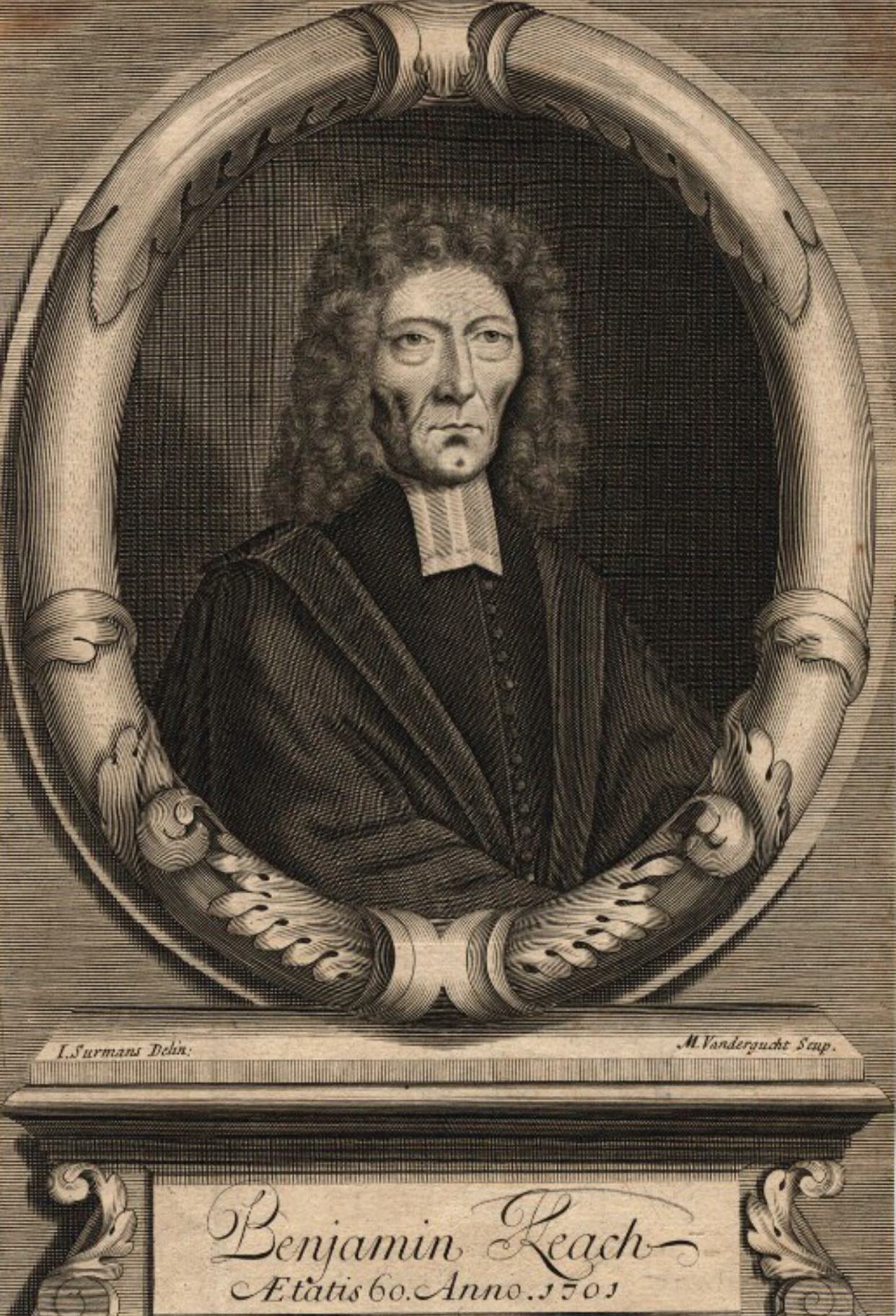
The article "Of a Metonymy of the Subject" by Benjamin Keach examines the use of metonymy in Scripture, emphasizing how various subjects or objects are used to represent broader concepts or ideas in theological discourse. Keach categorizes metonymy into five distinct types, demonstrating how the recipient is often a stand-in for wisdom, demonstrating biblical principles with references to Proverbs and Psalms that link the heart to understanding and moral character. He also illustrates how physical places or objects symbolize larger truths about God's creation and human behavior, supporting his assertions with numerous Scripture citations, such as Isaiah and John, that reflect these relationships. The overall significance of this examination lies in enhancing the reader's understanding of biblical language and encouraging a deeper engagement with Scripture through the acknowledgment of its metaphorical richness, ultimately leading to a greater appreciation of the divine truths conveyed.
Key Quotes
“The heart is put for wisdom where the scripture tells us the seat of wisdom is.”
“The thing containing is put for the thing contained, and place for the thing placed.”
“The names of countries are frequently put for their inhabitants as Egypt for Egyptians.”
“That by kosmon the world, we are to understand...such shall be saved.”
What does the Bible say about the heart being the seat of wisdom?
The Bible identifies the heart as the seat of wisdom, often indicating that wisdom and understanding are paramount qualities that one should possess.
Proverbs 2:10, Proverbs 21:21
Why is understanding the metonymy of the subject important for Christians?
Understanding metonymy in scripture enhances the depth of biblical interpretation and strengthens theological clarity for Christians.
Proverbs 2:10, Proverbs 21:21, Ephesians 4:22
How do we know that Christ represents His Church?
Scripture clearly affirms that Christ is symbolically and literally identified with His Church, reflecting a profound union.
1 Corinthians 12:12, Ephesians 5:30
CHAPTER III.
OF A METONYMY OF THE SUBJECT.
This kind of Metonymy shall be handled under five heads.
1. More generally when the recipient, or receiving subject is put for the adjunct.
2. More especially, when the thing containing is put for the thing contained, or place for the thing placed.
3. When the possesser is put for the thing possessed.
4. When the occupant object or subject is put for that which it is concerned about.
5. When the thing signed is put for the sign.
1. The Recipient or Receiving Subject is put for the Adjunct.
The heart is put for wisdom, (where the scripture tells us the seat of wisdom is) as Pr 2:10, and Pr 11:29, and Pr 15:13, and Pr 21:21; 6:32, "Whoso committeth adultery with a woman, lacketh a heart," so the Hebrew is, that is, lacketh wisdom and understanding: see Pr 7:7, and Pr 9:4,16, and Pr 10:13,21, in which places, the phrase wanting a heart, is to be understood of an unwise person or a fool, by which words the scripture expresses unbelieving and wicked men, as Pr 8:5, "O ye simple understand subtilty, and ye fools understand," an heart, so the Hebrew, that is wisdom! Pr 15:32, "He that heareth reproof possesseth or (acquireth) an heart," that is, as the Chaldee renders it, Wisdom. See Pr 28:16, "He that trusteth in his own heart is a fool," that is, he that depends on or confides in his own understanding and prudence, or he that is wise in his own eyes, as Isa 5:21; so Ho 7:11, and Ho 4:11.
The heart and reins are put for inward thoughts and affections, Ps 73:20-21, and Ps 51:7-8; Pr 23:16, "God searches the heart and reins," Ps 7:9-10, and Ps 26:1-2; Jer 11:20, and Jer 27:10, and Jer 20:12. This is to be kapdiognwstnv, as Ac 1:24, "The knower of hearts," Mt 26:21.
It is put for the desires of the soul expressed in prayer, as Ps 62:8, "Pour out your heart before him," that is, the desires of your heart, La 2:19.
The new or inward man is put for the condition or state of the converted or regenerate soul. An old or outward man is opposed to it. See Ro 6:6; Eph 4:22; 1Co 6:1, Heb 23:1, 2Co 5:17; Ro 12:2, and Ro 8:2,5; 2Co 4:16.
2. The Thing containing is put for the Thing contained, and Place for the Thing placed.
Mount Carmel is put for the trees there, Jer 46:18, "As Carmel by sea," that is, as the trees of Mount Carmel are drawn by sea, so shall he lead them captives: so says Rab. Kimchi, "Blessed be thy basket," De 28:5, that is, the meat or provision in it. A desert is put for the wild beasts there, Ps 29:8, with De 8:15. A house is put for a family, children, and domestics, Ge 7:1, "Come thou and all thy house into the ark." 2Sa 7:2. "The Lord telleth thee that he will make thee an house," that is, give thee an offspring or posterity to possess the royal dignity, 1Ch 10:6; Ps 49:12; Lu 19:9, etc. It is also put for a people or tribe sprung from any family, as Ex 2:1; Eze 3:1, and Eze 27:14, (&c.)
Islands are put for their inhabitants, and so for the Gentiles which possessed all the islands in the Mediterranean Sea, Isa 13:5, "Keep silence before me, O islands-The isles saw it and feared," etc. See Isa 42:4. "The isles shall wait for his law," Isa 51:5 "The isles shall wait upon me."
The sea is put for maritimeinhabitants, or seamen that dwelt near the shore, Eze 26:17, "How art thou destroyed that wast inhabited" of the seas, so the Hebrew; so Isa 60:5, "The abundance of the sea shall be converted unto thee," that is, the Gentiles which dwell near the sea, as the following words show; see Hag 2:7-8; De 33:19, "They shall suck the abundance of the seas," that is, goods and merchandize brought by sea.
A table is put for meat, Ps 23; 4:5; 78:19. A mountain for mountainous places, Jos 13:6; Jg 7:24 etc. Mountains and hills are put for idols, which were worshipped there, Jer 3:23. Mountains and valleys for their inhabitants, Mic 1. and Mic 4. "Mountains shall be molten under him, and the valleys shall be cleft" that is, the hearts of those that inhabit them shall wax soft. See Ps 68:2-3, and Ps 97:4-5, "They put to flight the valleys towards the east, and towards the west," that is such as dwelt in the valleys, 1Ch 12:15.
The world is put for mankind, Joh 3:16, and Joh 11:19; 2Co 5:19; 1Jo 2:2, and 1Jo 5:19. It is put for the wicked who are the greatest part of mankind, Joh 1:10, and Joh 7:7, and Joh 14:17, and Joh 15:19, and Joh 16:20,23, and Joh 17:9,14; 1Co 11:32; 1Jo 3:1, and 1Jo 4:5, and 1Jo 5:4-5. Hence the devil is called the prince of this world, Joh 3:31, and Joh 14:30 and Joh 16:11. Kosmokratorav "princes of the world," Eph 6:12, "The god of this world," 2Co 4:4. Which is expounded, Eph 2:5, "In time past ye walked according to this world, according to the prince of the power of the air, the spirit that now worketh in the children of disobedience."
The world is put sometimes for those that are converted and believe, Joh 6:33, The bread of God is he which cometh down from heaven, and giveth life unto the world, this is to believers, and Joh 14:31, "But that the world may know that I love the Father," etc. Yet Glassius thinks that the whole race of mankind is rather to be understood, in both places, as Joh 6:51, "The bread which I will give is my flesh, which I will give for the life of the world," for (1) this giving of life, is not an actual conferring of it by faith, but rather an acquisition or purchase of life for them, in which sense Christ is called the light that enlightens every man that cometh into the world. In the other text, Joh 14:31, Christ signifies by those words, that he was therefore to die, that he might deliver mankind from the power of Satan. (2.) That this redemption of mankind should, by the word of the Gospel, be revealed to the whole world. For he says not, let me die that I may show that I love the Father, but that the world may know that I love the Father: which [knowledge was had, when the Gospel was promulgated through the whole world by the apostles.
Camararius in his notes on Joh 17:21, "That the world may believe that thou hast sent me," says, by kosmon, the world, we are to understand, touv swzomenouv en tw kosmw, such shall be saved But Glassius says, that it signifies all men universally, as Joh 3:17, "For God sent his Son that the world through him might be saved." For though all men are not actually saved, in regard of their own stubbornness and impenitency, yet a spiritual unity for believers is prayed for, and that the world might believe, that is, that all men should be converted to the true knowledge of the Messiah; although very many remain in unbelief and wickedness, who shall have no share in his Redemption.
Ships are put for the men in them, Isa 23:1, "Howl, ye ships of Tarshish," that is ye mariners and merchants, &c. So verses Isa 10:14.
A nest is put for the young ones, De 32:11, "As an eagle stirreth up her nest, that is, the young eagles, as is clearly showed in the following words.
Ophir (a country in India abounding with gold) is put for gold brought from thence Job 22:24, "Then shalt thou lay up gold as dust, and Ophir as the stones of the brooks that is, gold brought from Ophir; abundance of gold is denoted by the whole phrase, and, metaphorically, great felicity.
A cup is put for the wine or liquor in it, Jer 49:12; Eze 23:32; 1Co 10:21, "Ye cannot drink the cup of the Lord and the cup of devils." Lu 22:17, it is said in the last paschal supper, "And he took the cup and gave thanks, and said, "Take this, and divide it amongst yourselves," that is, the wine not the cup; for Lu 22:18, he says, "I will not drink of the fruit of the vine, until the kingdom of God shall come." So Lu 22:20. We have the same Metonymy about the eucharistical cup of the Lord's supper, and 1Co 11:25-27. Of this cup Christ says, that it is the New Testament in his blood, but the containing vessel cannot be understood, but the thing contained, viz. the wine, which is sacramentally the blood of Christ, Mt 26:28; Mr 14:24. See more 1Co 10:16,21; 11:26-27; Mt 26:27; Mr 14:23; 1Co 11:28.
The namesof countries are frequently put for their inhabitants, as Egypt for Egyptians, Ge 17:15; Ps 105:38. Ethiopia for Ethiopians, Ps 67:7,7. Sheba for Sabeans, Job 1:15, and Job 6:19, see Isa 43:3-4. Judea and the adjacent countries about Jordan, are put for their inhabitants, Mt 3:5. Macedonia and Achaia for Christians living there, Ro 11:26. The land of Egypt is put for spoils brought from thence, Jer 43:12.
The grave is put for the dead that are buried in it, as Isa 38:18, "The grave cannot praise thee, death cannot celebrate thee," that is, they that are dead and buried; the reason follows, "They that go down into the pit cannot hope for thy truth," Isa 38:19, "The living, the living, he shall praise thee." See Ps 6:6; 115:17.
The earth is put for the inhabitants of the earth, Ge 6:11, "The earth was also corrupt before God, and the earth was filled with violence," which is expounded in the next verse, "For all flesh had corrupted his way upon the earth." So Ge 11:1, and Ge 28:22, and Ge 19:31, and Ge 14:24; 1Sa 14:29; 2Sa 15:23; Pr 28:2; Isa 24:20; Mt 5:13.
The ends of the earth are put for the inhabitants of the extremest parts thereof, Ps 22:27-28, and Ps 67:7.
A theatre (the place where plays and shows are seen) is put for the sight itself, 1Co 4:9, where the apostle Paul metaphorically says of himself, "For we are made a theatre (so the Greek) unto the world, and to angels, and to men" as if he had said, we are derided, hated, and abused by the world, and that not in a corner, but as if the whole earth were gathered together in one theatre to satiate and please themselves with beholding our miseries.
A city is put for citizens, Jer 4:29, "The whole city shall flee shall go into thickets and climb upon the rocks," so Isa 14:31; Jer 26:2, etc., Jerusalem, Chorazin, Bethsaida, Capernaum, are put for their inhabitants, Mt 3:5; Mr 1:5, Matthew 33:37, and Mt 11:21,23; Ac 18:25; Jg 5:7,11, etc.
To this by analogy may be referred these that follow.
Heaven, is put for God, who is said to dwell in the heavens, and there manifests his glory and majesty to angels, and glorified spirits, Ps 73:9, "They set their mouth against the heavens, and their tongue walketh through the earth," that is, they licentiously vent their blasphemies against God, and contumelious words against mankind. See more examples, in Da 4:23, with Da 4:22, and Da 4:29; 1Ki 8:32; Mt 21:25, "The baptism of John, whence is it? from heaven or of men?" that is, from God, or men, so Lu 20:4; 15:18, "Father, I have sinned against heaven, "that is, against God.
The heart is put for the soul, which is radically in the heart as its proper seat, Ps 14:3-4, and Ps 84:2; 1Pe 3:4; Heb 13:9, etc. The belly is put for the heart, which (viz. heart) is likewise put for the soul and its acts and cogitations, Job 15:35; Pr 18:8, and Pr 20:27, and Pr 26:22, and Pr 22:18; Hab 3:16; Joh 7:38.
3. The Possessor is put for the Thing possessed,
Ge 15:3, "Behold the son of mine house," so the Hebrew, "inherits me," that is, my goods and estate. De 9:1, "To possess nations greater and mightier than thy-self," that is, the countries of the Gentiles, for the people themselves were not to be possessed, but cut off by the command of God, as De 9:2-3, see 2Sa 8:2; Ps 79:7, "For they have devoured Jacob," that is, his riches and goods.
The prince is put for his jurisdiction, Mt 2:6, "And thou, Bethlehem, in the land of Juda, art not the least among the princes of Juda," that is, the principalities or perfectures (sic 'prefectures') of Juda, which were distinguished by thousands, as 1Sa 10:19.
The name of God is put for oblations offered to him, as Jos 13:33, "The Lord God of Israel was their inheritance," (viz. the Levites) which is expounded, verse Jos 13:14, "Only unto the tribe of Levi he gave no inheritance, the sacrifices of the Lord God of Israel made by fire are their inheritance," etc., and Jos 18:7, "The priesthood of the Lord is their (the Levites) inheritance" De 10:9, "The Lord is his inheritance," etc., see Eze 44:28.
Christ is put for the Church (or believers, who are his peculiar people, Tit 2:14; 1Pe 2:9) Mt 25:35, "For I was an hungered, and ye gave me meat," etc., says Christ, and verse Mt 25:40, it is thus expounded, "Inasmuch as ye have done it unto one of the least of these my brethren, ye have done it unto me." Ac 9:4-5, "Saul, Saul, why persecutest thou me? I am Jesus, whom thou persecutest," whereas verse Ac 9:1-2, it is said that Saul persecuted the disciples of Christ, so 1Co 12:12, "So also is Christ," that is, "his Church, hath many members, and many believers do constitute one body of Christ," or one Church, for it follows, verse 1Co 12:13, "For by one Spirit are we all baptized into one body;" Christ therefore is put for his mystical body, or, which is the same thing, that which properly belongs to a body is attributed to Christ, because of his mystical union with believers. For the same reason the afflictions of Christ are called the afflictions of the saints, Col 1:24[i]. Upon which place Lyranus says thus, "The passions or sufferings of Christ are two-fold, one he endured in his own proper body, as hunger, thirst, yea, even death, and in this sense there was nothing to be filled up---the other he suffers in his who are believers, when they are persecuted, afflicted, and oppressed for his sake."
[i] See more, Ac 20:28; Php 3:12; Ps 16:6; Eph 5:30,32.
And this is the meaning of the apostle here when he says, "Who now rejoice in my sufferings for you, and fill up that which is behind of the afflictions of Christ in my flesh for his body's sake, which is the church."
4. The Object is put for that which it is conversant about.
CHRIST JESUS is put for his doctrine, 2Co 11:4, "For if he that cometh preacheth another Jesus whom we have not preached," that is, another better doctrine of Christ, which he calls another gospel, etc., Eph 4:20, "But ye have not so learned Christ; if so be that ye have heard him, and have been taught by him, as the truth is in Jesus," etc.; this is to be understood of the doctrine of Christ.
God is put for worship appointed for his honour, as Ex 32:1, "And they (that is, the Israelites) said unto them (viz., Aaron), up, make us XXXX gods, that is, as[ii] Brentius, Gerhard, and others expound it, institue nobis publica sacra, etc., institute some public form of worship for us, or some visible sign of God's presence (as afterwards was the tabernacle, the ark and mercy-seat, Ex 40:34-35; Nu 7:84,) possibly some such thing as they had seen in Egypt; for now they were turned in their hearts to Egypt. Ac 7:39-40.
[ii] Brent. Com. In loc. Gerhard. Tom. 3.locor. de lege Dei S. 92
Glory and strength are put for the praise and celebration of glory and strength as Ps 69:1, "Give unto the Lord glory and strength," that is, give him the praise of his glory and strength. See Ps 8:2, "Out of the mouths of babes and sucklings, hast thou ordained strength," that is, the praise and celebration of his strength and omnipotency, as it is expounded, Mt 21:16. So Ps 96:6-7.
Sin is put for sacrifice or sin-offering, Ex 29:14, "The flesh of the bullock, etc. thou shalt not burn without the camp, it is a sin," so the Hebrew, that is, as our translation renders it, a sin-offering. Ho 4:8, "They eat up the sin of my people," that is, the sacrifice, or sin-offering, for sin has a three-fold acceptation. (1.) It signifies the transgression of God's law, 1Jo 3:4. (2.) Punishment for sin, "he shall bear his sin," Le 5; 20:20,27; 24:15; Nu 9:13; 18:22; Eze 23:49. (3.) Sacrifice offered for sin, Le 10:17, "Why do you not eat the sin of the holy place," for so the words are to be read, that is, the sin-offering. In this sense that text is to be understood, 2Co 5:21, "Christ was made sin for us," that is, a sin-offering, according to Isa 53:10, "If thou shalt make his soul sin," delictum, reatus, XXXX. Our translation renders it, "when thou shalt make his soul an offering for sin;" explained, Eph 5:2, "Christ hath given himself for us an offering and a sacrifice to God for a sweet-smelling savour:" for he is the true propitiatory sacrifice for our sins whom the old typical oblation adumbrated or shadowed forth.
That phrase of the Apostle Paul's, 2Co 5:21, "For he hath made him to be sin for us, who knew no sin," is borrowed from Isaias, upon which D. Franzius thus expresses himself. "How Christ was made sins may be plainly and perfectly declared from the beasts allotted for sacrifices, when by imputation of the sins of the people to them they became unclean, yea sin, and so were slain and sacrificed," etc. By which words the reason of this tropical speech, whereby sin is taken for sacrifice is noted; Illyricus says, "These sacrifices were so called, because the sins of the people (with respect to punishment) were after a certain manner by imputation transferred upon them," not that the verb XXXX signifies to expiate, Cl. Script, part 1, cof. 858.
Promise is put for faith, which embraces or receives the gracious promise of God, Ro 9:8, "Children of the promise," that is, of faith, which receives the gracious and free promise of Christ. They are called sons by a metaphor, with respect to Abraham, who is by the Holy Spirit called the "father of believers," Ro 4:16. As if he had said, they that tread in the steps of Abraham, and are alike unto him in faith. See Ro 4:12; Ga 3:7,29, and Ga 4:28, etc.
Blood is put for bloody men, or those that are malicious and ready to spill blood, or perpetrate any villainy, Isa 33:5, "That stoppeth his ears from hearing of blood," that is, hearkens not to them who conspire or confederate to commit murder, slaughter, or other wickedness (for that is synecdochially noted by the word blood.) See Pr 1:10-12, etc.
The subject or argument of writing is put for the writing itself, 1Ki 8:21,"The ark wherein is the covenant of the Lord," that is, the tables wherein the covenant was written, Ex 34:28, so Ro 9:4, ai Diaqhkai, "the testaments or covenants," that is, the two tables of the covenants, as they are expressly called, Heb 9:4. So the Old Testament is taken for the books wherein it was written and contained, 2Co 3:14, which is common in our vulgar speech to take the Old and New Testament for the books wherein they are written.
5. The Thing signified is put for the Sign.
The thing signified is sometimes put for the sign materially, that is, for the thing itself, which is the sign, 1Ch 16:11, "Seek the Lord and his strength," that is, the ark of the covenant, which was a sign and symbol of his presence and strength. So Ps 78:61; 105:4. Whence it is expressly called the ark of the strength of God, Ps 132:8; Eze 7:27, "The prince shall be clothed with desolation," that is, with a garment denoting mourning and desolation, 1Co 11:10, "A woman ought to have econsian power on her head," that is, a garment signifying that she was under the power of her husband.
Sometimes the thing signified is formally put for the sign, that is, for the term or appellation of the sign, as Ex 8:23, "And I will put redemption between my people and thy people," that is, the sign or token of redemption. De 16:3, "Seven days shalt thou eat unleavened bread therewith, even the bread of affliction," that is, a sign, monument, or memorial of the affliction, which you endured in Egypt. By this trope bread is called the body of Christ, and wine is called his blood, Mt 26:26,28; Mr 14:22,24; 1Co 11:24-25, that is, a sacramental sign and symbol of his body and blood, instituted in remembrance of him.

Comments
Your comment has been submitted and is awaiting moderation. Once approved, it will appear on this page.
Be the first to comment!