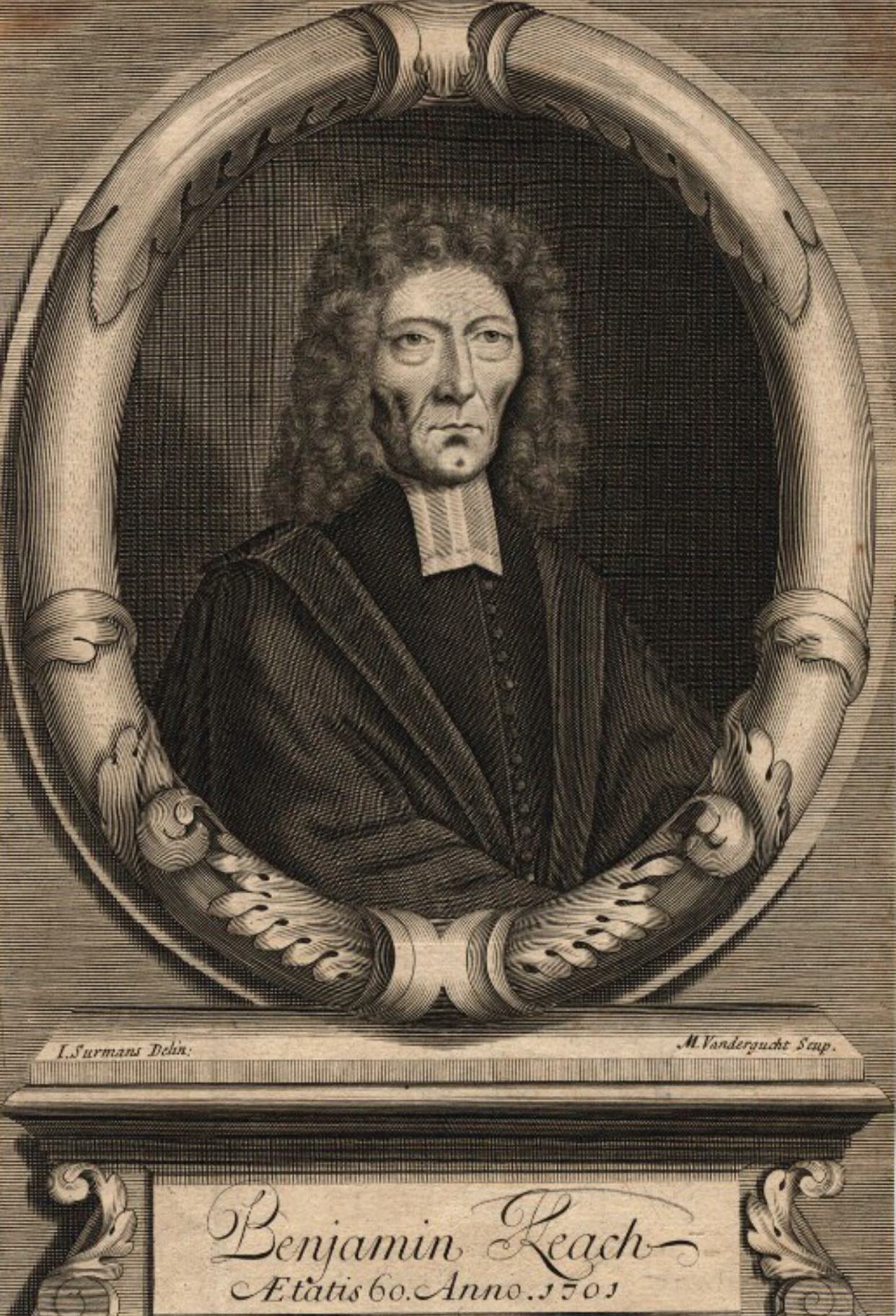
In Benjamin Keach's article, "IV. of a Metonymy of the Adjunct," the author explores the theological implications of various metonymies found in Scripture, emphasizing how certain terms can be employed to signify deeper meanings beyond their literal interpretations. Key arguments highlight seven distinct types of metonymies, providing examples from both Old and New Testaments, such as when "sin" refers to "sinners" (Isa 1:18) or "days" signifies events or circumstances therein (Ps 31:15). Keach supports his analysis through numerous Scripture references, illustrating the ways in which God’s word employs metaphoric language to enhance comprehension of spiritual truths. The doctrinal significance of this discussion is substantial, as it aids the Reformed understanding of hermeneutics, wherein recognizing such figures of speech allows for a more profound engagement with Scripture, ultimately leading to richer theological insights and a deeper appreciation of God's revelation.
Key Quotes
“An epithet of the incarnate Messiah taken from those places where he is compared to the sun and light.”
“The sign is put for the thing signified, for the Scriptures often communicate profound truths through nuanced language.”
“Circumcision is put for the circumcised Jews...which is a metonymy of the sign and for the spiritually circumcised.”
“How dreadful is this place! This is no other than the house of God and the gate of heaven.”
What does the Bible say about metonymy?
Metonymy, as illustrated in the Bible, uses a word or phrase to represent something closely related, such as 'the cup' for the drink it contains.
Ge 42:38, Isa 10:27.
How do we know the concept of metonymy is true?
The truth of metonymy as a concept in biblical interpretation is supported by its consistent application across various Scripture passages.
Job 5:16.
Why is understanding metonymy important for Christians?
Understanding metonymy is crucial for Christians as it enhances comprehension of the Bible's messages and theological implications.
Ps 20:1, Ps 115:1.
CHAPTER IV
A METONYMY of the adjunct is seven-fold.
1. When the accident is put for its subject in kind.
2. When the thing contained is put for the thing containing, or a thing in a place, is put for the place.
3. When time is put for things done or existing in time.
4. When the opinion of men is put for the thing itself.
5. When the occupatum, or subject concerned, is put for its object.
6. When the sign is put for the thing signified.
7. When a name is put for a person or thing.
Of these in order.
1. When the Accident is put for its Subject in kind.
THE abstract is put for the concrete, Ge 42:38, "Shall ye bring down my hoariness (or grey headiness, so the Hebrew) with sorrow to the grave,"that is, me that am now an old man, grey and decrepit with age, 1Sa 15:29, "The eternity (or strength of Israel shall not lie, "that is, the eternal and strong God of Israel, 2Sa 9:12, "And all the habitation of the house of Ziba were servants unto Mephibosheth, "that is, his whole family, or all that dwelt in his house, as we translate it. Job 5:16, "Iniquity stoppeth her mouth," that is, wicked men are compelled to be silent before God, Job 32:7, "Days should speak, and multitude of years should teach wisdom," that is, ancient men that are arrived to a great age, or many days. See Ps 12:1, and Ps 68:18, "Thou hast led captivity captive," that is, such as were in captivity, as Isa 49:24, and Jer 29:14, or actively, making those captives, that kept us in captivity, as the world, sin, death, and the devil. So Eph 4:8; Col 2:12-15,23., Ps 110:2-3, "From the dew of the morning thou hast the dew of thy nativity," that is, thy children, who, as dew seems to be generated of the morning moist air, and then appears scattered in innumerable drops, so shall thy children be begotten by the preaching of the Gospel in innumerable numbers. More examples you may see, Pr 23:21; Isa 57:13; Ps 144:3-4; 90:8-9; Jer 2:5; Eze 44:6, "And you shall say to the" [rebellion] so the Hebrew, that is, to the rebellious people. Lu 1:78, "the day-spring from on high hath visited us" An epithet of the incarnate Messiah taken from those places where he is compared to the sun and light, Isa 9:2, and Isa 60:1-2; Mal 4:2 etc. Joh 11:40, "If thou wouldst believe, thou shouldst see "the glory of God" that is, his glorious works, Ro 11:7; Eph 1:21; Php 1:16, "Supposing to add affliction to my bonds," that is, to me in bondage and captivity, 1Pe 2:17, "Love the brotherhood," that is, the brethren, or the congregation or assemblies of the faithful, 1Pe 5:9. So circumcision is put for the circumcised Jews, Ro 3:30; 15:16, which is a metonymy of the sign, and for the spiritually circumcised, Col 3:3, which is a metaphor.
Other adjuncts are put for their subjects, Eze 26:8, "He shall stir up the buckler against thee," that is, soldiers that wear bucklers or targets in war. See Isa 19:9; Ec 9:15.
Light is put for the sun, kat ecoxhn, by way of eminency, because it is the fountain and original of light, Job 31:26; Hab 3:4. It is put for fire, Mr 14:54, "And he sat with the servants and warmed himself, proj to fwj, by the light," that is, the fire, which gives light as well as heat. See Joh 18:18.
Oil or ointment is put for one singularly anointed, Isa 10:27, "The yoke shall be destroyed because of the anointing;" in the Hebrew it is [from the face of oil] or because of oil, that is, for the anointing of the Lord and his grace. Junius and Tremellius expound it thus: the yoke shall be destroyed because of the anointing, that is, by and through Christ thou shalt be set free, in whom the Spirit of Jehovah rests, who anointed him, Isa 61:1. Illyricus says, that this is properly fulfilled at the at the coming of the Messiah, and the redemption purchased by him, who has broken the yoke, cancelled the handwriting, and taken away the tyranny of the law, of sin, death and Satan. See Isa 9:4,6.
Sin is put for sinners, Isa 1:18, "Though your sins be as scarlet, they shall be as white as snow; though they be red like crimson, they shall be as wool," that is, the sinners by having their iniquities pardoned, shall be cleansed and purified from the guilt and condemnation of sin, for sin properly and in itself cannot be made clean, Ps 2:9; Mt 8:3, "His leprosy was cleansed," that is, the leprous man was healed, Ps 25:11; Ex 14:4; Ge 34:29; De 8:17; Job 15:29; Pr 31:29; Isa 10:14; 30:6; Re 18:3; Pr 15:6; Jer 20:5, etc, Job 6:22; Pr 5:10, etc.
2. The Thing contained is put for the Thing containing, and a Thing in a Place for the Place.
Ge 28:22, "And this stone which I have set for a pillar shall be God's house," that is, this place where I have erected a statue of stone, Jos 15:19, "Give me springs of water," that is, some portion of land where there may be springs of water, for it is added, that he gave her the upper springs and the nether springs, that is, a field in which there were springs in the higher and lower part. See Eze 26:5,14; Ho 9:6; Am 8:5.
Mt 2:11, "They opened their treasures and offered him gifts," that is, they opened their cabinets, (for so says Kirstemius upon the place, the Arabic word signifies), or purses, where their treasure or precious things were kept. See Ps 135:7; Mt 12:35; 22:13, "Cast him into outer darkness," that is, hell, the place of darkness. See more examples, Mt 25:10, "They that were ready went with him," eij touj gamouj, "into the marriage," that is, into the place where the marriage was to be celebrated. It is said in the same chapter, verse 21, 23, "Enter thou into the joy of thy Lord," that is, into the place of joy, the celestial kingdom, Mr 3:11. "And unclean spirits when they saw him, fell down before him," (viz. Jesus) that is, men possessed with unclean spirits. Lu 22:4, "For all these have of their abundance cast, eij ta dwra Oeon, into the gifts of God," that is, into the (dwro fulakion, or Gazophylacium) the place where those offerings were put, which were bestowed upon God. It is therefore called Corban, i.e., a gift, Mt 27:6. See more Ac 16:13,16, prayer is put for the place of prayer, as also Lu 6:12; Heb 12:1, "Let us run with patience the (agwna, certamen, strife, or) race that is set before us," that is, our course in this place of strife, of racing. Re 8:3, "And another angel came and stood at the altar, having libanwton, golden incense, that is, a golden censer," as we translate it. See verse ( Re 8:5 ).
To this kind of metonymy may be referred when the wind is put for that quarter of the world from whence it blows, 1Ch 9:24; Jer 49:32; 52:23; Eze 5:12; Mt 24:14. And where any river is put for the bordering country by which it runs, Isa 23:3; Jer 12:5; Ec 11:3. See also Jer 2:18, where it is withal a metaphor.
3. Time is put for Things done, or existing in time.
This is to be understood of the word time itself, as also of names which express parts of time, whether it be naturally or by institution, divided.
Time, 1Ch 12:32, "And the children of Issachar which were men that had understanding of the times to know what Israel ought to do:---that is, they were skilful and well instructed in prudence, whereby they know what to do, and when to do it, and therefore went before the Israelites, 1Ch 29:30, "With all his reign, and his (viz. David's) might, and the times went over him, and over Israel, and over all the kingdoms of the countries," that is, the various negotiations and chances, whether prosperous or adverse, which in any of those times happened to them. Es 1:13, "Then the king said to his wise men which knew the times," that is, who knew past transactions which happened in the respective times, or who knew how prudently to manage, and act all things in season, Job 11:17, "And thy time shall arise above the noon day," so the Hebrew, that is, thy meridian prosperity shall be clearer than the light, or most illustrious. Ps 31:15, "My times are in thine hands" that is, my life, health, and the whole state and course of my life, for whatsoever changes come, thou governest them by thy providence. See Ps 139:1-3, etc. 2Ti 3:1, etc.
An age, which is a part of time, as Heb 1:2, "By whom also he hath made XXXX, the ages," that is, the world, which endures for ages, and therefore all things existing, in time, so Heb 11:3. This signification comes from, the Hebrew word, XXXX cheled, which signifies both ages and world, (see Ps 17:14; 49:1; Ro 12:2. "Be not conformed to this age," that is, the impiety of this world, or the wicked men living in this age. For so aiwn is taken, Mt 13:22; Mr 4:19; Lu 16:8; 2Co 4:4; Ga 1:4; Eph 2:2; 6:12; 2Ti 4:10, etc.
Years,Pr 5:9, "Lest thou give thine honour unto others, and thy years unto the cruel," lest thou give thy life unto a jealous husband, who will kill thee, whereas otherwise thou mayest be safe and secure. See Chap, Pr 6:32-33.
Days, De 4:32, "Ask now of the days that are past, which were before thee," etc, that is, the histories and transactions of former times, search the Annals, 1Sa 24:19.
"Wherefore the Lord reward thee good for this day, which thou hast done unto me," (so the original) that is, for the benefit and good I received from thee this day, Mr 13:19, [i] "Those days shall be such an affliction, as was not from the beginning," that is, what shall come to pass in those days or in that time. This denotes such prodigious calamities, as if that time were even misery itself. 1Co 4:3, "But with me it is a very small thing, that I should be judged of you," or of Man's Day, hnpo anqrwpinhj, that is, as we translate it, man's judgment, because there are certain days allotted for judgments.
[i] Esontau, gad au hmerai ekeinai fluyij.
Eph 5:16, "Redeeming the time, because the days are evil," that is, very many evils, scandals, and sins, are perpetrated in these times: the Books of Chronicles are called the words of days,[ii] that is, a repetition, narrative, or rehearsal of the deeds and transactions of those times.
[ii] Verba dierum.
The days of any one in scripture phrase is called that time wherein any signal thing for good or evil, happens to him. For good, as Ho 1:11; Lu 19:42,44. For evil, as Job 18:20; Ps 137:6-7; Ec 5:19; Jer 17:16, with Joh 1:3; 3:10, and Joh 4:1,5,9-11; Jer 14:7,20-21, etc. Eze 21:19; 22:4; Ob 1:12; Mic 7:4; Ps 37:12-13. With respect to the effect, calamities, and misfortunes, are called the days of the Lord, because he justly punishes men for their malignity and wickedness, Job 24:1; Isa 13:6; Joe 1:15; 2:1-2; Am 5:20; Zep 2:2; 1:14-16,18. By way of eminency kat ecoxhn, the last judgment, when God shall reward every man according to his works, is called the day of the Lord, Joe 2:32; Ac 2:20; 1Co 1:7; 1Th 5:2, etc.
The day of the Son of Man. Lu 17:24,26, is expounded, verse 30, to be the day wherein the Son of Man shall be revealed. That appellation (by an Antanaclasis) is taken otherwise, verse 22, "The days will come when ye shall desire to see one of the days of the Son of Man, and ye shall not see it." Brentius upon the place says--"The sense is, because things are now in tranquility, the Son of Man is despised and rejected: but so great calamities shall come upon Judea, that men shall desire but for one "day to see me, and enjoy my help, but shall not compass their desires." Illyricus says, Ye shall desire to see, that is, enjoy for a small season those good things, and that good state you are in whilst I am present with you, but, etc. See verse Lu 17:23, and Mt 24:21,23 etc.
Christ calls his day the season of his coming into the flesh, in the fulness of time, Joh 8:56, "Your father Abraham rejoiced to see my day, and he saw it, and was glad," that is, he saw it by a peculiar appearance, and believed; upon which D. Franzius says, "None may doubt but a prospect of the face and person of Christ was shown and exhibited to Abraham in his divine vision, viz., "As he was born of a virgin, came of Abraham's seed, beginning with miraculous ministrations, exalted from his passion to the right hand of the Father, and to come in the last day, and to crown him in another life." [iii]
[iii] De interpret. Script. Orac. 47
The day of the exhibition of Christ in the flesh is called, Mal 4:5, "The great and terrible day of the Lord," or as others render it, honourable and fearful, as Jacob adorned the place where the heavenly manifestation was made with the same epithet. Ge 28:17, "How dreadful is this place? This is no other than the house of God, and the gate of heaven."
This day (viz. the manifestation of the Messiah} is dreadful or terrible to devils, because by his power their kingdom is destroyed, Joh 12:31; 1Jo 3:8. As also to the impious and rebellious enemies of Christ, see Mal 3:2, and Mt 2:3.
An hour,Mr 14:35. He (that is, Christ) prayed; "that if it were possible the hour might pass from him," that is, that most bitter passion, the thoughts of which, at that time troubled and oppressed him, Joh 12:27, "Father, save me from this hour," that is from the anxiety and agony, which I shall suffer in the time of my passion. Christ spoke of the time of his passion and death, at the thoughts of which (as a true and real man) he seemed to be in a great trembling and consternation.
The end or last time is put for reward, which is wont to he given when one has done his work, as Pr 23:18; 24:14,20; Jer 29:11, so 1Pe 1:9, "Receiving the telXX end of your faith, even the salvation of your souls," which the Syriac renders reward, or retribution. But this reward given by God is not a debt, but of free grace and mercy, because a merited reward or wages must bear proportion to the service done; but no service of ours can bear proportion to everlasting life and happiness, so that it necessarily follows, that the reward is purely of grace.
Feast is put for the sacrifice, which is offered upon the feast-day, as Ex 23:18 "Thou shalt not offer the blood of my sacrifice with leavened bread, neither shall the [iv] fat of my feast remain until the morning," that is, the fat of the lamb to be sacrificed, or of the sacrifice of my feast, as Junius and Tremellius render it. As also the Chaldee. So Isa 29:8, "Let them kill (feasts,) that is, as we translate it, sacrifices." See Mal 2:3. Ps 118:27, "Bind the (feast) so the Hebrew, with cords, even unto the horns of the altar," that is, the sacrifice of the feast or festival day, etc.
[iv] Adepts festi mei,
The Passover is put for the lamb which was slain and eaten on that festival in memorial of the deliverance from Egypt, Ex 12:21, "and kill the passover," that is, the Paschal Lamb, 2Ch 30:17; Mr 14:12,14; Mt 26:17-19; Lu 22:8,11,13,16.
Summer is put for summer-fruit, Isa 16:9; Jer 40:10; Am 8:1; 2Sa 16:2, for in these places the Hebrew is only summer.
Harvest is put for fruit gathered in the time of harvest, Ex 23:10; De 24:19; Isa 16:9; Joe 3:18. "It is also put for the reaper," Isa 17:5, which we translate harvest-man.
4. The Opinion of men is put for the Thing itself.
In Holy Scriptures sometimes things are named and described according to appearance or men's opinion (fainomenwj kai kata docan ) and not, (kata to einai kai alhqeian ) as they are, in their own nature. This happens. 1. In single words, as Nouns and Verbs. 2. In a conjunct phrase.
In Nouns, 1Sa 28:14-16,20. That diabolical spectrum or apparition raised by the witch of Endor in the likeness of Samuel, is called Samuel, because he falsely gave out that he was Samuel, and the deluded spectators thought him so. Hananiah is called a prophet, Jer 28:1,5,10, not that he was truly so, but so reputed. It is said, Eze 21:3, "I will cut from thee the righteous and the wicked," whereby righteous are meant persons that were only so in appearance, having an external form of righteousness which begat the good opinion of men, but with respect to God's notice that knows the inward frame of the heart, to be unsound, that is, to be unrighteous, Mt 8:12. The Jews are called the children of the kingdom, because they seemed to be such, and Christ says, Mt 9:13, "I am not come to call the righteous, (viz., such as are so in their own eyes,) but sinners to repentance," Lu 18:9; Ro 10:2-3 etc.
Lu 2:48, Joseph is said to be the father of Jesus (and verse 41, he is said to be his parent) because he was thought to be so by men, which is expressly said, Lu 3:23. See Joh 6:42. 1Co 1:21, "It pleased God by the foolishness of preaching to save them that believe" Verse 25, "Because the foolishness of God is wiser than men," etc. Where preaching of the Gospel, etc. is called foolishness, not that it was really so, but because the worldly wise reputed it so, as verse 1Co 1:18, viz., to teach salvation by the cross, to seek life in death, and glory in disgrace, which the carnal worldling thought folly, as verse 1Co 1:23.
The Devil is said to be the god of this world, 2Co 4:4, because he boasts that the kingdoms of this world are at his disposal, Mt 4:8-9; Lu 4:6-7, and because idolaters esteemed him a god, viz., in their idols, as Chemnitius [v] says. He is called the god of this world, as a dog is called the god of Egypt, because he was worshipped for a god. So the belly is called God, because men took more care to provide for it, than to serve God, Php 3:19, etc.
[v] Loco de creation, p. 119.
Ga 1:6. False teaching is called another Gospel, because some men thought it so, whereas it is really (as verse Ga 1:7 ) a perverting the Gospel. Epimenides is called the prophet of the Cretans, Tit 1:12, because they accounted him so, and after his death sacrificed to him, as Laertius witnesses. External profession is called faith, Jas 2:14,17,20,24,26, because men are apt to rest in it as sufficient for salvation, see Jude 1:12, etc.
In verbs, Mt 4:9, "The king (viz. Herod) was sorry," that is, he counterfeited sorrow; for verse 5, it is said, "he feared the multitude," when he would put John Baptist to death, of whom the people had a very great esteem; so that this sorrow was nothing else but artificial and feigned.
It is said, Mr 6:48, "That Christ would have passed by them," (viz. his disciples at sea) that is, he seemed to pass by, or such was the posture and motion of his body as if he would pass by, Joh 3:30, "He must increase, but I must decrease;" this increasing and decreasing is spoken with respect to the opinion of men, who had extraordinary esteem of John hitherto, and vilified Christ, otherwise speaking according to the nature of the thing, John Baptist was not diminished by the increasings of Christ, but afterwards derived his own increasings from his fulness.
Ac 27:27, "The shipmen deemed that some country drew near to them," (so it is in the Greek prosagein, appropinquare sibi aliquam Regionem) because the shore seems to move and draw near to them which are at sea; but it is to be understood that they drew near land, so Virgil 3, Æneid Provehimur portu, terraegue urbesque recedunt, that is, we sail from the port, and the lands and the cities go back.
Enjoined words, or an entire phrase, Ps 72:9, "his enemies shall lick the dust," that is, they shall be so inclining and prostrate towards the earth, that they shall seem to lick the dust of the earth, which is a description of fear and subjection. So Isa 49:23, and Mic 7:17,20. Isa 13:5, "they shall come from a far country, from the end (or extreme part) of heaven." This phrase is taken from the opinion of the vulgar, who (led by the guess of the eye) think that heaven is not spherical or round, but hemispherical, ending at the extremes of the earth, upon which the end or extremes of heaven seem to lean, or be staid upon, so that the end of heaven is put for the end of the earth, or remotest places; you have the same phrase, De 4:32; 30:4; Ne 1:9,[vi] Mt 24:31. This exposition may be confirmed by the places where mountains are called the foundations of heaven, as 2Sa 22:8. Because at a great distance the heavens seem as it were to rest upon them. They are called the pillars of heaven, Job 26:11, because heaven seems to be propt (sic-propped; de) by them as by pillars.
[vi] Vatablus in Ne 1:9, Finitor sive horizon nostril hemisphaerii u detur contingere eam Regionem, quam terminat.
5. The Occupate put for the Object.
Sense is put for its object, or the thing which is perceived by sense, as hearing is put for doctrine or speech, Isa 28:9, "Whom shall he teach knowledge? And whom shall he make to understand hearing?" so the Hebrew, that is, doctrine, or the word, Isa 53:1, "Who hath believed our hearing?" that is, our doctrine or speech, or as we translate it, report? So is akoh, hearing, taken, Joh 12:38; Ro 10:16; Ga 3:2,5. Hearing is put for rumour or fame. Ps 112:7; Isa 28:19; Eze 7:26; Ob 1:1; Hab 3:2; Mt 4:24; 14:1; 24:6; Mr 1:28 and Mr 13:7 etc. By the same trope the eye is put for colours seen by the eye, and are the object of sight, as in the original text of the following places, Nu 11:7; Le 13:55; Pr 23:31; Eze 1:4, and Eze 8:2, and Eze 10:9. So two eyes are put for a double way, which give occasion to look upon both, Ge 38:14,21. Some say this is a proper name, some say it is two fountains.
Affections, and what bear analogy with them, are put for their object, as faith for the doctrine, which is received and believed by faith, Ac 6:7; Ga 1:23; Eph 4:5; 1Ti 4:1; Tit 1:13; Jude 1:3; Re 2:13, See Ga 3:23,25
Hope is put for God, in whom we hope, and from whom we expect every good thing, Ps 71:5, "For thou art my hope, O Lord," that is, he in whom I hope, the support of my hope, and the God of my strength. See Jer 14:8; Ps 65:5-6; Jer 17:7,13, etc.
It is put for the Messiah or Christ specially, Ac 28:20, "For the hope of Israel I am bound with this chain," that is, for the Messiah, who is hoped for and desired by Israel, or (which is the same thing) for the good hoped for from the Messiah, Ac 26:6-8, so Col 1:27, and 1Ti 1:1, Christ is called our Hope.
It is put for men, from whom we expect good or confide in, as Isa 20:5, "They shall be ashamed of Ethiopia their hope," as verse 6. Likewise hope is put for the thing hoped for, as Pr 13:12, "Hope deferred maketh the heart sick, but when the desire cometh, it is a tree of life," that is, the thing hoped for and desired, Ro 8:24, "Hope that is seen, is not hope," that is, the thing hoped for, etc., Ga 5:5, "For we through the Spirit wait for the hope of righteousness by faith," that is, eternal life, promised to the just by faith, so Tit 2:13.
Love is put for the person or thing beloved, Jer 2:33, "Why trimmest thou thy way to seek love?" that is, that which thou lovest, Jer 12:7, "I have given the love of my soul into the hand of her enemies," that is, the people dearly beloved by me, as the Chaldee renders it, Ho 9:10, "And then: abominations were as their love," that is, the idols which they love.
Desire is put for the person, or thing desired and loved, Eze 24:16, "Son of man, behold, I take away the desire of thine eyes from thee with a stroke," that is, thy desired and beloved wife, as verse Eze 24:18, so verse Eze 24:21, "Behold I will profane my sanctuary, the excellency of your strength, the desire of your eyes," that is, that which you love and delight in, as verse Eze 24:25, for that which the mind longs after is ascribed to the eyes, as, "the lust of the eyes" is put, 1Jo 2:16. This may give some light to that passage, Hag 2:7, where Christ is called the "desire of all nations" the sense is, that the nations will extremely desire him, love him, embrace him, and hope in him, that is, when they are converted to the kingdom of Christ by the voice of the Gospel (to whom the name Gentiles is ascribed, Ro 11:13, and other places). The term desire is sometimes put for the affection of love; for to be desired, signifies to be loved and esteemed, (by a metonymy of the effect for the cause), for as much as love begets desire after the thing beloved, of which you have examples, in Ge 27:15; Ps 19:10-11, (with Ps 119:126-127), Pr 21:20; Song 5:6; Isa 1:29, and Isa 32:12, and Isa 44:9; Jer 3:19; La 1:7,10, and La 2:4; Da 9:23; 10:11,19; Ho 9:6; Am 5:11; Ec 7:14, etc.
Fear is put for God, who is feared, Ge 31:42, "The fear of Isaac," that is, the God whom Isaac feared and worshipped, so verse Ge 31:53. Junius and Tremellius think this phrase alludes to that fear, by which God (as it were with a bridle) restrained Isaac from, revoking or recalling that blessing he gave to Jacob, Ge 27:35 etc. Isa 8:13, "Let him be your fear, and let him be your dread," that is, let God be feared and dreaded by you.
Fear is put for the evil feared, Ps 53:5, "They feared a fear, where no fear was," that is, they feared where there was no evil nor danger, which is the object and cause of fear. Pr 1:26, "I will mock when your fear cometh," that is, that which you fear and tremble at, as verse Pr 1:27, "When your fear cometh as desolation, and your destruction cometh as a whirlwind; when distress and anguish cometh upon you." See Pr 3:25, etc., 2Co 5:11, "Knowing ton fobon the fear of the Lord," that is, the terrible judgment of the Lord.
An action is put for its object, Ex 15:2, "The Lord is my strength and praise," that is, the God whom I praise, and who is the scope or argument of my song. The like we have, Ps 118:14, expounded, verse Ps 118:15-16; Jer 17:14, the prophet calls the Lord his praise, that is, the object of his praise, and thanksgiving, for his great goodness. See De 28:8; 12:7,32., 1Sa 1:27, "And the Lord gave me my petition," that is, the thing I asked, so Job 6:8; 2Th 1:11; Heb 11:13; Ac 1:4, "Wait for the promise of the Father," that is, the Holy Spirit promised by the Father.
6. The Sign is put for the Thing signified.
IN nouns, Ge 49:10., "The sceptre shall not depart from Judah," that is, the royal authority, so Isa 14:5; Ec 10:11-12., A throne is also put for regal authority, Ps 89:4, and a crown or diadem, Ps 89:39; Eze 21:26, etc., unction is put for the priesthood, Nu 18:8, altars for divine worship, 1Ki 19:10; Ps 23:4, "Thy rod and thy staff comfort me," that is, thy care and love towards me; for a rod and a staff were a sign of pastoral care and office of the shepherd to his flock; this is withal an Anthropopathy, whereby God is represented as a Shepherd, and things relating to a shepherd attributed to him, Ps 140:8, "Thou hast covered my head in the day of arms," so the Hebrew, that is, in the day of battle, and adversities which hostility brings, the signs and instruments whereof are arms, Ps 44:6, "For I will not trust in my bow, neither shall my sword save me," that is, my military skill, fortitude, prudence, or stratagems, of which the signs and instruments of exercise were a bow, and a sword. To which the divine strength and goodness is opposed, verse Ps 44:7, "But thou, Lord, hast saved us from our enemies."
So elsewhere a sword is put for war and hostile violence, Ex 18:10; Isa 1:10, and Isa 2:4; 2Sa 12:10; La 5:9; Eze 21:3-4,9,32. in which there is also a metonymy of the organical or instrumental cause, as before. See other examples, Ps 144:11, and Mt 10:34, etc. [vii]
[vii] Gram. Sacr. p. 283
Mt 23:2, "The Scribes and the Pharisees sit in Moses' chair." The chair of Moses metonymically denotes the power of teaching, judging, and ruling the people, of which it was a symbol; which things are expressed by the name of Moses, who was instructed by God to teach and govern, and who exercised both by the authority of God, and left the rules in writing for the posterity of the Jews to observe. The term to sit also aptly notes both; for the public teachers, for the most part sat, Mt 26:55; Lu 4:20; Joh 8:2; Ac 22:3. "The judges also sat in a chair or tribunal" Ex 18:13; Jg 5:10; Mt 27:19, from whence to sit is put for ruling and judging, Ps 29:9-10, and Ps 110:1, (see 1Co 15:25), 2Th 2:4, and whereas the Priests, Scribes, and Pharisees sat in the seat or chair of Moses, and did conform to the way of teaching, and government of the people, according to the rule of the divine law given by Moses. Christ, ver. Mt 23:3, commands obedience to them; but gives a caution to take heed of their leaven, that is, their false doctrines, and feigned traditions, as Mt 16:6,12, for that did not belong to the seat of Moses, but to the seat of the scornful, or chair of pestilence, as Jerome renders it, Ps 1:1, the throne of iniquity, Ps 94:20,23., Ro 3:30; 15:8; Col 3:11. The Jews are called the circumcision, because that was the sign whereby they were distinguished from other nations; and the Gentiles are called the uncircumcision, because it distinguished them from the Jews, Ga 2:7-8; Eph 2:11; Ro 2:26-27; 3:30; Col 3:11 etc.
In verbs, sometimes to hide,[viii] signifies to protect, and put in a safe place, sometimes to leave or depart from another, for hiding is a sign of both. Of the former we have examples, Job 5:21; Ps 27:4-5; 31:20-21, and Ps 64:2-3 etc. where there is also an Anthropopathy, when the speech is of God. Of the latter we have examples, Ge 31:49, "when we are hid one from another," so the Hebrew, that is, when we depart or are absent from one another, De 22:1, "Thou shalt not see thy brother's ox, or his sheep go astray, and hide thyself from them," that is, thou shalt not go away and let them alone, but bring them back, so Isa 58:7.
[viii] Ascondere.
To sleep is put for to be secure, because sound and pleasant sleep is an evident sign of security, Ps 3:5, and Ps 4:8, puffing is put for contempt, for a slight puff of the mouth denotes when a matter is despised as an inconsiderable thing, Ps 10:5; 12:5.
To kiss signifies love, obedience, obsequiousness, and submissiverespect, of which in ancient times a kiss was a sign, as Ge 41:40; 1Ki 19:18; Ps 2:12. To this some refer that phrase, Mt 5:47; Heb 11:13, aspazesqau, osculo salutare; for aspazomai signifies to salute with kissing, and embracing, and so is put for a receiving or embracing in love, or faith in hope. [ix]
[ix] Leigh. Crit. Sacra.
To laugh is put for to be joyful, which is the sign of laughter, Job 8:21; Ps 126:1-2; Ge 21:6; Lu 6:21,25, and to be secure, Job 5:22, to stand is put for to minister, Eze 8:11; Ec 3:1. For it is the sign of a servant to stand, see De 10:8. To anoint signifies to make a king, or chief lord, Jg 9:8. For unction was in times past the rite and symbol of the solemn inaugurations of kings, as in many places of the Old Testament appears.
In conjunct phrases, to shut and open, none resisting, signifies a full and free power of administration, Isa 22:22, "To speak with a stiff neck," signifies proudly to resist and blaspheme God, Ps 75:5. For an erected neck is the indication of a proud mind. To give "cleanness of teeth", signifies famine, Am 4:6, because in eating, something of the meat sticks in the teeth; for where that uncleanness of teeth is not found, it signifies there was no meat eaten, or a defect of aliment. To lift up the eyes, signifies worship and adoration, Ps 121:1; 123:1; Eze 18:6, for whom we reverence and worship, we attentively behold. To lift up the head, signifies an erection of mind, animosity, and joy, as Jg 8:28; Ps 83:1-2; Lu 21:28 etc.
The face waxing pale, denotes fear, for shame causes one to blush, and then for fear the blood retires from the outward parts to the heart, as Isa 29:22, "Jacob shall not now be ashamed, neither shall his face now wax pale." See Job 9:24. To have a whore's forehead notes impudence, for the indications of that appear in the face as well as modesty and bashfulness, Jer 3:3.
To bow the knee, signifies subjection and obedience or divine worship, Isa 45:23; Php 2:10; Eph 3:14. Of which genuflection is a sign, to give the hand sometimes notes voluntary subjection, as 1Ch 29:24, 2Ch xxx 8, where the Hebrew signifies to give the hand, as in the margin of our Bibles. Sometimes it notes begging and imploring, as La 5:6. Sometimes confederacy, as Jer 1:15, she (that is Babylon) hath given her hand that is, she hath confederated with Croesus King of the Lydians, as Herodotus, lib. 1, says, see Eze 17:18; Le 6:2, with Ga 2:9; Job 17:2. "To put the hand upon the head, "signifies grief, calamity, and sadness, Jer 2:37, that being a sign of it, as 2Sa 13:19. "To put a hand upon the mouth, signifies silence, or that one cannot answer, Job 40:24; Mic 7:16, etc. See other examples, 2Ki 3:11; Ex 28:41; 29:9; 32:29; Nu 3:3. Jg 1:12.
To lift up the hand, is put for swearing, Ex 6:8, so the Hebrew, Ps 106:25-26, and elsewhere, because such as swore lifted up their hands towards heaven, as, Virgil says, 12 Æneid.
Deinde Latinus,
Suspiciens cselura, tenditque ad sydera dextram;
Haec eadem, JEnea, terram, mare, sydera, juro.
Sometimes it signifies to pray, as Ps 28:1-2; 68:31-32, and Ps 141:2; 1Ti 2:8. And to bless, Ps 134:2 for by that ceremony they used to bless of old. Also to indicate, or give notice, Isa 49:22.
To this may be referred where eating and drinking is put for health and life, as Ex 24:11. See Ge 16:13; Ps 2:3, "Let us break their bands asunder, and cast their cords from us," that is, let us remove this troublesome servitude, which by bonds and cords, as by certain signs, is noted. See Ps 46:9, "He breaketh the bow, and cutteth the spear in sunder, he burneth the chariot in the fire," verse Ps 46:10, "Be still and know that I am God," that is, he which puts an end to wars, and tameth the enemy, of which (viz., hostility) these things were dismal signs. See Ps 58:10; 69:11. See Job 16:15; Ps 35:12; Joe 1:3; Am 8:10, etc.
Isa 2:4, "And they shall beat their swords into plough-shares, and their spears into scythes," or pruning-hooks; that is, there will be a constant peace, of which there is not a more certain sign than when arms are turned into rustic or country instruments, which are useful in the time of peace. And because the prophet speaks of a spiritual peace in the time of the Messiah, here is also a metaphorical Allegory.
Isa 49:26, "They shall bow down to thee with their face toward the earth and lick up the dust of thy feet," that is, they will give thee honour and reverence, for the sake of Christ thy head, who dwells in thee: for this speech is of the New Testament church. See Ps 72:8-9, etc., Jer 31:19, "After I was instructed, I smote upon my thigh," that is, after my sin was shown unto me I was affected with grief of mind. For smiting the thigh was an indication of grief, as Homer, Iliad II. says of Achillis, that mhrw pghcamenoj, when he had smote his thighs, he spoke to Patroclus, Odyss. 5. "He cries out, O miserable! and struck his thighs," etc. La 2:10.
La 2:10, "The elders of the daughter of Sion sit upon the ground and keep silence, they have cast up dust upon their heads, they have girt themselves with sackcloth, the virgins of Jerusalem hang down their heads to the ground" by these signs a most extreme grief is described. Jon 4:11, "That cannot discern between their right hand and their left hand," that is, that are not come to the years or age of discretion. The signs and effects of reason and judgment are said to be wanting, yea, even judgment itself and the use of reason, and convenient age for the exercise of it.
In entire speech, hither may be conferred that custom of speaking in sacred scripture, whereby in commands or promises such things are put, which men were wont to do, and are only the signs of those things which are intended and understood by that speech, as when the prophet Elisha commands Gehazi his servant, 2Ki 4:29, and Christ his disciples, Lu 10:4, "To salute no man by the way" by which is intimated that they were with all expedition and dispatch to do their errands, and to avoid all interruptions by the way. For it is a sign of great haste among men if they are so intent upon the end of their journey or business, that they take no notice of any body they meet, so as to salute him or discourse with him. Otherwise mild, courteous, and civil salutations are reckoned among Christian duties, etc.
Jer 9:17, "Thus saith the Lord of hosts, consider ye and call for the mourning women, that they may come, and send for cunning women that they may come," and verse 18, "And let them make haste and take up a wailing for us," etc. The Lord does not approve of the dissembled wailing-women in mourning at funerals, but speaks according to the vulgar custom, denoting by this, and informing the people of the bitterness of the present calamities. See Am 5:16. Jer 10:17, "Gather up thy wares out of the land, O inhabitant of the fortress," that is, bundle and bind up your precious things together, as verse Jer 10:9. The sense is, that they were not to remain there, but to be led into captivity, as chap, 18: where the reason of this judgment is to be read at large. For they that are in a garrison, and doubt its strength, do convey their precious things to places of more security. This also may be an irony, as if the Lord had said, ye cannot effectually bring to pass anything to free you and yours. "We have the like place, Jer 46:19. Etc. By destroying the weapons, Eze 39:9-10. The certainty of the promised victory, and the peace that would ensue is denoted, as Isa 2:4.
Mt 24:20, "But pray ye that your flight be not in the winter, nor on the Sabbath day," The disciples are commanded, with respect to the dreadfulness and peril of the siege of Jerusalem, to do those things which belonged to the Jews, who thought that it was not lawful for them on the sabbath to go above [x] 1000 greater (or 2000 lesser) paces; and therefore they ought to pray, that they may not be necessitated to fly on the Sabbath, because the accustomed Sabbath day's journey would not be enough to convey them beyond the danger of the Roman soldiers. And by this the grievousness of the calamity is indicated.
[x] Goodwin in his Moses and Aaron says, that 2000 geometrical cubits is a Sabbath's day journey. Lib. 3
Lu 22:36, "Then said he (that is Christ) unto them, but now he that hath a purse, let him take it and likewise his scrip: and he that hath no sword, let him sell his garment, and buy one." By this speech is signified, that to that quiet and comfortable way of living, which the apostles hath hitherto enjoyed in the school of Christ, should immediately succeed a most grievous persecution, even to be begun that very night, and that the enemy with swords and clubs, were at hand, so that such as confide in an arm of flesh, and would consult (as men) about the security of themselves and theirs, could have no better way, than to dispose of all, even to their very coats, and provide themselves with military defences to resist the enemy's violence. By this sign therefore, the thing signified is to be understood; for Christ does not require, that his apostles should buy swords and defend themselves; but by the necessity of a sword, he symbolically insinuates or intimates the grievousness of that danger, which threatens them from the enemy. So says Theophylact and Enthymius upon the place. The apostles understood these words of Christ properly, and therefore say, ver. Lu 22:38, "Lord, here are two swords, to whom he said it is enough." By which answer he modestly and tacitly reprehends the absurdity of his disciples; as if he had said, I perceive you do not apprehend the meaning of my parabolical speech, therefore it is enough to have admonished you thus much; your experience, and the fulfilling of my prediction, will supply the place of an exposition, when in a little time a military host shall invade, to repel which a hundred swords shall not be enough. See Brentius and Erasmus upon the place.
7. A Name is put for the Person, or Thing.
THE name of God is put for God himself, De 28:58, "That thou mayest fear this glorious and fearful name," (viz. the Lord thy God,) Ps 20:1, "The name of the God of Jacob defend thee," that is, the God of Jacob. So Ps 115:1; Isa 30:27; Mic 5:4, and frequently elsewhere, Joh 3:18, "Because he hath not believed in the name of the only begotten Son of God," that is, Son of God himself. So Joh 17:6; Ac 3:16, and Ac 10:43; 1Jo 2:12, etc.
Name is put for man, Ac 1:15, "The number of the names together, were about one hundred and twenty," that is, so many men. So Re 3:4, and Re 11:13. Erasmus says, the reason of this speech is, that when men are numbered, their names are called over.
Name is put for son, for posterity, because they are called, by the name or surname of their ancestors, De 25:7; 1Sa 24:22; 2Sa 14:7, etc.
Name is put for the thing itself, Ac 4:12, "For there is none other name under heaven given unto men whereby we must be saved," that is, there is no other way or means of salvation but by Christ. Eph 1:21, "Every name that is named," that is, everything in nature. It notes also dignity or eminence, Php 2:9, "Wherefore God also hath highly exalted him, and given him a name which is above every name," etc.

Comments
Your comment has been submitted and is awaiting moderation. Once approved, it will appear on this page.
Be the first to comment!