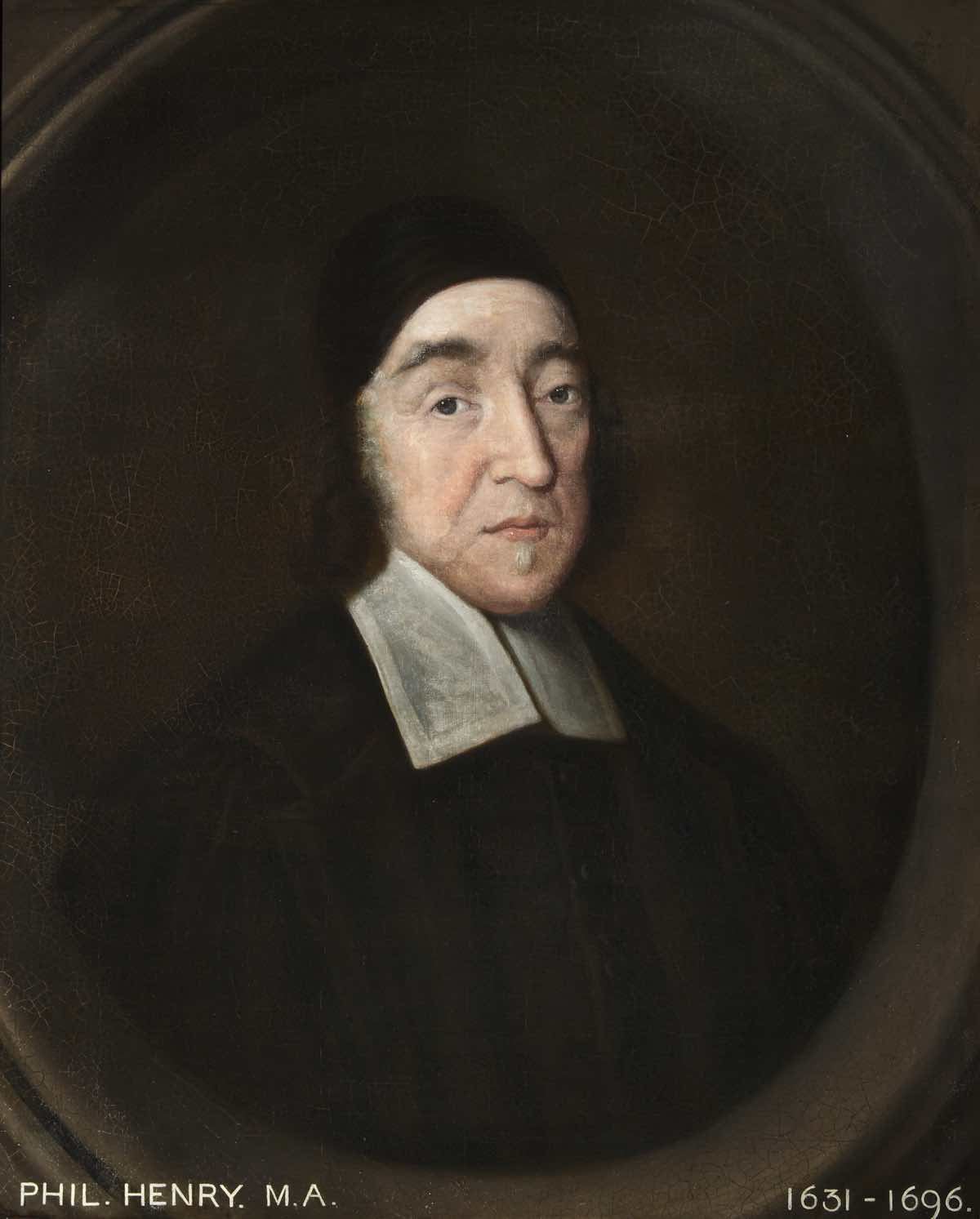
The article "Types of Christ" by Philip Henry explores the various Old Testament figures and objects that serve as types or foreshadows of Jesus Christ. Henry identifies twelve primary types, including Noah's ark, Abraham's ram, Jacob's ladder, and the paschal lamb, arguing that these types confirm Christ as the true Messiah and highlight the continuity of Scripture. He references key passages such as Colossians 2:17, Acts 2:36, and John 14:6 to demonstrate how these types point to Christ's atoning work, emphasizing the importance of faith in Christ for both salvation and daily spiritual sustenance. The article underscores the doctrinal significance of understanding Christ’s fulfillment of these types for encouragement in believers’ faith and obedience.
Key Quotes
“The great end I aim at is to confirm your faith in him as the true Messiah promised that Jesus is he that was to come and that we are to look for no other.”
“As there was then an ark of God's appointing so there is now a Christ in whom a few a remnant shall be saved.”
“This ladder is Christ; as man in his human nature his feet stood upon the earth; as God in his Divine nature his top reaches unto heaven.”
“The cities of refuge are our Lord Jesus; to him we must flee with all speed.”
What does the Bible say about types of Christ?
The Bible teaches that various figures from the Old Testament, such as Noah's ark and the paschal lamb, serve as types or foreshadows of Christ.
Colossians 2:17, 1 Peter 1:10-12
Why is the paschal lamb important for Christians?
The paschal lamb is important for Christians as it represents the sacrificial death of Christ, which secures believers from divine judgment.
Exodus 12, 1 Corinthians 5:7
How do we know Christ is the fulfillment of the Old Testament types?
Christ fulfills the Old Testament types through His life, death, and resurrection, which align with the prophecies and shadows presented in Scripture.
John 3:14-15, 1 Corinthians 10:4
What does it mean to have Christ as our city of refuge?
Christ as our city of refuge means that He provides safety and protection from divine judgment for those who flee to Him in faith.
Numbers 35, Hebrews 6:18-19
The types of Christ were of two sorts—real: personal.
The real types, or such things as were figures of him, and were fulfilled by him, were twelve:— Noah's ark. Abraham's ram. Jacob's ladder. The paschal lamb. The manna. The rock affording water. The brazen serpent. The red heifer. The two goats. The cities of refuge. The temple. The altar. These were all "shadows of Him that was to come." The body, or substance, was Christ, Col. ii. 17.
Having at large opened each of these,* I shall now give you a brief account of them altogether. The great end I aim at is to confirm your faith in him as the true Messiah promised: that Jesus is he that was to come, and that we are to look for no other.
* See Rey. P. Henry's Life, vi supra, pp. 157,191.
The clearer our belief is, and the stronger, as to this matter, the more influence it is like to have, both upon our comfort and our obedience.
And besides—God only knows how we may be any of us tried and tempted as to it. Most people are far from knowing it "assuredly," Acts ii. 36.
1. Noah's ark. That was the floating house wherein Noah and his family were saved when the world was drowned. It was a type of Christ: "For Christ hath once suffered for sins, the just for the unjust, that he might bring us to God, being put to death in the flesh, but quickened by the Spirit: by which also he went and preached unto the spirits in prison; which sometime were disobedient, when once the longsuffering of God waited in the days of Noah, while the ark was a preparing, wherein few, that is, eight souls were saved by water. The like figure whereunto even baptism doth also now save us (not the putting away of the filth of the flesh, but the answer of a good conscience toward God,) by the resurrection of Jesus Christ: who is gone into heaven, and is on the right hand of God; angels and authorities and powers being made subject unto him."
There is certainly a deluge of Divine wrath coming upon this present world, as there came a flood of water upon the old one. And the posture men will be found in is like to be the same, Luke xvii. 26,27. But as there was then an ark of God's appointing, so there is now a Christ in whom a few, a remnant, shall be saved. And the fewer, the more need we have to "strive:" to strive to get into Christ. For to them "there is no condemnation." Men may hang upon him by external profession, as, no doubt, many did upon the sides of the ark; and yet perish. They may climb high, as was the case then—to the tops of trees, houses, hills. But, if out of the ark, they were drowned notwithstanding. So, unless we are in Christ, though mounted high in parts, gifts, attainments, and the good opinion and esteem of our neighbours, it is all as nothing.
Where are we? In the ark, or out of it? "By faith Noah, being warned of God of things not seen as yet, moved with fear, prepared an ark for the saving of his house." We are warned; but do we fear? We fear; but do we prepare? Christ is already prepared. God hath prepared him. That which we have to do is to get into him. To make sure our interest in him.
2. Abraham's ram. Of that we read in Gen. xxii. We have the account there at large. "And Abraham lifted up his eyes, and looked, and behold behind him a ram caught in a thicket by his horns: and Abraham went and took the ram, and offered him up for a burnt offering in the stead of his son." Now, as that ram was taken by Abraham, and offered up instead of Isaac his son, so that Isaac escaped, and the ram was slain: so we poor Isaacs, being bound, laid on the altar, the knife in the hand, and the hand stretched out, and the fatal blow just ready to be given by Divine justice: behold the Lord Jesus caught, and killed, and his death accepted instead of our damnation. This was "the Lord's doing," and it should be "marvellous in our eyes." It was by no forecast of Isaac's, nor any friend's for him, that he escaped; but Jehovah-jireh, the Lord provided.
How much are we indebted! What Shall we render? See what the Saviour said when they came to apprehend him: "I have told you that I am he: if therefore ye seek me, let these go their way." Our duty is to "love Him" that hath "first loved us;" and, out of love to him, to be willing and ready to venture for him, according as he shall thereunto call us.
3. Jacob's ladder. "He dreamed, and behold a ladder set up on the earth, and the top of it reached to heaven: and behold the angels of God ascending and descending on it." This ladder is Christ. As man, in his human nature, his feet stood upon the earth. As God, in his Divine nature, his top reaches unto heaven. And he is the only way or means of converse and intercourse between us and God. All the services that ascend from us thither, are made acceptable only in and by him. And all the blessings that come down from thence to us, come only in and by him.
As for ourselves, if ever we come to heaven it must be by this ladder, in ascending which we must begin low, as Christ did. In poverty of spirit. In a thorough work of repentance, and humiliation. For want of this many who build high in outward profession, come to nothing. "Jesus saith, I am the way, the truth, and the life: no man cometh unto the Father but by me." Then make use of him as such. Go to the Father by him. Expect all from the Father through him.
4. The paschal lamb. We read concerning that in Exod. xii. At the coming of the children of Israel out of Egypt; when the last of the ten plagues was to be executed upon the Egyptians; for the safety of the Israelites, God appointed the blood of a lamb to be sprinkled upon the door-posts of their houses, to be a sign to the destroying angel that there dwelt an Israelite; that there no harm was to be done. He appointed, also, that the flesh of the lamb was to be eaten with bitter herbs; with their loins girt; and with their staves in their hands in \'.e posture of travellers. A yearly feast was to 1 kept in remembrance of this.
Now under these leaves the fruit lying hid was Christ. This is clear: "Purge out therefore the old leaven, that ye may be a new lump, as ye are unleavened. For even Christ our Passover is sacrificed for us: therefore let us keep the feast, not with old leaven, neither with the leaven of malice and "wickedness; but with the unleavened bread of sincerity and truth."
By the sprinkling of his blood upon the doorposts of our souls we are secured from the strokes of Divine vengeance. The justice of God, in the destroying day, passes over us. And we must by faith, as by the bunch of hyssop, make use of it daily—for justification; for consolation.
We are also, as they, to "keep the feast;" not once a year only, but all our lives long. We are to feed upon him; to "rejoice and be glad" in him. We are to purge out all the old leaven of malice and wickedness. We are to haste, like travellers, to the heavenly Canaan.
Besides this, there was also another lamb, typifying Christ: and that was the daily lamb; offered every day to make atonement for all Israel. The whole congregation, and every member of it, were alike concerned in it. So are we in Christ, and in his "once " offering of himself. "Behold the Lamb of God, which taketh away the sin of the world." We have daily need to do this.
5. The manna. Manna was the bread that came down from heaven fresh every morning, which the Israelites were fed with, forty years together, in the wilderness. It came in a dew, and they were to gather it before the sun waxed hot; for when the sun waxed hot, it melted.
This manna is a type of Christ: "Tour fathers did eat manna in the wilderness, and are dead. This is the bread which cometh down from heaven, that a man may eat thereof, and not die. I am the living bread which came down from heaven: if any man eat of this bread, he shall live for ever: and the bread that I will give is my flesh, which I will give for the life of the world."
For this we must hunger. We must say, "Lord, evermore give us this bread." We must gather it, each one for himself. It falls not into our mouths. It comes down in the gospel dew. We must gather it in time. "Go to the ant;— consider her ways, and be wise;" see Prov. vi. 6, etc. And, when we have gathered it, we must feed heartily upon it—every day. We must make application of Christ and his righteousness to our souls. It is not meat set before us, and gazed at, that nourishes; but meat taken, and digested.
6. The rock affording water. As the Israelites had their bread in a miraculous way, so they had their water. Moses smote the rock, and out of the rock water issued. This they drank of. And for sweetness it was more like oil or honey than water; see Deut. xxxii. 13.
Now "that Rock was Christ," 1 Corinthians x. 4. That is, a type or figure of Christ. He was smitten by Moses, that is, the Law, being "made a curse for us." He died "the death," "even the death of the cross." From that smiting, and that dying, issues a blessed stream of comfort and consolation to all true believers.
Our duty is to be drinking of it daily; sucking sweetness from it. "In the last day, that great day of the feast, Jesus stood and cried, saying, If any man thirst, let him come unto me, and drink." That is the way to thirst no more; see John iv. 10—15. It is the way not to thirst "for ever."
"They drank of that spiritual Rock that followed them." While we follow "the pillar," the rock follows us. While we keep close to God in a way of duty, God will keep to us in a way of comfort. But if we forsake him, the rock will forsake us.
7. The brazen serpent. Besides meat and drink, we have need sometimes of physic. The blessed Jesus hath it for us. He is the true brazen serpent: "As Moses lifted up the serpent in the wilderness, even so must the Son of man be lifted up: that whosoever believeth in him should not perish, but have eternal life."
While the children of Israel were in the wilderness, they were often murmuring against God. And once God sent "fiery serpents" among them for it; and "much people" died by reason of their biting. At last God bid Moses make a "serpent of brass," and put it "upon a pole;" and as many as looked up to it recovered from their wounds. Those that would not do so, died. Now "as Moses lifted up the serpent, so must the Son of man be lifted up." You see he himself says so. Here was a type of Him that was to come.
While we are in this world we are exposed to the bitings of sin and Satan. We are daily trespassing and transgressing, whereby God is dishonored, and the soul wounded. And those wounds are all mortal in themselves: "For the wages of sin is death." "Cursed is every one that continueth not in all things which are written in the book of the law to do them." But, behold! a remedy. A Christ "lifted up." First upon the pole of the cross: afterwards upon the pole of the gospel. We must look up to him by an eye of faith: "Look unto me, and be ye saved, all the ends of the earth: for I am God, and there is none else." That is the way to have healing: that is, peace with God, and peace in our own consciences. Do not say, It is a silly, simple, unlikely way; for so was looking at the brazen serpent. And, no doubt, many slighted it. But say—It is the way; the only way; God's way: therefore I will try. "Mine eyes are ever toward the Lord; for he shall pluck my feet out of the net."
8. The red heifer. Among other ceremonial appointments by Moses there was one concerning a water of purification; for the cleansing and purifying of those that happened to be unclean: as, suppose, by touching a dead body, or a grave, or the like; see Numb. six. They were to take a red heifer, and burn it to ashes, and then put the ashes into running water, and to sprinkle the unclean. That cleansed him.
This the apostle applies to Christ: "For if the blood of bulls and of goats, and the ashes of an heifer sprinkling the unclean, sanctifieth to the purifying of the flesh: how much more shall the blood of Christ, who through the eternal Spirit offered himself without spot to God, purge your conscience from dead works to serve the living God P"
As sin is wounding and killing, so it is polluting and defiling. It defiles the mind, the soul, the conscience. The fruit of that defilement is the turning us out of God's camp; out of his favour and friendship; out of his communion and fellowship; out of his kingdom and glory. Now, when we are defiled, we are not to do by our souls as slovens do with their faces, and hands, and clothes—let them alone in their defilements, one blot and spot after another, taking no care to make them clean. But, we must be sensible of what we have done, and make haste, and wash. Wash. Where ?" In that day there shall be a fountain opened to the house of David and to the inhabitants of Jerusalem for sin and for uncleanness." That "fountain" is the blood of Christ. A fountain; therefore there is a fulness in it. A fountain opened; therefore flee to it: "Let him that is athirst come; and whosoever will, let him take the water of life freely." The spots of guilt will never wear away of themselves. They must be washed out — washed out in this laver
There is no other way to satisfy justice, or to pacify conscience: "If I wash thee not, thou hast no part in me."
9. The two goats. See the law concerning them, Lev. xvi. 8—10, 22.
It was briefly this. Upon a certain day in the year, called the day of atonement, there were to be two goats brought to the priest. One he was to slay, and sprinkle the blood before the mercy-seat to make atonement. The other he was to take, and, laying his hand on his head, confess over him all the sins of all Israel; especially the sins of that year. Then he was to send him away into a land of forgetfulness, never to be heard of more.
Now these two goats were one type of Christ, and a notable figure of Him who was to come. The goat that was slain was a type of Christ dying, whose blood is sprinkled in heaven before the mercy-seat for us. The goat that escaped is a type of Christ rising again. For though death had power over him to take him, it had no power to hold him: "He died for our sins, and rose again for our justification."
Our duty is to afflict our souls in true repentance. To lay a hand of faith upon the head of Christ. To confess over him all our sins; and all our transgressions in all our sins. If we do so, he will certainly carry them into a land of forgetfulness. They shall be sought for, but they shall not be found. Oh, what gospel is here! What good news to a troubled soul!" I, even I, am he that blotteth out thy transgressions for mine own sake, and will not remember thy sins. Put me in remembrance; let us plead together: declare thou, that thou mayest be justified."
10. The cities of refuge. Those were places for malefactors to flee to, especially man-slayers that had killed at unawares, without malice prepense. Thither they were to hid; and if the avenger of blood overtook them ere they got thither, he might execute the laws upon them. But if once they reached the city, though but the suburbs, they were safe: although in a kind of banishment until the death of the high priest. Then they were acquitted, and might return home.
Now the malefactors are you and I, and all the guilty sons and daughters of Adam. The avenger of blood pursuing us is Divine justice. The cities of refuge are our Lord Jesus. To him we must flee with all speed. If we can get thither we are safe. In two scriptures there is reference to this: "That by two immutable things, in which it was impossible for God to lie, we might have a strong consolation, who have fled for refuge to lay hold upon the hope set before us ;"-—" And he found in him, not having mine own righteousness, which is of the law, but that which is through the faith of Christ, the * righteousness which is of God by faith."
The High Priest, which is our Lord Jesus also, is dead. And, therefore, we need not remain at all in banishment from peace and comfort; but immediately, upon repentance and faith, return to former "joy in God."
Many of these cities were conveniently placed: for situation, on high hills, to comfort with the sight- of them afar off: for nearness
within half a day's travel from every village. They were Levites' cities; way-marks set to direct overseers to keep the ways in repair. All which are to be spiritually applied for our encouragement.
But, nevertheless, if the manslayer were caught out of the city of refuge, it was death. So, "how shall we escape, if we neglect so great salvation?"
11. The temple: "Jesus said unto them, Destroy this temple"—his body,—"and in three days I will raise it up," John. ii. 19—21. The temple was a holy place, and nothing defiling was to come into it. So Christ's body was a holy body. No pollution ever befell it. The temple was the place of God's peculiar residence and abode. There he dwelt between the cherubim. So "in him dwelleth all the fulness of the Godhead bodily." The worshippers were required to look towards the temple in their prayers. So we are to look to Christ for acceptance in all we do. And for our own bodies, we are to look upon them as temples of the Holy Ghost. We are to preserve them, accordingly, pure and undefiled; and to glorify God with them.
12. The altar: "We have an altar, whereof they have no right to eat which serve the tabernacle." There was the golden altar. That was for incense. It stood within the tabernacle. It typified the intercession of Christ in heaven. And, there was the brazen altar. That was for sacrifice. It stood without. It typified Christ dying for us on earth. Of which, believing in him, we have a right to eat; that is, to take comfort. Through it all our gifts are sanctified; that is, made acceptable, 1 Pet. ii. 5. To it we are to fly, taking hold of its horns, when guilt and wrath pursue.

Comments
Your comment has been submitted and is awaiting moderation. Once approved, it will appear on this page.
Be the first to comment!