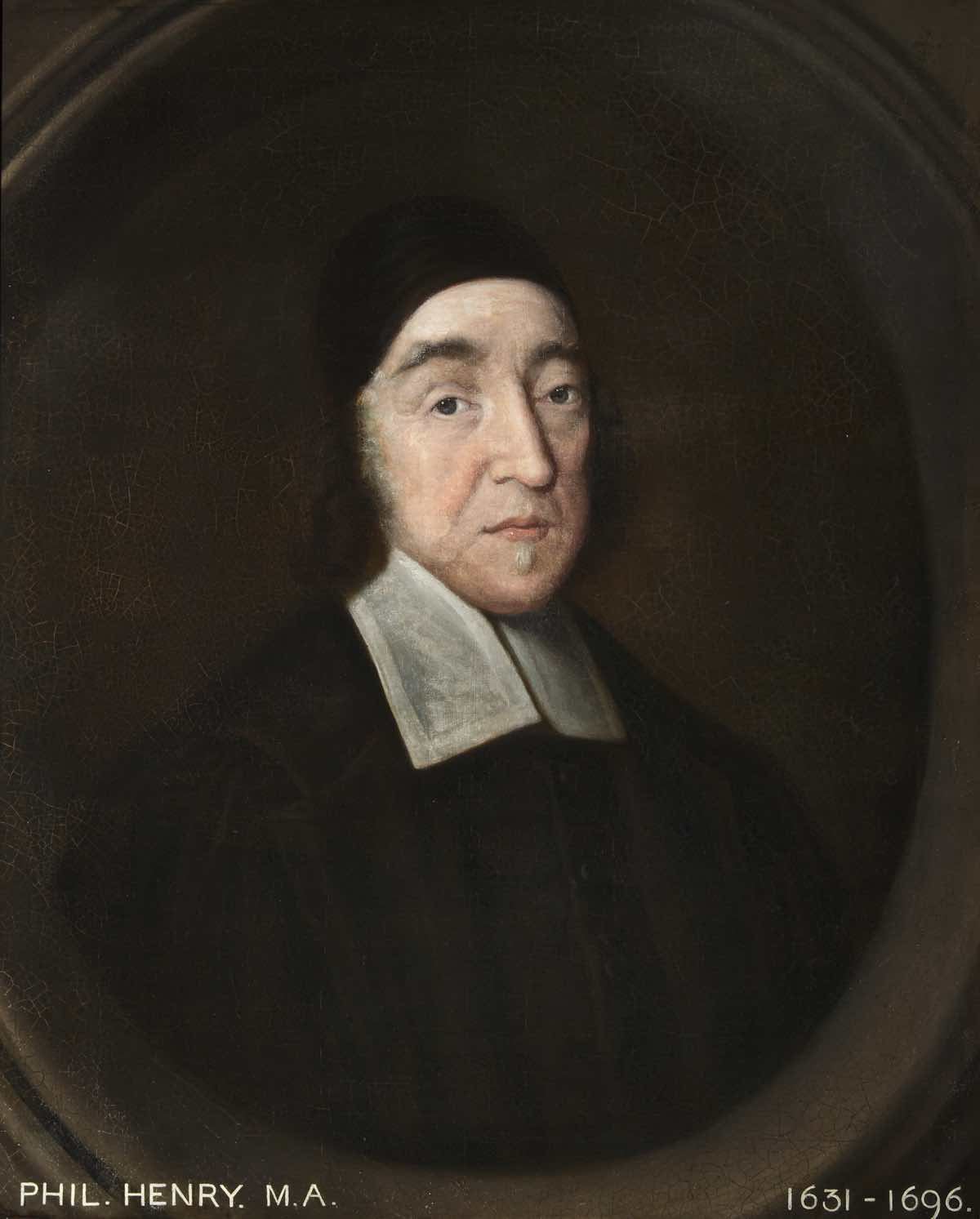
The main theological topic addressed in Philip Henry's last exposition is the doctrine of God's greatness as depicted in Psalm 104. The exposition highlights David's call for personal and communal worship centered on God's creation and providential care. Key arguments focus on the experiential aspects of worship, emphasizing that true blessing and praising of God involves the whole soul and is not merely verbal. Henry references several Scriptures, including Psalm 68:17 and Job 26:7, to illustrate God's sovereign control over creation, particularly in how He manages the elements of the natural world (like clouds and water). The doctrinal significance rests on the encouragement of believers to recognize and proclaim God's majesty and faithfulness in their lives, fostering a deep sense of worship that is heartfelt and authentic.
Key Quotes
“Blessing of God is to be soul work not to be done in word and tongue only but in deed and in truth inwardly and heartily.”
“O Lord my God thou art very great... that is astonishing but my God in covenant with me that is comfortable.”
“The mighty power of God is so much the more manifest in that... though the waters are higher than the earth they do not overwhelm it.”
“He causeth the grass to grow for the cattle and herb for the service of man that he may bring forth food out of the earth.”
What does the Bible say about praising God?
The Bible emphasizes the importance of praising God for His greatness and works, as seen in passages like Psalm 104.
Psalm 104
How do we know God's greatness is true?
God's greatness is illustrated through His creation and sovereignty, affirmed through Scripture like Psalm 104.
Psalm 104, Romans 1:20
Why is acknowledging God's providence important for Christians?
Acknowledging God's providence is crucial as it reassures believers of His continual care and control over all creation.
Psalm 104, Matthew 6:26-30
We are told that, on the morning of the day in the night of which Mr. Henry died, "between seven and eight o'clock, he performed family worship according to the usual manner: he expounded very largely the former half of the 104th Psalm; see his Life, ut supra, p. 221.
His eldest daughter, Mrs. Savage, preserved a copy of that exposition. She says at the foot of the transcript, "Finis,—indeed."
At the beginning of the MS. she has written, "My dear father's last exposition in the family, the last morning of his life, June 23, 1696."
At the end of it," Wrote out for me, S. S., by Mr. Will. Cook, one of dear father's young men that were then in the house."
It is as follows :—
Psalm civ.
David, in this Psalm, stirs up himself, and others, to adore, and bless, and praise God upon the account of his wonderful works, both of creation and providence. He doth not stir up others only to do it, but himself also. He does not stir up himself only to do it, but others also: beginning with himself.
"Bless the Lord, O my soul." Blessing of G-od is to be soul work: not to be done in word and tongue only, but "in deed and in truth:" inwardly and heartily. He addresses himself to God in the doing of it; and speaks not only of him, but to him all along. He speaks of the greatness of God in himself, and then of the greatness of his works. For as he is good and does good, so he is great and doth great things.
"O Lord my God, thou art very great;" that is, astonishing: but my God in covenant with me; that is comfortable. When we can look on the great God as our God, and our Father, with application of what he is to ourselves, how sweet is it!
"Thou art clothed with honour and majesty." Honour and majesty are royal clothing; especially such honour and majesty as is Divine and infinite.
"Who coverest thyself with light as with a garment." He dwells "in the light which no man can approach to." "God is light, and in him is no darkness at all." No creature that we either see or know affords us such a representation of God as light does. But the light that we see is infinitely short of the light that God is, and that God is covered with. He covers himself with it. Understand it of the firmament light; the sky light with which God covers himself from being seen by mortal eyes.
"Who stretchest out the heavens like a curtain." In a sense to veil his glory, and to conceal, cover, and hide it from being seen by us. The heavens, and the fight of them, are for that use and purpose.
"Who layeth the beams of his chambers in the waters." There are waters beneath the firmament, and waters above the firmament, Gen. i. 7. It is meant of the clouds, which are waters beneath the firmament, upon which the beams of the firmament are laid. We should think water an unlikely thing to lay beams upon, upon which to erect chambers. But the mighty power of God hath laid the beams of his chambers upon the waters.
"Who maketh the clouds his chariot." That is another expression of his greatness. The clouds are God's chariots, in which he rides triumphantly, Psa. lxviii. 17. There we read of other chariots of his: "The chariots of God are twenty thousand, even thousands of angels." Here the clouds are said to be his chariot; manifesting his presence therein by the various causes and effects of them.
"Who walketh upon the wings of the wind."
The wind, in regard to the swift motion of it, is said to have wings. God makes use of the wind as he doth of the clouds, to serve his purposes and designs in this lower world.
"Who maketh his angels spirits." Ministering spirits, sent abroad for the good of those who are heirs of salvation. God is a Spirit— Father, Son, and Holy Ghost; but not a made spirit, as the angels and souls of men. Some read it—Who makes his winds his messengers. The word that signifies spirit, signifies wind; and the word that signifies angels, signifies messengers. He makes his messengers the winds. And so they are oftentimes messengers of mercy or wrath, as God orders them.
"His ministers a flame of fire." The angels are a flaming fire; made so by God. One of the names given to them in Scripture is seraphim; that is, burners. Upon the account of what they are in themselves. Burning in zeal in every thing they do for God. We pray—" Thy will be done in earth, as it is in heaven:" that is, that it may be zealously done; with life, liveliness, and fervency. Upon the account of what they do. They burn and destroy when God gives them commission. Some read it—He makes flaming fire his minister. Understanding it of lightning and thunderbolts, which are often instruments of God's wrath, whereby he doth consume and destroy.
"Who laid the foundations of the earth, that it should not be removed for ever." Here he descends lower; from the clouds, and the winds, and the flaming fire, to the earth; which is laid, as it were, upon foundations. Such as shall abide, and continue; and that for ever. And yet elsewhere, in Job, it is said he hath hanged "the earth upon nothing," Job xxvi. 7. The foundation of the earth is nothing, and yet that nothing bears it up.
"Thou coveredst it with the deep as with a garment—the waters stood above the mountains." This was fulfilled in the great deluge.
"At thy rebuke they fled; at the voice of thy thunder they hasted away. They go up by the mountains; they go down by the valleys unto the place which thou hast founded for them." Or rather we are to understand it of the creation, comparing it with Gen. i. 9, 10. By which it should seem that the mountains were created so from the beginning, and are not as the effect of the deluge. It is said, "the waters stood above the mountains."
"Thou hast set a bound that they may not pass over, that they turn not again to cover the earth." That bound is a little sand which God has heaped together; unlikely in itself to make a bound, indeed seemingly unable to do it. The mighty power of God is so much the more manifest, in that though the waters are higher than the earth, they do not overwhelm it; although there be no visible defence save that of sand. God hath said to the waters, Hitherto ye shall come, and no further.
"He sendeth the springs into the valleys, which run among the hills." There is another of God's wonderful works; namely, the several springs that are upon, and some at the tops of, hills; some at the bottom of them; and some in the valleys; by which the earth is watered; by which drink is provided for the beasts of the field. "The wild asses quench their thirst;" the fowl also. Some of them have their habitations about the waters.
"He watereth the hills from his chambers: the earth is satisfied with the fruit of thy works." The rain is the fruit of God's works, wherewith the earth is satisfied and refreshed; the grass made to grow for the cattle; and, hereby, for the service of man. "He causeth the grass to grow for the cattle, and herb for the service of man: that he may bring forth food out of the earth."
"And wine that maketh glad the heart of man, and oil to make his face to shine, and bread, which strengtheneth man's heart." « Wine."—" Oil."—" Bread." Here is bread for necessity; and wine and oil for delight. Bread to strengthen man's heart; and wine to make the heart glad; and oil to make the face shine. AH these are gifts of God. The influence of his mighty power and providence. Upon each of which the rain has influence towards the preparing of them; and without which rain we should neither have wine, nor oil, nor bread: and therefore, if God be the Father of rain, and the Giver of that without which these things cannot be, we are to own him in them all, and see that corn, and wine, and oil are products of his wisdom, and power, and goodness; and give him glory accordingly.
THE END.

Comments
Your comment has been submitted and is awaiting moderation. Once approved, it will appear on this page.
Be the first to comment!