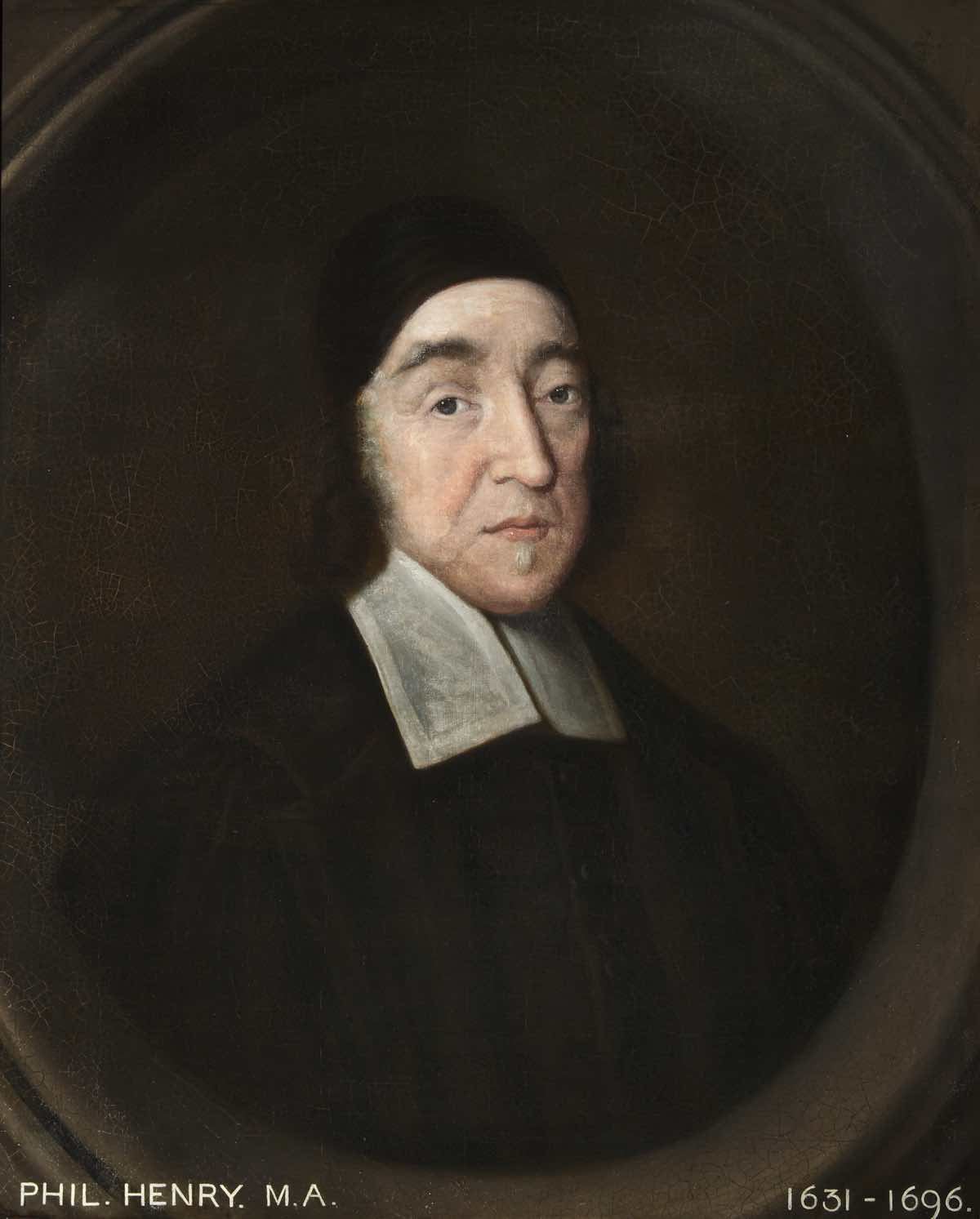
The article "The History of Christ" by Philip Henry systematically examines the life and ministry of Jesus Christ, underscoring His roles as Savior, Teacher, and Redeemer in Reformed theology. Henry emphasizes that the central message of Christian preaching is Christ Himself, with key points such as Christ's incarnation, ministry, sacrificial death, resurrection, and ascension serving as pivotal elements for believers’ faith and understanding. Scripture references, including Acts 8:35, 1 Corinthians 15, and John 17:3, are utilized to illustrate the doctrinal significance of knowing Christ for salvation and eternal life. The practical implications of this teaching stress the necessity of deepening one’s knowledge of Christ to foster authentic faith and spiritual growth, reflecting the Reformed emphasis on the sufficiency of Christ's work for redemption.
Key Quotes
“We preach not ourselves but Christ Jesus the Lord and ourselves your servants for Jesus' sake.”
“If ye do not know him ye cannot believe in him.”
“It is life eternal to know him then it is death eternal not to know him.”
“What shall I render unto the Lord for all his benefits towards me?”
What does the Bible say about the importance of preaching Christ?
The Bible emphasizes that preaching should center on Christ, as evident in Paul's declaration that they preached not themselves but Christ Jesus the Lord.
2 Corinthians 4:5, Acts 8:35
How do we know that Jesus was born of a virgin?
The prophecy of Jesus' virgin birth is confirmed in the New Testament, where His conception by the Holy Spirit is recorded.
Isaiah 7:14, Luke 1:31-35
Why is Jesus' resurrection significant for Christians?
Jesus' resurrection is vital because it affirms His identity as the Messiah and provides assurance of our justification.
Romans 4:25, 1 Corinthians 15:20-22
How can we understand the intercession of Christ?
Christ's intercession signifies His ongoing role as our mediator, continuously advocating on behalf of believers.
Hebrews 7:25, Romans 8:34
* See the Life of Rev. P. Henry, ut supra, p. 402
Holy Paul gives us a short account of his preaching, and that of his fellow-laborers, when, writing to the Corinthians, he says, "We preach not ourselves, but Christ Jesus the Lord; and ourselves your servants for Jesus' sake."
The preacher that preaches himself, can never either please God or profit his hearers; or save himself.
Paul and his fellow laborers preached " Christ Jesus the Lord." He was their text; their doctrine; and their application. Christ in the beginning. Christ in the middle. And Christ at the end of their sermon. That is the best preaching. Philip preached "Jesus" unto the eunuch; see Acts viii. 35.
And, themselves their "servants for Jesus' sake." "Not ourselves your lords and masters, lording it over God's heritage as having dominion-over their faith; but your " servants," ready to the meanest to do them good.
But observe, it is your servants—" for Jesus' sake" Not to do whatever you would have us do, rather than displease you: not servants to your lusts. No-" for Jesus sake." As far as he allows and approves: to promote your spiritual and eternal advantage.
"We preach Christ Jesus the Lord." This has been the subject of several sabbath sermons for divers months. I design at this time a "Repetition." Which to me shall not be grievous; to you it will be safe. If Christ Jesus be the great subject we are to preach, as Paul thought it, then it is what you are to learn. And have ye learned Christ? Have ye grown more and more in the knowledge of him? And in acquaintance with him?
If ye do not know him, ye cannot believe in him. Knowledge is put for faith; see Isa. liii. Ignorance of Christ is at the bottom of unbelief in him.
If ye do not know him, ye cannot love him. How can we love him whom we do not know?
If ye do not know him, ye cannot be saved by him. If it be "life eternal" to know him, then it is death eternal not to know him, John xvii. 3.
The particulars which we are to learn and know concerning Christ, lately spoken to, are twenty.
1. His forerunner. That was John the Baptist, who came before him to prepare his way, and to make ready a people for him. He was his harbinger, as kings have. The morning star to the sun-rising. He was his forerunner. —In his birth. Six months older. Conceived in the womb of an old woman, as our Lord was in the womb of a virgin; only our Lord was there by the power of the Holy Ghost; John in the ordinary way of generation. The birth of both was foretold by an angel from heaven. —In his baptism. John received people that came to him confessing their sins, to be his disciples and followers; and for their initiation baptized them. It was called the baptism of repentance, because all that came to it professed repentance. The same ordinance was afterwards taken up by our Lord Jesus, and made the gospel way of initiation into the Christian profession, Matt, xxviii. 19, 20.—In his preaching. They preached the same doctrine from the same text: "Repent ye;" see Matt. iii. 1, 2.— In his passion. They both died a violent death. The one was beheaded; the other hanged. And both for doing their duty: not for evil doing. John for reproving Herod; Jesus for speaking against the wickedness of the priests and elders. Both were young: in their prime. But in the end and design of their death there was a vast difference. John did not die to redeem and save; Jesus did. Now, have ye learned this? Are ye acquainted with John as the forerunner of Jesus? How he came in the spirit and power of Elijah. Prophesied of in Mai. iv. 5, 6; performed, Matt. iii. 1.
2. His conception and birth: in all respects extraordinary and strange. We love to hear strange stories, especially if true. Behold his conception. How extraordinary! so as never any other was before or since. He was conceived by the power of the Holy Ghost. This was requisite, that he might be without sin. How extraordinary his birth! He was born of a virgin whose name was Mary: a poor virgin, but a betrothed virgin; betrothed to an old man, one Joseph. There was mystery in it. Have ye learned this concerning him; how that "the Word was made flesh, and dwelt among us?" How he took our nature, and was "born of a woman?" Born in mean circumstances; in an inn; in the stable of the inn, there being no room in the house. How he was laid in the manger, and at the same time worshipped by the wise men? Oh the mystery of godliness that was in this! see 1 Tim. iii. 16.
3. His circumcision, and the name then given him, Luke ii. 21. He was circumcised like other children of the stock of Abraham, on the eighth day. Then he first shed his blood for us. Thereby he became obliged to the whole law of Moses, which he kept accordingly. And, by undergoing it, he put an end to it. It is a mercy he did. "His name was called Jesus." A sweet name. Have ye learned it? It signifies a Saviour. He came to "save his people from their sins;" not in them. The soul must bow in holy adorings of his infinite love. And every creature must bow, that is, stoop to him, and his laws and authority, either with their will or against it.
4. His presentation in the temple when he was forty days old, Luke ii. 22, etc. This was according to the law of Moses; which, being circumcised, he was bound to obey. At the presenting of him there was a sacrifice offered tor his mother's purification. There was the solemn dedication of him to God and his service. There was a price of redemption paid for him, being the first-born. Two old people, Simeon and Anna, were there: "And she gave thanks unto the Lord, and spake of him to all them that looked for redemption in Jerusalem."
5. His flight into Egypt for fear of Herod, and his return thence; see Matt. ii. He began betimes to be a confessor, even while in his mother's arms. He was driven into banishment from his native country. So hath many a one since been. A trial to be borne with patience. As soon as Herod was dead, God sent an angel to tell Joseph they must stay no longer. Here was mercy: "When Israel was a child, then I loved him, and called my son out of Egypt."
6. His disputing with the doctors in the temple when only twelve years old. A most astonishing event, recorded in Luke ii. 46, 47. It was a proof that he was an extraordinary person, designed for some great work. And was he not so? While he was doing this, he was about his "Father's business." Are we careful always to be so? And when he had done it, he became "subject" to his earthly parents; that is, dutiful to them, and observant of them. Here was an example to other children, according to the law of the fifth commandment.
7. His being baptized by John when he was thirty years old, Luke iii. 21—23. His condescending to this was a famous instance of his humility. The Master baptized by the servant. One reason of it was to encourage John and the people. Remember how he was owned. "Lo a voice from heaven, saying, This is my beloved Son, in whom I am well pleased."
8. How he was tempted of the devil with three horrid, hideous temptations, one after another. One to distrust God, by turning stones into bread when he was hungry. Another, to break his neck from one of the temple pinnacles. Another, to fall down and worship Satan. Let none say, I am no child of God, because I am tempted. Mark the weapons he fought with, whereby he overcame. The word of God: "It is written." And again: "It is written." To teach us, in the hour of temptation, to have that "sword of the Spirit" ready. If any of you should be tempted, remember you know where one is, a Friend of yours, who was tempted before you. Ay, and therefore tempted, that he might the better know how to succour you, Heb. ii. 17, 18; iv. 15, 16.
9. His disciples and followers: "He ordained twelve, that they should be with him." He had followers of divers sorts: men and women; some for love; some for loaves; some in truth and sincerity; some in guile and hypocrisy; some more loosely and at large; some more closely— as the twelve called his apostles, who were for the most part constantly with him, unless when sent abroad to preach. These were generally poor men, divers of them poor fishermen. Yet he chose to make use of them to catch souls. And they did so. He put "the treasure into earthen vessels," that the praise might be of God. Understand Psa. viii. 2, of these: "Out of the mouth of babes and sucklings hast thou ordained strength because of thine enemies, that thou mightest still the enemy and the avenger." Of the twelve, there was one who had a devil. There is no unmixed society upon earth.
10. His preaching, Mark i. 14, 15. To preach was one great part of his errand into the world. He was anointed for that purpose, Isa. lxi. 1. And he was an ordained, excellent, itinerant preacher. A house preacher. A plain, thundering, legal preacher. A comfortable, gospel preacher. A persecuted preacher. And a godly preacher in his life and conversation. Yet no very successful preacher. He converted but few in comparison of what we might have expected, and of what the apostles converted afterwards. Now we should make a business of acquainting ourselves with his doctrine. We should learn it. Love it. Live it.
11. His miracles: "Many other signs truly did Jesus in the presence of his disciples." The things here called "signs;" and elsewhere, "miracles and wonders," Acts ii. 22; were miraculous wonders intended for "signs." Signs, of the truth of his mission from the Father; of the truth of his Messiahship; of the truth of his doctrine. Therefore many of them were wrought after preaching. Many were his miraculous cures of sick people. The dead were raised to life. The winds and waves were "rebuked." The devil himself was rebuked, and made to obey him. Could any have done this but God, or one sent of God? His disciples saw them; nay, the multitude, thousands at a time—as when the loaves were multiplied. His enemies saw them, those who came purposely to be satisfied.—To the end that we might "believe."
12. The obedience of his life: "I do always those things that please him." Without failing at any time, in any thing; either in thought, word, or deed; against God or man. This could never be said of any other. He was a none-such herein. And it was requisite he should be so. Else he had not been a complete Saviour; else he had not been a sacrifice without blemish; else he could not have merited heaven for us, according to the first covenant, Gen. ii. 17. But one main end was to set before us an example: "Leaving us an example, that ye should follow his steps." An example of patience under suffering. Of prayer, for he was a man of prayer. Of humility and lowly-mindedness, Phil. ii. 6—8. Of love and charity, Eph. v. 2. Of care for souls, Matt. ix. 36. Of contempt of the world, John vi. 15. But who can follow him herein? If not as well as we should, do we as well as we can? Endeavouring to do so ?" He that saith he abideth in him ought himself also so to walk, even as he walked." To "learn" him, is to learn of him.
13. His sufferings at his death. He was a great sufferer as well as a great doer. Never was any like him, whether we respect the various kinds of his sufferings; his behaviour under them; or the blessed effects of them. Consider: What he suffered of himself, without the intervention of second causes. His agony in the garden, Luke xxii. 44.—What he suffered of his friends. One of them betrayed him; another denied him; they all forsook him. Each of which was an arrow to his heart.— What he suffered from his foes. They apprehended him; arraigned him; abused him; condemned him; crucified him.—What he suffered of his Father. He hid his face from him; forsook him; nay, was pleased "to bruise him." Might he not then say, Was ever sorrow like unto my sorrow?
14. His death. This was the penalty threatened. And, therefore, without that there could have been no Saviour. Let me die, said he, rather than man should not be redeemed. "He became obedient unto death, even the death of the cross:" the most painful of deaths. To be fastened to a gallows, with nails driven through his hands and feet, those tender parts; and there to hang till dead. Sometimes it was a great while. It was a lingering death. The most shameful of deaths. None but the vilest malefactors were crucified. It was a cursed death, for it is written "Cursed is every one that hangeth on a tree." Yet, bad as it was, and the circumstances made it a thousand times worse, he underwent it for us; and that cheerfully and joyfully. "Behold, what manner of love!"
15. His burial. When they had fulfilled all that was written of him, they took him down from the tree, and laid him in a sepulcher. The story is particularly recorded in the close of Matt, xxviii.; Mark xv.; Luke xxiii.; and John xix. Those who managed it are noticed; two especially—Joseph of Arimathaea and Nicodemus. Both persons of quality. One scarce known before to be a disciple; yet marvellously stirred up to be active in this great affair. What it was they did is also mentioned. They begged the body from Pilate. They wrapped it in clean linen. They embalmed it with great cost. They laid it in a new tomb hewn out of a rock, wherein never man had lain before. And, it was in a garden. He was buried, not only to show that he was truly dead, but also to perfume and sweeten the grave for us. The sting being taken out, that is now a bed of rest; see 1 Cor. xv. 56, 57.
16. His resurrection: "God raised him from the dead." Sometimes he is said to have raised himself. Christ as God, raised himself as man. The Divine—the human nature. It was on the third day after his death, as Jonah; but on the "first day of the week." Whence the Christian sabbath. It was also "early in the morning." He stayed no longer than just to fulfill the Scripture; see Hos. vi. An angel rolled the stone away, thus signifying that the debt was paid. The proofs were a threefold testimony— Angels. Apostles. Adversaries. And a tenfold appearance of him alive to many. Five the same day: five afterwards.
Surely this may confirm our faith in him as the Messiah promised, Acts ii. It may comfort our hearts in reference to the guilt of our sin. He "was delivered for our offences, and was raised again for our justification." In reference to worldly troubles—" He hath torn, and he will heal us: he hath smitten, and he will bind us up." In reference to the resurrection of our bodies, 1 Cor. xv.
It may direct our conformity to him in rising from the grave of sin to the life of righteousness, which is—to know "the power of his resurrection."
17. His ascension into heaven; just forty days after his resurrection. "After" he "had spoken to them." Spoken what he had to say in giving them instruction concerning the things of the kingdom of God; in blessing them. He was then doing it when just ready to be taken from them. It is said, "a cloud received him out of their sight." This cloud was his triumphant chariot, waited on by myriads of holy angels, Psa. lxviii. 17. At this time, after the manner of conquerors, he "led captivity captive;" he "received gifts for men," or gave gifts to men, Eph. iv. 8. He ascended to receive his crown: to send the Comforter, Acts ii. 33, as our forerunner to "prepare a place" for us. "If ye then be risen with Christ, seek those things which are above, where Christ sitteth on the right hand of God. Set your affections on things above, not on things on the earth."
18. His sitting "at the right hand of God the Father Almighty," Mark xvi. 19. It was of great consequence to know what entertainment he had in heaven with the Father; whether he bid him welcome or not. And he had great welcome, Psa. xxiv. 6, 9; ex. 1: as an ambassador who had done his duty faithfully and successfully. Sitting is not to be understood grossly and literally. He is said sometimes to stand; sometimes to be; sometimes to appear. But sitting is a posture of rest, when work is done: of honour: of office, as King, 'Prophet, Priest: of continuance, or abiding. And it being "at the right hand" notes preeminence. He is far exalted above all, Eph. i. 20, 21. It notes power, Matt. xxvi. 64; xxviii. 18.
We have thus an infallible proof of the Messiahship of Jesus Christ; an encouraging prop to faith; and a prevailing inducement to humility, holiness, and hope.
19. His making intercession: "Wherefore he is able also to save them to the uttermost that come unto God by him, seeing he ever liveth to make intercession for them." This is not to be understood grossly and carnally. But thus: "Ye are come—to the blood of sprinkling, that speaketh better things than that of Abel." That for vengeance—This for mercy. Typified by the incense offered by the high priest upon the golden altar within the vail, Rev. viii. 3. And, for our comfort, we may be assured that he is heard and accepted always. "Wherefore lift up the hands that hang down''— in reference to our sins. "Who shall lay any thing to the charge of God's elect? It is God that justifieth. Who is he that condemneth? It is Christ that died, yea rather, that is risen again, who is even at the right hand of God, who also maketh intercession, for us." And, in reference to our services: "Another angel came and stood at the altar, having a golden censer; and there was given unto him much incense, that he should offer it with the prayers of all saints upon the golden altar which was before the throne."
20. His coming again to judge the world at the last day, Acts i. 11. The rest are all past. His intercession present. This only to come: "This same Jesus, which is taken up from you into heaven, shall so come in like manner"—for substance, but not circumstance—"as ye have seen him go into heaven." As he then went up in a cloud, so his coming again shall be in the clouds. As there were then angels present who spake, so when he comes again he shall come with like attendants. Not a few, as then; but all—all. The whole society of them shall wait upon him to do him honour, Matt. xxv. 31. There will be also "thousands of his saints," Jude 14, 15. He will come—to judge. The same that came before to redeem, comes now to doom us. Some to everlasting misery; some to "life eternal." Oh, think you hear that trumpet sounding. If unready, fear; and make ready. If ready; rejoice.
I have thus given you as short an account as I could of the blessed Jesus whom "we preach." Let me now put three questions.
1. What "think ye" of him? Is not his name deservedly called "Wonderful?" Is there any other to be compared with him? Ought he not in all things to "have the preeminence?" Is there any God-man but he? Was ever any conceived as he was ?—Born as he was, of a virgin ?—Lived as he did, "holy, harmless, undented, separate from sinners ?"— Died as he did, such a painful, shameful death, so meekly and patiently ?—Rose again, and went to heaven as he did ?—Sits as he, to make intercession ?—Shall come again as he, to judge the world in righteousness? What say you? Is there any like him? Have ye learned to prize, and value, and esteem him above all? If not, it is because ye know him not.
2. What desires have ye towards him? Have any of you a mind to him, to have him? He is the "heir of all things." Shall he be your Head and Husband? Will you love him, and leave all for him, saying, "None but Christ; none but Christ?" Oh that it might be so! It were a rich recompense for all the pains of the sermons, if only one soul would be persuaded and prevailed with.
3. What will ye do for him? You have heard what he hath done; what he hath suffered; what he is now doing for you. And are you in no care what you shall do for him? Have you no thoughts about David's inquiry—" What shall I render unto the Lord for all his benefits towards me?" Or Paul's—" Lord, what wilt thou have me to do?" Believe it—our ingratitude, in not rendering according to all the benefits done unto us, grieves him more, and goes nearer to his heart, than all the wounds, and stripes, and thorns, and nails with which he was pierced when he hung upon the cross. Think you hear him say—" Do ye thus requite the Lord, 0 foolish people and unwise?"

Comments
Your comment has been submitted and is awaiting moderation. Once approved, it will appear on this page.
Be the first to comment!